



The KraneShares CSI China Internet ETF (KWEB) has been one of the most unloved trades in the past five years. It peaked in February 2021 at over $105 during the post-COVID tech mania, then spent the next two years getting cut in half, then in half again. It now trades under $30. Beijing’s regulatory crackdown wiped out hundreds of billions in market cap across Alibaba (BABA), Tencent (TCEHY), JD.com (JD), and the rest of the Chinese internet complex. 2025 brought a partial rehabilitation as the Hong Kong-listed names rallied on AI optimism around DeepSeek and a softer regulatory tone from the CCP, but 2026 has been ugly; risk peaked in October for Chinese tech stocks as much as it did for U.S. tech stocks. KWEB has just rejected off a retest of its 50-EMA in what looks like a textbook bearish continuation pattern. The setup is interesting because the fundamental case for Chinese tech stocks is the strongest it has been in years, and they are trading like nobody wants the earnings. That gap between fundamentals and price is exactly the kind of thing that resolves violently in the end. I’m betting we’re nearing a turning point.
Chinese Internet Earnings Are Quietly Crushing It
The consensus view of Chinese tech is the 2021 story: heavy-handed regulators, opaque corporate governance, and an ongoing property crisis dragging on both consumers and the banks. That story isn’t wrong about the past, but it has been increasingly wrong about the present. The largest names in KWEB have spent the last three years doing exactly what U.S. tech did in 2022 to 2023, but on a delay. They have been cutting costs aggressively, buying back stock, and refocusing on profitable core businesses instead of sprawling growth bets. The result is earnings power that looks nothing like the share prices. This is a tech ETF that trades around 15x earnings.
Note that this particular fund is a “Big Tech” themed fund, and so this works in the same way that Google (GOOGL) is a “tech company” despite it being in the communications services sector. The same would apply to Amazon being a member of “Big Tech” despite it being part of the consumer discretionary sector.
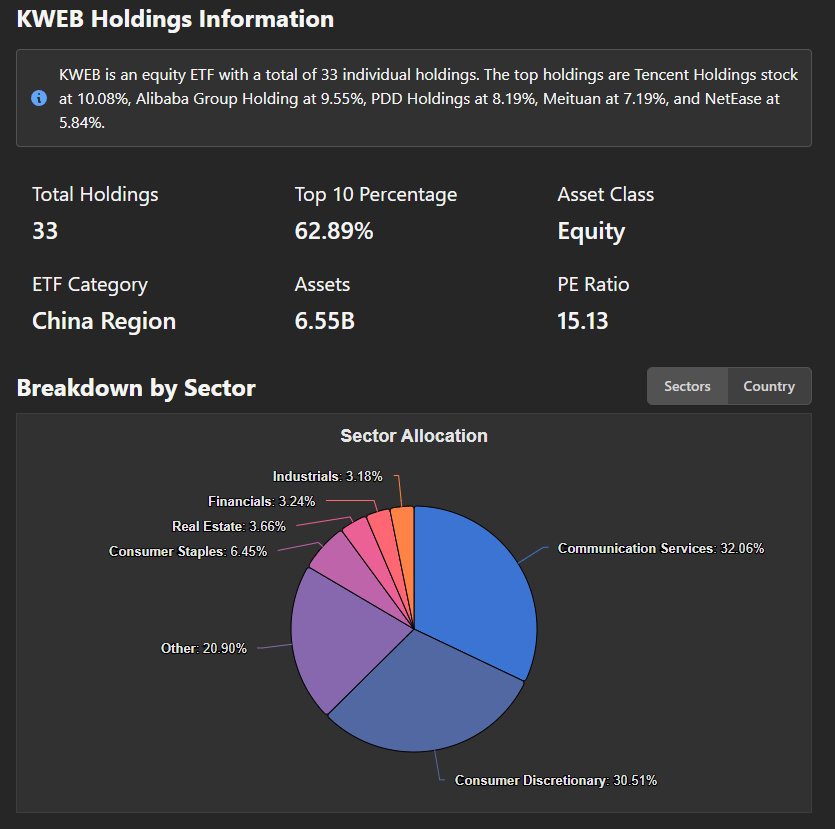
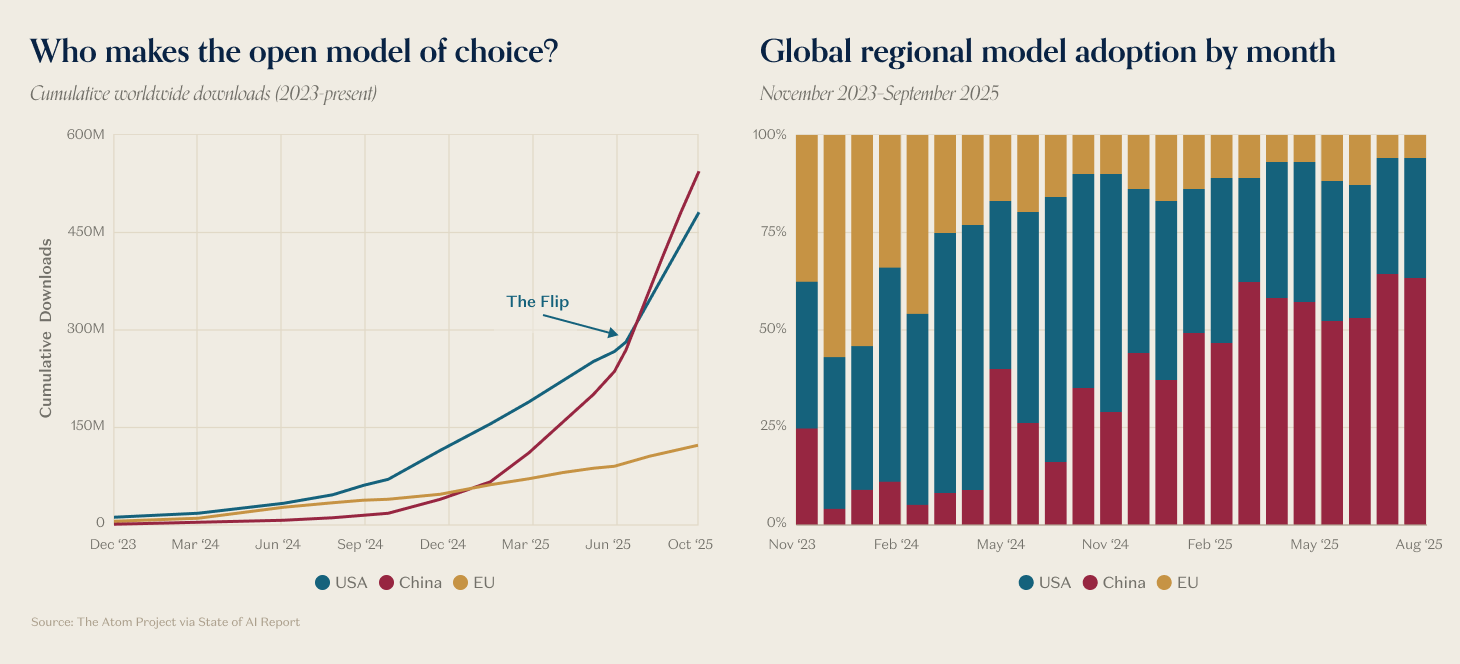
The largest constituent is a great example. Alibaba’s most recent quarter showed their cloud revenue accelerating 36% YoY, driven almost entirely by AI-related demand, which itself delivered >100% revenue growth. Their Qwen model series has become the default open-source LLM in much of Asia (and Silicon Valley startups, although that is mostly unsubstantiated as firms are tight-lipped) and is now competitive with the frontier models from OpenAI and Anthropic on several benchmarks.
For Western readers, it may be important to be reminded of the fact that China has more AI users than the U.S. does. It’s been a little over a year since they took the lead.
The valuation gap between Chinese and U.S. internet names has gotten very wide. Alibaba trades at ~19x forward earnings. Tencent trades at ~14x. The combined market cap of the entire KWEB ETF is smaller than Meta (META) alone. For comparison, KWEB’s average market cap-weighted P/E of 15 pales in comparison to the Magnificent Seven ETF’s (MAGS) 36x!. Big tech to big tech, it’s hard to compare.
We can and should argue that China deserves a discount for governance, geopolitical, and currency risk. But the current discount rate is essentially 0.58x, which is egregious unless investors believe that their capital is truly at risk of seizure by the CCP or some other catastrophic risk like Chinese belligerence over the Taiwan Strait.
Investor confidence was shattered by the failed Ant Group IPO and has never recovered, but time heals all wounds, and the regulatory environment has changed. Investors still haven’t priced in the shift around AI competitiveness in China, and that means buying opportunity.
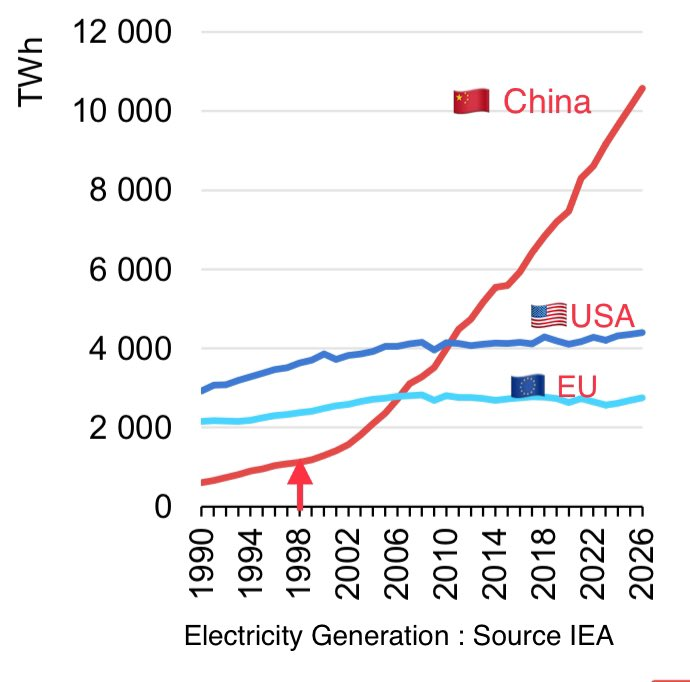
For KWEB specifically, AI competitiveness with the U.S. is the thesis behind names like Alibaba, Baidu (BIDU), and Tencent. It will ultimately depend on continued access to compute. For China, power is not the bottleneck like it is in the U.S.
No, the bottleneck for the Chinese is advanced AI chips. China is racing to build domestic alternatives, with Huawei’s Ascend chips and SMIC’s (SMIC) 7nm process making real progress, but they are still 12 to 18 months behind the frontier. If the trade truce between China and the U.S. holds and Nvidia’s (NVDA) China-specific chips keep flowing under the export control regime, Chinese internet companies have a runway to scale their AI products. If the truce breaks, they have to fall back on domestic supply that isn’t ready yet, and the AI growth story that has been driving the partial 2025 rebound stalls. That is a large risk to consider for KWEB.
The asymmetry here is what makes the trade interesting. If the truce holds, KWEB has obvious upside from continued earnings growth and AI-driven re-rating. If the truce breaks, KWEB’s downside is partially capped by valuations that already price in significant pessimism. You’re not buying KWEB at 25x forward earnings hoping for everything to go right; you’re buying it at ~15x earnings where a lot of bad news is already in the price. That’s a different risk-reward profile than chasing U.S. mega-caps at all-time highs.
Of course, with exposure to any emerging market, remember that position sizing is more important than security selection.
KWEB Technical Outlook
Technically, KWEB looks very bearish. Looking at the 5-year weekly chart, as the thesis on a re-rating around changing trader sentiment is a medium-term play, we see that there was an attempted breakout in the summer last year. It failed in October when risk more broadly fell out of fashion (US stocks fell too around then). The breakdown was rough, and it took KWEB below the 50-EMA, 200-EMA, and anchored VWAP. It’s still below that key institutional level.
Here’s the chart:
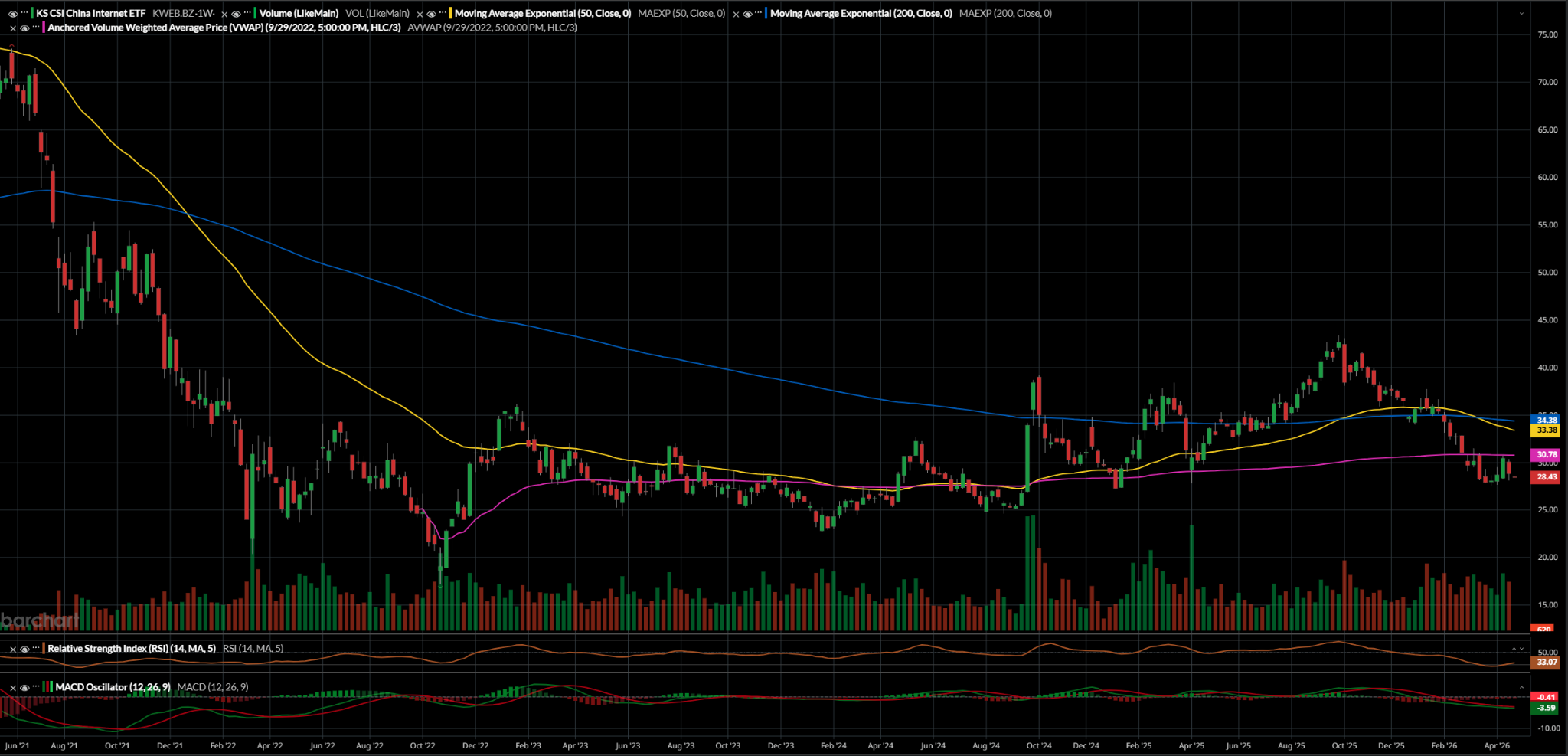
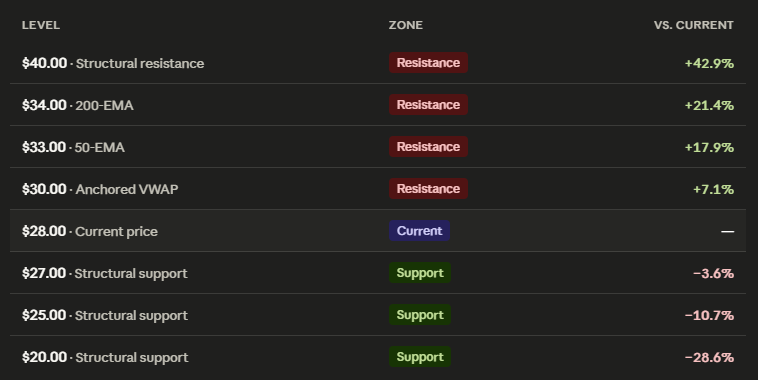
The good news for the bulls is that there is little room to fall from here, with structural support having been found multiple times below the current price at ~28. Both ~27 and ~25 are strong supports below the current level, although there is little below that until ~20.
Breaking out will be difficult, as there is a lot of selling pressure ahead of KWEB. Its first challenge will be the structural resistance and anchored VWAP sitting at ~30. Above that sits the 50-EMA, which just completed a death cross under the 200-EMA. Breaking above ~33 and ~34 will require a significant catalyst, as that level comes with institutional selling pressure. Should it break above those levels, it could run as high as 40 before it hits serious structural resistance.
Here are the key levels to watch:
Conclusion
KWEB is a trade where the fundamental case and the technical case are pulling in opposite directions. That means approach with caution, but it doesn’t preclude any trades. The fundamentals are the strongest they have been in years: Alibaba’s cloud business is accelerating on real AI demand, Tencent is back to growth, the entire ETF trades at ~15x earnings while MAGS sits at ~36x, and China has more AI users and more electricity than the U.S. does.
The market is pricing these names like the 2021 regulatory crackdown is still happening, but that gap is closing too. The price gap will close eventually, but eventually is the operative word, and traders can’t work on that assumption alone.
The chart is looking bearish, but that means a confirmation of this trade will be undeniable when it comes. KWEB just rejected off the 50-EMA after a death cross, and the structural resistance set by the anchored VWAP at ~$30 will need a real catalyst to break.
The good news for bulls is that the downside is well-defined: ~$27 and ~$25 are strong supports; you’re not buying into thin air. The bad news is that there is no clear technical reason to expect a breakout right now without a macro catalyst, and the most likely catalyst, the trade truce with the U.S., cuts both ways.
This is a position to scale into rather than chase, as the time it will take for investors to find confidence in the changing situation may be better measured with a weekly chart than a daily chart. The current ~$28 level is a reasonable starting point given how compressed valuations are, but I would want to add aggressively if KWEB tests ~$25. That’s where the risk-reward gets very asymmetric.
For investors who already believe China is uninvestable, nothing in this setup will change that. For those willing to take EM risk in exchange for the cheapest big-tech valuations on the global tape, KWEB is one of the few places where you’re getting paid to wait. The earnings are showing up. The price will eventually follow.