


Copper (XCU) prices remain near record levels after the strong rally in 2026. But the market is entering a more difficult phase. In my view, the long term trend remains bullish as long as copper holds above $5.20 per pound. But the high prices, aluminum substitution and U.S. tariff uncertainty may keep prices volatile in the short term. This article discusses the macro drivers, key copper levels and the risks that may decide whether prices break above $6.70 or correct toward support.
Aluminum Substitution Creates New Pressure on Copper Demand
Copper prices face new challenges after the record rally in 2026. The recent rally in copper prices has supported the long term bullish picture. But the higher prices have also encouraged substitution. When copper becomes too expensive, the industries start to look for alternative materials that are less costly. Aluminum is one alternative to copper that is much lighter and cheaper.
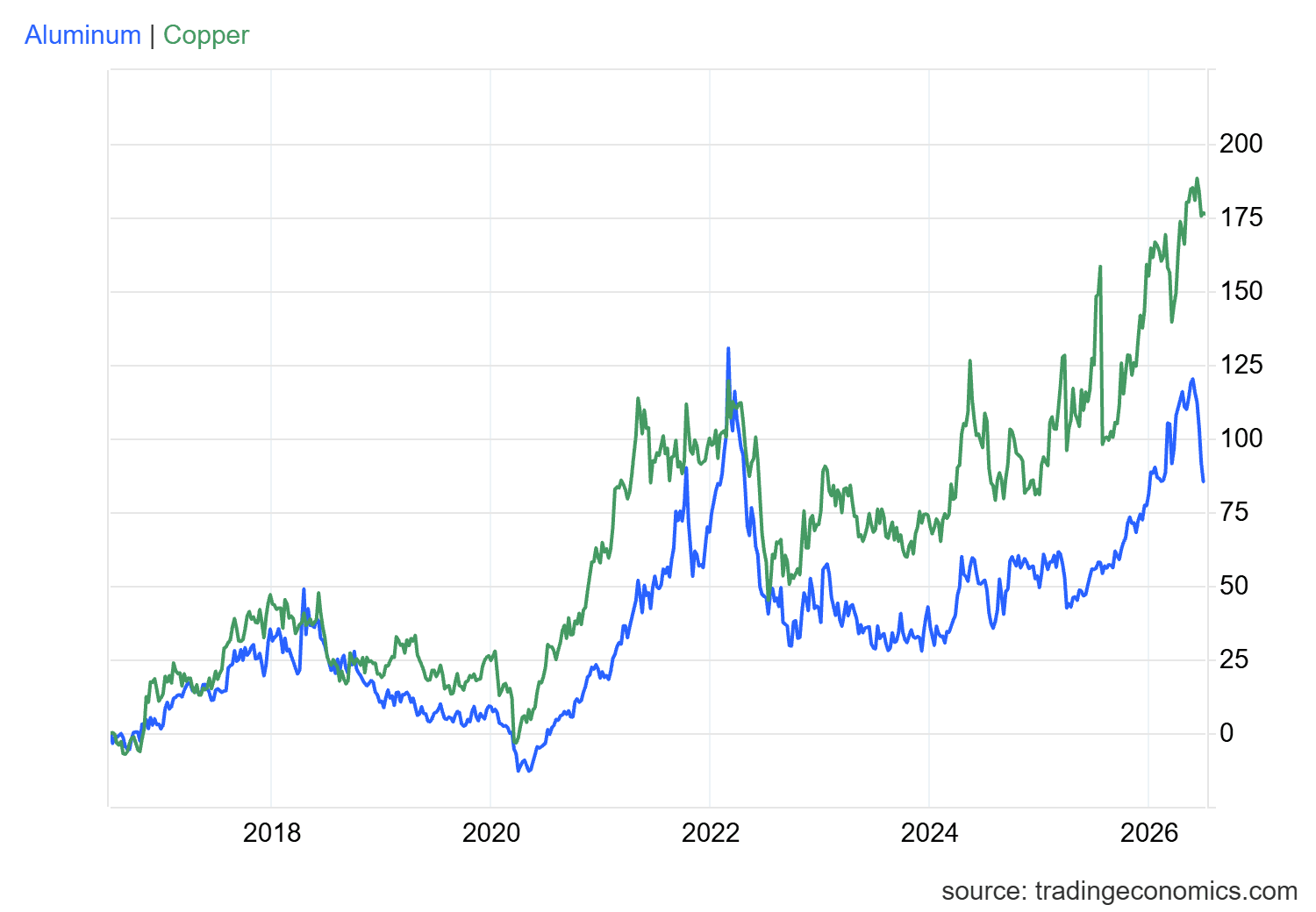
This shift has a significant impact on the copper demand. Aluminum is cheaper than copper and conducts electricity to a level that is sufficient for many industrial applications. This makes it appealing for electric vehicles, electric cables, air-conditioning and grid projects. This shift is more attractive from the cost perspective as the copper to aluminum ratio is close to 4.2. It does not imply that the demand for copper will drop. But it suggests that buyers could get picky if prices do not drop.
The chart below shows that the copper prices have gained more strength compared to Aluminum during the past 10 years. The price has surged by over 175%. But the Aluminum still remains affordable for many businesses. The drop in Aluminum prices during the past three weeks was more significant than that of copper.
Copper Price Forecast
Every new Copper analysis as it publishes, today's technical signal and key levels, live price — on one page.
See all Copper forecastsEV Makers Turn to Aluminum to Cut Weight and Costs
The electric vehicle sector is one example of this shift. Vehicle manufacturers would like to increase driving range without increasing the weight and cost of the vehicle. Aluminum wiring is already in use by Ferrari, BMW and a few Chinese EV manufacturers. This tendency suggests that industrial behaviour is subject to price changes for copper. It also establishes a limit for the copper rallies when end user begins to protect margins.
Power Cables and Air Conditioning Add to Substitution Risk
The same pressure is observed in power cables and air conditioning. Grid investments remain a long-term catalyst for copper and aluminum. But cable manufacturers and utilities are turning to more aluminum when it fulfills the performance needs.
This is significant because investments in the global grid are likely to remain robust over the coming years. According to the IEA, the global electricity demand is likely to cross 5,000 TWh for 2025-2030. To meet this demand, the annual grid investment will likely increase by appproximatey 50% by 2030.
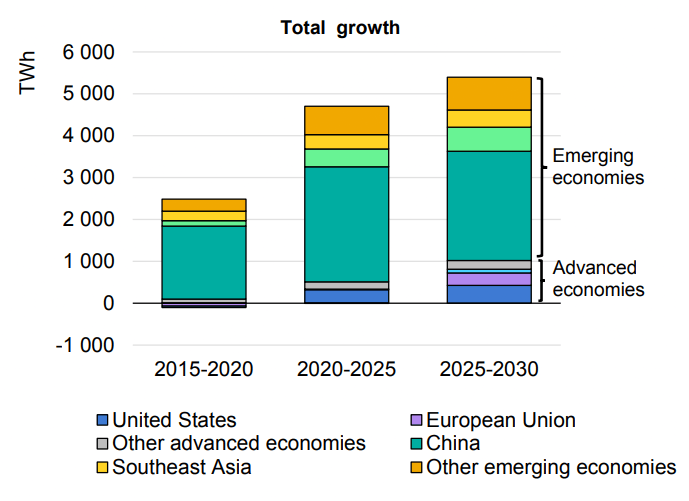
Aluminum could grow at a higher rate than copper if it takes over a larger share of this demand. But the rally in copper will persist with uneven increases.
U.S. Copper Tariff Decision Keeps Prices Volatile
The geopolitical landscape is another factor that influences base metals. The Strait of Hormuz situation has created confusion in the metals complex. Aluminum had a good premium on the back of regional smelter disruptions earlier this year. But this premium has begun to reduce as markets price in partial normality.
Sulfuric acid supply was impacted by the Gulf risk and put pressure on some producers. But the biggest catalyst for copper right now is U.S. trade policy. Washington needs to provide clarity on the tariff for refined copper. A tariff decision could increase copper market price differentials and alter copper market inflows into the U.S. Copper is likely to remain volatile until a decision is made, even as the broad-based metals war premium fades.
Overall, the macro picture is mixed. Demand for copper is still strong for long-term applications such as electrification, grids, data centers and electric vehicles. But high prices are now making them a demand risk due to the substitution of aluminum. This means that copper may need stronger confirmation from the tightening of supply and U.S. tariff policy to maintain the rally. Otherwise, the market may be heading toward a consolidation, in which buyers are getting used to the record prices.
Copper Bulls Need a Break Above $6.70
The long-term outlook for copper prices remains constructive as the price is trading at higher levels within the ascending channel. The price formed a low at $1.24 in 2008 and continued to surge higher within the strong bullish structure. But the price has reached the target of the ascending channel and hit the resistance of $6.70.
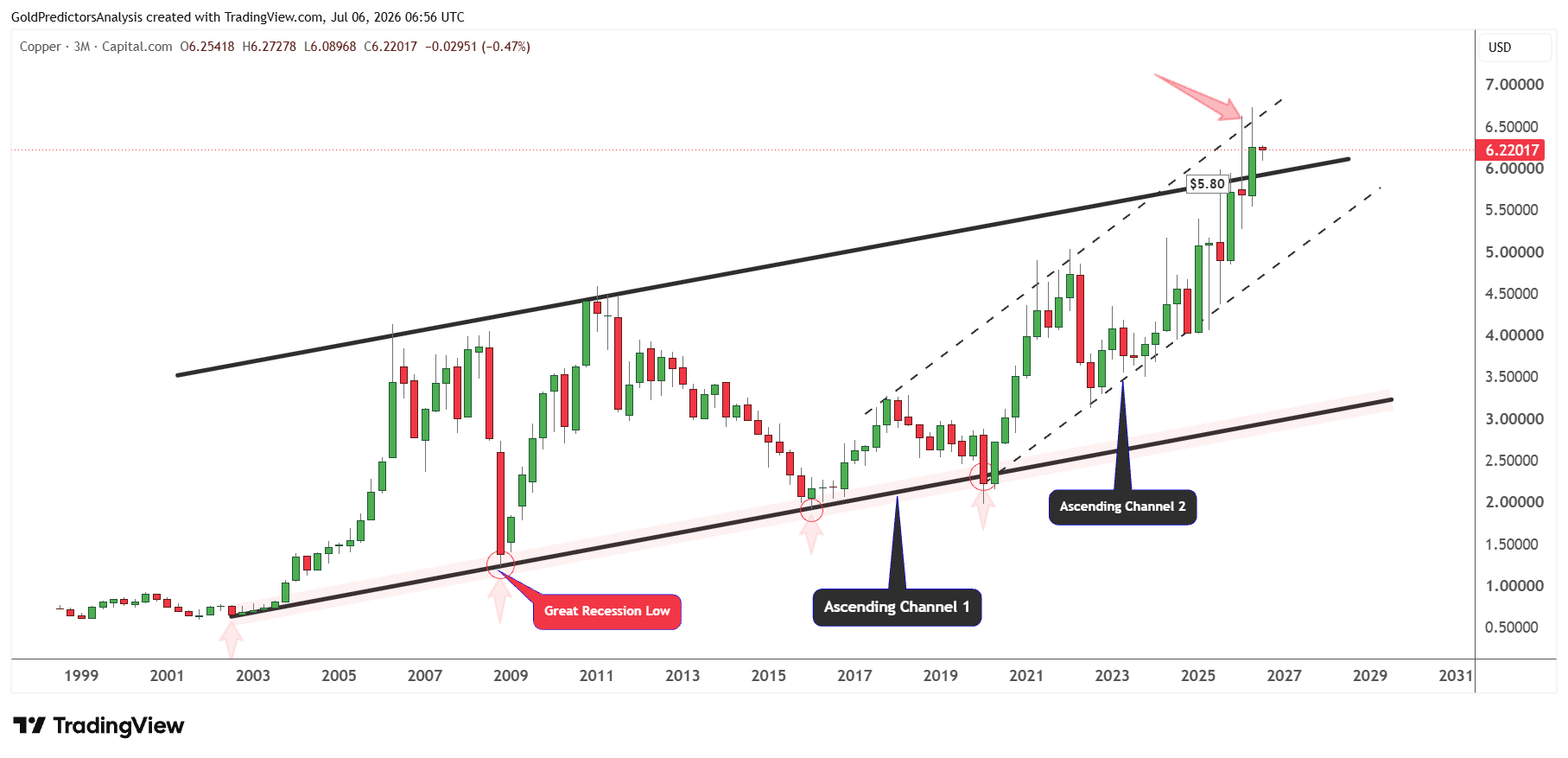
The copper prices produced the highest quarterly close in Q2 2026. The strong Q2 close in copper prices within the bullish structure indicates further upside in the next few months. But there might be a correction within the channel to find new buyers to continue the next move. However, a break above $6.70 will likely ignore the correction and continue the upside.
The monthly chart also shows strong consolidation between $6.70 and $5.20 within the ascending channel pattern. But the price remains elevated above the $5.20 support. The strong Q2 close in copper prices indicates further pressure and a potential need for replacement.
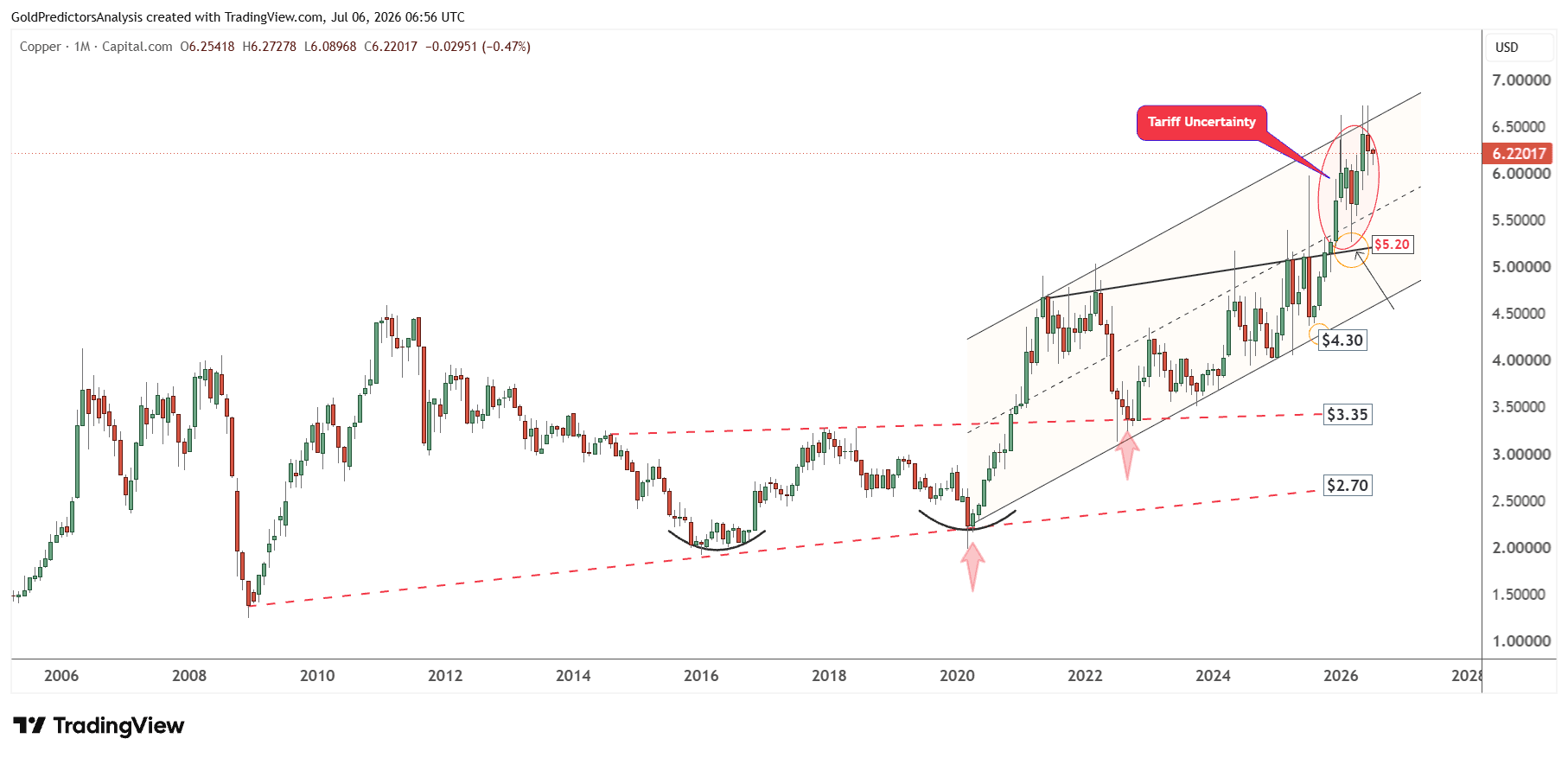
Any drop in copper prices back toward the $5.20 may attract new buyers. A break below $5.20 may push the prices to $4.30. As long as copper prices remain above the $5.20, the immediate trend remains higher.
Short-Term Copper Price Holds the $6.00 to $6.70 Range
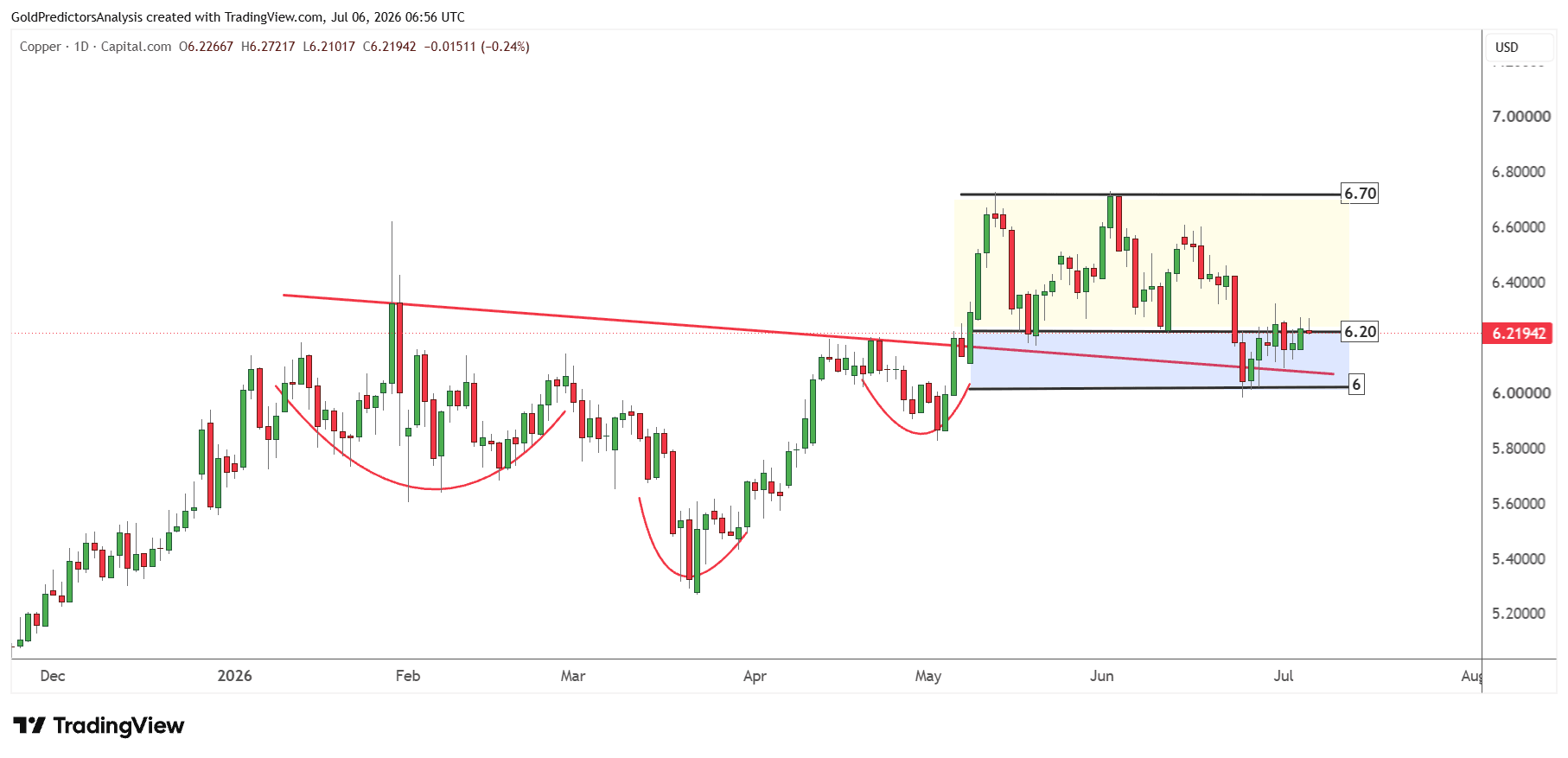
The short-term price action in copper prices also shows strong consolidation within the blue zone. This support zone lies between $6.00 and $6.20 where copper prices are consolidating to find the next move.
These consolidations look weak and suggest that prices may drop toward $5.20 if $6.00 is broken. But if prices continue to rally above $6.30, it will likely push higher toward $6.70.
The $6.00 to $6.70 range remains the consolidation zone in copper prices. A break of any of these levels is required to identify the next move in copper prices.
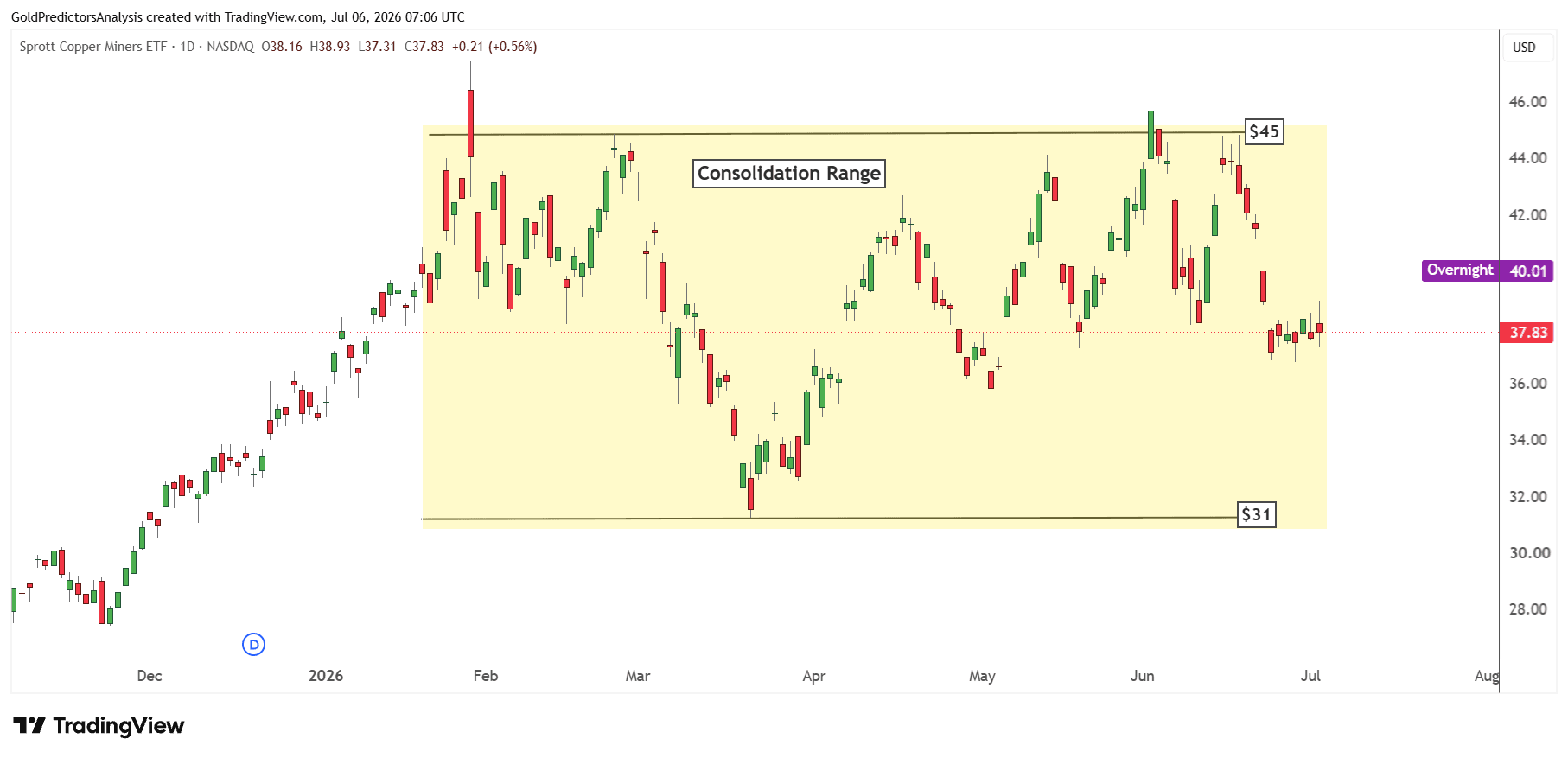
The Sprott copper miners ETF (COPP) also shows strong consolidation between $31 and $41. A break of any of these levels will likely give the miners the next direction.
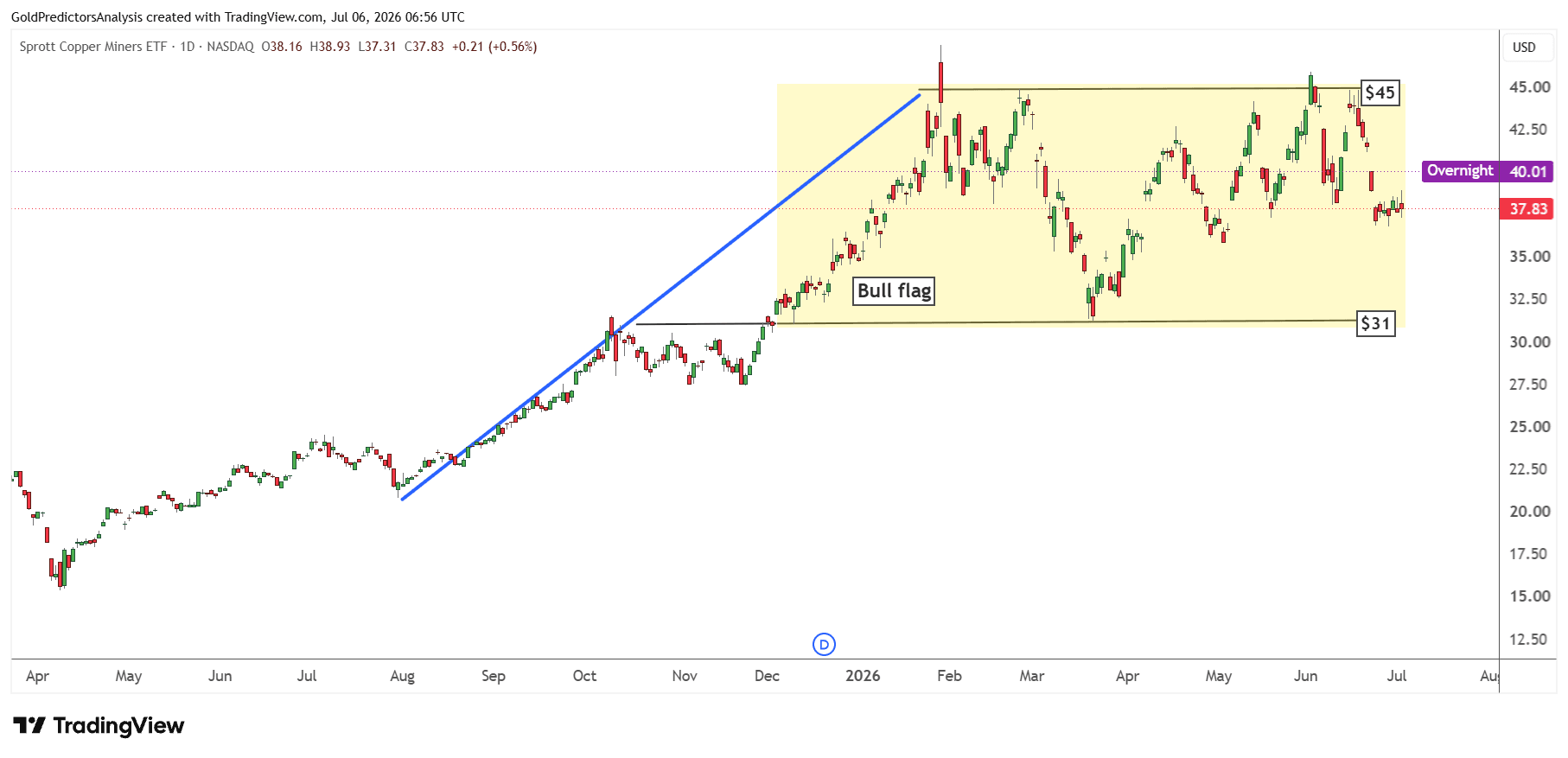
But the strong surge in copper miners from the 2025 lows has formed a bull flag pattern. Therefore, if the price maintains the $31, the next move in copper miners will be higher.
Key Risks for Copper Prices
The main risk for copper prices is the substitution effect. Manufacturers are trying to save margins and cut costs because of record prices. Aluminum is gaining in popularity due to its lower cost, lightweight and its many industrial applications. This change does not have an immediate impact on copper demand but it can dampen future demand growth if the price does not drop. If manufacturers of EV cars, cable and AC units increase the usage of aluminum in other products, the risk will intensify. If this is the case, copper may struggle to maintain the rally in the absence of further supply restrictions.
The second major risk comes from the uncertainty of trade policies. The U.S. tariff ruling on refined copper may lead to more price volatility. A stronger US dollar or higher Treasury yields may also put pressure on copper prices by reducing the risk appetite in commodities. A break below $5.20 per pound will increase the risk of further drop in copper prices to $4.30.
Bottom Line
Copper prices present a long term bullish structure, but the market now faces a more complex setup. The bull market is supported by strong demand from electrification, grids, data centers and electric vehicles. But the record prices are increasing the risk of aluminum substitution. The U.S. tariff uncertainty also keeps the volatility high in the short term. The $6.00 to $6.70 zone is now the important consolidation zone. A break above $6.70 per pound will likely validate the next bullish move. But a break below $6.00 could correct copper prices to $5.20 where fresh buyers may enter the market. The overall trend remains bullish as long as the copper price remains above $5.20 per pound.
Read more: Copper Eyes Breakout as Iran War Risks Ease