


Global markets are entering complex period in which trade policy and geopolitics are colliding simultaneously. The Trump administration is not only pushing through with new tariffs but also navigating economic consequences of the US-Iran conflict. These two forces are fuelling inflation, constraining financial conditions and causing greater uncertainty in markets around the world. Businesses are experiencing increased costs while policymakers are struggling to balance growth and inflation. This environment is changing capital flows and driving down confidence and risk of wider economic slowdown.
Trade Policy Shock and Inflation Pressures Build
The US structured its tariff strategy to create economic impact. The government imposed 10% tariffs at the global level for 150 days with the option to raise it to 15% as it explores new trade concerns. At the same time, Section 301 investigations targeting 60 countries are escalating trade tensions.
However decision made by the Supreme Court to overturn tariffs under International Emergency Economic Powers Act (IEEPA) has caused major financial shock. The US government faces over $130 billion in tariff refunds with more than 2000 companies filing claims. This sudden financial burden is an added pressure to the existing stressed economic system.
The Federal Reserve is now dealing with inflation driven by tariffs. The rising energy prices further increase inflation risks. This impact will be observed in the consumer prices soon.
According to the latest official data, the inflation is still around 3% which is above 2% target. According to Jerome Powell, between half and three-quarters of inflation is due to tariffs. This confirms that trade policy is directly feeding into consumer prices.
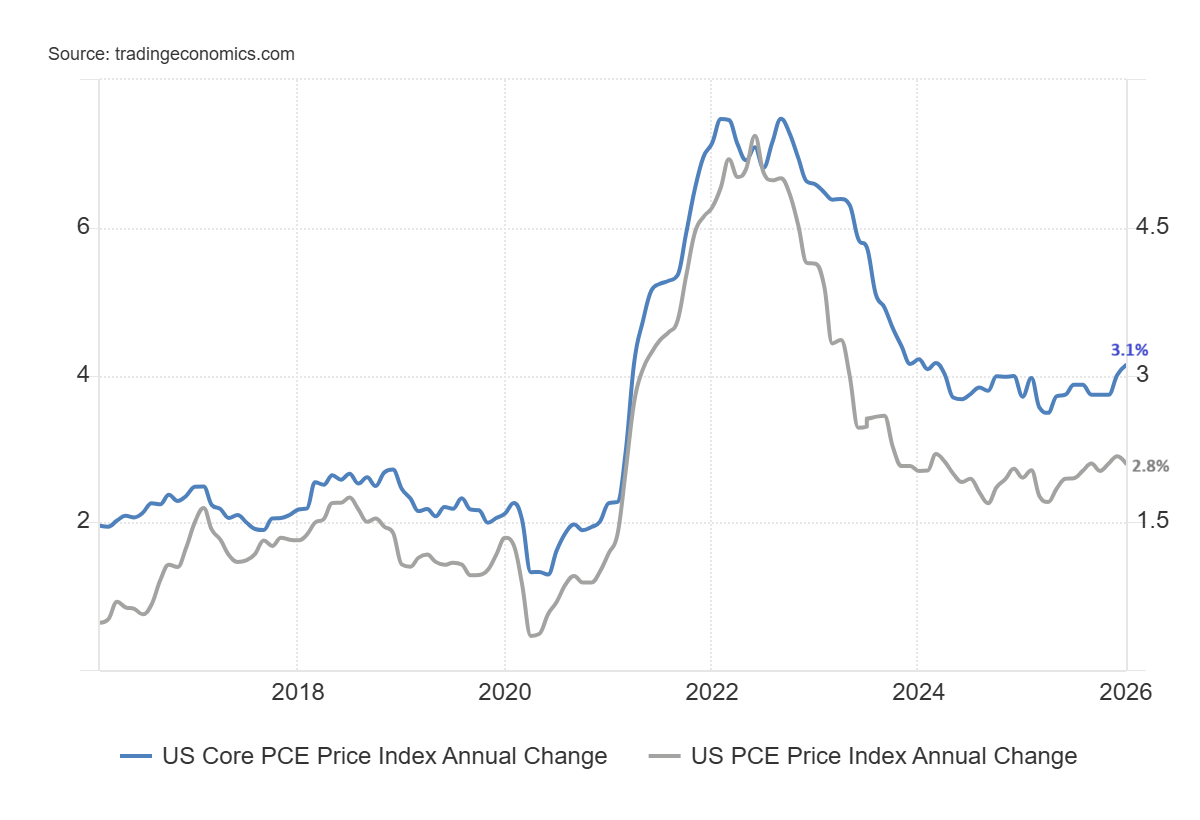
The Fed expected that the tariffs would lead to temporary price hike but uncertainty over what the tariff rates might be in the future is making the inflation outlook unclear. Powell also pointed out that it took two years for COVID-19 inflation to cool which leads to the fact that tariff driven inflation can last longer than one might anticipate.
EUR/USD Price Forecast
Every new EUR/USD analysis as it publishes, today's technical signal and key levels, live price — on one page.
See all EUR/USD forecastsMiddle East Conflict Escalation Drives Energy Shock
The geopolitical situation in the Middle East is adding further risk to global markets. The US-Iran conflict has entered its third week. The situation has escalated further, prompting them to send thousands of troops and possibly broaden operations.
Strategic targets such as the Strait of Hormuz and Kharg Island are at center of conflict. These targets handle 90% of Iran’s oil exports. Any break in these areas directly affects world energy supply. Markets are responding very much to the risk of escalation, particularly with increased military involvement.
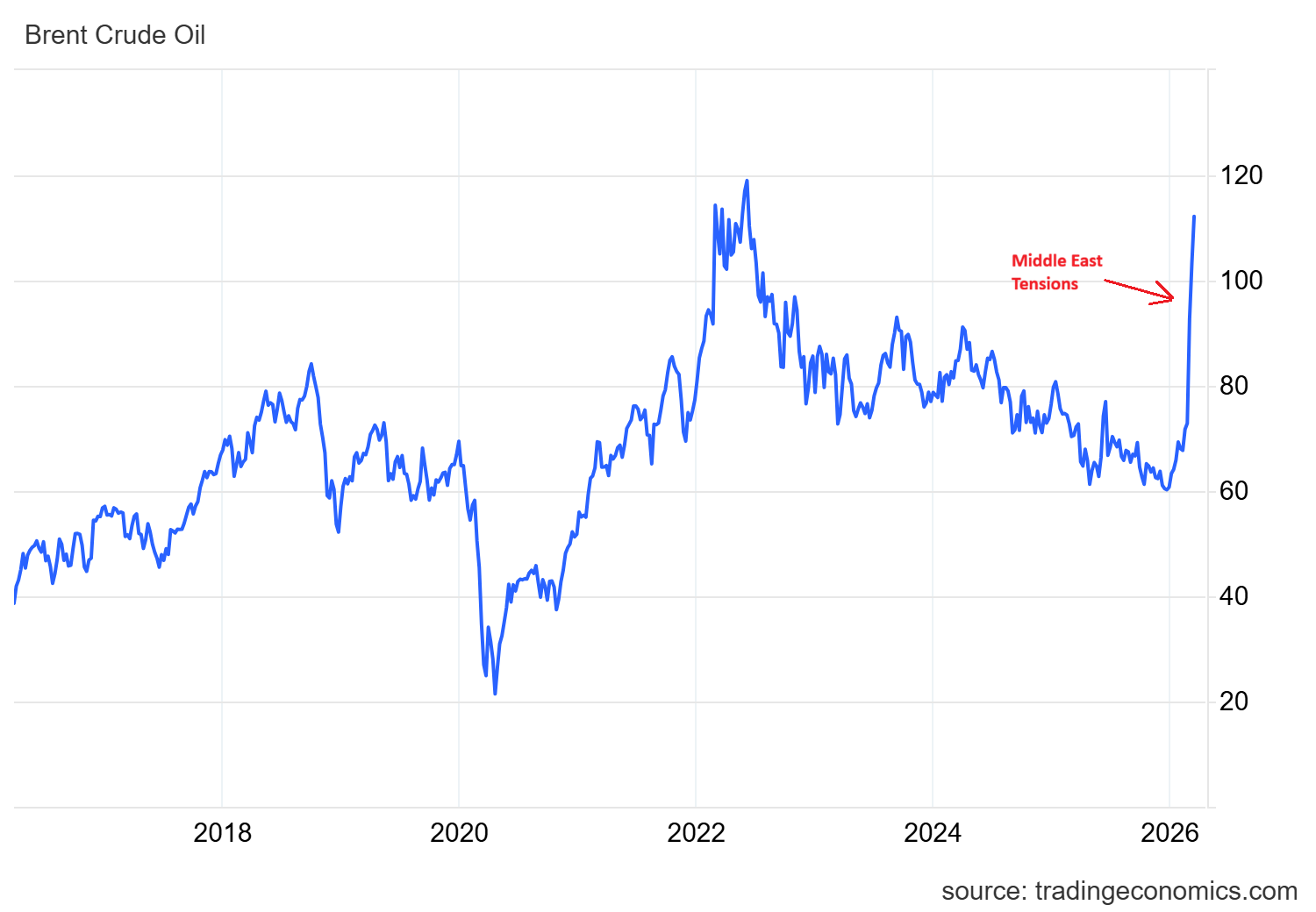
Oil prices have already surged in response to these risks. Brent crude oil (BCO) rose above $112 a barrel reflecting fears of supply as well as geopolitical uncertainty. In order to control domestic energy costs, the US government issued a 60-day waiver of the Jones Act, which permitted foreign-flagged vessels to transport cargo within the US.
This move is intended to lessen the transportation costs and ease supply bottlenecks. It specifically targets the transportation of gasoline and refined products from the Gulf Coast to the East Coast. However, this is only a short term solution. Rising energy prices are continuing to drive inflation upward and put pressure on consumers and businesses.
Global Market Outlook – USD, Commodities, and Equities
Currency Markets – US Dollar Strength Driven by Liquidity Tightening
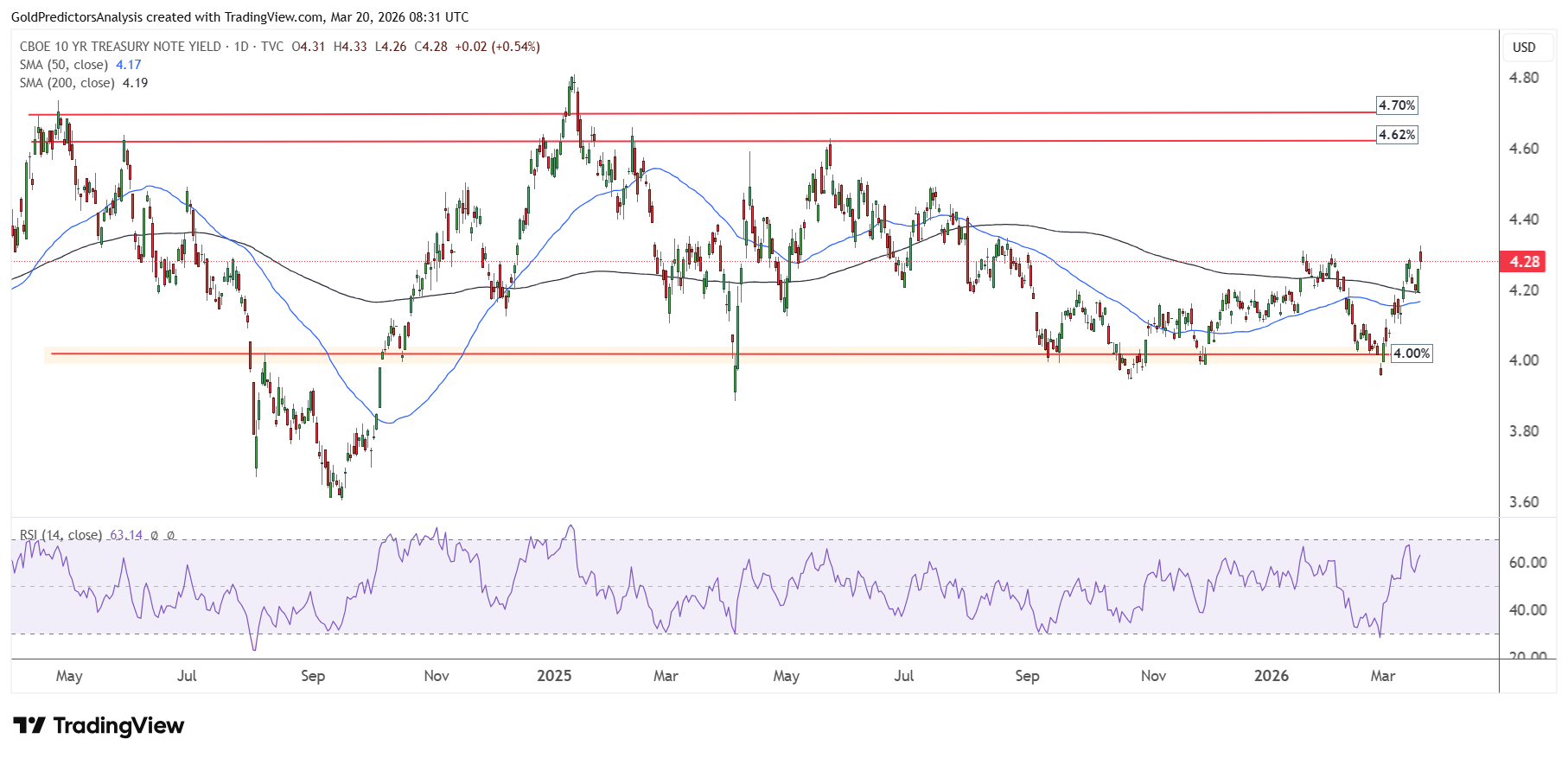
Currency markets are responding to this scenario of higher yields and lower liquidity. The US dollar is backed by higher interest rates and strong Treasury yields. The chart below shows that the 10-year Treasury yield has rocketed to 4.39% and is now aiming for 5.0%. This gives strength to the US dollar against major currencies.
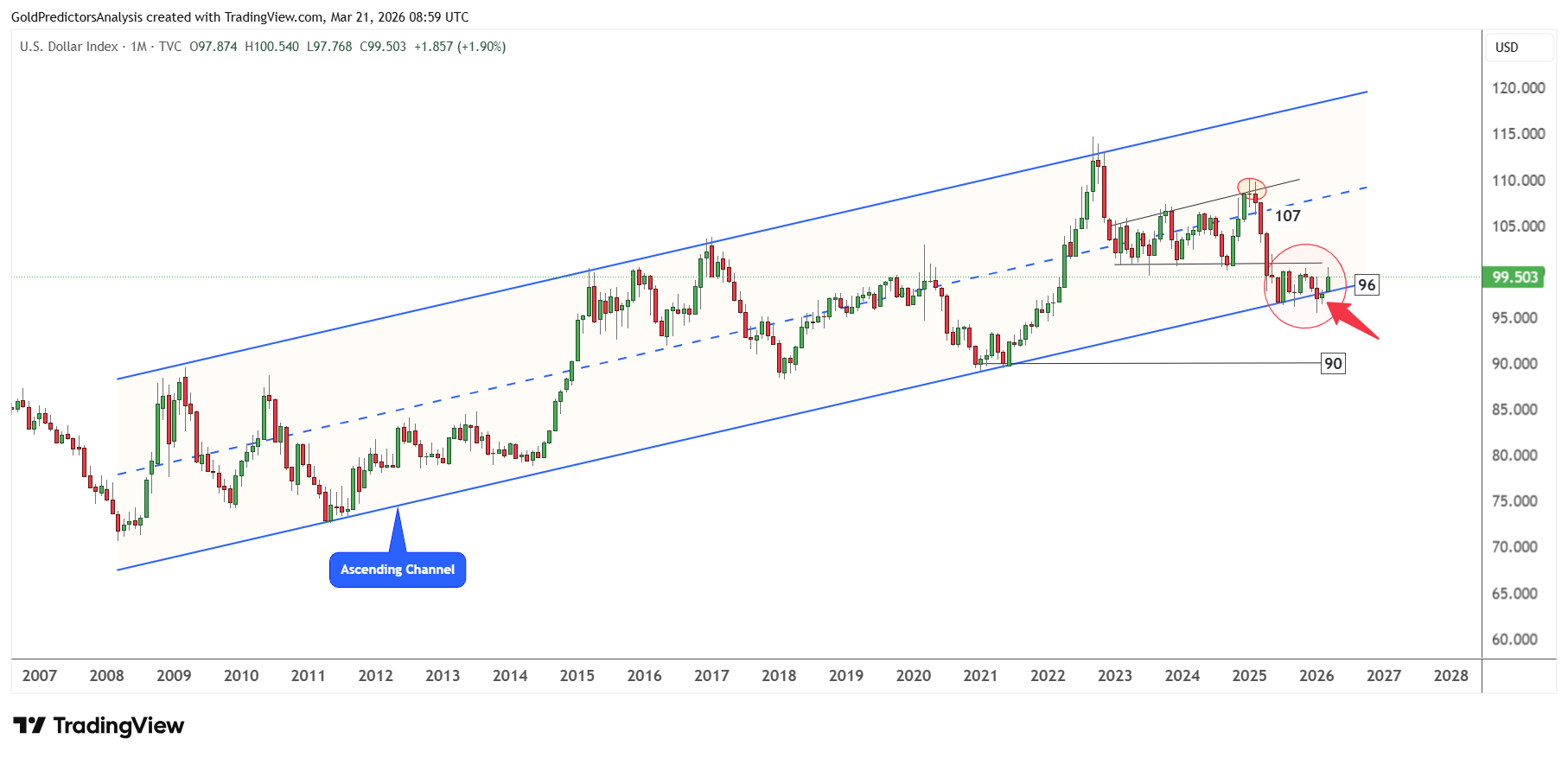
The chart below shows that the US dollar has initiated a strong rebound from the long-term support of 96.50 and is consolidating around the key resistance of 100.50. A break above 100.50 will indicate further upside to 102.
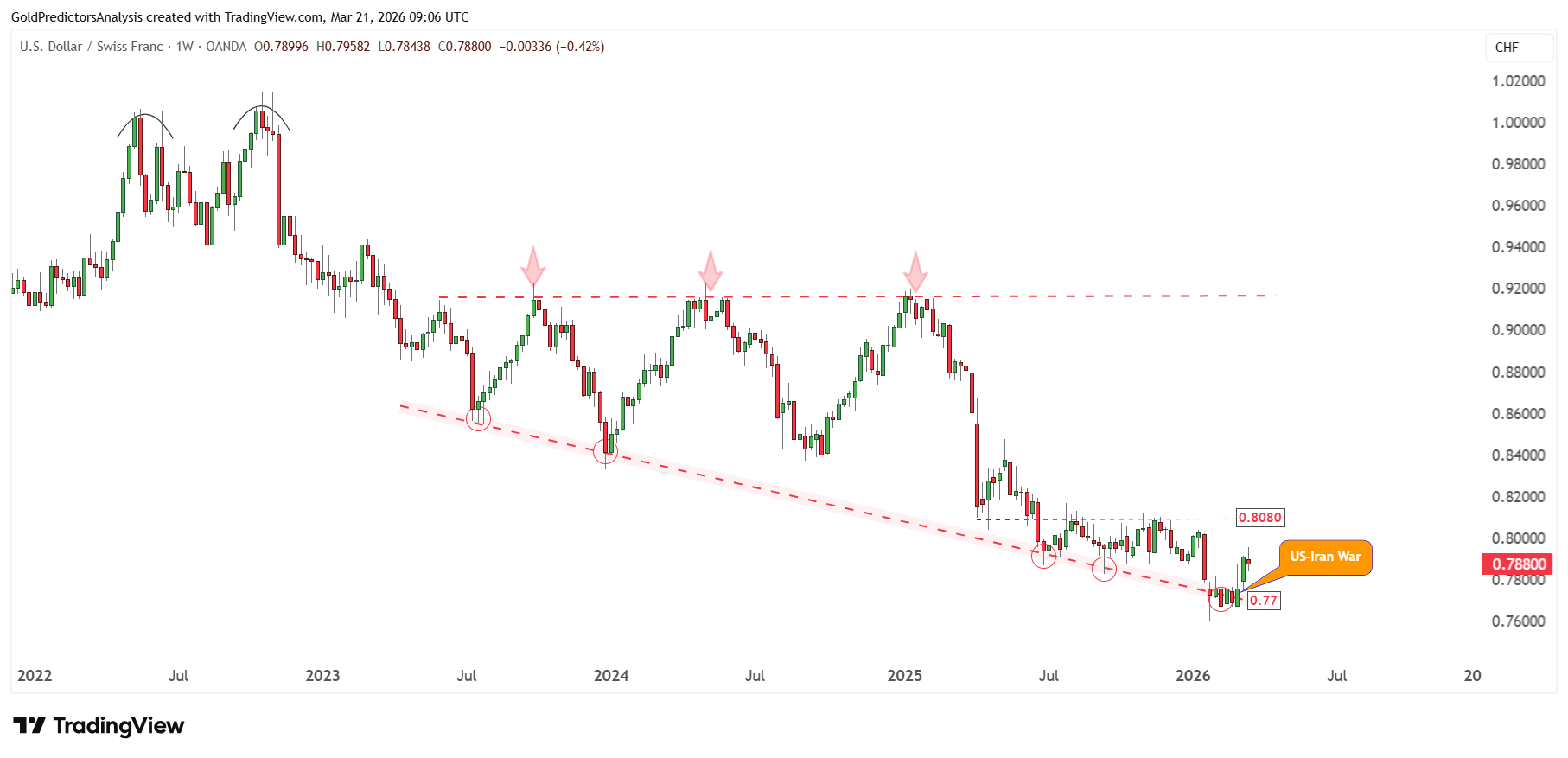
USD/CHF is likely to remain firm as safe haven flows go into the dollar instead of the Swiss franc. The pair has initiated a strong rebound from the long term support of 0.77. A break above 0.8080 is required to push the pair higher. However, a break below 0.77 will indicate that the safe haven flows are returning to the Swiss franc.
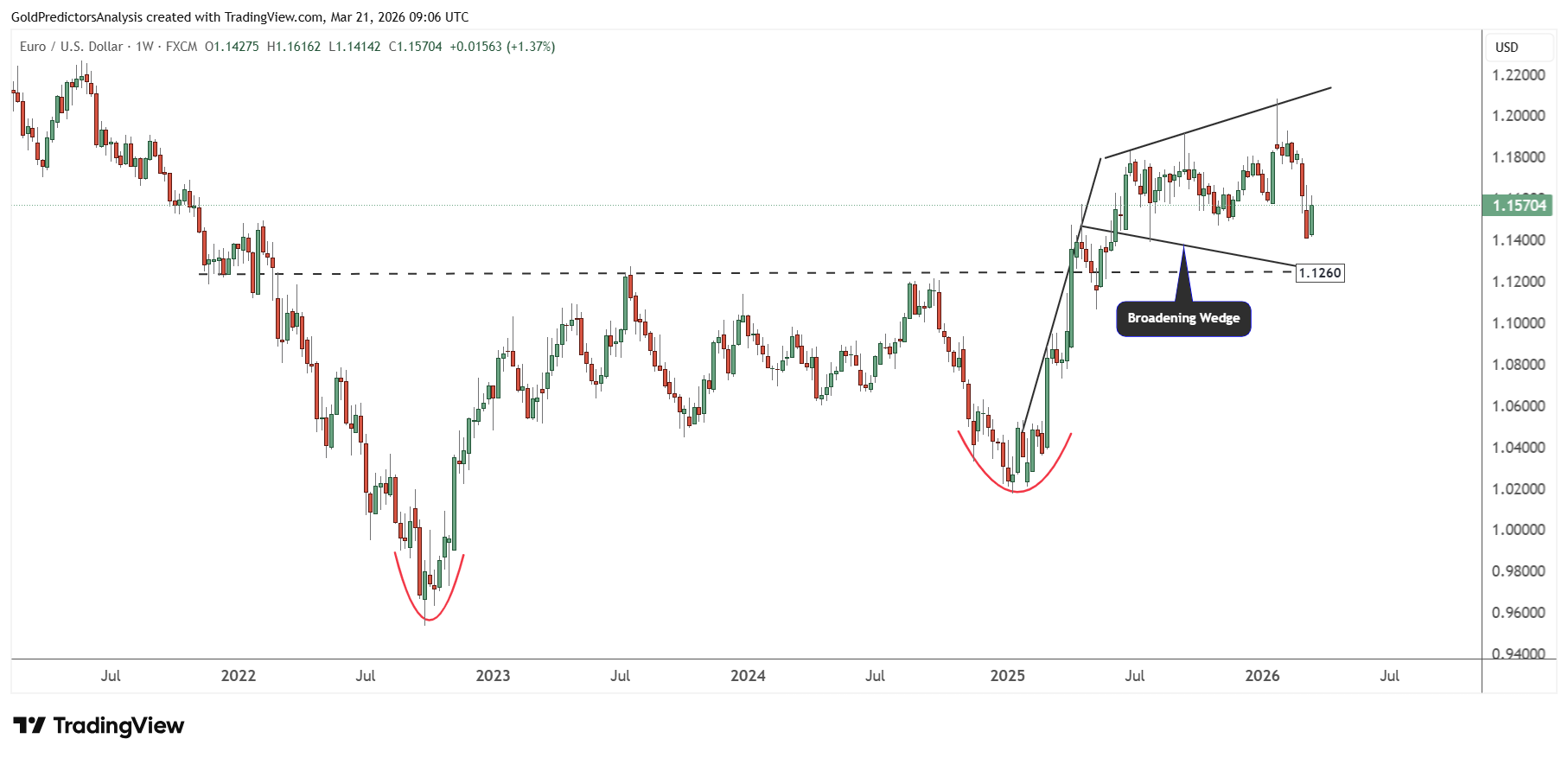
EUR/USD under pressure as higher US yields and global risk off sentiment hit euro. However, the pair has been trading within ascending broadening wedge pattern which indicates heavy volatility. The strong key support remains 1.1260. A break below 1.1260 will indicate further downside. However, the price structure favours a bullish move above 1.1260.
Commodities – Oil Strength and Metals Weakness Drive Divergence
Commodities are giving mixed reactions. Oil is still strong with supply risks while metals are struggling with the burden of higher yields and tighter liquidity. The energy driven inflation structurally supports commodities but tightening the money supply caps short term price action. This brings about divergence across commodity markets with energy leading and metals trailing.
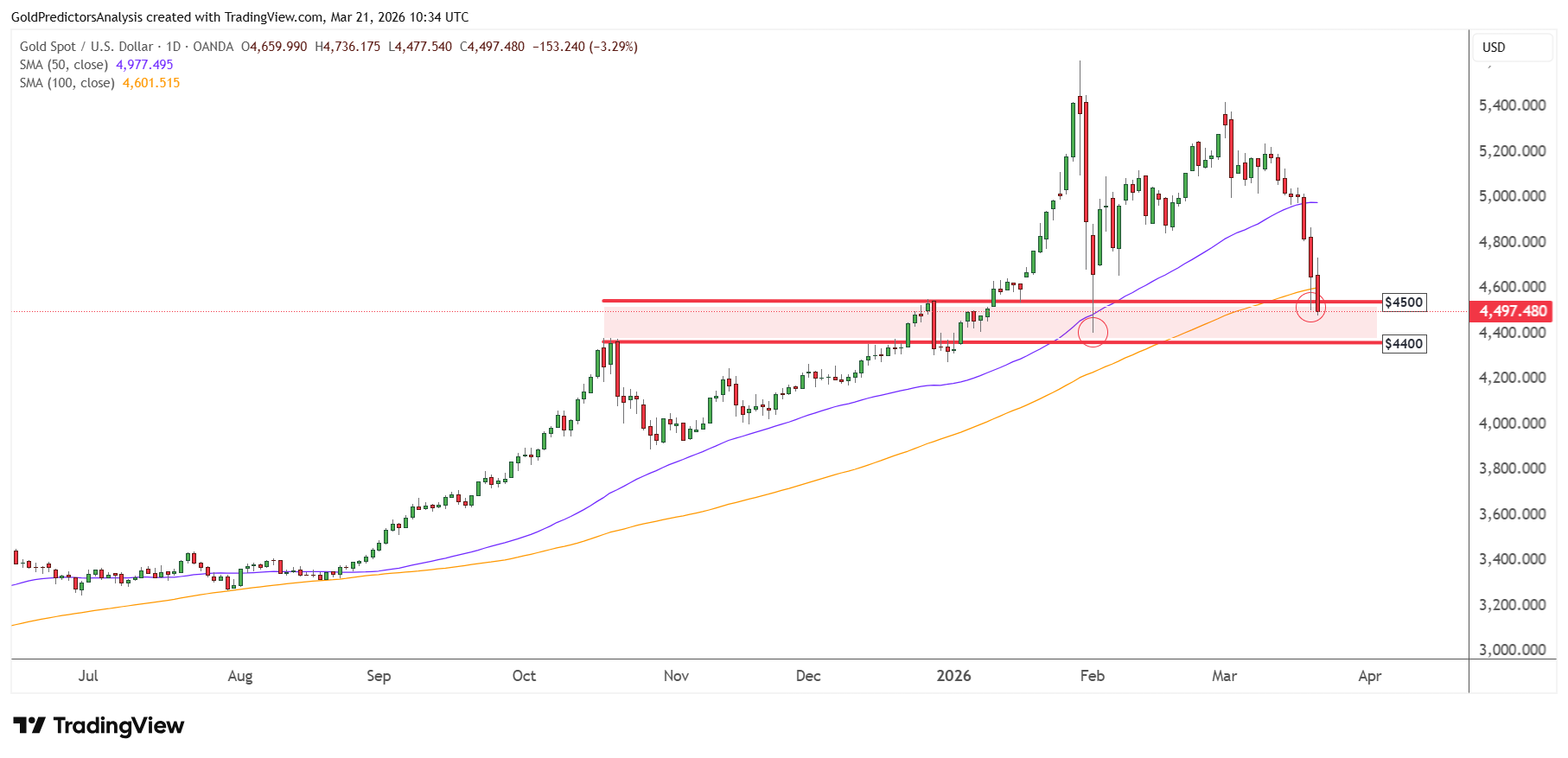
The gold (XAU) price is attempting to break support of $4,500, which indicates further downside before the next upside move. A recovery above $5,000 will confirm the bottom.
Equity and Financial Markets – Breakdown Risk and Tightening Financial Conditions
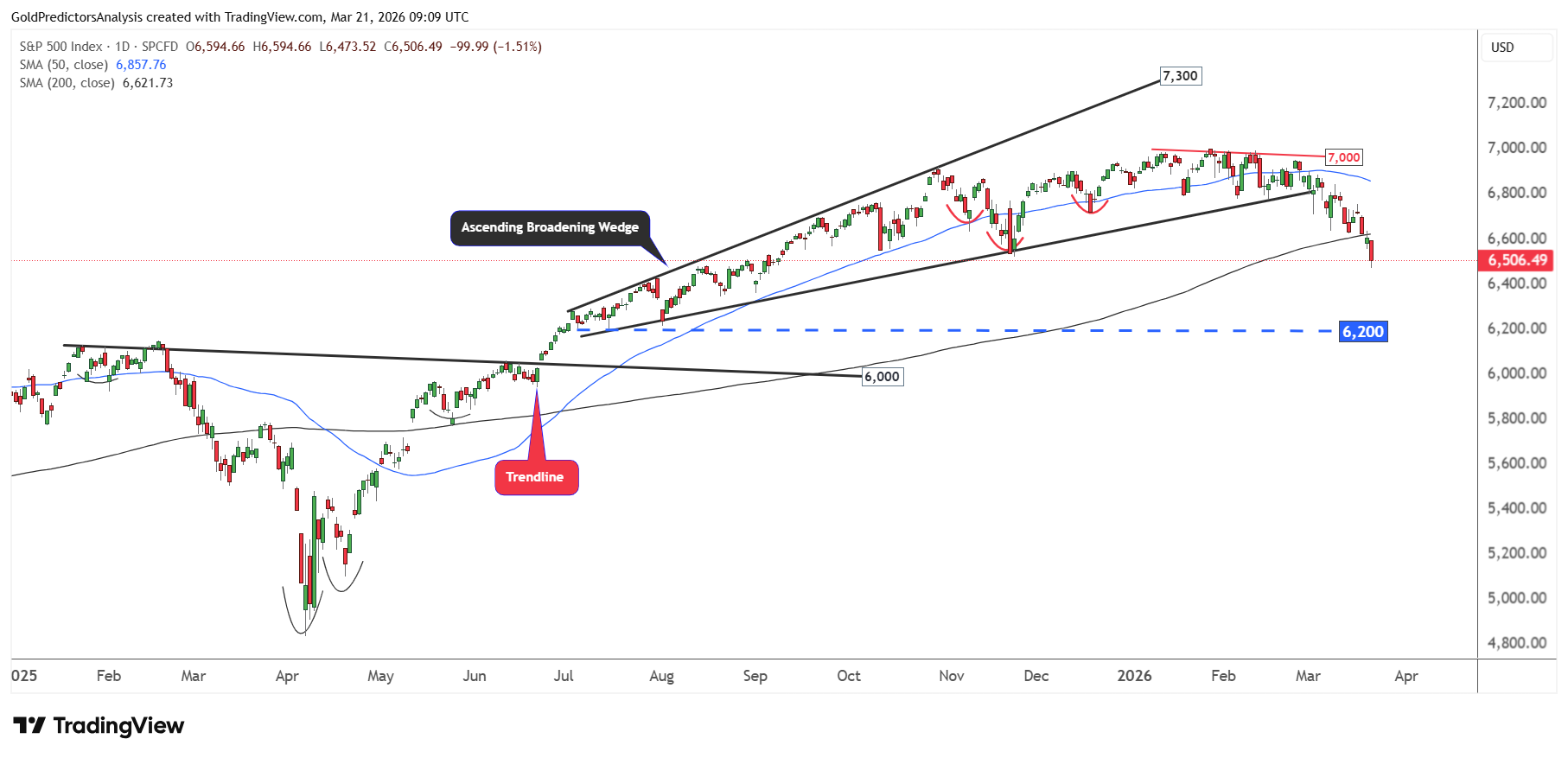
Financial markets are beginning to exhibit definite signs of stress. The S&P 500 has broken primary support at 6700 with the danger of a bear market. The ascending broadening wedge pattern defines this support. A break below this pattern indicates a minimum target of $6,000-$6,200.
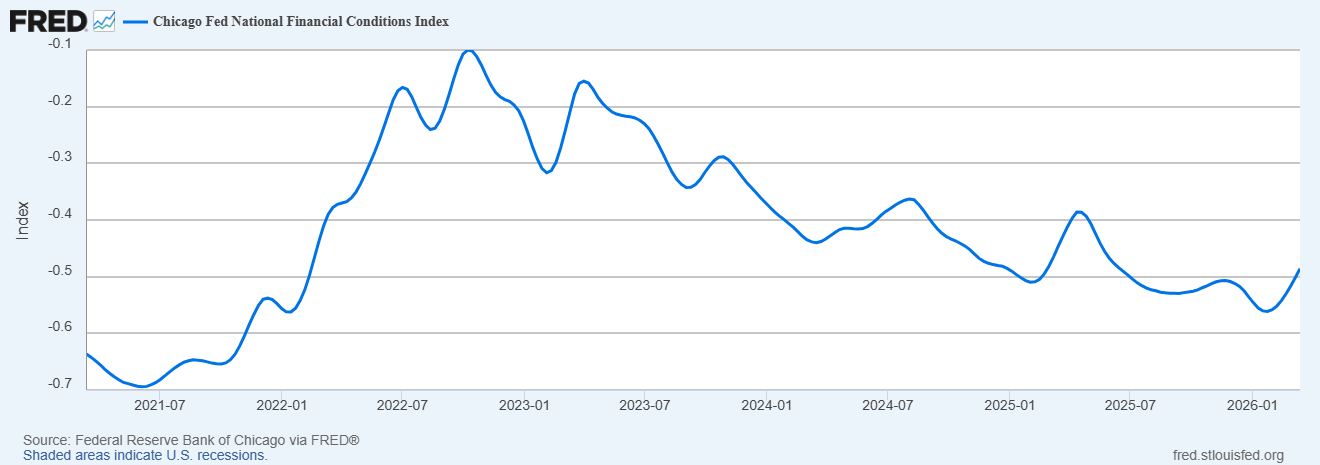
At the same time the Chicago Fed National Financial Conditions Index has moved to -0.486, suggesting a tightening of liquidity conditions. This shift indicates that financial markets are moving from an expansion phase to contraction. Equity markets are yet to fully price in the geopolitical escalation, but it does leave room for further downside in the event of further escalation in tensions.
Bottom Line
The prevailing environment suggests that the US economy is under pressure from various sides. Tariffs are keeping inflation high while energy prices are adding another layer of cost throughout the system. The Federal Reserve can’t lower policy fast enough. Businesses are facing increased costs and consumers are beginning to feel the pinch. At the same time, financial markets are tightening and conditions for liquidity are weakening, which adds to the risk of weaker growth.
Global markets are also becoming shakier due to increasing levels of geopolitical risks and trade tensions. The strength in the US dollar and higher bond yields are putting pressure on currencies, commodities and equities. Key support levels in major indices are already breaking, which is a sign that downside risks are building. If the conflict worsens or the tariffs increase, markets will shift more into risk-off conditions. This leaves the outlook more of a question mark and points to continued volatility in the near term.