


Gold (XAU) price rose sharply towards $4,800 due to the ceasefire announcement. However, it was unable to retain that gain as tension escalated again with growing market uncertainty. The pullback to $4,700 represents a transition from a short term market reaction to the renewed macro instability from increasing oil prices, inflationary pressures and tighter financial conditions. In my view, this sets the stage for gold to remain volatile within key range, where macro developments and critical technical levels will determine the next move. This article presents the macro drivers, the technical structure and key levels shaping the outlook for gold after the ceasefire.
Macro Drivers: Ceasefire Uncertainty and Inflation Shape Gold Outlook
Ceasefire Optimism Lifts Markets and Eases Inflation Fears
The announcement of ceasefire was initially well received in the market. President Donald Trump agreed to a two week pause with Iran, which was confirmed by Foreign Minister Seyed Abbas Araghchi. The agreement ensured the peaceful passage of the Strait of Hormuz with the cooperation of Iranian troops.
This development reduced the geopolitical risk. Oil prices dropped with Brent Oil reaching $92.50 and WTI Oil reaching $91 on Wednesday. Meanwhile, financial markets experienced an improvement in risk sentiment. Bitcoin (BTC) turned back to more than $70,000, which shows a lower level of fear. The S&P 500 also surged higher to 6,800 on improving sentiment.
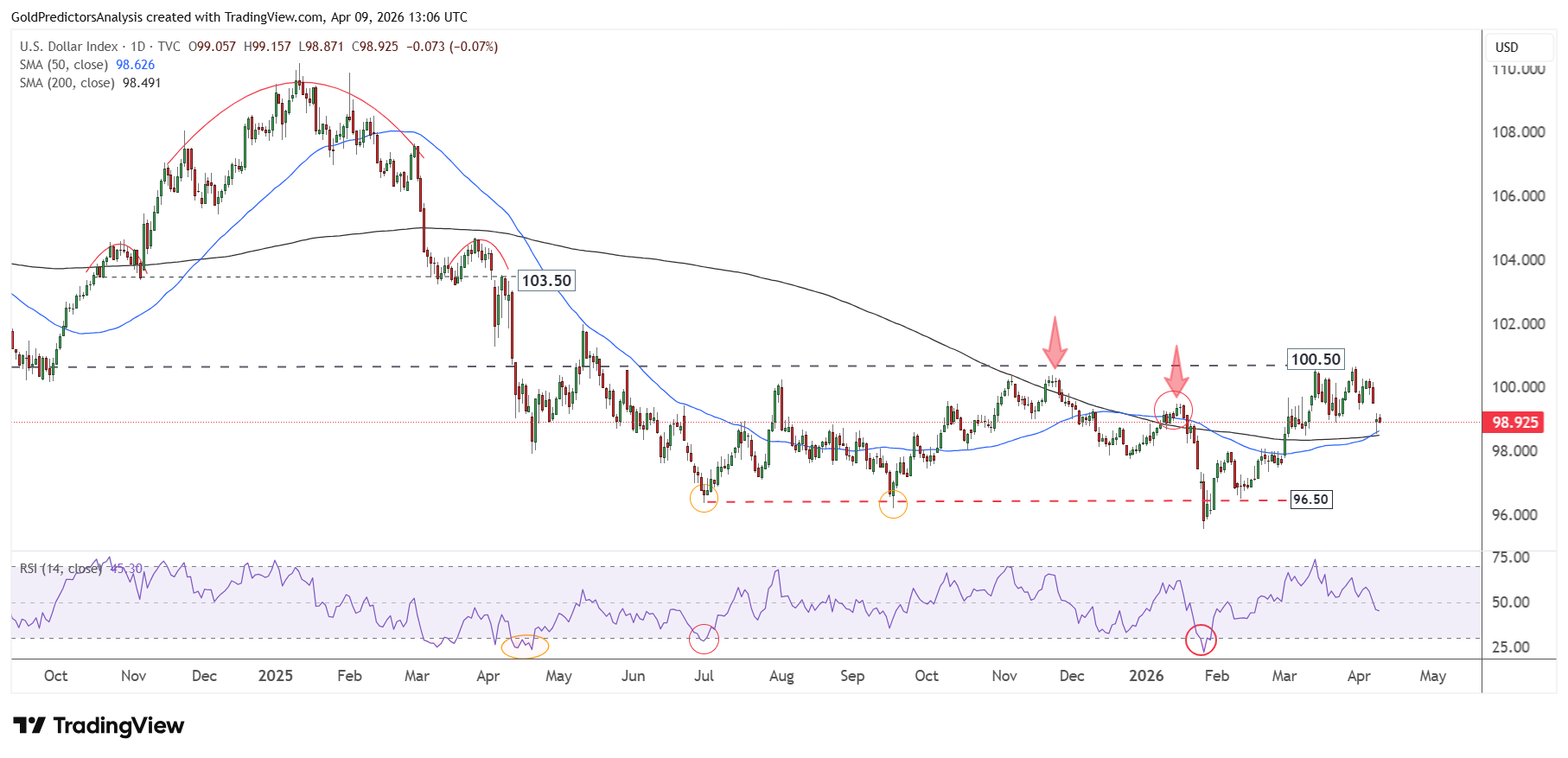
There were also signs of decreasing inflation in bond markets. The 10-year Treasury yield fell below 4.3%, and the US Dollar weakened against the board. The chart below shows a strong drop in US Dollar Index immediately after the news which pushed the index to 98.50.
Gold responded to this change by putting resistance at $4,800. But the rising risk mood and declining yields indicated that gold might not break out immediately.
Gold Price Forecast
Every new Gold analysis as it publishes, today's technical signal and key levels, live price — on one page.
See all Gold forecastsCeasefire Uncertainty Revives Geopolitical Risks and Market Volatility
This was not to last long before this situation changed after the ceasefire was announced. According to Reuters, military operations stepped up in Lebanon to attack the positions of Hezbollah. Iran considered this a breach of agreement and threatened that peace negotiations could no longer be feasible.
Mohammed Bager Qalibaf said that it was not reasonable to negotiate in current circumstances. The controversy revealed extensive rifts between the sides even prior to the commencement of official negotiations.
Meanwhile conflict extended further as Iran attacked the East-West Pipeline in Saudi Arabia which carries approximately 7 million barrels per day. The pipeline was critical due to the Strait of Hormuz disruptions. The destruction of this infrastructure caused severe doubts about global supply.
This expanding tussle posed a great deal of geopolitical risk. It also fuelled the apprehension that the ceasefire may not be maintained.
Rising Oil Prices and Inflation Pressure Tighten Financial Conditions
This new wave of escalation brought the oil prices higher again. The effect of supply disruptions is now acute, as hundreds of millions of barrels have been taken out of the market. It might take months to repair the damaged infrastructure.
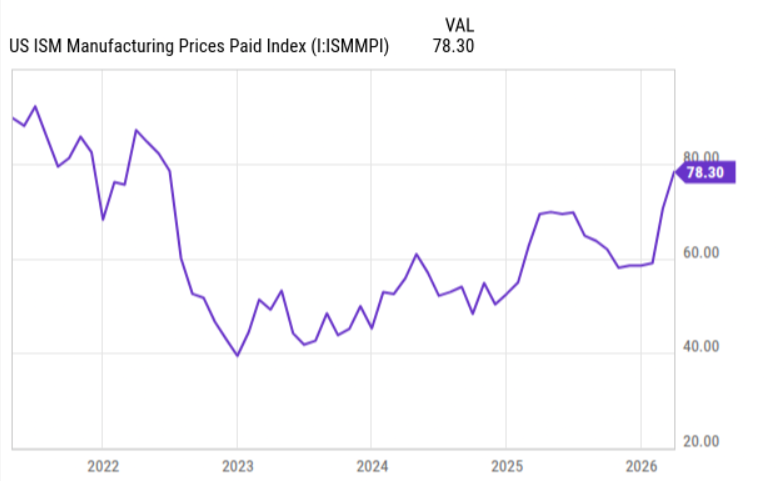
This is an energy shock that is directly feeding into inflation. The chart below shows a steep increase in input prices that is likely to be passed to output prices in the near future. The system is again experiencing inflation pressure.
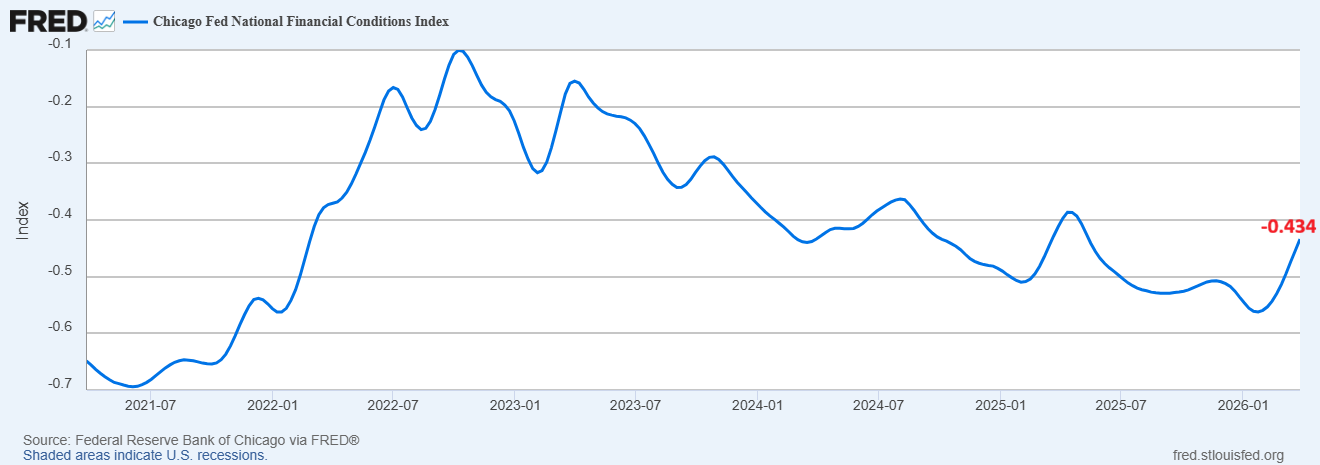
There is also a tightening up of financial conditions. Chicago Fed National Financial Conditions Index increased to -0.434, which means that there is less liquidity support.
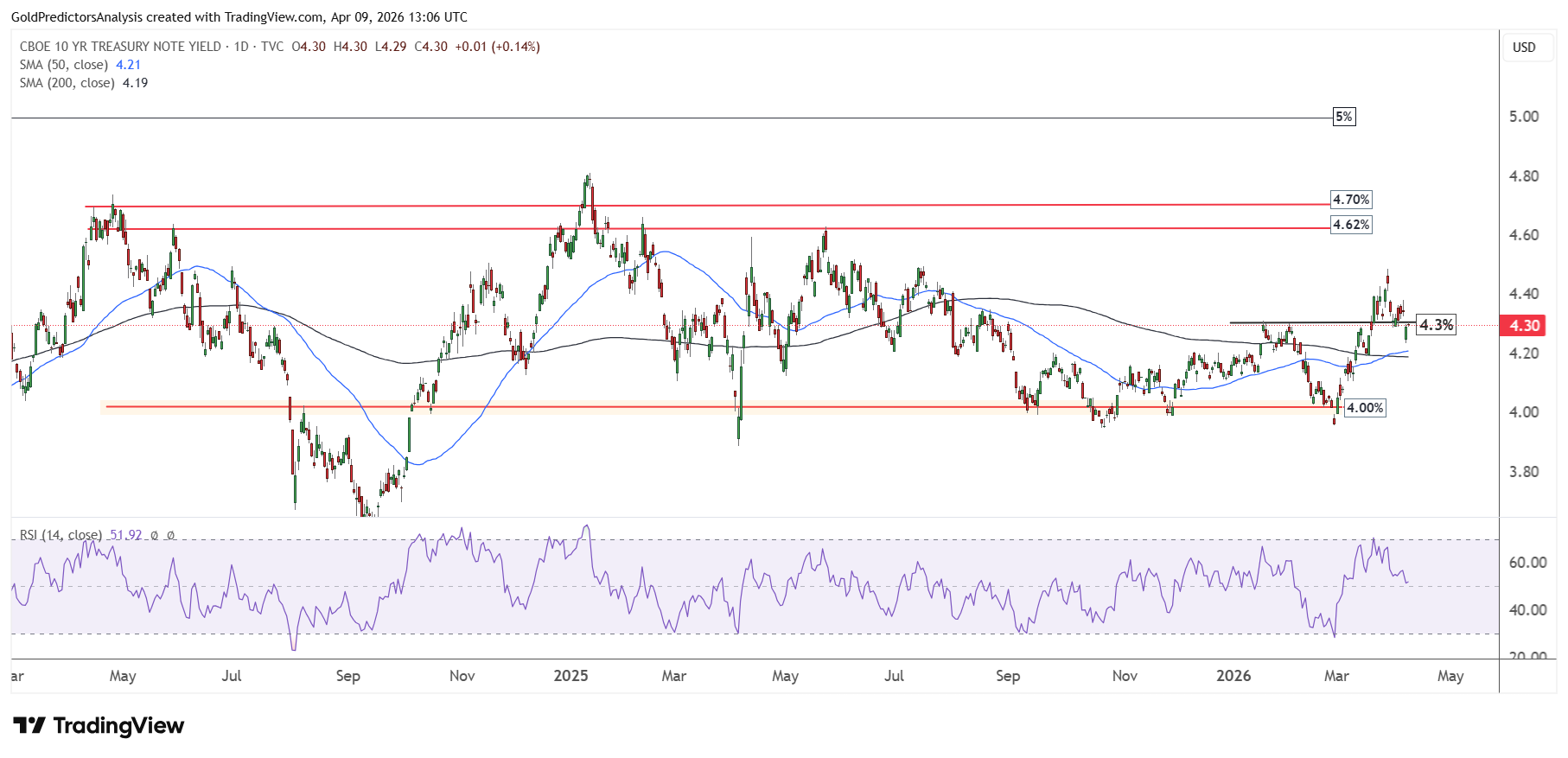
Meanwhile, the 10-year Treasury yield rose to 4.3% which indicates an increase in inflation expectations.
This change in macro conditions is now being responded to by Gold. The price dropped after pushing above the resistance of $4,800. An increase in oil costs and inflation is now serving as a headwind.
The macro backdrop transformed from short term relief to a reemerging instability. The breakdown of the ceasefire, coupled with energy shocks and the increase in inflation, is the new force of market movement.
Gold Technical Analysis: Key Resistance, Support, and Price Outlook
From technical perspective, the spot gold price surged immediately towards the key level of $4,800 after the ceasefire announcement. But the failure to keep the ceasefire and rising uncertainty in the financial markets sent the gold price back towards $4,700.
This reversal from the resistance initiated a bearish hammer candle at the red dotted trend line at the key level of $4,800. This is usually a bearish signal, but there is significant uncertainty in the gold market due to geopolitical developments.
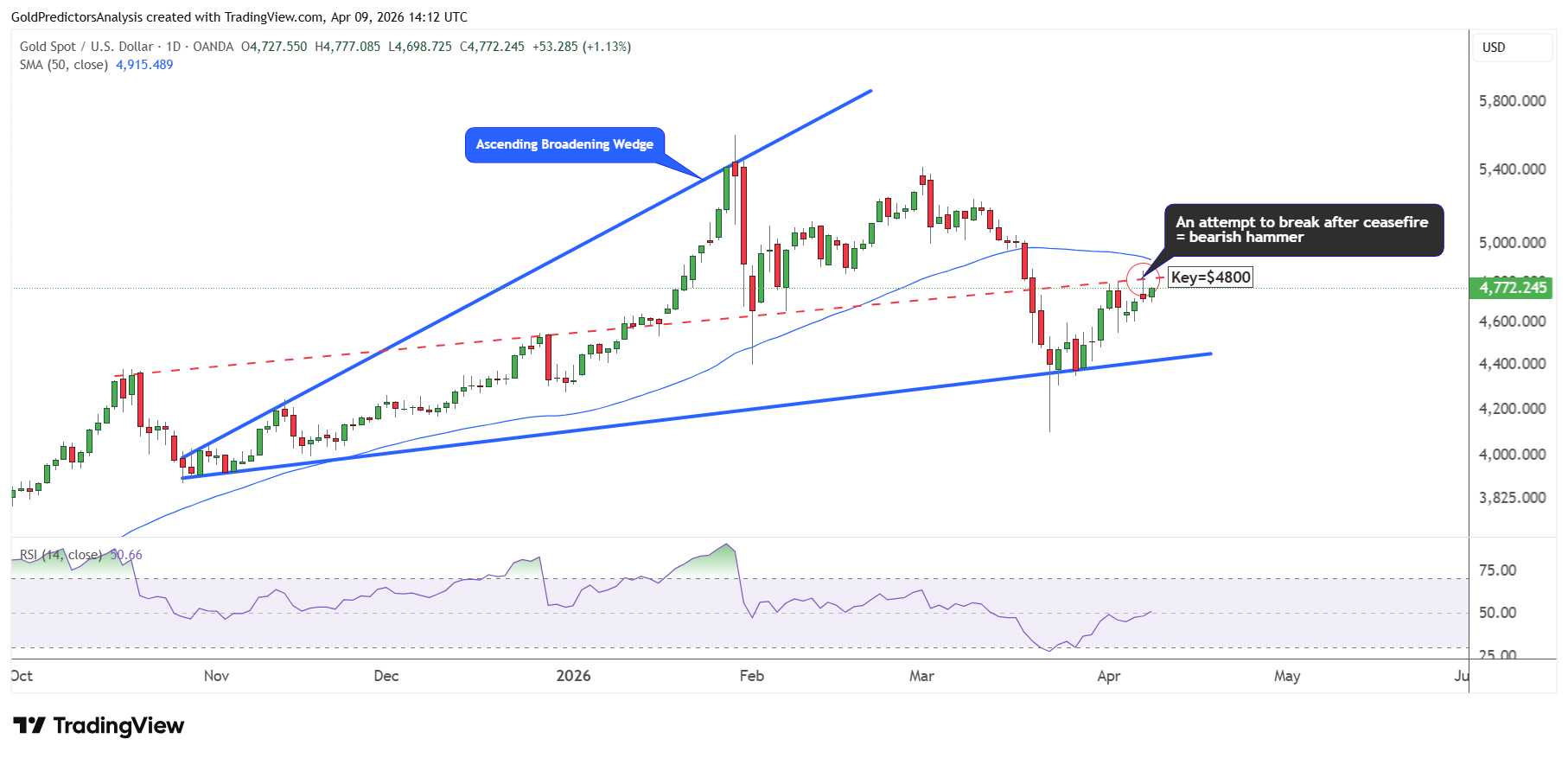
Therefore, any reversal back above the $4,800 area and daily closes above this level will initiate a strong boom. However, a break below $4,400 will indicate a downside towards $4,000. This resistance at $4,800 is also seen by the RSI. The failure to close above $4,800 failed to close the RSI above the mid level. The RSI break above 50 will be activated after the break above $4,800.
It is interesting to see the gold price action on the weekly chart, which shows that the gold price has already recovered above the $4,400 region. This region has been considered the risk zone area after the US-Iran war.
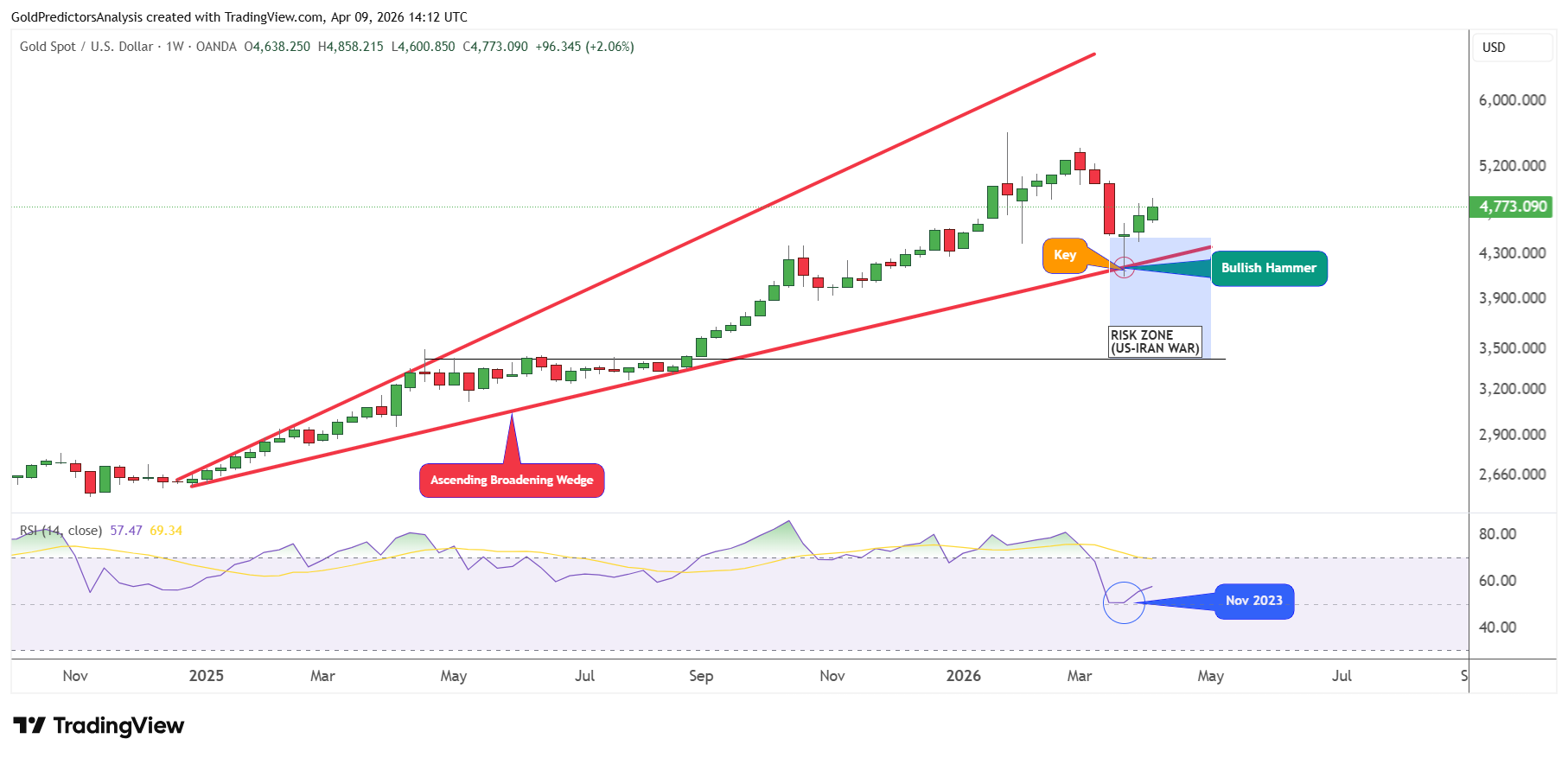
The blue zone highlighted on the weekly chart indicates that this region remains volatile. Any push in the gold market within this region will be due to the ongoing disruptions in the energy sector and strong uncertainty in financial markets.
However, the emergence of bullish hammer candles on the weekly chart and the strong support of the ascending broadening wedge pattern is a very strong signal that the gold market is going higher.
Moreover, the RSI is rebounding from the mid-level on the weekly chart. This is a very strong signal that the gold market should rise towards $5,600.
Market Risks
The greatest risk is the further development of the conflict. The truce has already proven to be fragile. Any further disturbance of energy infrastructure can drive oil prices even higher. This will put pressure on inflation in the system. Increasing oil prices may also drive the bond yields and the US dollar higher. This combination tends to be a headwind to gold. Meanwhile, stricter financial conditions, which are reflected in the Chicago Fed NFCI at -0.433, mean less liquidity support, which strains financial markets.
The other risk is market positioning and technical levels. Gold has already been unable to support above the $4,800. This demonstrates that the buyers lack control. In case of a repeat of the risk sentiment, gold can suffer short-term selling and then subsequent safe-haven buying. This makes the environment very volatile and there can be a sharp movement in either direction.
In Closing
Gold continues to be fueled by a weak macro environment. The first relief from the ceasefire has already faded, and the market is back to uncertainty. Oil prices are being pushed up due to energy disruptions and this is adding a level of inflation to the system. This is increasing bond yields and tightening financial conditions, which are providing a headwind to gold in the short term. Meanwhile, geopolitical risk is still high, and this aspect still favours gold as a safe-haven asset.
From a technical perspective, gold is trading within a critical range. The $4,800 is strong resistance, whereas the $4,400 is a major support area. A confirmed break above $4,800 will open the door to $5,000 and possibly $5,600 in the next few weeks. But a break below $4,400 will change the perspective and reveal the $4,000 mark. The current situation remains very unstable, and prices will be determined by the development of the macro risks in the near term.
If you’d like to know more about how to trade gold and silver, please visit our educational area.