


Gold (XAUUSD) is holding close to a significant area ahead of the U.S. inflation data. That’s an unusual setup as gold is facing two contrary forces: safe-haven demand from the Strait of Hormuz and pressure from improving yields, a rising dollar and changing Fed rate expectations. This article explains why today’s CPI release might be the next big event for gold and what levels will be the most significant following the release.
Macro Driver – Inflation, Oil Prices and Fed Rate Expectations
CPI Data Becomes the Main Test for Gold
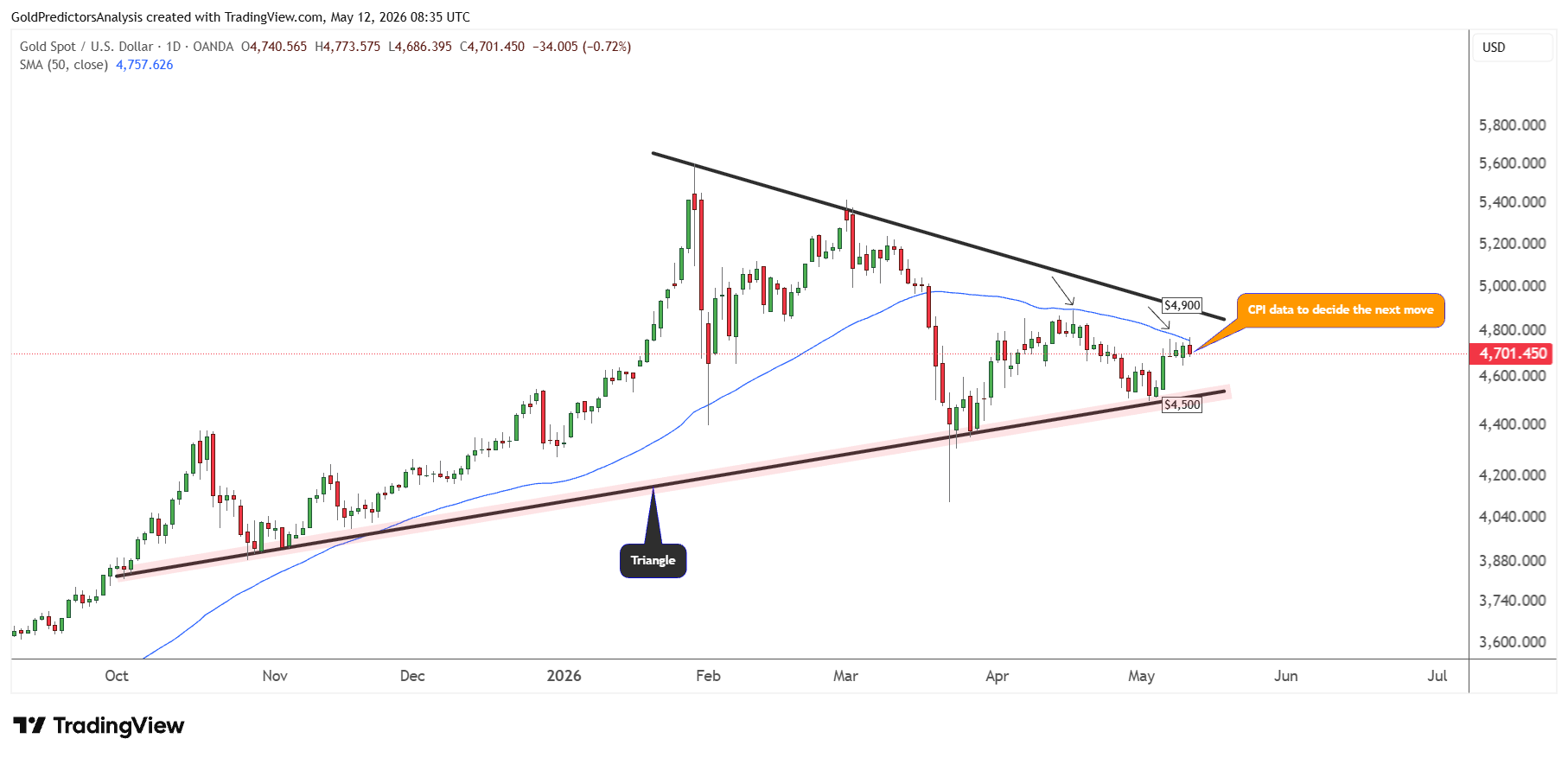
Gold prices consolidate in a range as traders await the U.S. CPI report today. The price hit $4773, which is the highest point of the past three weeks and reversed lower towards the support level. This suggests that the market is still not prepared to aggressively sell gold ahead of inflation data.
The upcoming reading of the CPI could influence the trajectory of the Fed’s policy. If inflation is higher than anticipated, traders could start to price out further rate cut expectations. That would be bullish for Treasuries and the U.S. dollar, which could put pressure on gold.
The main issue is energy inflation. With the ceasefire with Iran seemingly fragile, oil prices are rising from the lower end of the support range. Brent oil remains above $100 while WTI oil remains above $90. An uptick in crude prices could raise inflation expectations and cool the Fed. The chart below shows that the inflation expectations in April and May remain high.
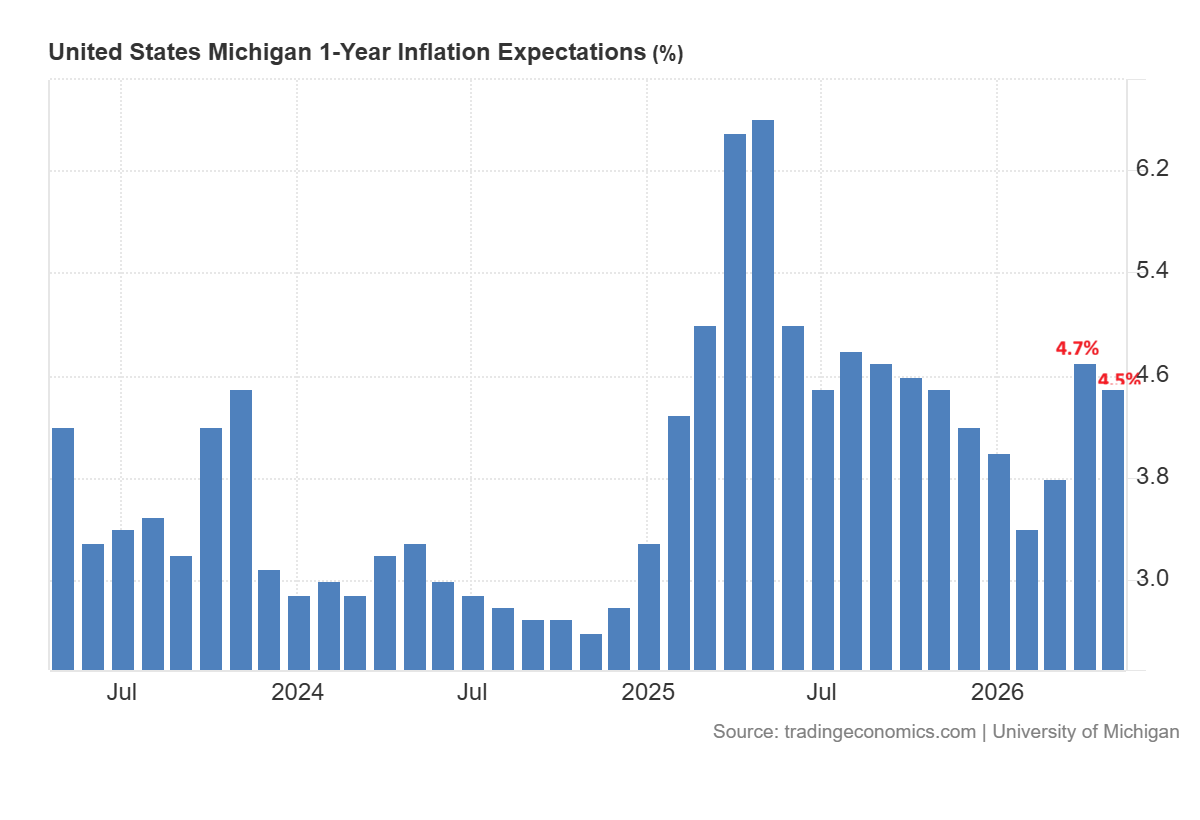
The fear of inflation supports gold but it is not always straightforward. Rising yields due to inflation can cause a problem for the non-yielding gold market. That’s why today’s CPI report is important.
Gold Price Forecast
Every new Gold analysis as it publishes, today's technical signal and key levels, live price — on one page.
See all Gold forecastsStrait of Hormuz Crisis Keeps Gold’s Safe-Haven Bid Alive
Gold continues to be primarily affected by the Middle East crisis. President Trump had stated that the ceasefire with Iran is on life support. These comments led to the loss of hope for peace deal. The U.S. proposal to Tehran has been rejected which keeps the uncertainty high. This helps maintain demand for safe havens as investors remain exposed to the possibility of a “bigger war”, cut supply routes to energy and additional pressures on global growth.
But the Hormuz crisis is also setting up mixed scenario for gold. Geopolitical risk supports gold to function as a defensive asset. Then again, the Strait of Hormuz closure is impacting the economies of the Middle East and disrupting the supply of oil. Gulf states could have to tap reserves if large fiscal deficits are experienced. The choking of the Strait can exert pressure on the U.S. dollar and gold during that time. So, gold could remain held up by fear but constrained by liquidity problems and reserve sales.
Strong Labor Market Keeps Fed Rate Cut Hopes Under Pressure
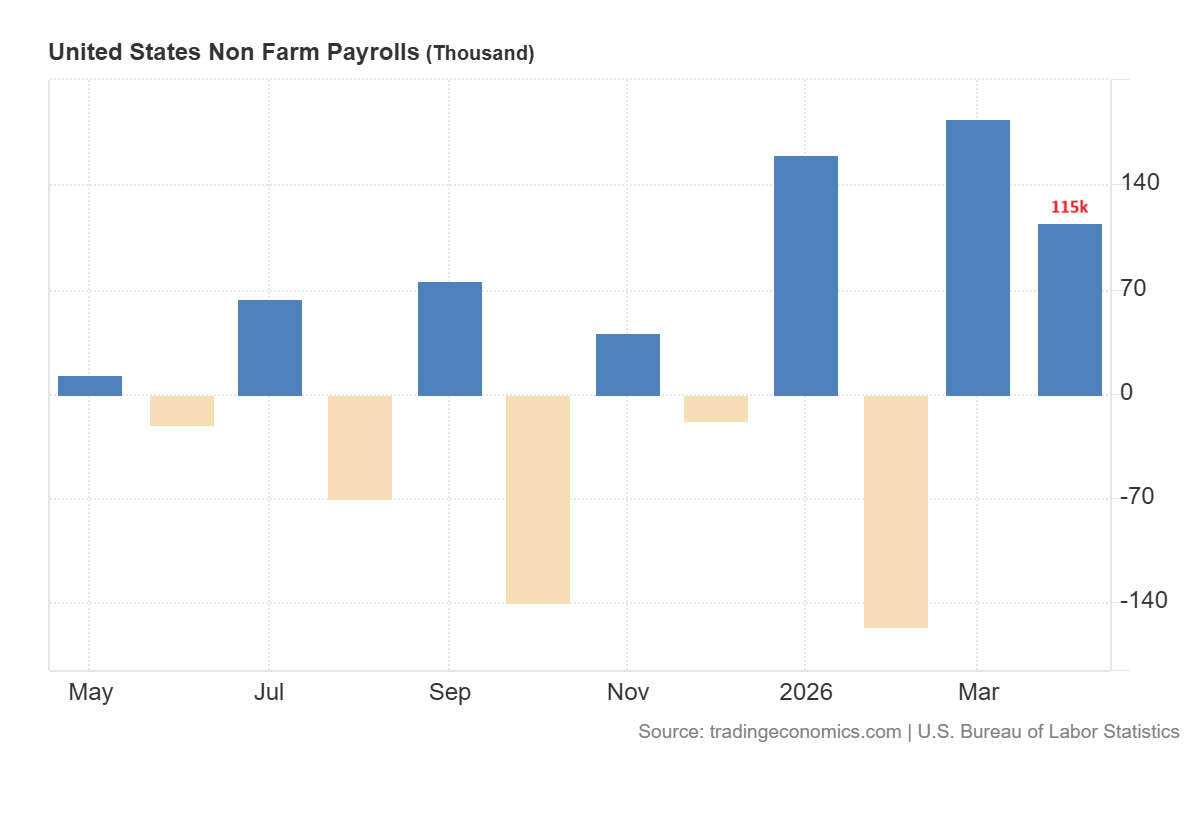
The U.S. labor market also contributes to the gold outlook. The economy added 115,000 jobs in April which was almost double the expected 65,000.
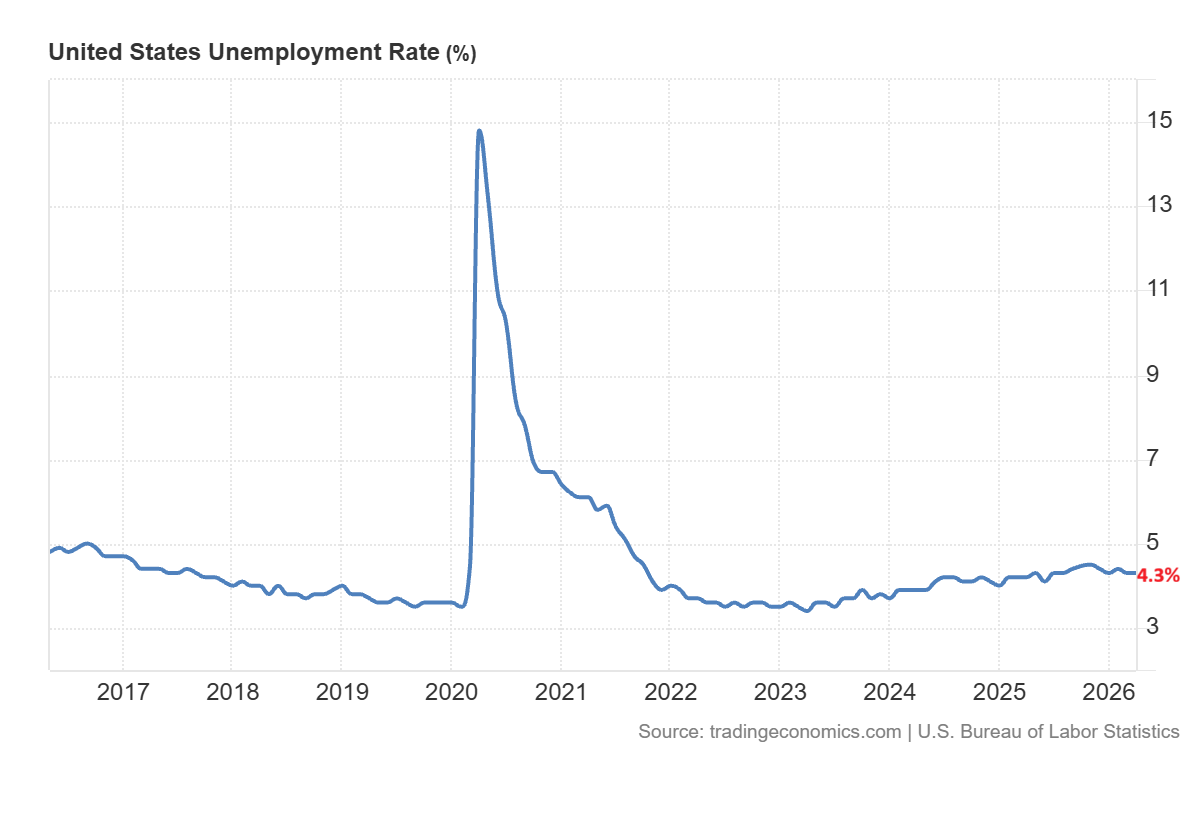
The unemployment rate stayed low at 4.3%.
The chart below shows that the average weekly overtime of production and nonsupervisory employees is stabilizing.
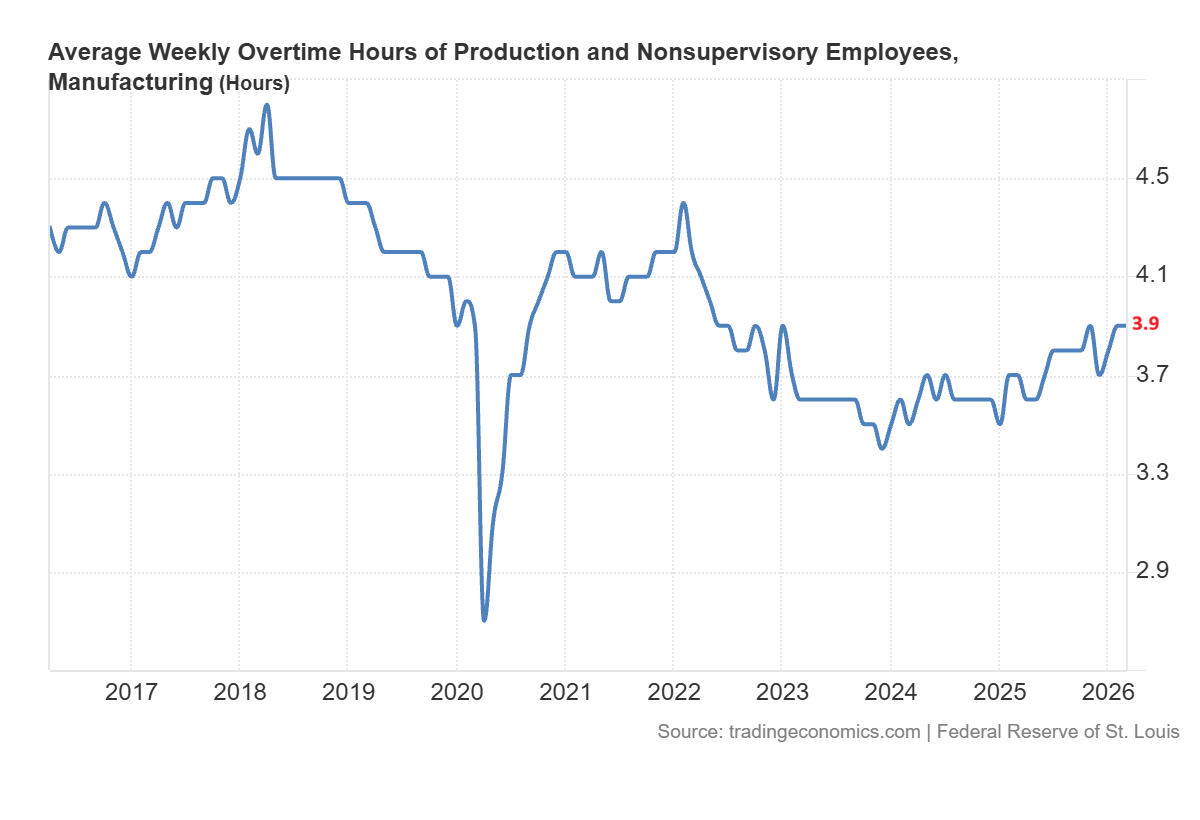
Meanwhile, the temporary employment is also showing strength in 2026 after stabilizing from the lows of October and December 2025.
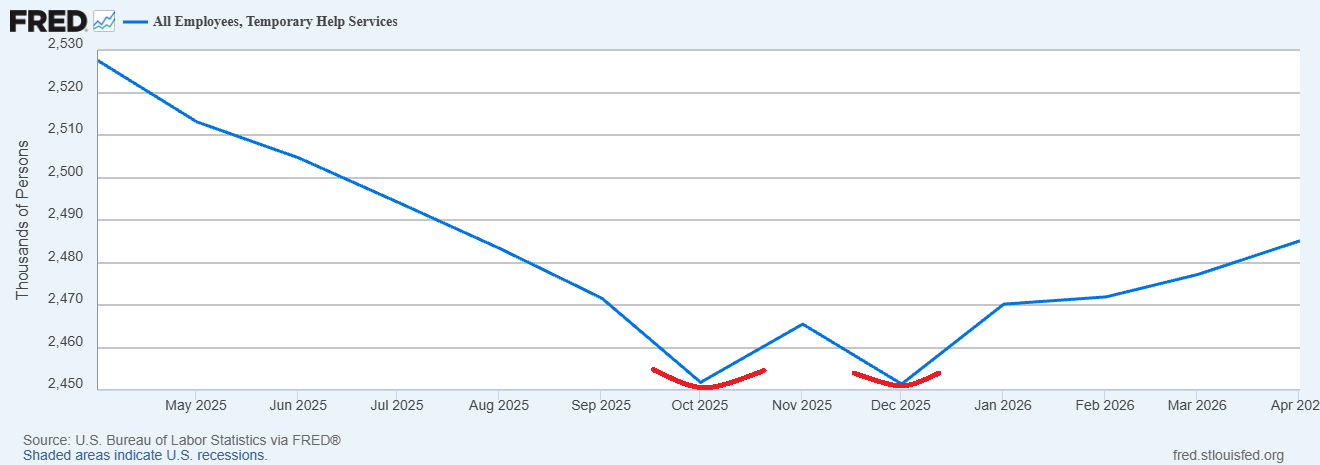
These indicators suggest that the strength in the economic activity makes it difficult for the Fed to justify aggressive rate cuts.
The chart below shows that the wages grew by only 0.2% in April. This takes some “inflation pressure” out of wages.
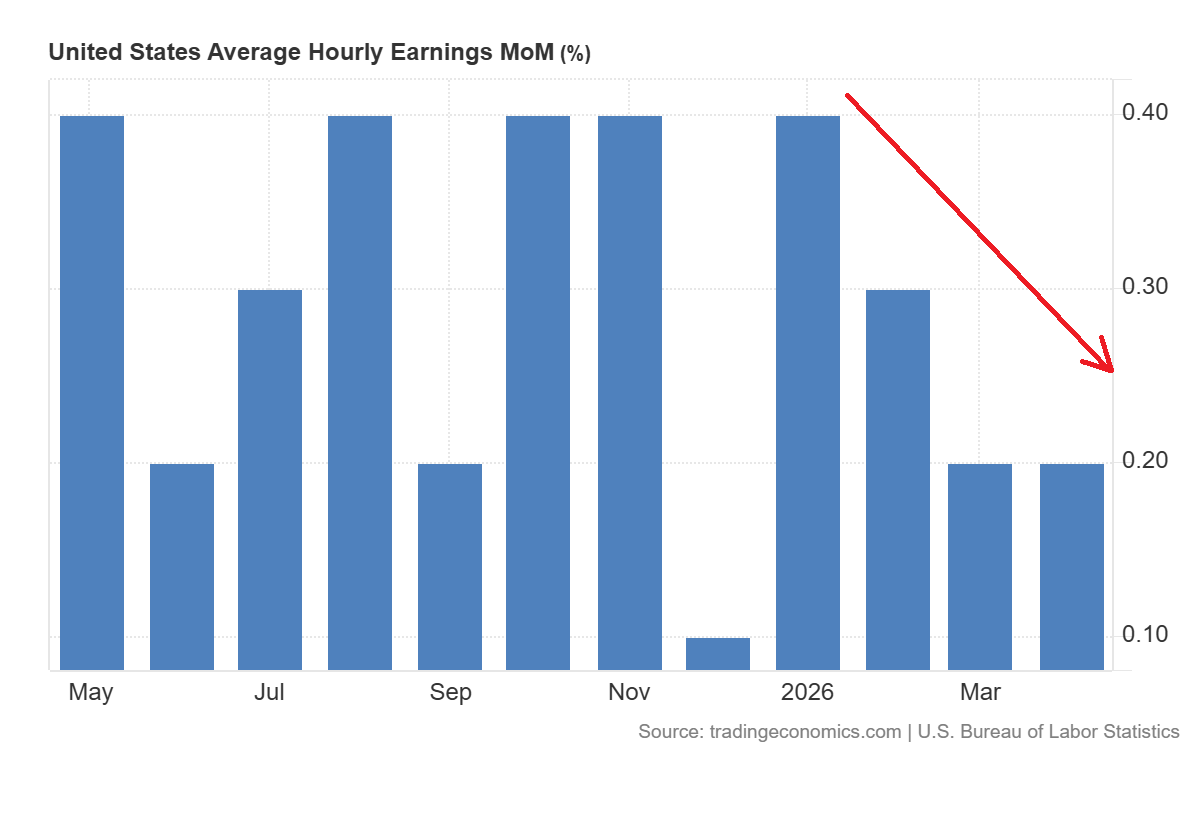
However, the overall employment situation remains strong. Fed can remain cautious with a strong labor market, sticky inflation expectations and higher oil prices. That’s a temporary headwind for gold as higher rates for a longer time means that gold is even more expensive to hold. Gold could require lower CPI data or a clear risk-off rally to reestablish a strong upside momentum.
Gold Technical Analysis: Triangle Compression Signals Next Major Move
The weekly chart for spot gold shows that the price is constructing strong bullish price action within the ascending broadening wedge pattern. The chart highlights the risk zone where the U.S.-Iran war could take prices toward the $3,500 area, due to the extreme risk of energy disruption and recessionary conditions.
But the gold price maintained the support line of the ascending broadening wedge pattern and produced a key reversal candle on March 23 at the support of $4,100.
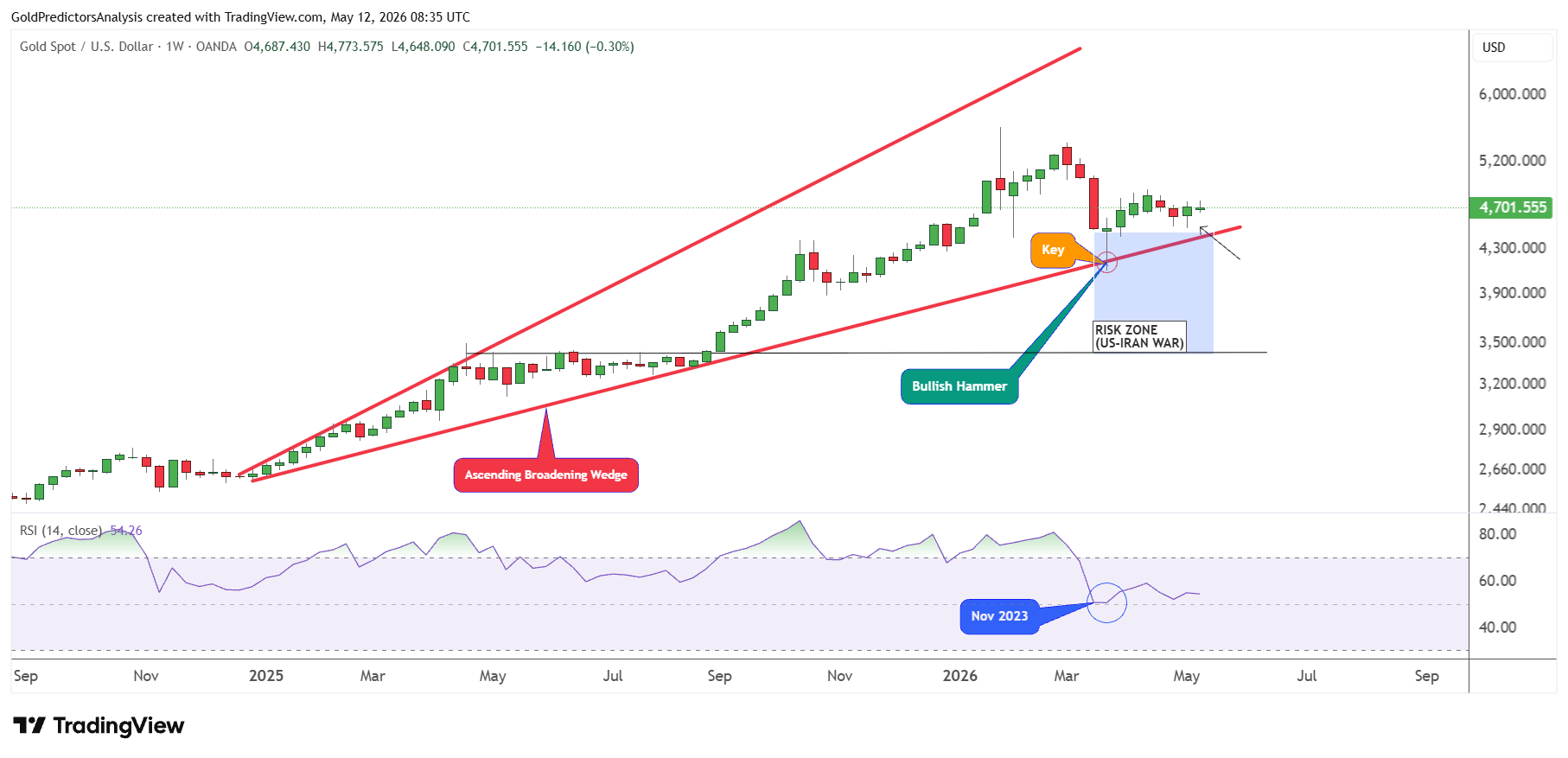
After forming this bullish hammer, the price stayed above the higher levels and formed another bullish hammer candle last week.
Therefore, if the inflation data is supportive of gold, then prices will likely surge above $4,800 and will likely reach the $5,000 area in the short term. The breakout above $5,000 this time will likely keep the strong bullish momentum in gold market.
On the other hand, when gold prices hit the $4,100 area on March 23, the RSI hit the midline which had not been seen since November 2023. This indicates that prices are currently normalizing above the mid level and looking for further upside.
On the other hand, short-term price action is compressed within the triangle pattern. This compression is approaching the breaking point at the end of the triangle. In the midterm, the market is expected to push the price more toward $5,600.
But a break below $4,500 will likely define the next move toward the $4,000 region. A breakout of this triangle will likely define the next move in the gold market in the short term.
Related Markets: Yields, Dollar, and Risk Assets Shape Gold’s Next Move
The US Treasury Yields are important for gold. If the CPI comes out as stronger than expected, yields could increase again as markets lower their expectations for further Fed rate cuts. This would certainly put pressure on gold as bullion is not a source of income. That’s why gold prices can be tricky in times of inflation. In theory, inflation is good for gold, but in practice it can hurt it when the real yield is rising.
The volatility of bonds is also a factor. The crude oil price has risen back above $100 while the MOVE index has dipped further into negative territory. Lower volatility of bonds can help liquidity and risk assets.
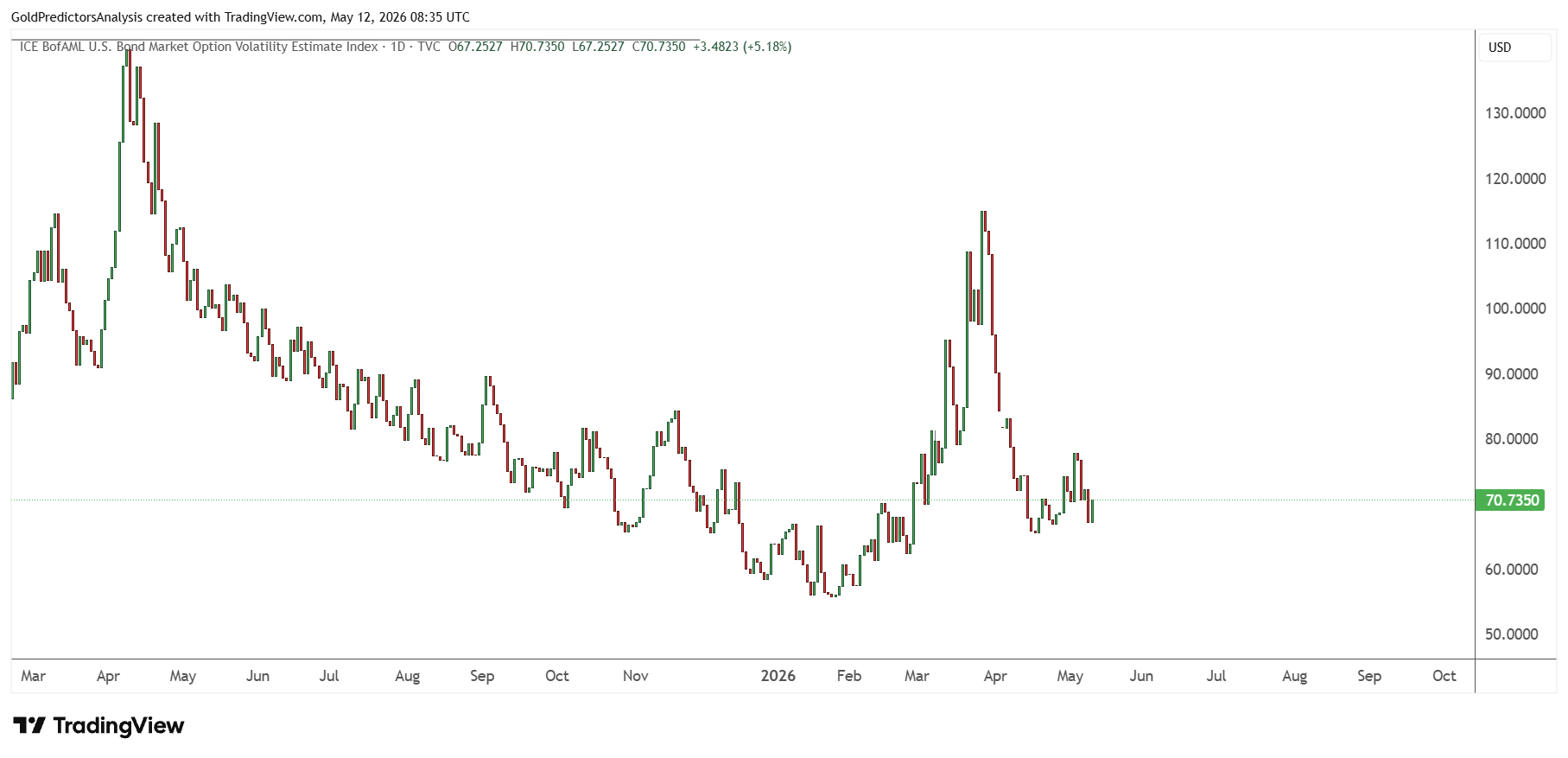
The surge in S&P 500 to record levels, the positive consolidation in Dow Jones 30 below 50,000 and the positive shift in Bitcoin (BTC) above 80,000 all support these conditions. This could be a reason why the stocks have been holding up despite the oil shock. In the case of gold, it is safe haven flows that could remain constrained as long as bond volatility doesn’t pick up again or until equity markets start to falter.
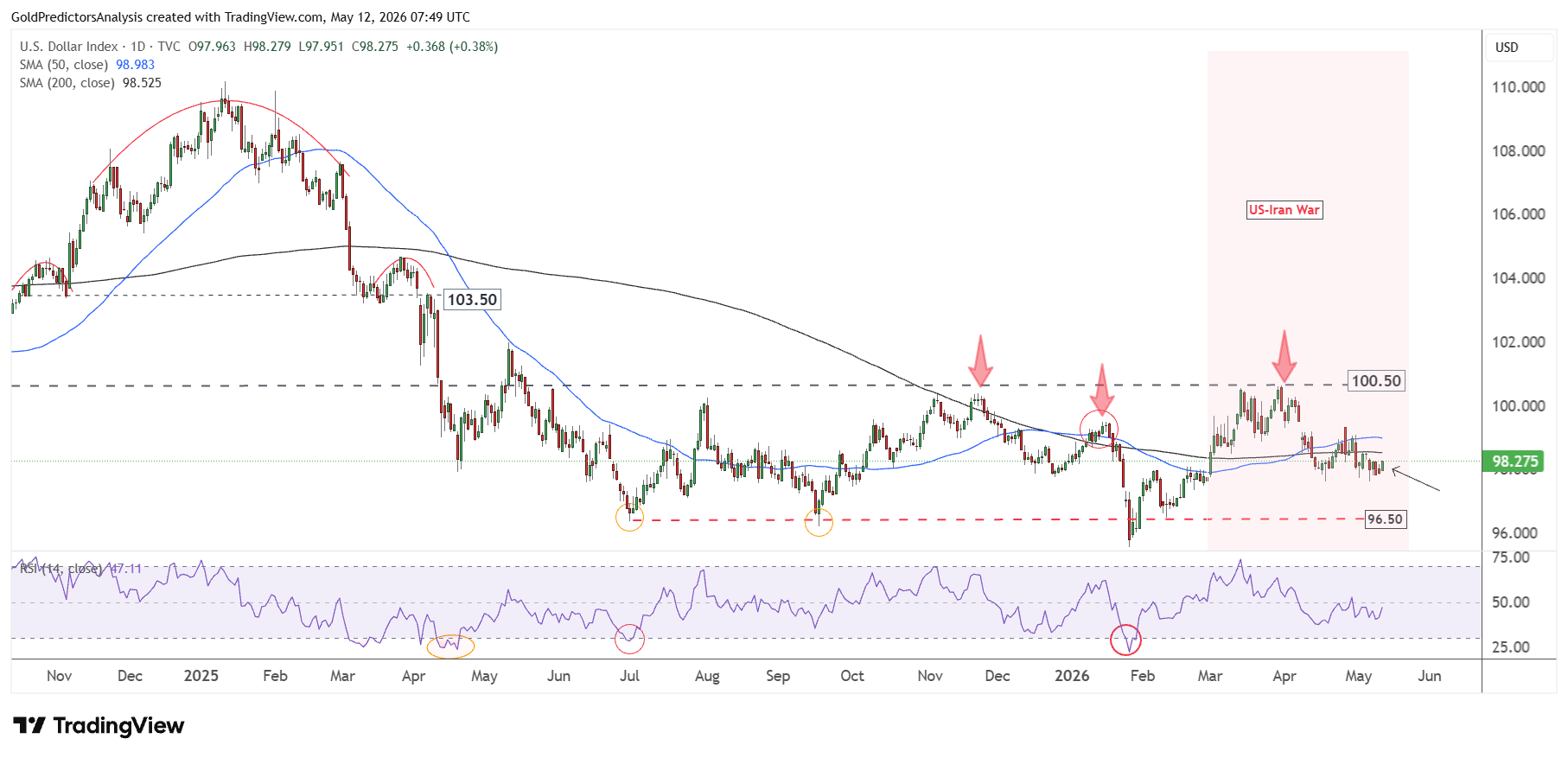
Another big market to keep an eye on is the U.S. dollar. The dollar continues to rally in advance of the CPI report, which puts pressure on gold. If the CPI is hot, the dollar could continue to appreciate as traders think the Fed will remain hawkish.
Bottom Line
Gold remains at the breaking point with conflicting inflation data, oil prices and Fed expectations. The Strait of Hormuz crisis keeps safe haven demand alive but higher oil prices can also lift inflation expectations and keep the Fed cautious. This makes today’s CPI report important. A softer read could push gold up to $4,800 and beyond in search of $5,000, whereas a hot read could see yields and the dollar higher, limiting the gold rally.
From technical perspective, the bulls continue to enjoy their advantage until the price of gold remains above the $4,500 support level. The emergence of ascending broadening wedge, bullish reversal candles and triangle compression suggests that a bigger move is in the making. If it breaks above $5,000, it might pave the way to $5,600 in the medium term. But in case of a break below $4,500, the bull market setup will be undermined and the attention will shift to $4,000. I think that oil-induced inflation will likely result in higher gold prices in the next few months. The market is currently preparing for that bigger move by consolidating above the $4,000 pivotal zone.
If you’d like to know more about how to trade gold and silver, please visit our educational area.