



The healthcare sector, which I follow with the Health Care Select Sector SPDR ETF (XLV), has been the second-worst-performing sector ETF in the S&P 500 for over a year, next to consumer staples. While the S&P 500 hits new highs and semiconductors ride one of the longest win streaks in history, XLV is approaching the same levels it touched at its 2026 lows, retesting the anchored VWAP that marked the bottom in March. That divergence is the story: healthcare was left behind by the rally, largely because its fundamentals are still looking a little bleak. But the technical picture may be appealing for traders and those looking for an opportunity to catch a bounce; XLV looks like it will respect the level even if the fundamentals aren’t quite in place.
The Trump administration’s most-favored-nation drug pricing policy is making headlines again—the first time was its introduction back in May of last year—and while the implementation details are still murky, the headline risk alone has been enough to compress multiples across pharma names. New details have emerged in recent days as Regeneron (REGN) has entered into a deal to provide MFN pricing to the TrumpRX website. The stock fell ~4% on the news, and the whole sector shuddered. The issue is that this policy is adverse to profit margins without much recourse from the provider. While it seems from the deal that REGN can opt in to certain products and out of others being in this program, the more normalized this practice becomes, the less valuable healthcare firms will be as their profit margins are one of the reasons why the industry carried the valuation premium it did. Twenty-year patents, opaque costs for patients and providers, and subsidizing the MFN pricing that Europe has been enforcing for years with U.S. payees were just part of the industry before. That changing, even if it’s unclear to what extent, is cause for a major rerating.
The Heaviest Hitters Have the Biggest Problems
UnitedHealth Group (UNH), one of the largest holdings in XLV at ~6% of the fund, has had a brutal stretch with the DOJ Medicare Advantage investigation.
Eli Lilly (LLY), a ~13% component and the largest by far, saw the GLP-1 narrative shift from “infinite TAM” to “compounding pharmacies (e.g. Hims and Hers (HIMS)) and Novo Nordisk (NVO) are eating the margin,” and the market has rerated the entire weight loss complex accordingly in 2026—both LLY and NVO.
Medical device companies are dealing with tariff exposure on inputs, as many of their core components come from Europe.
The biggest fundamental concern, and the one that bears (rightfully) point to most often, is that forward earnings estimates for the sector have been falling while the rest of the market has been seeing upward revisions.
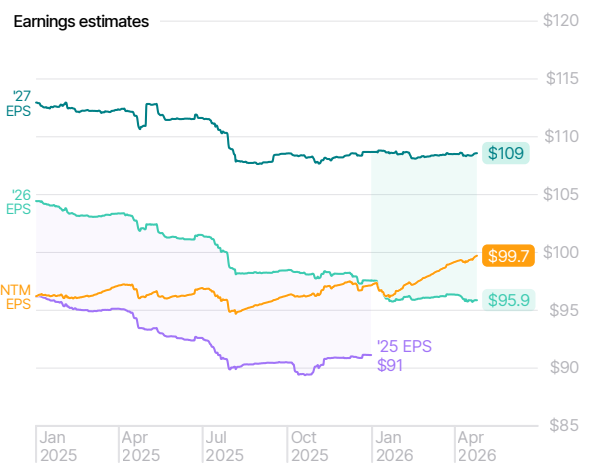
This is not a minor issue. Healthcare has historically been one of the most earnings-stable sectors in the index, and watching forward guidance numbers get cut across pharma, managed care, and even medical devices is genuinely as broad a bearish signal as one could ask for.
This is not just a story of “valuations are too low and the bears are wrong.” Any bull case has to acknowledge that the E in P/E is moving against you in the short term. That being said, valuations can provide us some perspective. The sector is now battered down below its 5-year average but isn’t quite at its 10-year average yet.
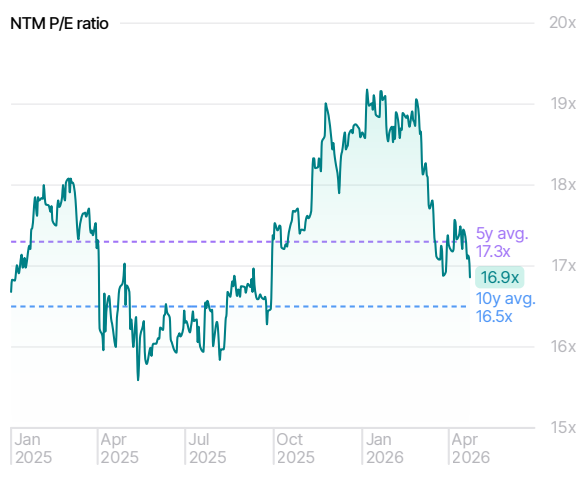
Here’s where I push back against the bears: the rate of negative revisions has stopped accelerating. Now, stopped-getting-worse is not the same as good, but in a sector this unloved, it is the inflection point that matters. Markets bottom when the second derivative on revisions turns positive, not when revisions go positive in absolute terms. By then, the gains will have been made.
But the earnings story is also more nuanced than the headline numbers suggest. Pharma’s R&D pipeline cycle is finally turning the corner with GLP-1s and their derivative forms. Lilly’s Mounjaro and Zepbound are still growing at >40% YoY despite the compounding pressure. Outside of that, Merck (MRK) has multiple late-stage oncology drugs that the market has assigned little value to; it’s fair not to value these firms like biotech startups, but that’s what a decade of acquiring research labs has done to some of these pharma giants. AbbVie (ABBV) navigated the Humira cliff better than anyone expected, and Skyrizi and Rinvoq are now generating combined revenue that exceeds Humira at its peak.
This all matters for XLV because the healthcare sector is top-heavy; LLY, JNJ, ABBV, UNH, and MRK make up ~42% of the ETF. These are the names that drive the chart, and so their fundamentals matter too.
The Demographic Tailwind Hasn’t Stopped Compounding
Macro-wise, demographics provide gravity to the healthcare thesis. Today’s earnings are largely overshadowed (and soon to have less shadow) by America’s inverting demographic pyramid. There are fewer young people, and there will be more old people than ever before in our future. That dynamic is set to increase as time goes on; it’s a trend in birthrates that hasn’t abated since the 1970s—and that’s just the U.S. The rest of the developed world is aging faster.
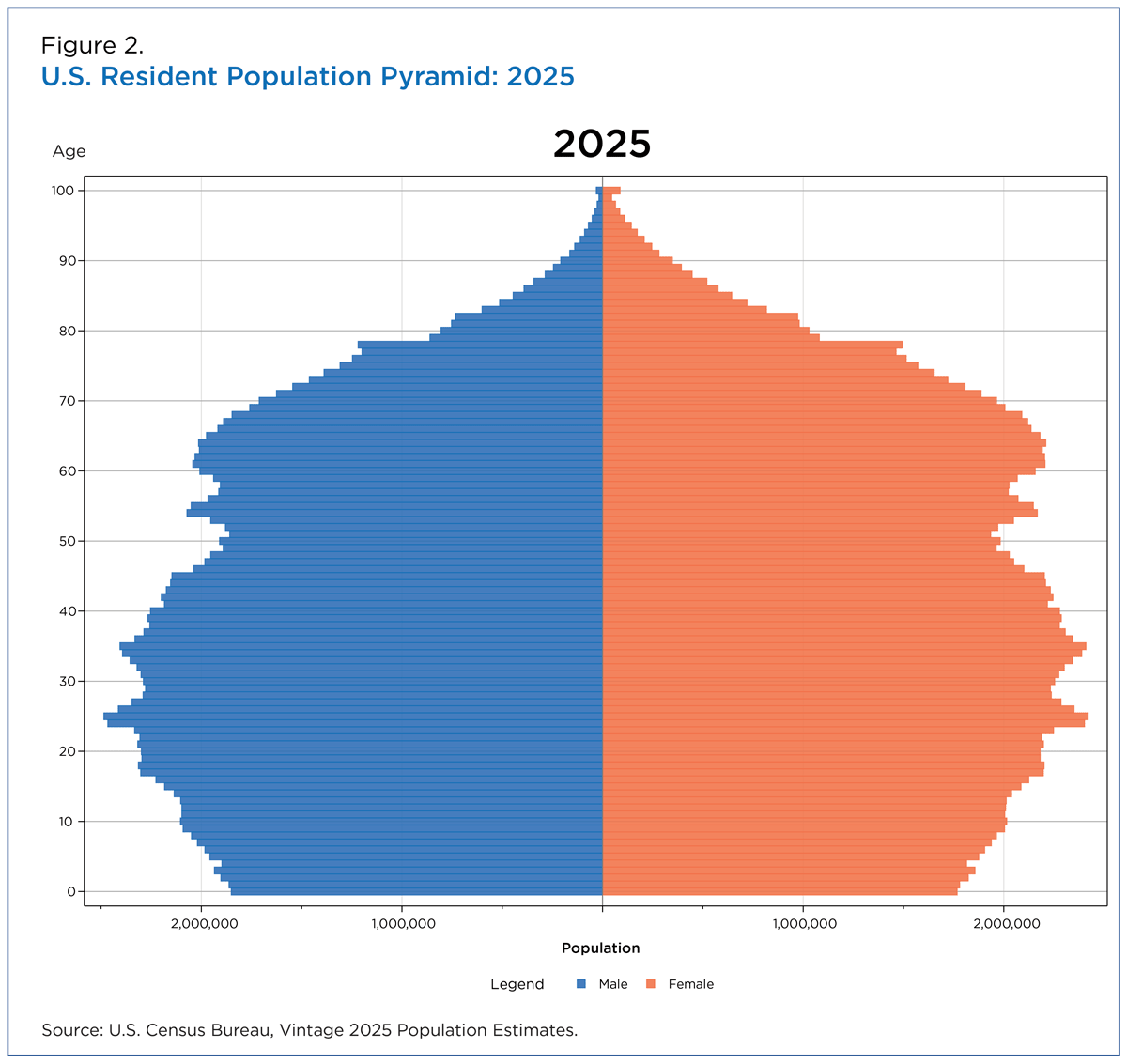
Healthcare spending grows roughly in line with the >65 population, and that cohort is growing at the fastest pace in a generation. The Boomer demographic wave is now fully in its high-utilization years, and Gen X is right behind them. CMS projects national health expenditures to grow at a 5.8% CAGR through 2032, outpacing nominal GDP growth. That’s a structural tailwind that doesn’t care about election cycles, drug pricing rhetoric, or whatever the current administration thinks of pharmaceutical companies.
That’s a driver for the long term, but one that is becoming more and more salient as time goes on and it becomes clearer that the trend is accelerating.
XLV Technical Outlook
The technical picture is rough, but that’s exactly where opportunity lies for those that believe in the fundamental bull case. I find it a mixed bag personally, and the technicals come off just as mixed.
Here’s the 1-year daily chart:
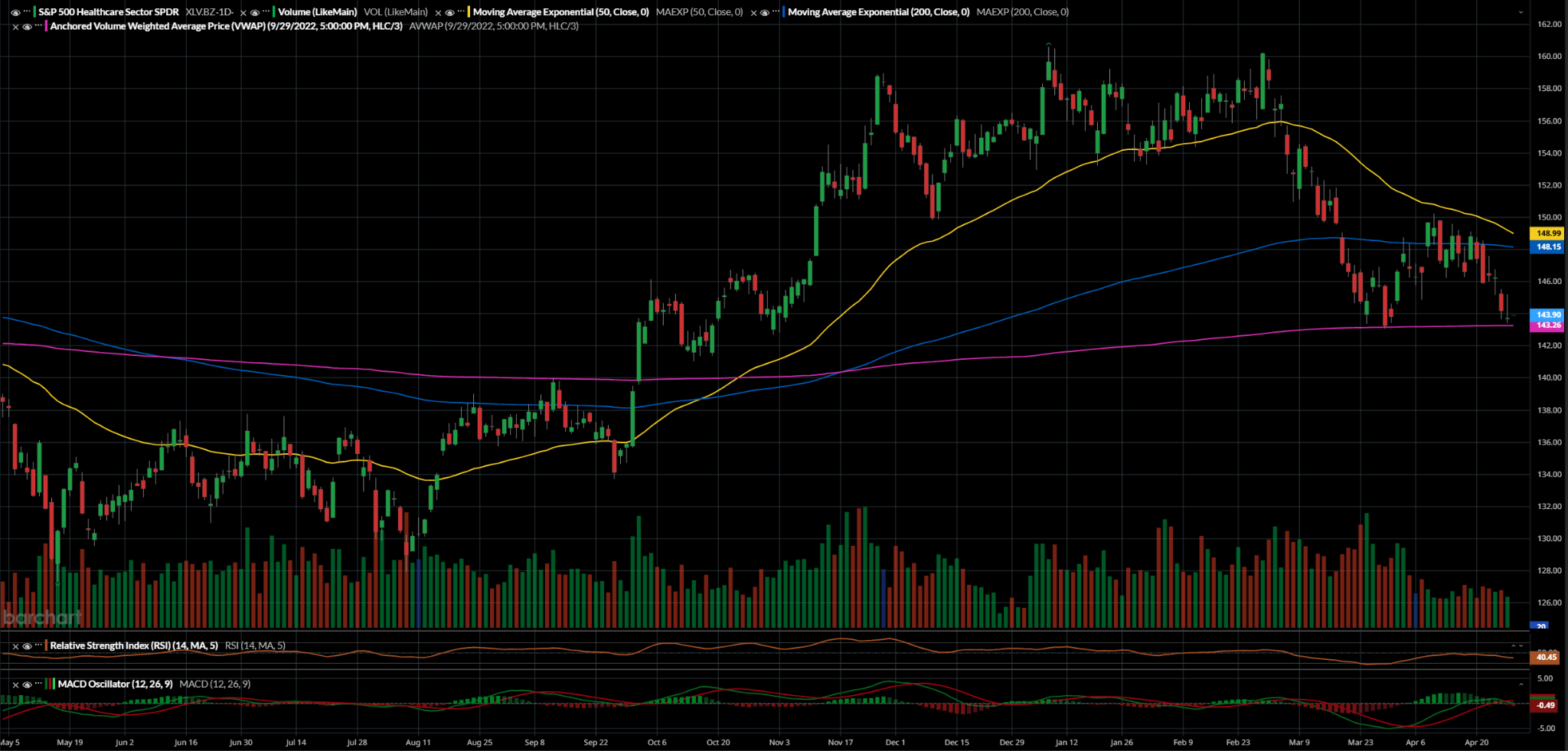
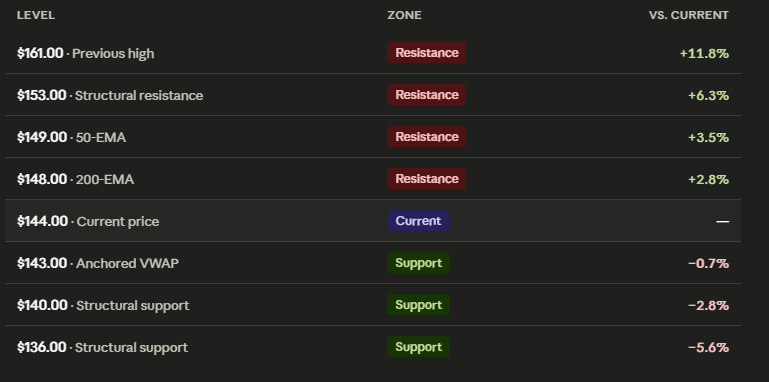
After hitting a high of ~161 in January, and then peaking again close to it in late February, XLV was hit hard alongside the rest of the market by the outbreak of the U.S.-Iran war. It broke below its 50-day EMA in early March and has been below it since. XLV then broke below the 200-day EMA later in March, and after failing a breakout above it, is back at the bottom of the current channel. Thankfully for the bulls, the anchored VWAP has been acting as strong support and was the floor at ~143 before. It’s acting as the floor again, and a failure this time around would be devastating for the bulls.
Structurally, the chart looks fairly clean to me. We are locked into a tight channel by the three major institutional zones, and it’s unlikely that without a new catalyst (the market running up didn’t do it), we will break above ~150. But the ~143 floor also looks solid here and aligns with past structure even without the VWAP (although I’d argue that’s why the VWAP ended up there). All that to say, the current crowd driving XLV seems to respect technicals more than average, and that can be to the advantage of traders.
Here are the key levels to watch:
Conclusion
Healthcare is the unloved sector where the fundamental and the technical cases are pulling in the same uncomfortable direction, and they’re both saying “wait.” This could be a bounce or we may be about to see a full breakdown.
Earnings estimates are still getting cut, and the policy backdrop is genuinely hostile with MFN pricing now moving from headlines to actual deals. The largest names in the ETF have specific, real structural problems that aren’t getting solved anytime soon.
The technical levels are doing real work here. XLV is sitting right on the anchored VWAP at ~143 that held in March, and the 50-EMA, 200-EMA, and structural resistance are all stacked tightly above the current price between ~148 and ~153. That’s a defined channel with clear lines for both bulls and bears.
The VWAP is the line in the sand. A break below ~140 invalidates the bull case and opens the door to ~136 and lower. On the upside, reclaiming the 50-EMA at 149 with volume would be the first real signal that the channel is breaking. A break above 153 would put the previous high at 161 back in play, but neither happens without a fundamental catalyst, whether that’s a clear inflection in the earnings revisions or a softening of the MFN pricing posture, or something unforeseen.
Buying here without confirmation is buying because valuations are cheap, and as the bears will rightly tell you, cheap can stay cheap for a long time when earnings are still being cut. Waiting for validation will be key.