


Gold (XAU) and silver (XAG) have shown strong volatility after the recent shift in macro conditions. The prices are reacting to changes in liquidity, rising energy costs and escalating geopolitical tensions in the Middle East. In my view, this combination of gradual liquidity support and war driven inflation pressure sets the stage for mixed and uncertain trend in the near term. This article outlines how these macro drivers, along with silver’s behaviour at key support levels, will shape the next move in precious metals.
Liquidity Shift and the Fed’s Gradual Balance Sheet Expansion
The overall economic landscape has begun to change with the shift in liquidity. When overnight funding markets faced issues, the economy clearly had less liquidity than expected. Federal Reserve began to expand its balance sheet again. However, this time expansion is slow and controlled rather than the rapid expansion used during previous QE programs.
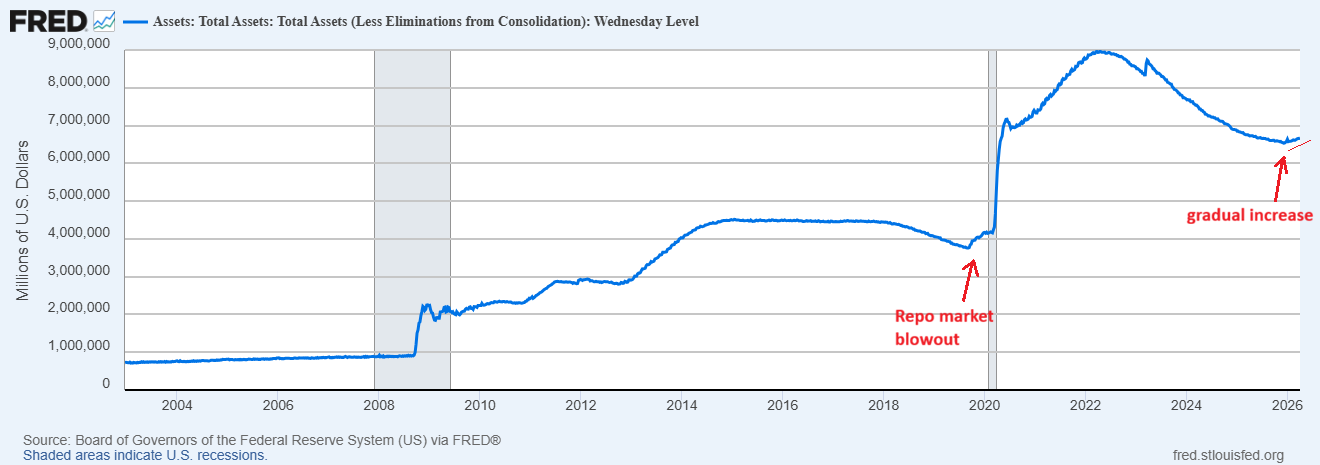
Previous QE programs have been large and fast due to extreme crisis conditions. The current growth is significantly smaller and slower. The goal of the Federal Reserve is to maintain stable reserve levels and keep interest rates low.
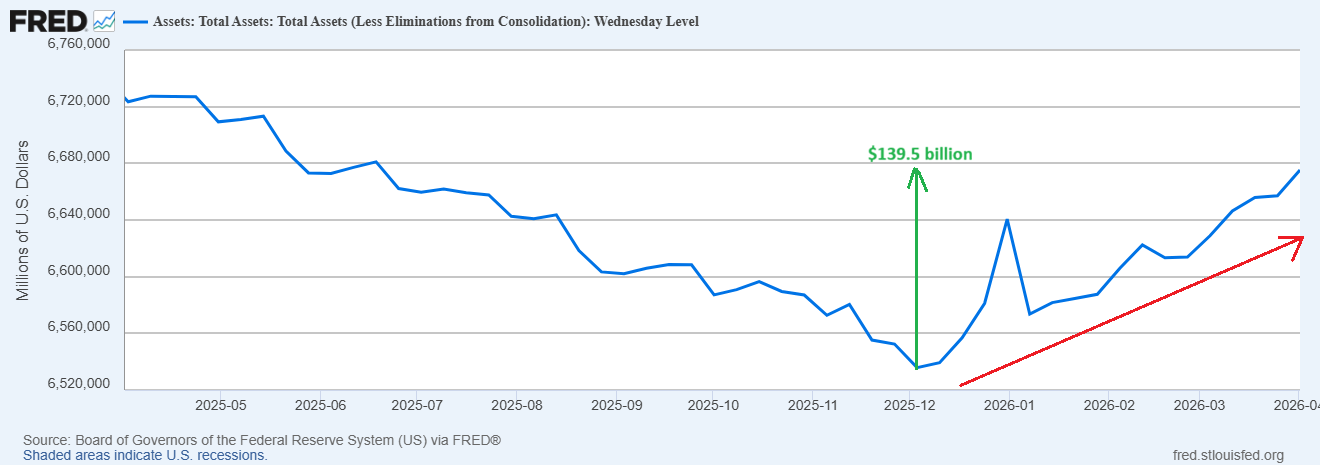
Currently balance sheet is approximately $139.5 billion higher than it was when it hit its most recent trough. This is indicative of slow but manageable build up in liquidity and therefore does not signal an aggressive shift in the Fed on monetary policy.
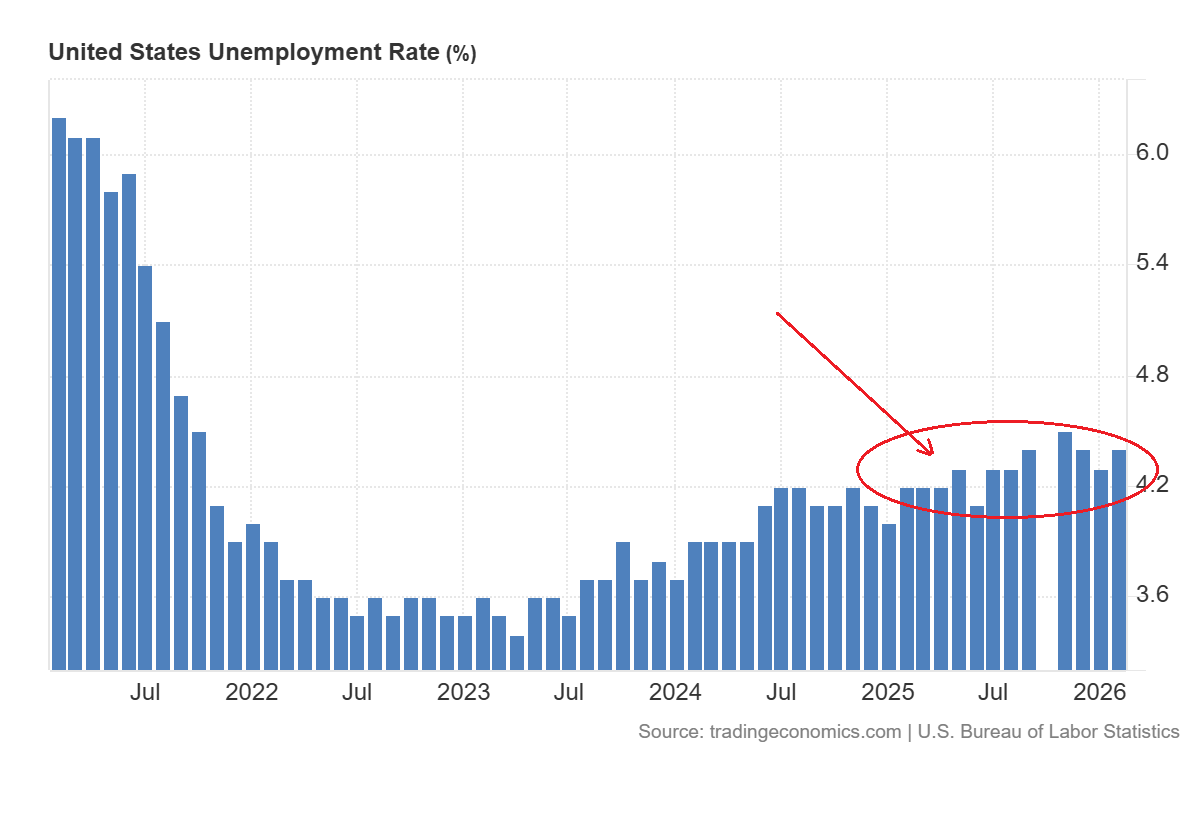
In addition to the trends in the balance sheet, the overall economy is sending some conflicting messages. While employment has been growing at slower pace, I do not see an immediate decline.
The chart below shows that the unemployment rate has remained just above 4% since 2025.
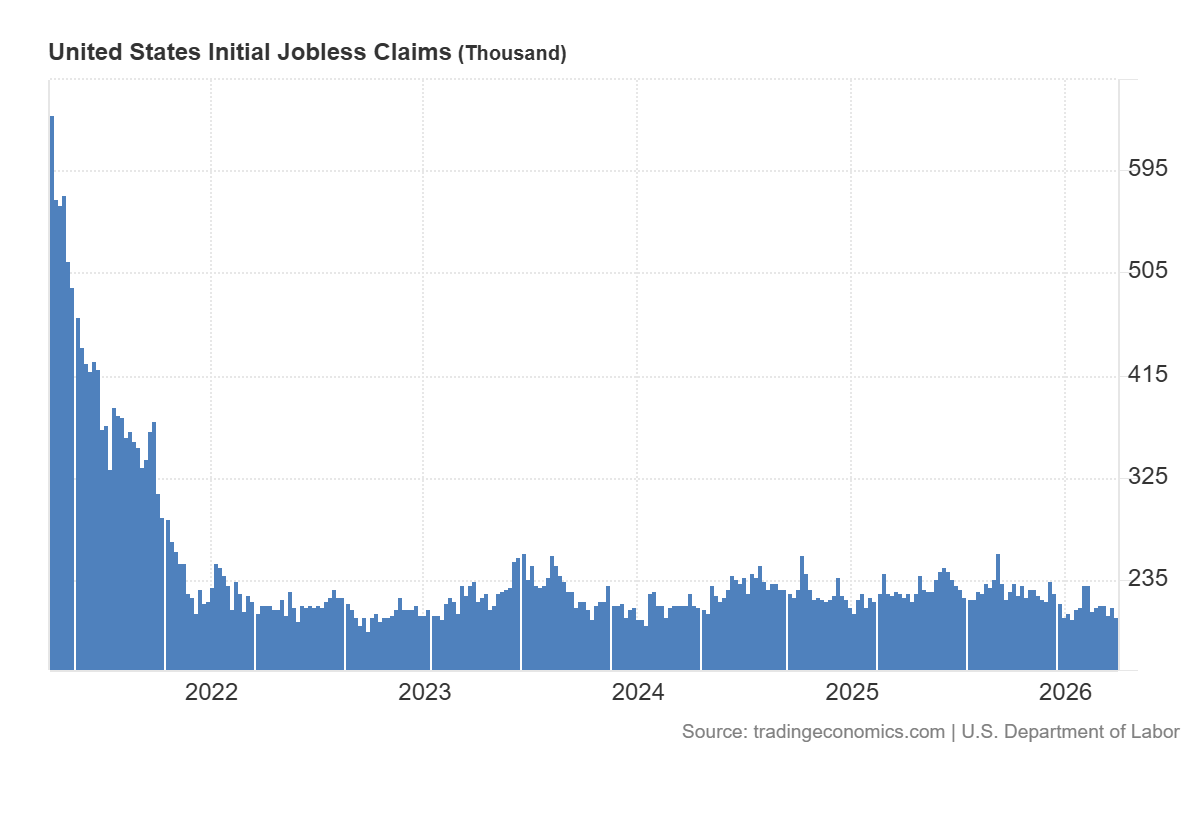
On the other hand, initial jobless claims have declined to 202k in March 2026 which indicates that the layoffs remain contained.
The consumer sentiment remains low while manufacturing sentiment appears to be improving.
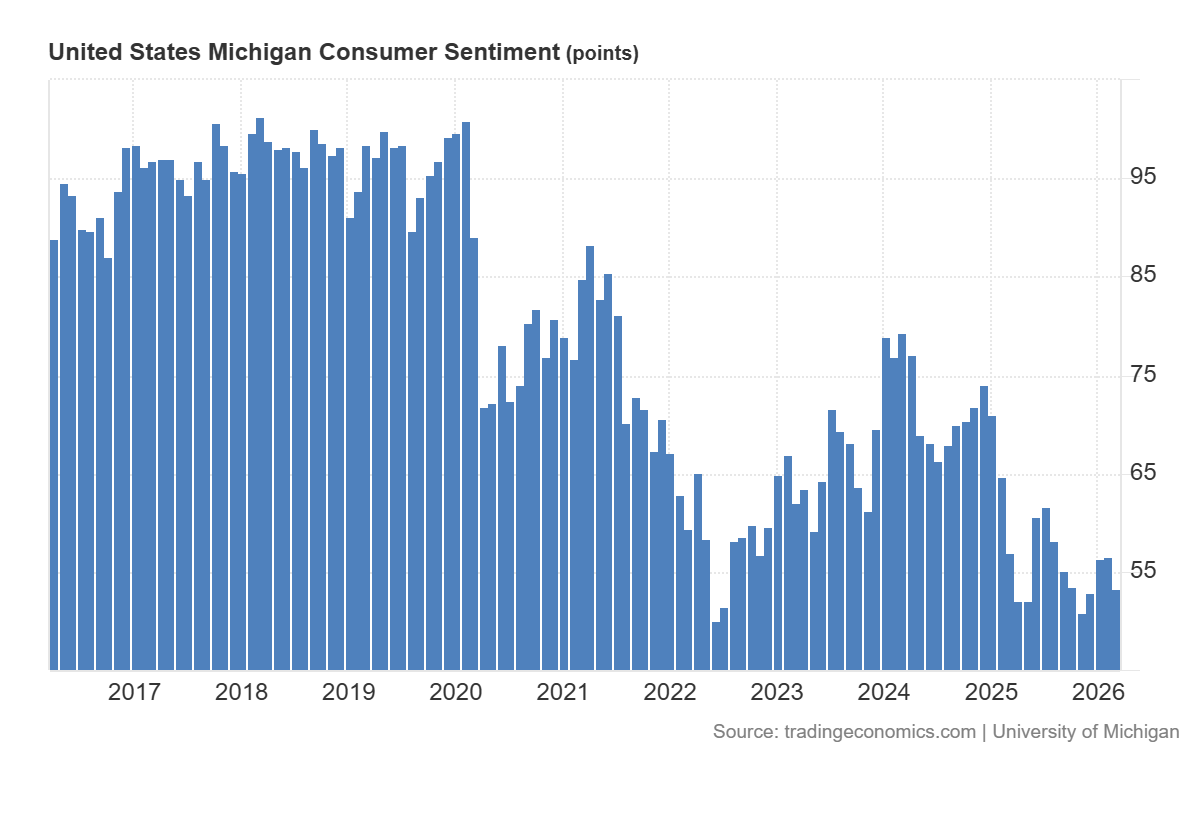
These factors will keep Federal Reserve cautious. They reduce urgency to ease but still leave room for further liquidity additions if things continue to deteriorate. Therefore, gold and silver would likely remain in supportive environment but are unlikely to provide a significant bull market.
Gold Price Forecast
Every new Gold analysis as it publishes, today's technical signal and key levels, live price — on one page.
See all Gold forecastsGeopolitical Risk and Oil Shock Drive Inflation Volatility
US–Iran Conflict Triggers Oil Surge and Inflation Shock
This situation changed when geopolitical risk entered the equation. As the U.S., Iran and Israel are currently involved in a developing conflict, this adds another level of volatility to the situation. The disruption around the Strait of Hormuz has further increased global energy prices which creates concerns regarding future supply stability.
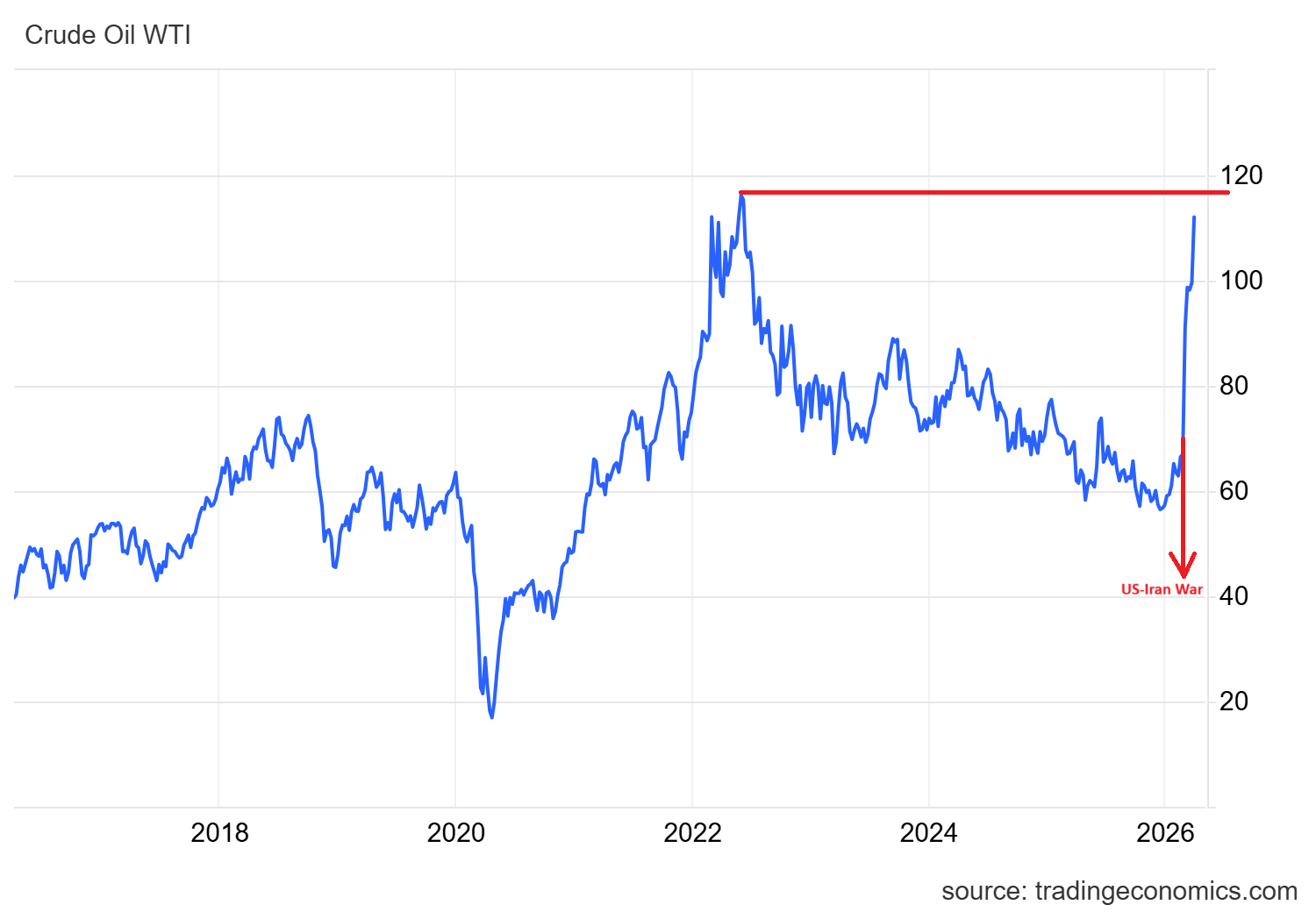
Therefore, this is a direct inflationary shock to the entire world economy. The chart below shows that WTI crude oil surged after US-Iran conflict in a straight line and is ready to reach new highs.
Gold and Silver React to Inflation and Safe-Haven Demand
With increasing energy costs affecting inflation expectations, central Banks will have difficulty making decisions. On one hand, rising inflation provides support to gold due to its use as a hedge against inflation. On the other hand, rising inflation can keep interest rates higher for longer which may put short-term downward pressure on gold by providing additional strength to the U.S. dollar.
In addition to the increase in safe haven asset demand due to war, investors will also seek ways to reduce risk from uncertain events through hedging. Gold often leads as investors seek to protect themselves from geopolitical risks. The behavior of silver will generally follow that of gold.
However, it will react differently from gold due to greater industrial exposure. If there is slower economic growth due to higher energy prices, it will affect silver. A divergence in price movement between gold and silver could provide useful indicator for the underlying metals’ trend.
A fundamental principle of this theory is that the war creates possible “above baseline” condition. If situation continues to deteriorate and impacts global financial systems, the Federal Reserve may need to rapidly expand monetary policy beyond their existing incremental pace.
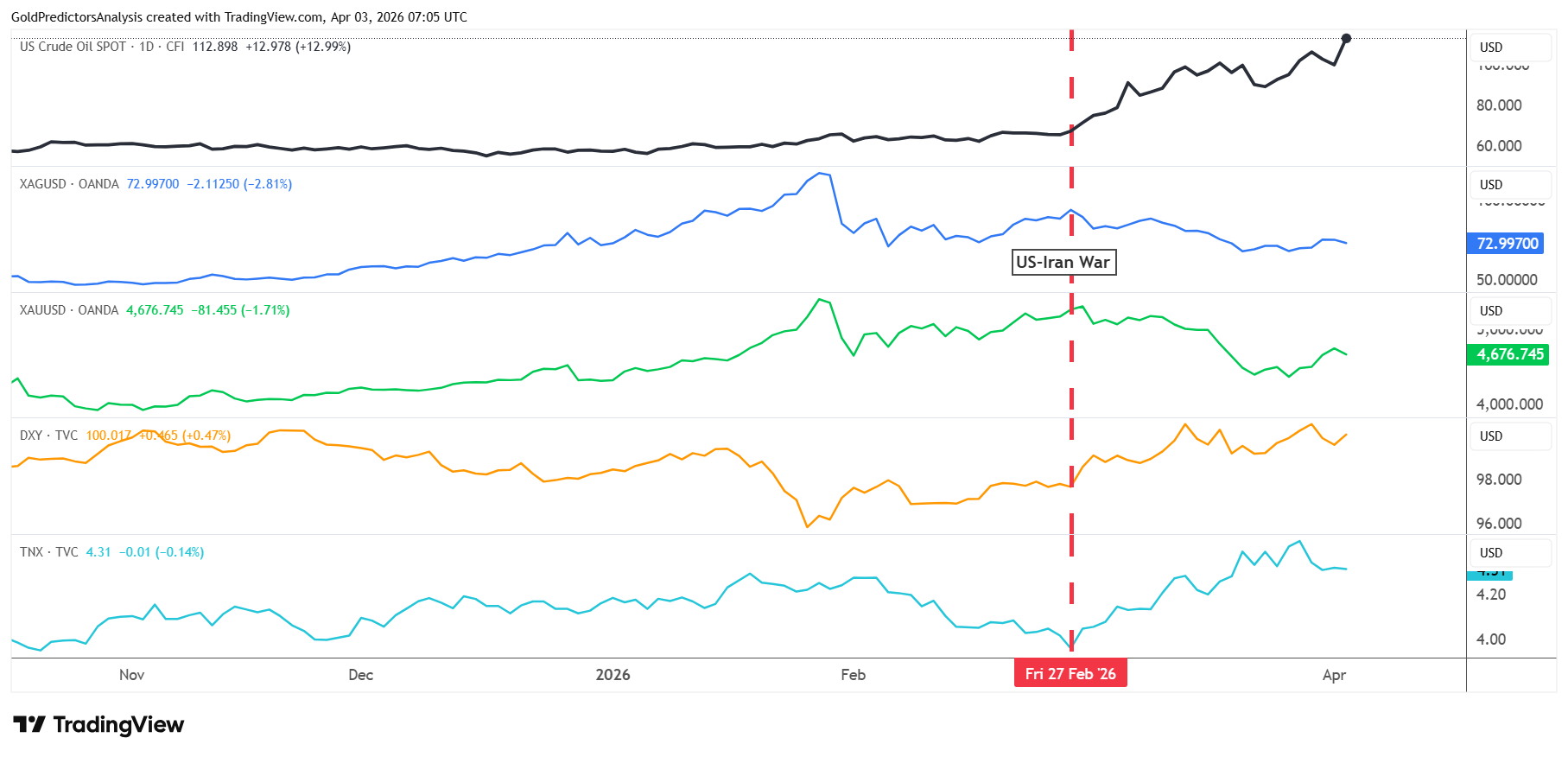
If this were to occur, it would represent a larger positive force for both gold and silver. The market currently appears to be experiencing significant price volatility due to a combination of inflationary pressures, interest rate expectations and safe haven demand. The chart below shows how the rising oil prices have shifted the US treasury yields and US dollar higher while gold and silver have fallen.
Silver Leads Rally but US-Iran War Signals Risk
The chart below shows that the precious metals sector started strongly in 2026, but the price is again hovering near the levels it began the year. The chart shows a strong spike of over 60% in the silver price in January 2026, whereas the spot gold price did not gain as much.
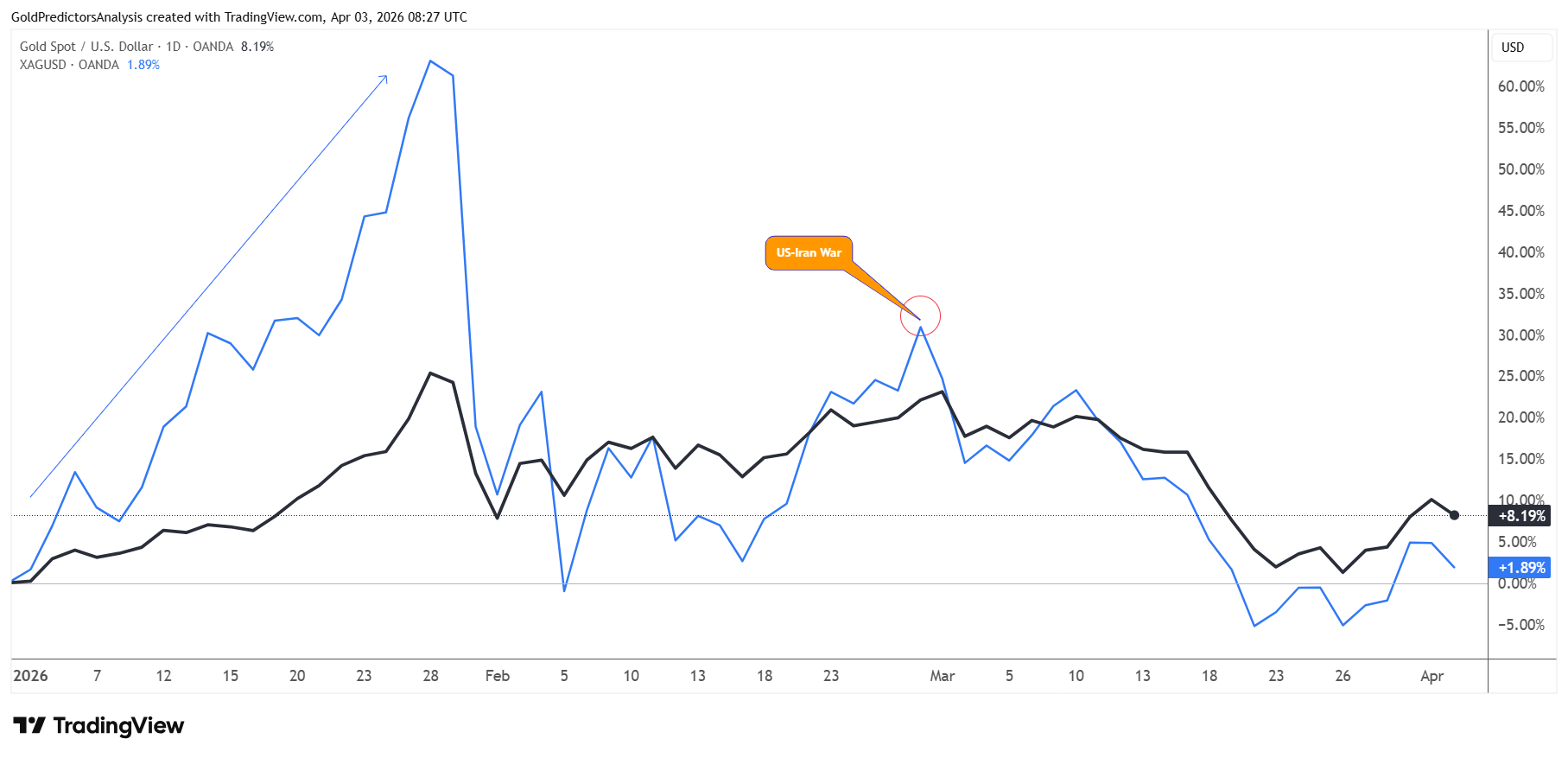
It is quite normal that when both metals are likely to produce a top, whether a medium-term or long-term top, the silver price leads the rally and moves faster than gold. However, the correction has pushed the silver price lower, and it is now 1.89% above its starting level of 2026. On the other hand, gold is also 8.19% above the starting level of 2026.
This behaviour shows that silver price leads the rally during a bull market, but when the silver price declines, it increases the risk of a further drop in precious metals sector.
However, it is observed that after the US–Iran war, both silver and gold prices are showing same price patterns.
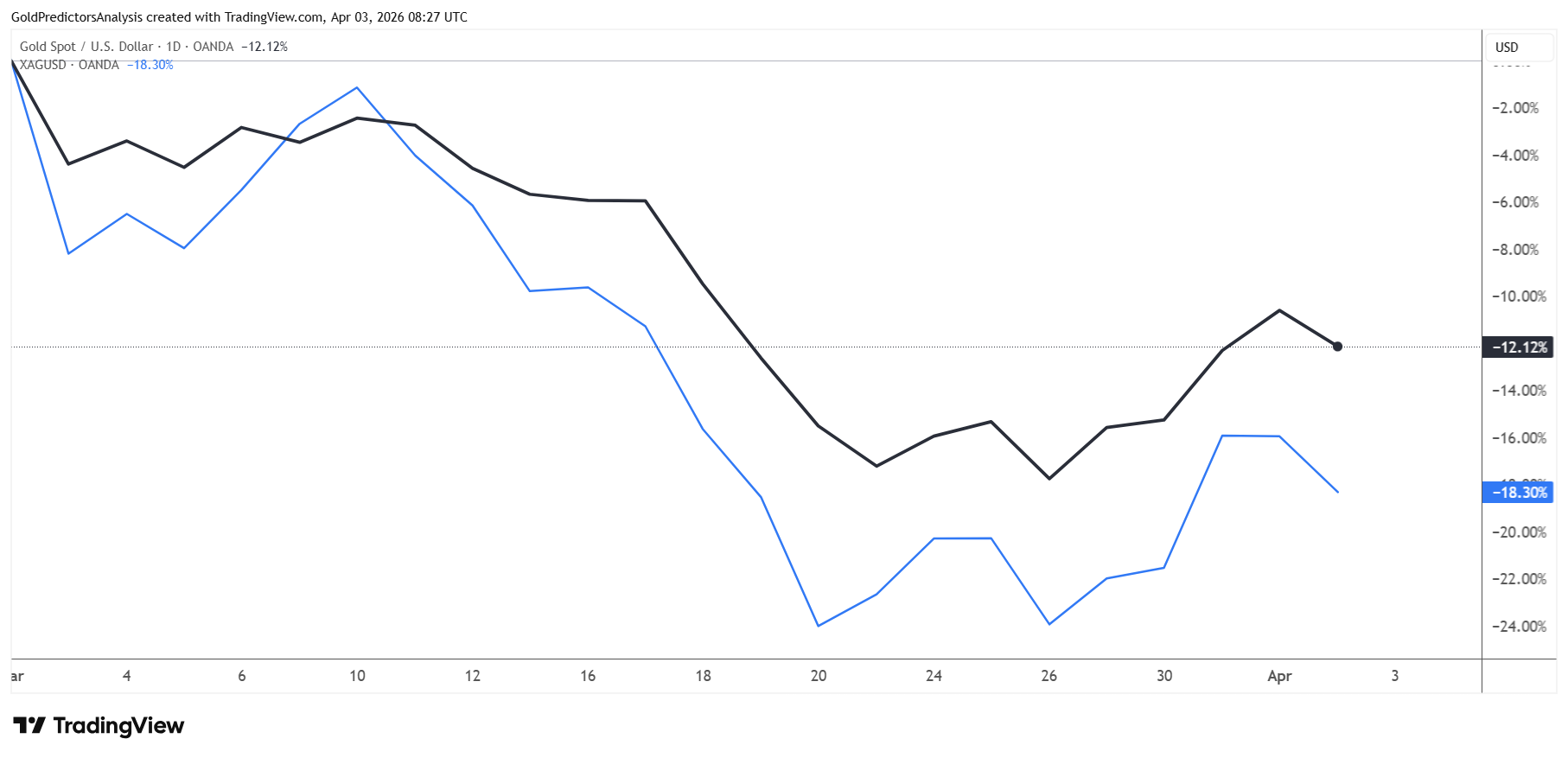
The silver price is down by 18.30%, while the gold price is down by 12.12% since the war started. This negative trend indicates that the precious metals are driven by the geopolitical developments in the Middle East.
What Is Next in Gold and Silver
Gold and silver are now trading in mixed environment where macro forces are pulling in different directions. The overall liquidity level remains favorable but it does not appear sufficient to create a sustainable upward move without additional support.
On the other hand, rising energy costs and escalating global uncertainties are supporting gold’s status as safe haven. However, an increase in future inflationary expectations may cause interest rates to rise which continues to push up the value of the U.S. dollar. This may limit the potential for gold prices to appreciate in the near term. Therefore gold and silver prices may remain volatile in the short and medium term.
In contrast to gold, silver is expected to be the leading indicator regarding the direction of the overall trend. Silver price leads the precious metals rally during the bull market. This trend was also observed in January 2026. Currently, the silver price is lagging which indicates that momentum has declined. Therefore, if silver continues to lag behind gold, then it could suggest weakness in the precious metals sector.
On the other hand, gold and silver may rally on escalation of political instability. Central banks may also feel compelled to implement aggressive monetary policy by increasing liquidity. This may introduce renewed strength in gold and silver.
Despite the short term weakness in both metals, they have hit their respective support zones and are currently rebounding within the long-term bullish structure. Gold has found support at $4,100, while silver has found support at $61. As long as these levels hold, the next move in both metals might develop to the upside.
If you’d like to know more about how to trade gold and silver, please visit our educational area.