



Oil prices are holding steady as supply concerns, inflation pressure and Strait of Hormuz uncertainty continue to bolster the market. Producer prices are already ticking up as fuel and transport costs ripple through the economy while Treasury yields are testing the significant resistance levels. Strategic reserves from China or the U.S. might help ease prices in the near term but they cannot solve the supply problem. This article examines how the oil shock is moving through inflation, yields, strategic reserves and the technical picture for Brent and WTI oil.
Oil Shock Spreads into Inflation, Yields, and the Real Economy
Producer Prices Rise as Fuel and Transport Costs Hit Goods
The high oil price is now not just an energy market story. These are now spreading in the broader economy. Producer prices rose by 6.0% in the 12 months to April 2026, primarily due to an increase in prices for fuel, freight and transport. This increment is important because consumer inflation lags behind producer inflation. Businesses absorb increased costs and then part of the costs is transferred to consumer prices.
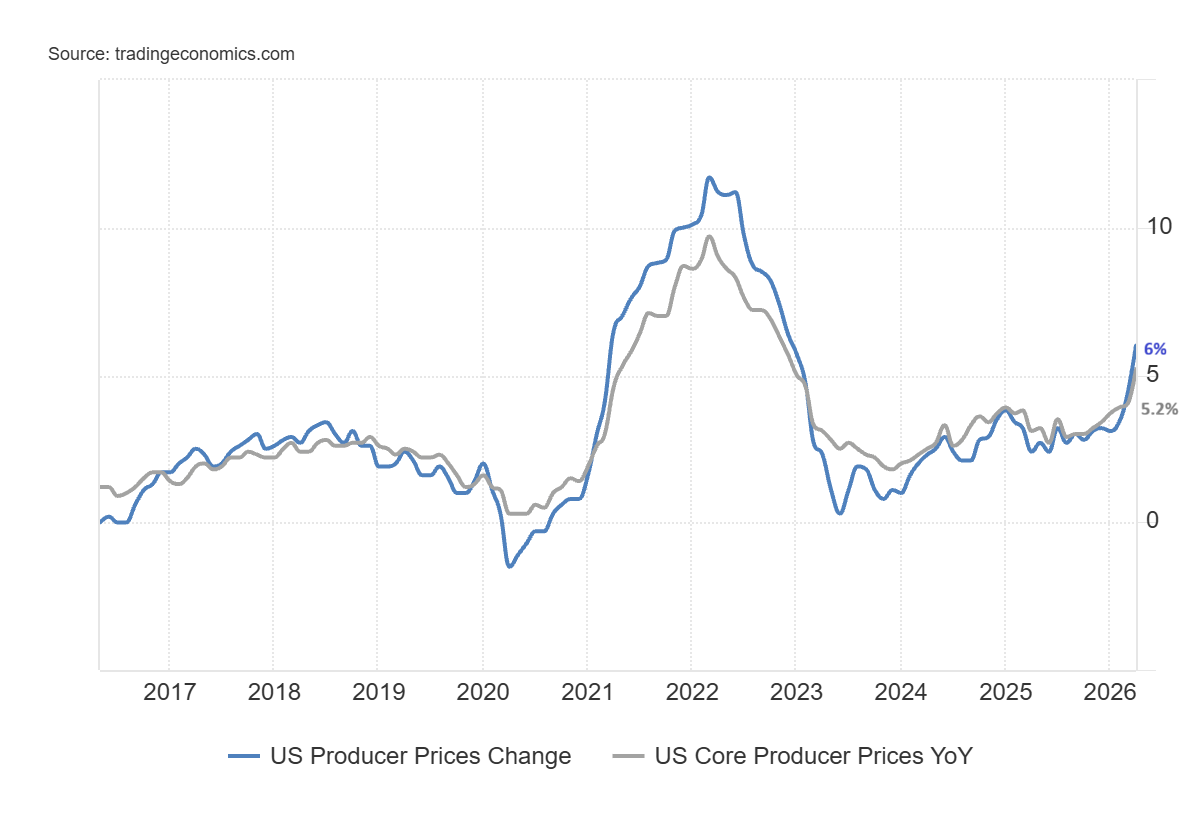
The larger warning is due to the core PPI. It jumped to 5.2%, excluding food and energy. This indicates that the oil shock is not just on gasoline, diesel and power. An increase in transport costs increases the cost of transporting goods. Fuel price also increases the production, packing and transportation costs.
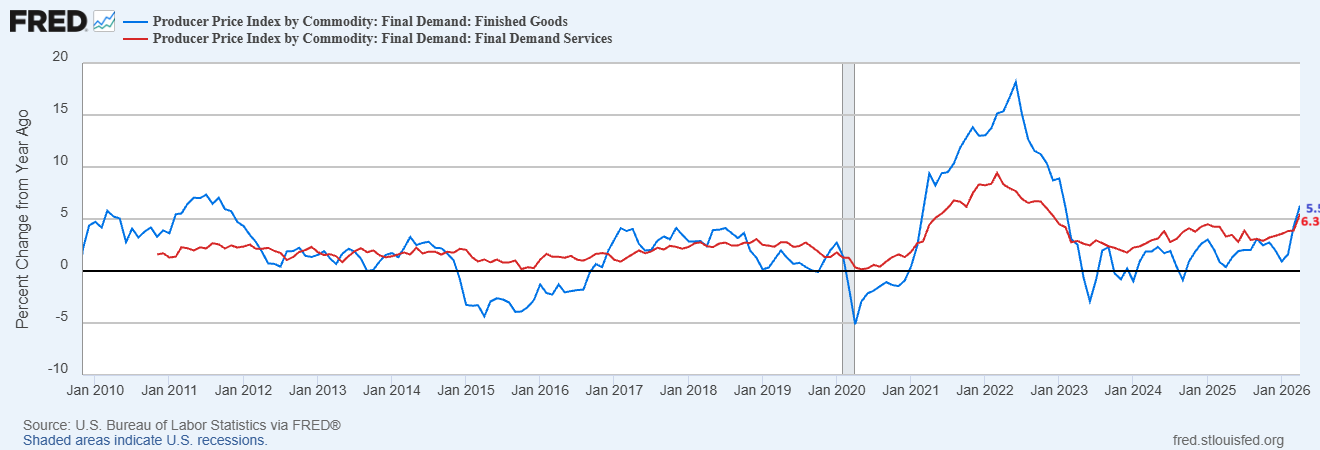
The goods prices appear more vulnerable than the services. The PPI of goods increased 6.3% and that of services grew 5.5% as shown in the chart below. This gap makes sense. Fuel, shipping, packaging and supply chains are more critical to goods.
This pressure could grow if the flow through the Strait of Hormuz remains choked. Russia’s invasion of Ukraine in 2022 already demonstrated the speed at which energy producers can react to energy supply disruptions, as their producer prices shot up. A Hormuz shock may be worse as the Strait is the major bottleneck for world crude flows.
Brent Oil Price Forecast
Every new Brent Oil analysis as it publishes, today's technical signal and key levels, live price — on one page.
See all Brent Oil forecastsTreasury Yields Climb as AI Spending Masks Main Street Weakness
The bond markets are also responding to the energy crisis. The 10 year Treasury yield is approaching the 4.6% resistance zone. A breakout would indicate a move to 4.70%. This would suggest a tightening of financial conditions. That would make for a rough combination for the economy.
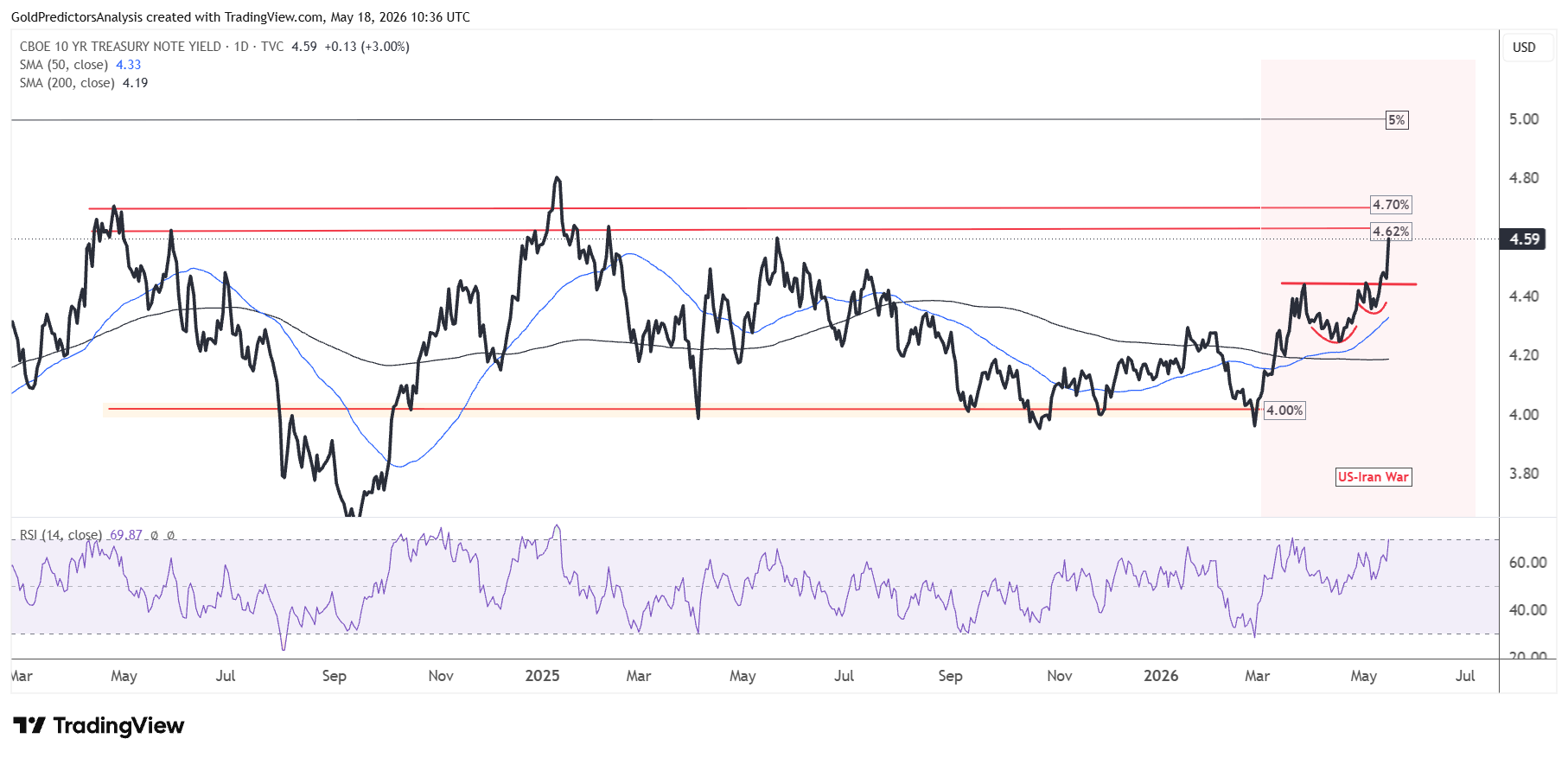
The oil fired inflationary process puts pressure on yields to move higher. Increased yields will lead to increased borrowing costs. The higher borrowing costs put consumers, companies and equity values under strain.
But the economy is not weak across the board. Expenditure on AI continues to drive growth. The investment in large data centers is the driver for semiconductor, construction and heavy electrical equipment stocks. This spending is helping to keep the U.S. economy afloat. The chart below shows that the semiconductors & semiconductor equipment industry group index keeps surging with faster rate during the last few weeks.
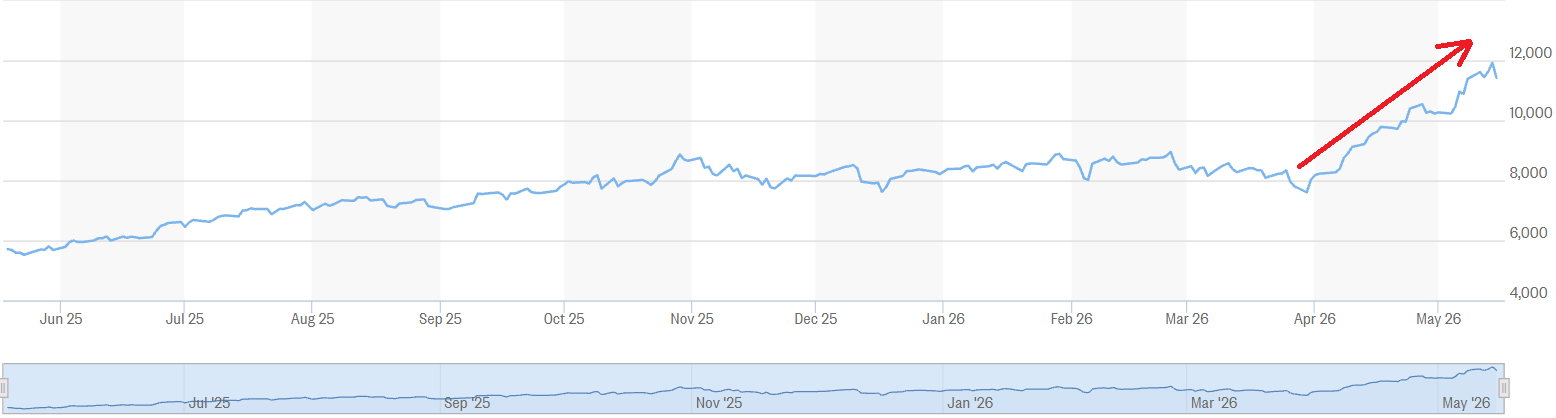
But the Main Street economy appears to be weaker. The sluggish Containers & Packaging Index is sounding warning bells that demand beyond the AI craze may be cooling.
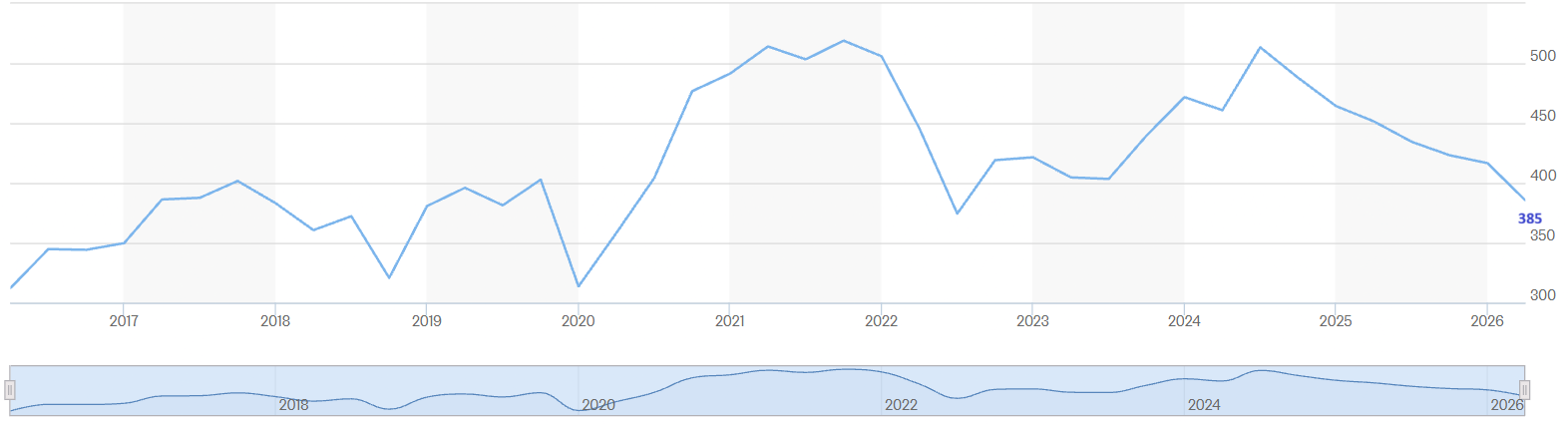
A robust AI investment cycle can sustain energy demand. But more expensive oil can also put a strain on households and small businesses. That means that crude oil could keep up even as certain sections of the economy begin to falter.
Strategic Reserves May Cool Oil Prices, But Supply Risks Remain
China’s Crude Reserves Could Ease Short-Term Market Pressure
Brent crude is holding at higher levels as supply risk is being priced in. It indicates that traders are not considering the Hormuz issue as a short-term headline. They are taking a big risk on a real supply crunch. Crude oil should be expected to be picked up on any dips as long as shipping levels remain uncertain.
China could be very instrumental in cooling off the market. Beijing has ample inventories of large crude and could draw reserves to relieve some of the strain on spot demand. According to EIA data, China, the U.S. and Japan have the world’s largest strategic oil inventories, which provide policymakers with some flexibility to deal with temporary price volatility.
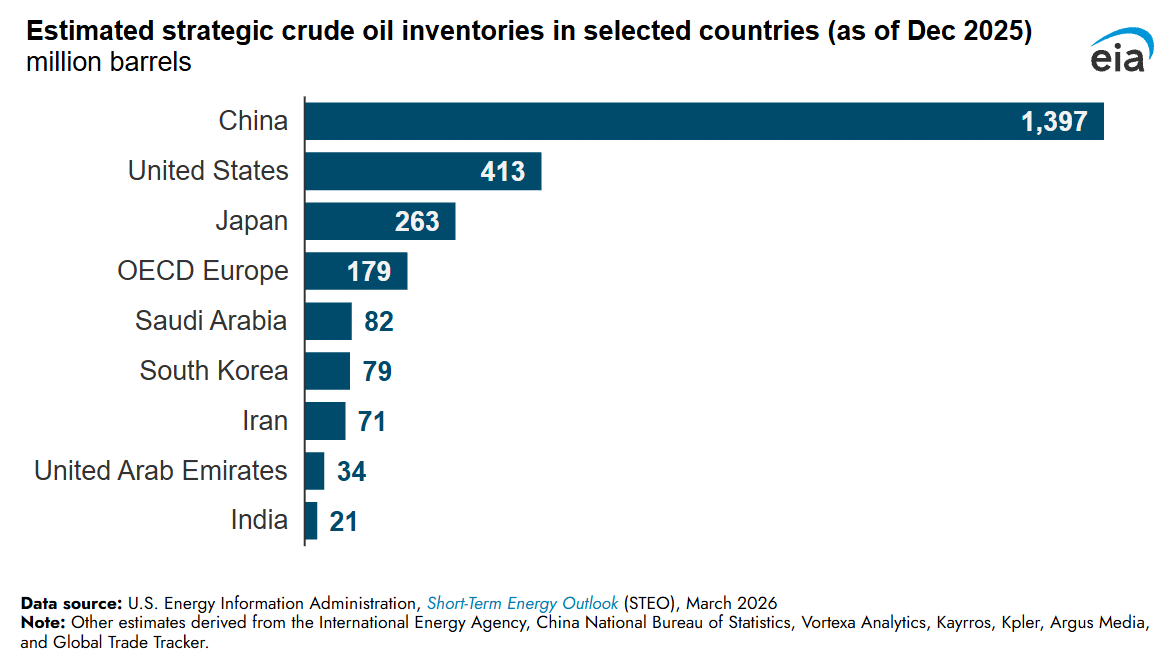
But reserves do not generate new oil supply. They merely move supplies from storage to the market. Hence, any further release could dampen the rally and is not necessarily the end of it. Crude could back away from extreme levels if China cooperates. However, the market will remain on the length of the disruption in the Strait of Hormuz and the normalization of Middle East exports.
Trump-Xi Talks Add a Political Layer to the Oil Outlook
That is why the Trump-Xi meeting is important for oil. Falling oil prices are great for President Trump’s policy of curbing inflation and stabilizing the yield of Treasury securities. President Xi is aware of this. China’s assistance might come at political or trade cost. If Beijing does draw on its reserves, it could demand concessions in return. That’s why the oil situation is as much a negotiation story as it is a supply story.
There’s not much space either in the U.S. American reserves could become an issue if they get too low. If the total crude stocks are below the 2023 low, it should heighten concerns of a shortage. That might provide another layer of support for oil prices.
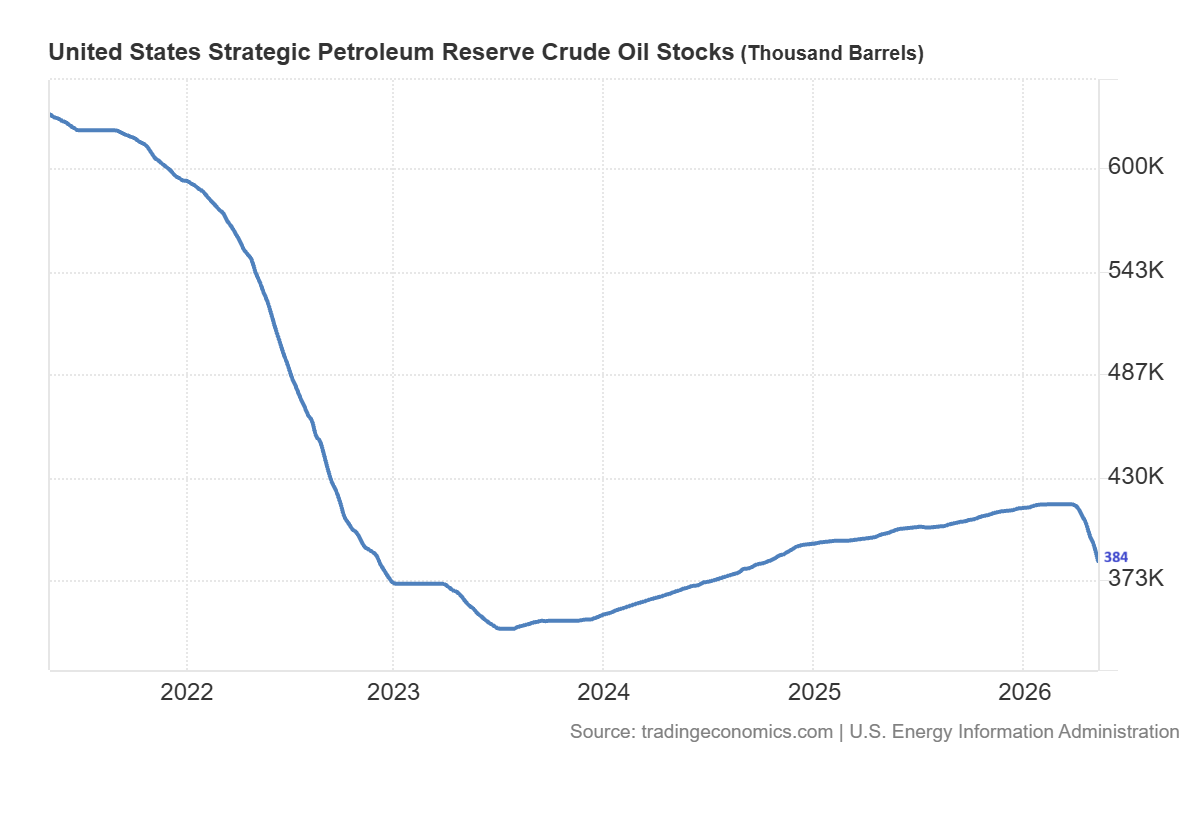
Brent could settle if the market gets quiet on the back of the inventory releases, but the overall pattern remains bullish, and the Hormuz risks are still in place. A sustained break above recent highs will likely keep the oil prices higher. The key downside risk is a real breakthrough in the diplomatic efforts which brings back confidence in shipping and a quick elimination of the fear premium.
Crude Oil Technical Analysis: Bullish Structure Builds Above Key Support
From a technical perspective, WTI crude oil remains strongly bullish and consolidated in a wide range after the US-Iran war. This wide range remains between $80 and $120. Each time the price drops lower toward the $80 level, it produces a strong recovery above the $100 level. The $100 level remains the key level for the upside in the WTI market.
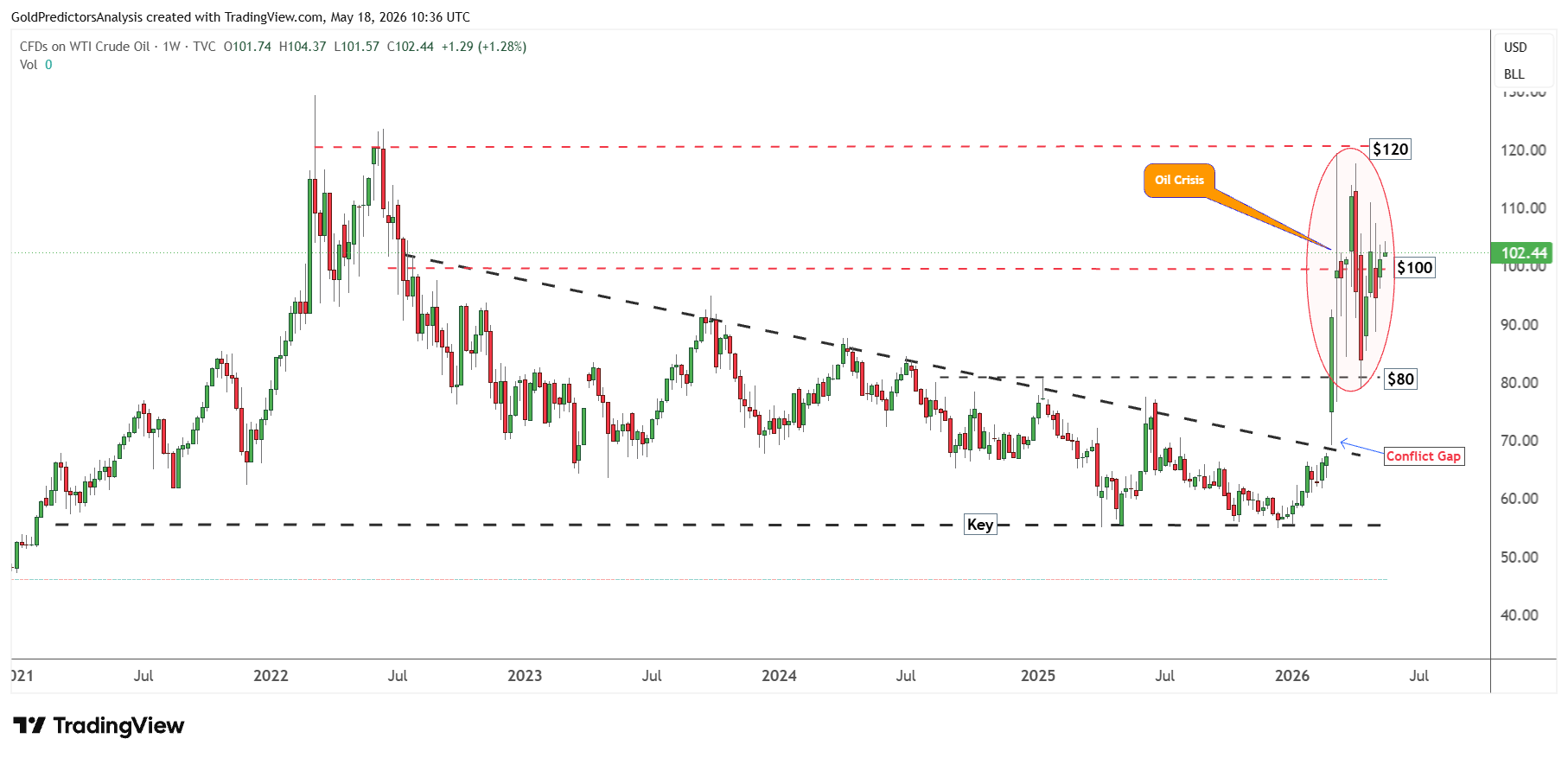
A break above $120 will likely push oil prices much higher. But a break below $80 will indicate the resolution of the US-Iran crisis.
Since the $120 level in the oil market has historically been the key resistance level. This is why oil prices are taking longer to break above this level.
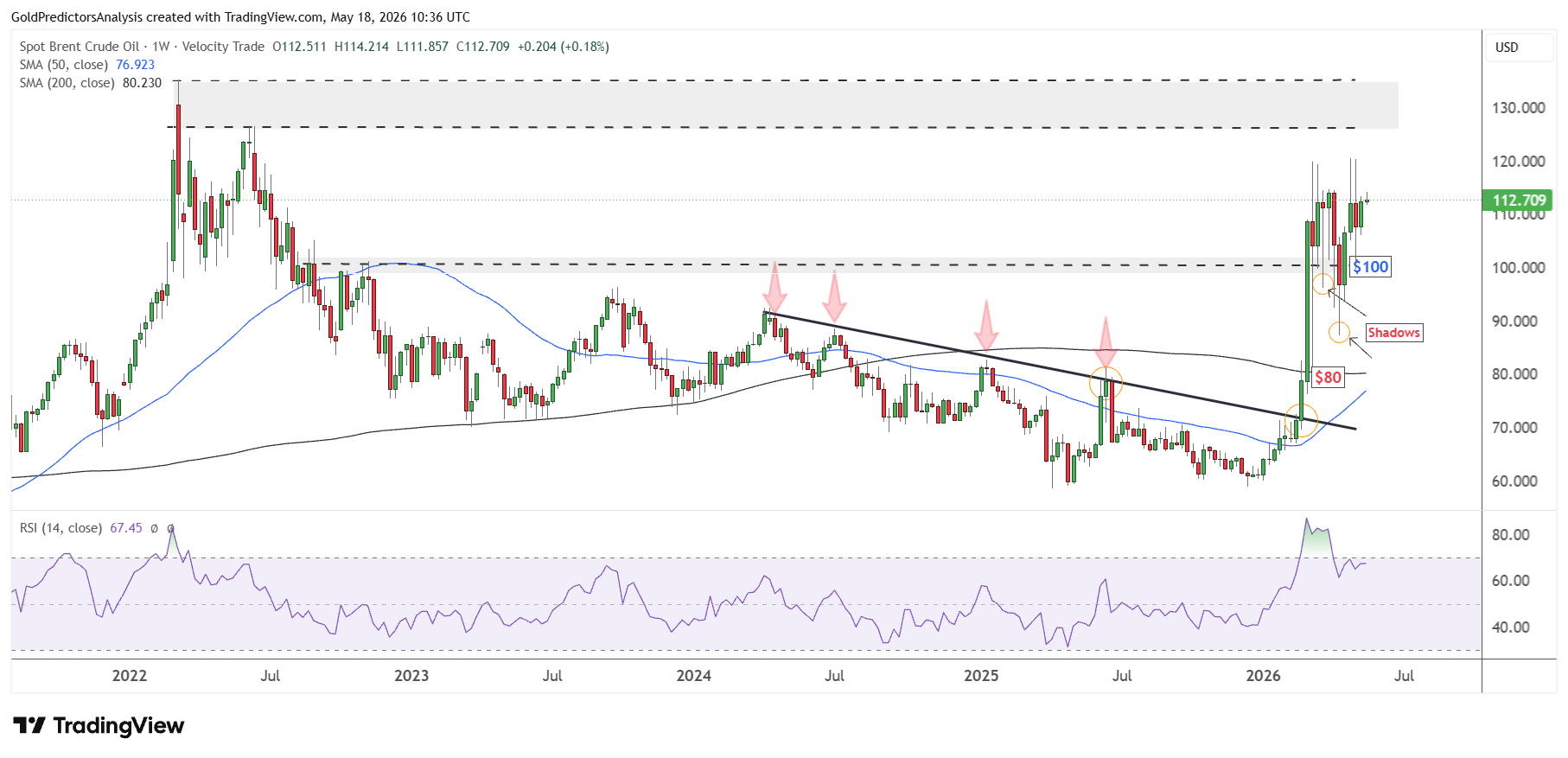
The same bullish structure is also observed in the Brent crude oil market which shows a strong key reversal above $100. The emergence of shadows on the weekly candle above $90 indicates the bullish momentum. This bullish momentum can take the prices to $130 to $140.
The RSI is also cooling from the overbought region. But the overall trend remains bullish. The wicks on the weekly candles in the Brent crude oil market suggest that the price is stabilizing above the support levels to push higher.
Market Risks
The main risk for oil is a real diplomatic breakthrough. The fear premium could quickly dissipate if there is a de-escalation in the US-Iranian situation and shipping confidence in the Strait of Hormuz is restored. This would take the pressure off of both Brent and WTI, particularly if China also draws down its own crude reserves. Oil may roll back from the recent highs if the supply outlook improves, which will undermine the bullish setup.
The second risk is from demand. Oil prices are already feeding into producer prices and Treasury yields. An increase in yields can lead to an increase in interest rates, which could cause consumer and business spending to decline. This may adversely affect fuel demand and the overall economic activity outside the AI-driven fields. If so, oil could continue to be volatile even as the long-term picture is bolstered by supply risk.
Bottom Line
Oil prices continue to be supported as the market is continuing to risk on supply, inflation pressure and uncertainty around the Strait of Hormuz. China or the U.S. may be able to dampen the market for a while using strategic reserves, but this does not address the actual supply problem. While shipping confidence is low, both Brent and WTI may be expected to remain strong, with buyers coming back in to buy when prices dip.
The big issue is now the broader economic impact of higher oil prices. The higher oil prices are now spreading through producer inflation, Treasury yields and borrowing costs. This puts strain on households, businesses and equity markets, while AI spending boosts segments of the economy. The base case remains bullish for oil, but a real diplomatic breakthrough or a big deceleration in the demand could shift the tone quickly. A break above $120 in Brent oil will likely open the door for a strong rally towards the $140 or even higher.
If you’d like to know more about how to trade crude oil, please visit our educational area.