



Oil prices remain strong following a period of historic volatility as the market balances the headlines of ceasefire against an ongoing serious supply disruption in the Middle East. The extension of the ceasefire has reduced some of the panic in the short term but has not restored confidence, as the Strait of Hormuz is still closed and the wider flow of crude is still strained.
I think this unsolved supply shock with declining available inventories and the threat of increased buying by China, sets the stage for higher oil prices in the coming weeks. This article presents the fundamental and technical drivers that may shape the next move in the oil market in the coming months.
Fundamental Drivers Keeping Oil Prices Elevated
Ceasefire Hopes Ease Panic, but Supply Risks Remain
The oil markets have a mixed backdrop now. On the one hand, President Donald Trump declared that he would lift the ceasefire with Iran indefinitely to give more peace negotiations. This headline would have helped to calm down some of the panic in the crude markets. But the market failed to see it as a complete de-escalation since the U.S. also indicated that it would continue its naval blockade on the Iranian seaborne trade. That sustains a significant threat to supply and does not allow traders to price in peace. An initial Iranian response was also skeptical and this further raised questions about whether a true diplomatic breakthrough had been reached.
This is important as oil is not just a reaction to headlines about wars. It answers the question of the freedom of movement of barrels. An extension of ceasefire is supportive of stability but a blockade in place destabilizes the flows and maintains a tight market. This explains why prices have the potential to remain high despite the political language sounding less heated.
The Supply Shock Continues to Drive the Market
The biggest driver of oil is the magnitude of the supply shock. According to IEA data, the oil supply around the world had dropped by 10.1 million barrels per day to 97 million barrels per day in March. That is an unprecedented fall and indicates energy infrastructure attacks both in the Middle East and tanker blockades via the Strait of Hormuz. OPEC+ production dropped drastically and non-OPEC+ production went down as well. Meanwhile, Middle Eastern and Asian refinery processes were at risk due to the difficulty in obtaining the feedstock.
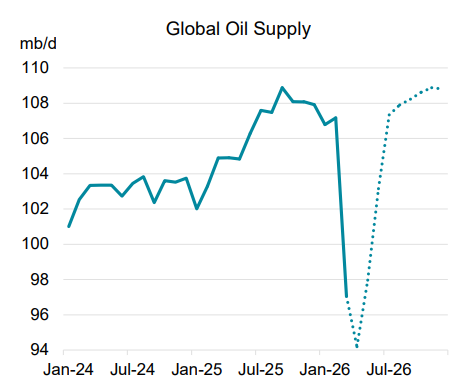
This was the reason why the market was so aggressive. With such a drop in supply, refiners start to rush to find substitute cargoes. This supports the reasons why spot crude and differentials skyrocketed. The price hike was not a mere emotional trading due to the war headlines. It was an actual lack of available barrels, broken infrastructure and transport routes.
Brent Oil Price Forecast
Every new Brent Oil analysis as it publishes, today's technical signal and key levels, live price — on one page.
See all Brent Oil forecastsInventories Offer Temporary Relief
Inventories have cushioned the impact but they have not addressed the issue. It was revealed that oil inventories decreased drastically in March and that floating storage is increasing in the Middle East since the Strait is essentially closed and there are no more export outlets. China also deposited crude in tanks earlier and later began to draw on those that had been stored in barrels during the disruption. The stock draw helped in covering some of the supply loss and alleviated short term buying pressure in the market.
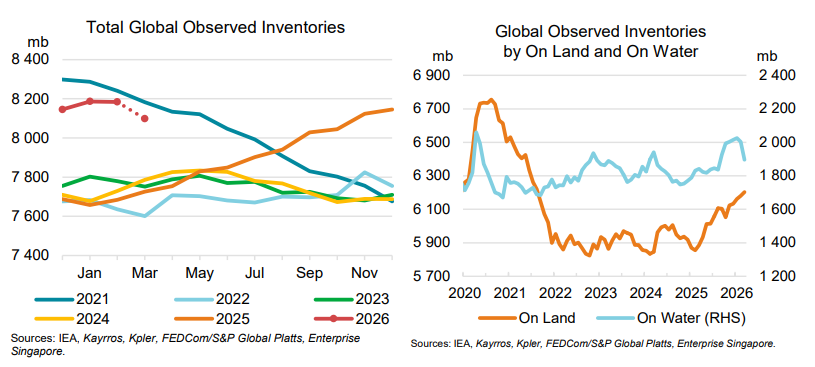
But this buffer does not seem permanent. China can resume large-scale buying of crude in the coming weeks as inventories are going back to work levels. That is an important point. This would bring fresh demand to an already constrained supply as China is the largest crude importer in the world. Inventories have cushioned the entire effect of the shock, but they can also be preparing for the second leg up in prices next time restocking starts.
Demand Weakness Slows the Rally, but Does Not End the Threat
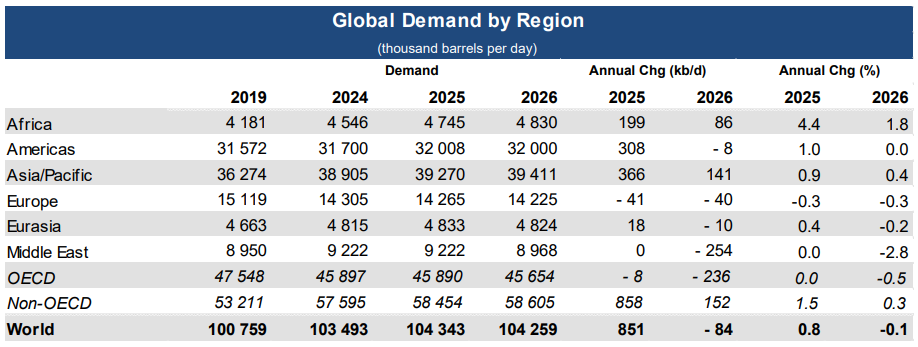
The other side of the coin is demand destruction. The supply shock that has lifted prices has begun to damage consumption. The oil demand is now expected to shrink by 80 kb/d this year and there will be a steep drop in the second quarter of 2026.
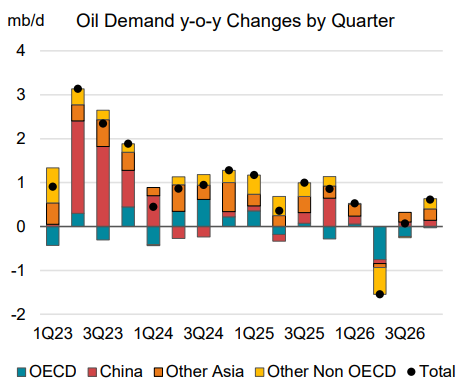
It has already shown weakness in the demand for naphtha, LPG and jet fuel in the Middle East and Asia Pacific. This means that higher oil prices are starting to damage the economic activity.
Nevertheless, the reduced demand is not completely the solution since the demand for oil is rather inelastic in the short term. Industries and people will not be able to stop consuming energy immediately because of price increases. This is why even oil that is sold at $90 to $100 a barrel might not have significant effect on the demand so as to balance the market.
In case the supply losses worsen further, governments might have to step in with demand-restricting actions like fuel rationing or transport restrictions as Fatih Birol warned. That threat continues to make the macro an oil bull in the short run despite the possibility that recession worries may turn into a drag in the future.
Why the Fundamental Drivers Still Support Higher Oil Prices
The existing oil environment is still positive since the market is yet to overcome unresolved geopolitical risk, intense supply disruption, declining accessible inventories and chances of China re-emerging as a huge buyer. Simultaneously, U.S. producers are not too confident in the increase in drilling operations as they are not sure that the rise in prices will be sustainable. This reluctance restricts the rate of recovery of supplies. This means that the oil market can afford few mistakes. Ceasefire headlines can persist but prices might remain solid until the physical movement of crude in the region returns to normal in a significant sense.
At this point, the actual macro driver is war. It is mixture of restricted flows, sluggish diplomacy, shrinking inventories and ineffective supply reaction. That merger keeps the market narrow and helps to argue about high oil prices in the following few weeks and even months. More than wishful headlines would be needed to bring a bearish shift. It would involve visible supply chain improvements, steady levels of exports and signs that the emergency inventory supply is no longer needed.
Technical Drivers Point to Further Upside in Oil Prices
From a technical perspective, the WTI oil price shows extreme volatility not seen since the 1980 crisis. This strong volatility is evident in the monthly candle of March 2026, which produced a 50.94% gain. However, almost all of the gains were erased in April 2026. But the price is again maintaining upward momentum after the strong correction from the resistance. This resistance is defined by the descending channel pattern.
Based on the fundamental side of the coin, oil remains strong as the Strait of Hormuz is still closed. There is no near-term possibility of reopening the Strait. This kind of supply shortage will signal a breakout above $110. This breakout will likely take out the long term resistance around $125 to $130.
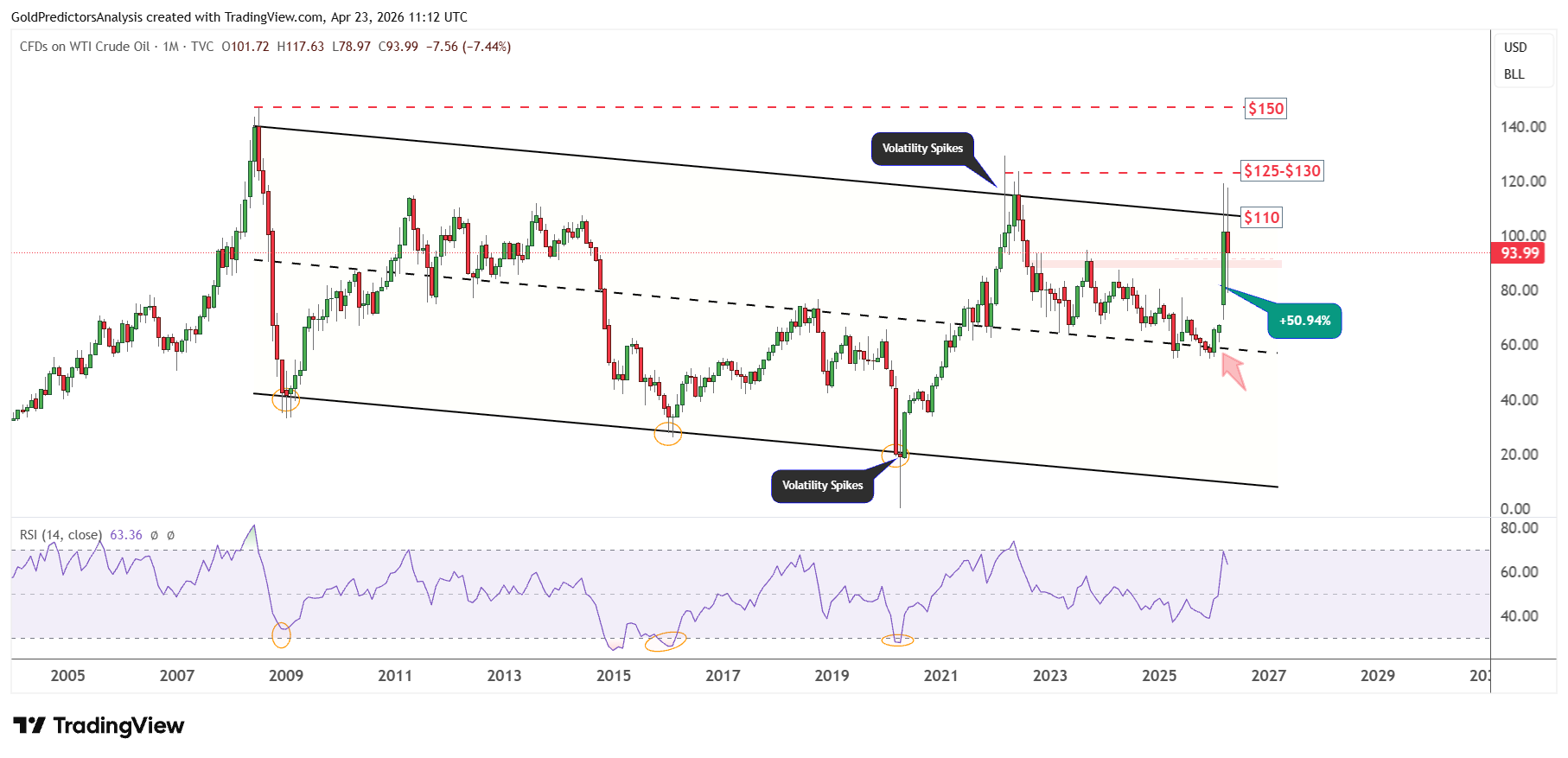
This breakout will quickly push prices towards $150. However break above $150 will indicate a strong surge towards the $200 area. The chart shows that the strong rally in oil prices from July 2020 lows indicates a positive trend.
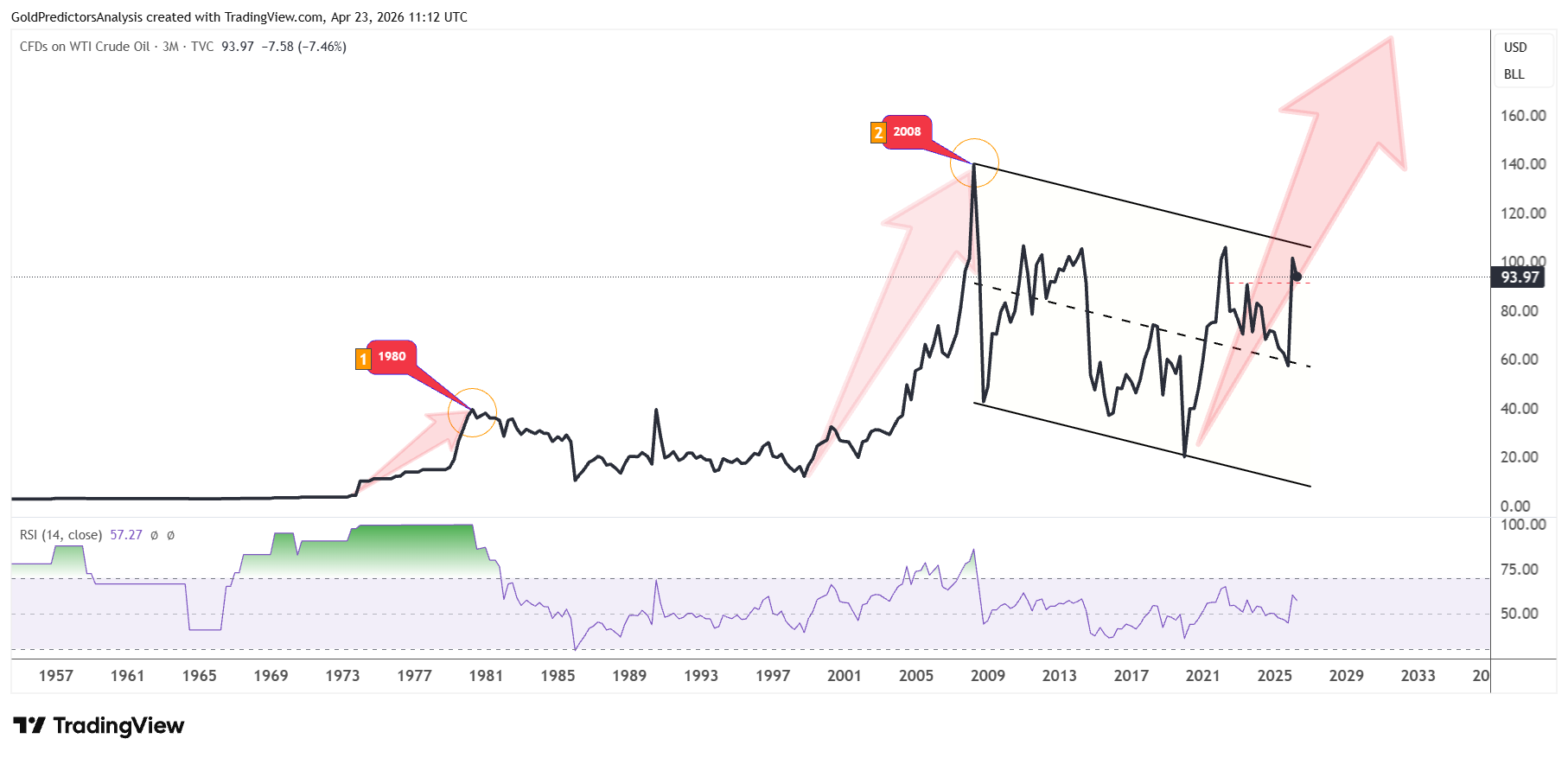
Historically, oil prices have been surging in stages. The first stage of the rally was driving from 1973 to the 1980s high. The high in 1980 was developed around the $40 area.
The second stage of the oil rally began in October 1998 reaching a high in July 2008 at $147. Now the third rally is beginning by marking a low in April 2020 and approaching the record high.
If the conditions are not resolved by July 2026 and the Strait of Hormuz is still closed, it will trigger a broader economic recession. This will push prices towards $200.
What is Next In Crude Oil?
Oil prices are expected to go higher as the underlying environment remains tight and unresolved. The headlines about the ceasefire calmed some panic but they did not reestablish normal oil flows. The presence of the U.S. blockade, the shutdown of the Strait of Hormuz, declining accessible inventories and the threat of China coming back as a big buyer continue to place a strain on supply.
Meanwhile, the off-region producers have failed to respond quickly to close the gap. That puts the market in another squeeze. Although the demand has begun to impact negatively due to the high prices, oil consumption is difficult to cut down very fast which means the supply shock can still dictate the price action in the short run.
The technical picture backs that positive opinion. In March 2026, oil prices surged on high volatility. The prices reversed most of the move in April but the market did not collapse. The price has corrected and begun to regain an upward momentum. This behavior suggests that the buyers are continuing to protect the overall trend.
A break above $110 can push the price to the long term resistance at $125 to $130. On the other hand, a break over that level would pave the way to $150. A break above $150 would push the prices to $200. The fundamental principles explain why oil is tight whereas the charts indicate where that pressure can lead to the next significant upside breakout. In my view, the bullish momentum in oil prices will pick up when prices break $120.
If you’d like to know more about how to trade crude oil, please visit our educational area.