



China put its rare earth weapon back in the holster last November, but it didn’t unload it. As part of the trade truce, Beijing suspended its sweeping export controls on rare earth elements (“REE”) and strategic metals through November 2026. It is offering Western manufacturers a reprieve from what had been an escalating squeeze on the materials that power everything from EVs to fighter jets to smartphones. Markets exhaled, and the REE sector took off. But the reprieve is exactly that, and the clock is still ticking.
In practice, actual shipments of export-controlled rare earth compounds to the U.S. remained nearly nonexistent through the first two months of this year, suggesting the controls are de facto in place. China still controls roughly 60% of global rare earth production and 90% of refining capacity, a structural chokehold that no trade deal can undo by November. The Sprott Critical Materials ETF (SETM) has surged over 170% during the last year and is now pressing against a resistance level that has capped the rally twice this year. As we approach another chance at a breakout, we come at it with a brighter macro picture than before, an important factor that can make the difference.
The Clock is Ticking for the West
The macro case for rare earth miners has three legs, and all three are load-bearing right now. The first is geopolitics: the U.S.-China rivalry over critical supply chains has accelerated from rhetoric to policy on both sides, with Washington now functioning as an active participant in the sector as well. The Department of Defense took a $400 million equity stake in MP Materials (MP) last July, set a price floor of $110 per kilogram for neodymium-praseodymium oxide—twice the market rate—and committed to buying the entire output of MP’s planned stateside magnet facility. The State Department has since mobilized over $30 billion in letters of interest and investments across domestic critical minerals projects, including a $1.6 billion LOI for USA Rare Earth (USAR) in late January.
These address real shortfalls. The U.S. and its allies in NATO severely lack production capacity for almost any of the most critical materials for advanced defense systems like anti-air missiles. That 90% figure stated about China is no lie. Add in Russia to the picture (“New Axis”), and the control in some elements like gallium is >99%.
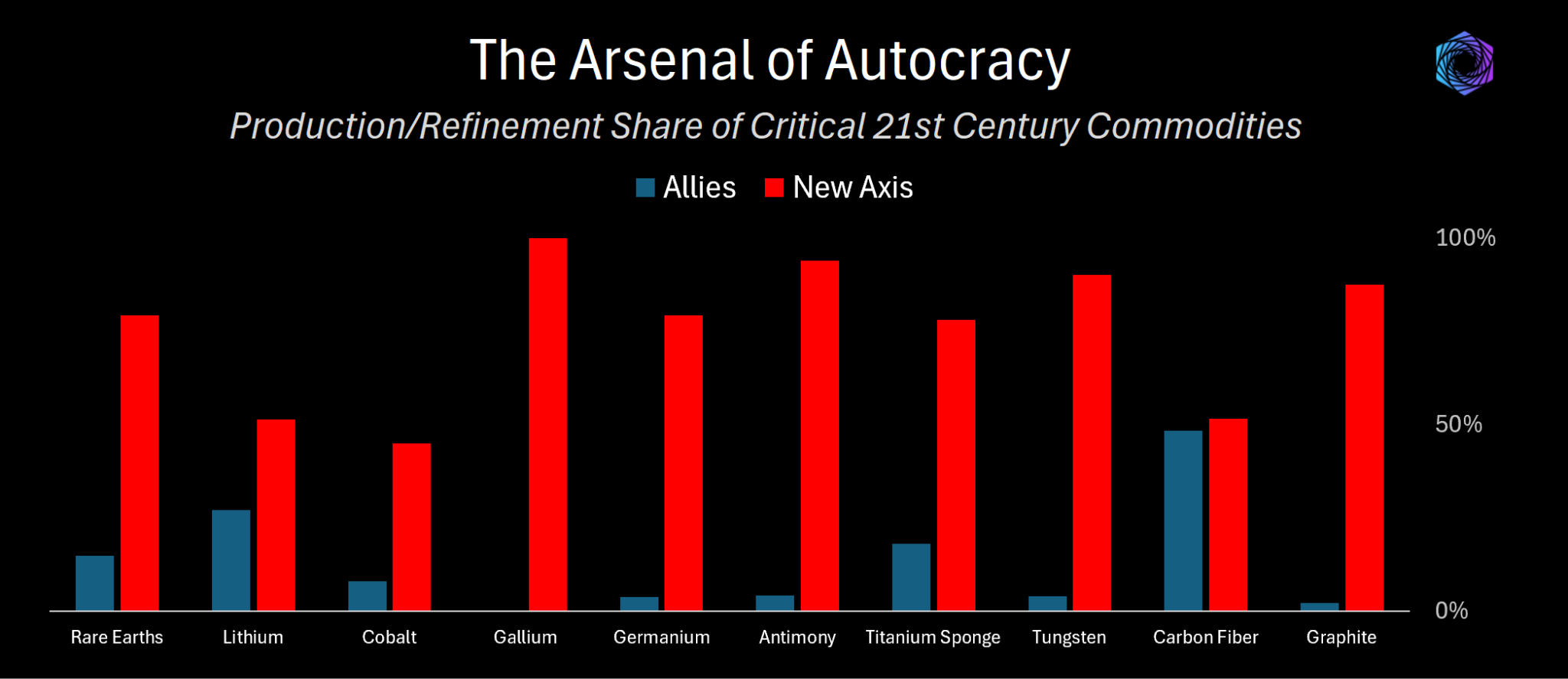
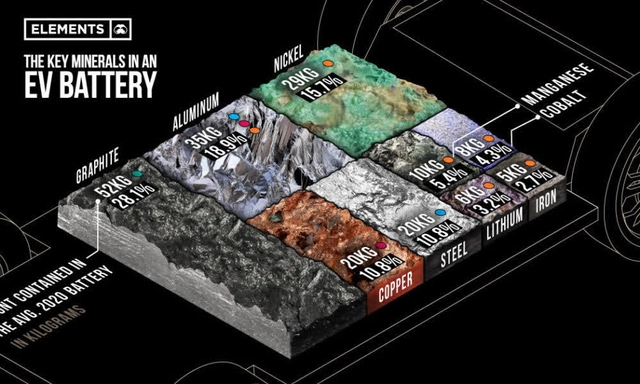
The second leg is structural demand: REE are non-negotiable inputs for most things made through advanced manufacturing, like AI data center hardware and advanced warfare systems (drones, missiles, etc.), industries that are all growing, not contracting. They will need more and more REE inputs as time goes on, and without this investment into domestic and allied production, we will not only continue to fall far short of target, but the gap will widen. Consider that an EV battery is 1/4th graphite, which China controls 95% of the processing for. Without that supply chain node, EVs cannot be made.
The third is supply reality: despite the diplomatic truce and the investments currently flowing, building processing capacity takes years, and the West is slow to build by global standards. Australia’s Lynas Rare Earths (LYSCF), the largest REE producer in the West that has deposits of all 17 REEs, still sends material to China for refining. We can produce, but not refine, and we won’t be able to change that for years.
As an ambitious effort to secure enough critical resources to continue production of military equipment and other things necessary to national interests, the U.S. launched “Project Vault” with the intent of buying up $12B worth of REE stock. Congress is in the process of authorizing additional funds, up to $2.5B, in a bipartisan effort.
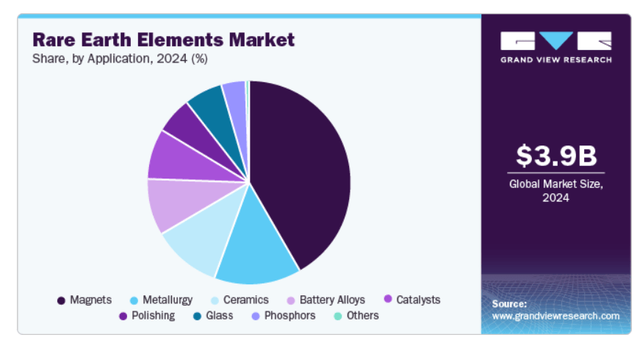
But as I’ve highlighted already, just throwing money at the problem now can’t fix the decade of neglect in these supply chains. The current REE market cannot support that level of capital inflow. It’s simply not large enough in its current form. Industry estimates had the market at $4B in 2024, with projections that the total market globally today is<$10B at the high end.
There is more money flowing into the sector with political goals (as opposed to strictly economic ones that require certain returns) than there can rightfully be allocated. This is going to create dislocations in pricing, like we’re already seeing with the pricing floor provided to MP, that will dramatically benefit the firms held by the SETM ETF. The buildout is looking to be turbocharged over the coming years.
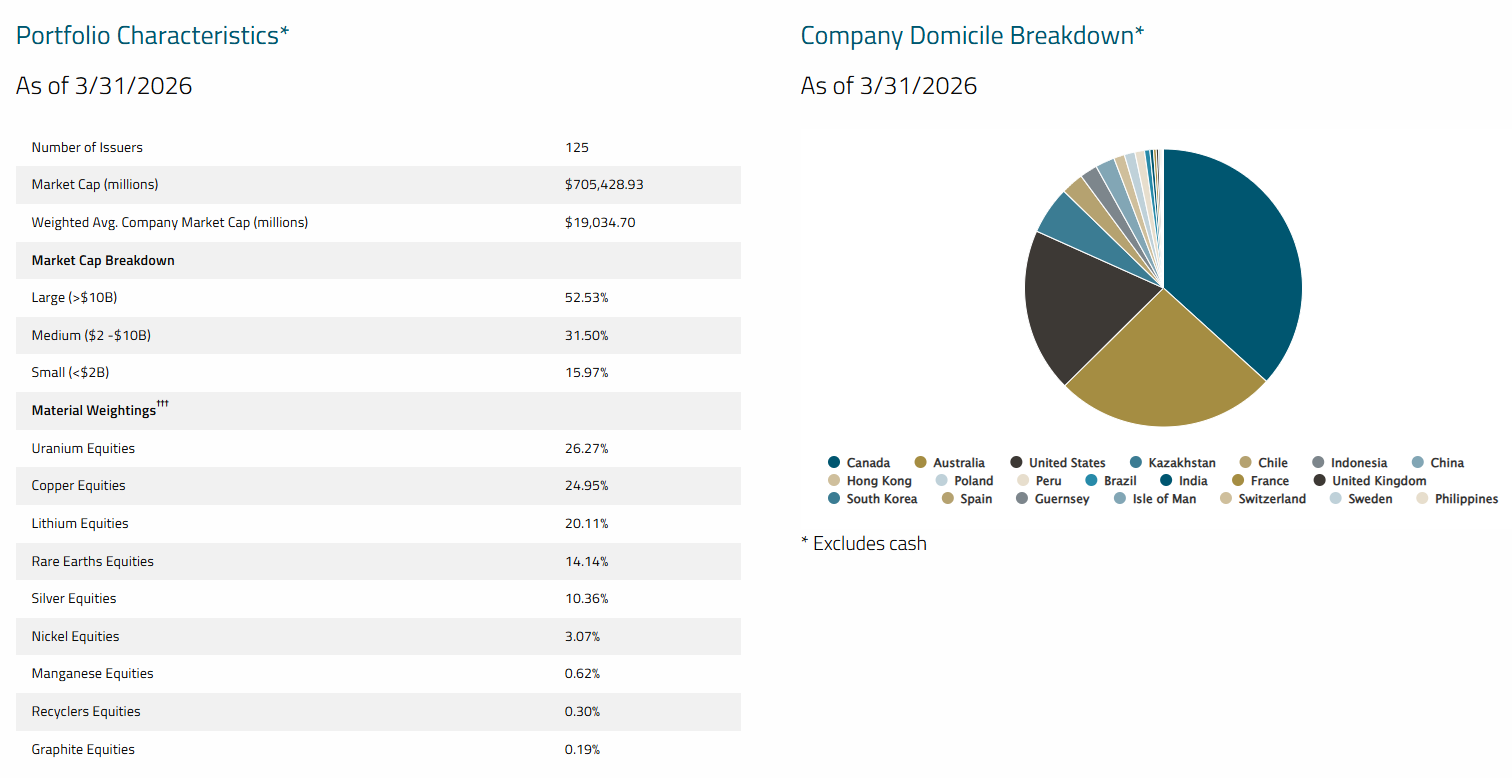
Other firms in the fund stand to benefit too, like those engaged in copper and uranium mining, which are increasingly becoming considered strategic assets and critical suppliers by the government. Here is a snapshot of SETM’s exposure, although note that many firms that are listed as one category often blur the lines. Many of the largest uranium miners also produce heavy rare earths but aren’t listed in that category since they are all only afforded one label.
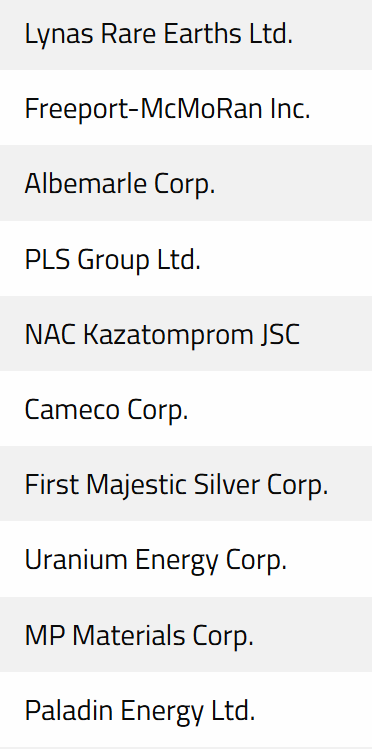
Here is a snapshot of SETM’s top 10 holdings from its website for context on the individual firms:
SETM Technical Outlook
This brings us to the technical picture for rare earths and critical materials. As mentioned earlier, the fund has hit a ceiling at the ~40 mark, having hit it in January and February, rejecting both times. It made a lower high in February and a lower low in March, both bearish signs.
But the bounce off the VWAP at ~30 and subsequent breakout above the 50-EMA at ~34 is a bullish sign. It looks like a possible resumption of the rally, although the bulls still have to prove themselves with one last task.
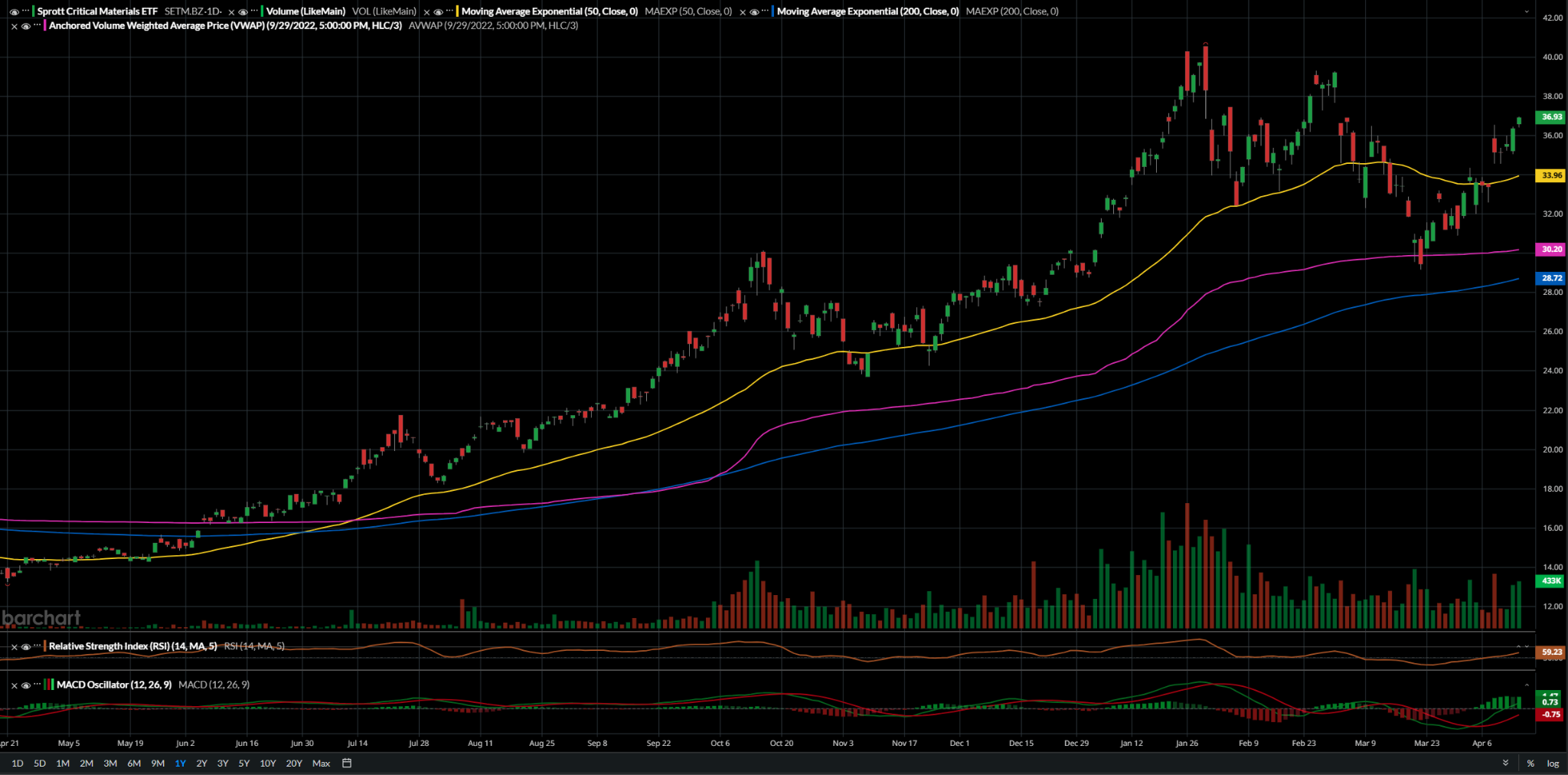
Bulls have momentum in their favor, with the RSI about to touch 60 and the MACD is clearly positive territory. The fresh volume in the last two sessions has kept it from turning over, which is bullish heading into the next retest of the 38-40 zone.
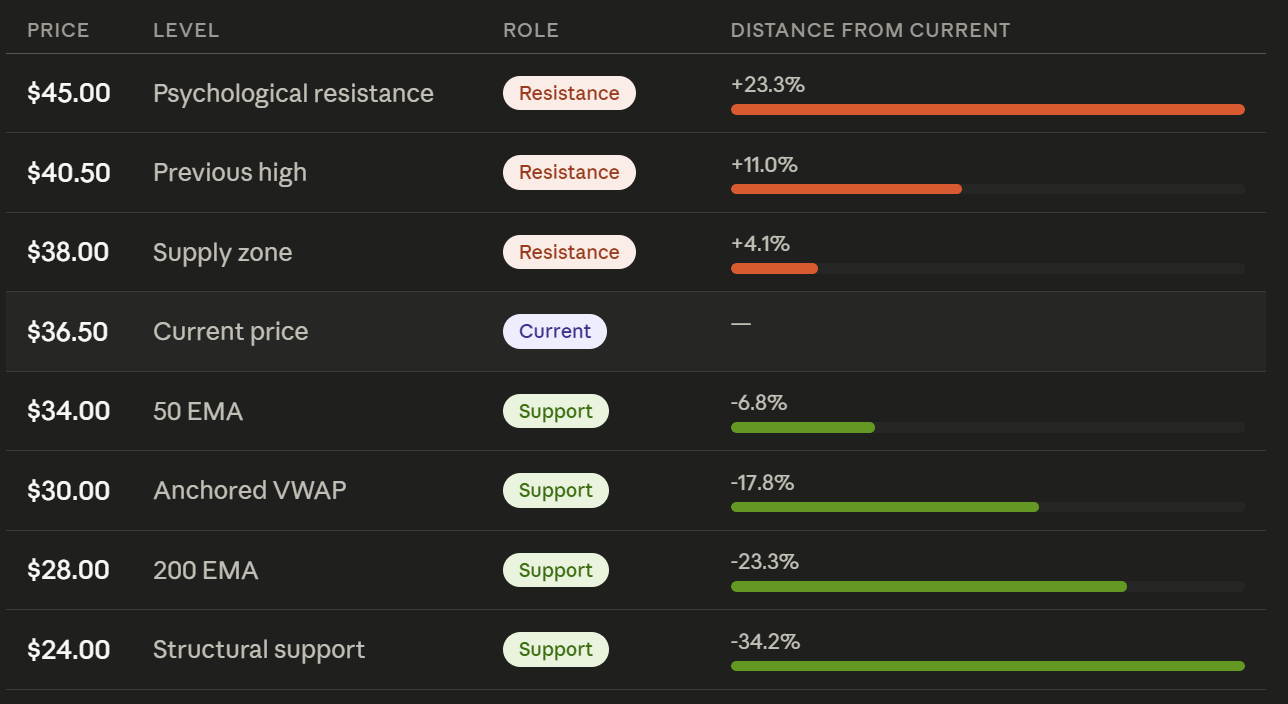
For bulls, rejection again is not the end of the road. It depends on where in the zone rejection hits. If it comes in under 39, making another lower high, that is invalidation of the breakout altogether. A break above 40.50 would mean a new high and SETM would enter uncharted territory, although 45 will likely act as a psychological resistance level.
For bears, a higher high, even if it still rejects off the ~40 zone, would be a poor signal for the medium term. A lower high will likely bring a retest of the 50-EMA at ~34. Failing that means the next support isn’t until the anchored VWAP at ~30. The 200-EMA is in tow at ~29, so that level brings strong support. It would be wise to take profit before those levels, as it is likely that SETM will find buyers there. However, a break down below the 200-EMA at ~28 could see SETM fall as low as ~24 before it finds its first structural support.
Here are the key levels to watch:
Conclusion
The SETM thesis doesn’t require you to predict the outcome of U.S.-China diplomacy or what will come of the trade true. It only requires you to accept that there is a structural gap and the November deadline will come well before it’s fixed.
Washington is throwing money at a supply chain that took two decades to hollow out. It will take years to rebuild because money doesn’t resolve the issue of regulations, permitting, and construction. Those are issues that take time to fix, and the structural gaps will widen.
The technical picture is constructive: momentum is positive, volume is supportive, and the fund is approaching a breakout attempt from a stronger macro foundation than either of the last two tries. If this attempt fails, it will solidify a bearish pattern of lower highs and lower lows.
At best for the bulls, a confirmed break above $40.50 opens uncharted territory. But a rejection still isn’t fatal, provided it makes a higher high. That alone would tell you the trend is intact. Either way, the case for critical materials exposure is the medium term can be justified largely on macro concerns. The countdown to November is already on, and it seems unlikely given how the start of the year has gone for Washington that they will make significant headway on patching trade relations with China. And so SETM stands to continue its run.