


The Commitment of Traders report (“CoT”) doesn’t make many headlines, but it should. Every week, the CFTC forces the largest players in futures markets—commercial dealers/market makers, asset/money managers, leveraged funds, and large independent traders or “whales”—to disclose their aggregate positions across commodities, stock indexes, and bonds. It’s the closest thing markets have to an X-ray of institutional conviction at large. Currently, we’re seeing something interesting: fresh capital is moving into the markets, and it isn’t going where most retail traders think it is. Institutional traders—“smart money” as they are called—are turning their backs on oil at these prices, sitting out gold despite the macro case for it, and moving back into U.S. equities. Most importantly, they are signaling risk is back on the menu.
Institutions Call Peak Oil
Crude oil has had a historic run over the last 45 days, but given the macro circumstances, few are surprised. Funds tracking oil like the Invesco DB Oil Fund (DBO) are up over 65% YTD, and for most of that time, institutional positioning backed the move. That’s starting to change.
Here’s the CoT report for crude oil:
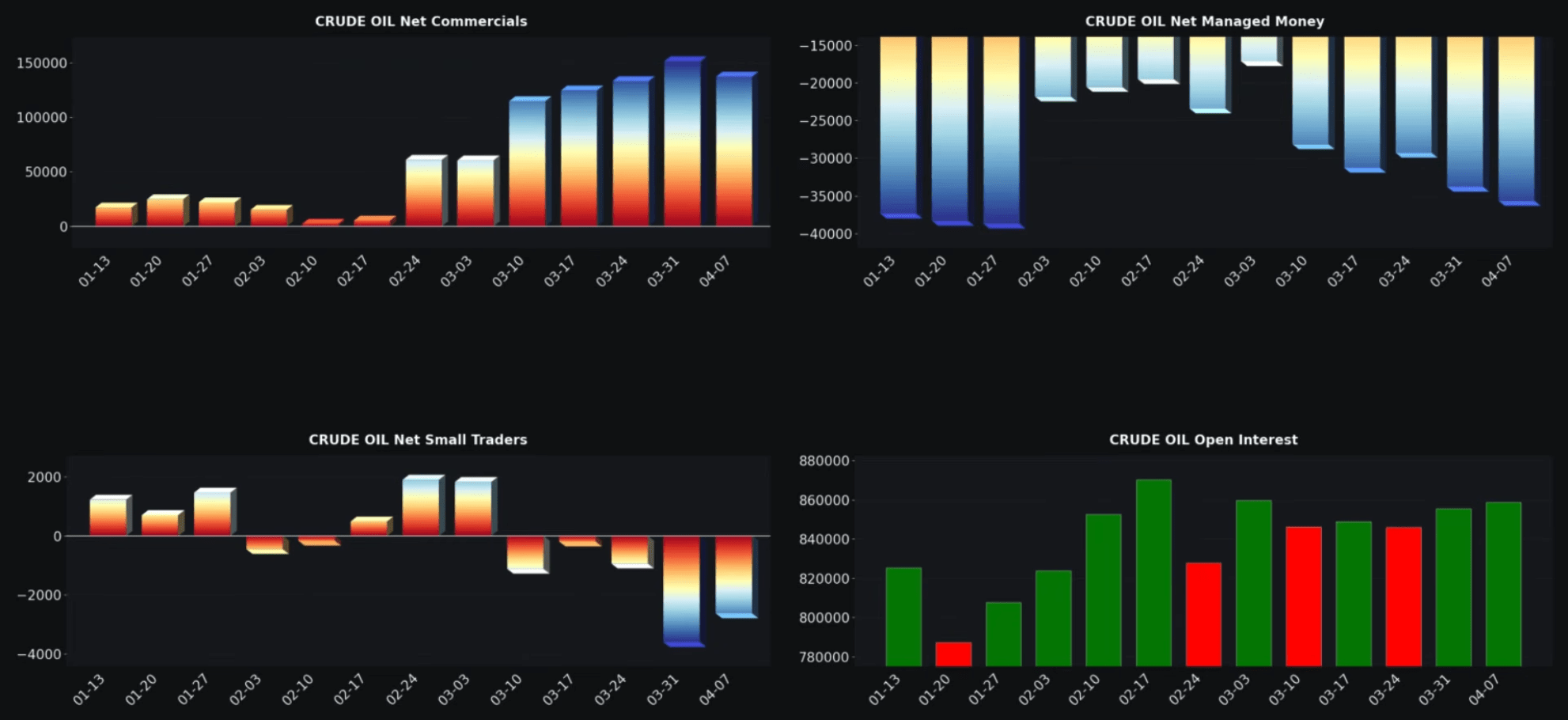
Since late March, overall open interest in crude futures has been rising. Commercials have backed off their long positions while money managers have been piling into shorts. This isn’t rotation within existing positions; open interest is expanding, which means fresh capital is entering the market, and it’s entering on the bearish side across the board.
Even small traders (the aforementioned “whales”, called this because they are individuals rather than institutions), who tend to have shorter time horizons on their positioning, are reducing their shorts, which indicates that their consensus is that the local top in oil is behind us. That’s an important distinction because dealers and managed money will often make moves too early, while small traders will try to time more precisely. Small traders move alongside big traders. It means that the consensus is unanimous.
Their consensus, at least in aggregate, is that peak oil is behind us. That doesn’t mean oil collapses tomorrow. Geopolitical risk doesn’t evaporate on a schedule. But the smart money thesis is clear: this is a top, not a launchpad. This is a great signal for traders that are still in oil here to consider taking their profits alongside the institutions.
Copper Price Forecast
Every new Copper analysis as it publishes, today's technical signal and key levels, live price — on one page.
See all Copper forecastsThey Are Happy To Sit Out Gold
The conviction driving fresh capital into crude oil futures does not extend to precious metals, and to gold in particular. Since January, institutions have been exiting gold on both sides. Commercials and managed money alike are reducing exposure, open interest has fallen to new lows on the year. Gold went from the most crowded trade in the room to one of the emptiest, and it happened fast. It wasn’t even just the U.S.-Iran war; it’s continued lower for more than a month into the conflict.
Here’s the CoT report for gold:
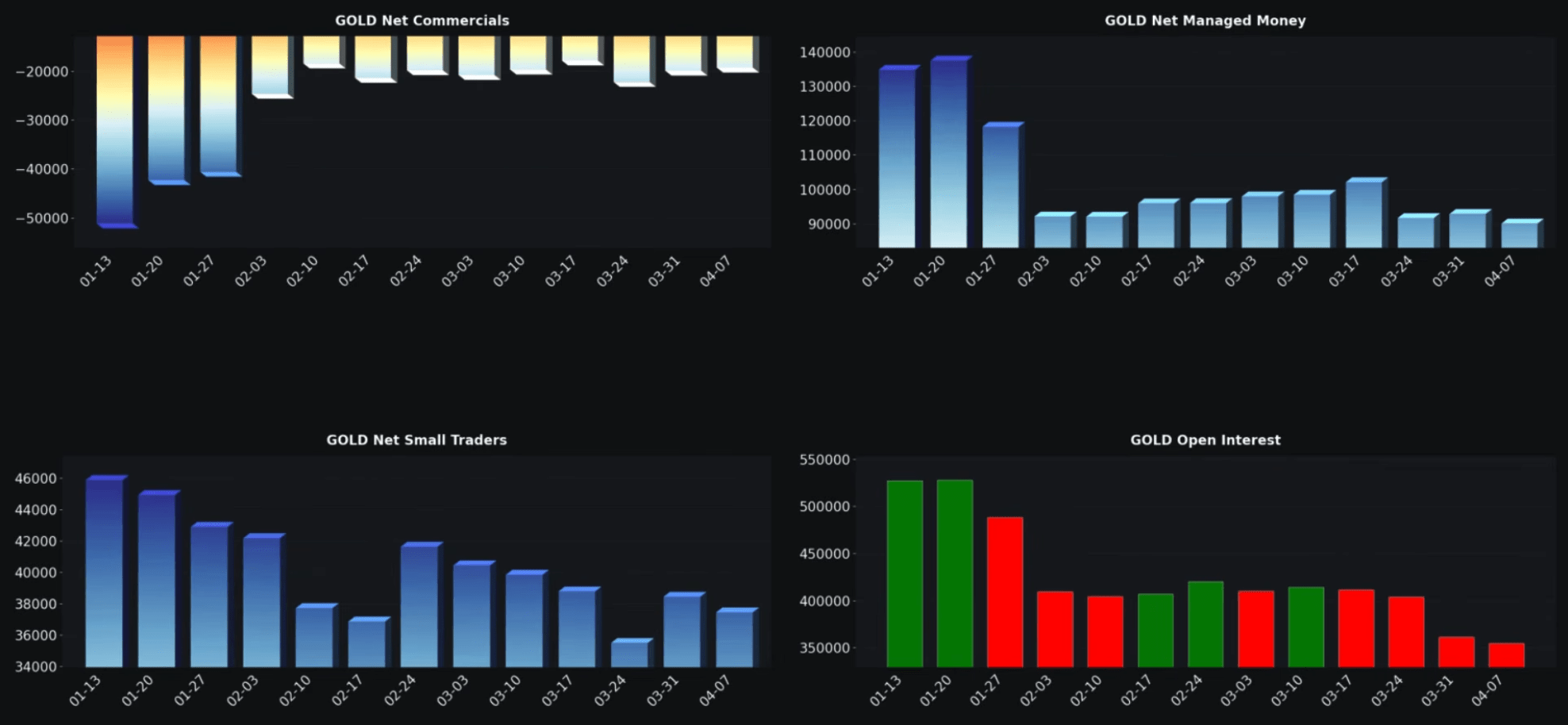
This needs some unpacking, because the bearish positioning doesn’t mean the long-term bull case for gold is broken. Commercials reducing their shorts is actually a bullish signal. The majority of commercials are gold miners; they only stop selling when they think they can get better prices later. So this pattern tells us that they think gold goes higher.
The problem is that managed money doesn’t agree yet, or at least isn’t willing to act on it. Their long levels have remained depressed since mid-March and show little sign of movement yet. Without institutional longs re-engaging, there’s no fuel for a sustained move in either direction. Central banks still matter for this picture but even they’ve been slowing into this year.
The result is a market in limbo. Declining open interest means lower overall volume in gold futures, which is a recipe for the current range to hold. For traders, this is a signal to wait and see what happens next for gold—perhaps even to hedge your downside in case institutional liquidity stays clamed up for some time.
The long-term drivers of gold remain intact from my view: long-term dollar weakness, fiscal debasement, and central bank accumulation are all still in play. Institutions have decided to watch from the sidelines for now, and until they come back, gold may be range-bound. It’s not a rejection of the bull thesis, as they’re not changing their tune on direction, but they are changing their tune on exposure both long and short. It’s an odd signal to get, but we’re in odd times for gold.
Other Metals Get a Second Look
Silver and copper tell more nuanced stories than gold, and somewhat more encouraging ones, though neither offer a clean setup.
Here’s the CoT report for silver:
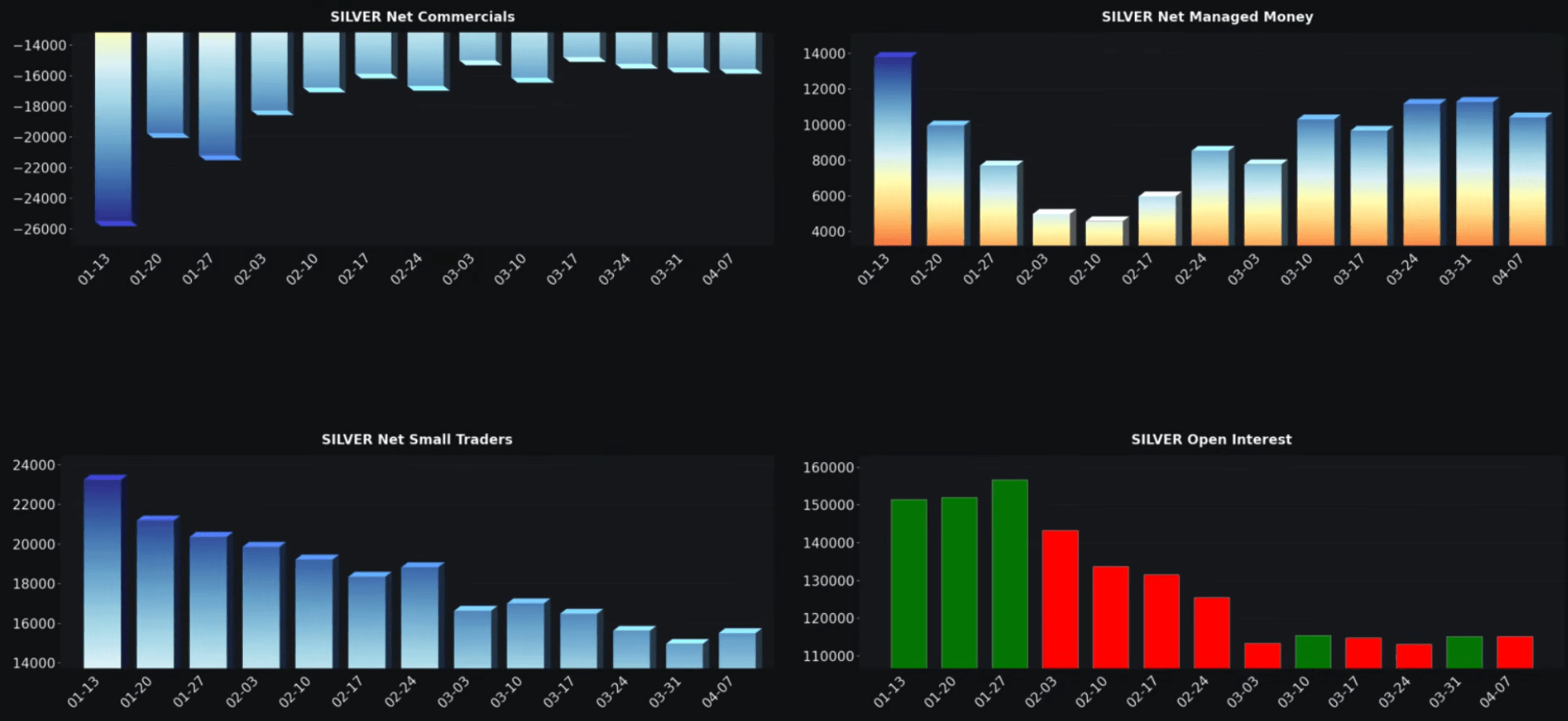
Silver’s open interest appears to have bottomed, which is the first thing you want to see after a large downside move. The problem is that the composition is backwards: money managers are reducing long exposure while commercial entities have held their short exposure, even raising it slightly.
The only group adding long positions is small traders, and even they are running well below where they were in January and February, roughly 40% lower. Silver is more bullish than gold from a positioning standpoint, but that’s a low bar right now. The little guy is still fighting for silver, and sentiment among small traders can really move markets.
Copper is faring slightly better. Here is its CoT report:
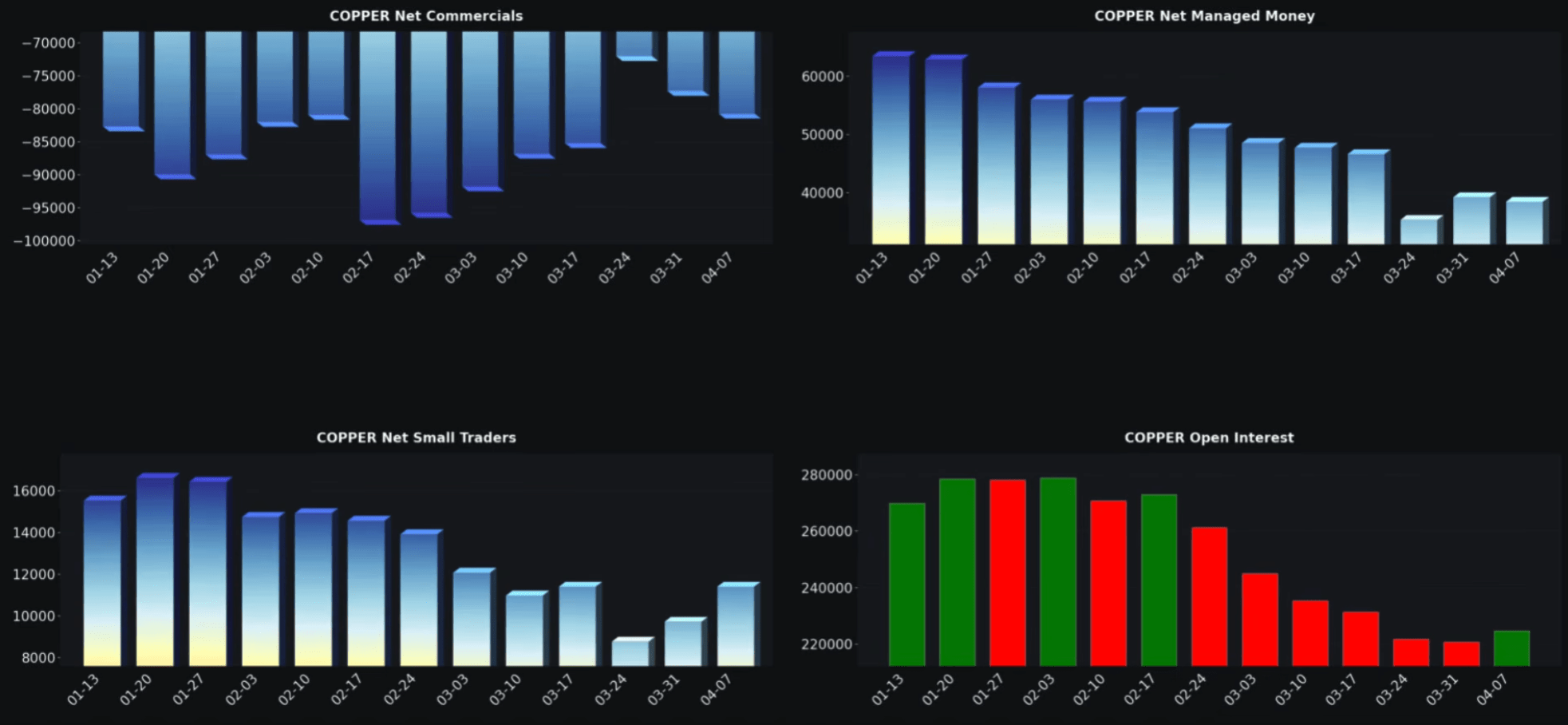
Commercial entities are raising their shorts, which at first glance looks bearish, but managed money is starting to buck that trend. They’re weak, but they’re starting to raise their long positions. Small traders are rebuilding long positions too, much faster than managed money, but still well below January levels. Overall, they are trending in the right direction. Open interest for copper has just turned, and whether that holds remains to be seen.
The broader takeaway across base and precious metals is that institutions are participating selectively, without the conviction that would signal a sustained move is coming for gold, silver, or copper.
Base metals are getting more attention than precious metals right now, which is itself a signal: it suggests institutions are more interested in the industrial demand story than the safe-haven/de-dollarization trade. When the risk appetite is there for copper but not for gold, that’s telling of where institutional confidence in the macro narrative is, which is undecided and leaning bearish.
Leveraged Funds Call the Bottom For Stocks
The most telling signal in the entire CoT report right now isn’t in commodities. It’s in equities, specifically in what the most aggressive type of institutional traders are doing with their S&P 500 futures positions.
A quick note on methodology: because there are several ways to trade the S&P in futures markets, the figures here aggregate the standard, mini, and micro contracts into a single picture. And because leveraged funds are far more active in equity futures than in commodities, they’re worth tracking here alongside the usual cast of dealers, managed money, and small traders or in this case, “non-reporting” and “unreported” traders.
Here is the CoT report for the consolidated S&P 500:
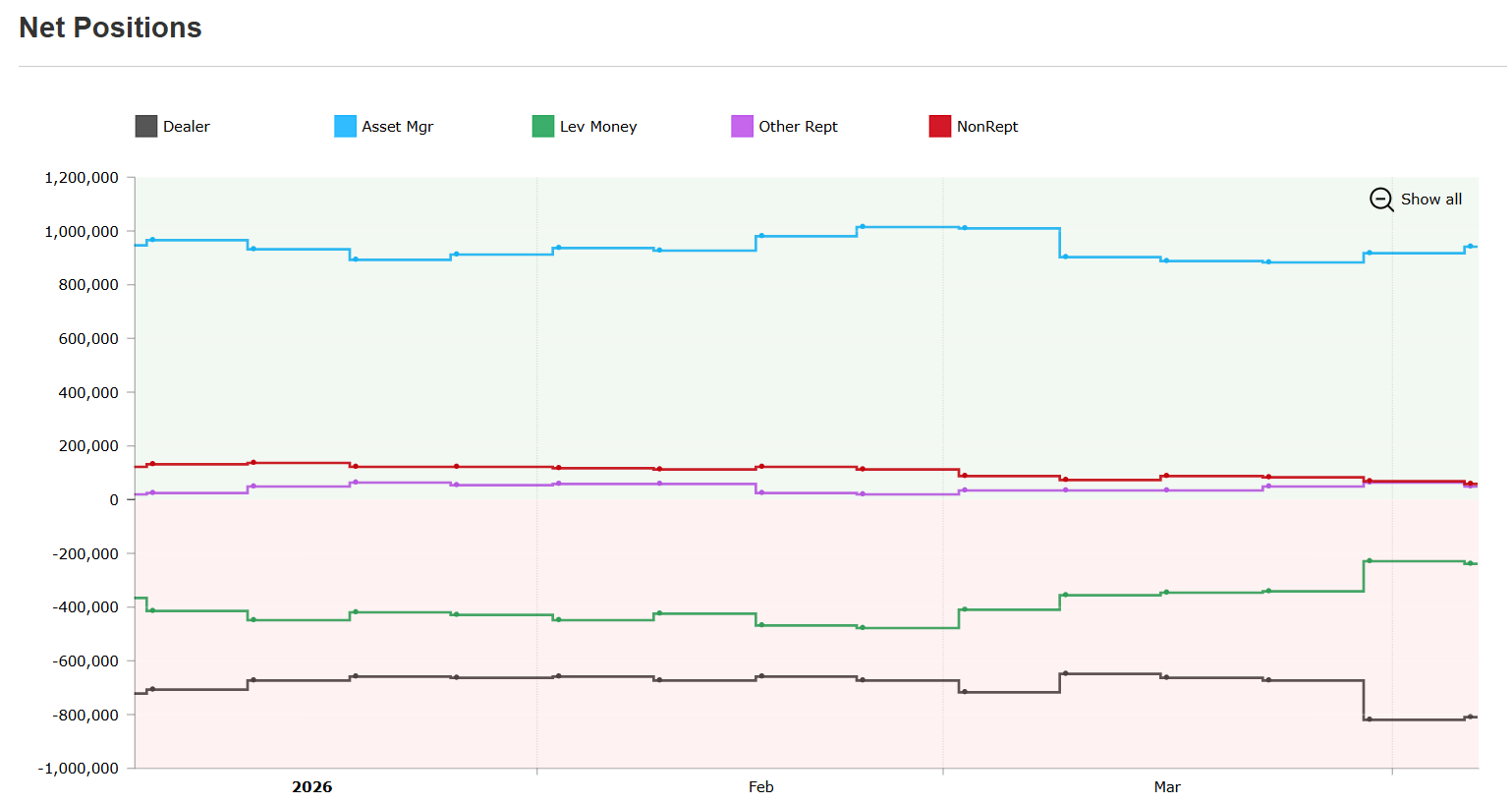
What stands out isn’t the long side because it hasn’t moved much there, and leveraged funds have actually moderated their long exposure from last week, leaving them essentially flat on the year in terms of gross longs.
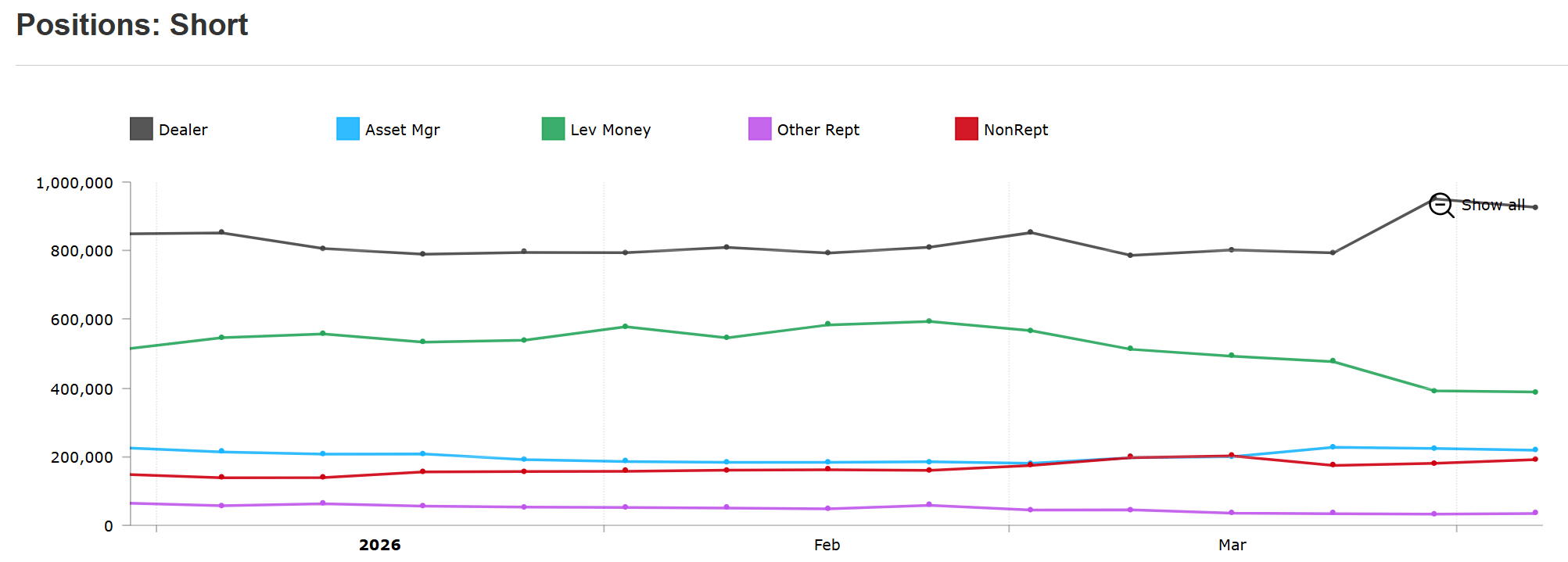
The action is entirely on the short side. Leveraged funds have been covering aggressively, and the scale of that covering is difficult to ignore. Their total short position is down roughly 31% from its peak on February 23rd. That’s a directional statement; they think this new level for the market holds. That suddenness in their movement is telling of conviction.
Dealers have been absorbing the movement as leveraged funds exit, which is fairly routine for equity futures, as their dealers are largely market makers.
Asset managers have grown both their longs and shorts roughly in tandem. It’s a mix of long-term long exposure and elevated short-term hedging given the ongoing geopolitical backdrop. It leaves their net position relatively flat.
Leveraged funds are the most short-horizon, most directionally aggressive traders in the futures complex. When they cover this much, this fast, it means they believe the downside trade is over. That’s as close as futures markets get to a bottom call. It’s not a guarantee that 7,000 will hold on the S&P 500, but it’s a signal that these fast money traders are calling. It’s rare that they cover their positions so suddenly.
Conclusion
The full picture of institutional/smart money is that they are bearish on oil after a 65% run, indifferent to gold and leaning bullish on silver (but only with the small traders). They are cautiously optimistic on base metals like copper and aggressively covering equity shorts as we breach all-time highs. That’s a recipe for a market that is rotating away from the war trade and back toward the recovery trade.
That doesn’t mean the geopolitical risk is gone, although the market seems to be pricing it like it is. The CoT report won’t tell you what happens tomorrow. What it will tell you is what the largest pools of money with the most resources in the room are betting on. Whether you agree with that read or not, it’s worth knowing which way the big players are leaning before you make your next move.