



Back on March 23rd, I called for a near-term bottom in technology stocks when the State Street Technology Select Sector SPDR ETF (XLK) was trading at $136. The setup was simple: tech was oversold and the earnings weren’t letting up like the price was; valuation fell as it was attacked from both sides, a great setup to buy into. Tech was leading the bleed in U.S. stocks after the opening of the U.S.-Iran war, and the bears were out in force. But now that the conflict has matured and there appears to be light at the end of the tunnel for many traders, XLK now sits at a new high, just above the zone I said I would take profits in. The question now is whether tech has more room to run or not. To me, the fundamental case looks stronger than before, and it’s difficult for me to justify exiting even if the technicals look overbought.
Tech’s Fundamentals Look Better Than Ever
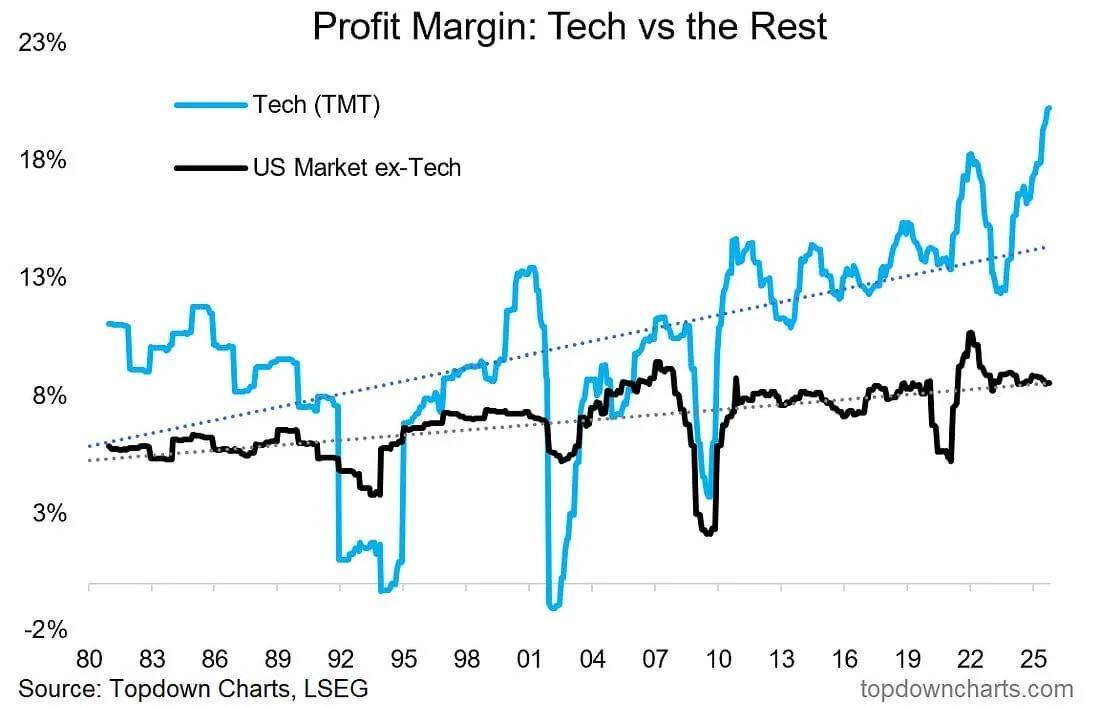
Technology stocks are an unusual bunch compared to most other stocks; while they have always had much more volatile profit margins, they have been structurally higher than the rest of the market for a long time. Most tech businesses benefit from being low marginal cost businesses. It costs very little to produce one more unit of software compared to manufacturing, utility provision, or energy extraction. This has meant that growth for these stocks is easier because they can squeeze more of their products. The Internet changed the game. You can see it in the chart. Combine a low marginal cost business like software with a global distribution system and you have a recipe for structurally higher profits year in and year out.
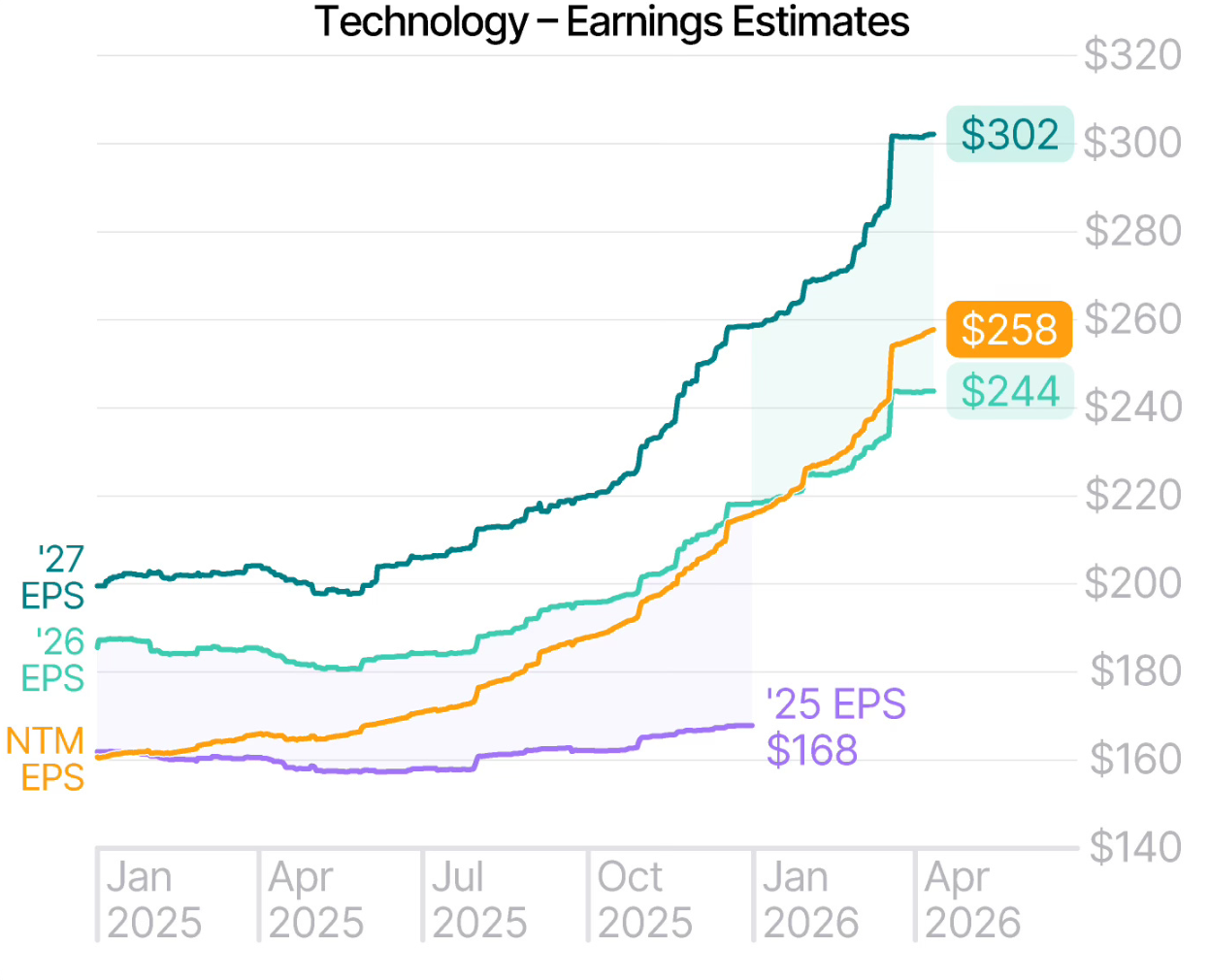
Zooming in on today, and tech is still not disappointing. The sector has been consistently upping its earnings estimates, raising guidance even as stock prices fell significantly through Q1. AI is turning out to be very similar to the software business after its initial barrier costs (read as: building a data center) in that the cost of processing one more token doesn’t scale linearly with input costs. As the pivot to AI accelerates, so too are technology earnings estimates.
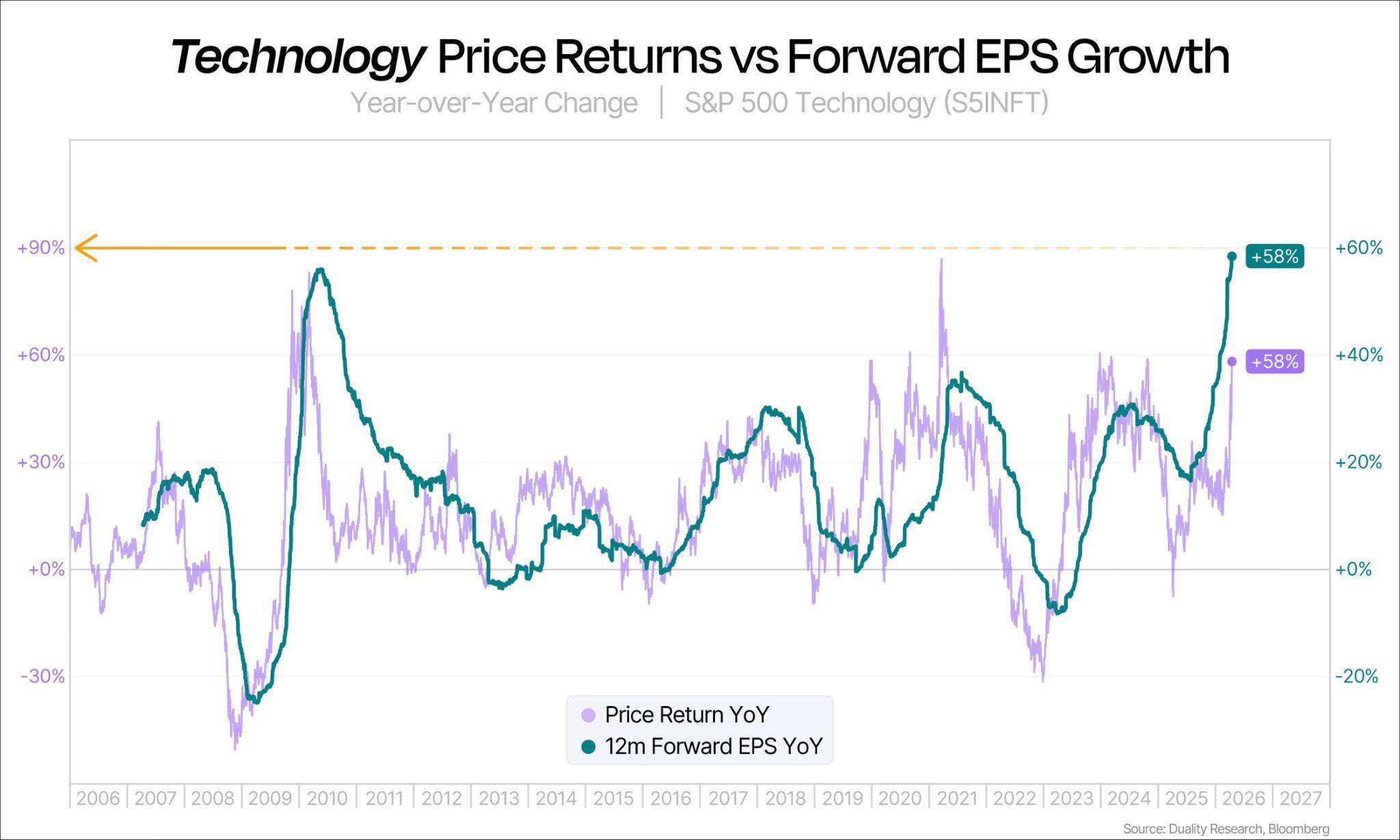
Historically speaking, when technology stocks re-rate as low as they have, down to ~23x their earnings (the low in late March was at ~19x), but forward EPS growth is high, stock prices are quick to follow. This isn’t a rule by any means, and I invest by the maxim “history does not repeat nor rhyme, it instructs,” but it’s a hard chart to look at and feel bearish.
When looking at this wild earnings growth rate that tech was able to muster in 2025 and continued through Q1 2026, using a metric like price/earnings-to-growth (“PEG ratio”), tech looks cheap by comparison to other sectors and indexes. It has a lower PEG ratio than the S&P 500 ex-Mag 7 and even the global stock index. This metric alone doesn’t mean that it’s a good time to keep buying, as it may stay that way for longer than one can stay in the trade. However, this is definitely a time when we could say that tech is “undervalued”—at least relative to some of its sector peers.
S&P 500 Price Forecast
Every new S&P 500 analysis as it publishes, today's technical signal and key levels, live price — on one page.
See all S&P 500 forecasts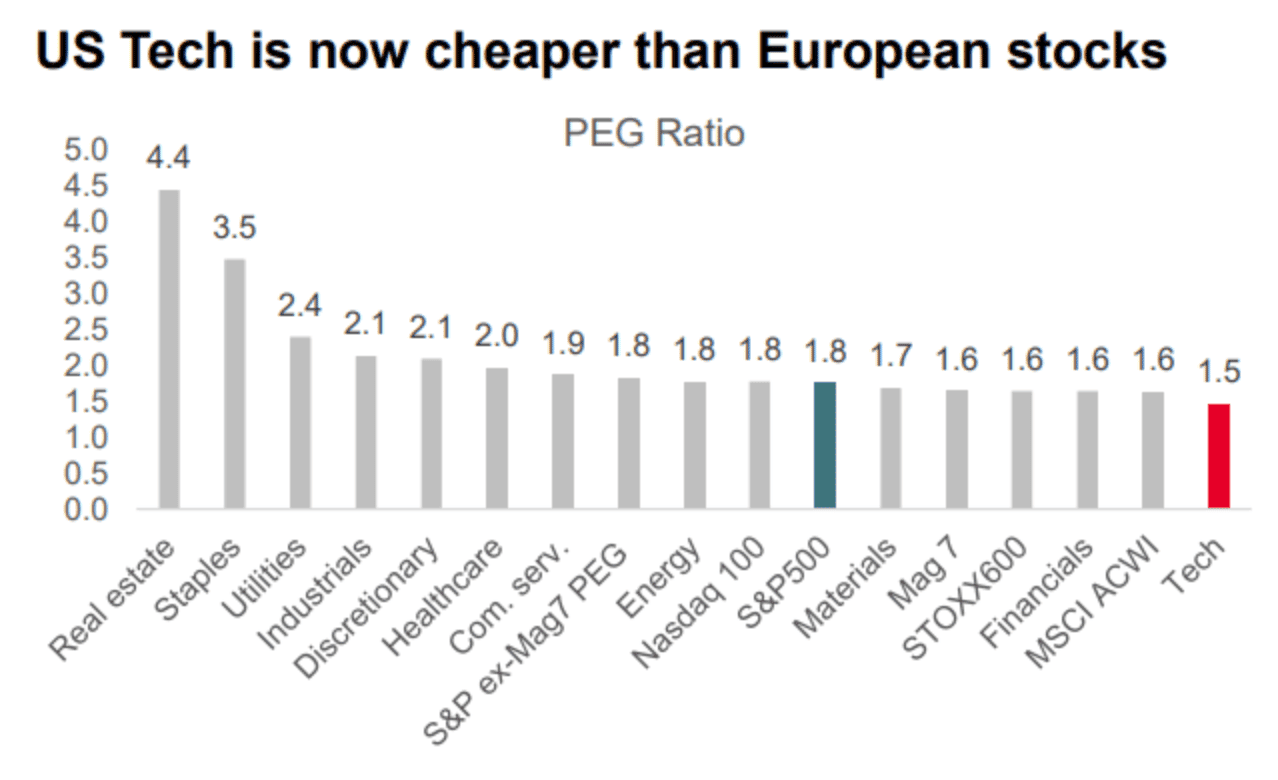
Technology Technical Outlook
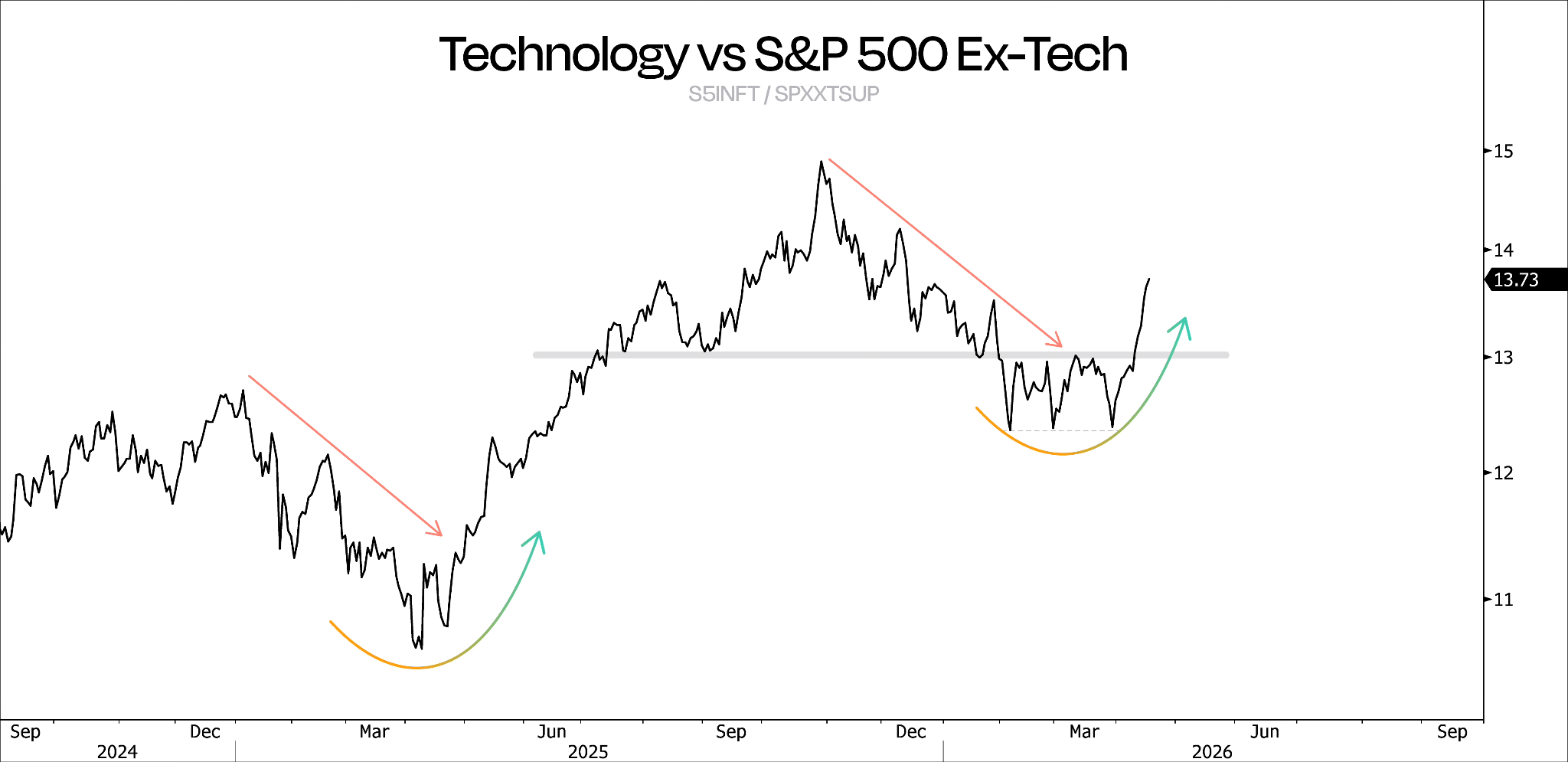
This upswing in tech stocks has caused a breakout in the ratio of tech vs. an ex-tech S&P 500 index, something that happened last time we hit a real bottom a little less than a year ago. The following upswing was violent and extended itself into a secular bull run that lasted months.
Here’s the technical picture for XLK, although I also recommend ETF investors consider VanEck’s TRUT ETF as well, for its more accurate exposure to the S&P 500 technology index. This is the 1-year daily chart with the VWAP anchored to the September 2022 lows:
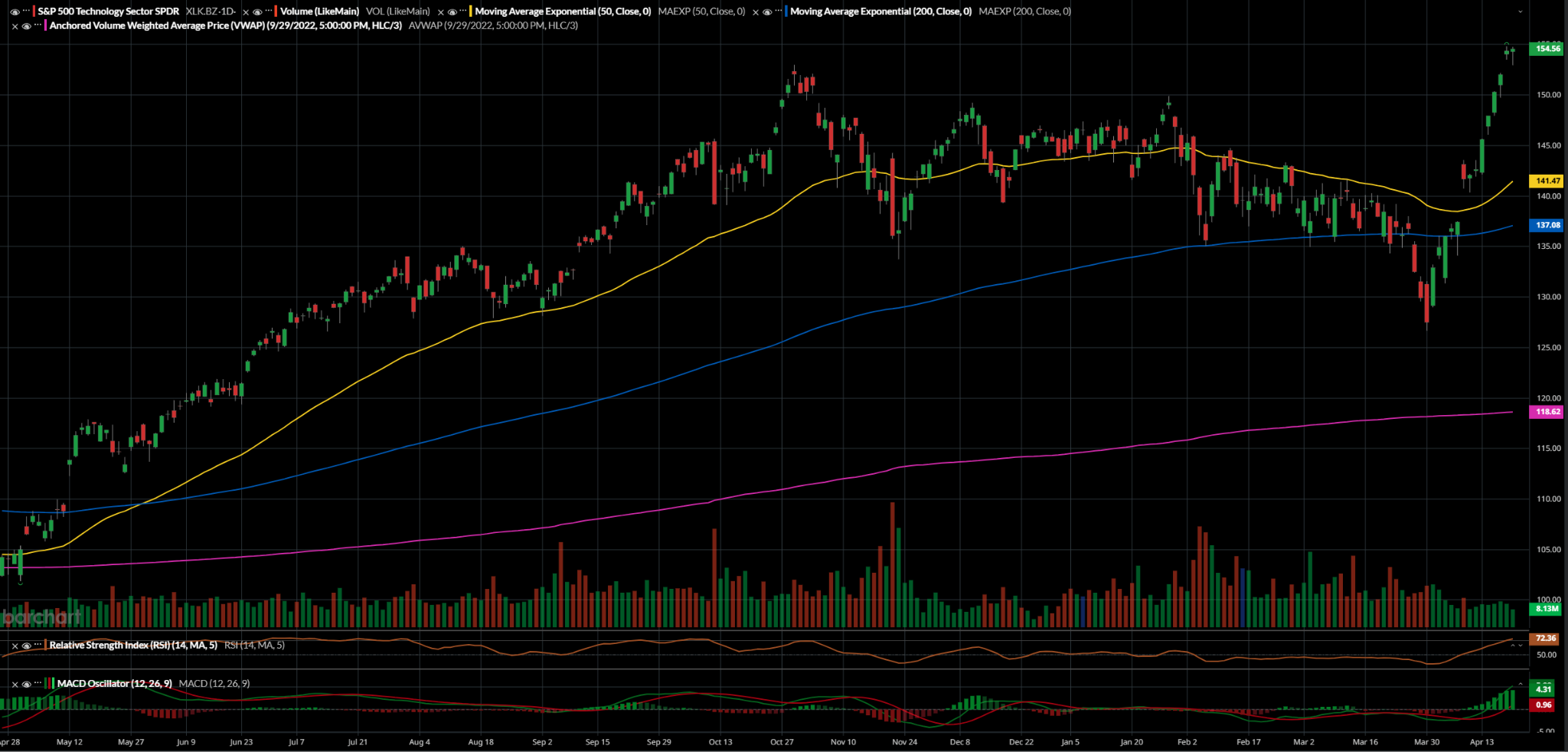
The level needed to validate the breakout I wrote about in my last article covering XLK was 140, and it blew through that without question or a previous failure. This came due to the U.S.-Iran ceasefire, and it’s been climbing since. Now that it’s touched the new high at ~154.80, there was a minor pullback—though that’s expected. XLK may pull back as far as ~151 over the coming days. Holding that line would be very bullish; that is the old supply zone that should now act as support.
Momentum is mixed. Moving averages as shown in the MACD, are ripping higher and show no signs of slowing yet; the divergence between signal lines is growing. But relative strength as shown in the RSI, is now officially overbought, sitting at ~72. That, combined with the drop-off in volume over the last few days compared to the monthly average, is a bearish sign, although it says little about the duration. It may stay overbought for a while, especially if it continues higher in the short-term.
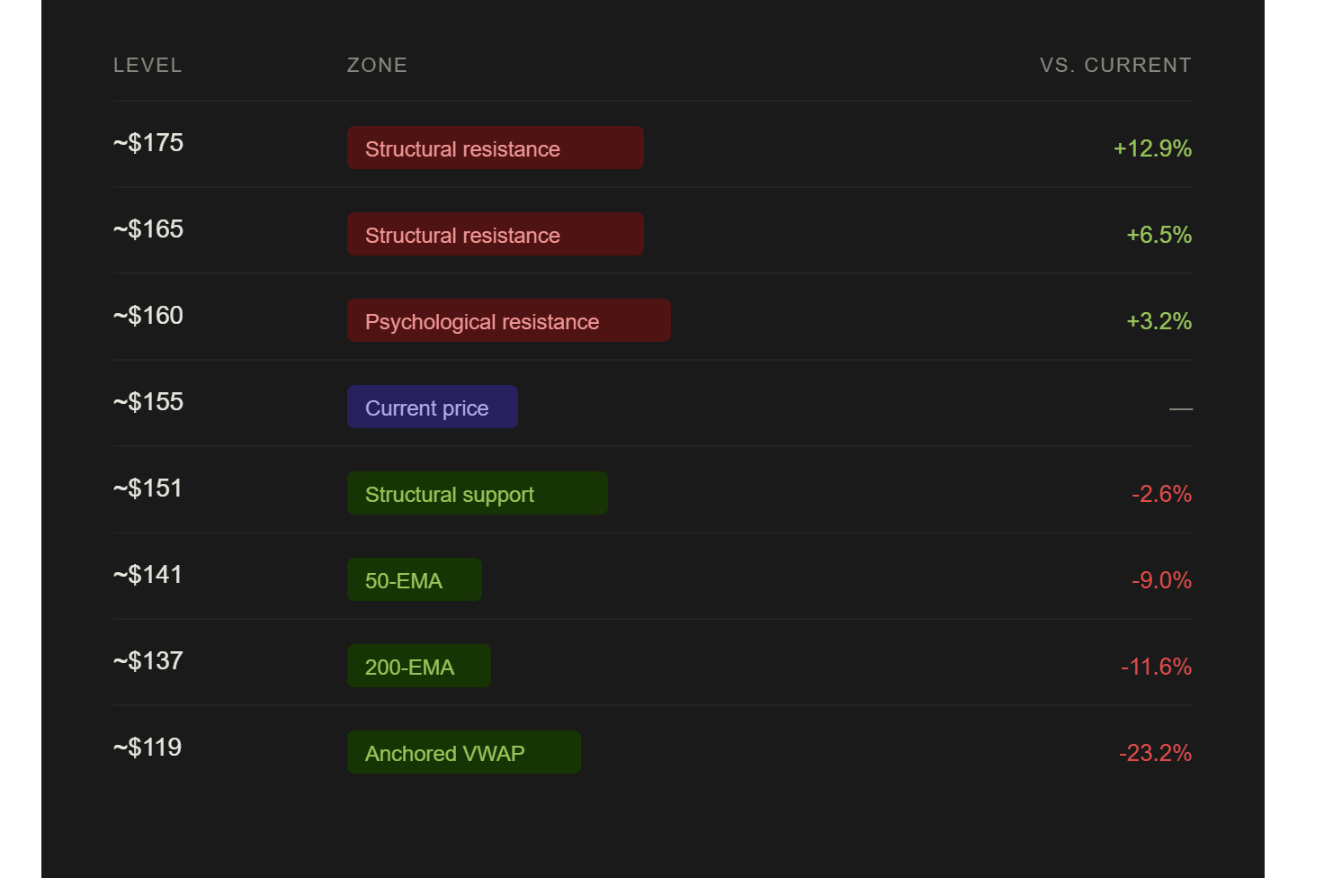
Where the price goes if it heads higher is a hard guess because it’s uncharted territory. The next major resistance sits at ~160, and then ~165 above there. If we reach those levels, what comes next will likely be more clear, especially because we will see if this one-day pullback leads into a deeper consolidation or not.
For bulls and bears, here are the key levels to watch as this trade plays out:
Conclusion
Tech bulls were able to hold the support levels on their chart back in March and have rocketed up since, but fundamentals still show the sector undervalued compared to its history and its peers in certain metrics. The businesses are fundamentally becoming more attractive even as they rise, because their earnings growth is rising faster than their prices despite the all-time highs.
Technicals are mixed, though mostly still bullish from my view. There is an argument for overextension, and the RSI is showing that, but the price looks like it could run even higher to me. What will matter is what comes in the following days: a continued run-up toward 160 and then to ~165 before we hit the next big resistance/supply pocket or consolidation to ~151. If we get consolidation, holding that level is important because below it, there isn’t another support level until ~141.
Of course, when stocks run like this and overbought conditions start to flash, it’s never a bad time to take some risk off the table. Prudent investors may be able to get good entries on a pullback, but don’t be alarmed if the bull run continues. From my view, prices are still catching up to earnings.