


Few things entice speculators more than a chart seemingly in the middle of going parabolic. The Amplify Breakwave Tanker Shipping ETF (BWET) has been setting up such a chart. The fund effectively tracks crude oil tanker freight rates, and it has soared over 428% YTD. Even after that massive run, the setup suggests that we could still have some gas left in the tank (no pun intended).
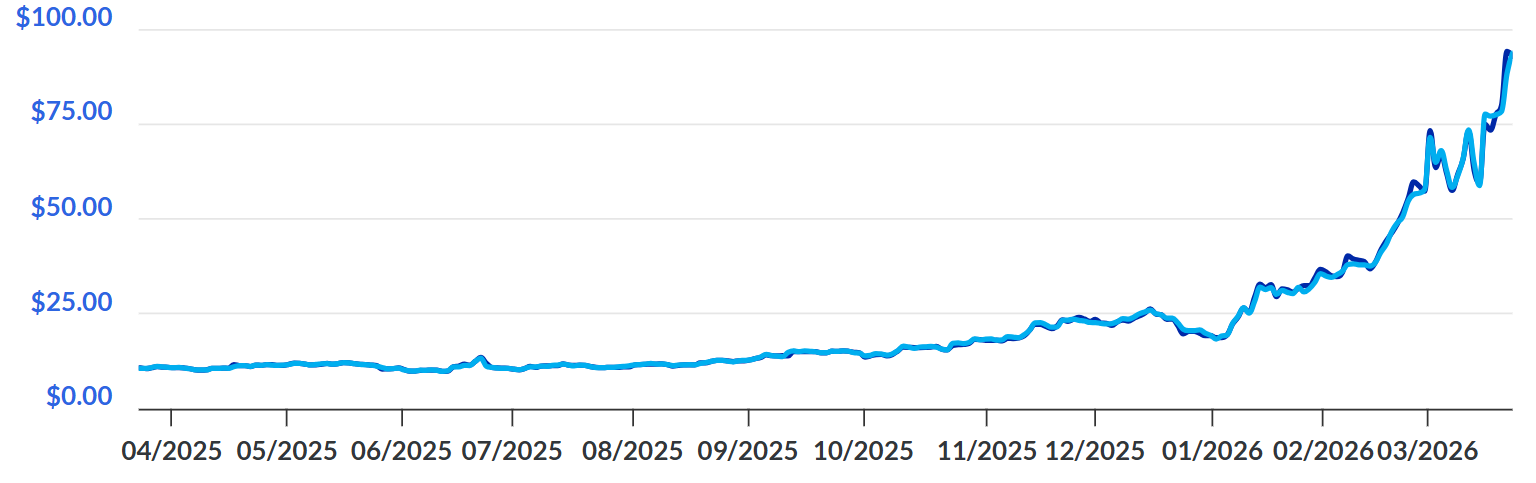
Such runaway behavior is due to the looming global energy crisis linked to the closure of the Strait of Hormuz. It makes perfect sense why these rates would be soaring at a time like this. Tankers who do have their freedom of movement (not stuck in the Persian Gulf) have become a hot commodity. Take away the supply of something that has inelastic demand—most of the oil the world consumes, it does not consider “discretionary”—and price will fly upwards.
A Leveraged Bet on Oil Macro
I think the best way to consider freight rates is like a call option on the market consensus outlook for oil. When things in geopolitics get too rocky and oil starts to spike, bookings for transport ships, and thus rates for oil tankers, surge even faster.
The most recent catalyst has been the closure of the Strait of Hormuz, of course, but shipping rates were rising before that, basically since the new year started. The bottom was around the time that the U.S. captured then-Venezuelan President Nicolas Maduro. Since then, uncertainty and fear around global oil flows have only risen and are compounding exponentially due to the U.S.-Iran War. Now, with news of escalations from Saudi Arabia and the UAE, including reports of the Saudi crown prince leaning on President Trump to prolong the war, the Israeli military now incurring into Lebanon, fear of a global energy crisis is rising.
While I am optimistic for peace in the long run, for the short term, my guess will be as good as anyone’s. This is where speculators have an advantage in markets, and how a well-placed or timed directional bet on BWET could be very profitable.
If the conflict does escalate or even if it just maintains its status quo for another four weeks (we are on week four now), oil will continue to stay elevated above $100/barrel, and we could expect tanker rates and funds that have exposure to them, like BWET, to go even higher.
Understanding Tankers & BWET
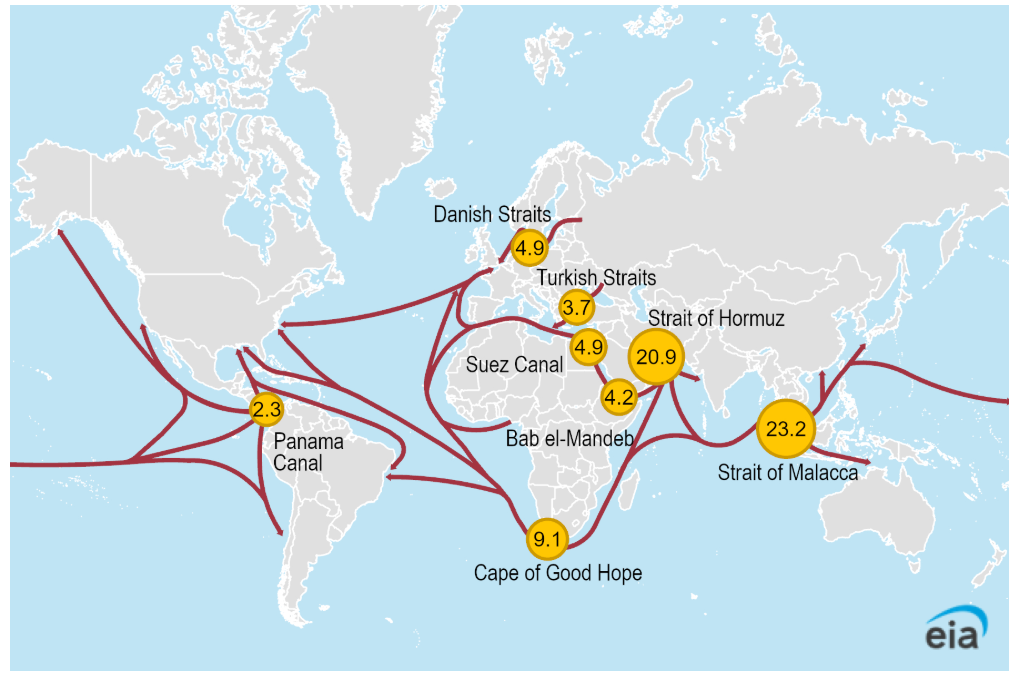
There are three popular tanker classes that move crude around the world: VLCC, Suezmax, and Aframax. BWET focuses on the larger two, and mostly on the largest, VLCC, or Very Large Crude Carriers. Note that VLCC tankers cannot fit through the narrow Suez Canal and so mostly travel through blue waters. Much of the world’s oil, 20B barrels/day, flows through the Strait of Hormuz in VLCCs.
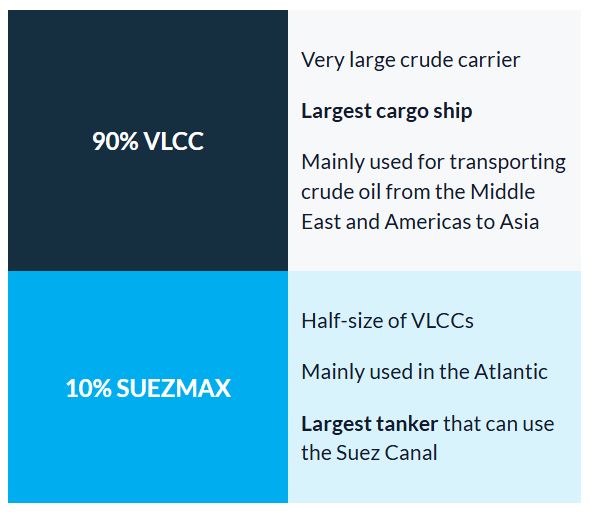
To that end, BWET invests heavily in VLCC freight futures, up to 90% of their exposure. The other 10% is in Suezmax vessels. So investing in BWET is primarily giving exposure to these massive tankers headed for blue waters to Asia and the Americas.
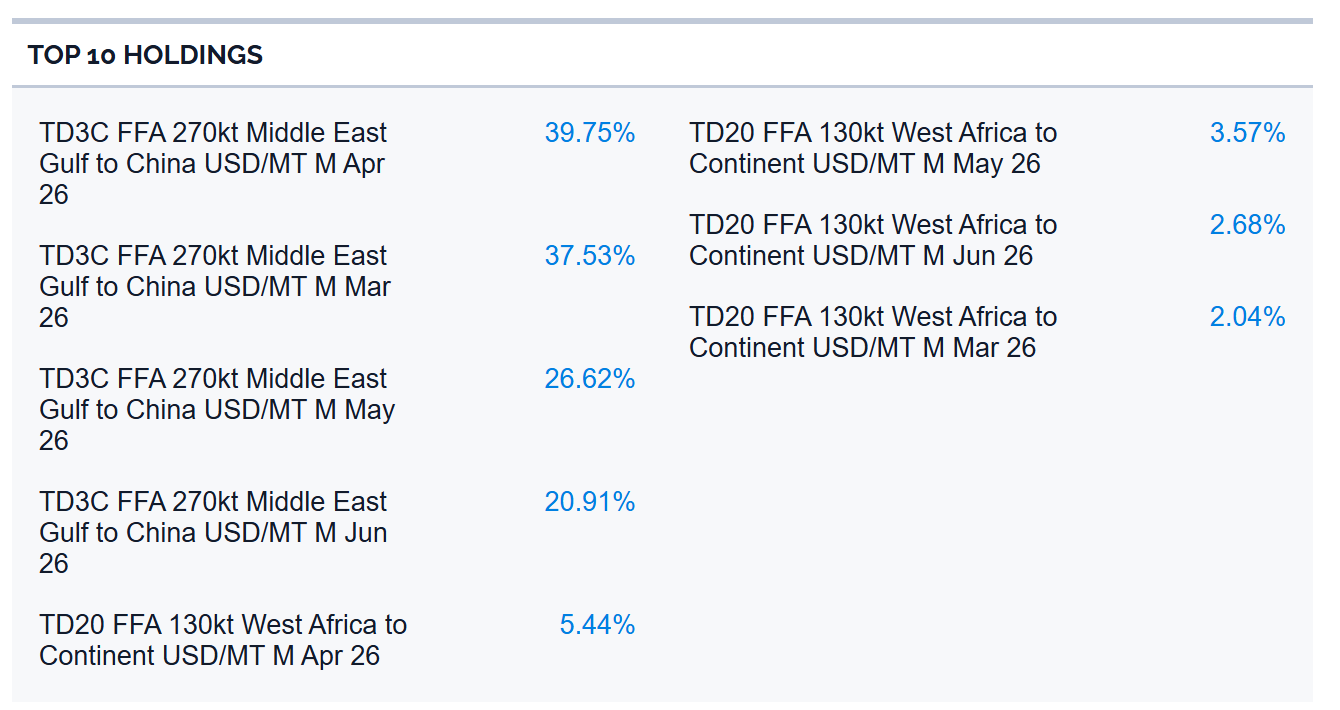
The fund is directly invested in the futures themselves, laddering its exposure out across the curve and actively managing their positions to avoid being caught in backwardation and contango. One could trade these futures themselves if they had direct access, but for folks who prefer to invest at the macro level and leave the micro level (futures management) to Amplify. There are pros and cons for both methods of exposure. BWET can change its holdings as needed to maintain its target exposure, but here are its current holdings. I expect future holdings to look similar, but rolled out in time.
The Chart Asks Only One Question
That is, “When will it cool off?” It’s clear that this momentum is fundamental in nature, driven by macro forces outside the control of the shipping firms operating vessels. But as mentioned earlier, the timeline is unclear. So long as the U.S.-Iran War keeps the Strait of Hormuz closed and oil prices elevated, we should expect strength from BWET.
But a reversal will eventually come, and traders with good timing could still catch both sides. It’s clear that the reversal is not coming today, and the current news cycles seem to indicate we may be waiting longer than originally thought. Either way, it’s doubtful that these prices are delivering new structure to the chart and creating new lows for the future.
Here’s the 1-year chart with daily candles. The fund launched in mid-2023, so there is little data beyond that.
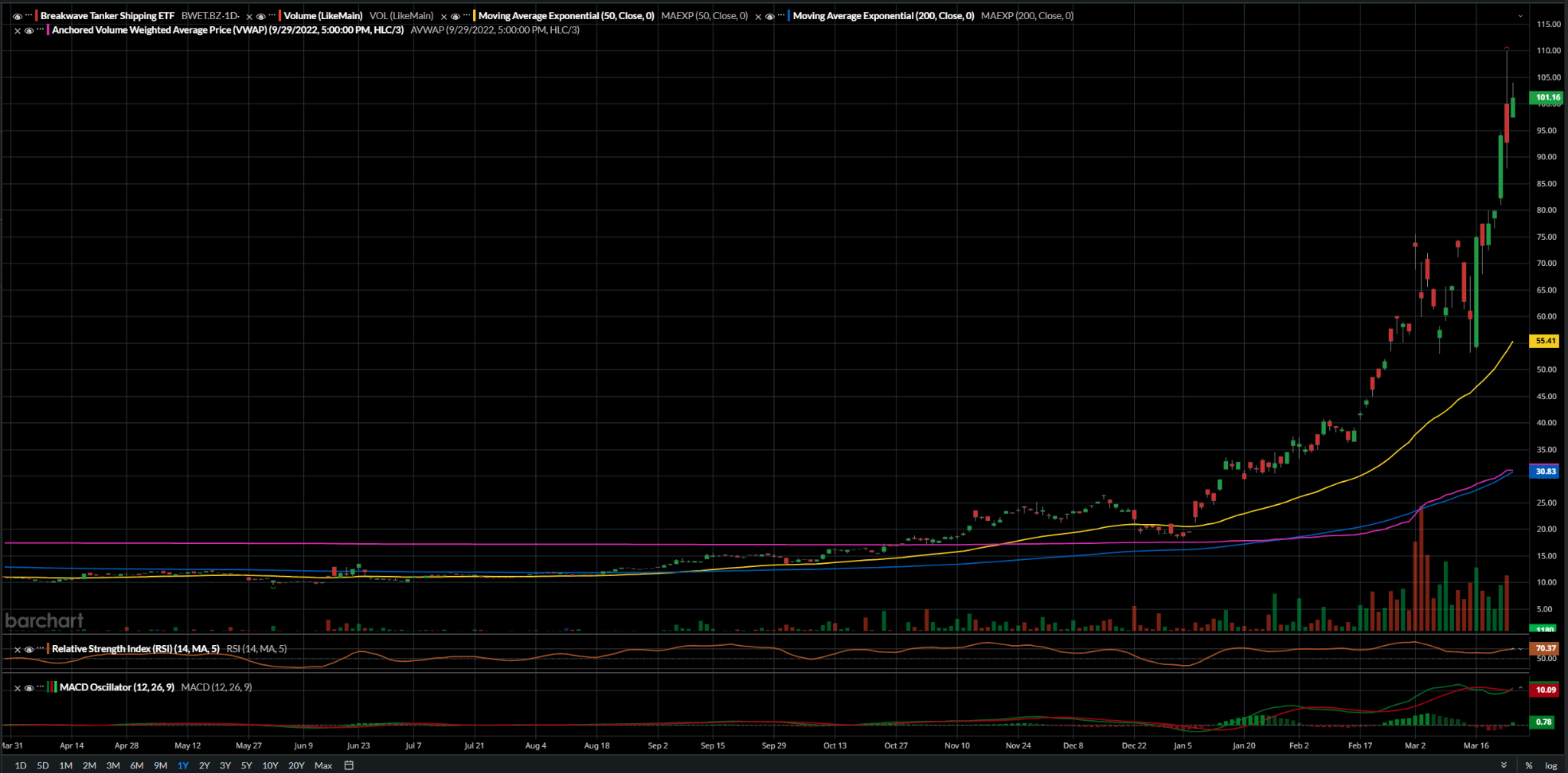
This is the process of going parabolic, and $100 is a strong psychological level here, but the last resistance met was at $110, so there may be more room to run back up if we see further escalation in the Middle East. Momentum is overbought, but that is expected at times like this. Keep in mind that during these kinds of moves, RSI can stay pinned to overbought for a long time, and so it isn’t a good timing indicator on its own.
For bulls, watch short-term support levels like 85 (last breakout), 75 (structural, former resistance), and 55 well below that for the first institutional support at the 50 EMA. Beyond that, we don’t see another support level until 30, with the 200 EMA and anchored VWAP providing dynamic support in that zone. It’s most likely, statistically at least, for BWET to see a pullback toward 80-85 before moving back up again from here.
For bears, wait until we break below 80. If we do, and it is paired with positive news about a peace deal, we could see a return to the previous trend before March, getting as low as 40 or under, down to the 20s if we return to pre-2026 levels, though that will like need additional catalysts to see.
Conclusion
Crude oil freight rates can act as leverage on oil macro, and the BWET ETF is doing just that right now. As oil surged and nearly doubled, BWET went on a 400%+ run and threatens to go higher still as tensions in the Middle East continue unabated.
But parabolic moves in these kinds of instruments, especially when driven by the macro situation at hand, tend not to be sustainable. From here, the coming news cycles will determine if BWET goes higher or lower. It’s acting as leverage, and so I expect it to crash significantly on good news regarding peace but continue even higher and more violently than crude oil on bad news.
Traders don’t make the news (often), they can only trade around it. My favorite stock market adage applies here to both bulls and bears of BWET: “Position sizing is more important than security selection.”
Handle this one with care, but I expect it to be incredibly profitable for those who stick the entry and exit.