



Gold (XAU) price remains supported as the Middle East tensions keep the safe haven demand alive despite the recent correction to long term support zones. The fragile ceasefire around the Strait of Hormuz has not removed the risk premium and sticky PCE inflation keeps the Fed outlook uncertain. In my view, gold remains bullish above $3,950, but the price must break above $4,350 to confirm a stronger rebound towards $5,000 and higher levels.
Strait of Hormuz Tensions Support Gold Safe-Haven Demand
Gold is continuing to be supported by renewed geopolitical risk in the Strait of Hormuz. Iranian Revolutionary Guards are increasing pressure on shipping lines and are forcing ships to adhere to Tehran’s route. This has raised uncertainty in the energy market, shipping and global risk sentiment. The risk premium has not been removed from the region under the framework of the ceasefire, with several tankers turned back.
This risk escalated following a cargo ship report of an attack off the coast of Oman. Following the incident, the IMO suspended its escort operation, and the U.S. struck back with a series of airstrikes targeting Iranian missile, drone and radar facilities. This is important for gold because the market faces a fragile ceasefire rather than clear de-escalation. But investors may seek safety if shipping is disrupted or if the conflict escalates again.
The situation in Lebanon adds another layer of uncertainty. Hezbollah rejected the security agreement between Lebanon and Israel. This indicates that the tensions in the region remain alive despite numerous ceasefire agreements. A failure of any of these agreements may provide an impetus to safe-haven demand and help maintain the gold support.
PCE Inflation and Treasury Yields Shape Gold Price Outlook
But the oil market is mixed. Israel and Lebanon signed an interim ceasefire agreement that pushed the prices down. The decline in oil prices can defuse inflation fears and reduce the near-term pressure on Treasury yields. This can support gold if yields decline. But the drop in oil does not eliminate inflation risk due to the recent escalation in the Middle East crisis.
Gold Price Forecast
Every new Gold analysis as it publishes, today's technical signal and key levels, live price — on one page.
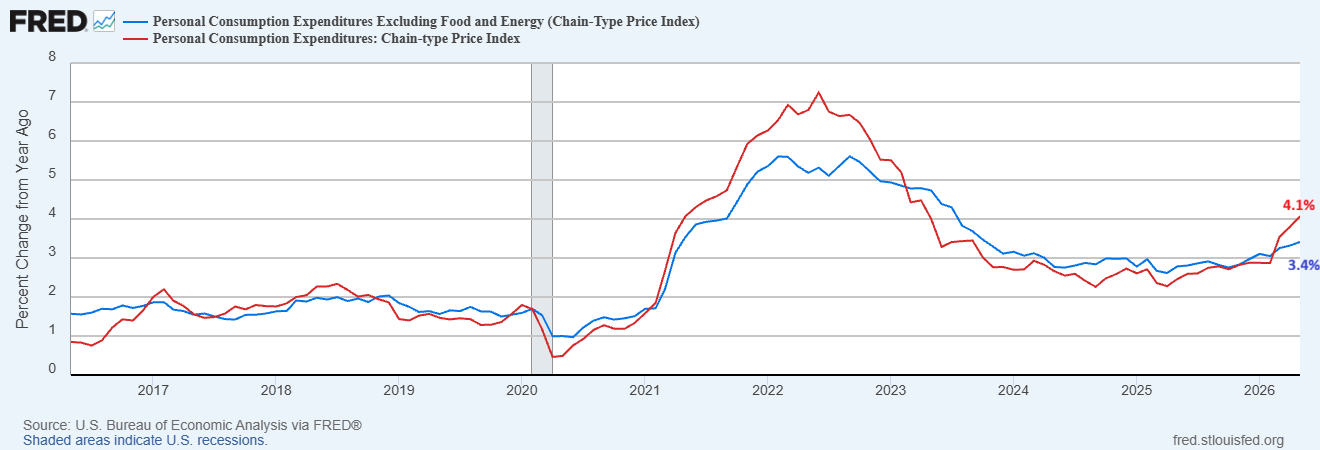
See all Gold forecastsThe latest inflation data shows that the inflation is spreading beyond energy. The headline PCE was up to 4.1% for the 12 months ending May. The core PCE ticked up to 3.4%.
The monthly increase for May was even higher for headline and core PCE inflation.
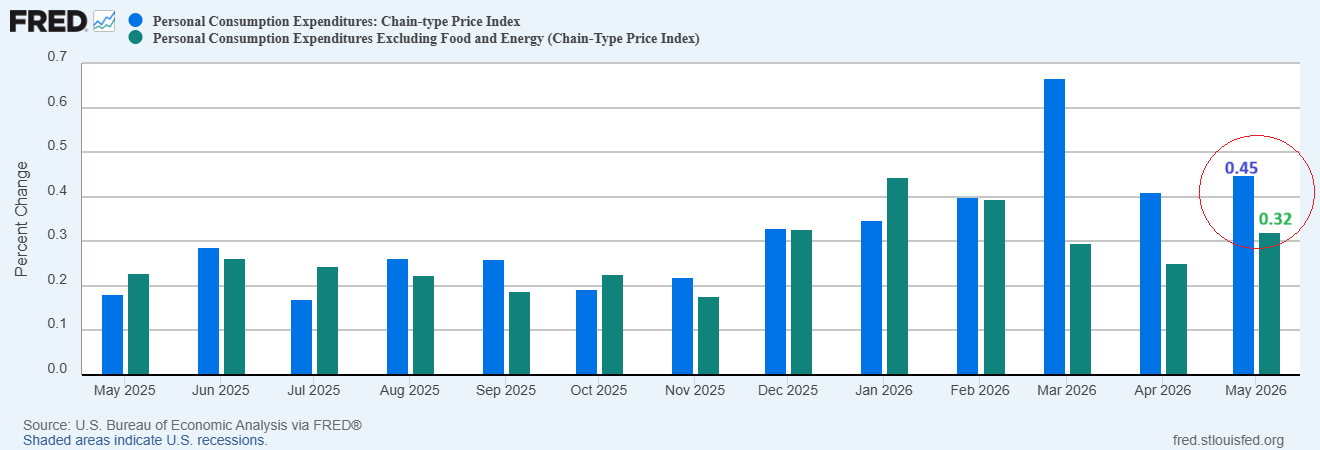
This is significant because food and energy goods are excluded from the concept of core inflation and indicates general inflation pressure in the economy.
Moreover, the services inflation is also strong, which indicates that cost pressures are permeating the economy. The higher fuel prices in April and May are impacting the supply chain costs and will likely persist for the next few months.
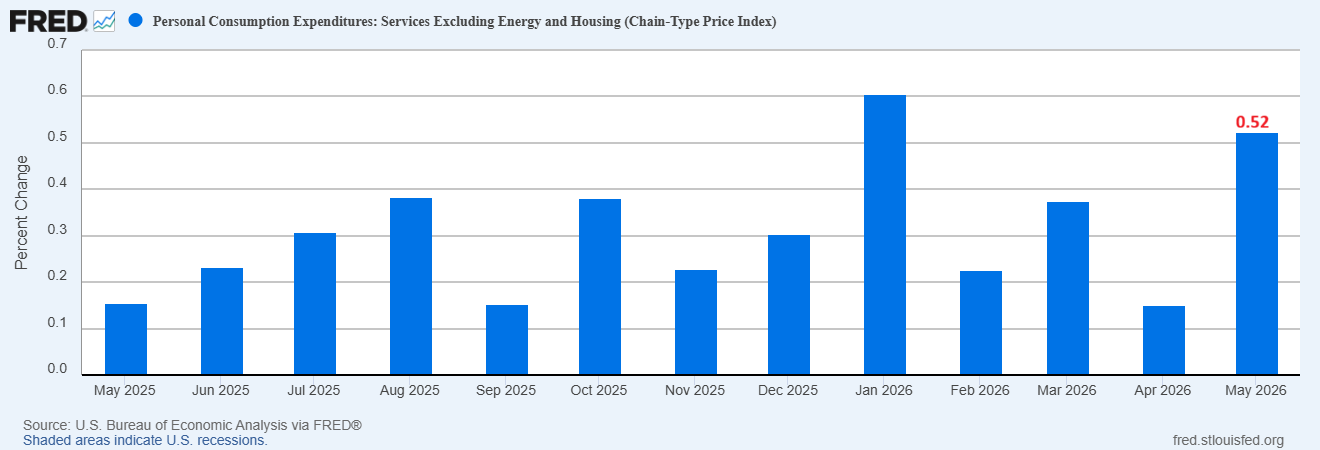
That makes it a tough situation for the Federal Reserve. Lower oil prices could ease the market in the near term, but stubborn inflation puts pressure on the Fed to leave policy unchanged or raise rates again. That is headwind for gold as rising rates favor the U.S. dollar and Treasury yields. Despite this, gold could remain steady if geopolitical uncertainty counteracts the Fed’s expectations.
Treasury yields are falling due to the lower oil prices and milder inflation expectations ahead. This move is bullish for gold in the short term. But the market may be moving faster than the actual inflation slowdown. The impact of higher fuel costs in April and May will take months to normalize.
Therefore, the gold price is stuck between two forces in the short term. On one hand, the lower yields are bullish. On the other hand, sticky inflation keeps the Fed hawkish.
Gold Price Defends $3,950 for an Upside Move
Gold Price Shows Strong Support Near $3,950
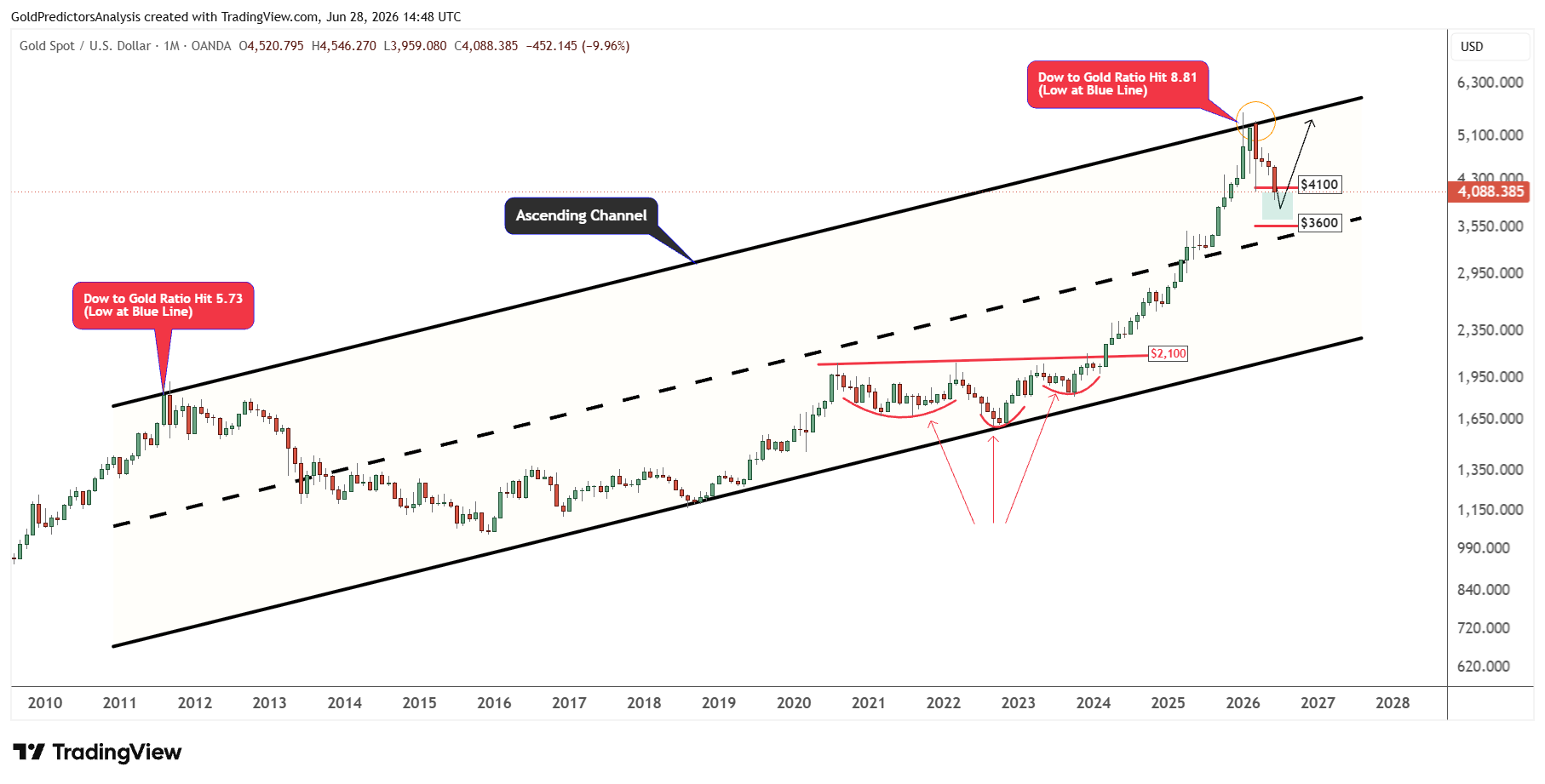
The long-term outlook for spot gold shows that the price remains in a healthy bullish trend since the 2023 lows. However, the price was exhausted in January 2026, when it produced a bearish hammer candle. This bearish formation triggered a drop towards the lower end of the ascending channel pattern.
Last week, the price hit the $3,959 area as per expectations and rebounded to close above the support line of the ascending channel. This indicates a strong support zone in the spot gold market. But a break below $3,950 will signal further downside in the short term.
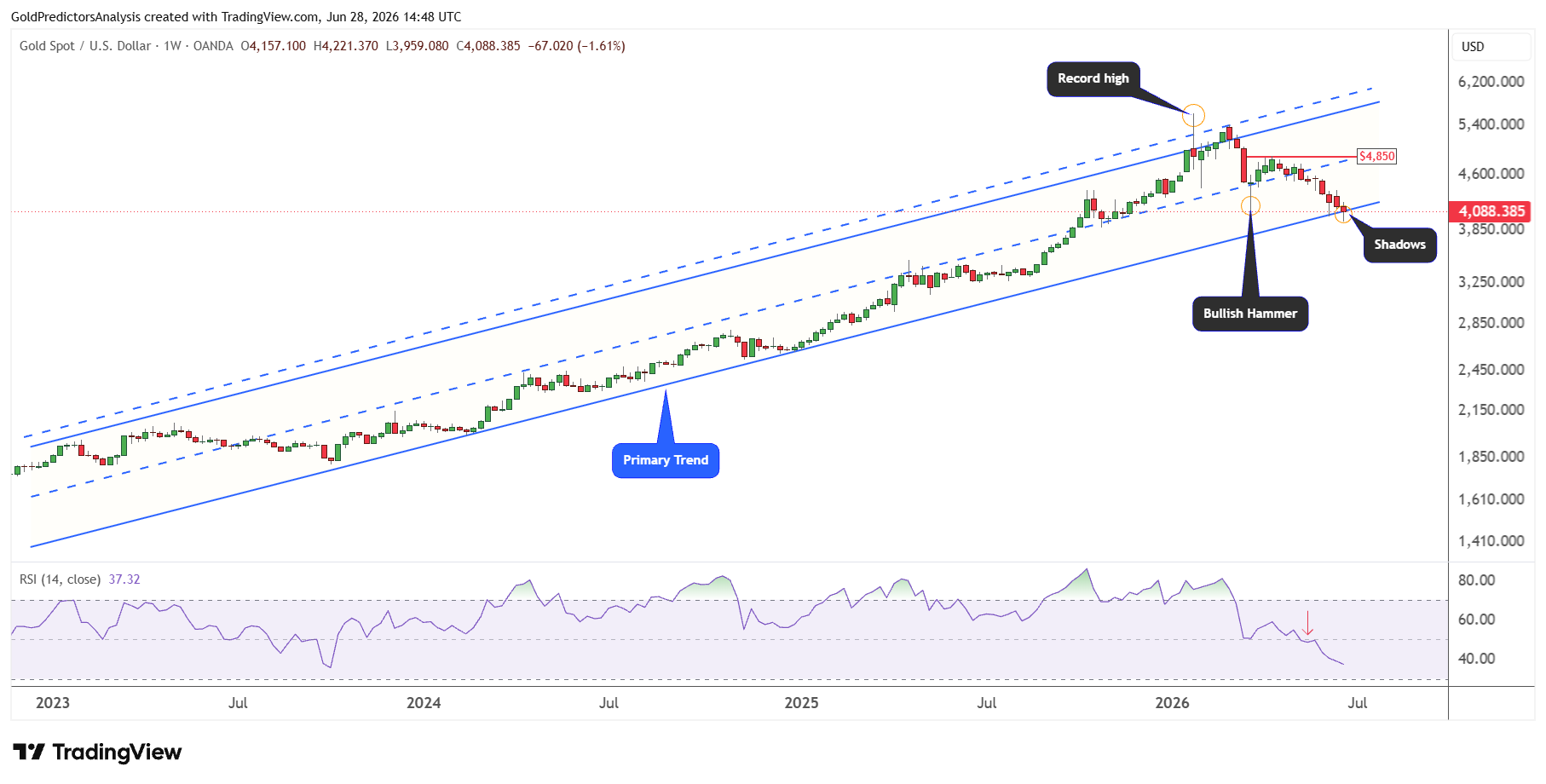
The RSI remains below the mid-level and continues to decline. But the RSI has reached similar levels not seen since October 2023, when it produced a strong rebound and healthy rally to mark new record highs. The importance of the current support zone is obvious.
Gold Needs $4,350 Breakout to Confirm $5,000 Move
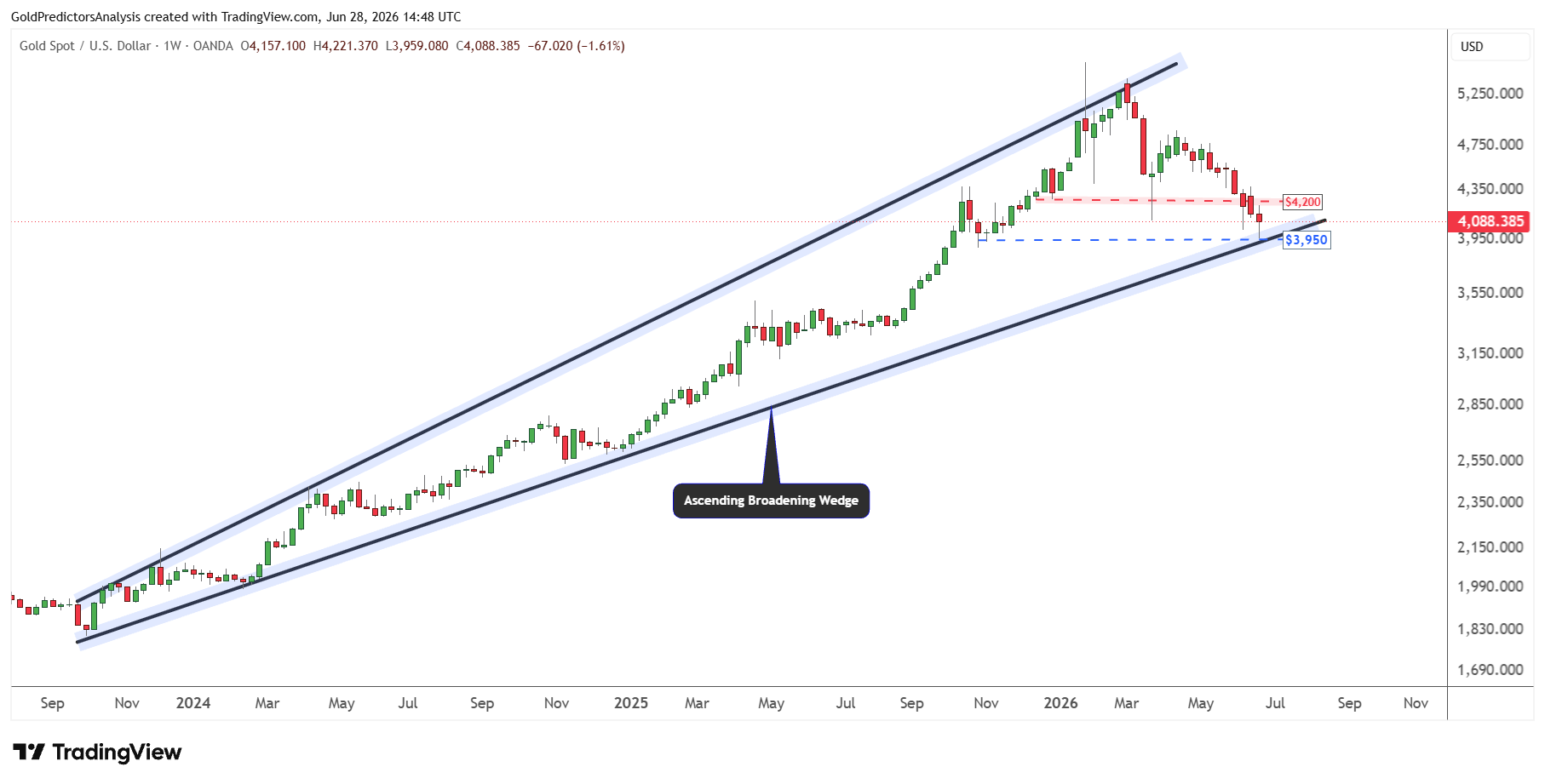
The price has been trading within a broadening wedge pattern since 2023. The support zone of $3,950 is also confirmed by the lows of November 2025. However, the price failed to close above $4,200 last week. This keeps the price uncertain in the short term.
For spot gold, the price must break above $4,350 to confirm a bottom and a move towards $4,500. However, any break below $3,950 will break the strong support zone and trigger a strong drop towards the $3,500-$3,700 range. But this drop will not change the long-term bullish structure.
The long-term outlook for spot gold remains strongly bullish as the price approaches the strong buy zone between $3,600-$4,100. The gold price will likely continue higher once the bottom is confirmed.
The formation of an inverted head-and-shoulders pattern within the ascending channel also supports the healthy rally. But the short-term price action remains uncertain and the price may consolidate in the short term. Any break below $3,950 will further push gold prices within this buy zone.
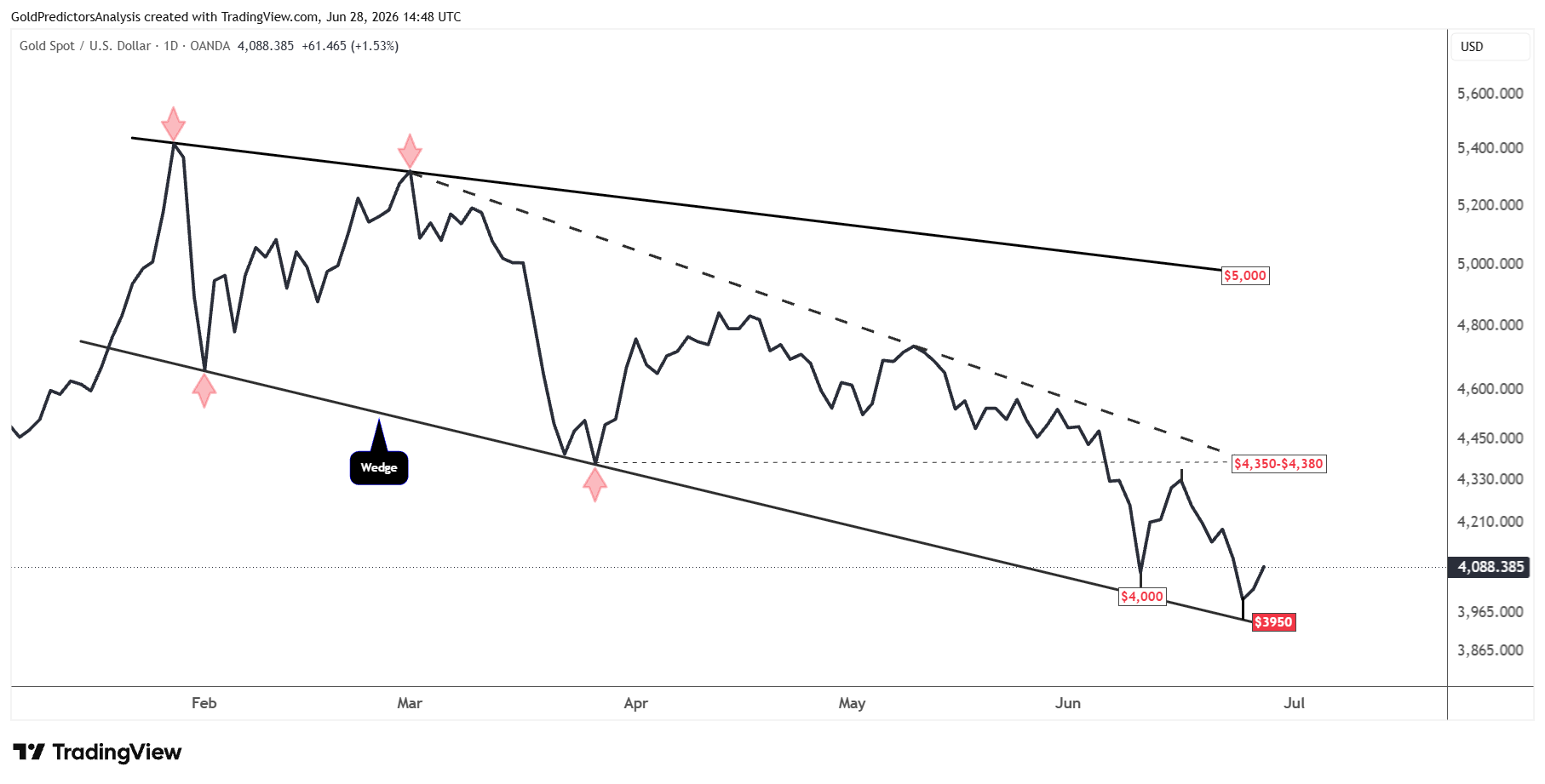
The importance of $3,950 is evident on the daily chart which was discussed in the previous update. The price rebounded from the $3,950 area and triggered a strong rally in the short term. But the price must break above $4,350 to confirm any meaningful rally.
A break above $4,350 will signal further upside towards $5,000. However, a break above $5,000 will confirm the bottom and signal a strong move towards $5,600.
Gold Risks Depend on Fed Policy and Middle East Calm
The primary risk in the gold price comes from the sudden calm in the Middle East. If the shipping through the Strait of Hormuz improves and the ceasefire agreement holds, the safe haven demand could decline. A further drop in oil prices may also reduce inflation expectations and push back investors into risk assets.
Another risk comes from sticky inflation and the Fed policy. The services inflation and core PCE remain strong which could lead the Fed to hike rates. This would support the US dollar and keep the gold price under short term pressure. The overall trend in the spot gold market remains bullish as long as the $3,950 holds.
Bottom Line
Gold remains supported by the mix of geopolitical risks and a decline in US Treasury yields. The tensions around the Strait of Hormuz and fragile ceasefire keep the safe haven demand alive. This situation keeps buyers active around key support levels as the market reacts to the shipping risks and headlines from the region.
Both the strain over the Strait of Hormuz and the fragile ceasefire in the Middle East have maintained the level of safe-haven demand and the risk premium has not been eliminated. This will keep buyers engaged around key support levels, particularly as market sentiment remains sensitive to shipping risks and headlines from the region.
Meanwhile, sticky inflation keeps the outlook complicated. While lower oil prices could help to ease short-term inflation concerns, core PCE and services inflation remain robust. This will force the Fed to maintain a tight policy or to hike in September. This is why gold may consolidate in tight range until the market receives a better read from inflation data, Treasury yields and the U.S. dollar.
From technical perspective, the $3,950 level is still the major support in the spot gold market. If this level is not broken, the major bullish structure is in place. A break above $4,350 will signal a stronger rebound and pave the way for $5,000. A break above $5,000 will confirm the bottom and trigger a strong surge to record levels.