
Fed Chair Jerome Powell is anticipated to adopt a cautious, possibly hawkish tone in light of these figures, which could enhance the U.S. dollar’s appeal and depress gold prices.
Market Dynamics and Geopolitical Effects
Despite a 4.2% increase in April, following a 3.5% rise in March, gold’s attractiveness has been compromised by stronger forecasts for the U.S. dollar and diminished safe-haven demand amid cooling Middle East tensions.
Peace talks between Israel and Hamas, alongside reduced fears of escalation with Iran, have somewhat stabilized the geopolitical landscape, shifting investor focus to more yield-bearing assets.
Upcoming Economic Indicators and Market Sentiment
Gold’s immediate future will likely hinge on further economic data and Fed guidance. Traders are eyeing the upcoming release of the Nonfarm Payrolls report and other key indicators such as the Chicago PMI and the Consumer Confidence Index due on April 30, 2024.
These metrics could provide fresh insights into economic health and influence gold market volatility.
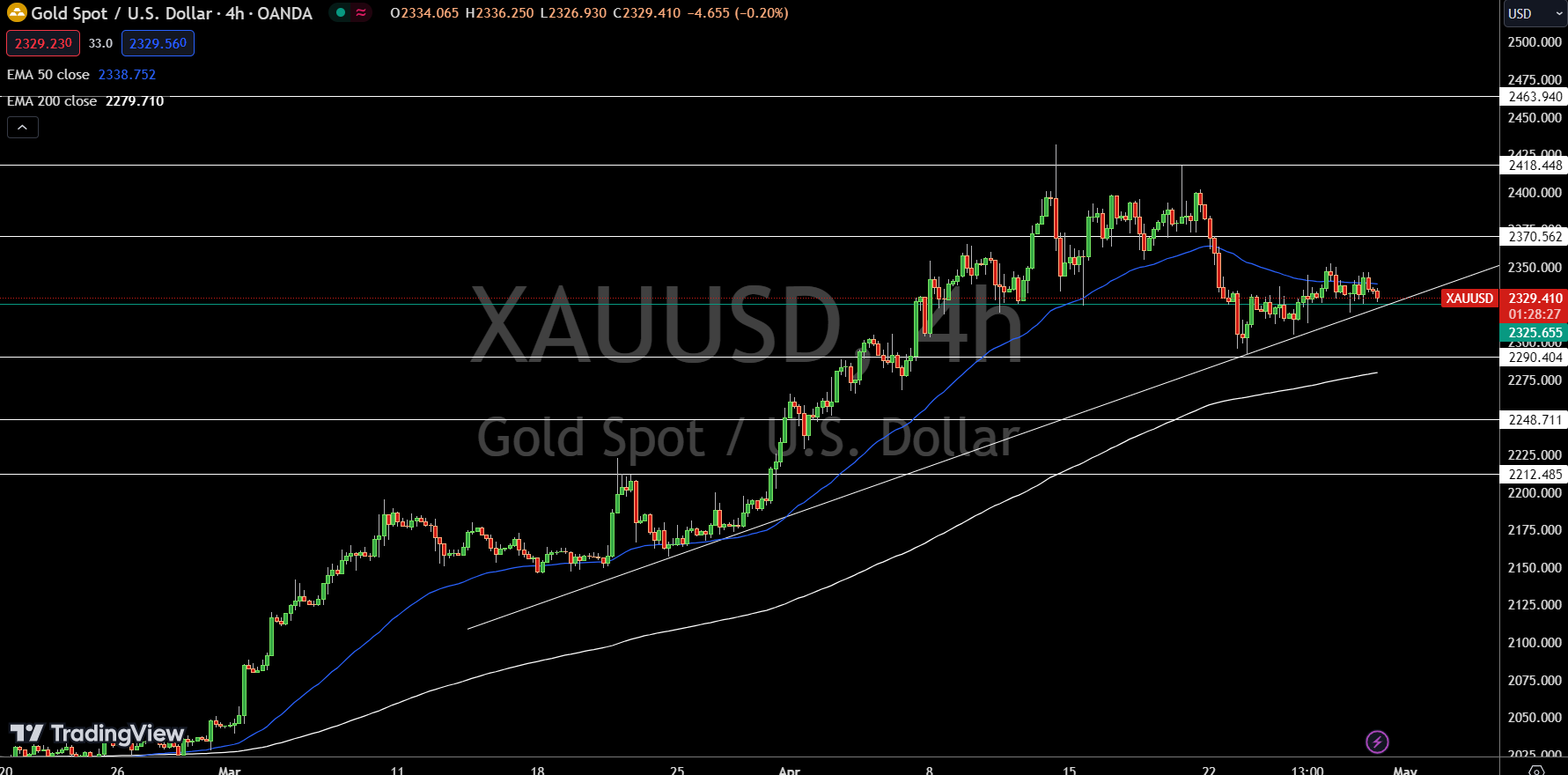
As of April 30, the price of Gold stands at $2,329, marking a decrease of 0.38%. The precious metal is currently hovering just above the pivot point of $2,325.66. Should prices fall below this level, there is a potential for a further sell-off, indicated by an earlier breakout below the $2,322 mark.