


Bitcoin (BTC) is currently hovering above the $63,000 level following a multi-week drop that temporarily put an end to the latest rally.
The top crypto was hit by a wave of negative sentiment resulting from a deterioration in the macroeconomic backdrop in the United States and the Democrats’ victory during the midterm elections.
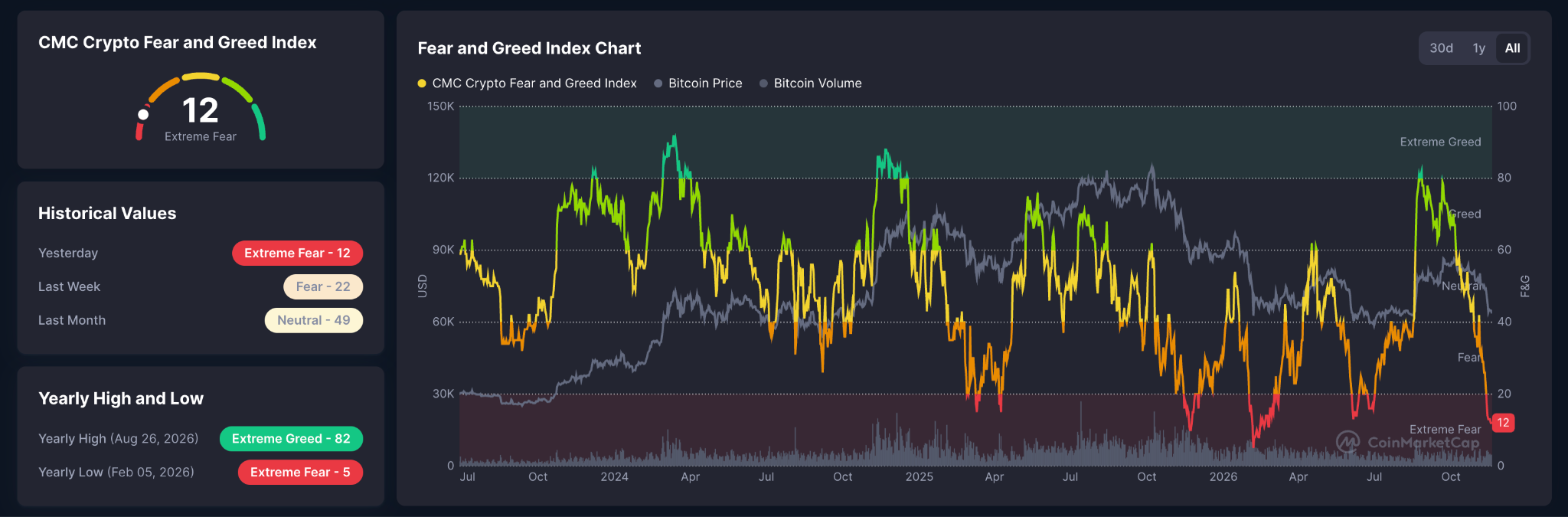
The Crypto Fear and Greed Index showcases the current state of the market, indicating that investors are in panic mode as this sentiment gauge dropped to “Extreme Fear” territory.
At 12, this is the lowest reading since February, back when BTC was trading slightly above its current price.
Analysts expect an increasingly hawkish Federal Reserve, as data from FedWatch shows that market participants now see two consecutive rate hikes during the December and January FOMC meetings.
CoinShares’ analyst, James Butterfill, provides an interesting insight about the state of the crypto market: “Without a meaningful change in Fed expectations, a sustained improvement in institutional flows or a return of whale accumulation, range trading remains the more plausible outcome.”
In summary, BTC’s latest price action is primarily tied to changes in the macroeconomic backdrop rather than price action signals. Hence, oil prices, the situation in Iran, and inflation levels in the U.S. remain the most important catalysts to keep an eye on.
Bitcoin ETFs On Track to See Their Highest Monthly Net Outflows in Years
Any positive changes on those fronts (e.g., the end of the war with Iran) could propel the price of Bitcoin and dramatically change the market’s attitude toward cryptocurrencies in a relatively short period.
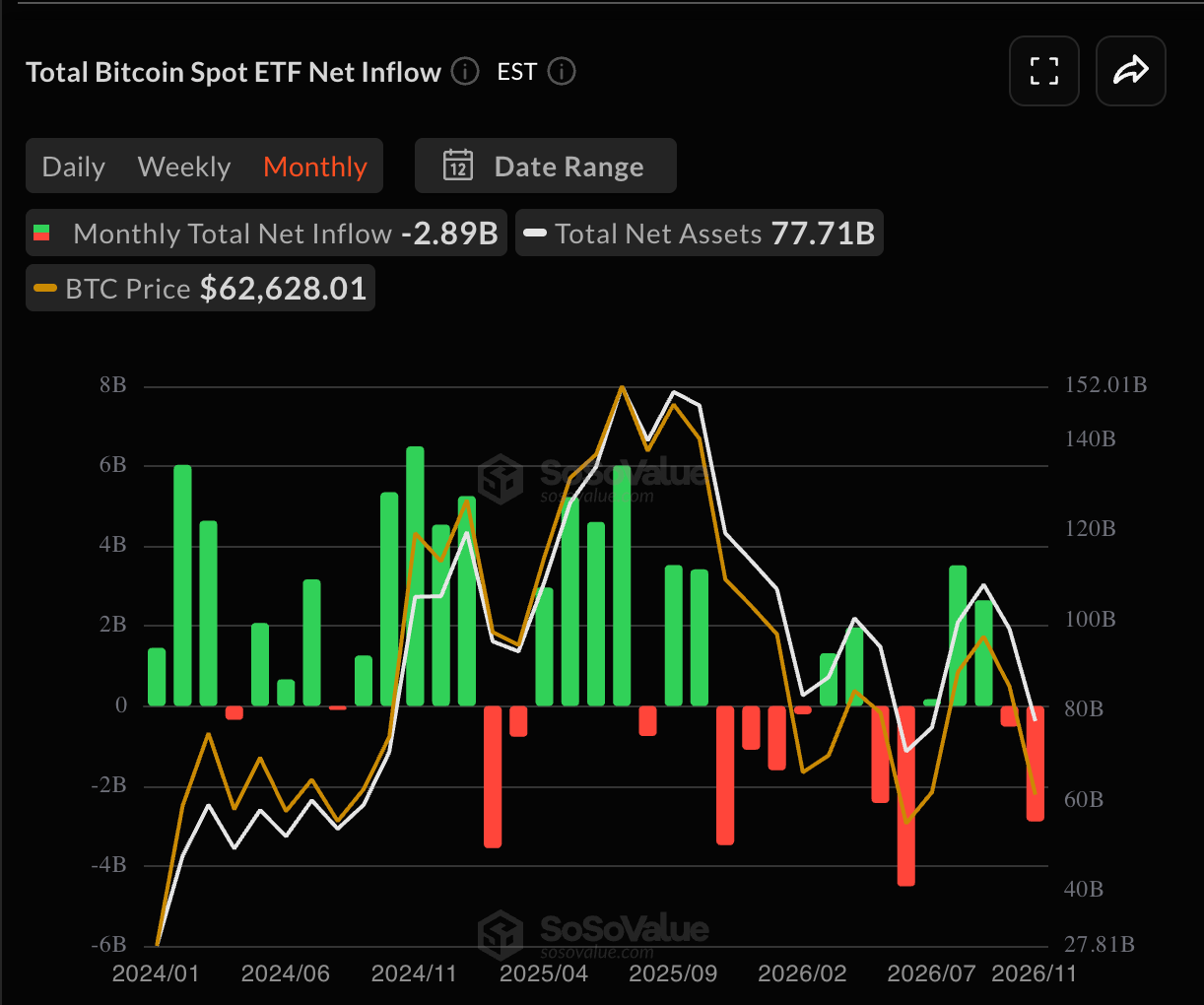
For now, spot exchange-traded funds (ETFs) linked to Bitcoin continue to bleed. These vehicles have seen net outflows of $538 million so far this week, as Wall Street continues to shun cryptocurrencies.
In just 19 days of November, investors have withdrawn $2.9 billion from these ETFs, meaning that we could end the month with nearly $5 billion in outflows if the trend continues. In such a case, this would be the highest monthly withdrawal on record in more than two years.
However, we still see a scenario in which Bitcoin could start to recover, but it involves a strong drop below $60,000 that traps bears and sweeps the necessary liquidity to trigger the next bull run.
Bitcoin Price Forecast
Every new Bitcoin analysis as it publishes, today's technical signal and key levels, live price — on one page.
See all Bitcoin forecastsBTC May Need to Drop to $55K Before a True Recovery Begins
Turning to the daily chart, we can see how the latest rally for BTC played out in July this year, following a strong drop that started in May.
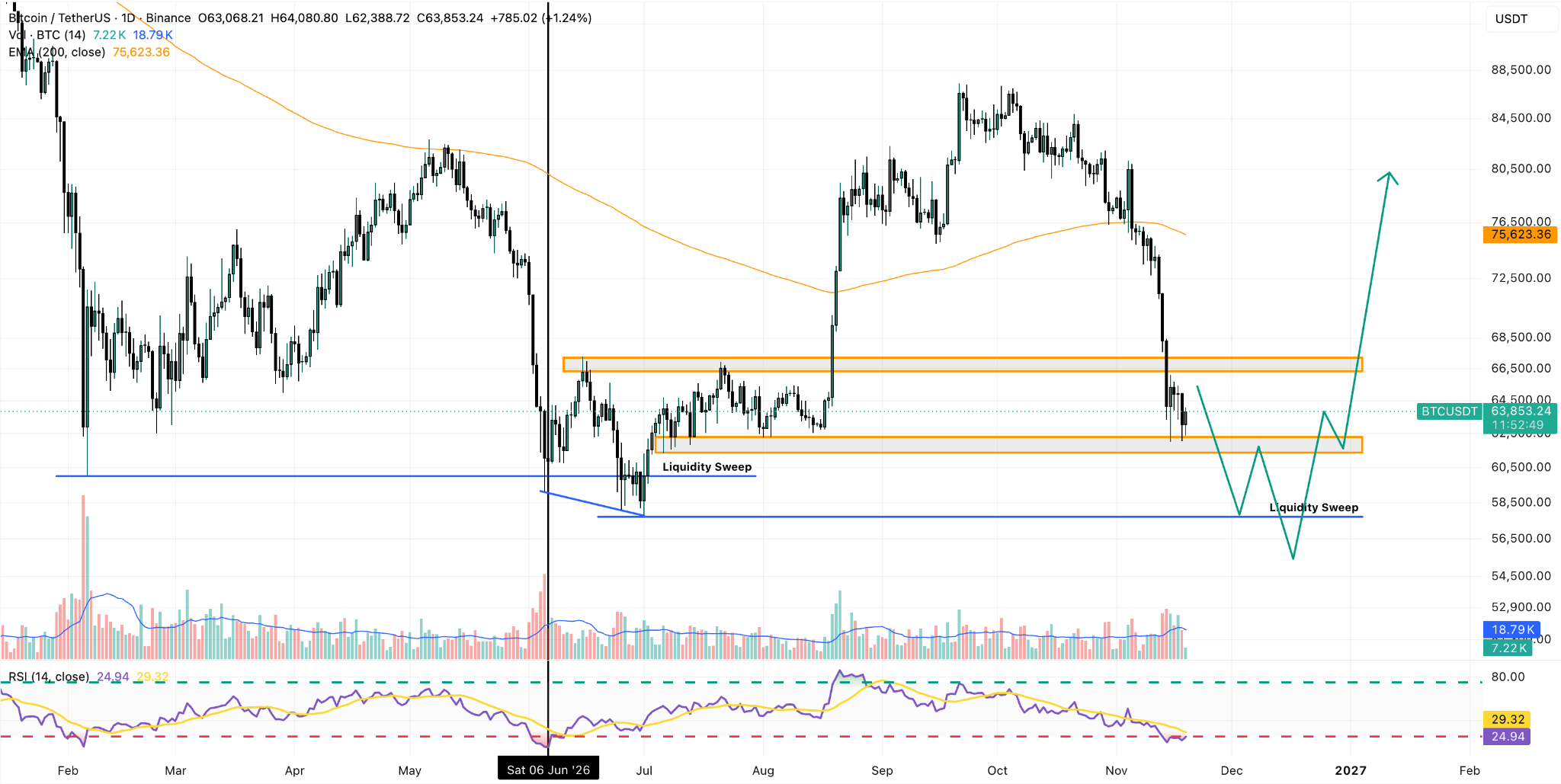
The price temporarily bounced off the previous low at around $60,000, but that was a dead-cat bounce.
The true rally commenced after a liquidity sweep below this level, as bears were trapped and their stop orders provided the liquidity needed to catalyze a massive rebound toward the levels we saw in August-September.
If a similar pattern unfolds this time, the price could rebound after hitting $57,000 in the next few days, potentially targeting a retest of the $62,000 area from below.
However, we would still expect a much stronger drop to $55,000 to sweep the liquidity below the July 2026 low, and then we may start thinking about a true recovery for BTC.