



The BOJ kept interest rates at 1.25% but another hike is still possible. Inflation remains high and wages continue to rise. Weak consumer spending may delay the next move. I think that a clear sign of a rate hike could help the recovery in the yen. However, high interest rates in the U.S. may limit the gains.
Fed Keeps Rates Steady as Inflation Remains High
The Federal Reserve left the interest rates unchanged at 3.75%-4% in October as expected. Kevin Warsh provided no real guidance about interest rates and said that the inflation remains too high. But Governor Lisa Cook and Cleveland Fed President Beth Hammack voted for rate hike despite the upcoming midterm elections.
Fed Chair Kevin Warsh mentioned that politics played no role in the FOMC decision. He also said that the economy is expanding at a strong pace. Despite elevated uncertainty, domestic spending has been strong which is underpinned by strong productivity growth and robust capital investment.
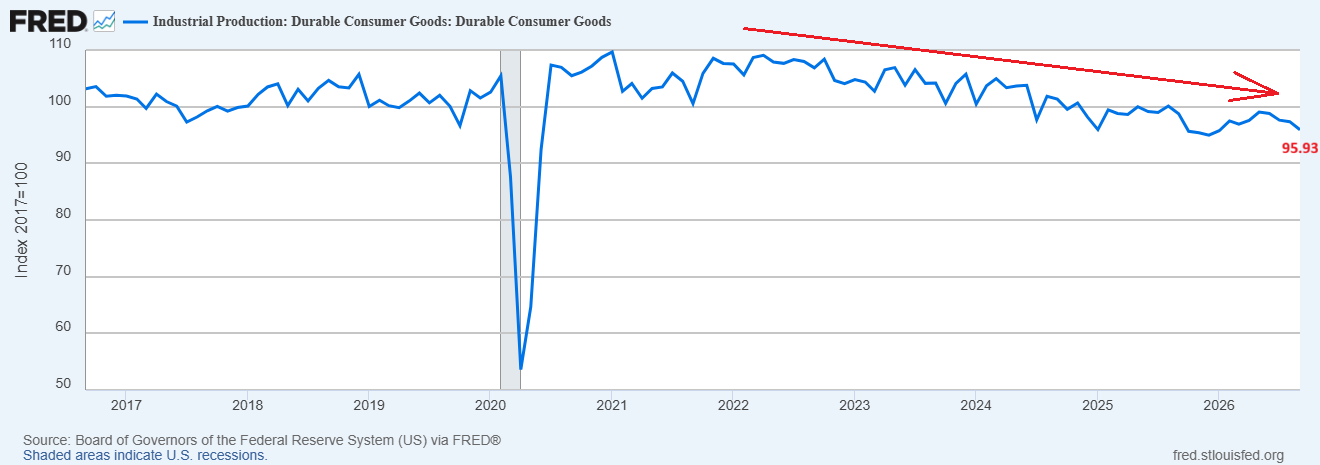
The chart below shows that industrial production of consumer durables has been declining since 2021.
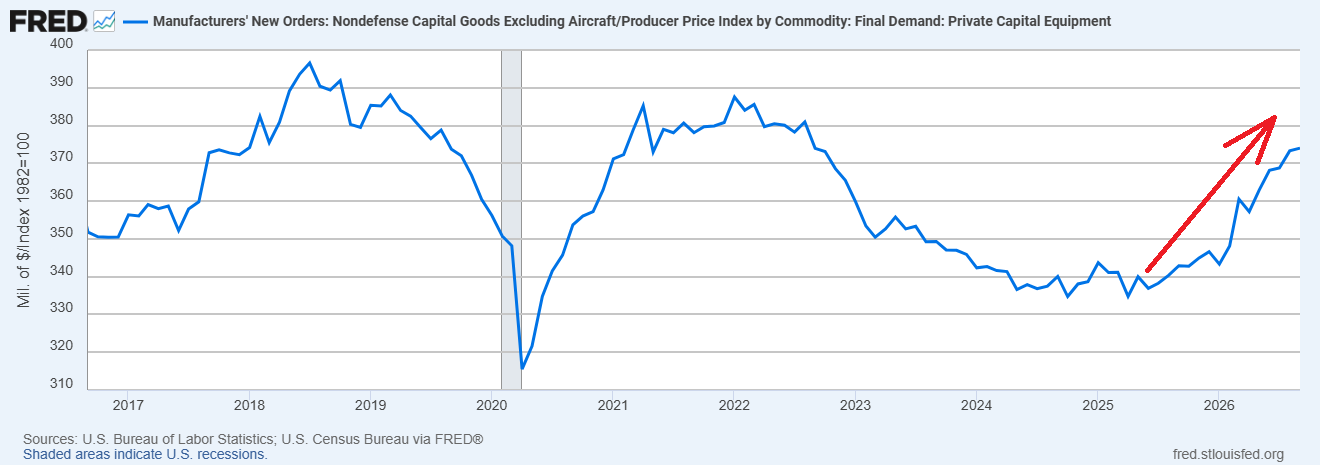
But manufacturers’ new orders for non defense capital goods excluding aircraft have grown since 2025. This is driven by the boom in AI capital spending.
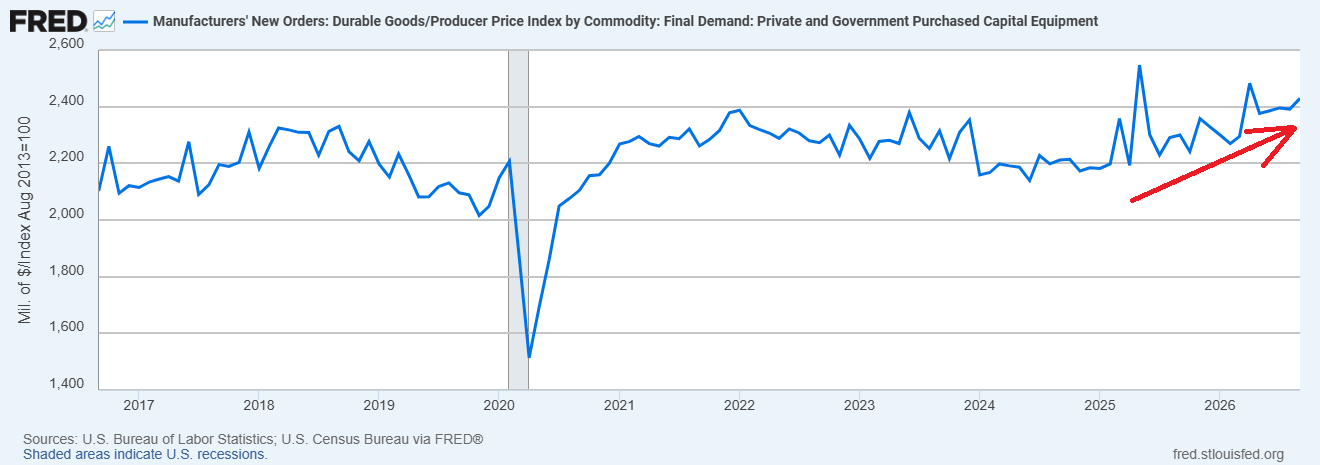
The manufacturers’ new orders for durable goods also show strong industrial outlook.
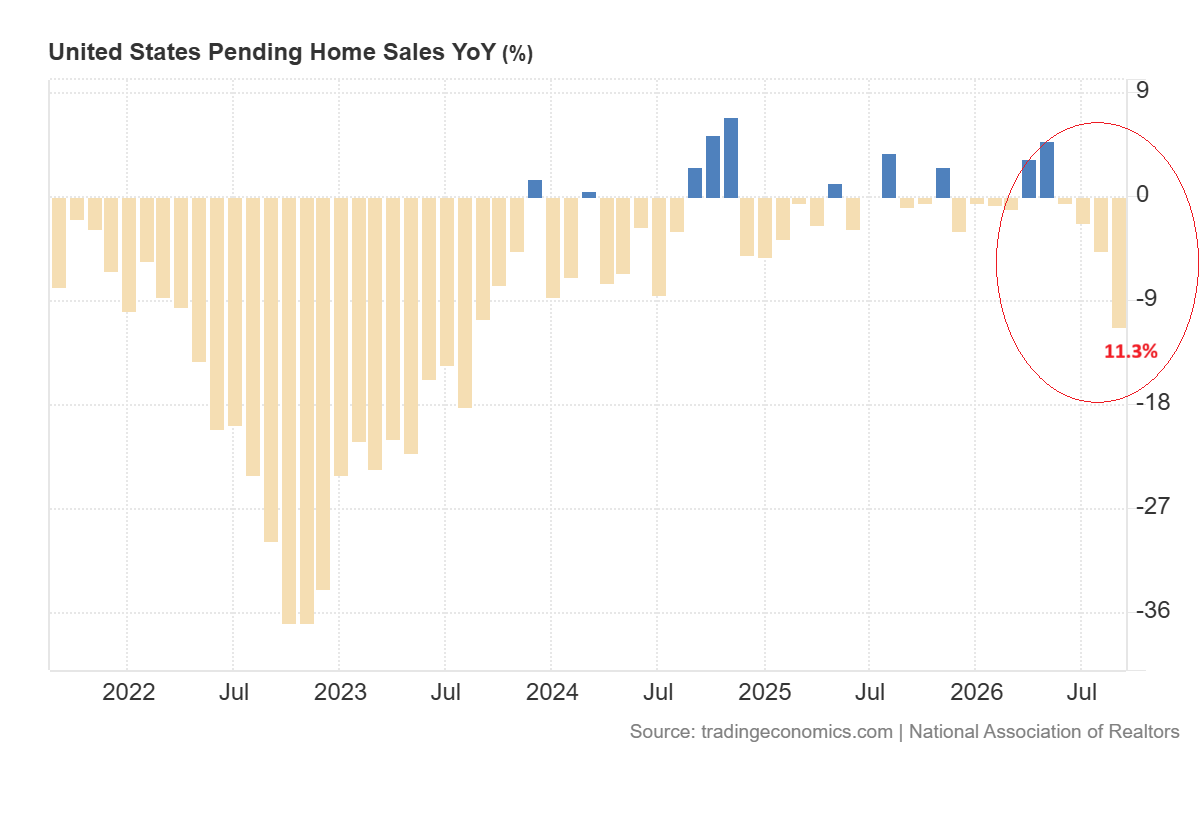
The boom in U.S. industry is driven by AI capital spending, defense spending and energy supplies. But private consumption remains flat as food and beverage freight volumes are down sharply. The chart below shows that the housing market has also dropped significantly.
The expansion in industrial activity is lifting GDP growth as seen in the chart below.
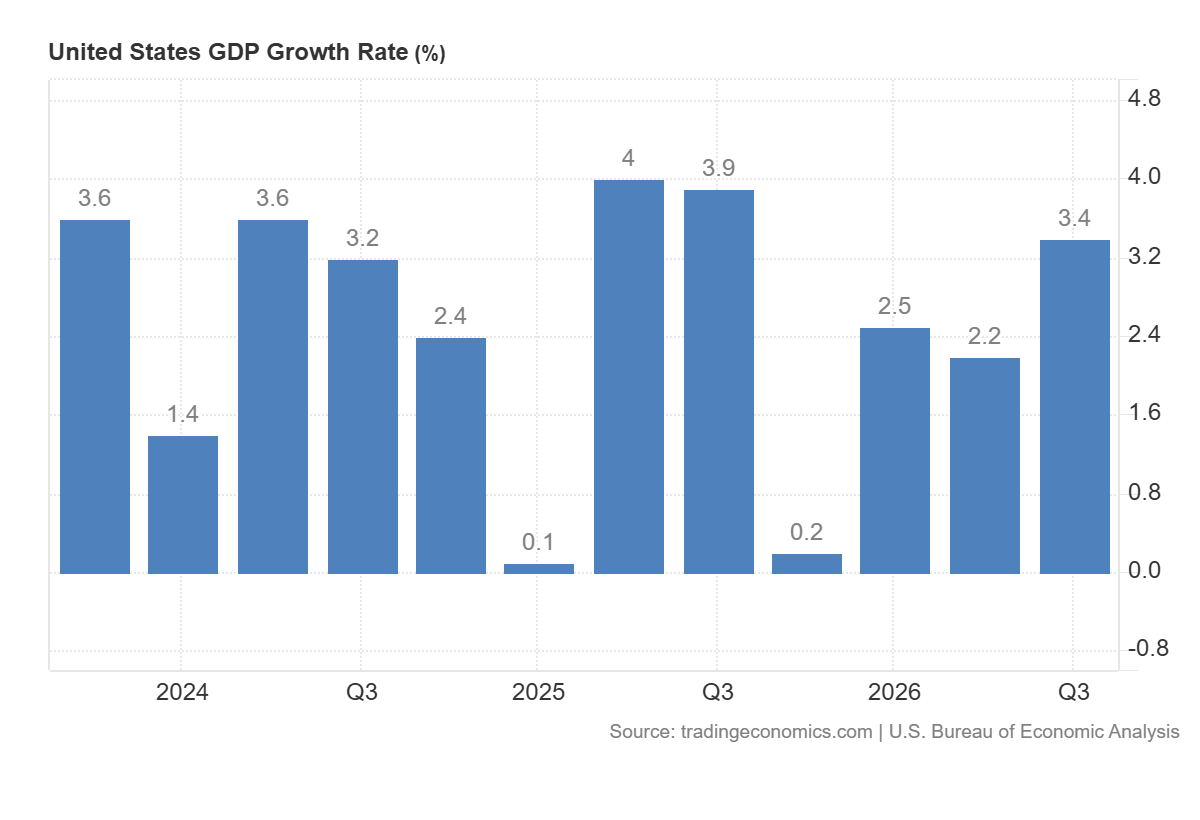
The increase in activity increases the demand for finance, tightens financial conditions and pushes interest rates up as demand outpaces supply.
BOJ Rate Outlook: Persistent Inflation Keeps Further Hikes in Play
The Bank of Japan also kept the policy rate unchanged at 1.25% in October with 8-1 vote. There was only one member who voted for the increase in the interest rate to 1.5%. This suggests that the pressure for tighter policy still remains within the board.
The BOJ also said that underlying inflation now matches the 2% target and retained plans to increase rates further as conditions allow. The bank lifted the fiscal 2027 core inflation forecast to 2.6% from 2.4%. This keeps possibility of another hike by the BOJ open but the bank has made no commitment on timing.
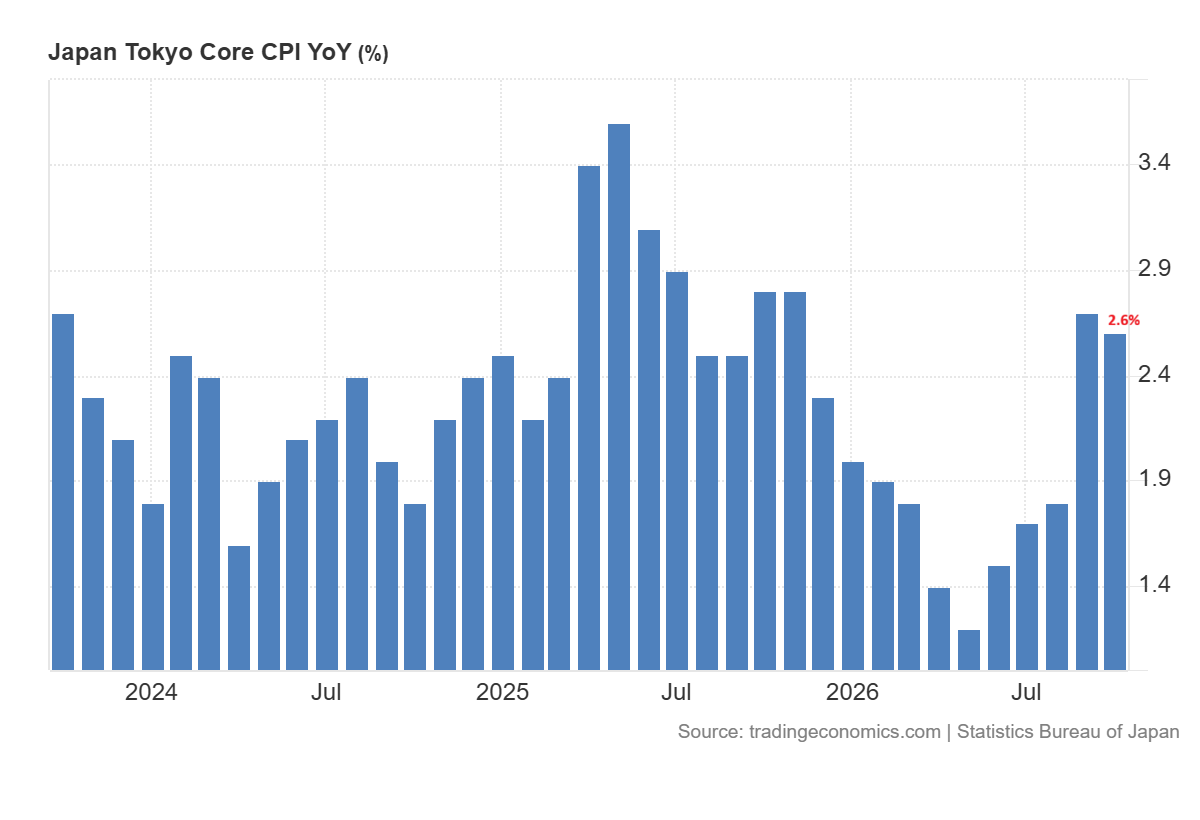
The latest inflation data from Japan also supports this outlook. The chart below shows that core inflation in Tokyo eased to 2.6% in October as compared to 2.7% in September. But it remains above the 1.2% recorded in May 2026.
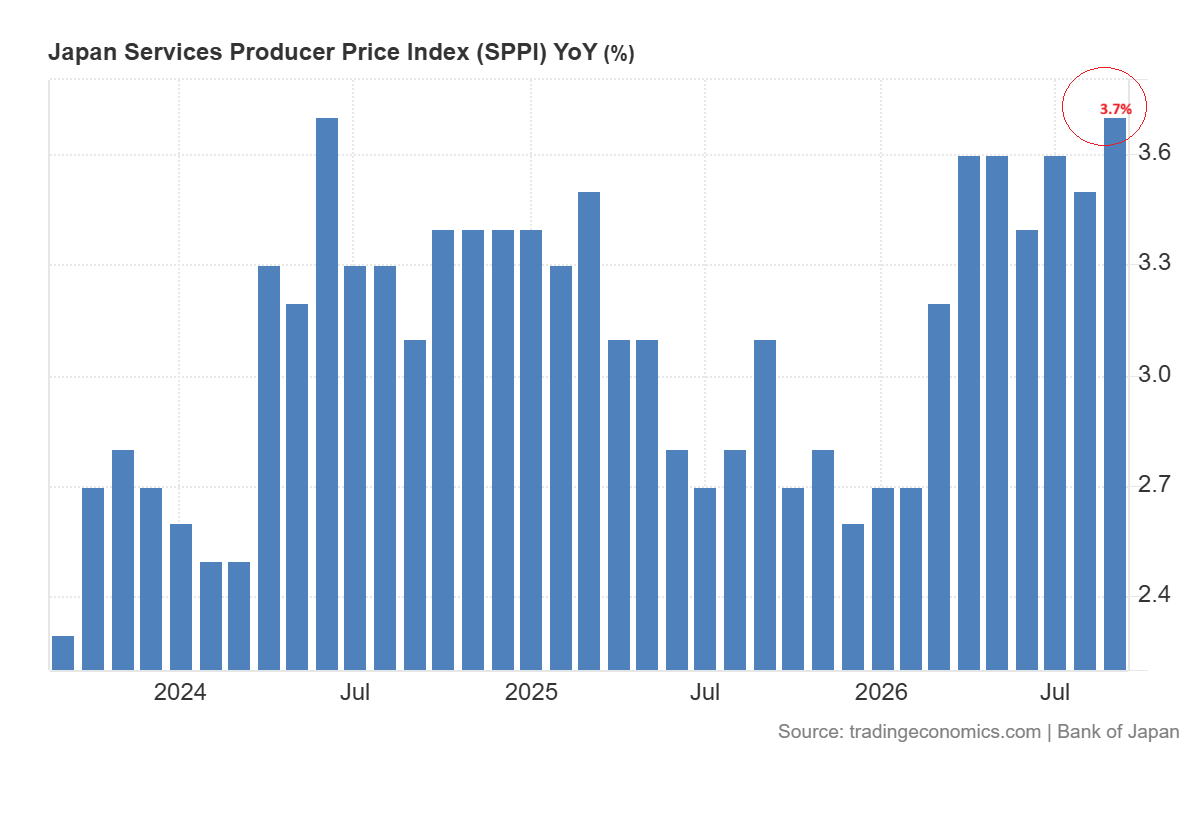
The service producer price index in Japan increased to 3.7% in September. The chart below shows that the service inflation has remained strong since December 2025. This suggests that inflation remains persistent in the economy.
Japan’s Weak Spending Could Slow BOJ Hikes Despite Wage Growth
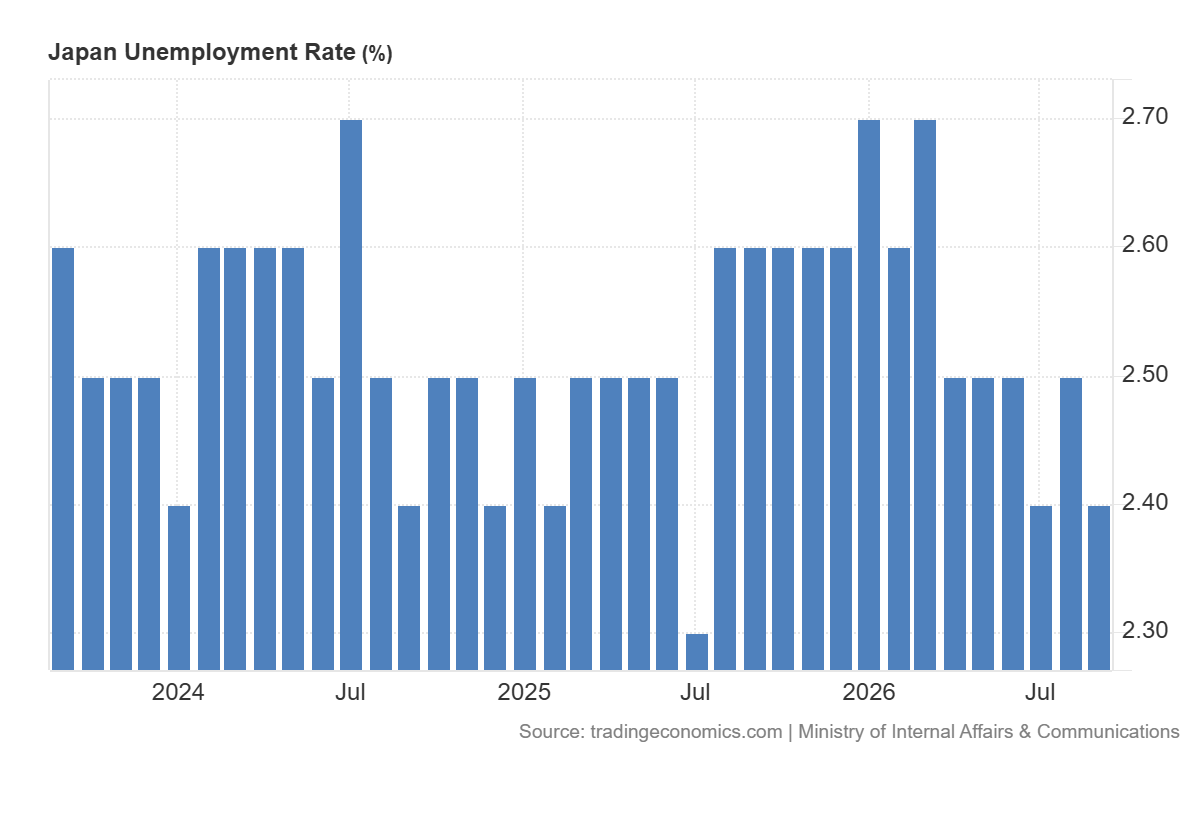
The labor market also suggests that the BOJ has some room to raise interest rates in future. The chart below shows that the unemployment rate dropped to 2.4% in September 2026 as compared with 2.5% in August 2026.
Meanwhile, the jobs to applicants ratio increased to 1.19 in September. This means that employers reported available jobs of 119 for every 100 applicants.
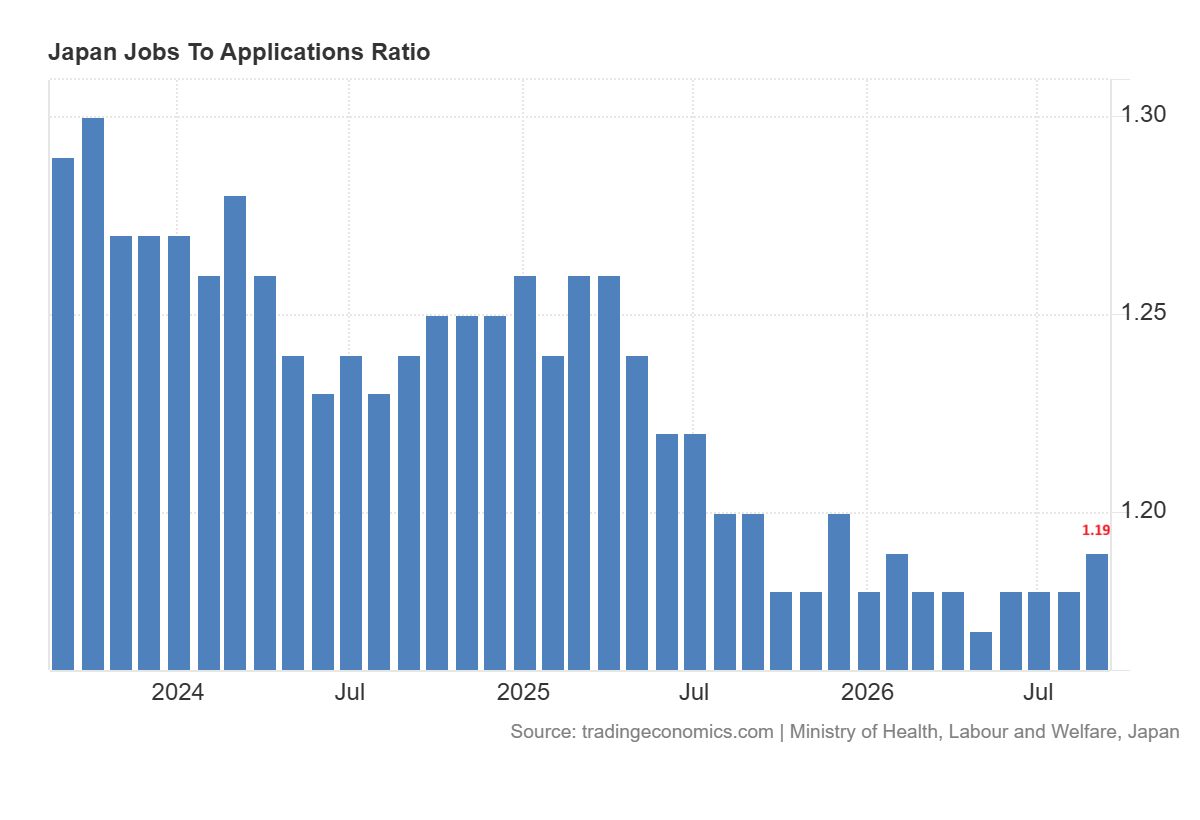
The cash earnings also remain strong at 3.9%. The purchasing power remains strong which can support spending. But shortages in labor can keep pressure on companies to increase pay. These developments suggest that the likelihood of another hike is high.
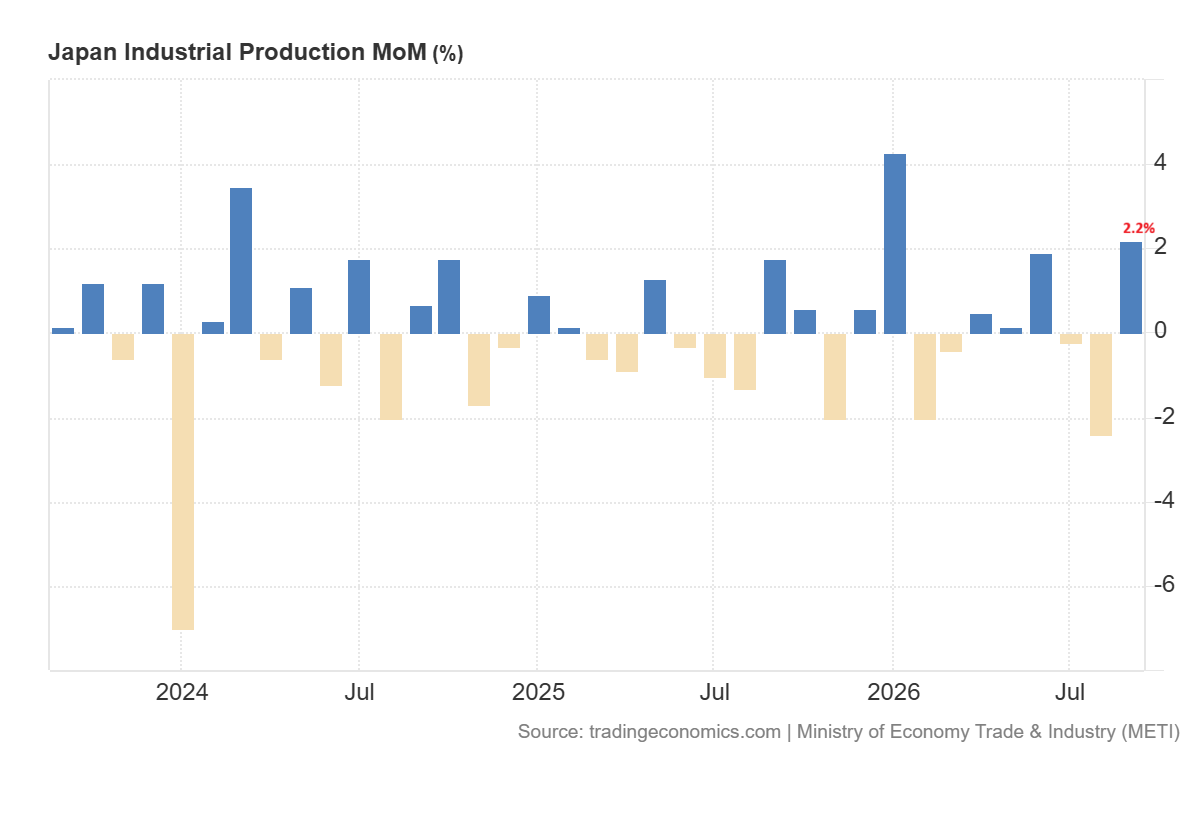
But the growth data also suggest measured pace. The chart below shows that the preliminary industrial production increased by 2.2% in September.
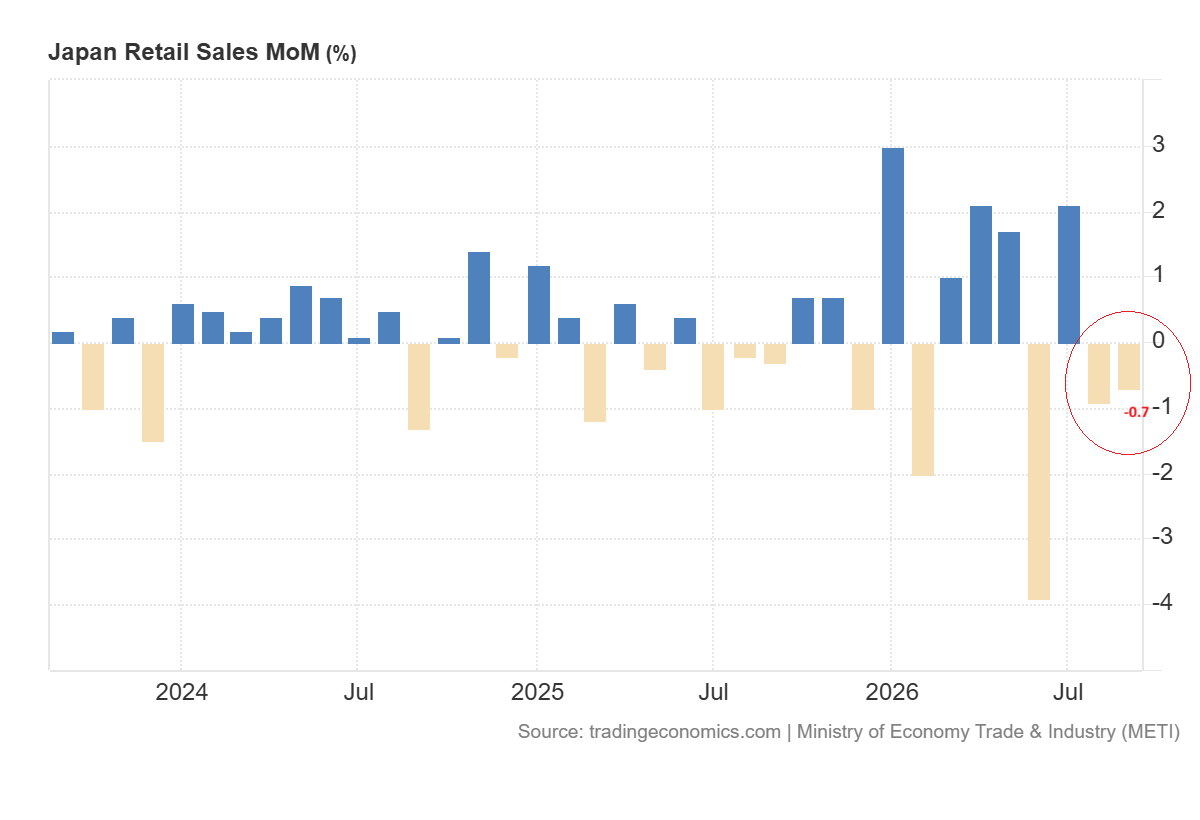
But retail sales dropped 0.7% from August which marks the second consecutive monthly decline.
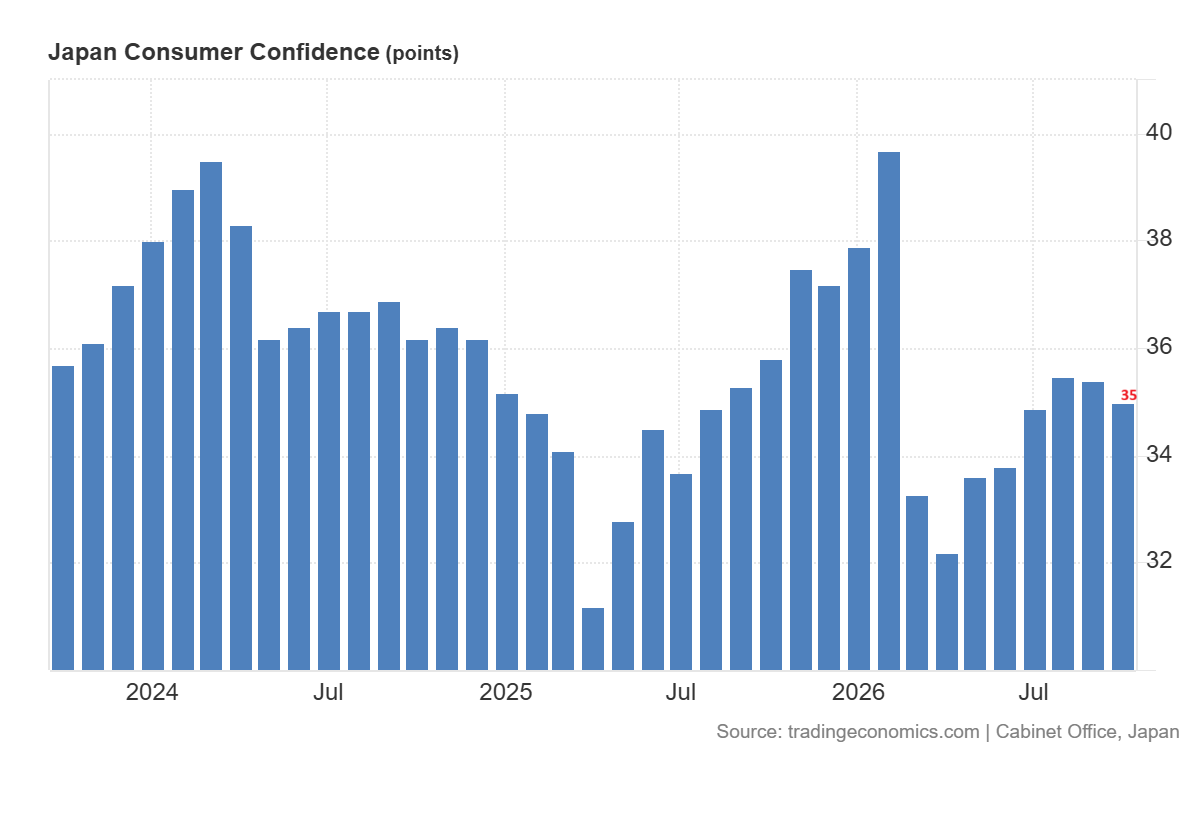
Consumer confidence also dropped to the 35 level in October from 35.4.
Crude oil prices remain strong near the resistance levels. The high cost of energy remains a risk to the purchasing power of households and company profits. These data suggest that the possibility of further hike by the BOJ remains in play.
I think that if expectations for Japanese rate increases relative to Federal Reserve, ECB and Bank of England rise, this could support the yen and weigh on USDJPY, EURJPY and GBPJPY.
USDJPY Forecast: 156 Support and 159 Resistance Define the Range
From a technical perspective, USDJPY has been trading within the ascending broadening wedge pattern that stretches from the April 2025 lows. The pair hit a low at the 152.88 level in September and produced strong rebound towards the 159 level.
Now, the pair is consolidating in a tight range between the 159 and 156 levels and is looking for the next direction. A break above 159 may push the pair towards 160, which is the key level for the short-term direction.
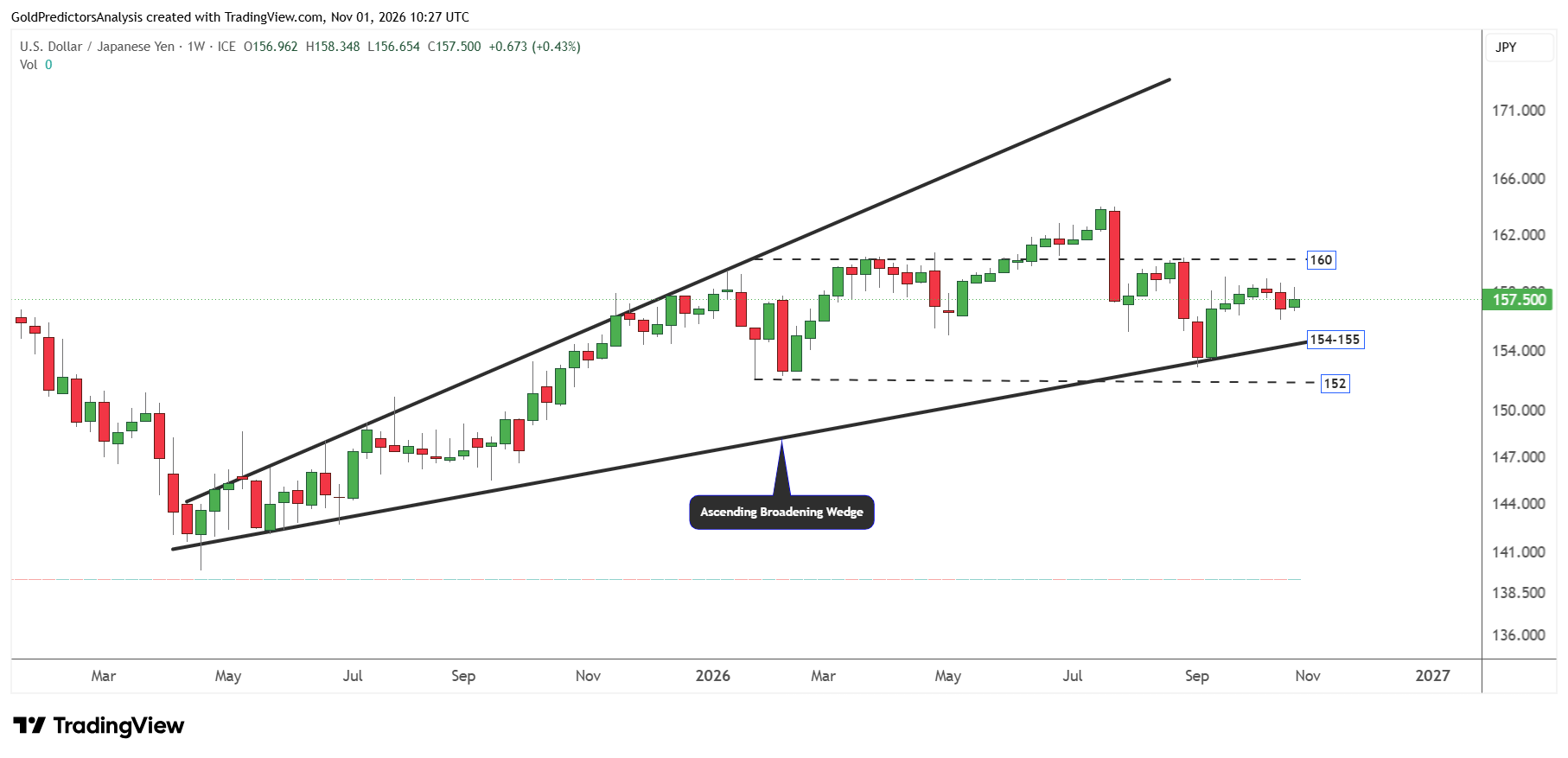
But a break below 156 may push the pair towards the long-term support region of 154 to 155. A break below 154 may push the pair toward 152, which is the key support level to decide the direction for the pair in the medium term. A break below 152 may introduce deeper correction towards the 145 area.
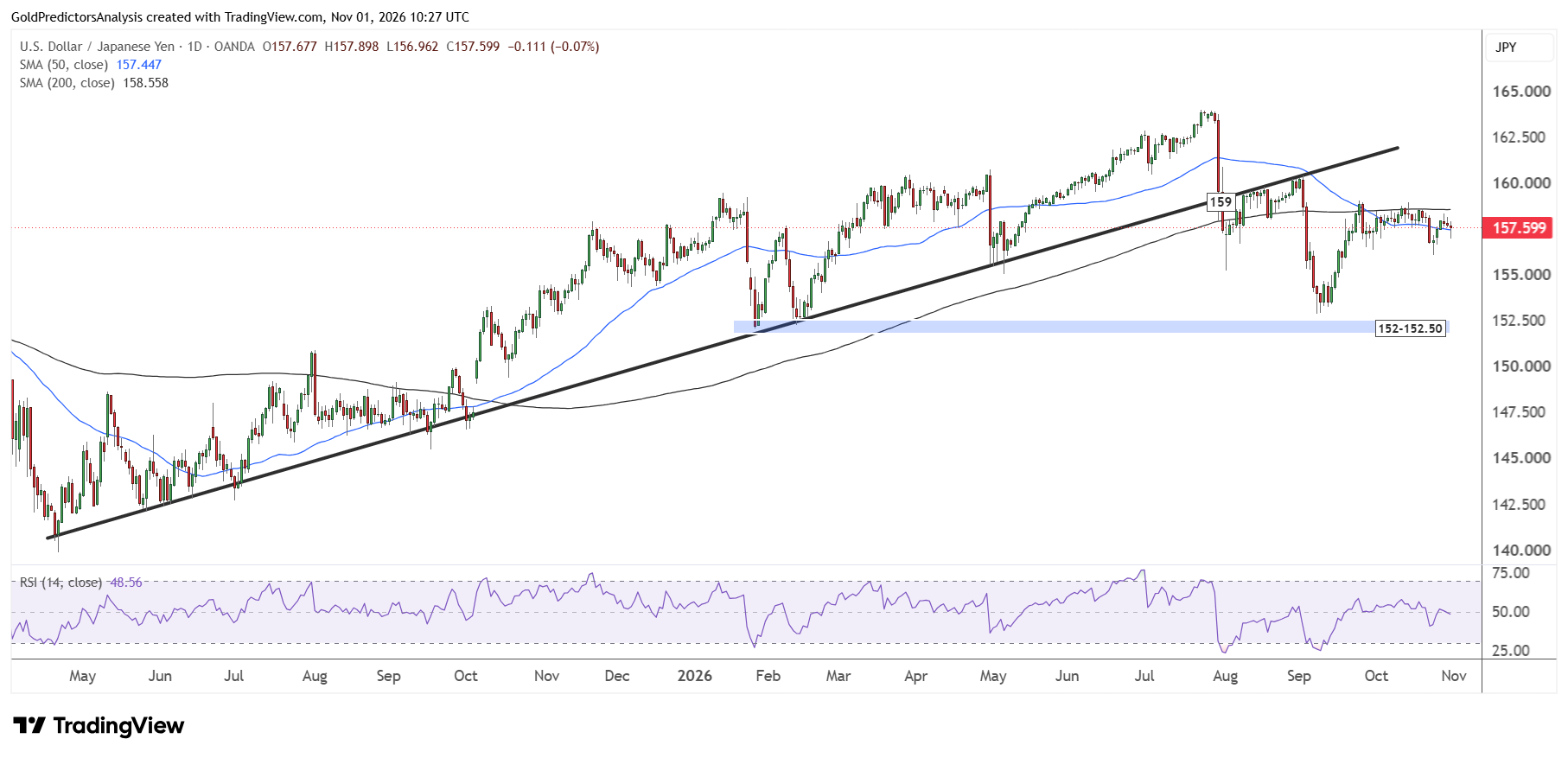
The daily chart for USDJPY also shows that the immediate trend in the pair was broken in July 2026 at the 159 level. The pair has now hit the strong support area near the 153 level and produced rebound. However, the pair failed to break above the 200-day SMA and is now consolidating below it to find the next move. A break above 159 will likely push the pair further to the upside.
However, if the pair breaks below 156, it may challenge the 152 level on the downside. The RSI is also consolidating around the midline and shows uncertainty in the short term.
EURJPY and GBPJPY Forecast: Key Support and Resistance Levels
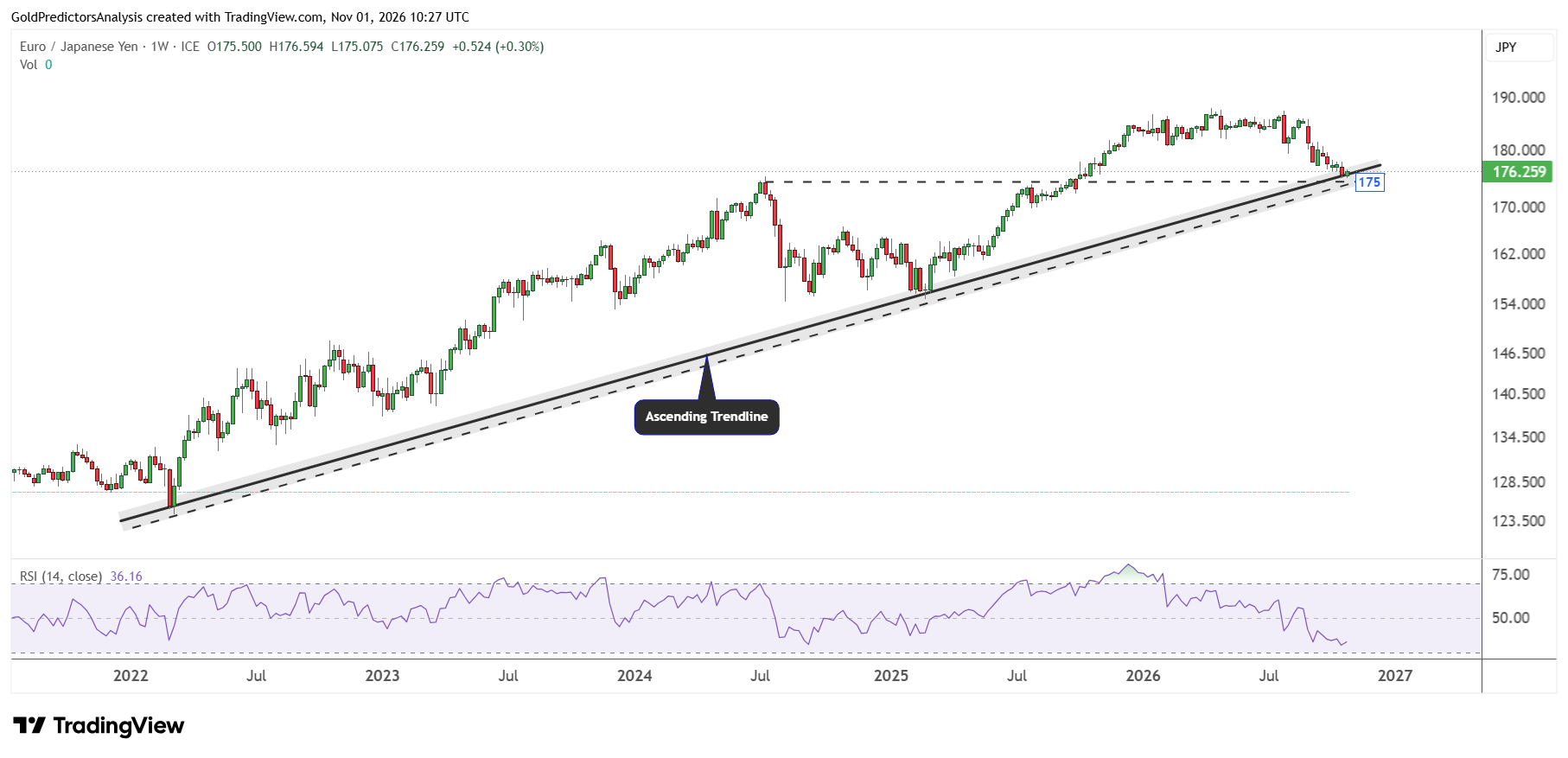
From a technical perspective, EURJPY has been trading within a bullish trend since the lows of March 2022. The pair started a correction after marking a high in April 2026 and has now reached the strong support region of 173 to 175. A confirmed break below 173 will likely open the way for further drop towards the 166 level.
On the other hand, a strong recovery from the current support region to above the 180 level will open the way for further upside towards the key resistance at 188. A confirmed break above 188 will open the way for strong rally in the pair. EURJPY remains in strong bullish trend as long as the pair holds the ascending trend line in the 173 to 175 region.
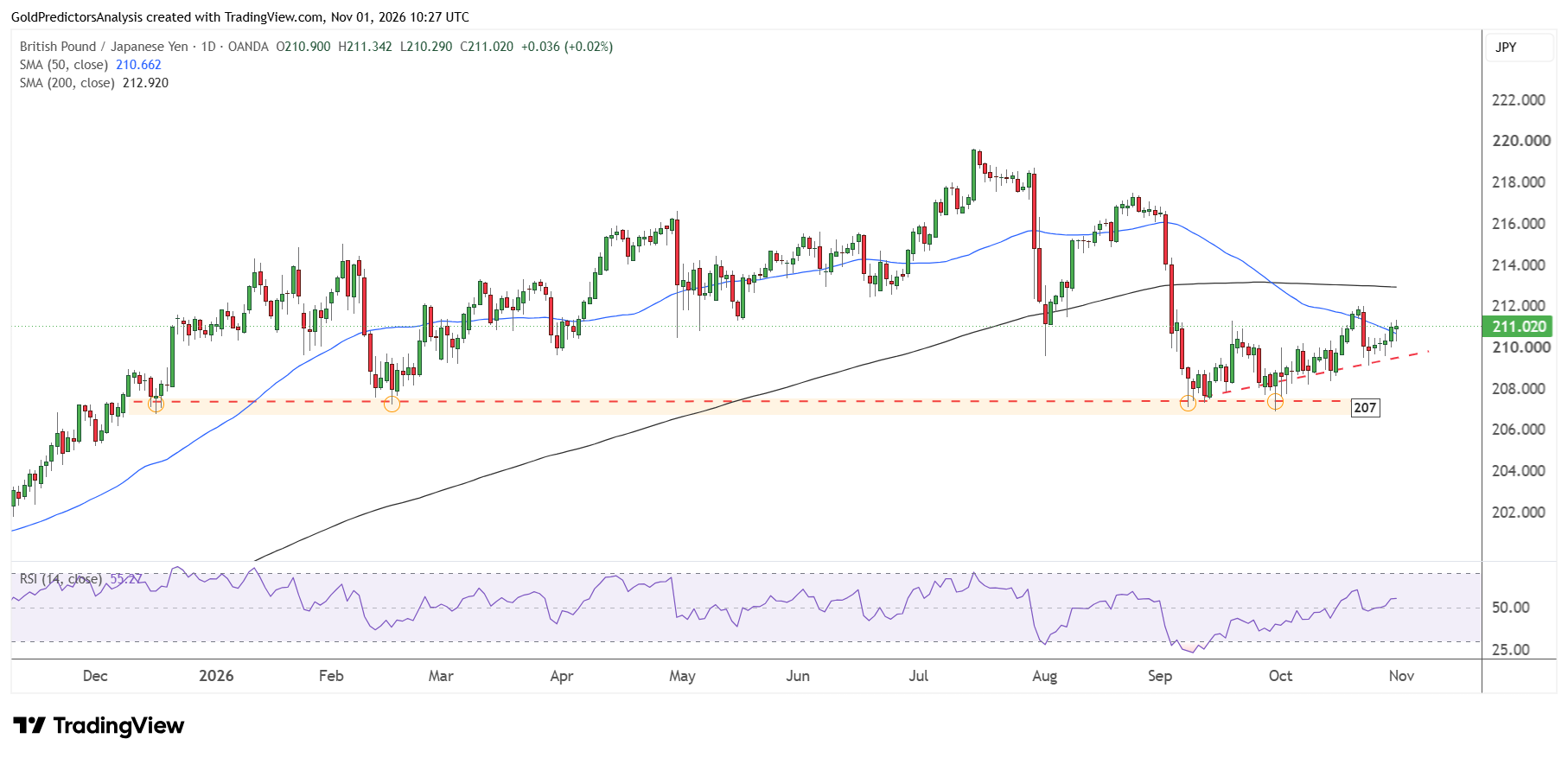
The daily chart for GBPJPY shows that the pair formed a low at the strong support level of 207 on 30 September 2026. The pair produced a bullish hammer candle at this support. This bullish hammer candle pushed the pair towards the 50-day SMA, where the pair is now consolidating.
GBPJPY remains above the ascending trend line that stretches from the lows of 8 September 2026. The price is now challenging the 50-day SMA. The RSI also remains above the midline which suggests positive movement in the short term.
A break above 212 may push the pair toward the 200-day SMA at 213. A confirmed break above 213 will likely open the way for further upside towards 217.
Bottom Line
Inflation in Japan remains persistent, and wage growth is high. This provides reasons for BOJ to increase interest rates again. But weak retail sales and consumer confidence slow the pace of the increase. In my view, the Japanese Yen may strengthen if the expectation of interest rates in Japan increases relative to the major central banks. Therefore, the outlook depends on how the gap between the interest rates in Japan changes relative to other central banks.
The technical picture remains mixed across yen pairs. A break below 156 in USDJPY may push the pair to the support zone of 154-155 and then 152. But a break above the 160 level in USDJPY may initiate a strong rally in the pair.
On the other hand, a break below 173 in EURJPY may open the way for the pair to 166. But a break above 180 may open the way for further upside toward the 188 level. For GBPJPY, the pair needs to hold the 207 level to maintain bullish outlook in the short term.
Read more: Oil Rally Fuels December Fed Hike Risks