



BoC’s Insurance Hike
The BoC rate announcement was interesting yesterday. Heading into the event, markets priced in about an 80% chance of a hike and 20% of a hold, but the forecast distribution – this is the breakdown of analysts polled by Reuters – revealed about 55% expected a hike and 45% called for a hold. Given this, and in line with what we saw with the RBNZ this week, I was closely watching for a potential hold decision, but alas, it was not to be. The BoC delivered a hike, bringing the overnight rate to 2.5%. I feel the BoC were almost forced to move at this point after headline inflation jumped to 3.1% and energy prices remained elevated.
To me, this ultimately smells like an insurance hike rather than the beginning of a policy-tightening cycle. Underlying inflation remains around 2%, and the labour market still shows signs of slack.
Fed Holds Target Rate Steady
The Fed then hit the wires on Wednesday and, as widely anticipated, kept the target rate at 3.75-4.00% in a 10-2 vote, with Cook (that surprised me) and Hammack dissenting in favour of another hike.
The accompanying rate statement was nearly identical to September’s, except for the decision, vote (last time it was unanimous to hike), and a couple of additions.
The growth framing was upgraded from ‘solid’ to ‘strong’, with the statement also dropping ‘Today’s policy action will support a timelier return to the Committee’s 2 percent goal’ and replacing it with ‘The accumulation of more information will help the Committee determine the policy stance appropriate to ensure a timely return of inflation to the Committee’s 2 percent goal’ – echoing a more data-dependent line.
Shortly after, Chairman Kevin Warsh’s presser offered very little to move the needle, and I would call it a hawkish hold. He made clear that pausing did not mean the Fed was easing off on inflation, and he acknowledged that price stability has not yet been achieved. But he stuck to the data-dependent script, framing the hold as an observational pause to see how September’s hike feeds through, and declined to offer guidance on December.
However, what was noteworthy was that Warsh announced a structural overhaul to the Fed’s calendar to reduce the number of rate-setting meetings. While the FOMC will still meet eight times a year, it will hold fewer live policy decisions, dropping to seven rate votes in 2027 and six in 2028. The remaining meetings are ‘strategy-only’ sessions, so no public statements or rate changes.
Brent Oil Price Forecast
Every new Brent Oil analysis as it publishes, today's technical signal and key levels, live price — on one page.
See all Brent Oil forecastsMarket Snapshot
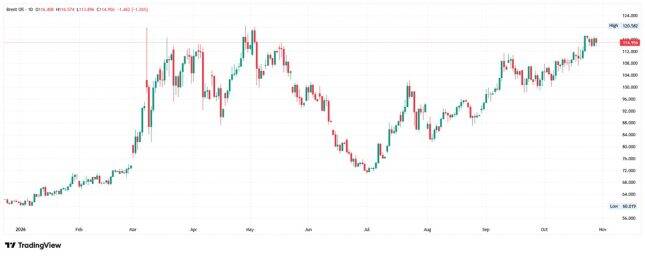
The takeaway from yesterday is that the market is looking through the Fed hold and focusing on the ‘next hike’ story. Yields near 5% remain the headwind for gold, and with the USD slipping only modestly, bullion continues to struggle to hold US$4,025-ish. Oil remaining above US$100 keeps inflation in the spotlight for central banks, and Vice President JD Vance’s outreach to Iran is the headline to watch for any relief.
Overnight, Asia woke up to a classic earnings divergence out of the US. Microsoft won, with Azure growth accelerating to 48% from 43% last quarter and the rest of the business was strong enough to lift overall revenue and earnings, so shares rose about 2.5% after the bell. Alphabet, by contrast, lost out. While Google Cloud revenue was strong – up 103% – search revenue grew 12% on estimates of roughly 15%, essentially feeding the ‘AI is a threat to search’ narrative, and shares fell more than 9% in late trade.
The regional fallout was most visible in Korea. The KOSPI initially fell 2.8% (though it has since recovered to -1.2% as of writing), with Samsung’s slide weighing heavily. The headline numbers were fine, with chip profits surging 15-fold, but they just missed estimates. The real irritant was that Samsung deferred any new shareholder return announcement to late January, after the market had hoped for more buybacks or dividends, as SK Hynix delivered.
Written by FP Markets Chief Market Analyst, Aaron Hill