
Gold (XAUUSD) prices surged after a mixed US jobs report added to expectations for Federal Reserve rate cuts. In my opinion, the combination of cooling off growth, continued inflation pressures and a weak dollar creates the environment for gold to extend the rally into early 2026. This article introduces the macro drivers, technical structure and related market signals that are getting gold into the next phase.

Key Macro Trends Driving Gold
Mixed Labor Data Helps Fed Cut Bets Alive
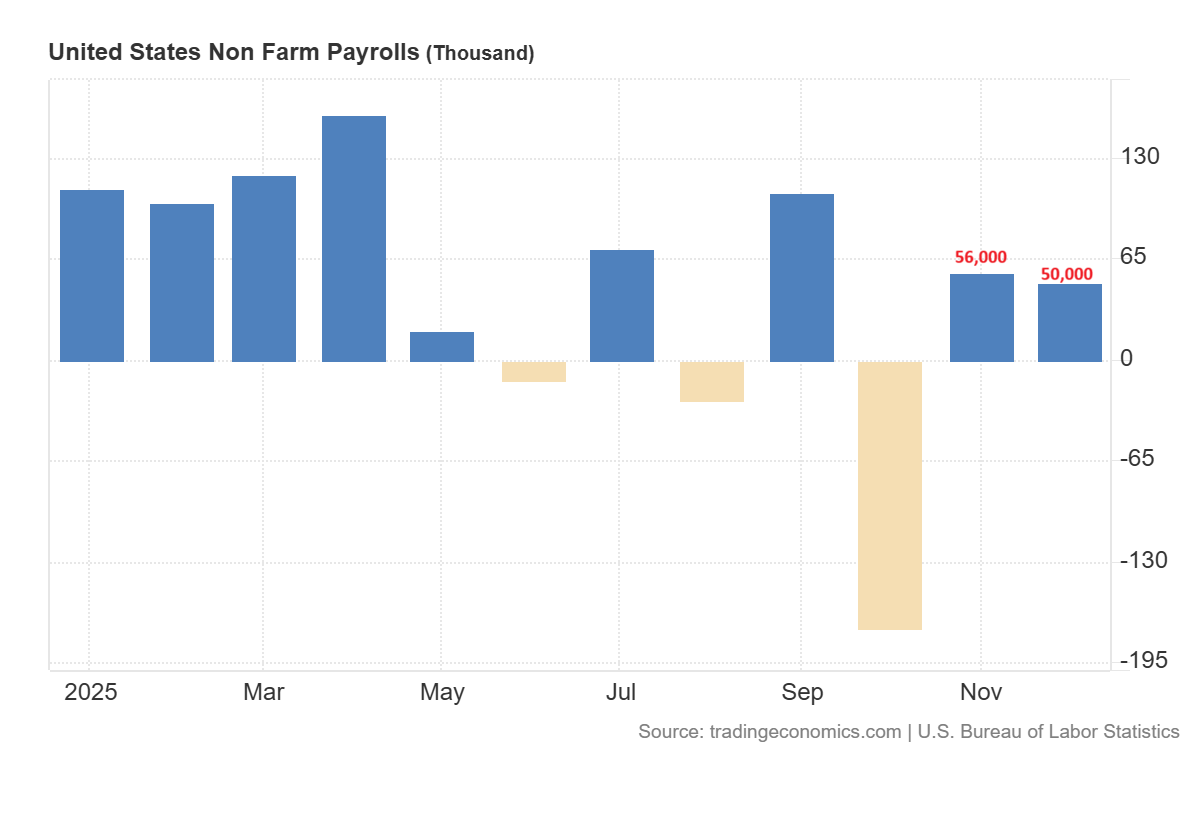
Gold price rallied on Friday and ended the week with a 4.10% gain. This was driven by the mixed U.S. employment report. Job growth fell well below expectations; the unemployment rate also edged down.
The chart below illustrates the fact that the U.S. economy added 50,000 jobs. However, forecasts had pointed to 60,000. Moreover, the previous month was revised down to 56,000.
Meanwhile, the unemployment rate dropped to 4.4% from 4.5%, which was also below expectations.
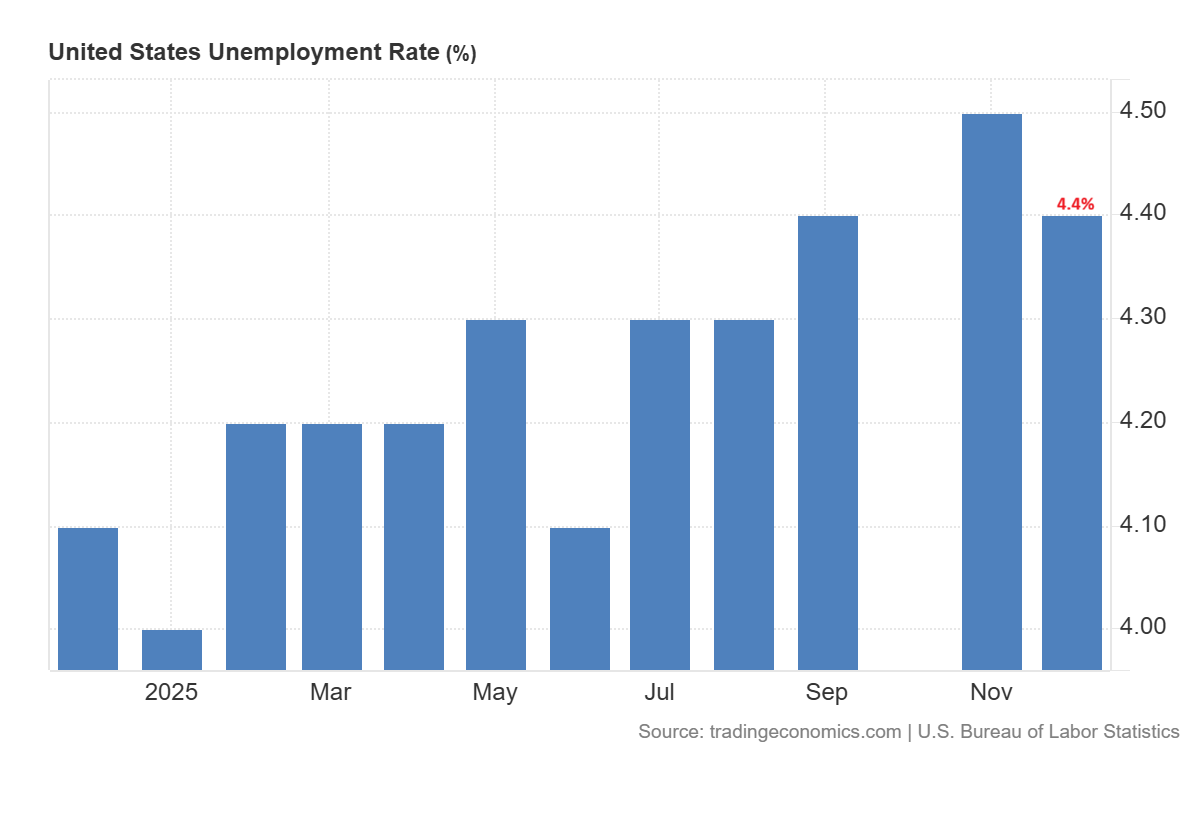
The market saw the data as the cooling of growth but not a collapse. That keeps expectations for the Federal Reserve in a dovish path. Traders are still expecting about 50 basis points of rate cuts throughout the year, which is continuing to support gold demand.
Gold Price Forecast
Every new Gold analysis as it publishes, today's technical signal and key levels, live price — on one page.
See all Gold forecastsLabor Market Cools without Cracking
Broader measures of labour also point to cooling. Continued unemployment claims increased to 1.914 million by late December, which was more than 500,000 higher than the 2022 low.
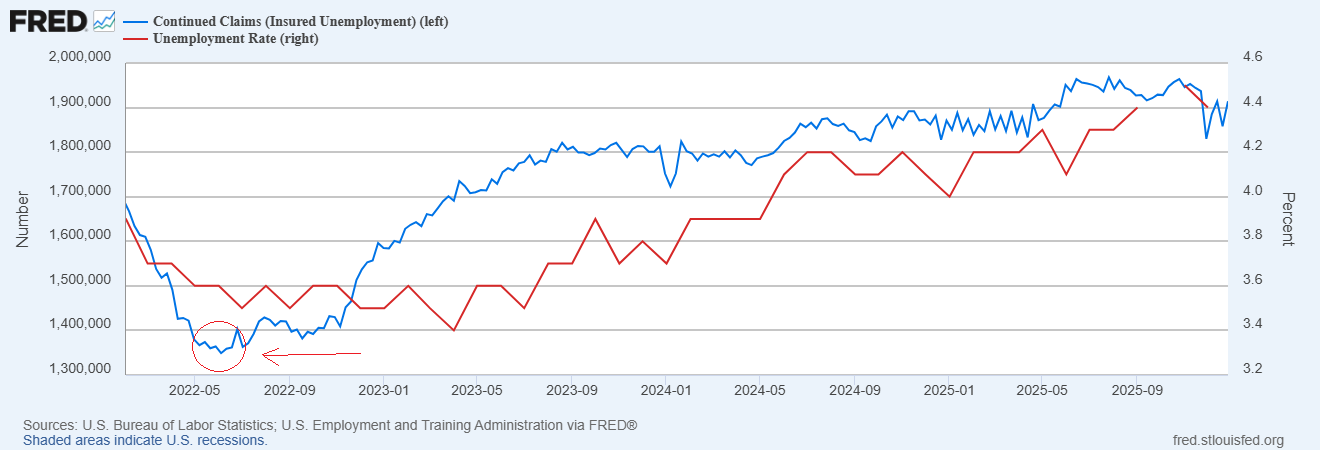
Despite this increase, the rate of unemployment is less than 5%, which is normally seen as a recession. This signal is of a slowdown rather than a crisis.
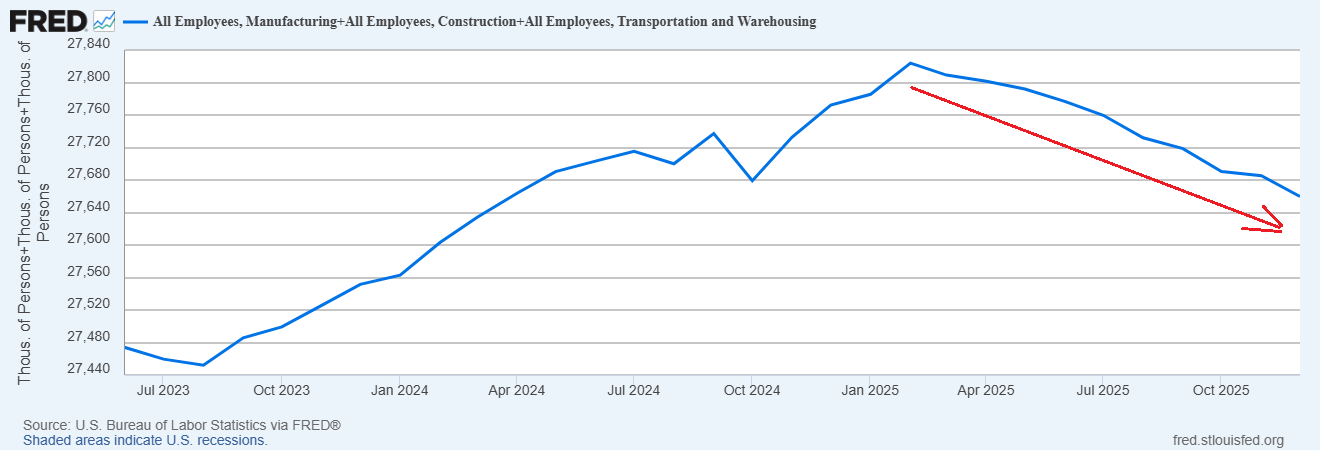
On the other hand, cyclical sectors provide another warning sign. Manufacturing, construction, transportation and warehousing employ only 17% of workers in the United States. These sectors typically absorb most of the recession-related job losses. Employment in these sectors has fallen a long way from the February 2025 peak. This decline is an indication of clear risk-off conditions.
Housing and Transport Signal Cooling Growth
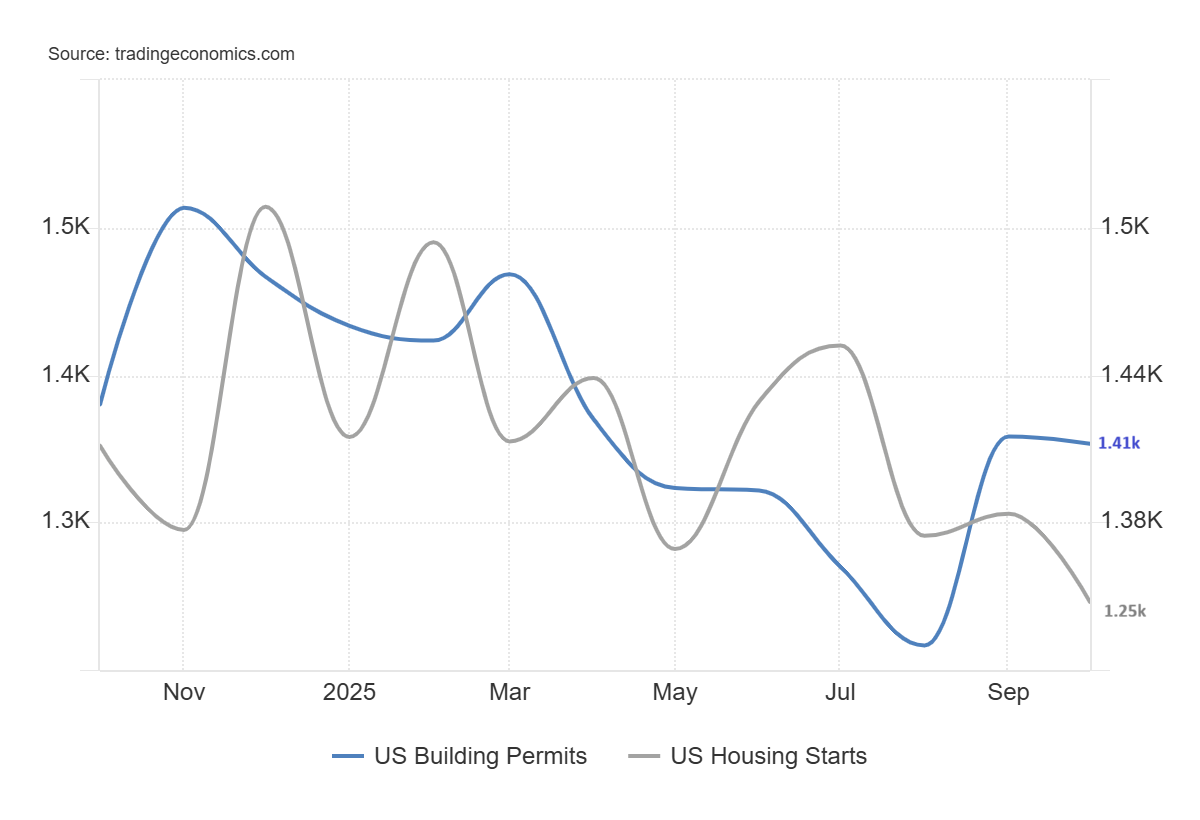
U.S. housing data confirms softer momentum. The chart below shows that the building permits have dropped 0.2% to 1.412 million. On the other hand, housing starts declined by 4.6% to 1.246 million. These numbers indicate less demand and tighter financial conditions.
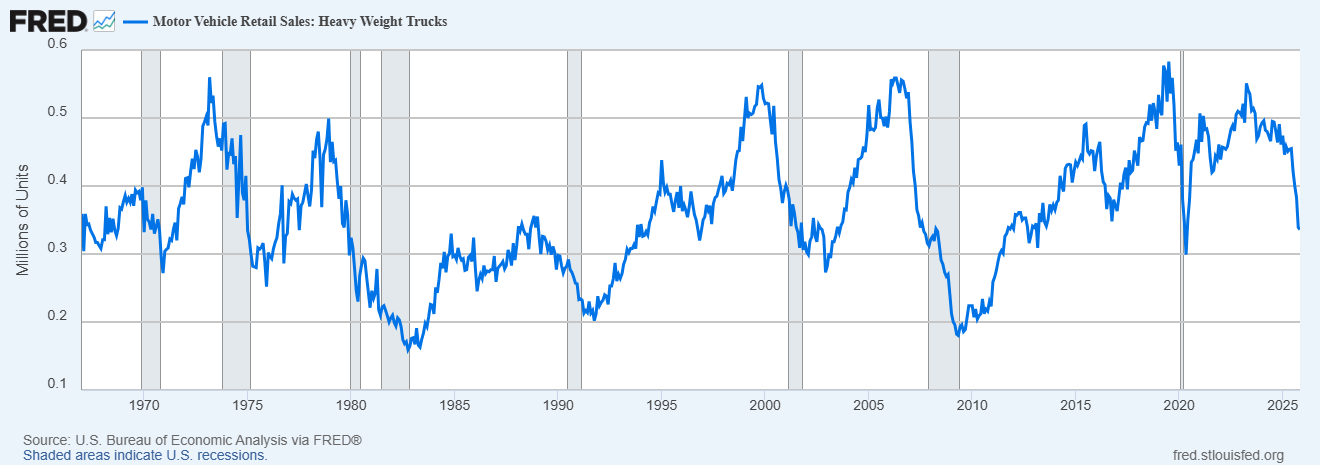
Transportation data also indicates a similar outlook. The chart below illustrates that heavy truck sales have fallen to recession levels. Historically this pattern has coincided with economic slowdowns and increasing risk aversion. These signals cap yields and provide support for gold during periods of late cycle.
Consumer Sentiment Increases, but Inflation Concerns Remain
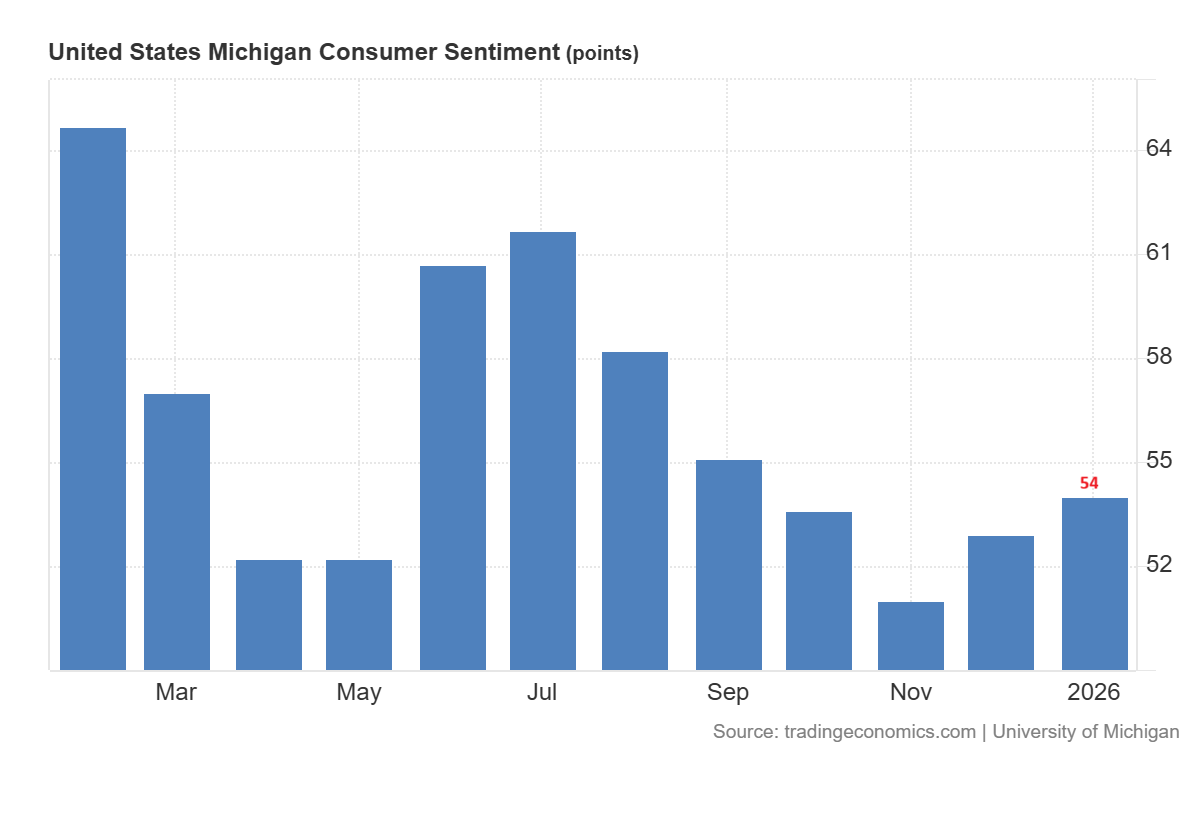
The chart below shows that the University of Michigan consumer sentiment increased to 54 level and beat expectations. However, the fears of inflation persist.
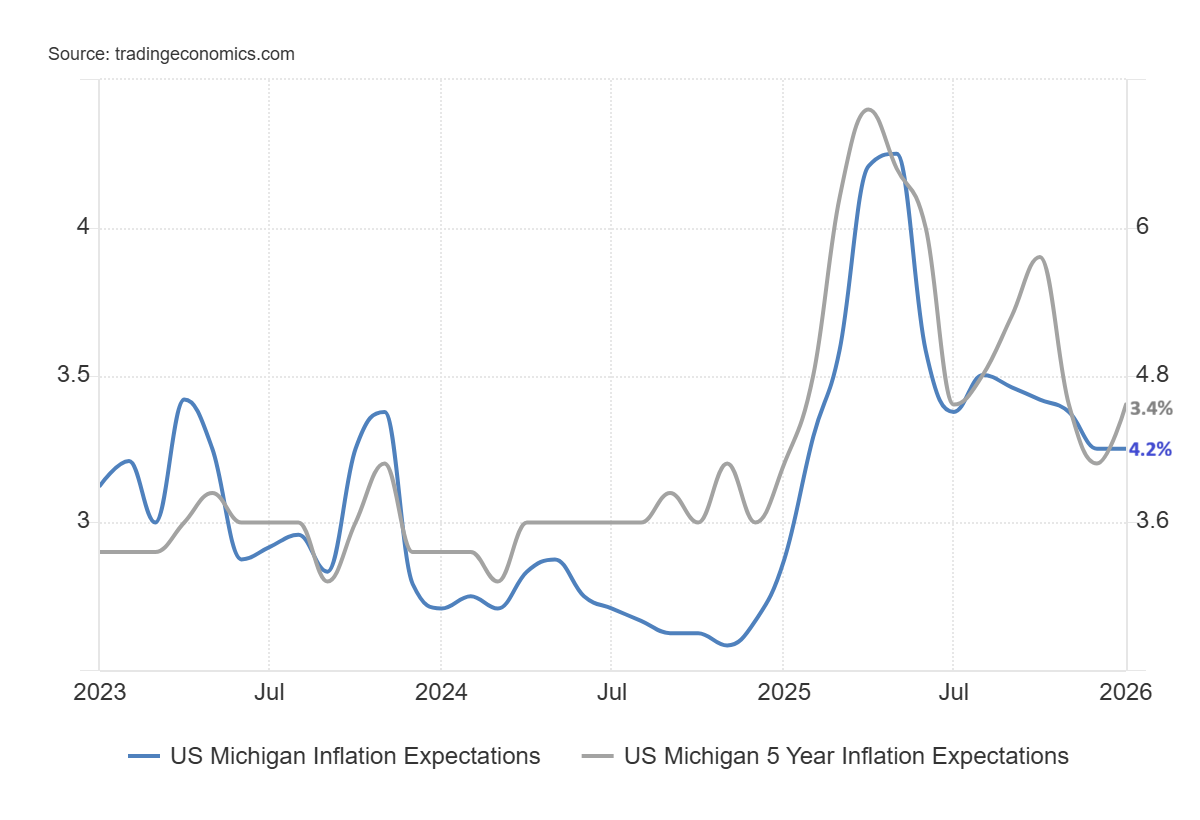
The chart below reveals that one-year inflation expectations are still at 4.2% but five-year inflation expectations increased to 3.4%. These levels are still elevated. Persistent inflation fears bolster gold’s role as a hedge despite economic growth.
The market is now looking to next week’s inflation figures, retail sales, regional manufacturing surveys and jobless claims, which could spell further direction for the gold price. In my opinion, a downside surprise in inflation or activity data would bolster rate cut expectations. That outcome would boost gold prices in the near term.
Technical Structure Builds Foundation for 2026 Gold Rally
The technical structure of the gold market is still bullish as shown in the chart below. The gold is still in a bull phase as of 2024. The consolidation between April and July 2024 set off a strong move. The month of July 2024 marked the start of a rally that lasted the next two to three months.
Similarly, the consolidation from the highs of October 2024 into January 2025 also caused a strong move during Q1 2025. Then, prices consolidated between April and August 2025 and triggered another strong rally marking a high in October 2025.
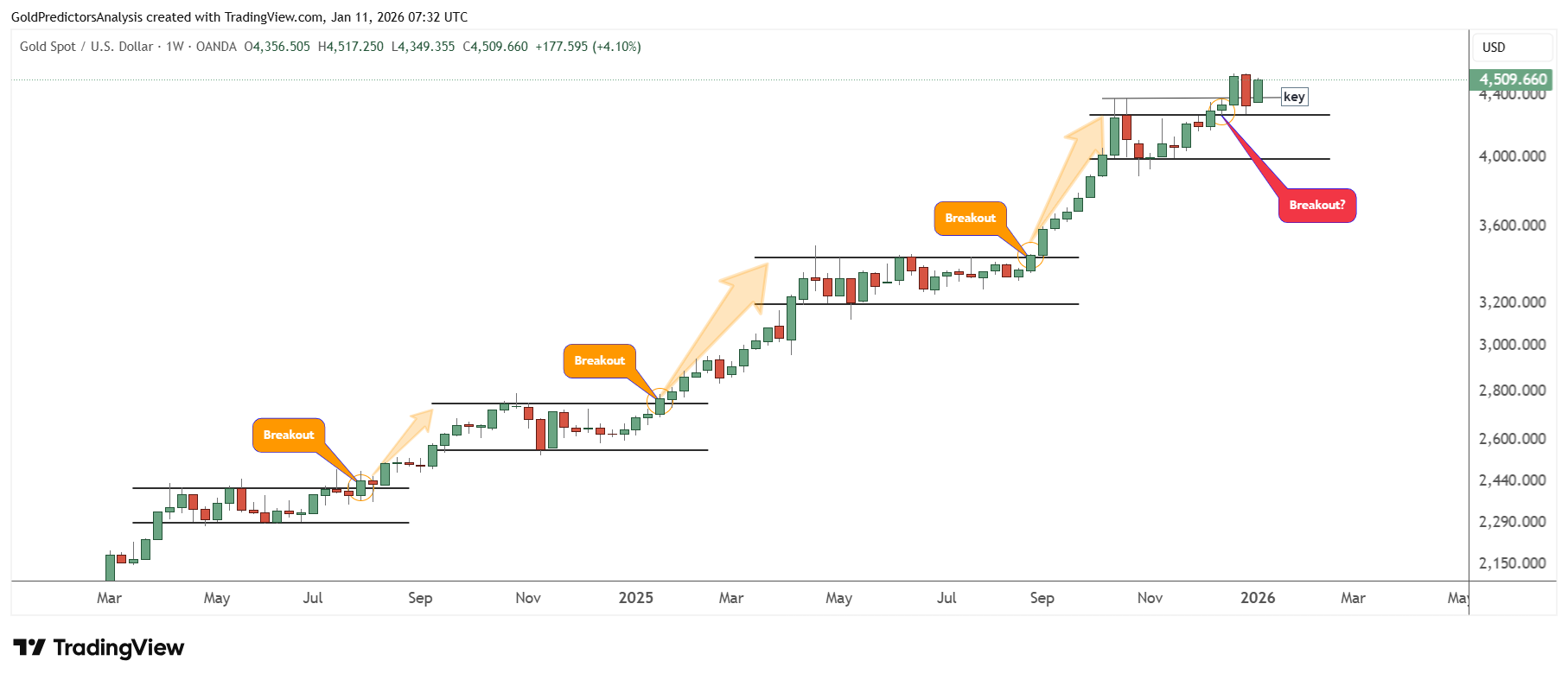
Recently the gold market broke through the October 2025 highs and went into a great surge. The recent correction in the last week of 2025 resulted in a bottom at the $4,260 level. This correction was a retest of the breakout level from the previous consolidation. This retest triggered a strong rebound to higher levels. This rebound shows that the gold market is building the base for the 2026 rally.
This bullish trend is further confirmed by the chart below which shows that the gold market formed a strong basing pattern from August 2020 to November 2023 and triggered a strong move. Gold marks strong gains when it breaks after a period of consolidation.
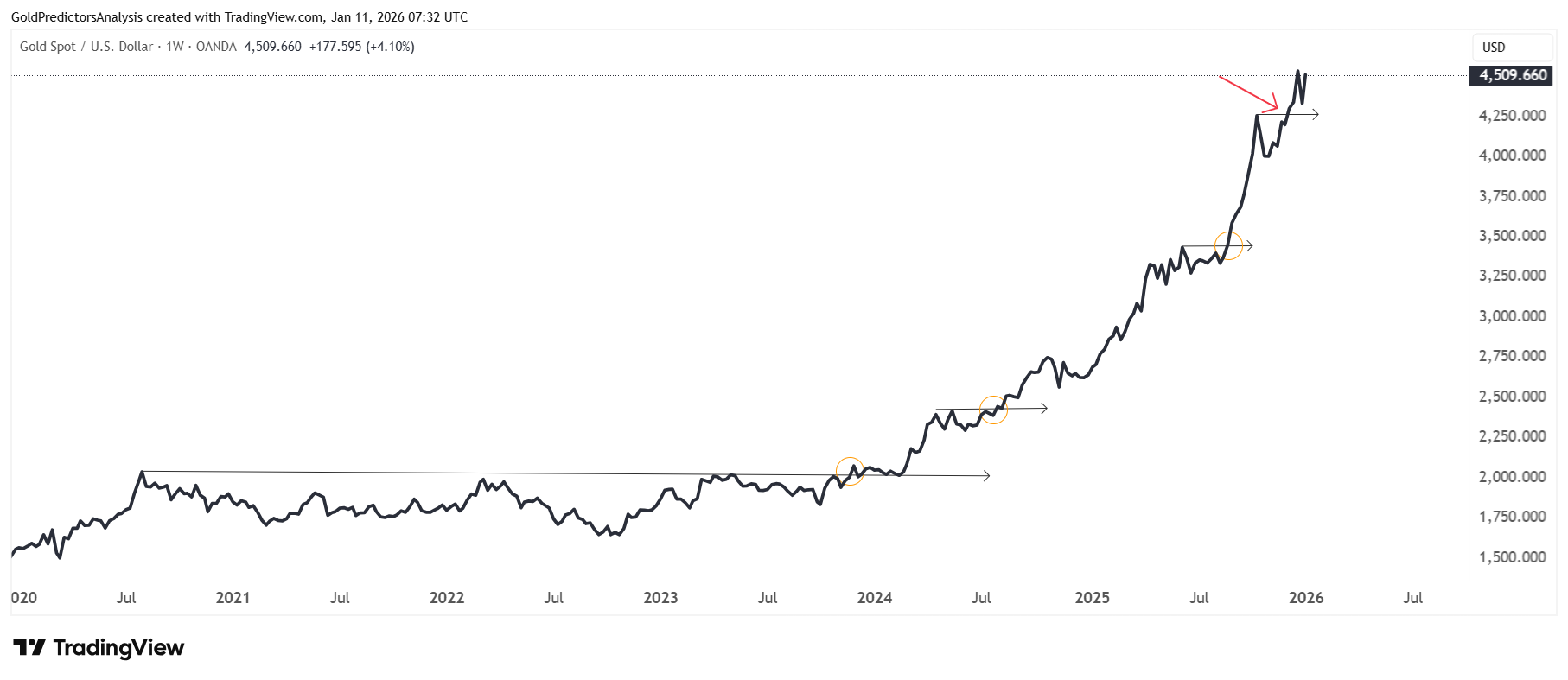
The gold price has already broken above the new record levels in December 2025 which has opened the door for continued upside in 2026.
Related Market Trends and Gold Correlations
Dollar Index Weakness Confirms Bullish Gold Outlook
The U.S. Dollar Index is still trading within a long-term ascending channel, which started in 2008. However, the price structure has been weakened dramatically over the last few months.
The chart below shows that the US dollar broke below the midline of the ascending channel in 2020. This breakdown took the index towards the support line of this channel.
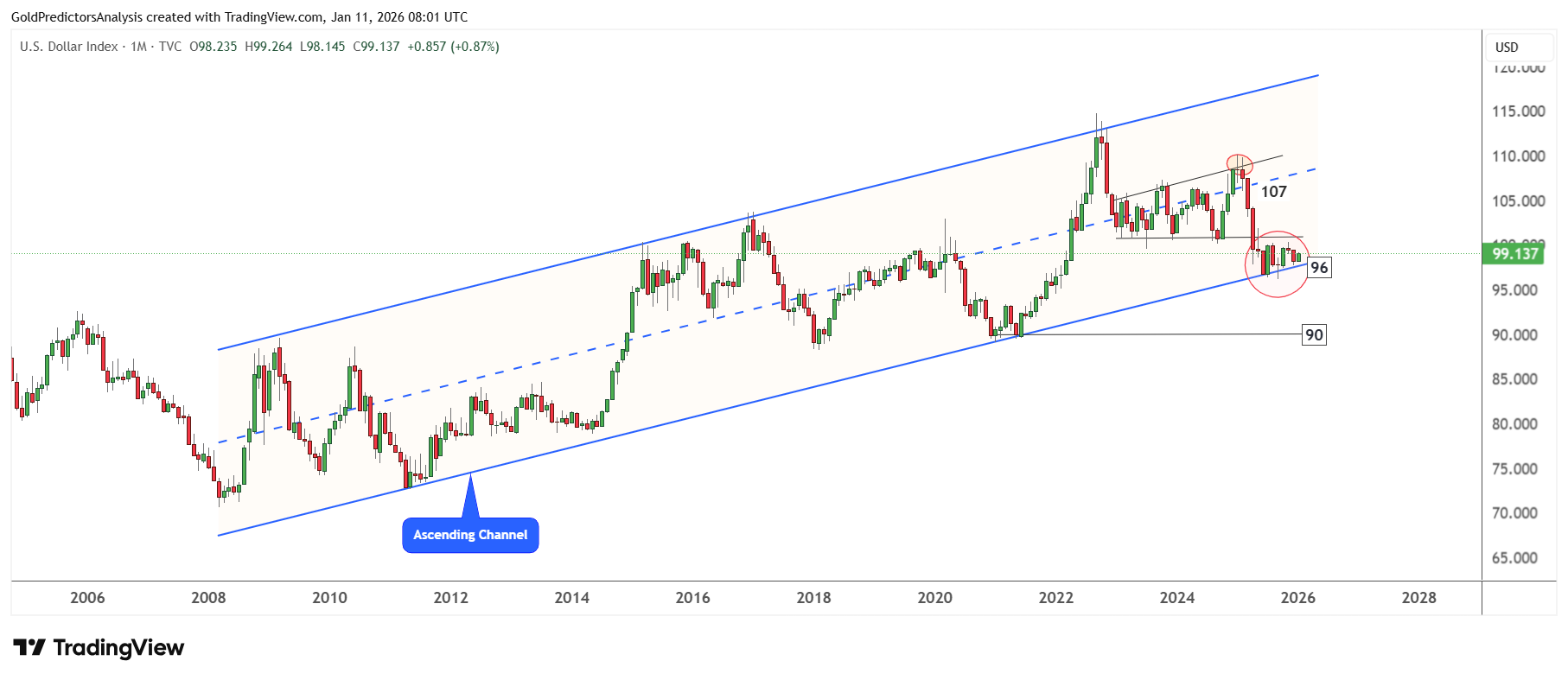
This correction has created a massive rally in the gold price. Historic sharp drops in the dollar have helped major gold rallies. Currently, a recent bearish structure is highlighted in the red circle near the lower boundary of the channel. If the dollar fails to support 96 level, the next support is around 90.
A breakdown below 96 would confirm a bearish continuation in the US dollar. That move would likely add to bullish momentum in gold for the first half of 2026. However, a recovery above 102 will indicate consolidation in the gold market.
Gold-to-Silver Ratio Breakdown Signals Silver Catch-Up
The gold to silver ratio has broken below a multi-year ascending structure. There is a good clean break from both major channels and the ratio is now trading below 60.
This move indicates a possible leadership change in the precious metal space. Historically, when the gold to silver ratio breaks down, silver (XAG) tends to perform better than gold. This pattern validates the beginning of a broader metals rally.
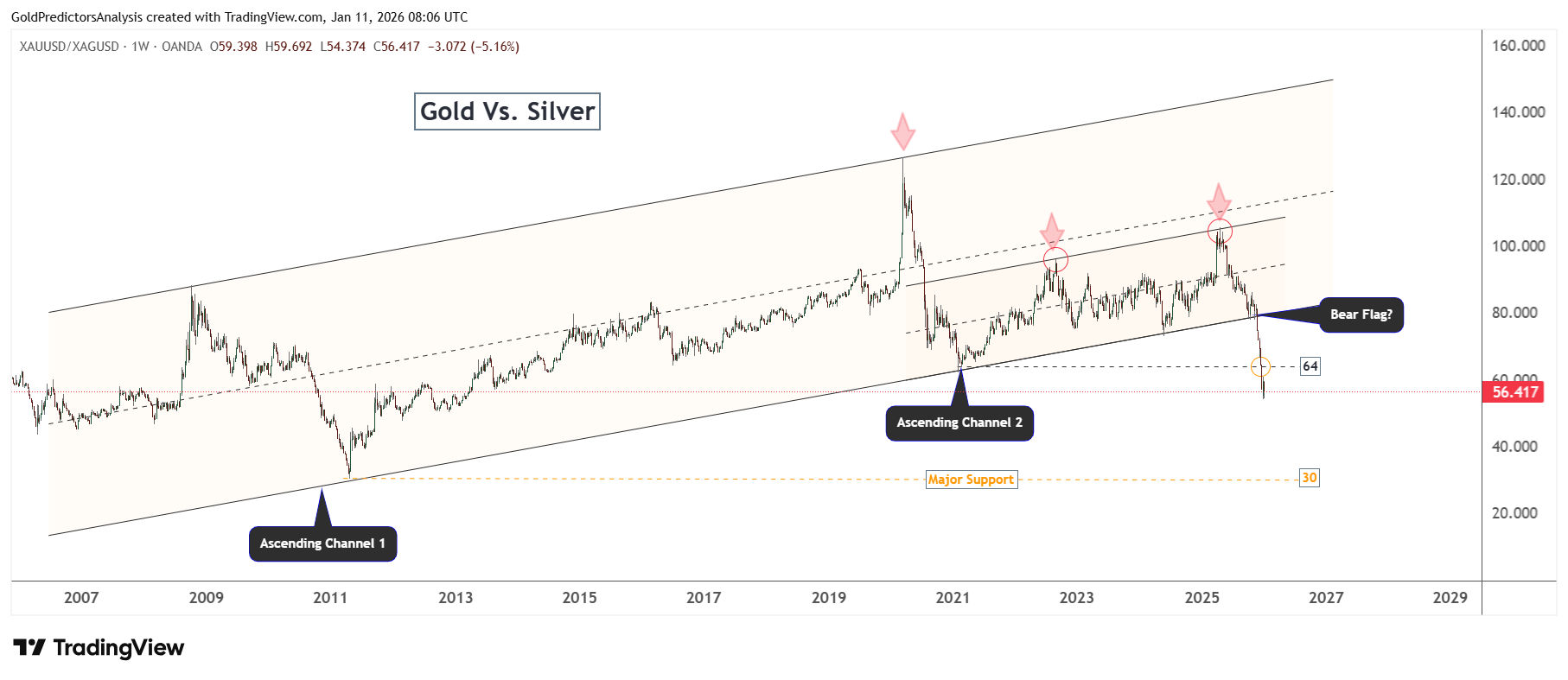
This move would be a good bullish signal for silver and would confirm that the gold breakout is part of a larger cycle in hard assets. This breakdown adds more confidence to the bullish gold thesis for 2026.
In Closing
Gold has confirmed a bullish breakout above previous record levels. The bounce off the $4,260 retest area gives strength to the continued rally with the market likely to continue higher through January 2026.
Mixed labor data, slowing housing and transportation data, and sticky inflation support the bullish prospect for the gold market. At the same time, weakness in the U.S. dollar and the break in the gold to silver ratio confirm that this move is not isolated. These related market signals are pointing to favor the gold rally.
In my opinion, the base case is bullish and there is more upside as long as gold continues to hold above the $4,260 breakout zone. A sustained move below that level would indicate a deeper consolidation but the wider structure is still favoring higher prices into 2026.
If you’d like to know more about what drives gold and silver prices, please visit our educational area.