
US Growth Revs Up, But Jobs Flash a Caution Signal
The latest batch of US data paints a stronger growth picture on the surface, but the internals are a bit less clean for risk. Q3 GDP is running hot, trade is improving, and core durable demand is holding up. At the same time, private payrolls slipped in November and small businesses are cutting heads. For traders, this is starting to look like a late-cycle mix: growth still decent, but the labor side losing some steam.

GDP Beats, Consumer and Government Do the Heavy Lifting
Real GDP grew at a 4.3% annualized pace in Q3 2025, a clear step up from 3.8% in Q2. The bulk of that strength comes from consumer spending, firmer exports, and higher government outlays, while investment is the drag. Imports fell, which mechanically boosts GDP and hints that domestic demand isn’t running out of control. Traders will read this as confirmation that the US economy is still outpacing most peers, which generally leans supportive for the dollar and keeps a floor under yields.
Trade Gap Narrows as Exports Pick Up
The September goods and services deficit narrowed to $52.8 billion from $59.3 billion in August, with exports up 3.0% and imports up just 0.6%. Industrial supplies and materials led the export gain, helped by a strong jump in nonmonetary gold, while consumer goods exports got a decent lift from pharmaceuticals. Year-to-date the overall deficit is still wider than in 2024, but the three-month average gap has come in $14 billion from a year earlier. That improvement, even if partly noise, takes a bit of pressure off the dollar bears who have been leaning on external balance as a key argument.
Durable Goods Cool, But Core Demand Holds
October durable goods orders fell 2.2% after two monthly gains, but the headline drop is all transportation. Ex-transport, orders are up 0.2%, and ex-defense they’re down 1.5%. That split matters. Weakness in big-ticket transport can skew the headline and exaggerate the downside story. Under the hood, core demand is still slightly positive, which suggests business spending isn’t falling apart, just losing some steam. Equity traders will probably treat this as a mild negative for heavy industry rather than a broad warning on all cyclicals.
ADP Shows Private Jobs Down — Small Firms Feel the Pain
The ADP report shows private payrolls down 32,000 in November, with hiring “choppy” through the back half of 2025. Weakness is concentrated in manufacturing, professional and business services, information, and construction. The breakdown by firm size is telling: small businesses are cutting aggressively, while mid-sized and large companies are still adding staff. That kind of split usually signals that conditions are getting tighter at the margin — credit a little more expensive, demand a little less reliable — even if headline growth is still strong.
Gold Price Forecast
Every new Gold analysis as it publishes, today's technical signal and key levels, live price — on one page.
See all Gold forecastsBottom Line: Growth Still Firm, but Not a One-Way Bull Story
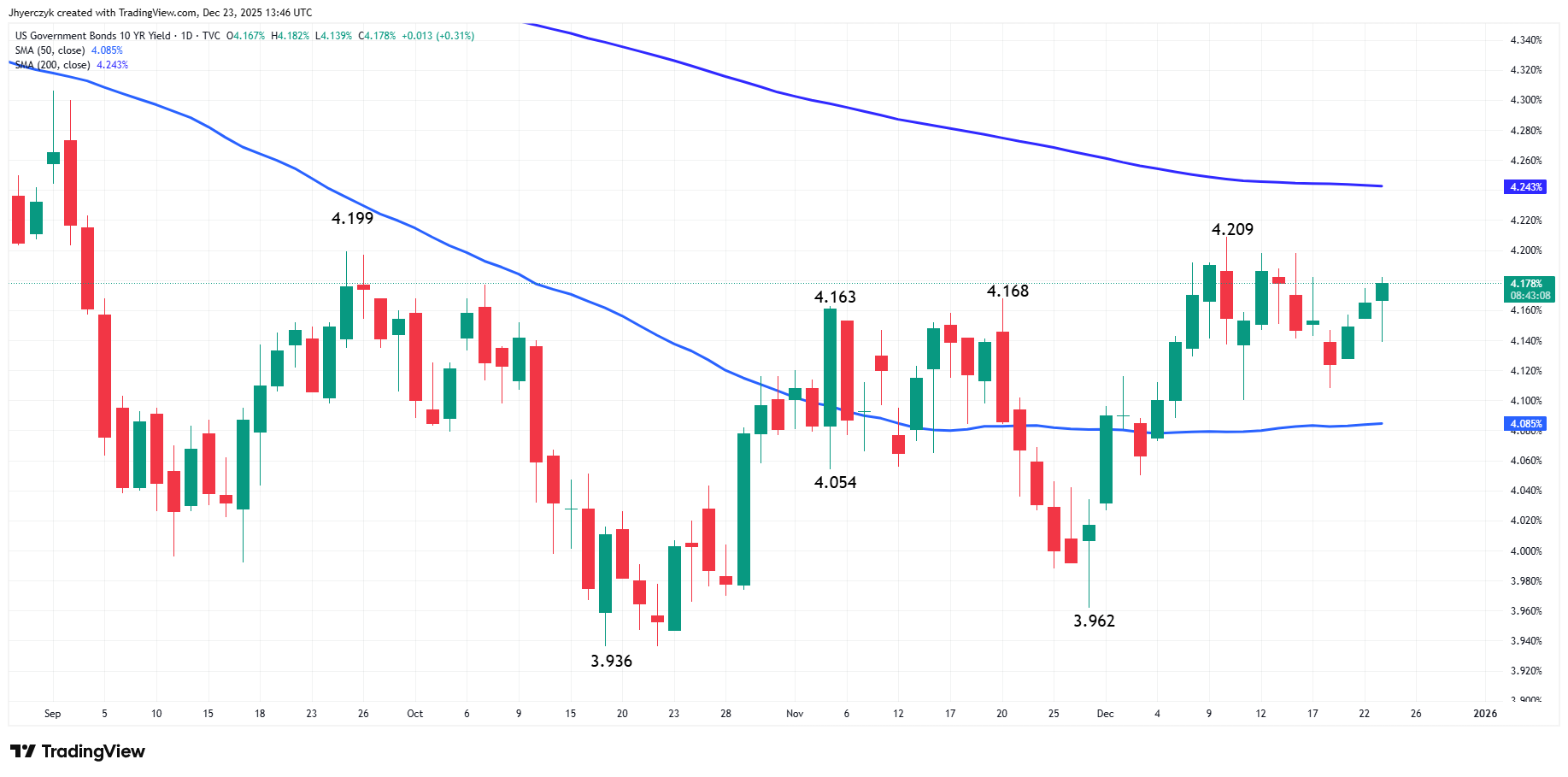
For traders, the mix says this: growth is still solid enough to cap bond rallies and keep the dollar supported on dips, but the softer labor tone argues against a straight-line move higher in yields.
Risk assets probably keep finding buyers on weakness, especially in exporters and select cyclicals, but the soft ADP print should keep some caution in play around small-cap and rate-sensitive names.
Near term, bias looks modestly bullish for the dollar and neutral-to-slightly-bearish for longer-dated Treasuries — as long as the hard data continues to back this 4%-plus growth story.