
Bitcoin (BTC) has dropped by over 45% from its October 2025 record high of around $126,275, with many fearing that it is repeating a 2022 bear market structure.
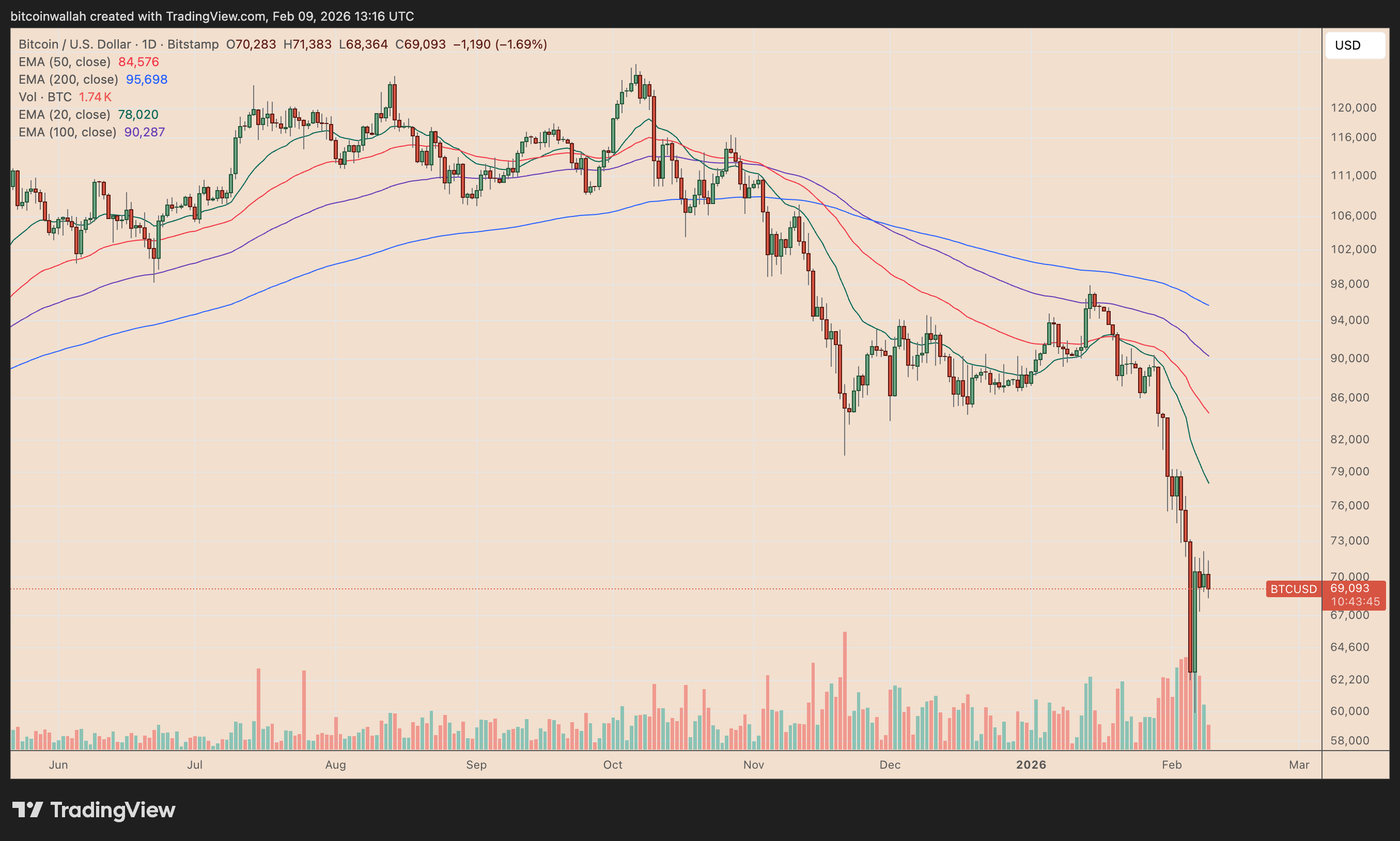
But some charts are showing that Bitcoin may bottom out soon. Let’s examine them as follows.

Bitcoin Accumulation Addresses Flash a “Whales Bought the Dip” Signal
The latest BTC selloff is meeting aggressive dip-demand from long-term, non-spending wallets, according to data resource CryptoQuant.
On Feb. 6, around 66,940 BTC moved into accumulator addresses, the largest one-day inflow of this cycle, implying big holders used the drawdown to absorb supply and then self-custodied those coins.
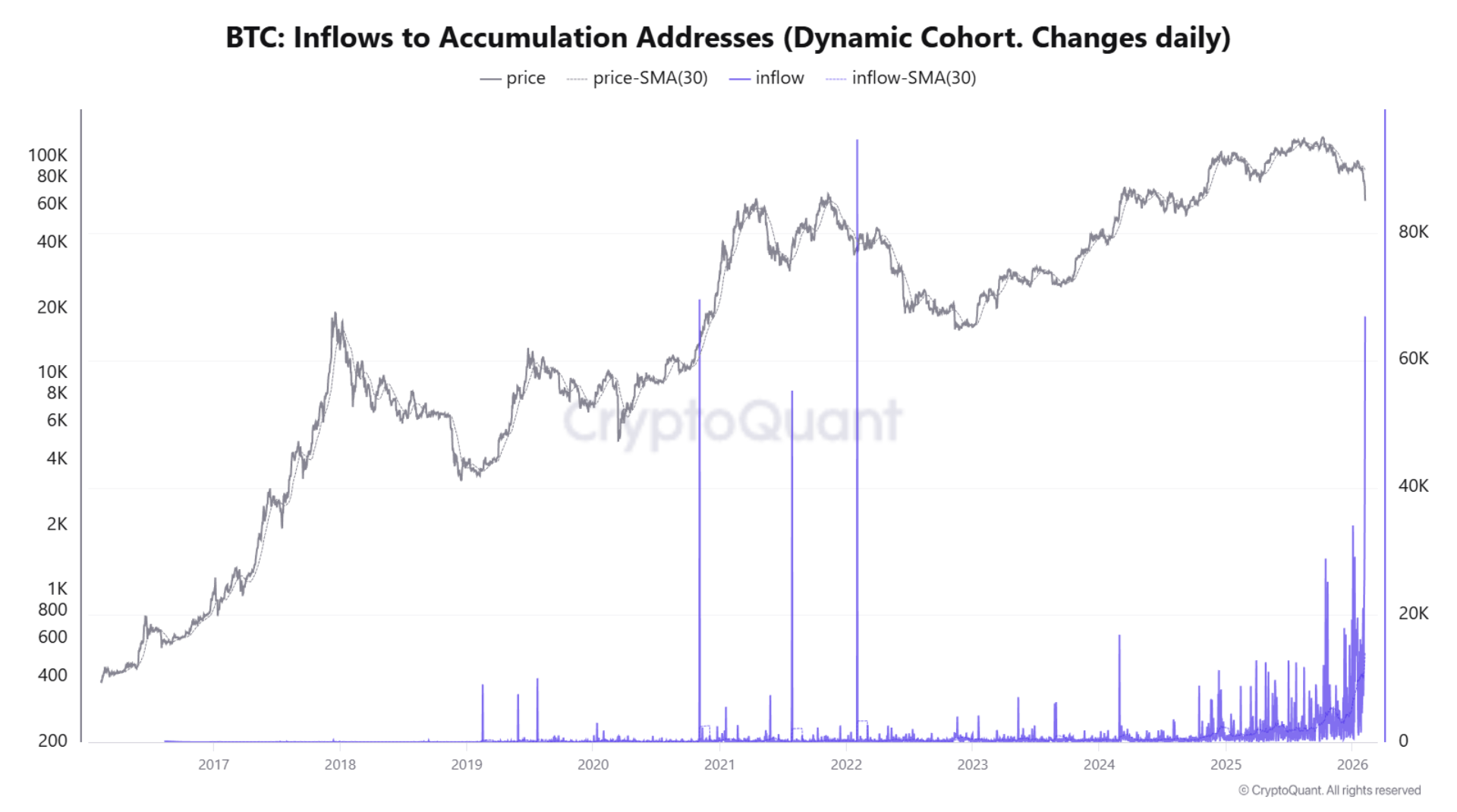
In other words, traders pulled their BTC into wallets that historically don’t distribute quickly. That matters because panic-led dumps typically get “sticky” only when buyers step away.
Here, the opposite shows up: the deeper the dip, the more coins migrate into hands that usually don’t sell on short timeframes, tightening liquid supply and improving the odds of a stabilization phase.
The caveat: a single spike can be noisy (entity clustering, internal reshuffles), but sustained elevated inflows would strengthen the “dump won’t last” thesis.
Glassnode’s 1K–10K BTC supply shows a clear uptick during the latest selloff, hinting that whales are adding exposure as price weakens.
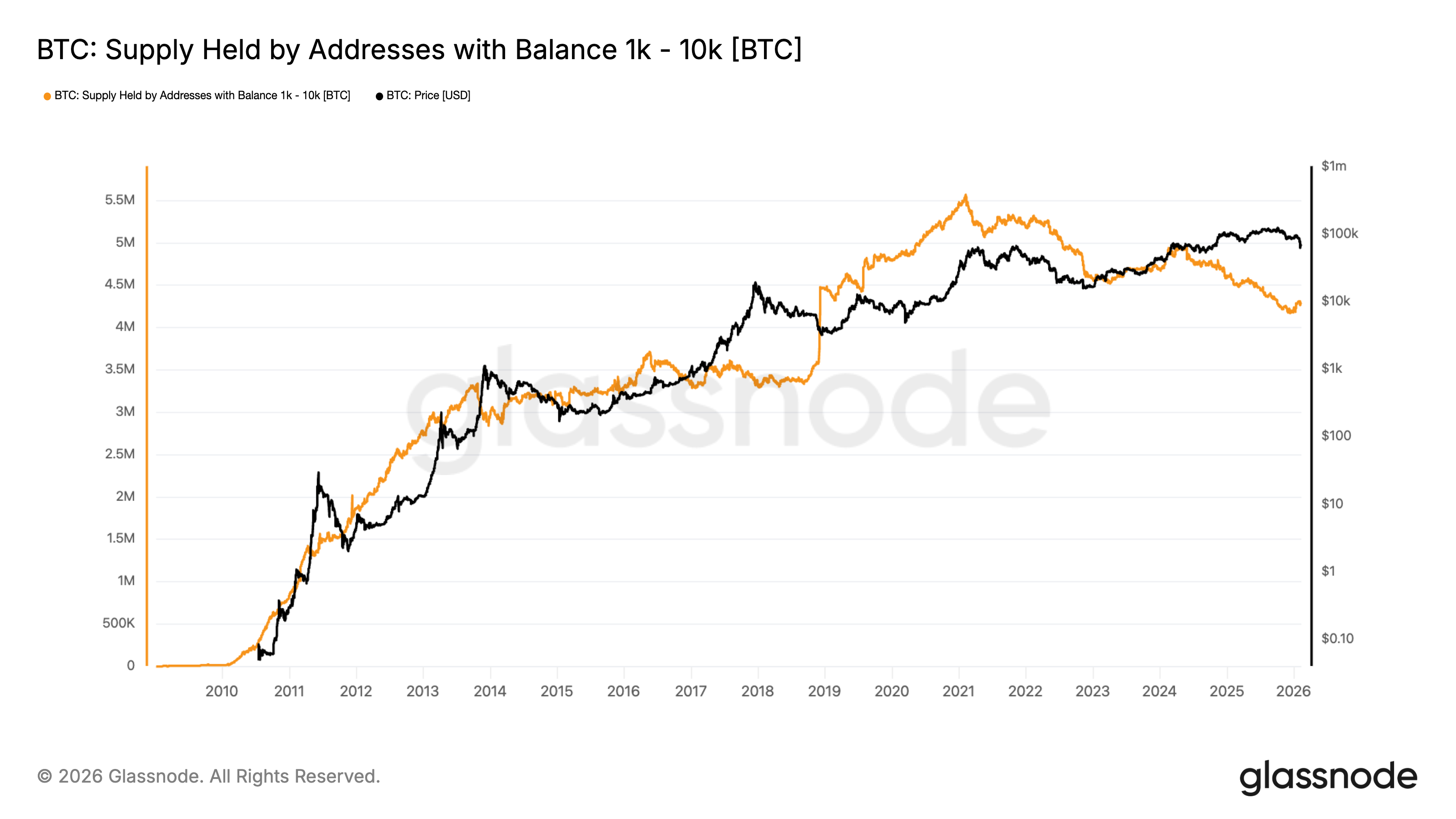
That matters because this cohort often absorbs supply during deleveraging, helping dumps burn out faster.
Bitcoin Price Forecast
Every new Bitcoin analysis as it publishes, today's technical signal and key levels, live price — on one page.
See all Bitcoin forecastsBitcoin Sharpe Ratio Enters Historical Bullish Reversal Zone
Bitcoin’s Sharpe ratio has slipped to around -10, its lowest level since March 2023, placing it in a zone that has historically aligned with late-stage bear markets, according to CryptoQuant analyst Darkfost.
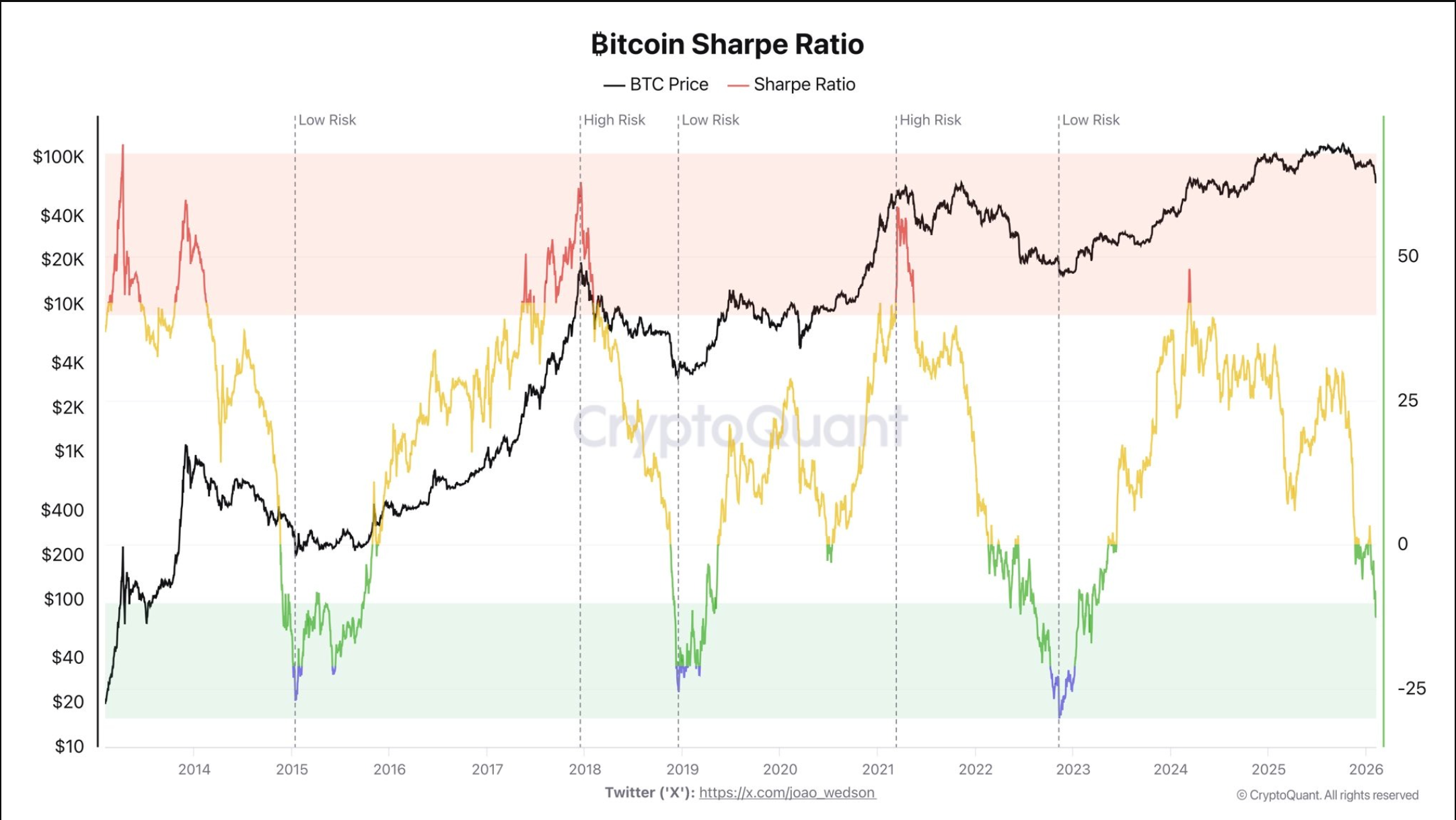
The metric, which measures risk-adjusted returns, signals that BTC’s recent performance looks unattractive relative to risk, explaining why downside pressure has persisted.
However, similar negative readings in late 2018–early 2019 and late 2022–early 2023 coincided with market bottoms, not prolonged selloffs.
In practical terms, BTC may still look risky in the short term, but the risk-to-reward profile is becoming increasingly asymmetric, a condition that has often preceded trend reversals rather than deeper, sustained declines.
US Spot Demand For Bitcoin Reappears
The Coinbase Premium Index, a proxy for U.S. institutional demand, has snapped back into positive territory following Bitcoin’s sharp dip toward the mid-$60,000s.
After spending most of January deeply negative, signaling persistent selling pressure from U.S. traders, the sudden flip suggests aggressive spot buying on Coinbase as prices weakened.
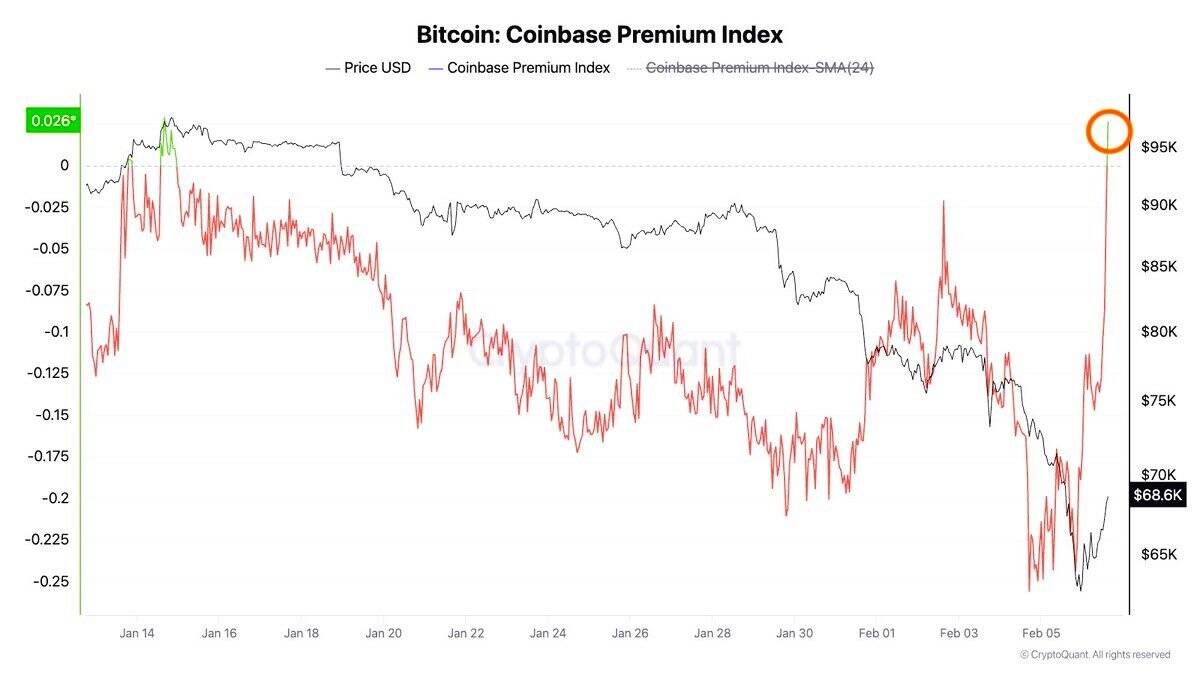
Historically, sharp rebounds in the premium during drawdowns have coincided with local price stabilization, as U.S.-based institutions and high-net-worth buyers step in to absorb supply.
It reinforces the idea that the latest BTC dump is being met with real spot demand. If the premium remains positive, it would indicate continued accumulation rather than a short-lived relief rally.