


Warm Weather Outlook Sinks Natural Gas Despite Record Storage Draw
Natural gas futures settled lower last week as the extreme cold temperatures forecast to extend into mid-month failed to materialize. Prices also fell despite a record storage withdrawal as traders anticipate that warmer weather will bring with it increased production that will fill in the supply drop before the summer heating season.
Last week, March Natural Gas finished at $3.422, down $0.087 or -2.48%.

Why Bullish News Didn’t Matter
Recapping last week, we saw some potentially bullish elements, but natural gas traders don’t look backward—they look to the future. This includes supply and weather.
Conditions as of January 30 looked bullish on paper. On Thursday, the U.S. Energy Information Administration (EIA) weekly storage report showed a record 360 Bcf drawdown. The number was less than the consensus forecast of -375 Bcf, but it turned a surplus to the 5-year seasonal average into a small 1.1% deficit. Traders didn’t even blink because they know the extreme cold that caused the deficit is in the past and that strong U.S. production can easily make it up before the summer heating season.
Production Surge Looms as Rig Count Climbs
Production is expected to increase as the winter cold yields to the warmer spring. Friday’s Baker Hughes report likely sealed its fate with a rise in natural gas drilling rigs. During the week ending February 6, the number of active U.S. rigs jumped by 5 to 130. The number of active rigs is now at a 2.5-year high, suggesting that near-term gas production will continue to climb.
Warm Weather Through February 20
The weather is another headwind facing traders this week. The Commodity Weather Group sees above-normal temperatures across key demand areas through February 20. Natgasweather.com predicts a drop in national demand from high this weekend to low next week.
Natural Gas Price Forecast
Every new Natural Gas analysis as it publishes, today's technical signal and key levels, live price — on one page.
See all Natural Gas forecastsTechnical Outlook: Bears in Control
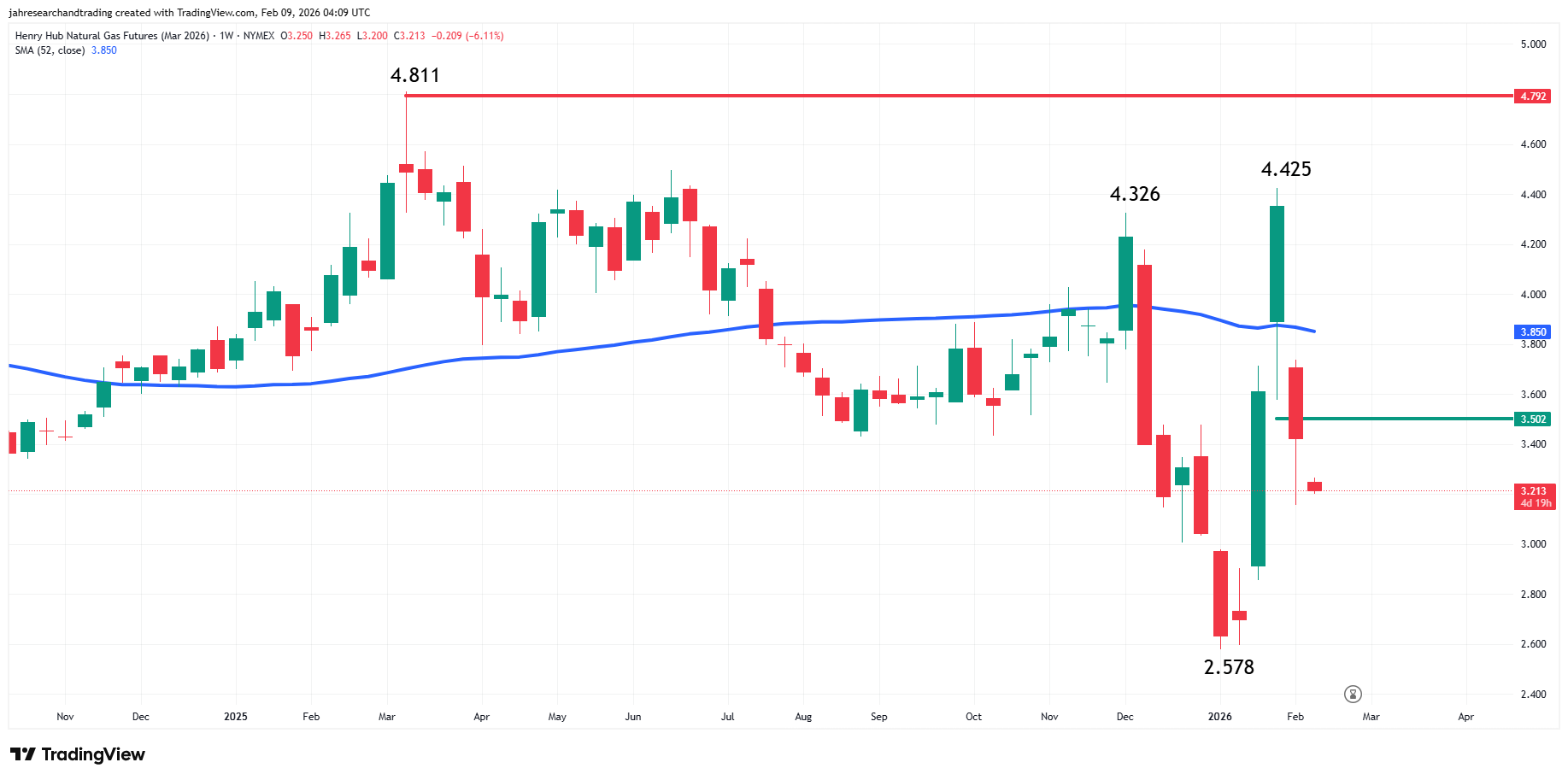
Technically, the close on the bearish side of the 52-week moving average and on the weak side of a short-term pivot puts natural gas in a position to open lower on Monday.
The near-term swing is $2.578 to $4.425. Its 50% level at $3.502 is potential resistance along with the 52-week moving average at $3.850.
The pivot is controlling the short-term direction. The 52-week moving average is both resistance and the trend indicator.
The Week Ahead: Sell the Rally
With the latest forecast calling for a warm-up until about February 20 and the market on the weak side of a pivot and moving average, our bias for this week is bearish. Given these conditions, we also believe the market has shifted back to “sell the rally” mode.
More Information in our Economic Calendar.


