Gold (XAU) prices are pressing toward all-time highs as recession signals intensify and inflation data grows less reliable. The metal continues to attract safe-haven demand, driven by softening labor trends, falling oil prices, and a weakening U.S. dollar. In my view, this sets the stage for a breakout toward the $5,000–$6,000 zone, with structural and macro catalysts aligning into 2026.
Macro Pressures and Economic Shift Drive Gold’s Appeal
Labor Market Data Points to Slowing Growth
The U.S. labour market added 64,000 jobs in November, slightly above expectations. However, this follows a sharp drop of 105,000 jobs in October, driven mainly by a decline of 162,000 in federal employment.
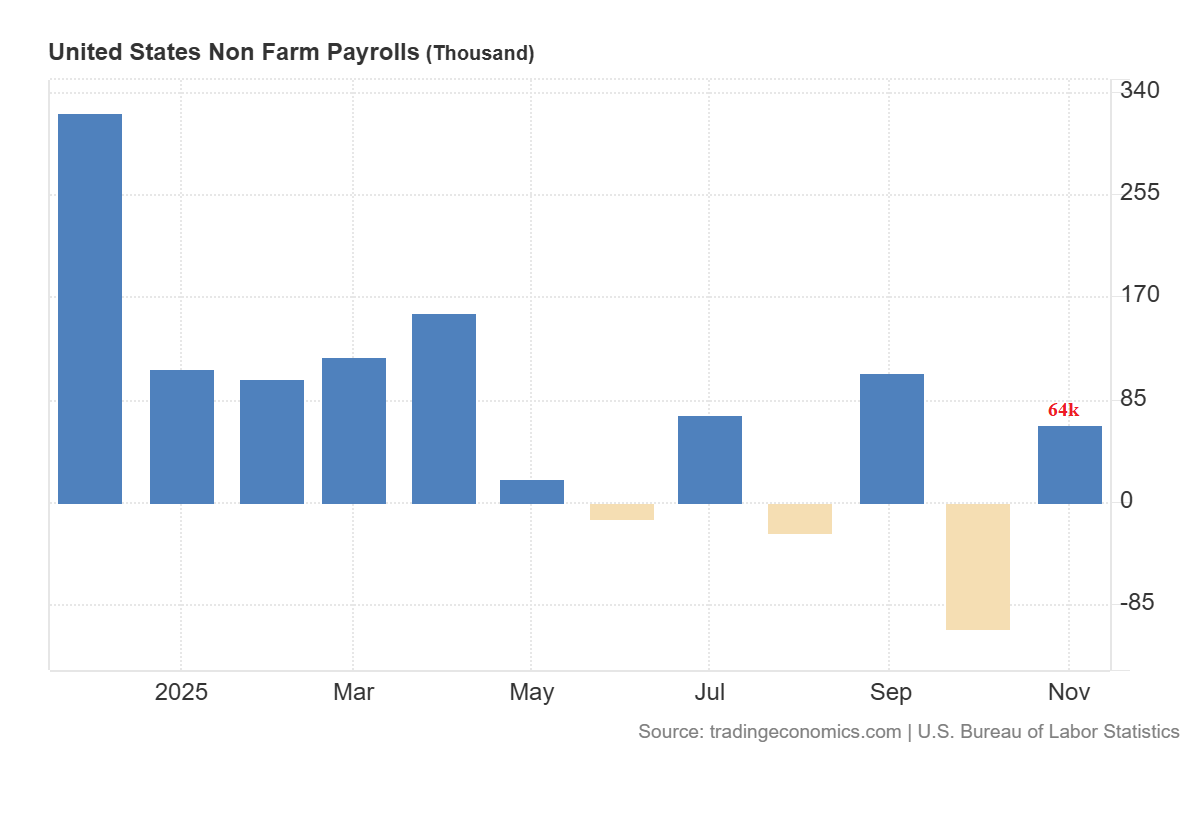
On the other hand, private-sector jobs, excluding healthcare and government, remain positive. However, the growth rate has slowed significantly.
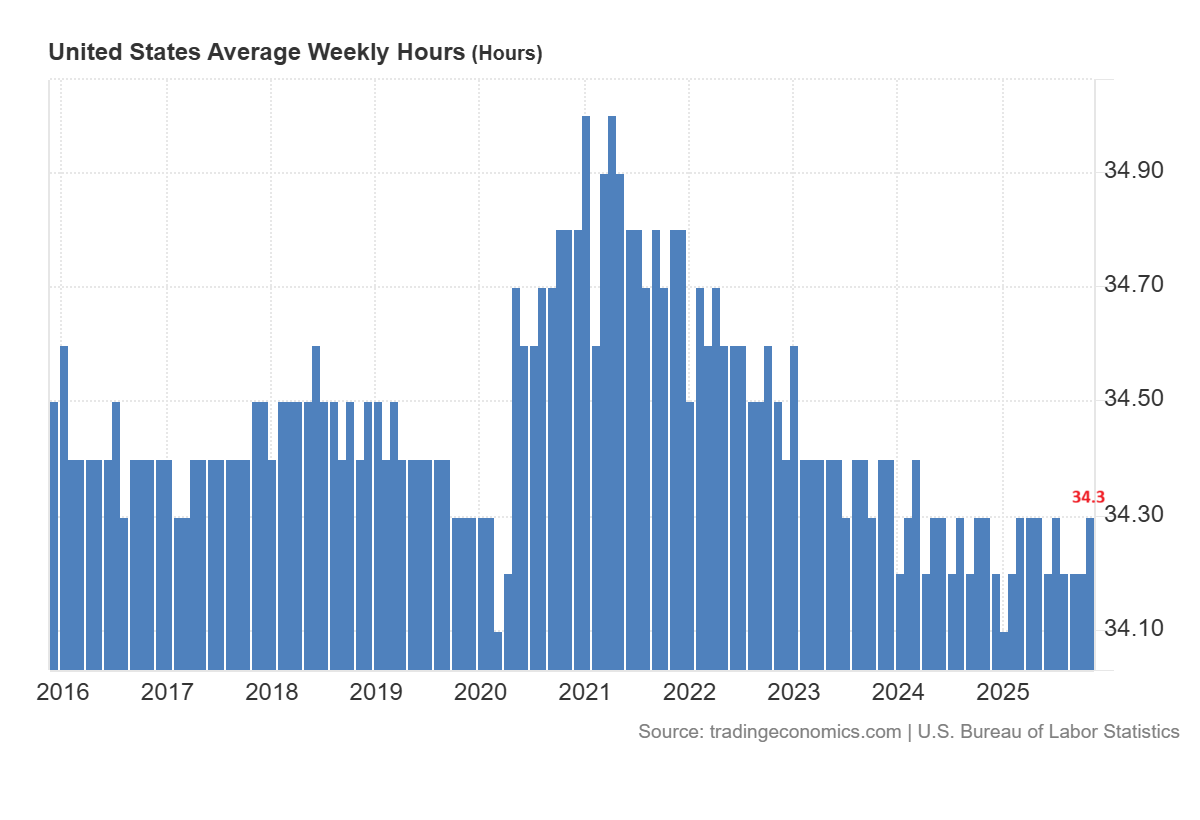
Moreover, the unemployment rate increased to 4.6%, edging closer to the 5.0% threshold that marks the start of a recession. On the other hand, the average weekly hours worked declined to 34.3. Historically, readings below this level have been associated with periods of recession. Moreover, the temporary job losses are also accelerating.
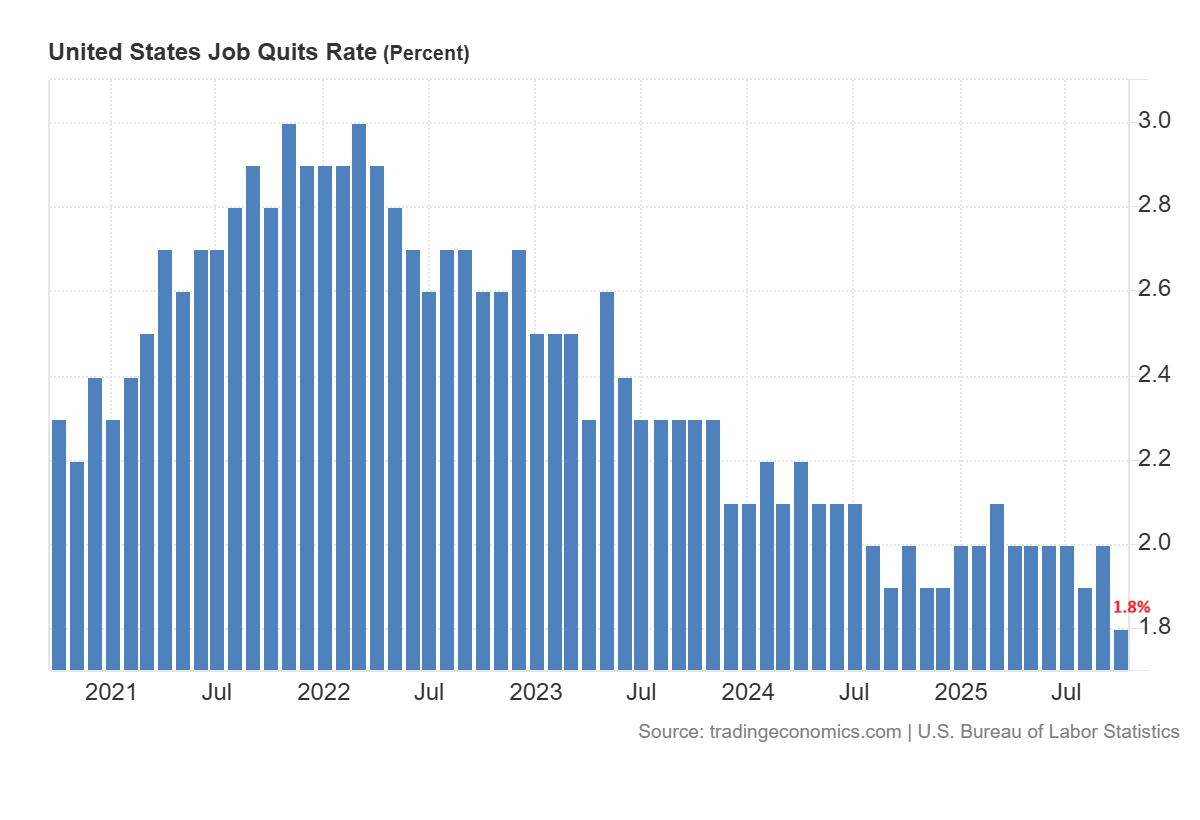
Meanwhile, the quit rate dropped to 1.8% in October, reflecting rising uncertainty among workers. Historically, readings below 2.0% act as an early warning signal of a potential recession.
Additionally, employment in key cyclical industries, such as manufacturing, construction, transportation, and warehousing, is declining.
These labour trends signal a softening economy. The pace is likely to slow further, easing inflation pressure.
Gold Price Forecast
Every new Gold analysis as it publishes, today's technical signal and key levels, live price — on one page.
See all Gold forecastsInflation Metrics Are Distorted and Questionable
The chart below shows that the inflation rate has dropped to 2.7% in November. On the other hand, the US core inflation rate has fallen to 2.6%. Moreover, the trimmed mean CPI eased to 2.9%, and Sticky CPI ex-shelter slowed to 2.7%. While these figures appear encouraging at first glance, questions remain regarding the reliability and underlying quality of the data.
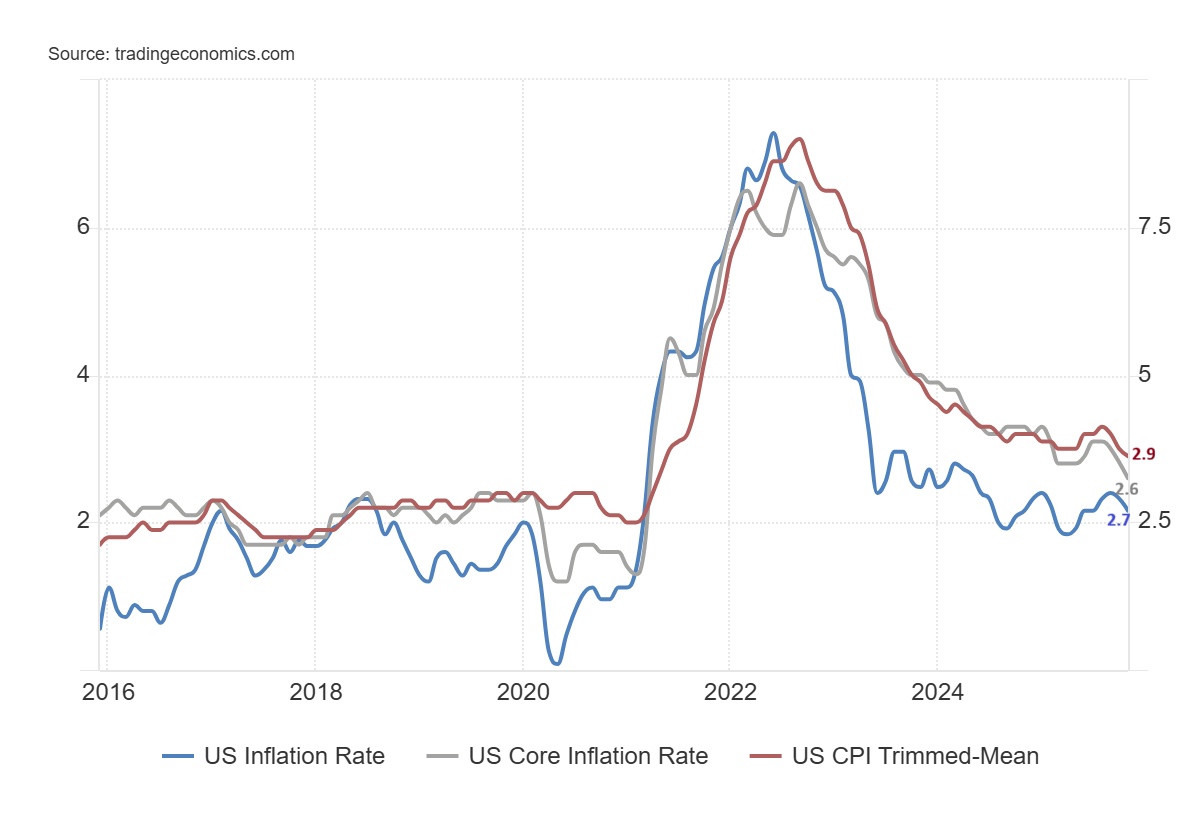
The Bureau of Labor Statistics admitted missing data for both October and November. In its November CPI report, the BLS stated it used approximations, particularly for Owner’s Equivalent Rent (OER). OER accounts for 26% of the total CPI, 33% of the core CPI, and 44% of the core services CPI. Its artificial decline contributed significantly to the drop in the CPI.
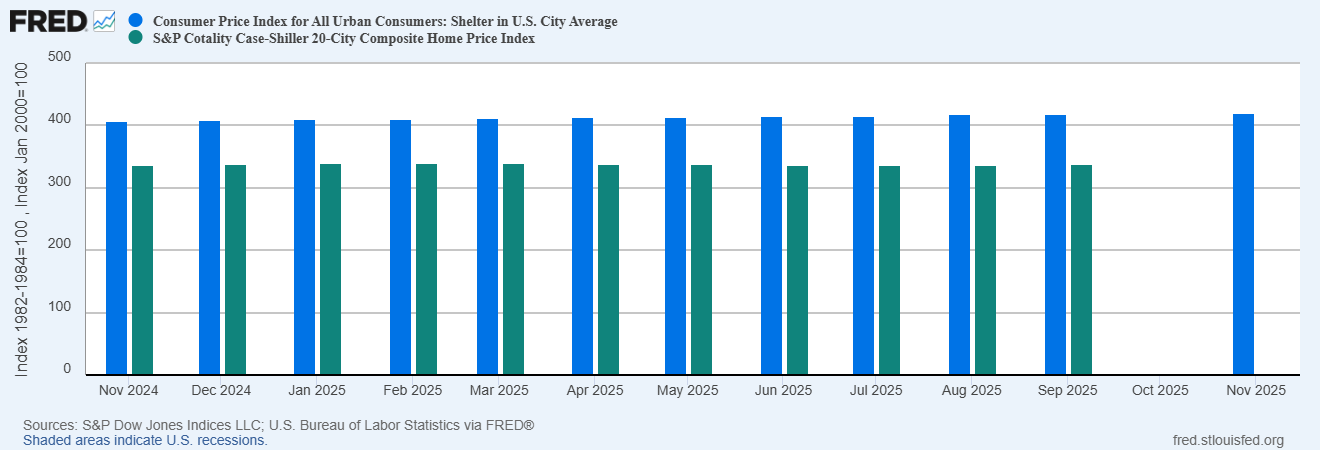
Moreover, the shelter CPI fell to 3.0% in November from 3.6% in September. However, this number is disconnected from actual home prices, as seen in the Case-Shiller Index below. Real inflation might be higher than the reported figure.
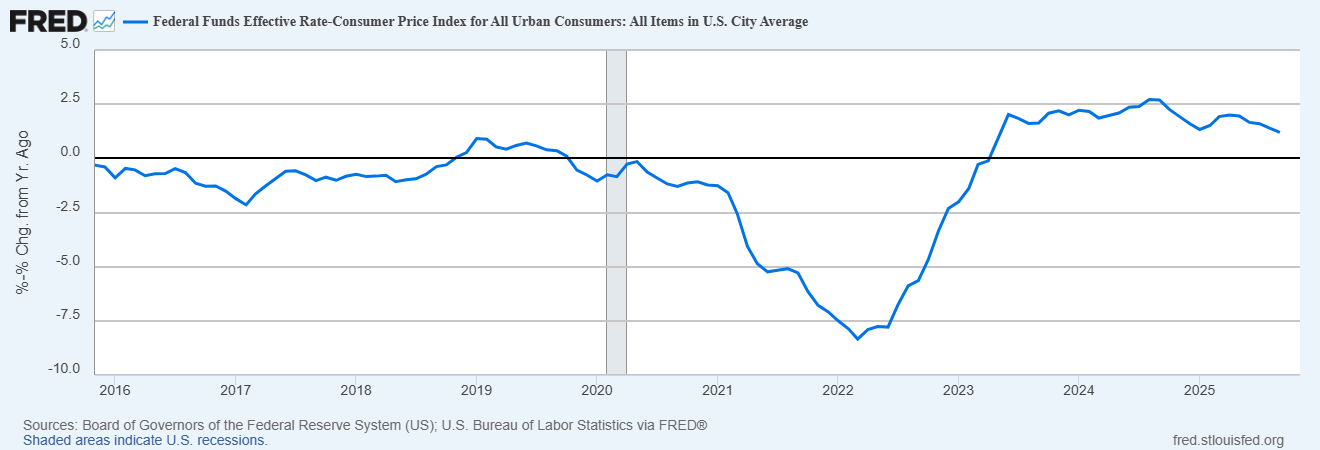
The chart below shows that the real fed funds rate dropped to 1.2%. The real federal funds rate is calculated by subtracting the CPI number from the nominal federal funds rate. If real inflation is higher than the reported figures, then this implies that real rates may already be negative. The negative rates are a sign of stimulative monetary policy. These conditions support gold.
Oil and Dollar Weakness Add to Recession Risks
Crude oil prices have dropped below $55 per barrel, a level below the breakeven point for U.S. shale producers. If this persists, production will decline as unprofitable wells are shut. OPEC+ will unlikely intervene, as they aim to regain market share. The falling oil prices also signal slowing global demand and an increased risk of recession.
Meanwhile, the U.S. dollar has started to weaken. The narrowing interest rate spread between the U.S. and Japan puts pressure on the US dollar. The price of gold benefits from dollar weakness, especially when paired with falling real yields and slowing economic activity.
Gold Breakout Structure Points to Continued Strength
The weekly chart below shows a powerful rally from the $3,200 zone to above $4,250, driven by strong macro tailwinds and safe-haven flows.
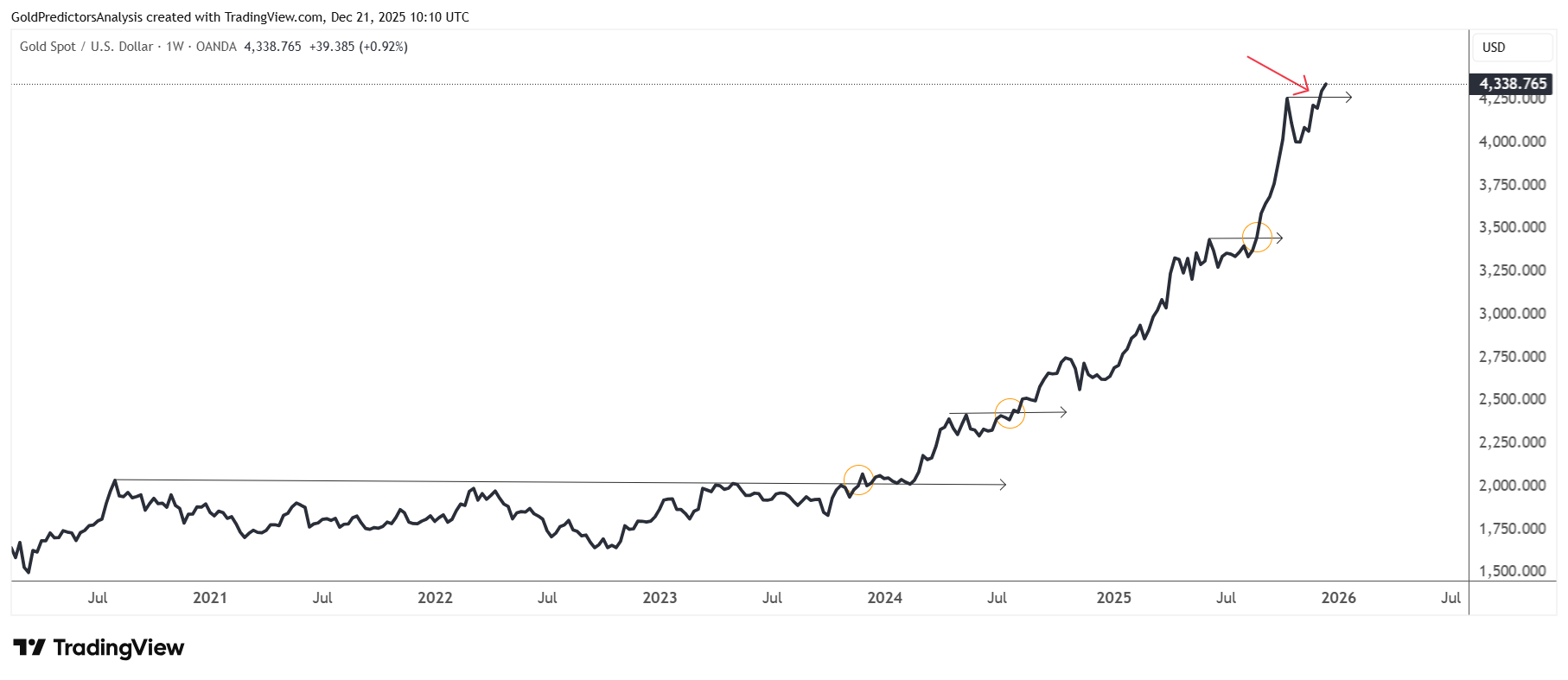
The chart shows that each consolidation phase formed a continuation base, followed by vertical breakouts. The pattern highlights a clear stair-step rally structure. A break above $4,380 will trigger a significant move to the upside.
The broader outlook for the gold market remains firmly bullish. The price broke out of an ascending triangle that formed between April and August 2025. This breakout occurred at the key decision line, confirming the start of a new leg higher.
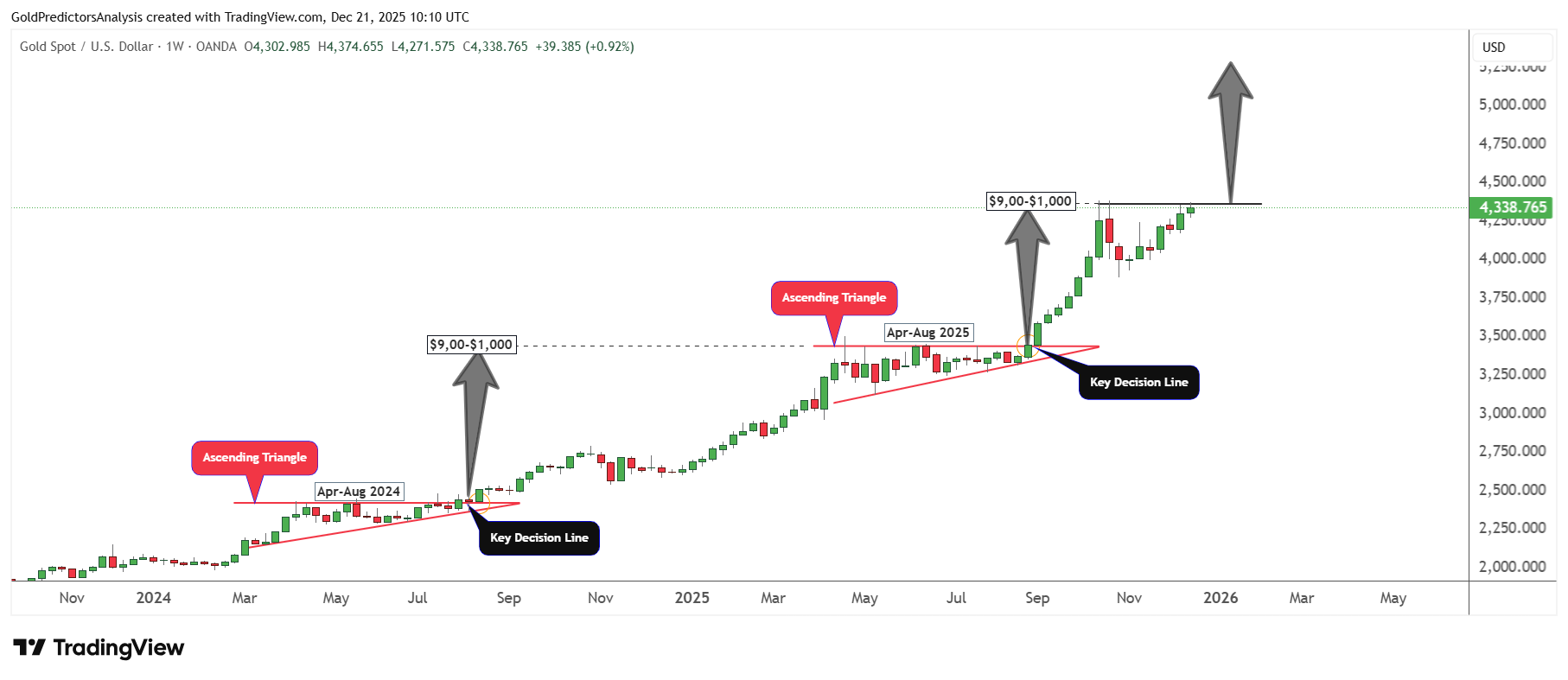
This triangle pattern mirrors a similar structure from 2024, which also preceded a sharp rally. Both patterns support a measured move projecting long-term gains toward the $5,000–$6,000 range. A confirmed breakout above this level would likely trigger the next rally phase toward the $5,000–$6,000 zone.
Cross-Market Signals Reinforce Gold’s Bullish Setup
Silver Takes Leadership in Precious Metals
Silver (XAG) has broken out strongly from a bullish base. The chart shows a clear ascending broadening wedge followed by a rounded bottom pattern. Price surged above the neckline and now trades above $66, confirming a breakout. This pattern marks a major technical shift.
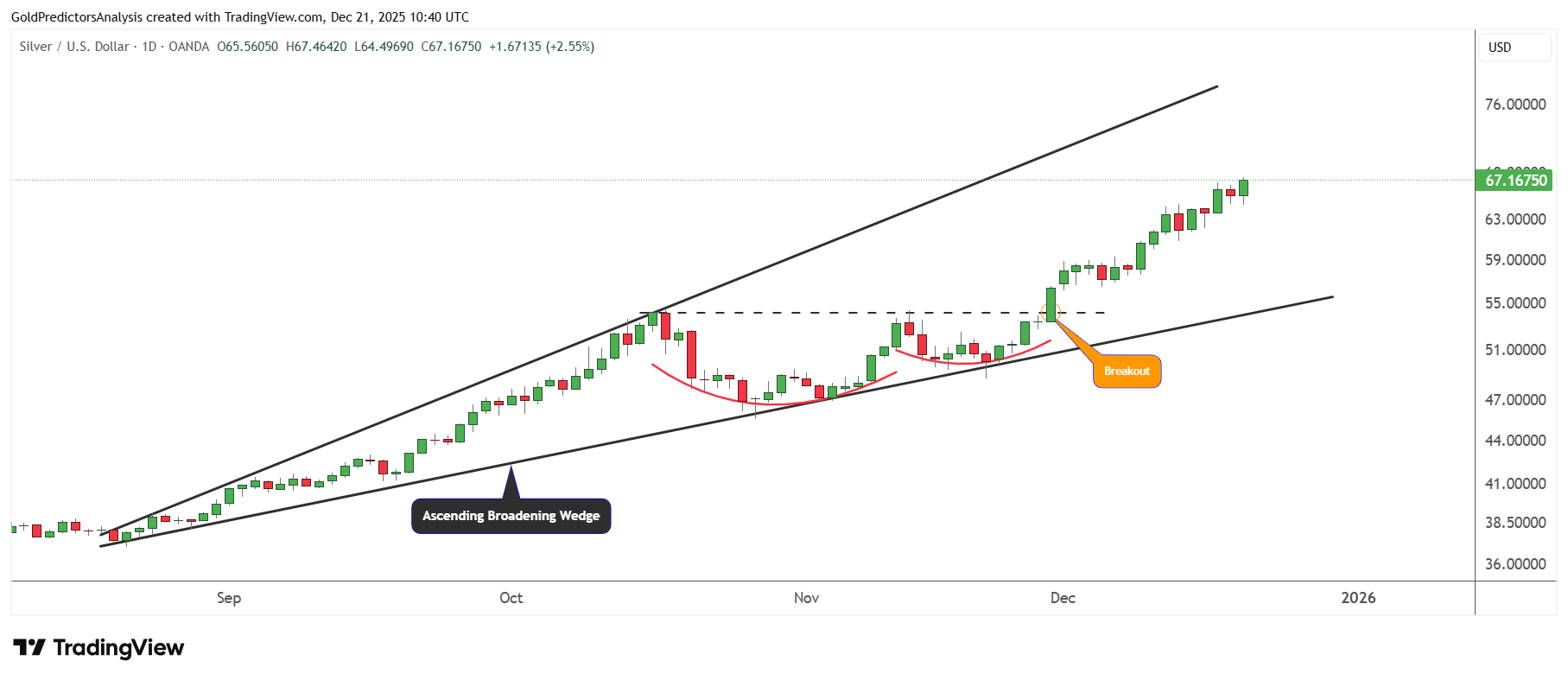
The breakout also confirms that silver is no longer lagging. It has moved decisively ahead of gold in terms of short-term momentum. If silver continues to lead, it could act as a tailwind for gold prices. Historically, silver leadership has aligned with powerful rallies in the precious metal market.
Gold-to-Silver Ratio Breakdown Signals Rotation
The gold-to-silver ratio has collapsed below the lower boundary of its ascending channel. The recent sharp drop to 64 suggests a breakdown is underway. The bear flag pattern visible on the chart increases the probability of a downside breakout from the 64 level.
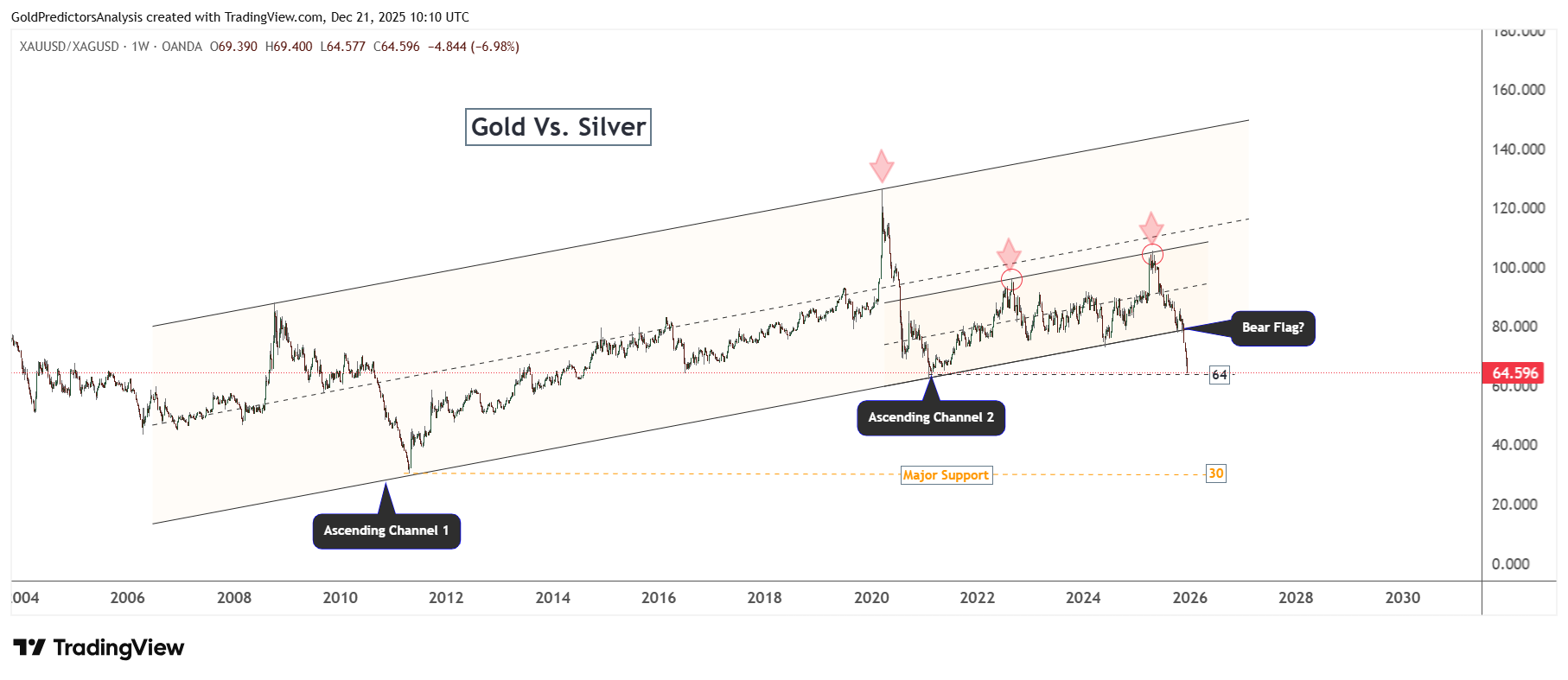
This breakdown marks a rotation from gold into silver. Each past rejection from the upper trendline of the channel led to a cycle where silver outperformed gold. If the 64 level breaks, the ratio could fall as low as 50–55, further strengthening silver’s dominance and confirming a broader metals rally.
Dollar Breakdown Confirms Precious Metals Upside
The U.S. Dollar Index (DXY) has failed to hold above its key support level. The chart below shows a breakdown of its rising wedge, with the price now testing the 96 support level. If this level fails, the next downside target sits at 90.
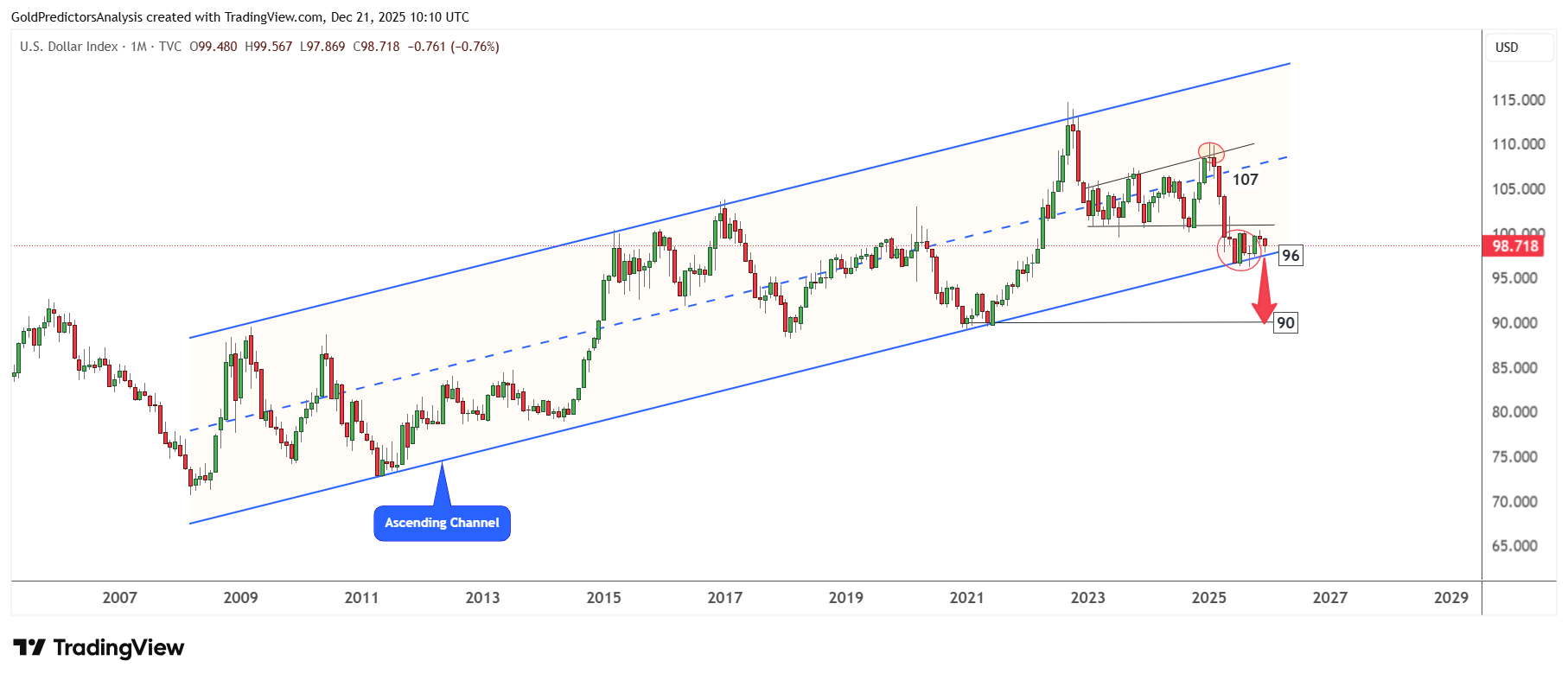
This breakdown aligns with the ongoing decline in real interest rates and rising expectations of Fed rate cuts. A weakening dollar typically boosts the prices of gold and silver. The dollar’s decline marks a structural shift that supports the case for higher precious metal prices into 2026.
Final Thoughts
Gold remains on a firm upward trajectory as macroeconomic pressures intensify. Slowing labor data, questionable inflation figures, and weakening oil and dollar signals align to support further gains. In my view, the technical and fundamental backdrop favors a continued move toward the $5,000–$6,000 zone in the coming weeks.
The broader outlook remains bullish into 2026, driven by softening real rates, safe-haven demand, and ongoing structural imbalances in fiat systems. As long as the $4,000 support holds, the uptrend remains intact. A confirmed breakout above $4,380 would validate the next leg higher and open the door to long-term targets of around $10,000.