
These are the major scheduled economic data releases and events that are due in the coming days, as the Ukraine crisis continues to dominate market sentiment:

Monday, February 28
AUD: Australia January retail sales and February inflation
EUR: ECB member Fabio Panetta speech
USD: Fed speak – Atlanta Fed President Raphael Bostic
Tuesday, March 1
CNH: China manufacturing and non-manufacturing PMIs
AUD: Reserve Bank of Australia rate decision
CAD: Canada December GDP
EUR: Eurozone Markit February manufacturing PMI
GBP: UK Markit February manufacturing PMI
GBP: BOE MPC members Catherine Mann and Michael Saunders speeches
USD: Fed speak – Atlanta Fed President Raphael Bostic
USD: US President Joe Biden’s State of the Union
Wednesday, March 2
AUD: Australia 4Q GDP
Brent: OPEC+ meeting
EUR: Eurozone February CPI, Germany February unemployment, ECB Chief Economist Philip Lane speech
GBP: BOE’s Silvana Tenreyo and Jon Cunliffe speeches
USD: Fed speak
– Fed Chair Jerome Powell testifies before the House Financial Services Committee
– Chicago Fed President Charles Evans
– St. Louis Fed President James Bullard
– New York Fed Executive Fed President Lorie Logan
US crude: EIA weekly US crude inventories
CAD: Bank of Canada rate decision
Thursday, March 3
CNH: China Caixin composite and services PMIs
EUR: Eurozone January unemployment, February Markit services and composite PMIs, and ECB minutes
USD: Weekly jobless claims
USD: Fed speak – Fed Chair Jerome Powell testifies before Senate Banking Committee, New York Fed President John Williams’s speech
Friday, February 25
EUR: Eurozone January retail sales, Germany’s January external trade
USD: US February jobs report
Apple hosts annual shareholders meeting
Russia’s invasion of Ukraine is obviously the most important theme in the market right now.
It appears that the Kremlin’s aim is to replace the Ukrainian government with a Russia-friendly government which will ultimately mean Ukraine will not be able to become a member of NATO. Sanctions have been enacted on Putin, but these have not been as tough as they could have been. Currently Russia is not excluded from SWIFT, the international payments system, and crucially, energy exports have also not been barred.
Investor’s flight to safety was initially swift and a classic response to such a seismic geopolitical shock.
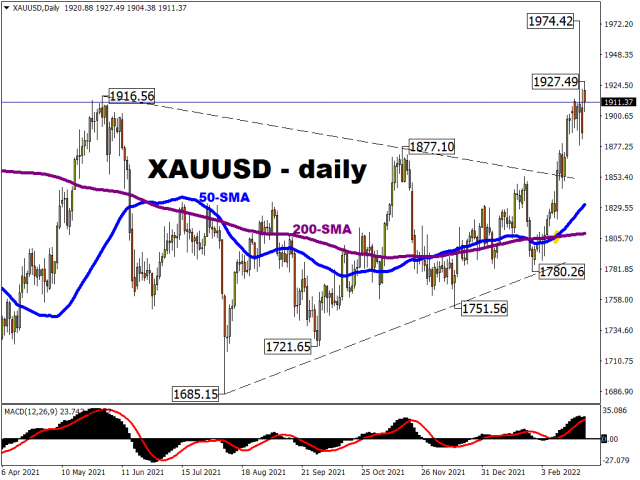
Gold shot higher, oil surged by $9 and safe haven currencies like the yen and swiss franc, as well as the US dollar, were bid. But markets have reassessed the risk and at present softer-than-anticipated sanctions are leading investors to fade some of these moves, as risky assets once more gain favour. Of course, the situation is still uncertain, and markets cannot rule out tougher restrictions down the road.
The underlying issue for markets remains tighter monetary policy and money markets have reduced bets on all central banks hiking rates this year, with the ECB pricing affected the most. Inflation was obviously already an issue for all policymakers, and price pressures may worsen, especially in energy and gas markets. The Ukrainian conflict constitutes a negative supply shock and also a potential major demand shock for the Eurozone.
But there is still around a 20% chance of a 50bp move by the Fed at its March meeting.
We should not forget that the latest US CPI figures were the highest in 40 years which means the Fed does not have a lot of room to play with. The monthly US jobs report is expected to confirm ongoing strong growth in the labour market as labour force participation picked up. Another move lower in the unemployment rate below 4% may also up the ante on the potential for a bigger Fed rate hike, despite the Ukrainian conflict.
We get two major central bank meetings this week and policymaker comments will give the market a sense of whether the conflict in Europe and the impact on energy prices have altered their outlook.
- The Bank of Canada is fully expected to raise rates by a quarter of a point, with a further six rate increases priced into this year. Elevated inflation and strong housing data have been seen recently, but the bank is not expected to signal its strategy to reduce the size of its balance sheet.
- The RBA is set to be more circumspect after wage growth came in softer than expected. In fact, the bank may push against the current hawkish market pricing with most local analysts not forecasting at tightening in monetary policy until the summer.
By Lukman Otunuga Senior Research Analyst
Disclaimer: The content in this article comprises personal opinions and should not be construed as containing personal and/or other investment advice and/or an offer of and/or solicitation for any transactions in financial instruments and/or a guarantee and/or prediction of future performance. ForexTime (FXTM), its affiliates, agents, directors, officers or employees do not guarantee the accuracy, validity, timeliness or completeness, of any information or data made available and assume no liability as to any loss arising from any investment based on the same.