
Lowe’s approaches its fiscal second-quarter earnings with a different mix of opportunities and risks from its larger rival Home Depot. While both retailers are exposed to the same difficult housing environment, Lowe’s remains more dependent on the do-it-yourself customer, making consumer confidence, household budgets and housing affordability particularly important indicators for traders.
The company is scheduled to report its second-quarter 2026 results on August 19, one day after Home Depot. That sequencing could make Lowe’s report especially important for investors looking for confirmation of whether the weakness in home improvement is stabilizing or becoming more entrenched.
The key issue is whether Lowe’s can continue taking market share even if the broader home improvement market remains broadly flat.

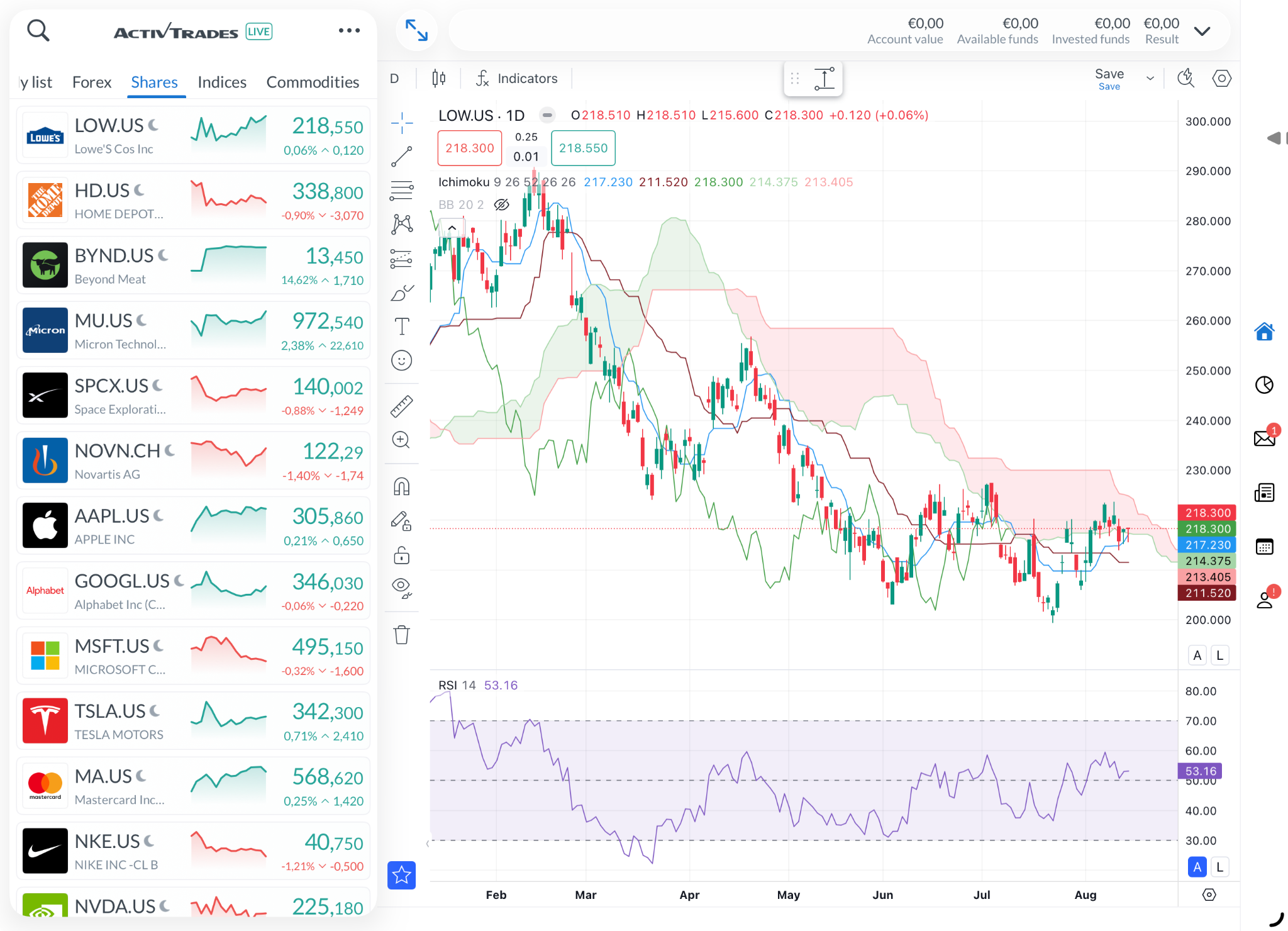
Lowe’s Started 2026 on Firmer Footing
Lowe’s delivered a relatively solid fiscal first quarter. Sales increased to $23.1 billion from $20.9 billion a year earlier, while comparable sales rose 0.6%. The company benefited from strong spring execution, a 15.5% increase in online sales, and continued strength in appliances, home services and Pro sales.
Reported diluted EPS came in at $2.90, compared with $2.92 a year earlier. However, the quarter included $96 million of pre-tax expenses related to the acquisitions of Foundation Building Materials and Artisan Design Group. Adjusted diluted EPS increased 3.8% to $3.03.
The combination of positive comparable sales and improving adjusted earnings was significant because Lowe’s has been operating in an unusually difficult DIY market. Management highlighted that the company had achieved its fourth consecutive quarter of positive comparable sales despite the challenging housing backdrop.
For traders, the upcoming report will show whether that momentum survived into the second quarter or whether consumer caution began to weigh more heavily on demand.
The Biggest Issue: Lowe’s Is Still Heavily Exposed to DIY Customers
The distinction between Home Depot and Lowe’s is important. Lowe’s estimates that approximately 60% to 65% of its revenue comes from DIY customers. Management has described the current housing environment as particularly difficult for this customer group. That creates a more direct link between Lowe’s performance and household confidence.
Consumers facing high mortgage costs, expensive homes, elevated fuel prices and broader economic uncertainty may still spend on repairs they cannot postpone. But they can delay a bathroom renovation, kitchen remodel, landscaping project or other discretionary improvement.
That makes the composition of sales more important than the headline figure. Traders should look for evidence that consumers are continuing to shift toward maintenance and essential projects, while higher-income households remain more willing to spend on discretionary upgrades. Lowe’s CEO Marvin Ellison described this as a K-shaped economy, with higher-income consumers continuing to spend while lower-income households pull back.
If that divergence persists, Lowe’s could produce resilient aggregate results while still facing weakness in important parts of its customer base.
Housing Affordability Remains a Structural Headwind
The broader housing market provides little reason for complacency. Existing-home sales fell again in July, while high prices and mortgage rates continued to discourage potential buyers. The median existing-home price remained above $430,000, while limited inventory continued to restrict transactions.
For Lowe’s, low housing turnover matters because homeowners often spend more on improvements when buying or selling a property. Fewer transactions therefore mean fewer natural triggers for large renovation projects.
High interest rates compound the problem. A mortgage rate above 6.5% significantly increases monthly payments, leaving consumers with less financial flexibility for non-essential spending. It also discourages homeowners with low-rate mortgages from selling, perpetuating the low-turnover environment.
This explains why Lowe’s management has repeatedly emphasized that lower interest rates could give consumers more flexibility for home improvement projects. For traders, interest-rate expectations therefore matter beyond the traditional impact on financial stocks. A sustained decline in Treasury yields and mortgage rates could become a catalyst for Lowe’s long before the housing data itself turns decisively higher.
Pro Customers Offer a Route Beyond the DIY Slowdown
Lowe’s is responding to the difficult DIY environment by strengthening its professional business. The Pro customer is strategically attractive because contractors and tradespeople are purchasing products for projects rather than discretionary consumption. That creates the potential for more consistent demand even when homeowners postpone major renovations.
The first quarter already provided evidence that Pro sales were contributing to growth, alongside appliances and home services. Lowe’s acquisitions of Foundation Building Materials and Artisan Design Group are also designed to broaden its professional offering. Traders should therefore pay close attention to the integration of these businesses and whether management sees incremental opportunities to capture market share.
The opportunity is substantial. Lowe’s says it operates in a roughly $1 trillion home improvement sector that remains highly fragmented, creating room for large retailers to gain share. That means Lowe’s does not necessarily need a strong industry recovery to grow. If the company can outperform smaller competitors, improve its Pro proposition and expand services, it can potentially generate company-specific growth even while the overall market remains muted.
Online and Services Are Important Growth Engines
Another area to watch is the company’s Total Home strategy. Lowe’s delivered 15.5% online sales growth in the first quarter, while home services also remained a source of strength. These businesses can help Lowe’s capture more of the customer relationship rather than relying exclusively on store traffic. Online growth can increase product accessibility and convenience, while services allow Lowe’s to participate in projects that may be more complex than a traditional DIY purchase.
This could become increasingly important as customers become more selective. When consumers are reluctant to undertake major projects, retailers that can offer convenience, installation and professional assistance may have a better chance of retaining spending.
Traders should therefore watch whether online growth remains strong without requiring excessive promotional activity. Strong digital sales accompanied by stable margins would be a more convincing signal than sales growth achieved through aggressive discounting.
Costs Could Become a Bigger Earnings Issue
Lowe’s also faces a changing cost environment. Management said higher oil prices had only a limited impact during the first quarter but were creating more challenges in the current quarter. Rising energy costs can affect transportation expenses and input costs across the supply chain. That makes gross and operating margins particularly important in the upcoming earnings report.
The company’s fiscal 2026 guidance currently calls for sales of $92 billion to $94 billion, representing approximately 7% to 9% growth, while comparable sales are expected to range from flat to up 2%. Adjusted operating margin is expected at 11.6% to 11.8%, with adjusted EPS of $12.25 to $12.75.
A key trading signal would be a change in the balance between revenue growth and profitability. If Lowe’s delivers stronger sales but warns that transportation, tariffs or other input costs are eroding margins, investors could interpret the quarter less positively than the headline numbers suggest.
The Opportunity Lies in Market-share Gains
The central bull case for Lowe’s is that it can continue gaining share even before the housing cycle turns. The company has already produced four consecutive quarters of positive comparable sales despite a difficult environment. If that trend continues, investors may increasingly view Lowe’s as a company capable of generating organic growth through execution rather than simply waiting for lower mortgage rates.
The bear case is that the company remains disproportionately exposed to DIY customers at precisely the moment when affordability pressures are most severe. If consumers increasingly restrict spending to essential repairs, the addressable pool for larger discretionary projects could remain constrained.
What Traders Should Watch
The most important figures will be comparable sales, DIY versus Pro trends, appliances, home services and online sales. But guidance may matter even more.
Traders should also listen for management commentary on consumer segmentation, large-ticket purchases, mortgage rates, housing turnover, oil prices and cost inflation. The company’s ability to maintain its fiscal-year outlook will be a major test of whether first-quarter resilience was sustainable.
The broader housing environment is still a major obstacle. July existing-home sales declined for a second consecutive month, reinforcing the argument that high borrowing costs and limited inventory continue to suppress housing activity.
Yet that weakness also creates a potential upside catalyst. If mortgage rates decline meaningfully, housing turnover eventually improves and consumers regain confidence, pent-up demand could return to home improvement. Lowe’s combination of DIY exposure, Pro expansion, online growth and home services gives it multiple ways to participate in that recovery.
For Lowe’s traders, the most bullish outcome would not necessarily be a dramatic earnings beat. It would be evidence that the company is taking market share, protecting margins and sustaining positive comparable sales while the broader market remains flat. That would strengthen the argument that Lowe’s is becoming less dependent on a housing rebound—and potentially better positioned when that rebound finally arrives.
Sources: Lowe’s, CNBC, Reuters, AP News, Yahoo Finance