


Market Overview
Oil prices inched higher on Friday as escalating geopolitical tensions revived concerns about supply disruptions, though the market remained on track for a weekly loss amid optimism over progress in broader peace negotiations. The risk of additional tanker seizures heightened fears of reduced crude flows, prompting a rebound in buying after earlier selling pressure.
Analysts noted that a credible diplomatic breakthrough could unlock sanctioned supply, potentially pulling WTI toward the $55 range.
Meanwhile, the International Energy Agency raised its 2026 demand forecast and trimmed supply expectations, signaling a tighter market ahead, even as OPEC projected a more balanced global outlook.

Natural Gas Price Forecast
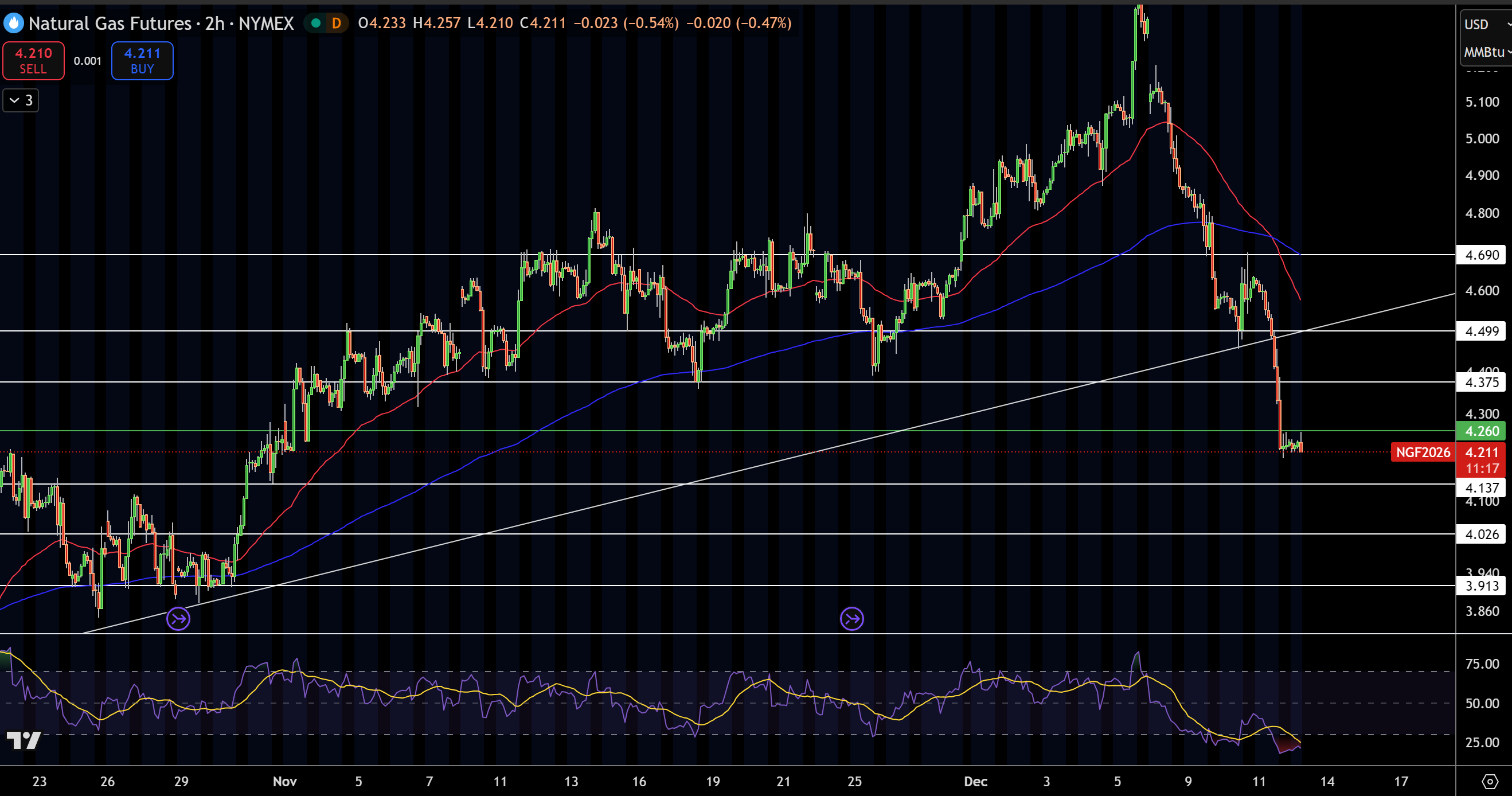
Natural Gas is trading near $4.21 after a sharp breakdown from the rising trendline that supported the rally through November. The selloff accelerated once price sliced below $4.37 and $4.31, both former support zones now acting as resistance. Candlesticks show multiple lower highs and strong bearish bodies, confirming sustained seller control.
If downside momentum continues, the next support sits at $4.13, followed by $4.02 and $3.91, where prior consolidation pauses occurred. A deeper move could retest the broader base near $3.86. For buyers, a recovery above $4.31 is needed to challenge $4.37 and $4.49, but EMAs remain firmly downward-sloping.
WTI Oil Price Forecast
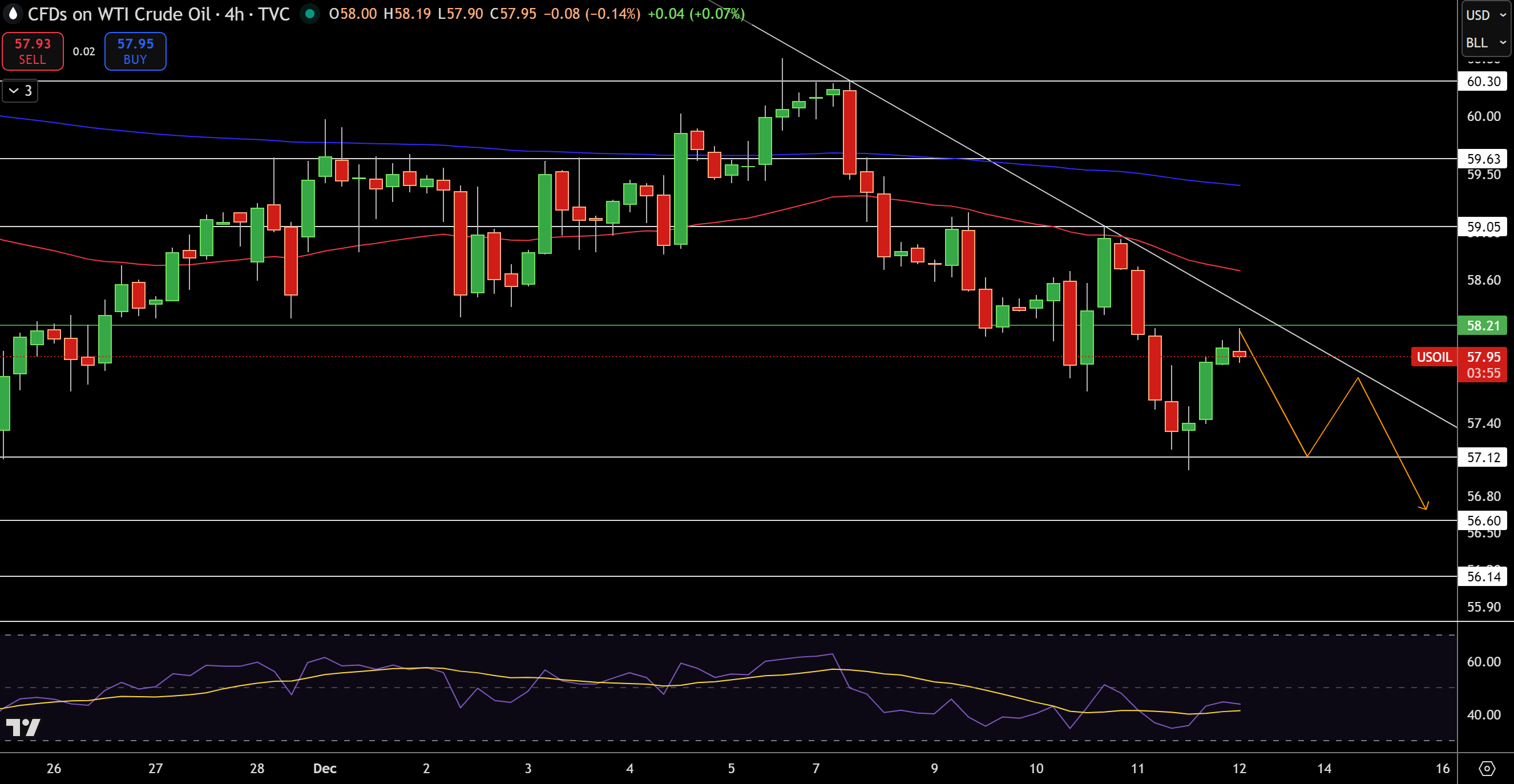
WTI Crude Oil is trading near $57.95, holding below a descending trendline that has capped price since the December high. Recent candles show rejection near $58.21, confirming it as immediate resistance. The 20-EMA and 50-EMA remain above current price, reinforcing bearish structure and showing sellers are still in control.
If price stays below the trendline, downside pressure could extend toward $57.12, a level tested multiple times this week. A break below that exposes $56.60, followed by deeper support near $56.14. Candlestick bodies remain small, indicating hesitation but still favoring lower highs.
Natural Gas Price Forecast
Every new Natural Gas analysis as it publishes, today's technical signal and key levels, live price — on one page.
See all Natural Gas forecastsOn the upside, bulls need a firm close above $58.21 to challenge the trendline and potentially retest $59.05. RSI is hovering near 40, showing weak momentum without oversold conditions, allowing room for further declines.
Brent Oil Price Forecast
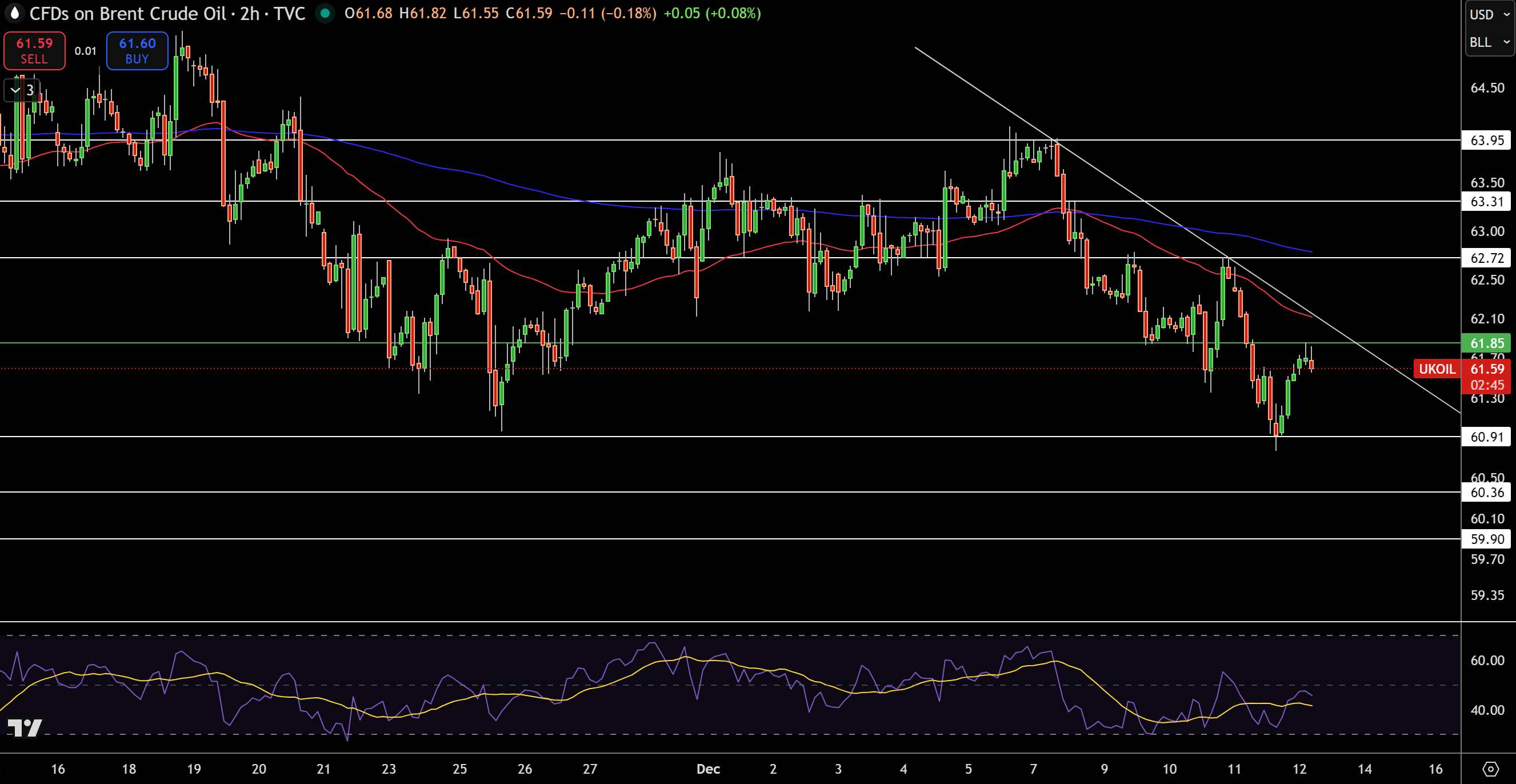
Brent Crude is trading near $61.59, holding below a descending trendline that has capped price since the December high. Recent candles show repeated rejection near $61.85, confirming it as immediate resistance and aligning with the 20-EMA, which continues to slope lower. This keeps bearish pressure intact.
If sellers maintain control, downside levels to watch include $60.91, followed by $60.36 and $60.10, where prior reactions formed intraday floors. A break below these zones would open the path toward $59.90.
For bulls to gain momentum, Brent needs a clean breakout above $61.85 to challenge $62.72 and the broader trendline.


