Market Overview
Oil markets opened the week with modest gains as geopolitical tensions elevated supply-risk premiums, with Brent trading near $63.39 and WTI around $59.16 a barrel. Heightened unrest in key producer regions raised concerns about potential disruptions to exports, even as expectations for additional Venezuelan supply and forecasts of a structural oversupply in 2026 tempered further upside.
Analysts note that prices have climbed more than 3% recently, the largest weekly increase since October, yet markets are still reluctant to price in significant risk without clear supply interruptions. Meanwhile, projections of global supply outstripping demand through much of 2026 suggest a broad trading range unless unexpected disruptions emerge.
Natural gas fundamentals remain influenced by demand growth and LNG export trends, but energy markets overall are navigating the balance between near-term volatility and long-term oversupply pressures.

Natural Gas Price Forecast
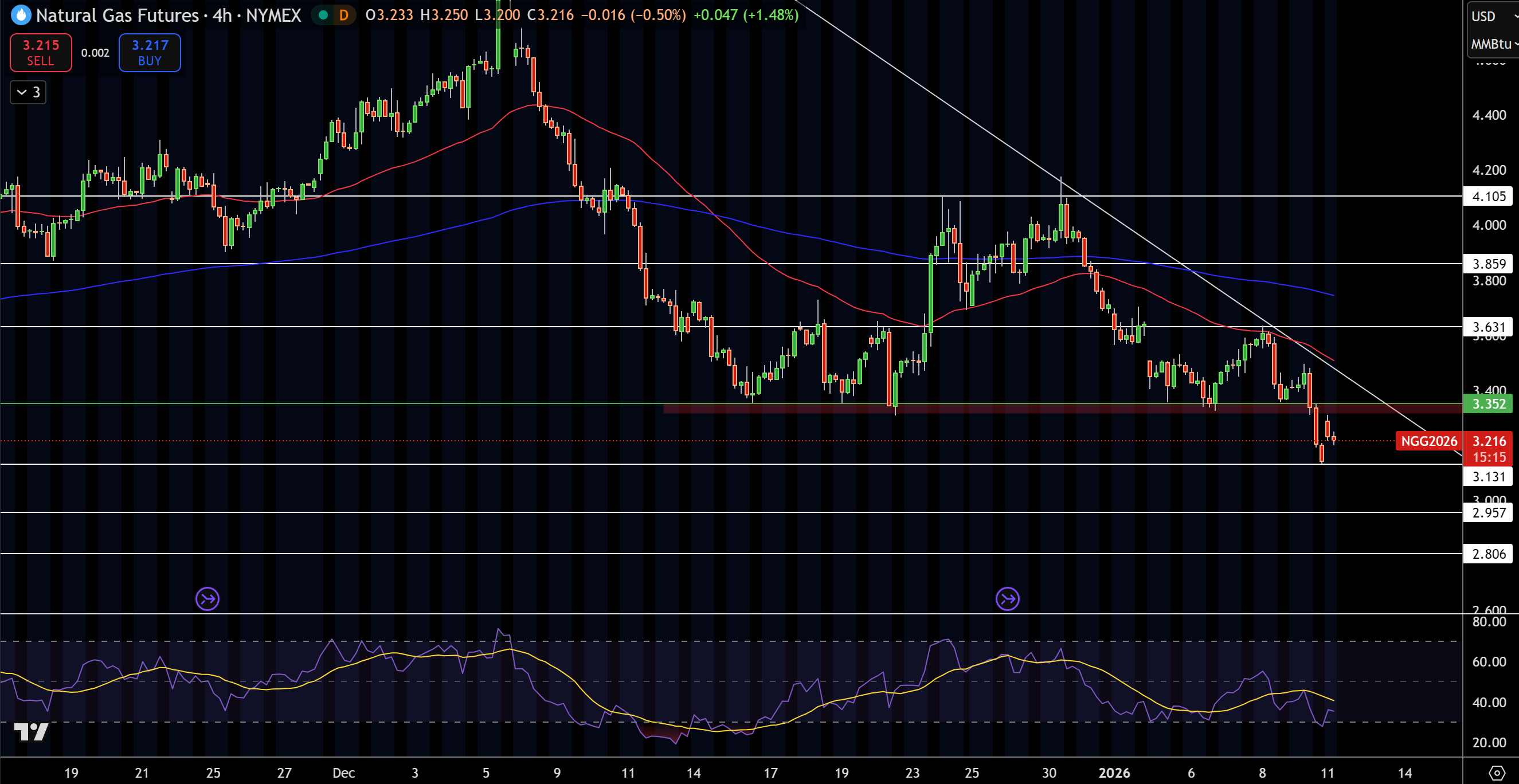
Natural gas is trading near $3.21, sitting just above the key $3.13 support that has held multiple tests over the past month. The price remains below the descending trendline from the December high, indicating persistent downward pressure. Candlesticks near support display long lower wicks, signaling buyers are still active, but momentum remains weak.
The 50-EMA has crossed below the 200-EMA, strengthening the bearish structure, while RSI hovers around 40, showing limited momentum. A break below $3.13 would expose $2.95 and $2.80. A recovery above $3.35 is needed to shift bias back toward $3.63. The trade idea is to sell below $3.13, targeting $2.95.
WTI Oil Price Forecast
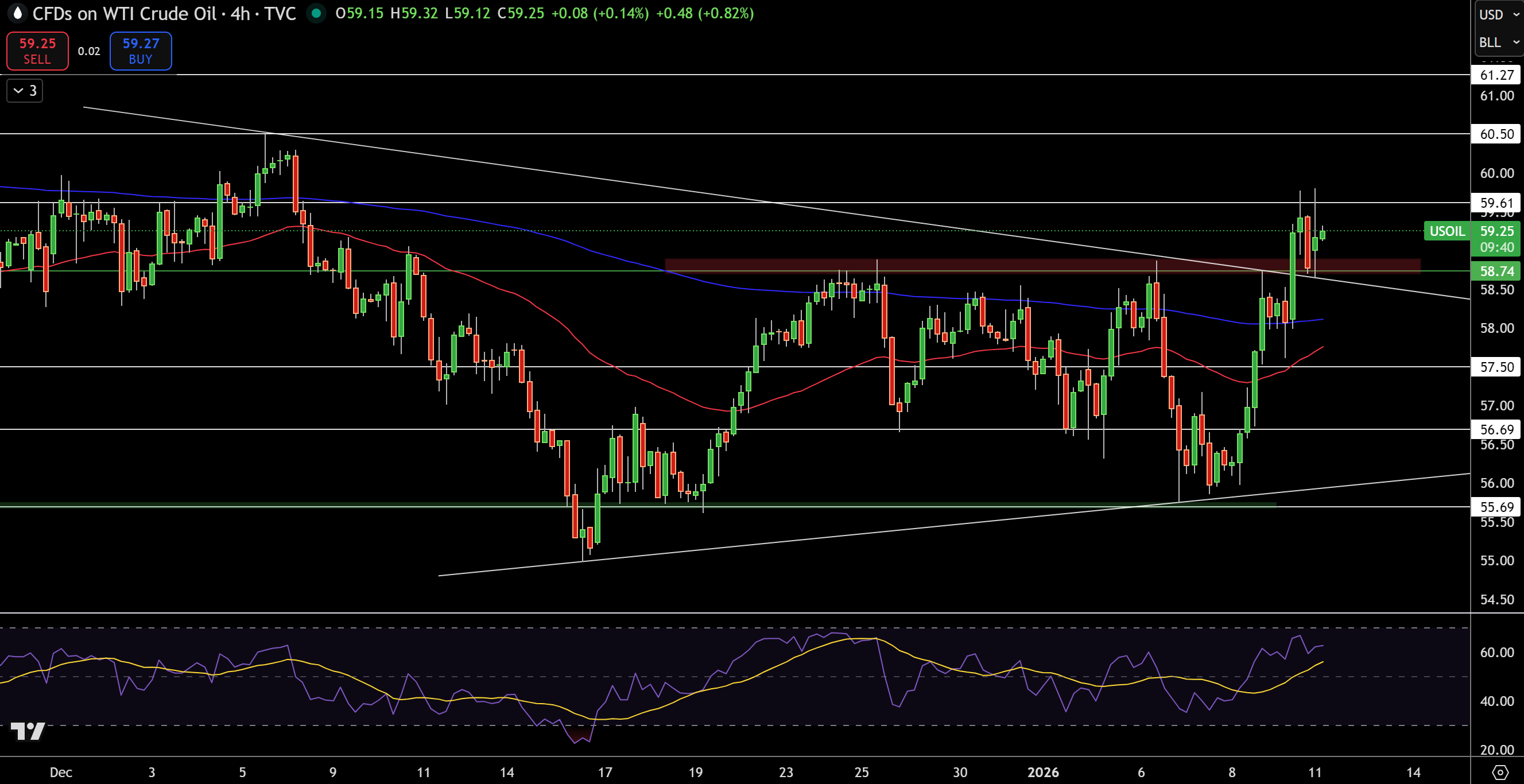
WTI crude is trading near $59.25, holding firmly above the key $58.74 breakout zone after a sharp push through the descending trendline that has limited upside since early December. The breakout was confirmed by a wide bullish candle, followed by two smaller consolidation candles sitting just under $59.61, showing controlled momentum rather than exhaustion.
Price is now positioned above both the 50-EMA and 200-EMA, with the 50-EMA turning upward and hinting at a potential momentum shift. The RSI near 63 shows strengthening but not overextended conditions. The broader structure resembles a contracting wedge breakout, with room for continuation if buyers defend the breakout zone.
Natural Gas Price Forecast
Every new Natural Gas analysis as it publishes, today's technical signal and key levels, live price — on one page.
See all Natural Gas forecastsIf WTI holds above $58.74, upside targets sit at $60.50 and $61.27, aligned with prior reaction zones. A drop back below $57.50 would weaken the pattern and expose the lower supports at $56.69 and $55.69. The trade idea is to buy above $59.61, targeting $60.50.
Brent Oil Price Forecast
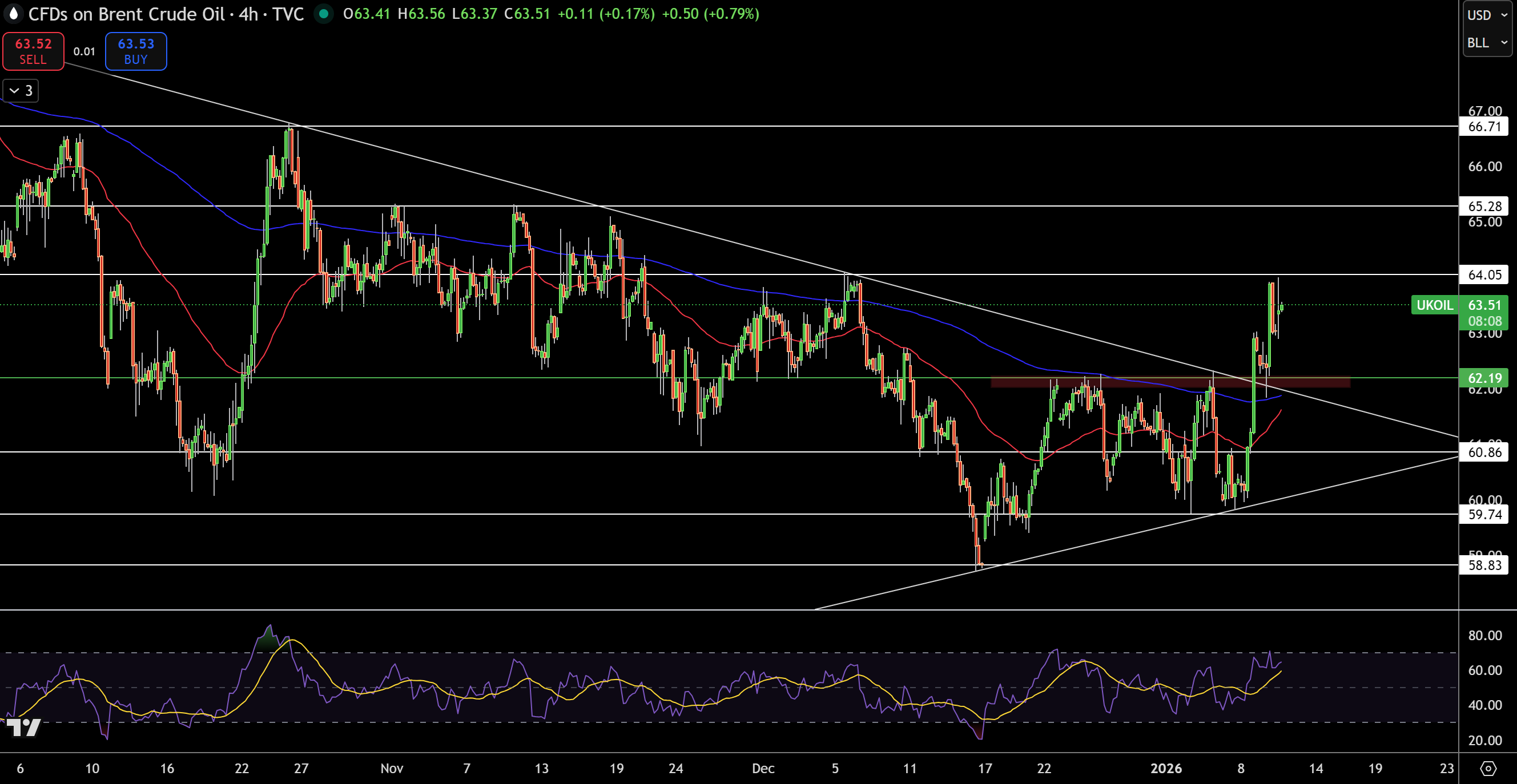
Brent crude s trading near $63.50, holding above the key $62.19 breakout zone after slicing through a long descending trendline that capped price since November. The surge created a strong bullish candle, followed by smaller consolidation candles just under $64.05, showing buyers pausing but still in control.i
The 50-EMA has crossed above the 100-EMA, strengthening the upward bias, while RSI sits near 60, indicating healthy momentum without being overbought.
If price holds above $62.19, the next upside targets are $65.28 and $66.71, both aligned with prior reaction highs. A drop back below $60.86 would weaken the structure. The trade idea is to buy above $64.05, targeting $65.28.