Oil prices climbed to seven-week highs as traders reacted to Iran tensions. The Iranian government’s crackdown on protests raised concerns that oil exports might slow down. With Iran already facing sanctions, any additional disruptions could lead to tightening global supply.
However, the upside was capped with news from Venezuela. The U.S. expects Venezuela to release up to 50 million barrels of oil that will alleviate supply concerns. Oil companies are gearing up tankers to start exports in a short time. This potential offset in supply helped contain the price rally caused by fears over Iran.
Moreover, the geopolitical tensions contributed to the market volatility. Attacks on Russian energy infrastructure and declining exports from Azerbaijan raised concerns for disruptions. These developments contributed to the risk premium in oil prices. On the other hand, Norway’s continued support for oil production also reassured markets that some growth in supply is possible.
Despite all this, analysts at Goldman Sachs expect prices could drift lower in the long term. They pointed out new supplies coming into the market, which could result in a surplus. If more oil becomes available, prices may not go much higher even with geopolitical tensions. The lower U.S. interest rates may also stimulate demand, but the uncertainty over Fed policy may induce volatility in the oil market.
Oil Technical Analysis
WTI Oil (CL) recovered from the long-term support at the $55 area as seen in the daily chart below. This rebound broke above the 50-day SMA and closed above the $58 level. The strong move indicates that oil prices might continue towards $62.
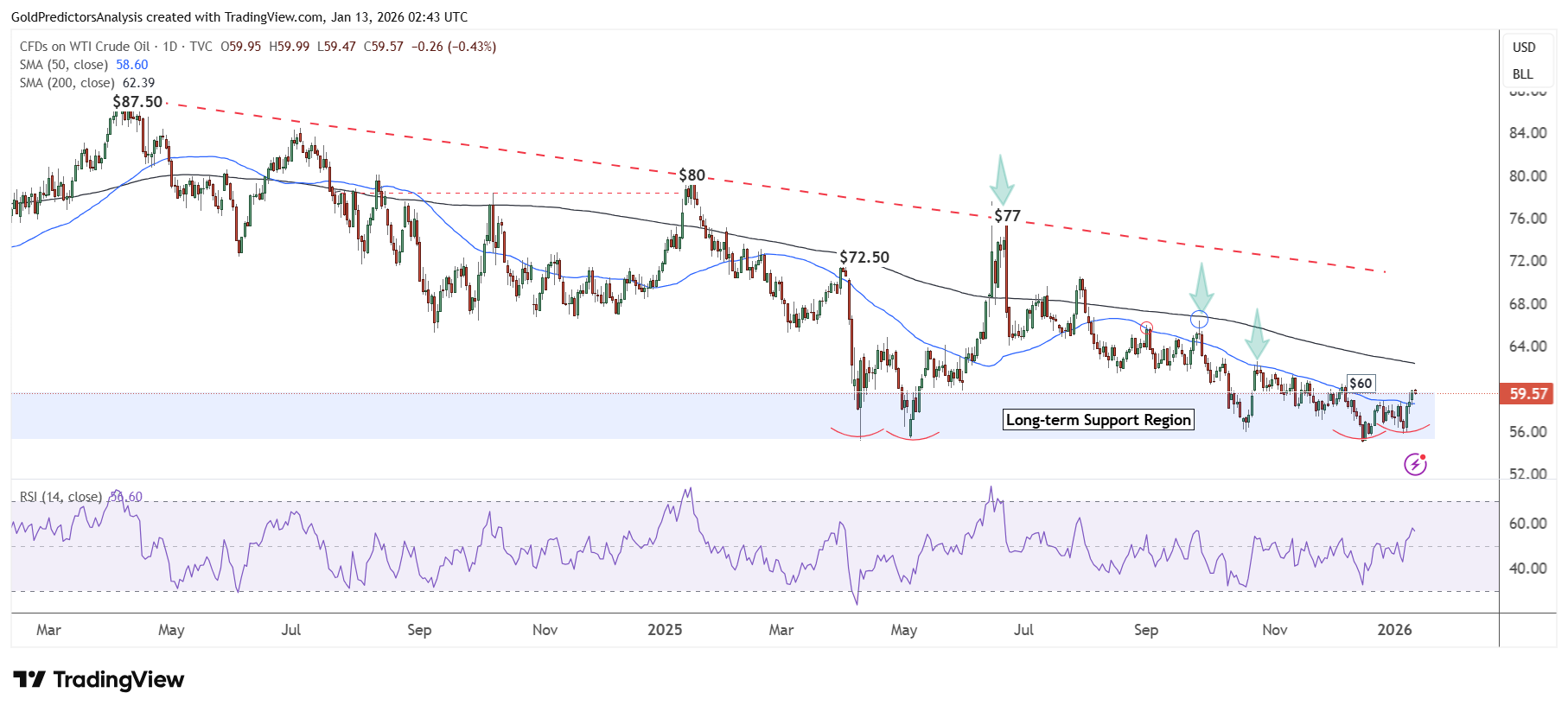
As long as the price remains below the $62 area, the overall picture remains bearish. However, the inability to break below the $55 support over the past nine months indicates resilience, even if it has been in a bearish structure.
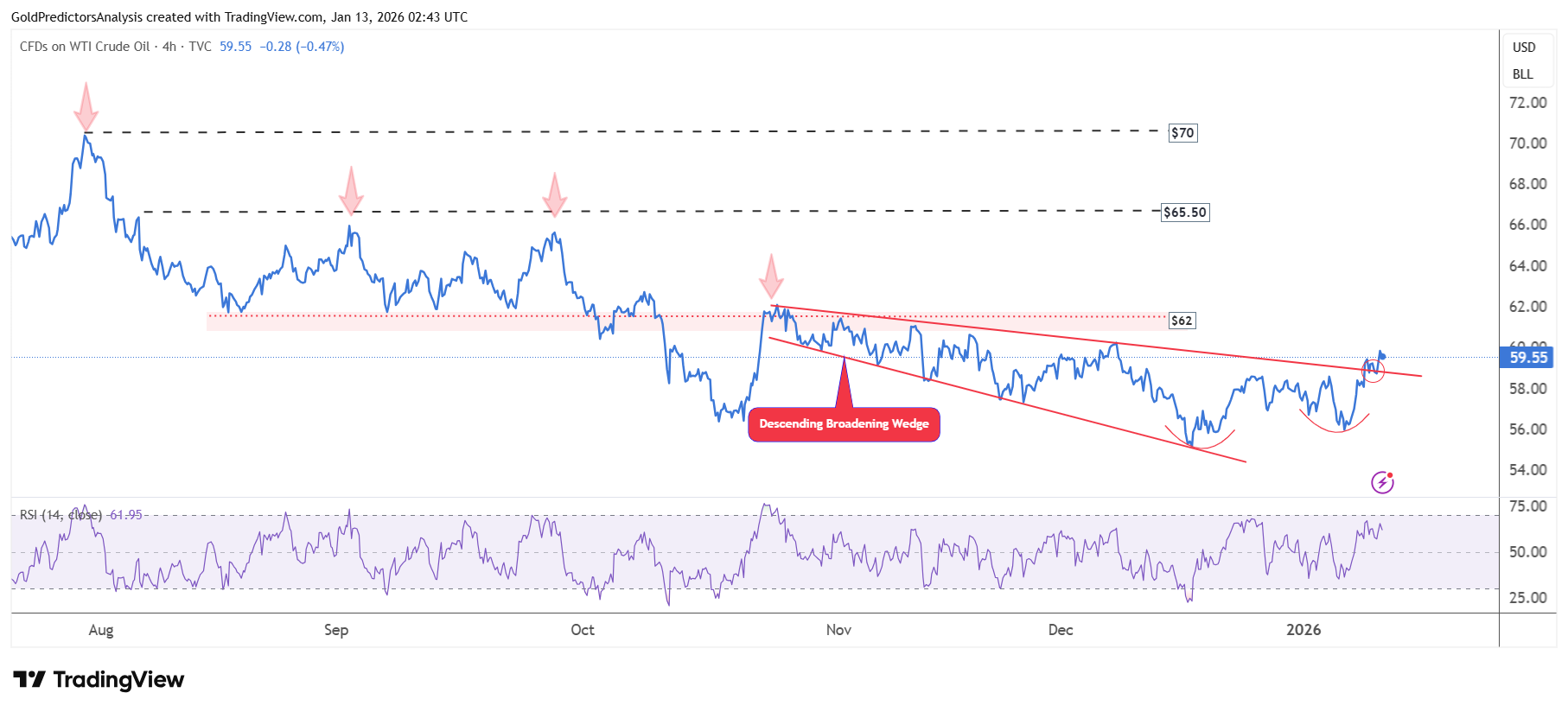
The price also broke out of the descending broadening wedge pattern as shown on the 4-hour chart below. This breakout from the wedge pattern points to a bullish formation and leads to a higher probability of a move to $62 area. A break above $62 would be a possible move toward $65.50.
Brent Oil Price Forecast
Every new Brent Oil analysis as it publishes, today's technical signal and key levels, live price — on one page.
See all Brent Oil forecastsNatural Gas Technical Analysis
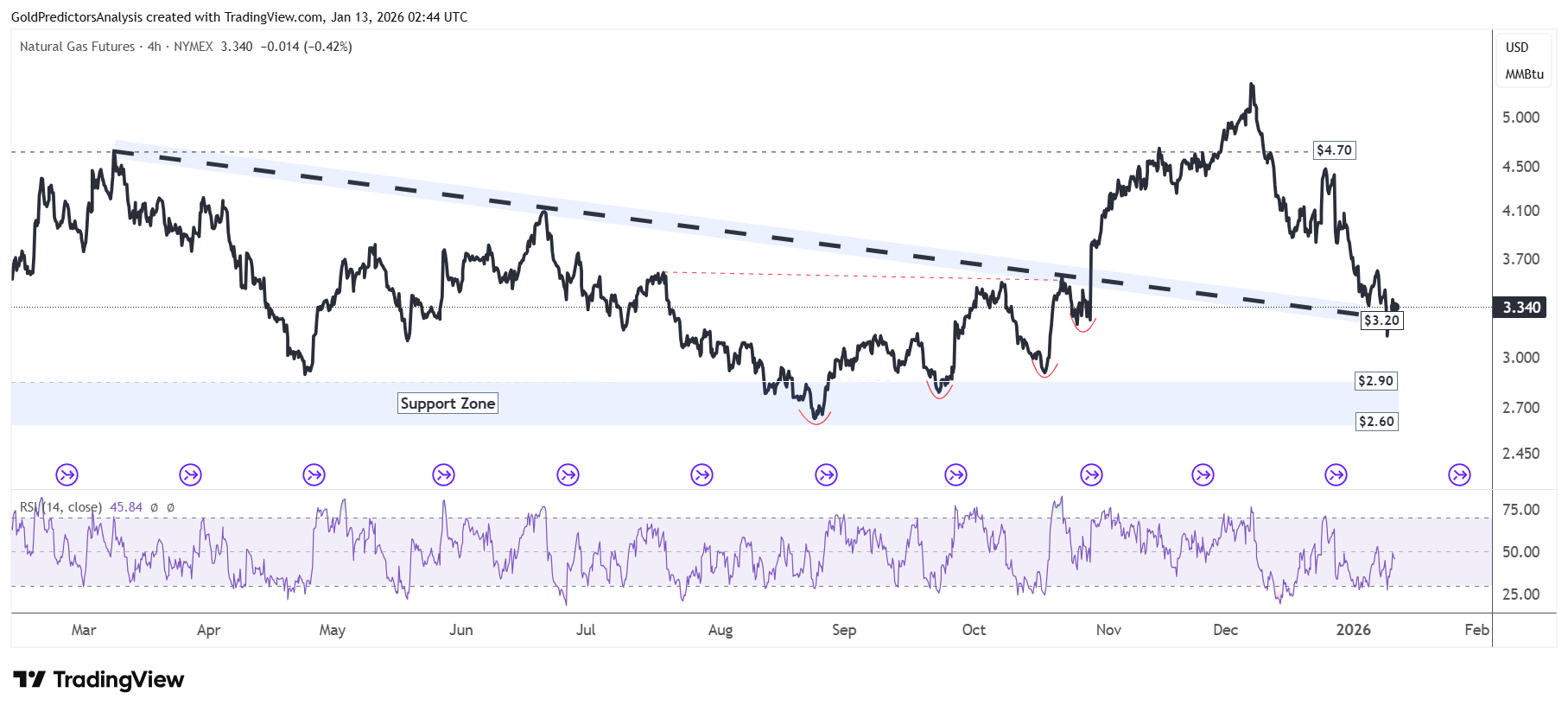
Natural gas (NG) prices also broke below the $3.80 support level and consolidated below the 200-day SMA. This breakdown has negated the previous bullish trend in natural gas and is a sign of further consolidation with a negative bias.
A break above $4.50 is needed for natural gas to regain upward momentum. However, as long as prices are at levels below the $3.80 resistance, natural gas may continue to move lower.
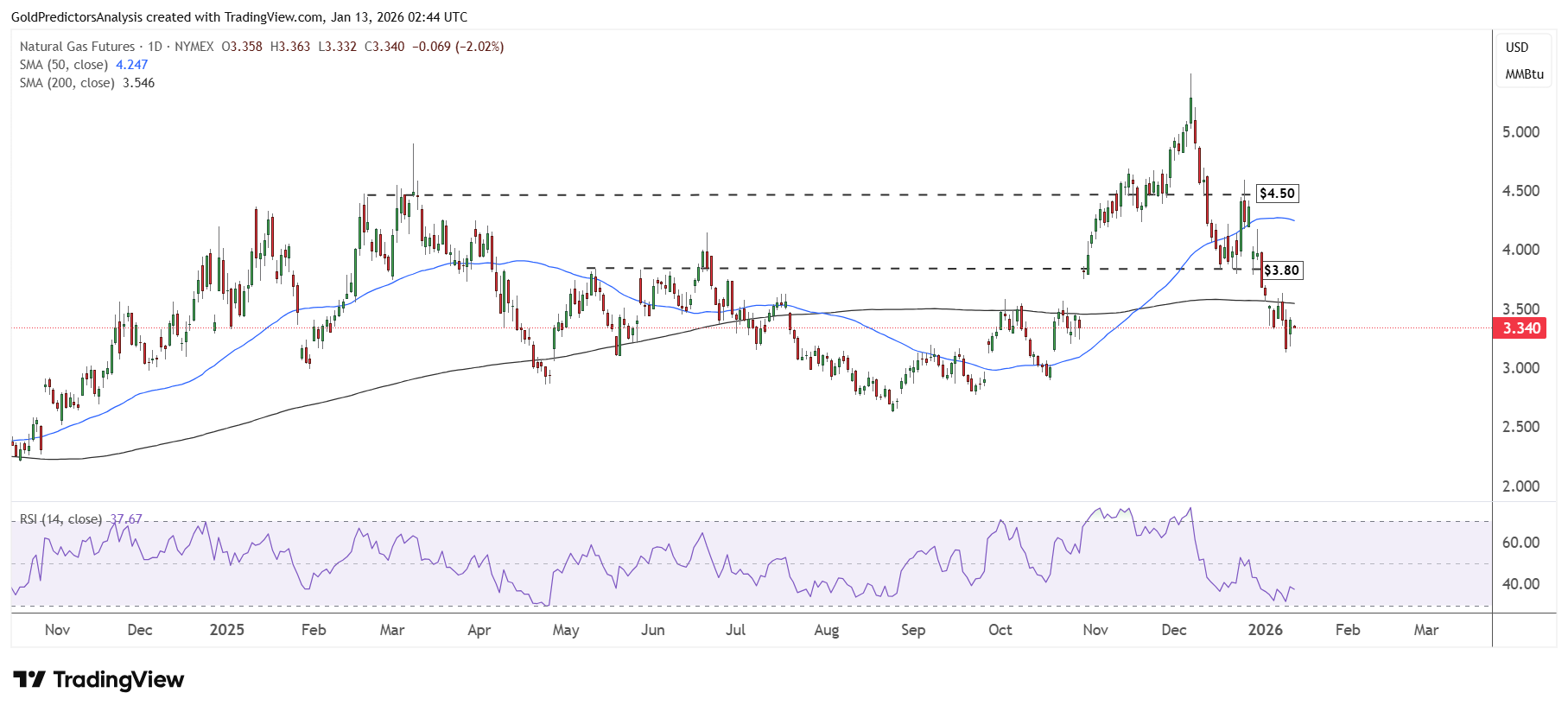
The chart below shows that the price has reached strong support at $3.20 as defined by the black dotted trend line running from the March 2025 highs. The next strong support for natural gas is between $2.60 and $2.90, which could provide a great potential for a short-term bottom in natural gas prices.
US Dollar Technical Analysis
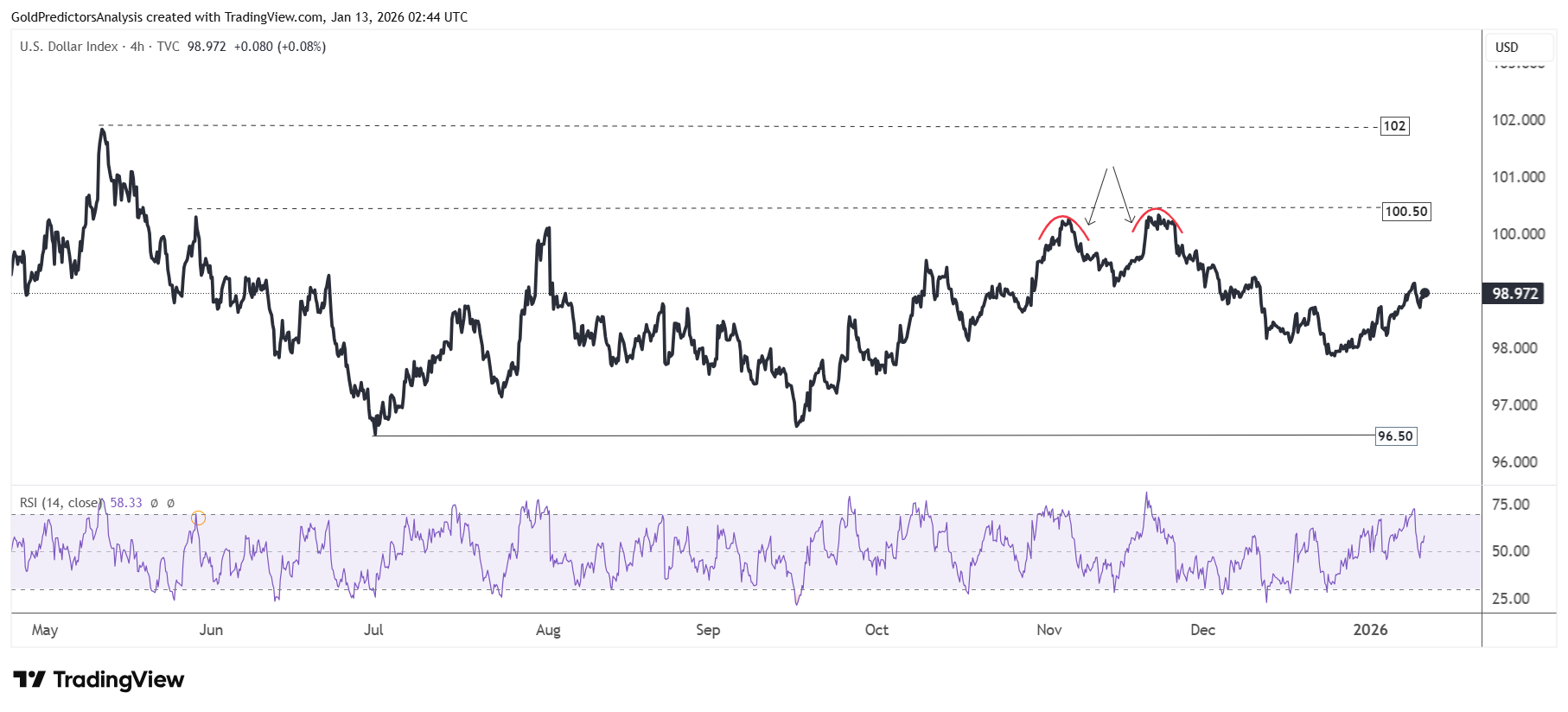
The daily chart of the US Dollar index shows that the index has reached strong resistance at the 200-day SMA and is consolidating around this level to find out where to go next. A break above 99.20 will signify further upside, while a break below 97.50 will mean a downside movement towards 96.50.
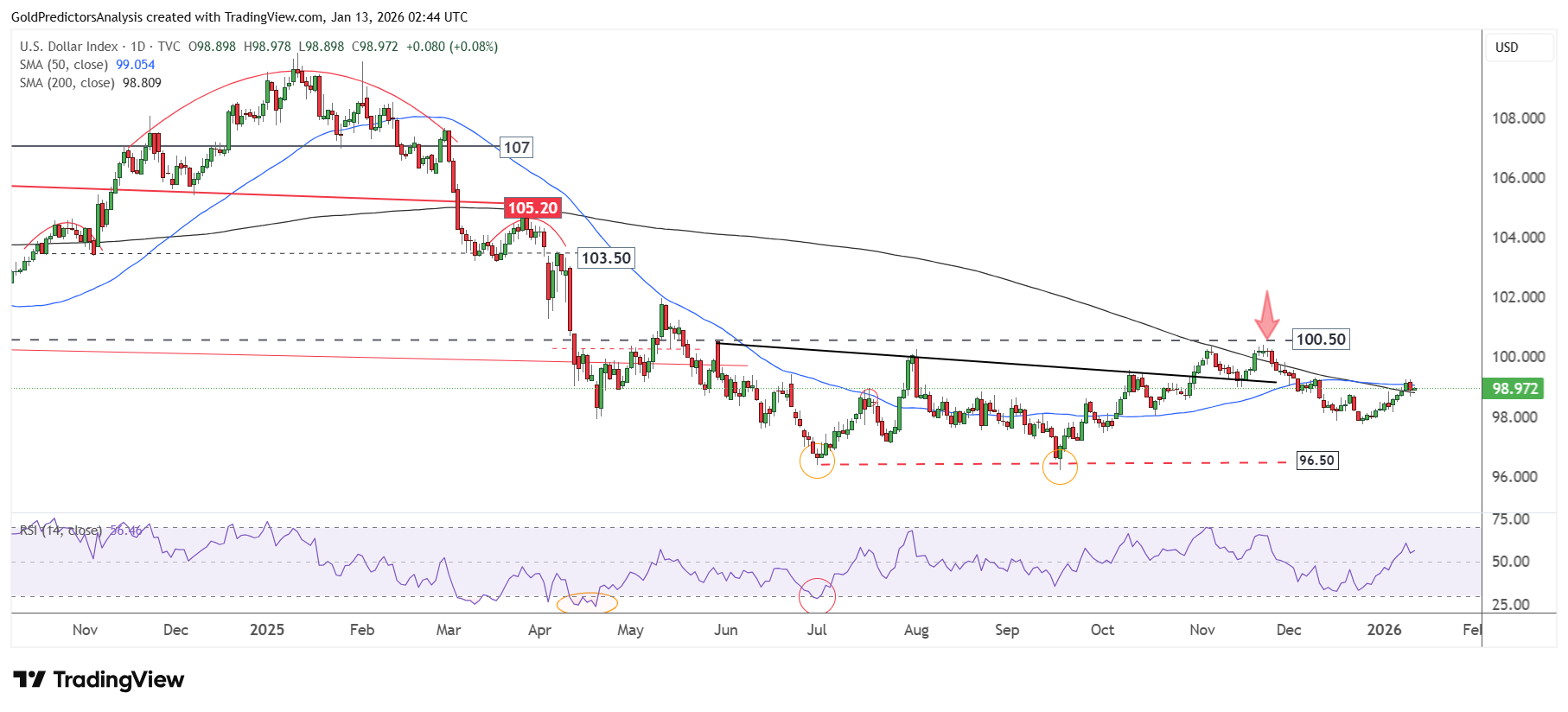
The short-term price action also shows the strong consolidation between 96.50 and 100.50 levels, and a break of this range is needed for the next move.