Oil prices fell as markets responded to news that the U.S. will be importing Venezuelan crude oil, which contributes to the expectation of ample world supplies. Brent crude oil (BCO) settled around $60 a barrel and the WTI crude oil (CL) closed around $56 a barrel. This negative price action shows bearish sentiment after the announcement.
The market is looking at the potential for more supply entering the market which keeps prices lower despite escalating geopolitical tensions. The deal for bringing 30 million to 50 million barrels of Venezuelan oil to the U.S. boosts the expectations of more oil available. Therefore, there is less near-term upside pressure in the oil market.
On the other hand, U.S. inventory data shows that crude stockpiles decreased more than expected. This decline is bullish to prices and an indication of demand strength.
However, fundamentals for stocks of gasoline and distillate are mixed leading to mitigating bullish reactions. The market is still watching the supply dynamics very closely and the reduction in crude stockpiles has contributed to the slight price stabilisation after steep declines. This environment does not allow for strong price gains unless demand picks up or output cuts are made.
Crude Oil Technical Analysis
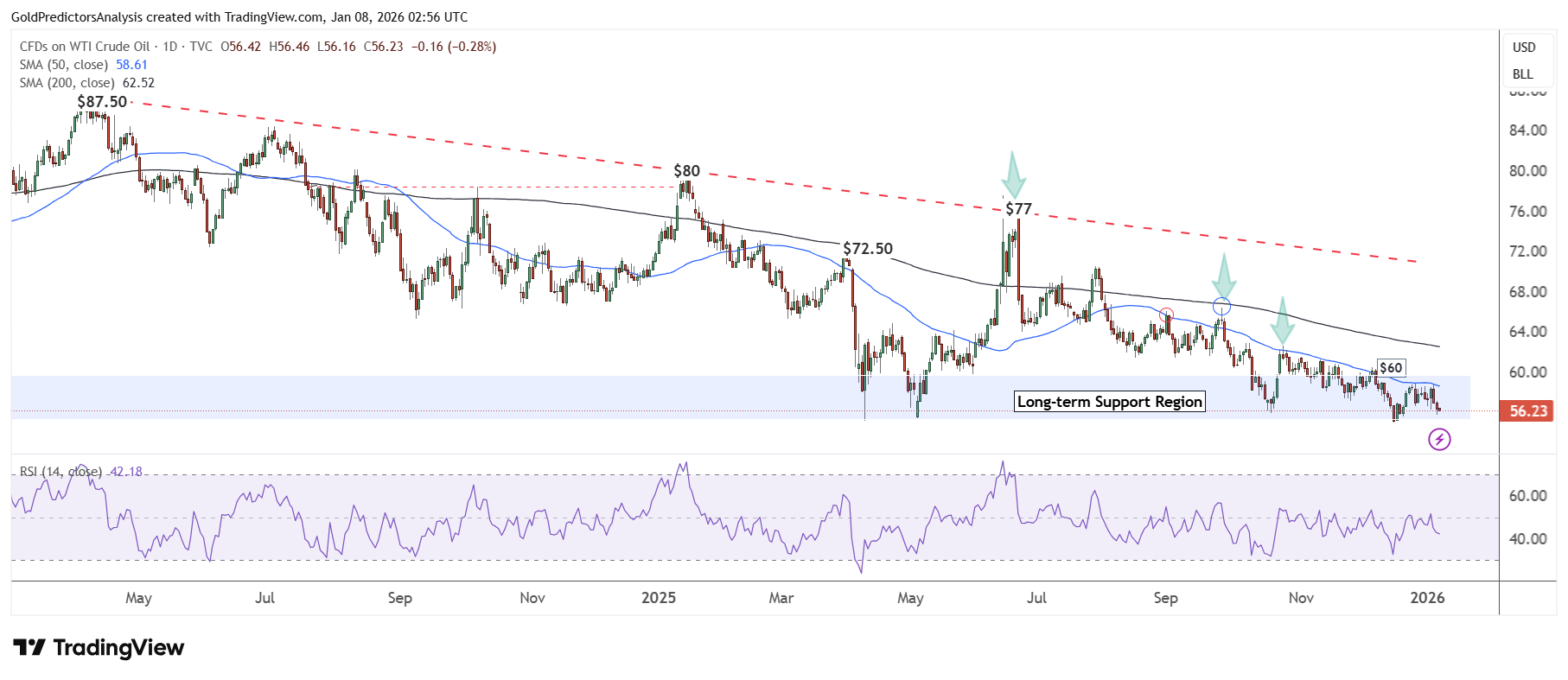
The daily chart for WTI crude oil shows that there is still bearish pressure as the prices fall to the lower boundary of the long-term support at $55 area. This weakness in the oil market follows the failure of the breakout above the 50-day SMA which points to prices preparing to have a break lower. Moreover, the RSI is also turning lower from the mid-level which shows bearish pressure.
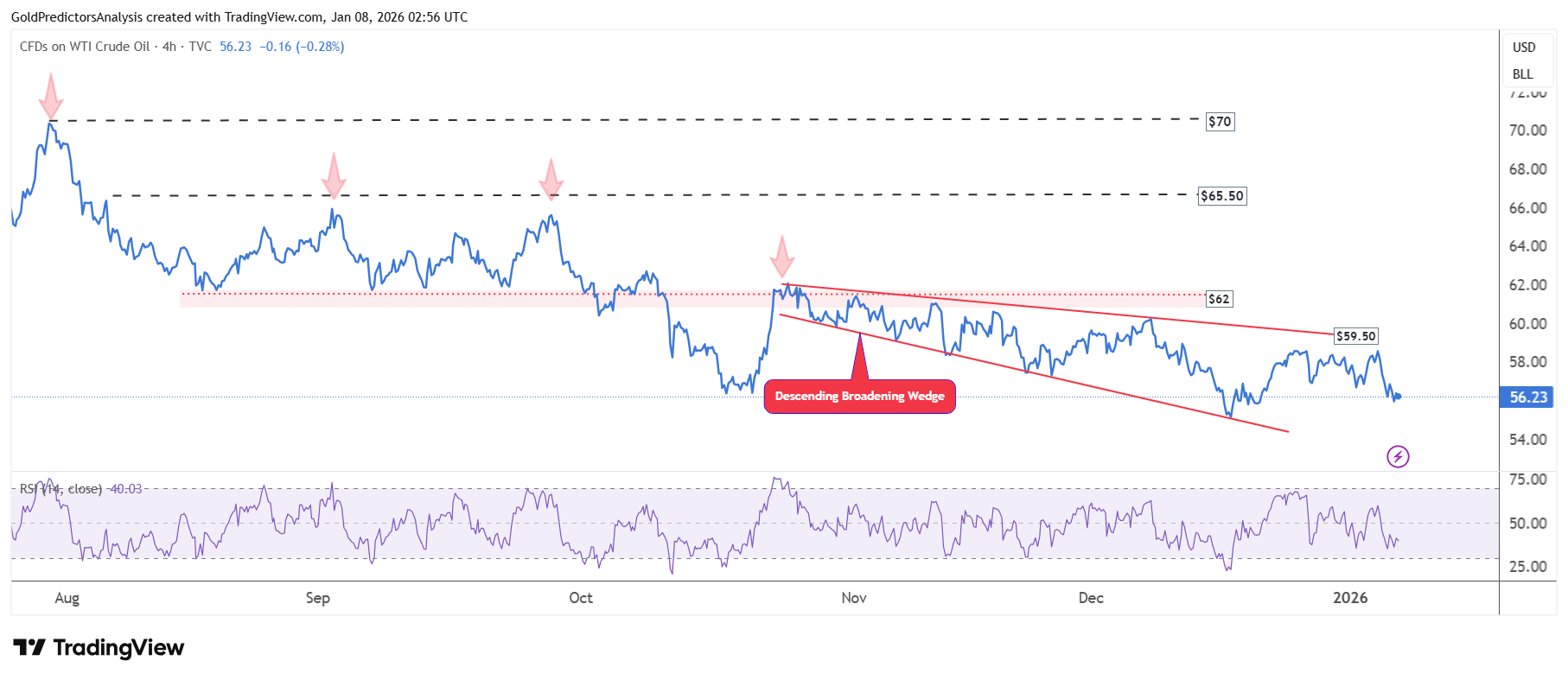
The 4-hour chart of WTI crude also shows the negative price action inside the descending broadening wedge pattern. The price failed to break above the $59.50 level and continued towards the lower support of $55 area. There is a persistent weakness in the last quarter of 2025, which highlights continuous bearish momentum in the first quarter of 2026.
Natural Gas Price Forecast
Every new Natural Gas analysis as it publishes, today's technical signal and key levels, live price — on one page.
See all Natural Gas forecastsNatural Gas Technical Analysis
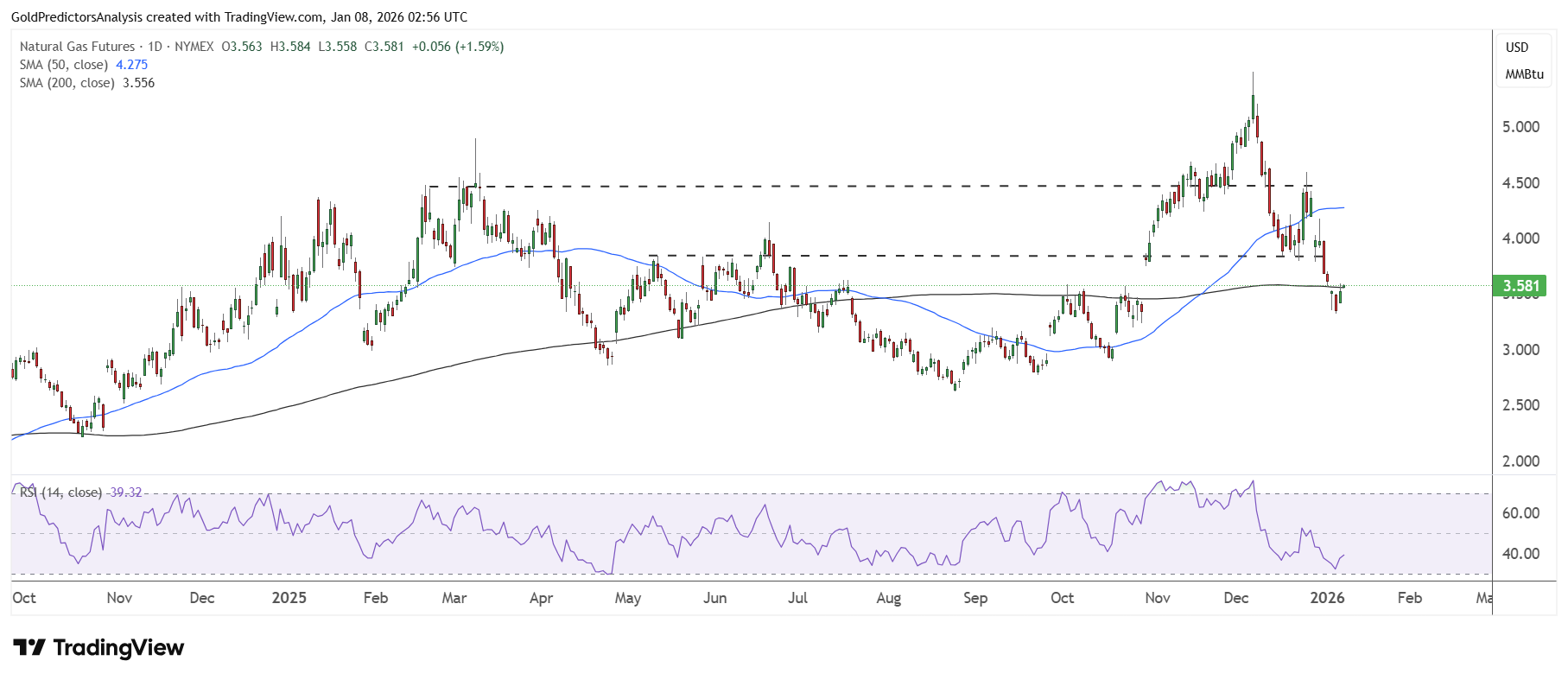
The daily chart for natural gas prices shows that prices rebounded from support of $3.30 and are now consolidating around the 200-day SMA. A break above the $3.70 level will indicate further upside toward the $3.85. However, as long as the price remains below $4.50 level, natural gas prices may continue to move lower. A break below the $3.20 level will indicate further downside toward $2.60. However, the RSI indicator shows signs of short-term exhaustion and indicates a possible rebound.
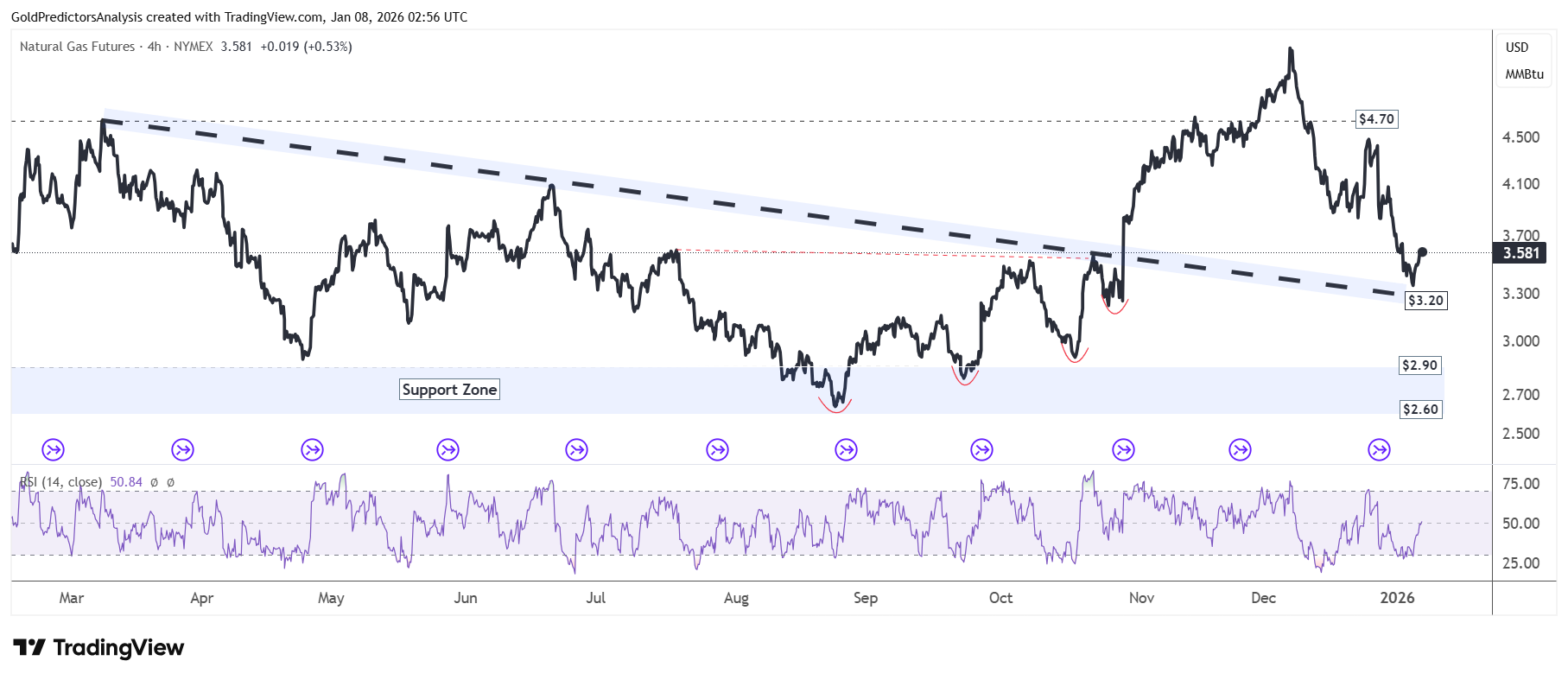
The 4-hour chart for natural gas prices shows that natural gas prices rebounded from the short-term support of the $3.20 to $3.30 area. The immediate resistance remains at the $3.85 level. However, as long as the price remains below $3.80, it may drop back toward $3.20. A break below $3.20 will indicate further downside toward the $2.90 to $2.60 support region.
US Dollar Technical Analysis
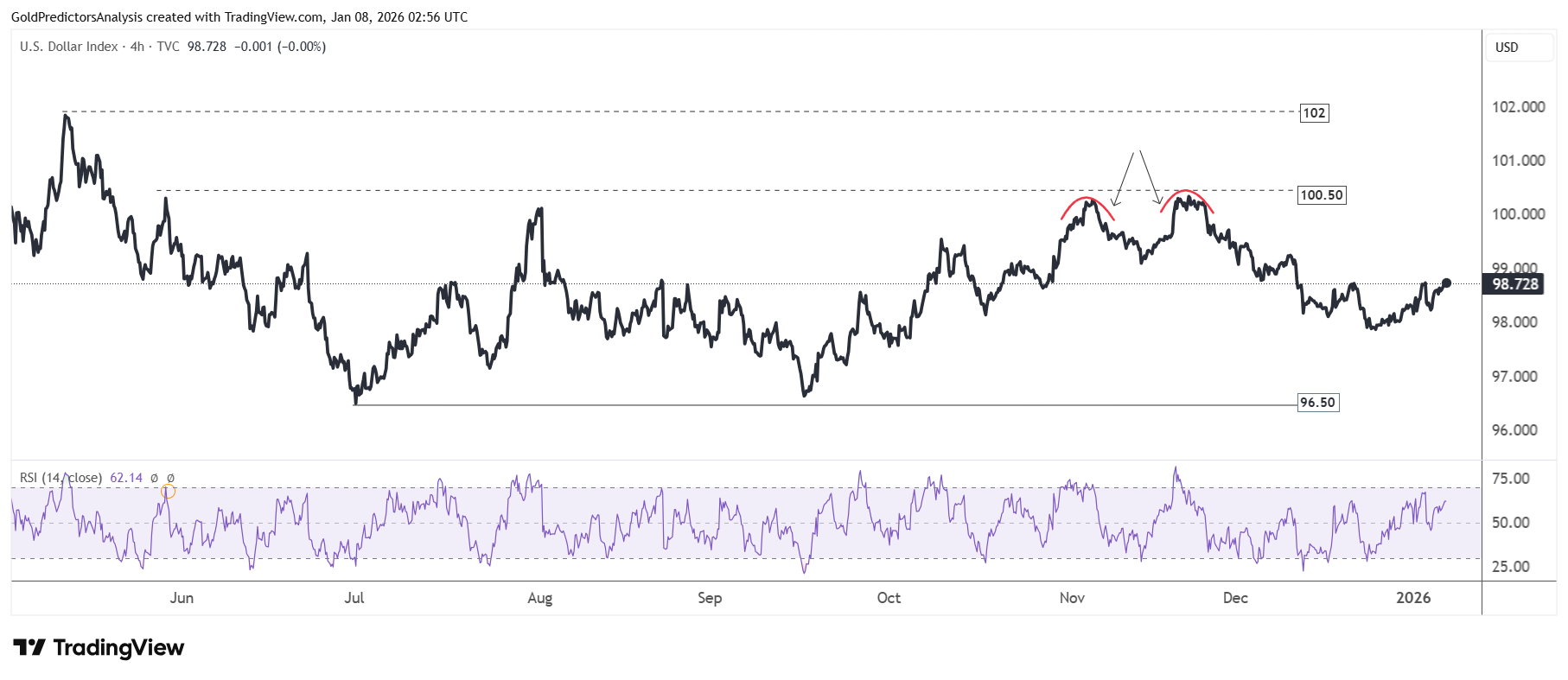
The daily chart for the USD index shows that the index rebounds from the support level of 97.50 back toward the 200-day SMA. The index shows uncertainty in the short term below the 200-day SMA. A break above the 99 level will indicate further upside toward the 100.50 level. A break above 100.50 is required for the USD index to ease the bearish pressure. On the other hand, a break below 96.50 will indicate continued downside in the index.
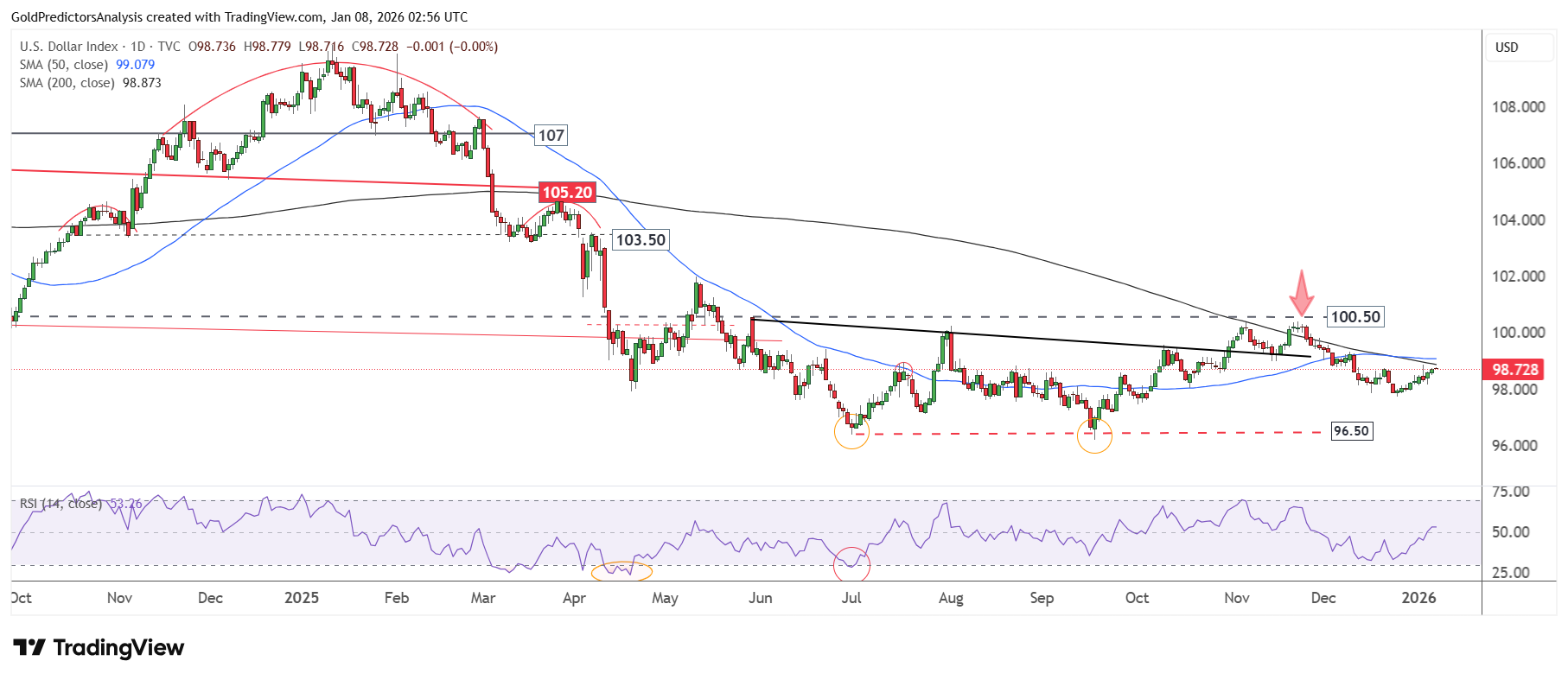
The 4-hour chart for the US Dollar Index shows that the index is rebounding from the 97.50 support level and consolidating in the short term. The short-term direction remains uncertain but the index is preparing for a rebound back toward the 100.50 level. The RSI indicator also shows strong consolidation in the short term. This consolidation requires a breakout from the 100.50 or 96.50 level for the next move in the US Dollar Index.