WTI crude oil (CL) and gasoline prices extended their losses. Traders responded to warnings of a “super glut” in 2026, driven by rising supply and weakening demand. The bearish tone intensified after Saudi Aramco cut its January prices for Asia, signalling softer global demand.
The latest EIA report showed a larger-than-expected crude draw, which would typically support prices. However, sharp increases in gasoline and distillate inventories pressured market sentiment. In addition, rising Cushing stockpiles and weakening crack spreads further weighed on prices by reducing refinery demand for crude.
Despite the bearish fundamentals, geopolitical risks offered support. Drone attacks on Russian tankers and threats from President Putin raised concerns about supply disruption. Reduced Russian exports and pipeline outages kept oil from falling further. OPEC+ production pauses, and sanctions add to the complex supply picture.
WTI Crude Oil (CL) Technical Analysis
WTI Oil Daily Chart – Bearish Pressure
The daily chart for WTI crude oil shows that the price is fluctuating below the 50-day and 200-day SMAs, indicating negative price action within the long-term support zone. A break below $55 would likely trigger a strong and significant decline in oil prices.
However, a recovery above the $65 region could signal further upside toward the $70 area. As long as the price remains below the $75 region, oil is likely to continue trending lower within the broader bearish structure.

WTI Oil 4-Hour Chart – Consolidation with Negative Bias
The 4-hour chart for WTI crude oil shows that the price is fluctuating below the $62 area, reflecting ongoing negative price action. The price has been steadily declining since it marked a high between July and August 2025.
Natural Gas Price Forecast
Every new Natural Gas analysis as it publishes, today's technical signal and key levels, live price — on one page.
See all Natural Gas forecasts
Natural Gas (NG) Technical Analysis
Natural Gas Daily Chart – Correction within Bullish Momentum
The daily chart for natural gas (NG) shows that the price has pulled back toward the strong support region between $4.50 and $4.70 after facing resistance at the $5.50 level. However, the broader trend remains strongly bullish, and this correction is likely to find solid support for further upside movement.
Strong support lies between the $4.20 and $4.00 region, and as long as the price stays above this zone, the upward momentum is expected to continue. Moreover, the RSI is stabilising after retreating from overbought levels, suggesting that this correction may present a buying opportunity for traders and investors.
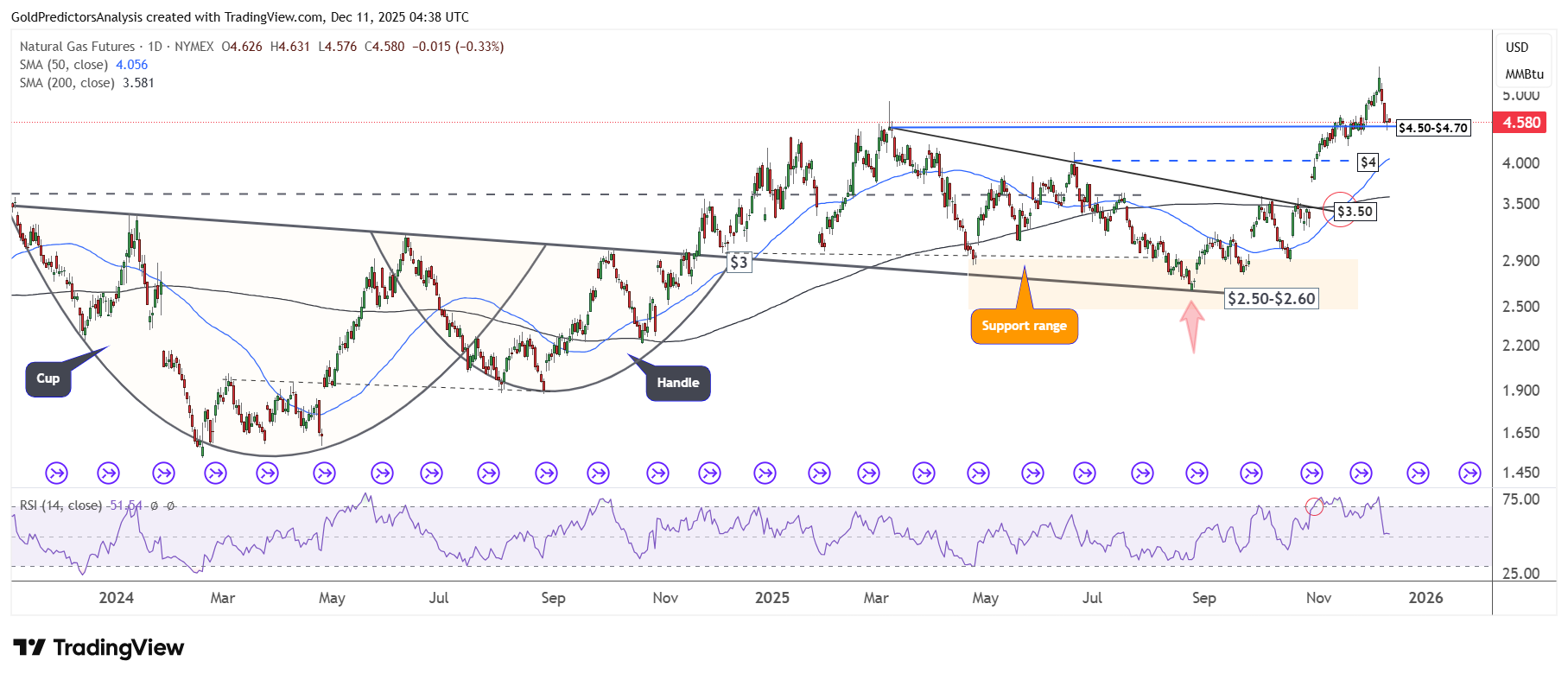
Another daily chart shows a strong bullish price structure in natural gas, where the price has pulled back into the red-dotted region around the $4.50 area. The 50-day SMA remains above the 200-day SMA, which confirms a strong upward trend.
A break above the $5.50 level would likely trigger a continuation of the rally in natural gas prices. However, a break below the $4.00 region could signal another downward move.

Natural Gas 4-Hour Chart – Positive Trend
The 4-hour chart for natural gas shows that the price is fluctuating within an ascending broadening wedge pattern and is awaiting a clear directional breakout. A break below $4.50 may trigger further downside toward the $4.20 level, which aligns with the measured target from the base of the wedge. However, the $4.00 region remains a strong support zone, and a solid rebound from this level is likely.

US Dollar Index (DXY) Technical Analysis
US Dollar Daily Chart – Bearish Pressure
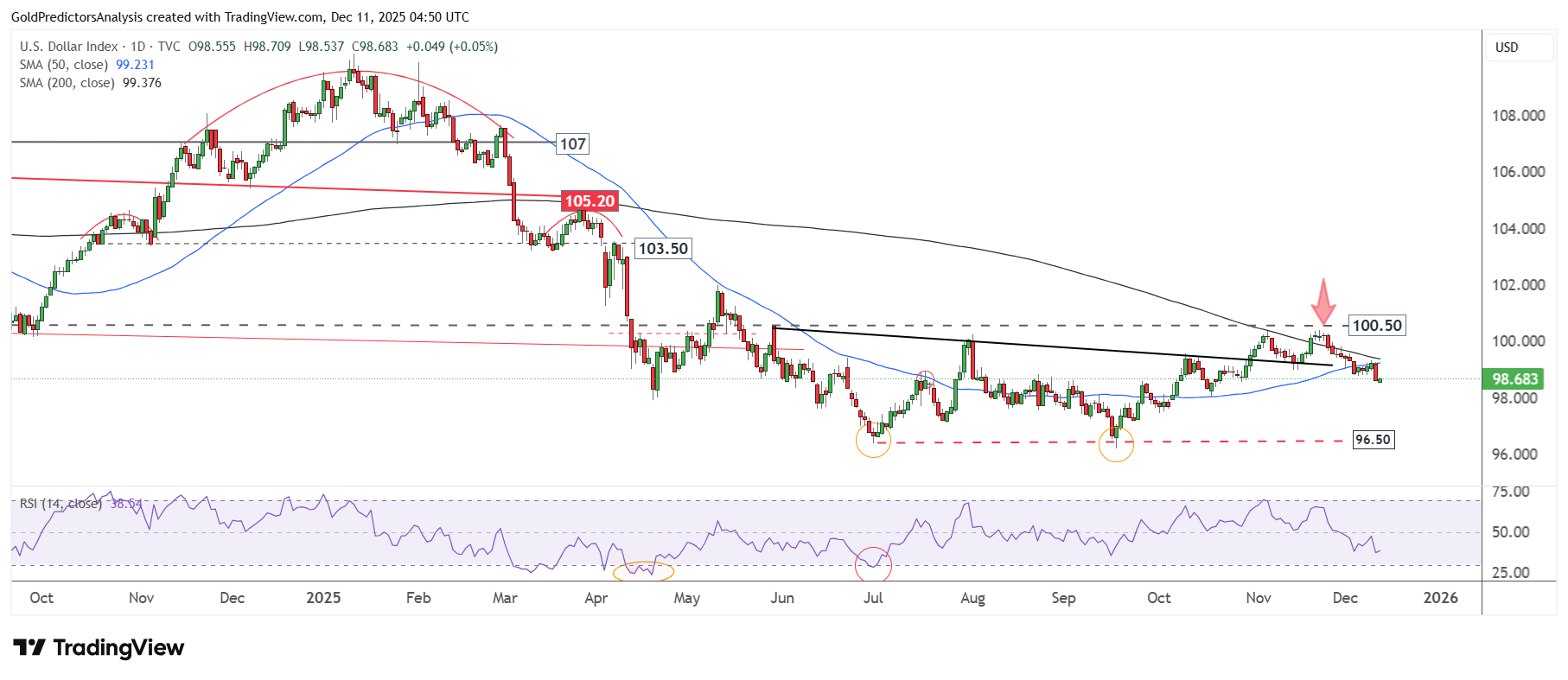
The daily chart for the U.S. Dollar Index shows that the index continues to trade lower after hitting resistance at the 200-day SMA. The formation of a double top pattern near the 100.50 level further confirms negative price action. A break below the 98.00 level will likely trigger additional downside in the index. However, a breakout above the 100.50 resistance would neutralise the bearish trend and signal potential upside.
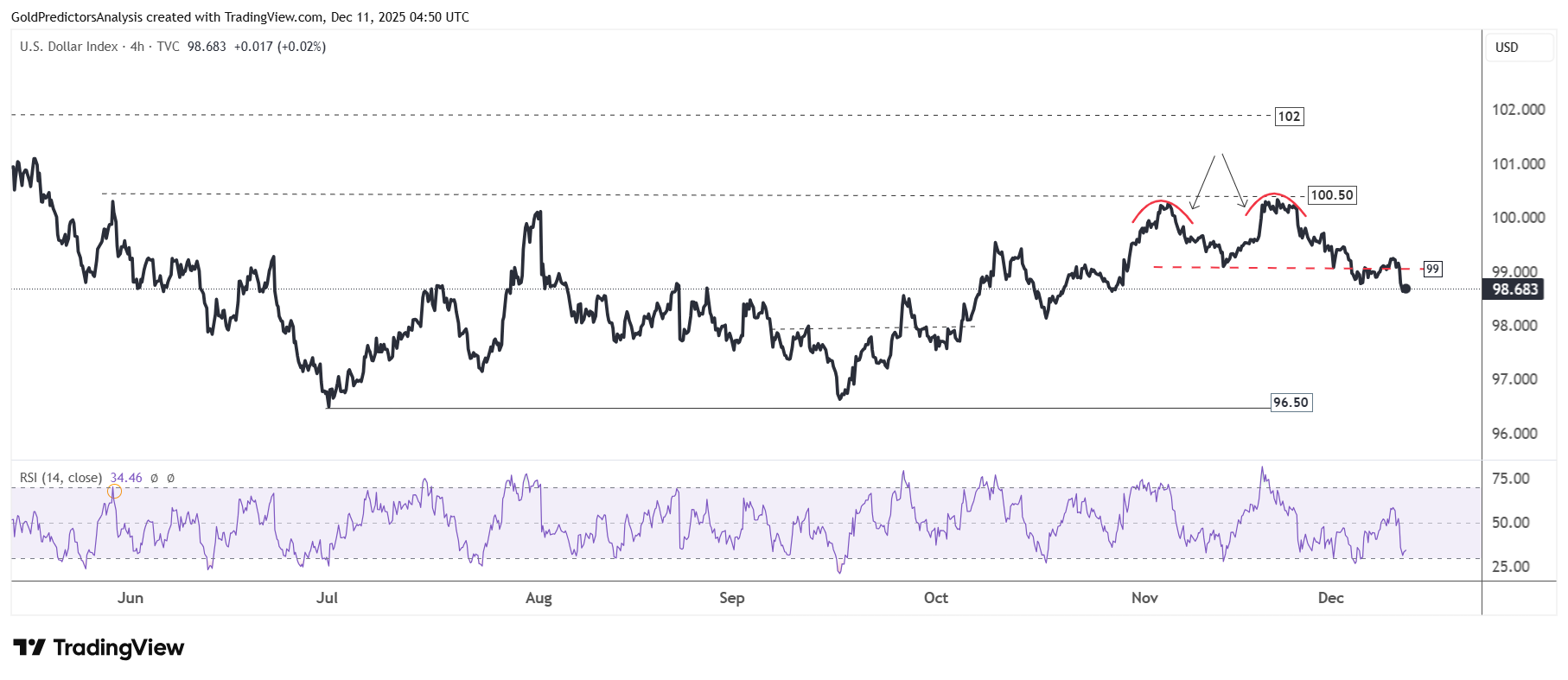
US Dollar 4-Hour Chart – Negative Price Action
The 4-hour chart for the U.S. Dollar Index indicates that the index remains lower after breaking below the neckline of a double top pattern. A break below the 98.00 level could trigger further downside toward the 96.50 level. However, a break above 100.50 would initiate a move higher toward the 102.00 level.