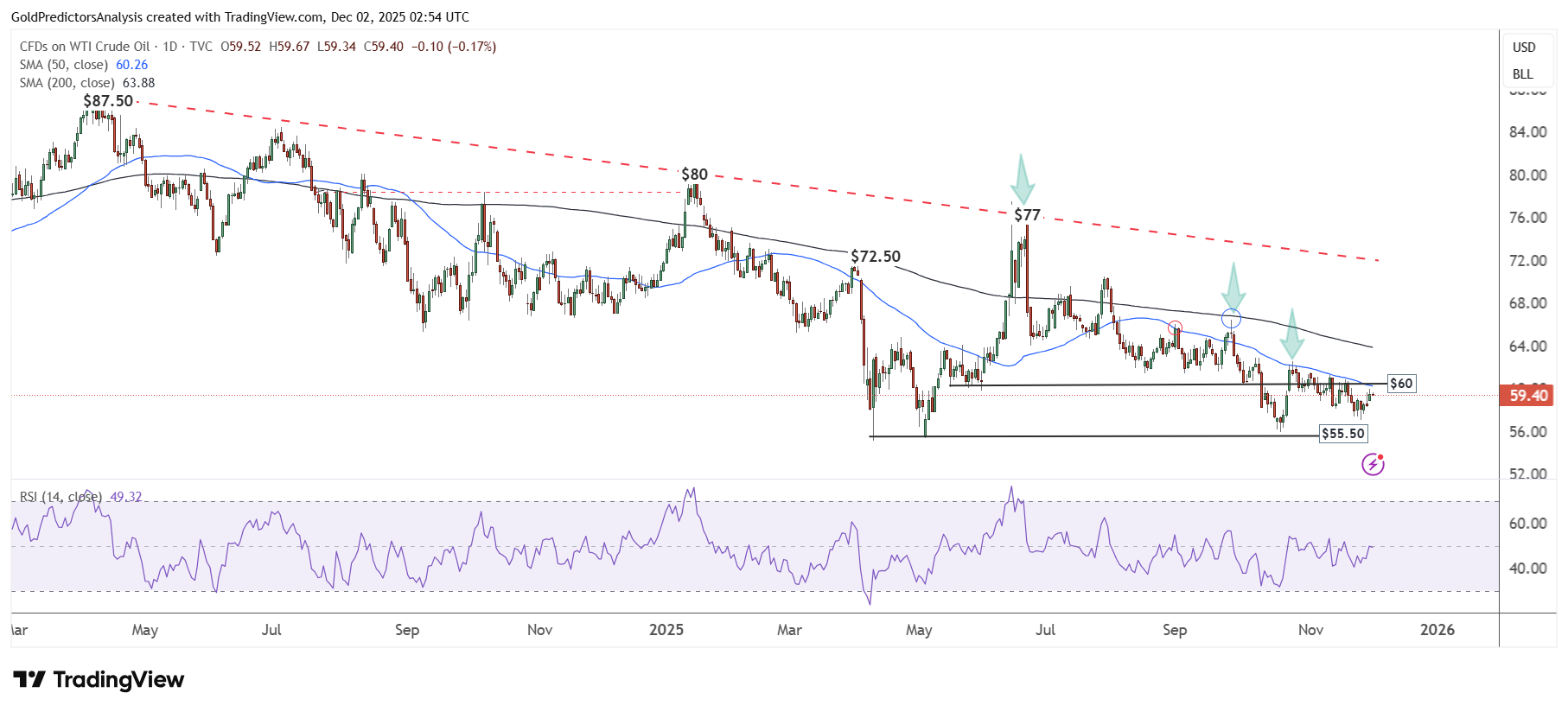
Oil prices increased from the support level following the emergence of new geopolitical tensions and supply risks. Ukrainian drone attacks on Russian oil infrastructure increased fears of disrupted crude flows. At the same time, the U.S. restricted Venezuelan airspace, adding another layer of uncertainty to the market.
The decision by OPEC+ to maintain steady output levels helped support the price rebound. This is viewed as a sign of discipline, preventing fears of oversupply. This came after four months of losses in crude futures, during which concerns about excess supply had weighed heavily on sentiment.
Market reaction was swift. Brent crude oil (BCO) settled above $63, and WTI oil (CL) increased to nearly $60 per barrel. Traders are now watching closely for further disruptions in the Black Sea region. Any escalation in Ukraine or Venezuela could trigger another leg higher in prices, especially given that global demand remains strong.
Despite these developments, the overall technical picture remains bearish, and any price rebound may be limited. A break above $70 is required to ease the bearish pressure in the oil market.
WTI Crude Oil (CL) Technical Analysis
The daily chart for WTI crude oil shows the price fluctuating below the 50-day SMA near the $60 level. This consolidation reflects negative price action, suggesting market uncertainty. The next significant move in WTI crude oil will likely depend on a breakout near the 200-day SMA around the $64 region. A break below $55.50 would signal a sharp decline, while a breakout above the $65 level could open the way for further upside toward the $70 area.
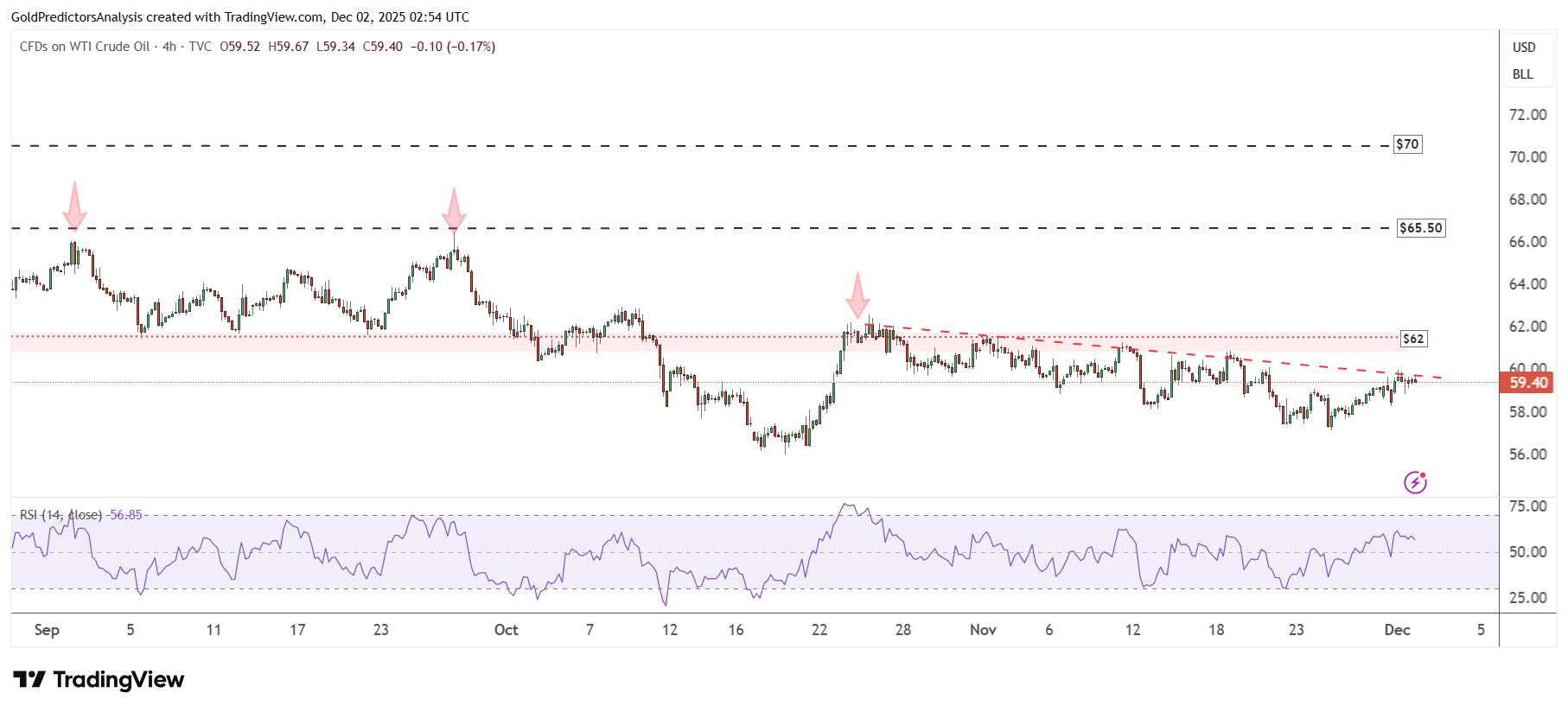
The 4-hour chart for WTI crude oil shows that the price is consolidating below the red dotted trendline near the $60 level. A breakout above $60 would suggest a potential move toward the $62 area. However, the recent consolidation reflects market uncertainty and lacks a clear directional bias. However, the price action below the $62 level suggests a negative tone in the oil market.
Natural Gas Price Forecast
Every new Natural Gas analysis as it publishes, today's technical signal and key levels, live price — on one page.
See all Natural Gas forecastsNatural Gas (NG) Technical Analysis
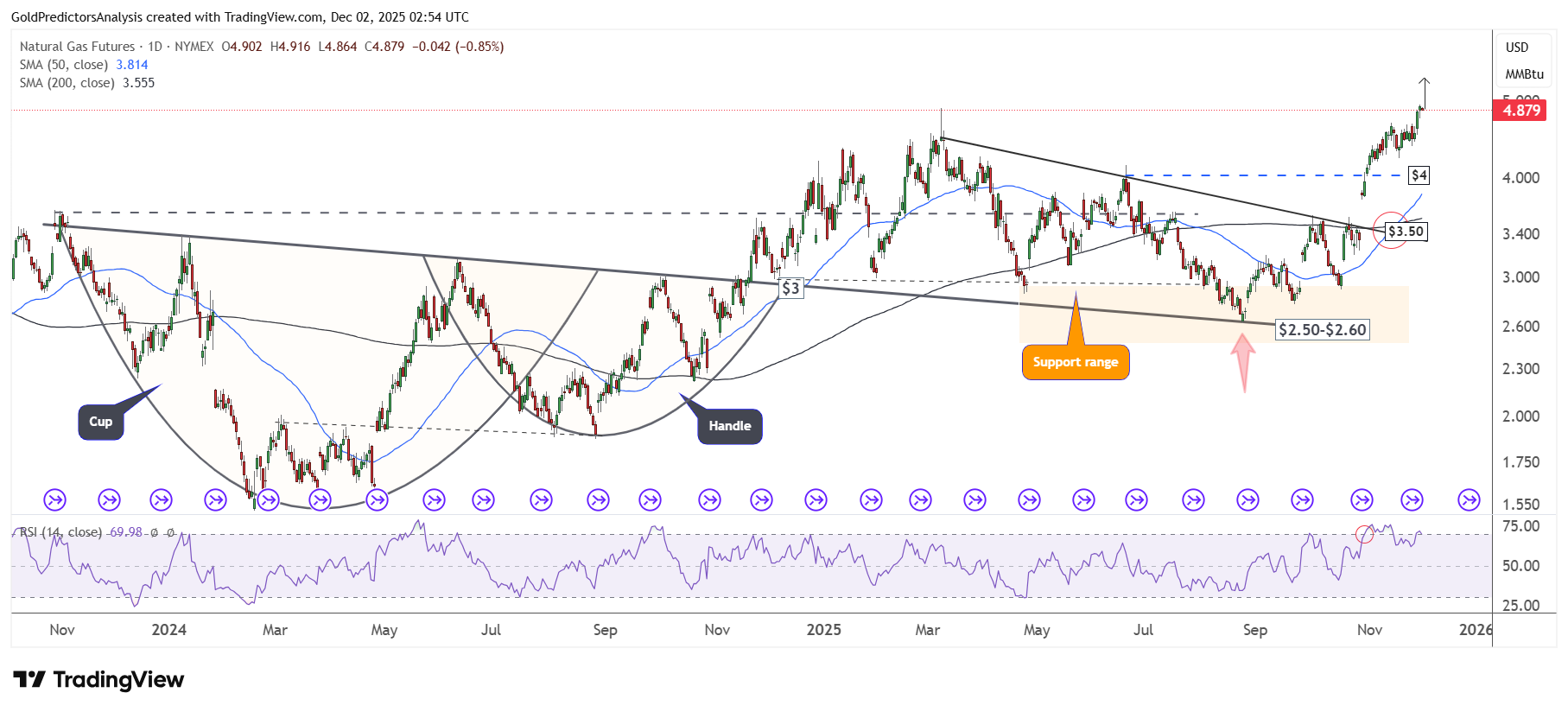
The daily chart for natural gas (NG) shows the formation of a cup and handle pattern. The breakout from this pattern and retest of the neckline at $2.60, followed by the continuation above $4.50, indicates bullish momentum. Currently, the price is consolidating around the $4.90 level, suggesting that further upside is likely.
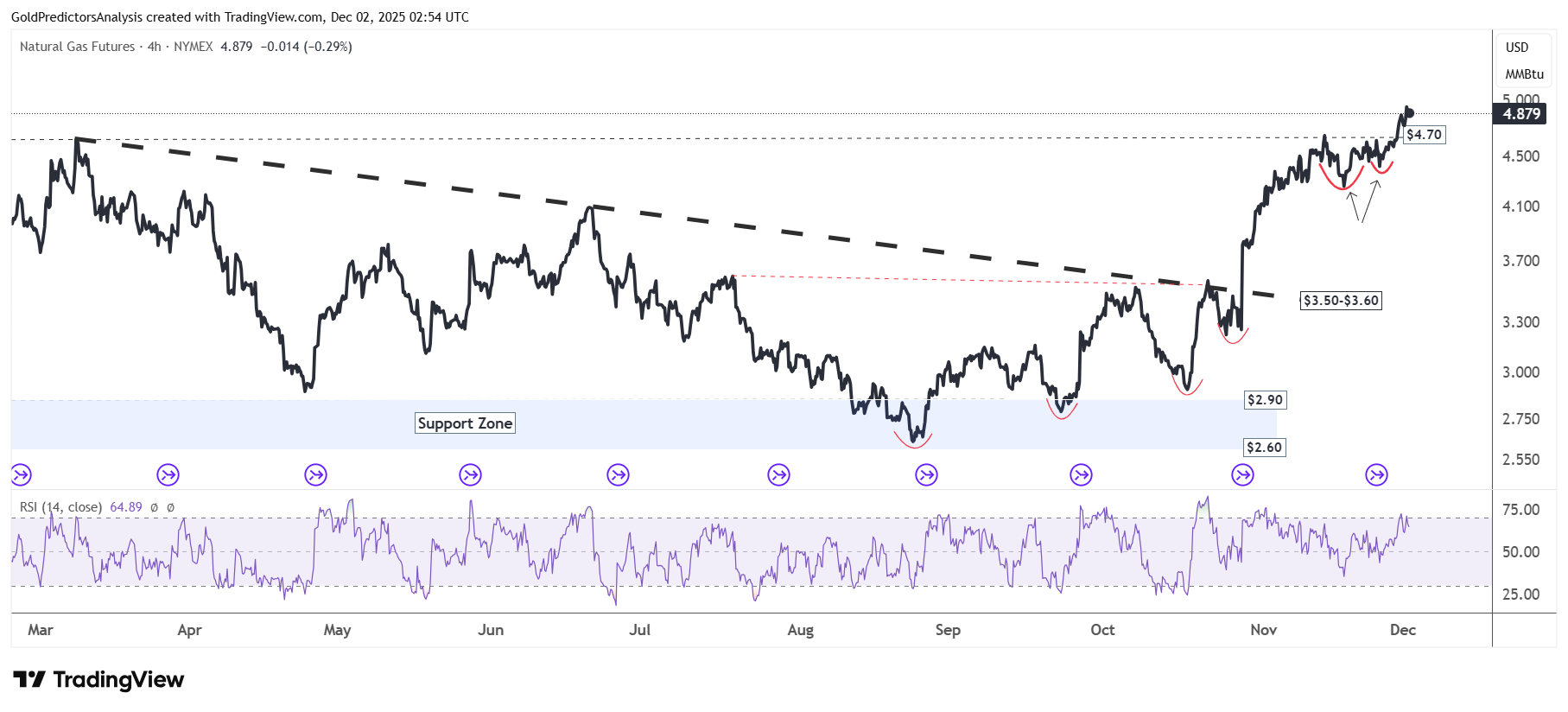
The 4-hour chart for natural gas shows a strong price breakout above the $4.70 region, indicating solid and positive price action. Natural gas prices are likely to continue higher as long as the $4.70 support holds. The emergence of multiple bullish formations near the $2.50 level, followed by a breakout above the $3.50 resistance, has opened the door for further upside in natural gas.
US Dollar Index (DXY) Technical Analysis
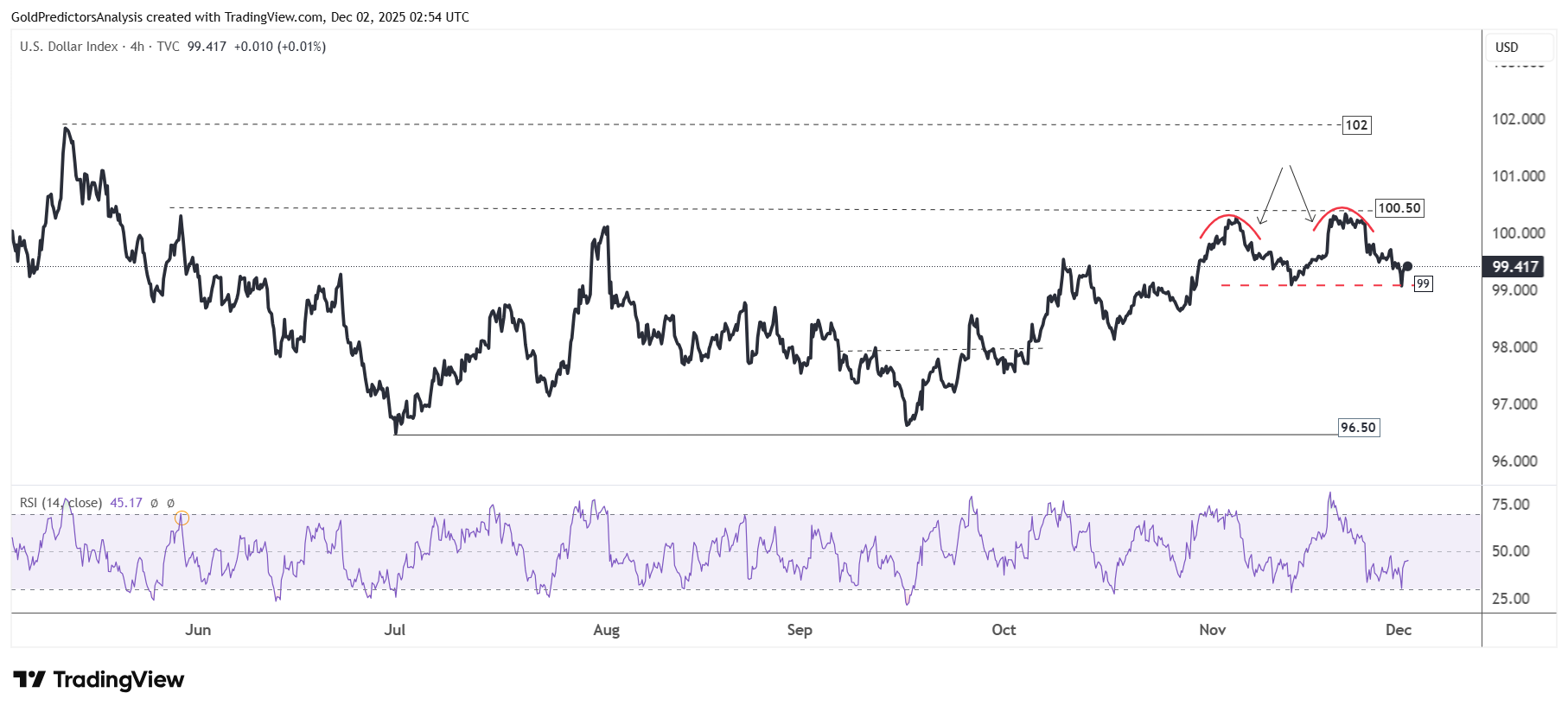
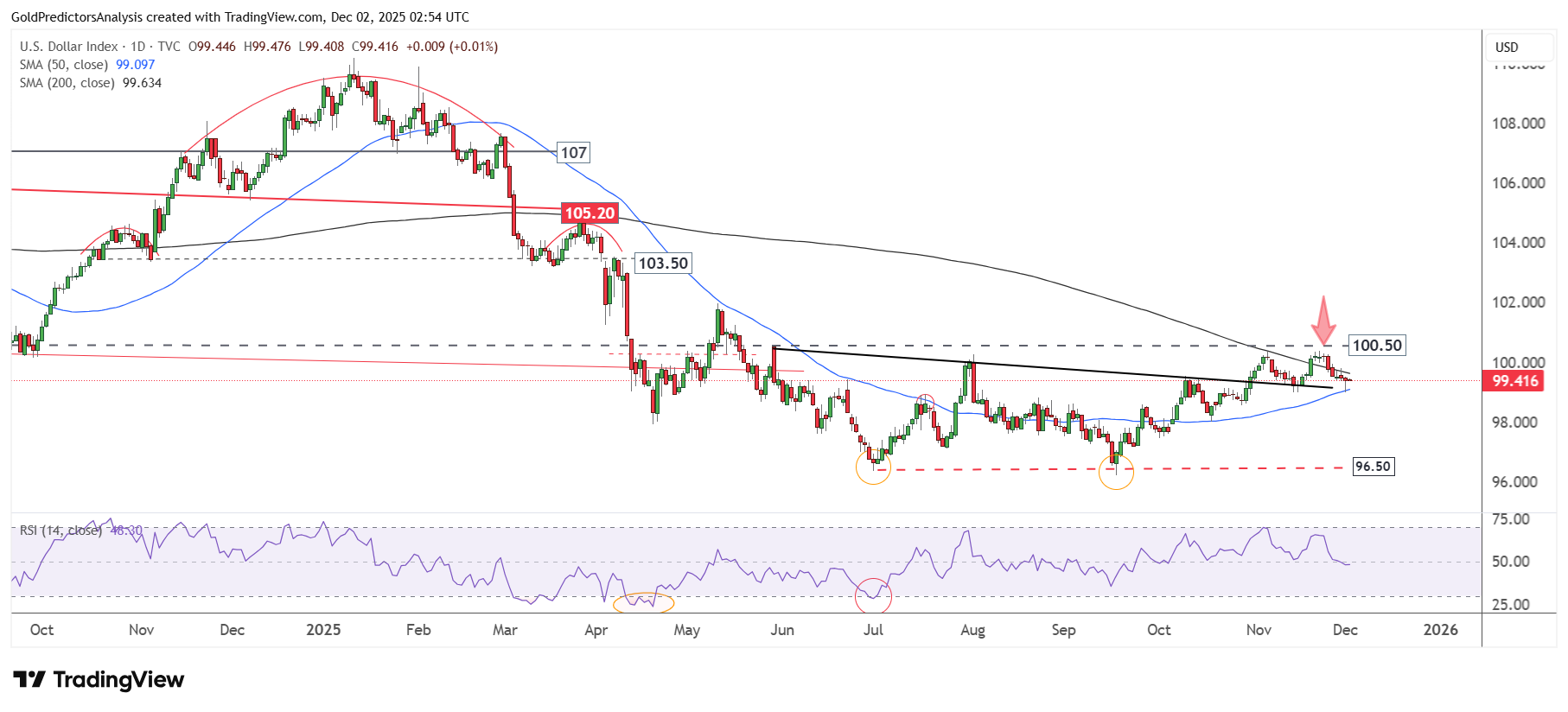
The daily chart for the U.S. Dollar Index shows that the index failed to break above the 100.50 level and subsequently dropped sharply. The correction from 100.50 has tested the 50-day SMA, and the price is now consolidating between the 50-day and 200-day SMAs.
A break below the 50-day SMA near the 99 level would signal further downside toward the 96.50 region. On the other hand, a breakout above 100.50 would suggest additional upside potential.
The 4-hour chart for the U.S. Dollar Index indicates the formation of a double top pattern near the 100.50 resistance level. A break below the 99 level would suggest further short-term downside toward the 98 and 96.50 levels. As long as the index remains below 100.50, the next move in the dollar is likely to be lower.