Oil prices dropped to their lowest levels since early 2021 as oversupply fears dominated market sentiment. Brent crude oil (BCO) fell below $60 per barrel, while WTI crude oil (CL) dropped toward the mid-$50s. This decline reflects growing concerns that additional Russian barrels could return to the market if a Russia–Ukraine peace deal moves forward. The easing of expectations for sanctions added pressure, reinforcing a bearish outlook for crude prices.
On the other hand, the market structure confirms the weakness. The six-month Brent spread flipped into contango for the first time since October, indicating an excess of supply and weak near-term demand. A sizable surplus is already priced into the market, limiting the near-term upside potential. As a result, average prices may recover only modestly next year unless a major geopolitical or policy shift alters supply dynamics.
Moreover, the demand concerns intensified the selloff. Soft Chinese economic data raised doubts about global consumption at a time when supply continues to grow. Although U.S. action against a Venezuelan oil tanker offered limited support, ample floating storage and pre-emptive Chinese buying helped mitigate its impact. As a result, downside risks remain dominant for oil prices in the near term.
WTI Crude Oil Technical Analysis
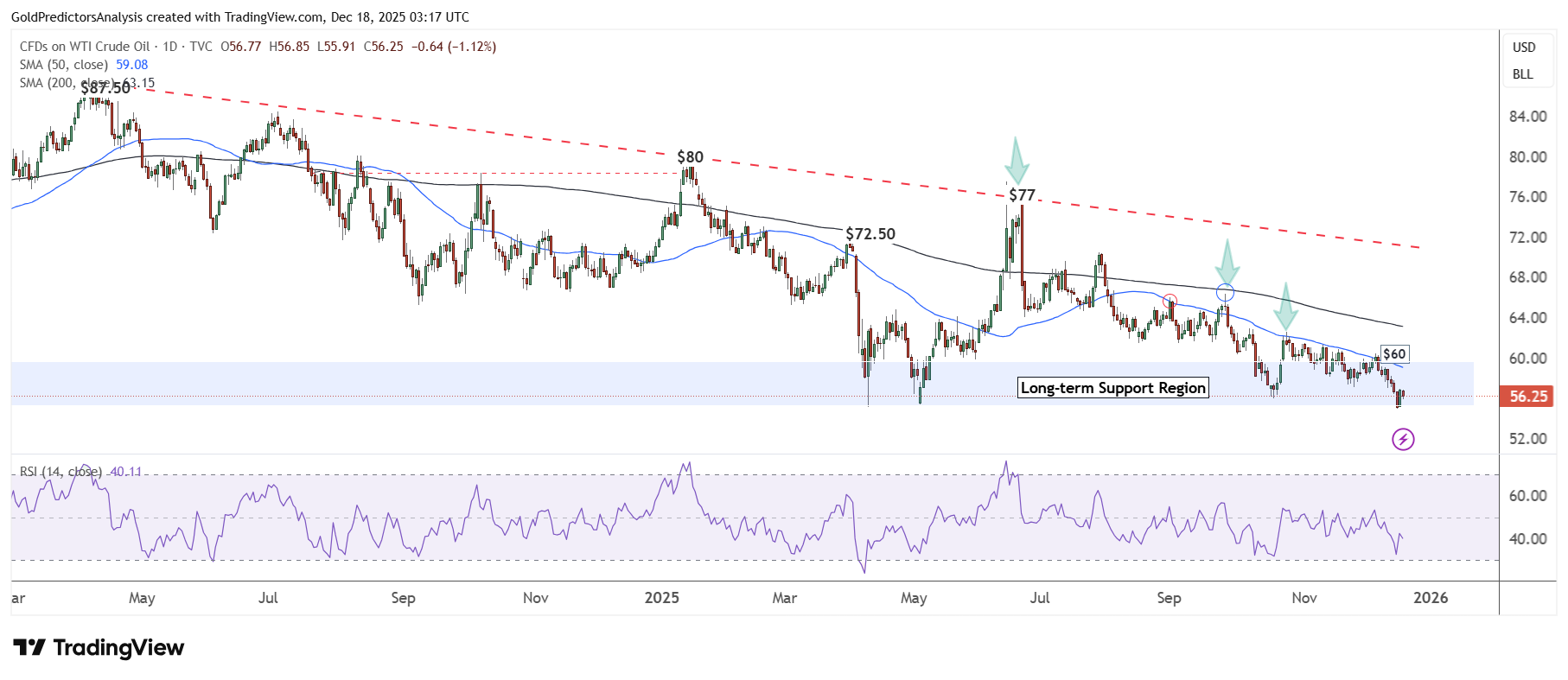
The daily chart for WTI crude oil indicates that prices are fluctuating within the long-term support zone, ranging from $55 to $60. A decisive break below $55 would likely trigger a sharp decline in the price. Despite short-term fluctuations, the broader trend remains bearish, with prices continuing to trade under sustained downward pressure. A break above the $65 level would signal a potential reversal in the current trend.
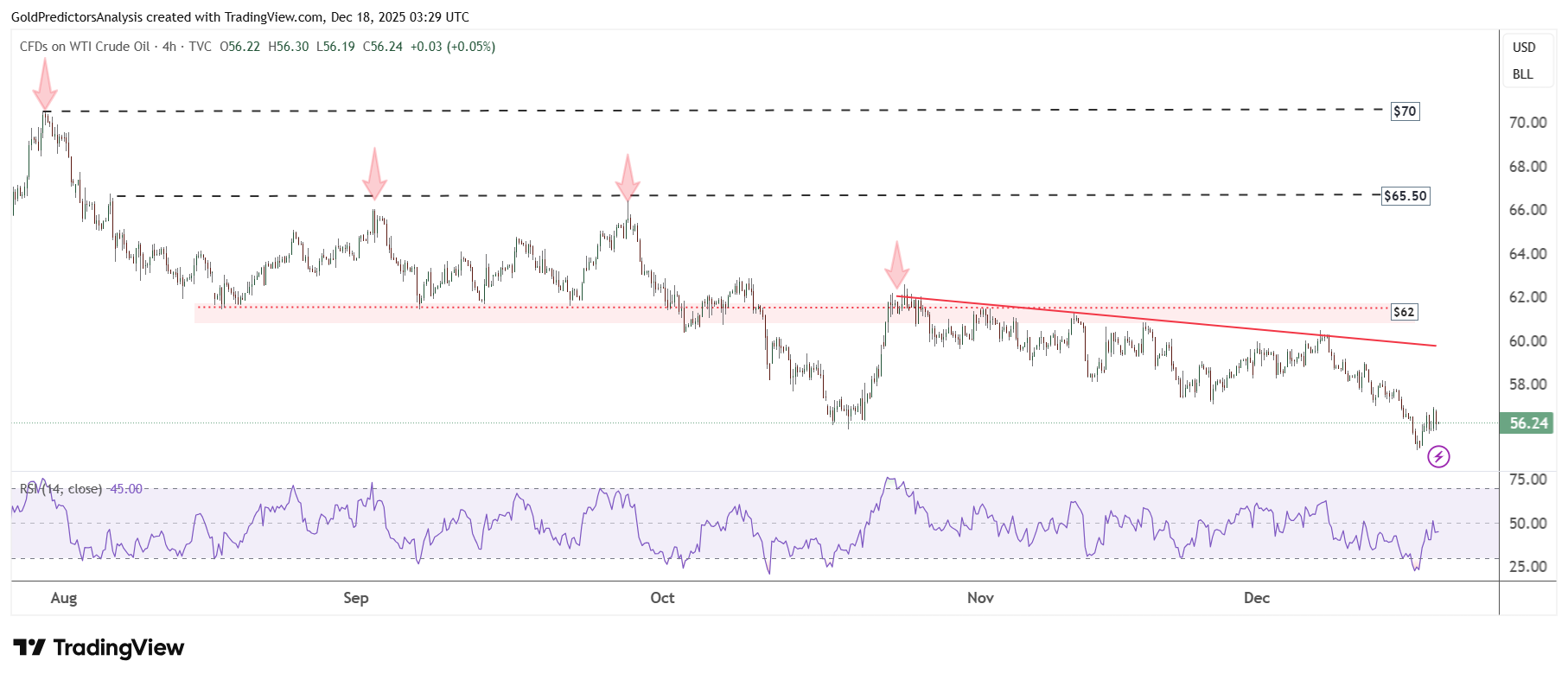
The bearish pressure in the oil market is also evident on the 4-hour chart, which shows that prices are trading within a clear downward trend. This structure suggests the potential for further downside.
A break above $62 would indicate a short-term rebound toward the $65.50 level. However, a move above $70 would invalidate the current bearish structure and signal a possible trend reversal.
Natural Gas Price Forecast
Every new Natural Gas analysis as it publishes, today's technical signal and key levels, live price — on one page.
See all Natural Gas forecastsNatural Gas Technical Analysis
The daily chart for natural gas (NG) shows that prices have corrected sharply toward the key support level at $3.82 before rebounding higher. Despite this correction, the price remains above the 200-day SMA, which signals continued positive momentum.
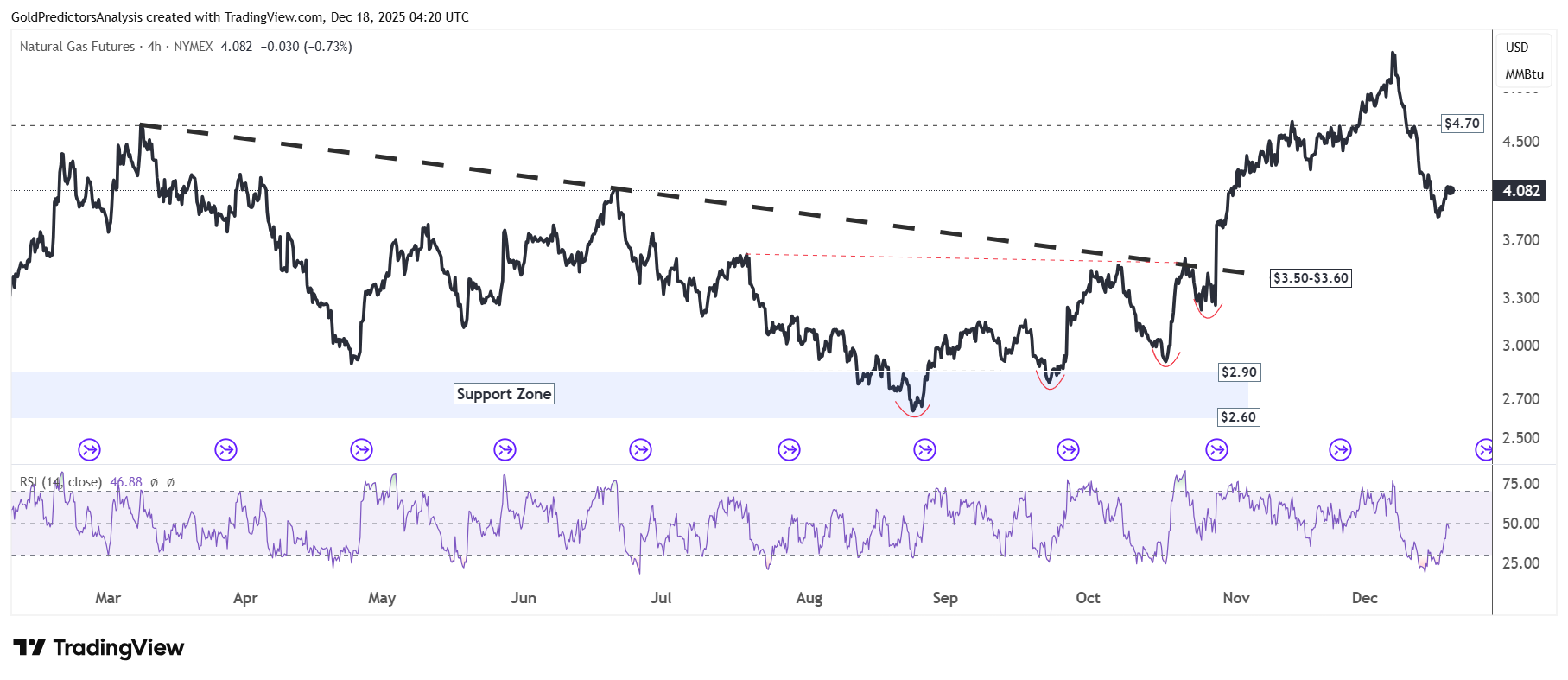
A recovery above the $4.70 level would confirm that the correction is likely complete, and that the uptrend may resume. The emergence of an Adam and Eve bottom pattern above the $2.60 level also suggests a potential long-term bottom structure.
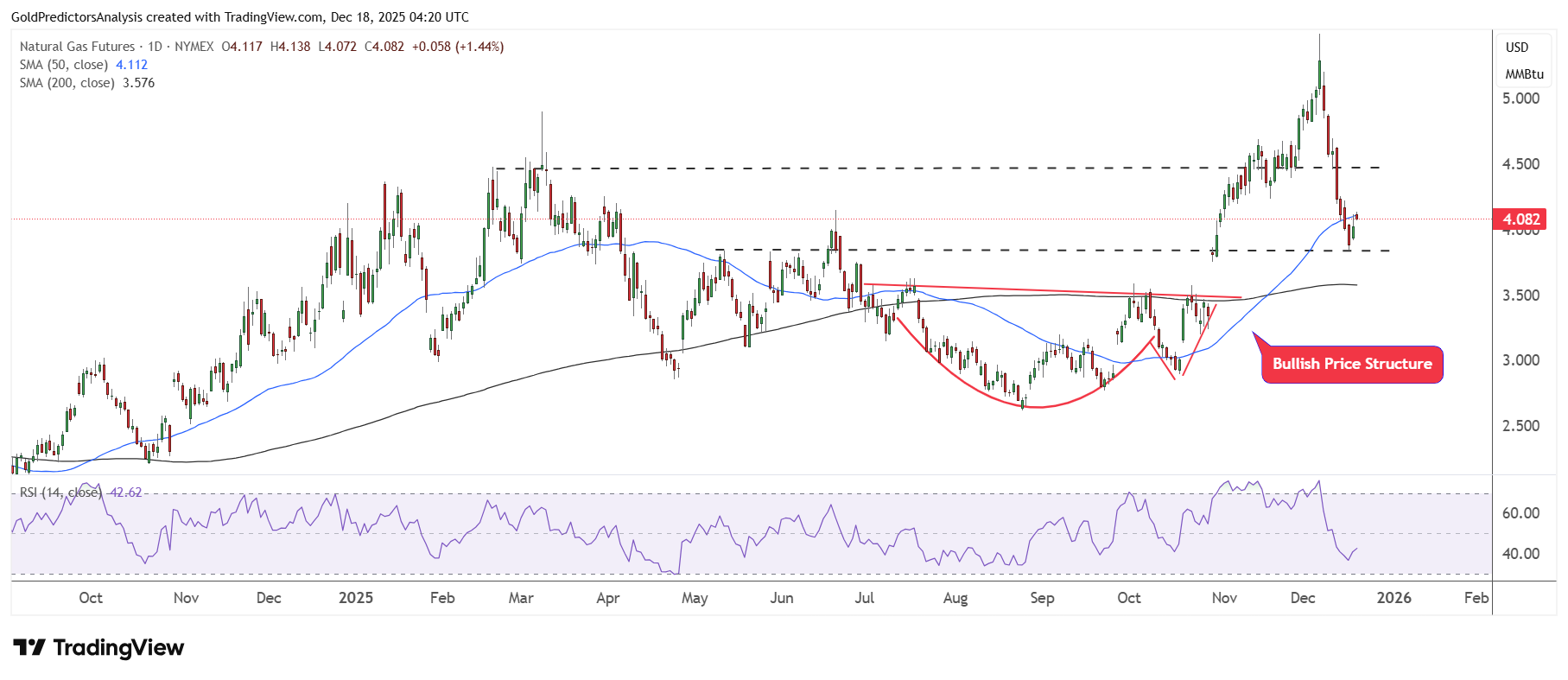
However, a decisive break below $2.60 would invalidate this bullish setup and indicate the possibility of a deeper correction in natural gas prices.
The 4-hour chart for natural gas shows that the price corrected from the long-term resistance level near $4.70 and found strong support around $3.82. The overall price structure remains firmly bullish as long as prices stay above the key support zone near $2.60.
A breakout above the $5.50 level would likely trigger a strong rally, potentially driving natural gas prices to significantly higher levels.
US Dollar Index Technical Analysis
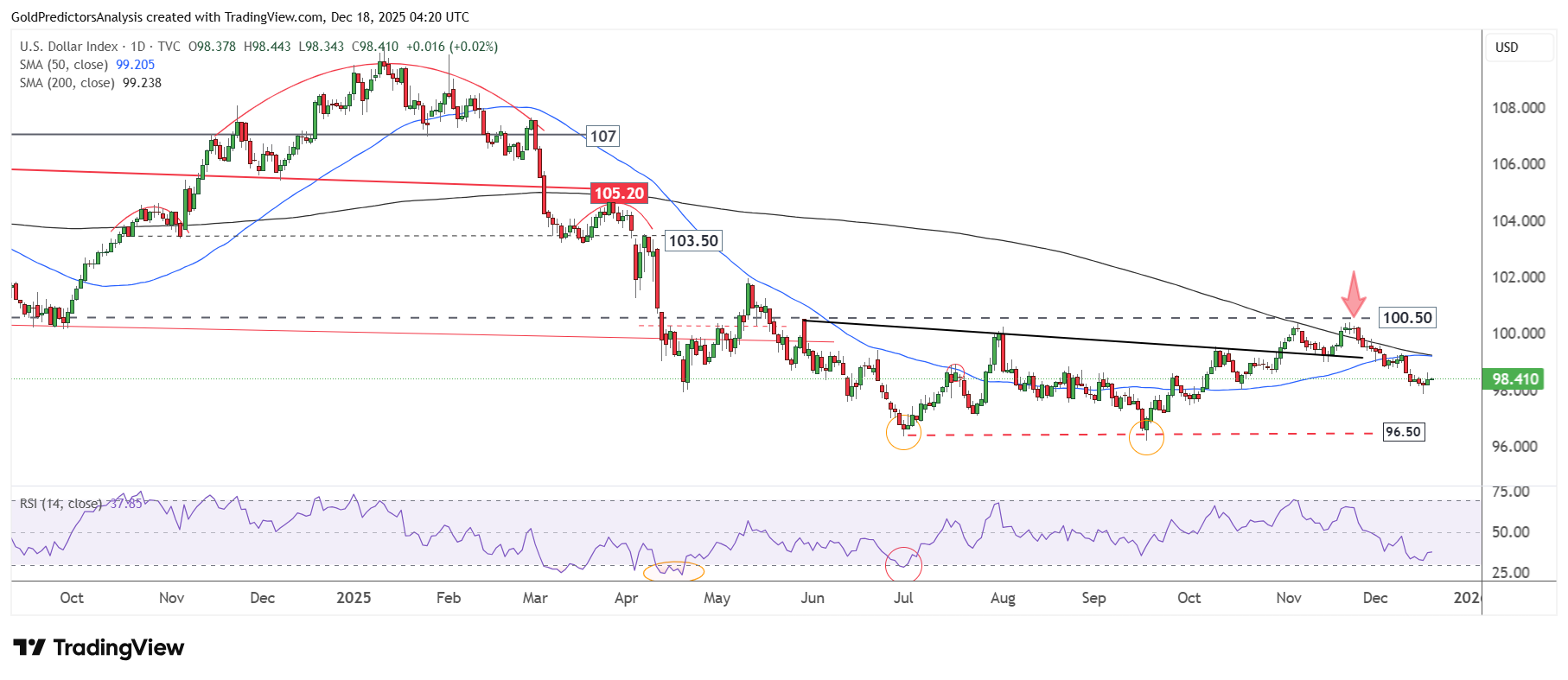
The daily chart for the U.S. Dollar Index indicates that the index remains under bearish pressure but held above the key support level at 98.
The price is currently rebounding from this support, facing immediate resistance around the 99.20 area. A confirmed break below 98 would open the door for a decline toward the 96.50 level.
However, a breakout above 100.50 would confirm a bottom formation and could trigger a rally toward the 102 regions.
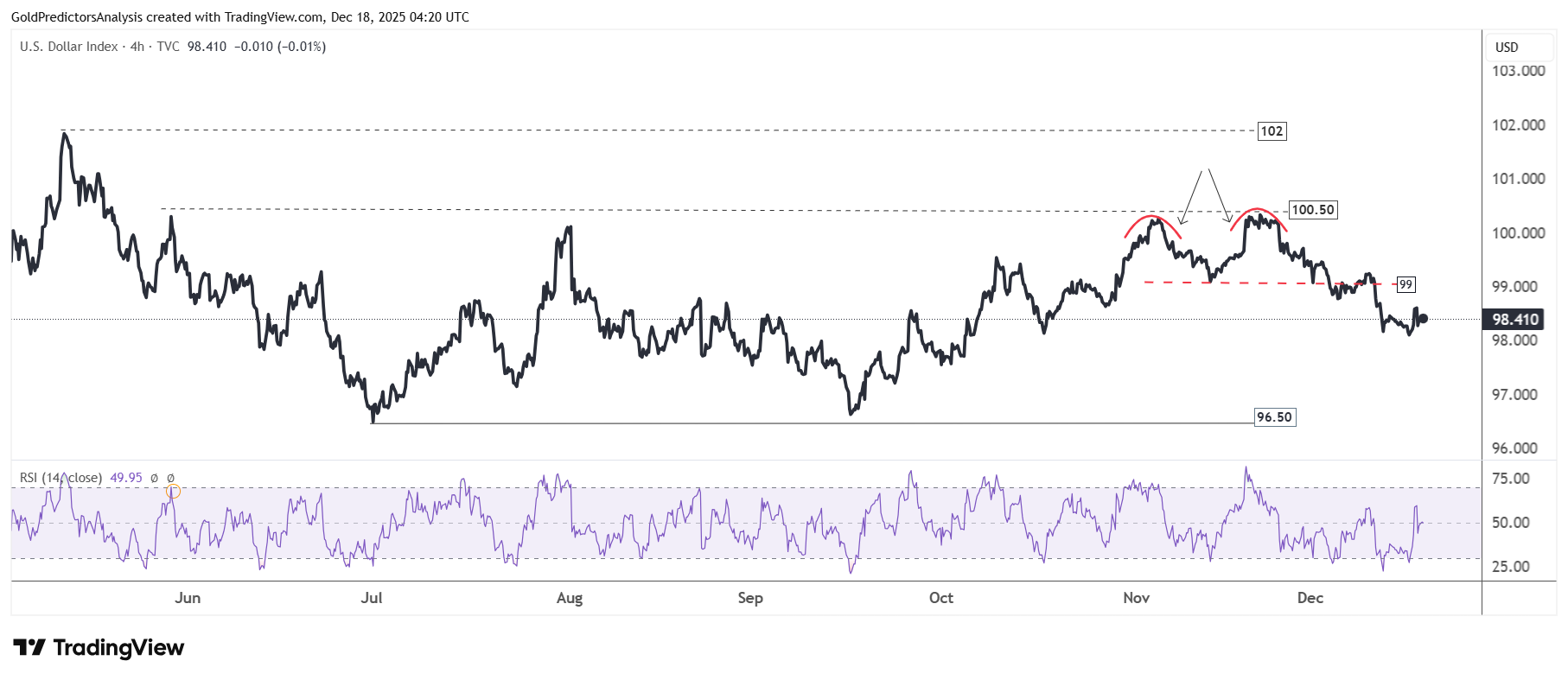
The 4-hour chart for the U.S. Dollar Index shows continued bearish momentum after forming a double top and breaking below the 99 level. The index tested the 98 support level, rebounded slightly, and is now consolidating near that zone.
A confirmed break below 98 would likely trigger a sharp decline toward lower levels. Conversely, a breakout above the 100.50 level would invalidate the bearish structure and signal the start of a strong rally.