
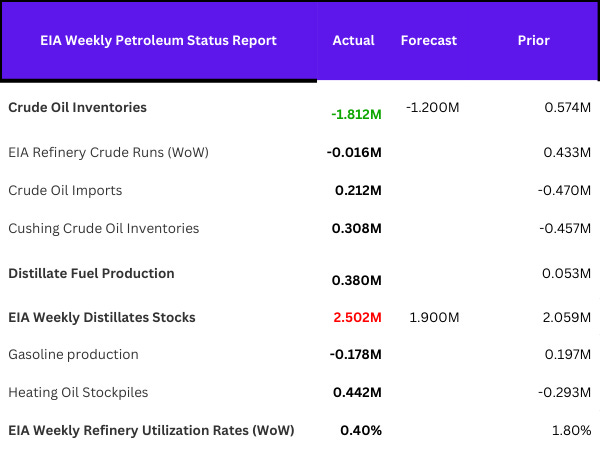
Crude oil prices fell sharply last week, with WTI down 4.4% to close at $57.44, as prices failed to hold above the $60 mark despite a significant drop in crude inventories. Beneath the surface, EIA data reveals a less favorable situation: distillate inventories have risen aggressively, refineries have slowed production, and barrels continue to accumulate where the market does not want them.
In situations like this, apparent optimism masks a deeper imbalance, suggesting that this movement is likely not over yet.

Beware of the Bull Trap
The market is finally starting to realise that Glut or no Glut, you don’t want to be a turkey at Christmas. In simple terms, you don’t want to be long while there is so much supply in the face of hard data of builds globally. The demand picture is the Global Western hemisphere is also done for. Don’t take my word for it- here is what the Trafigura Chief Economist said:
That drove oil markets certainly for a while…then the third one emerging markets really to me, you know, I think has been the bright spot where we’ve seen continued growth; and that’s offset some of the uncertainty elsewhere. And I think that continues to be a big theme for commodity markets not just this year but every year going forward.
-Saad Rahim- Trafigura Chief Economist.
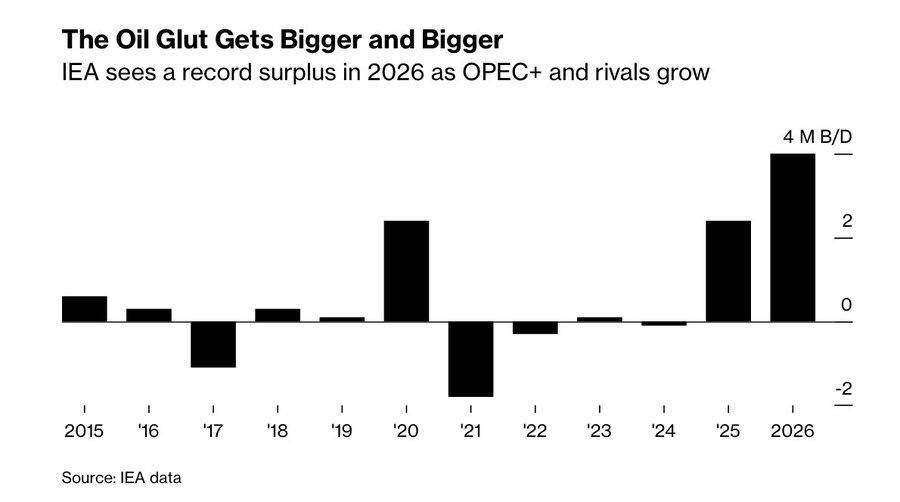
We are now starting to see the rise of The Glut stutter and consolidate at current levels. Enhanced Russian seaborne activity sanctions may re accelerate the glut. But for now, we are starting to see the signs that the glut is going into storage.
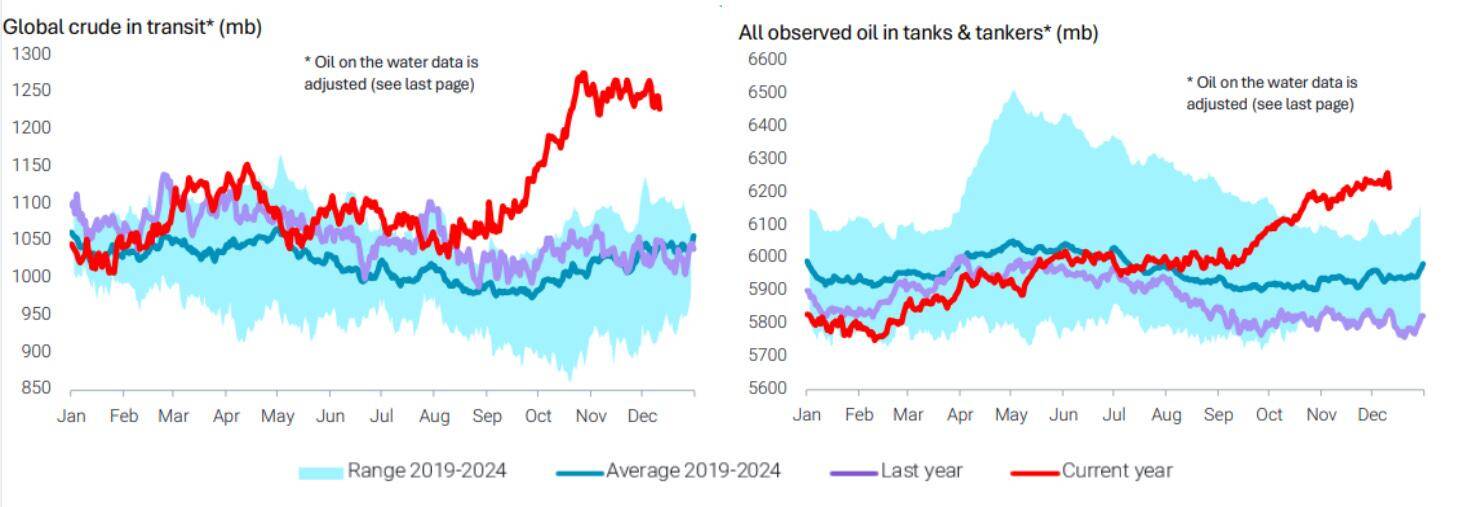
Now that the clod snap for North America is priced in (last week) and priced out (this week), we can see an acute change in LNG at sea coming into land. And Nat Gas prices this week at Henry Hub tell that story.
Make Oil Exploration Great Again
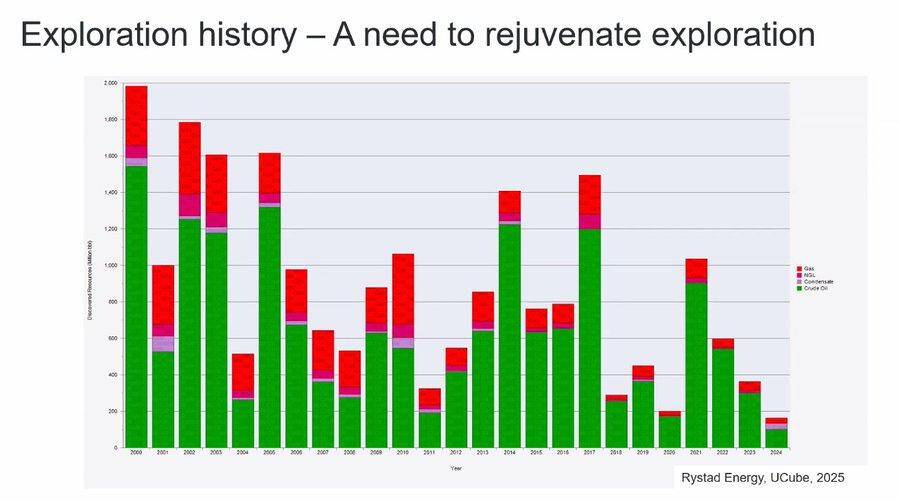
My dad was a senior driller in oil exploration for fifty years. He was on a rig right up until the last three months of his life. He spent those decades bouncing around the world, onshore and offshore. In the later years he specialized in deepwater – high-pressure, high-temperature wells, the hard end of the business.
Brent Oil Price Forecast
Every new Brent Oil analysis as it publishes, today's technical signal and key levels, live price — on one page.
See all Brent Oil forecastsI asked him once, “How much oil is there left out there?”
This is a man who spent half a century looking at seismic and geothermal data from all over – and then going out and drilling it.
He thought for a moment: “About two, maybe three hundred years’ worth.”
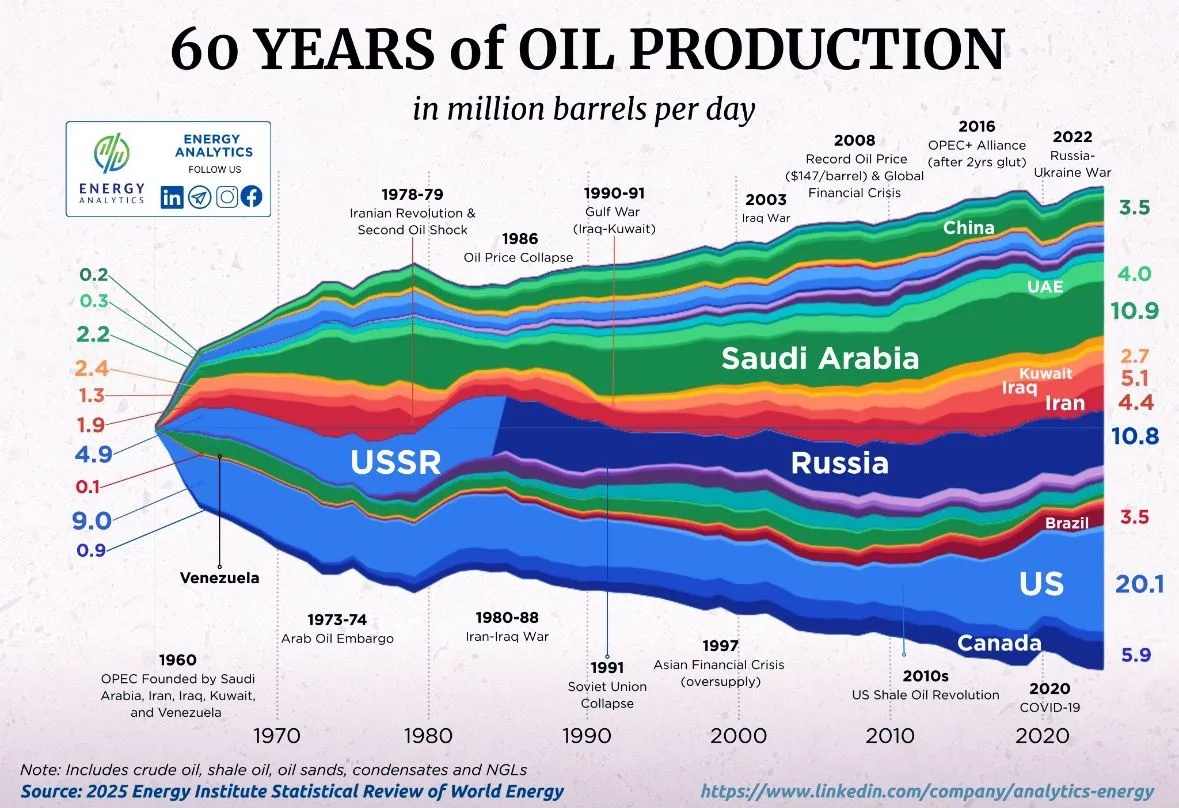
The point of that story isn’t that his number is exact. It’s that someone who devoted his life to finding oil did not believe we’re about to run out, or that demand is about to vanish any time soon.
Yes, transportation demand will decline over time. But petrochemical feedstock demand – medicines, plastics, fertilizers, industrial chemicals – doesn’t just disappear. As transport demand rolls over while new barrels increasingly come from deeper, tighter, more complex reservoirs, core demand persists while the barrels themselves get harder and more expensive to produce.
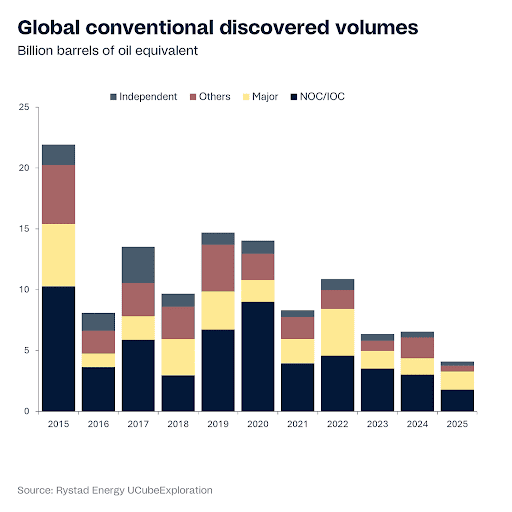
That sets up the next phase. Once we chew through this short-to-medium term glut, the cost of getting a barrel from reservoir to refinery is likely to rise significantly. AI can only help to a certain level. Prices will have to move higher to clear the market and cover structurally more expensive upstream and refining, at least until the industry grinds costs back down.
The implication is simple: petrochemical end products will tend to run ahead of headline inflation, and some high-cost regions will simply be priced out. They’ll rely more heavily on lower-cost producers, deepening the shift of supply – and pricing power – toward the cheapest barrels.
So the long game is simple.
Even if sectoral demand falls – especially in transportation – core demand doesn’t disappear. It just shifts. As that happens, marginal exploration and production operators get squeezed out. The high-cost, high-debt, late-cycle players go first.
What’s left is a smaller group of operators drilling tighter, deeper, hotter wells. Fewer players, tougher barrels. Those who remain will only invest if they can command a higher premium to cover the rising technical and capital cost of each new barrel. This is your oil to $300 a barrel story. The real risk to this future picture is population decline.
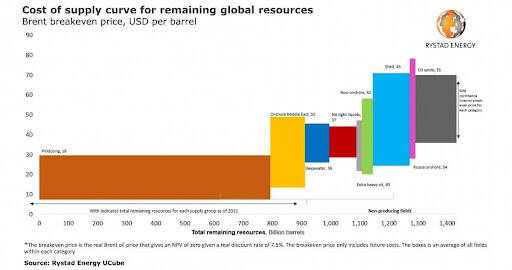
In summary
The market is finally waking up to the risk of being long into a visible glut: inventories are building, Western demand is fading and, as Trafigura’s Saad Rahim notes, emerging markets are now the only real growth engine. Structurally, though, we’re not “running out” of oil – transport demand may erode, but petrochemical and industrial demand will persist even as new supply comes from deeper, tighter, more expensive reservoirs. That squeezes out marginal E&Ps, concentrates production in a smaller group of operators, and pushes up the full-cycle cost of each new barrel. Once the current glut is cleared, that cost structure – not scarcity – is what sets the stage for a much higher price regime. Petrochemical products running ahead of inflation and an eventual path to eye-watering numbers, even $300/bbl in an extreme squeeze.
OECD data are quietly shouting “looser, not tighter”: production is growing about six times faster than product demand, with almost all the incremental consumption coming from the Americas while Europe flatlines and Asia-Oceania shrinks. The demand mix is narrow – jets and LPG up mid-single to high-single digits, diesel and fuel oil flat to negative – which screams travel/petchem strength against soggy freight and industry. Inventories are edging higher year-on-year, and the extra barrels are sitting in the Atlantic Basin (Americas + Europe), undercutting any “global shortage” story even as regional dislocations and spreads still matter. Here are the stats details as below.
- Supply outrunning demand (by a wide margin)
- OECD indigenous crude/NGL/feedstock production in September was up 6.3% y/y and +2.2% year-to-date.
- OECD net consumption of total products (your demand proxy) was only +1.0% y/y in September and +0.6% YTD.
→ Supply growth is roughly 6x demand growth on the month – a structurally looser OECD backdrop unless non-OECD soaks it up.
- The Americas are the only real demand engine
- OECD Americas total product net deliveries: +1.7% y/y in September, +1.7% YTD.
- OECD Europe: +0.2% y/y, but -0.1% YTD.
- OECD Asia Oceania: +0.5% y/y, but -2.0% YTD.
→ Almost all incremental OECD demand this year comes from the Americas; Europe is treading water and Asia is a drag.
- Demand growth is narrow: jets and LPG vs dead diesel
For Total OECD year-to-date vs 2024:- LPG: +7.1%
- Total kerosene (jet/other): +2.6%
- Total gasoline: basically flat (+0.1%)
- Gas/diesel oil: -0.2%
- Residual fuel oil: -3.8%
→ Growth is planes + petchem; freight/industry barrels are flat to negative.
- Stocks drifting higher – and the builds are in the West
- OECD total oil stocks on national territory rose 1.349 Mt m/m in September to 472.2 Mt, and are about +4.8 Mt y/y vs September 2024 (roughly +1%).
- By region, Sep-on-Sep total oil stocks: Americas +4.3 Mt (~+2.3%), Europe +1.8 Mt (~+1.0%), Asia Oceania –1.3 Mt (~-1.3%).
→ The marginal barrel is sitting in the Atlantic Basin, not Asia – helpful for Asian diffs, less friendly for Atlantic cracks.
- Distillate picture: OECD comfortable, US rebuilt from mid-year dip
- Total OECD middle distillate stocks: 206.5 Mt → 210.2 Mt between Sep-24 and Sep-25 (about +1.7% y/y).
- US middle distillate stocks dipped to 18.3 Mt in 2Q25 but recovered to 20.4 Mt in 3Q25 (around +11% q/q and now slightly above Sep-24).
→ The “disty crisis” narrative doesn’t show up in OECD tanks right now – but the speed of the US rebuild is a good reminder that refiners can respond when cracks scream loud enough.
What’s the Next Move?
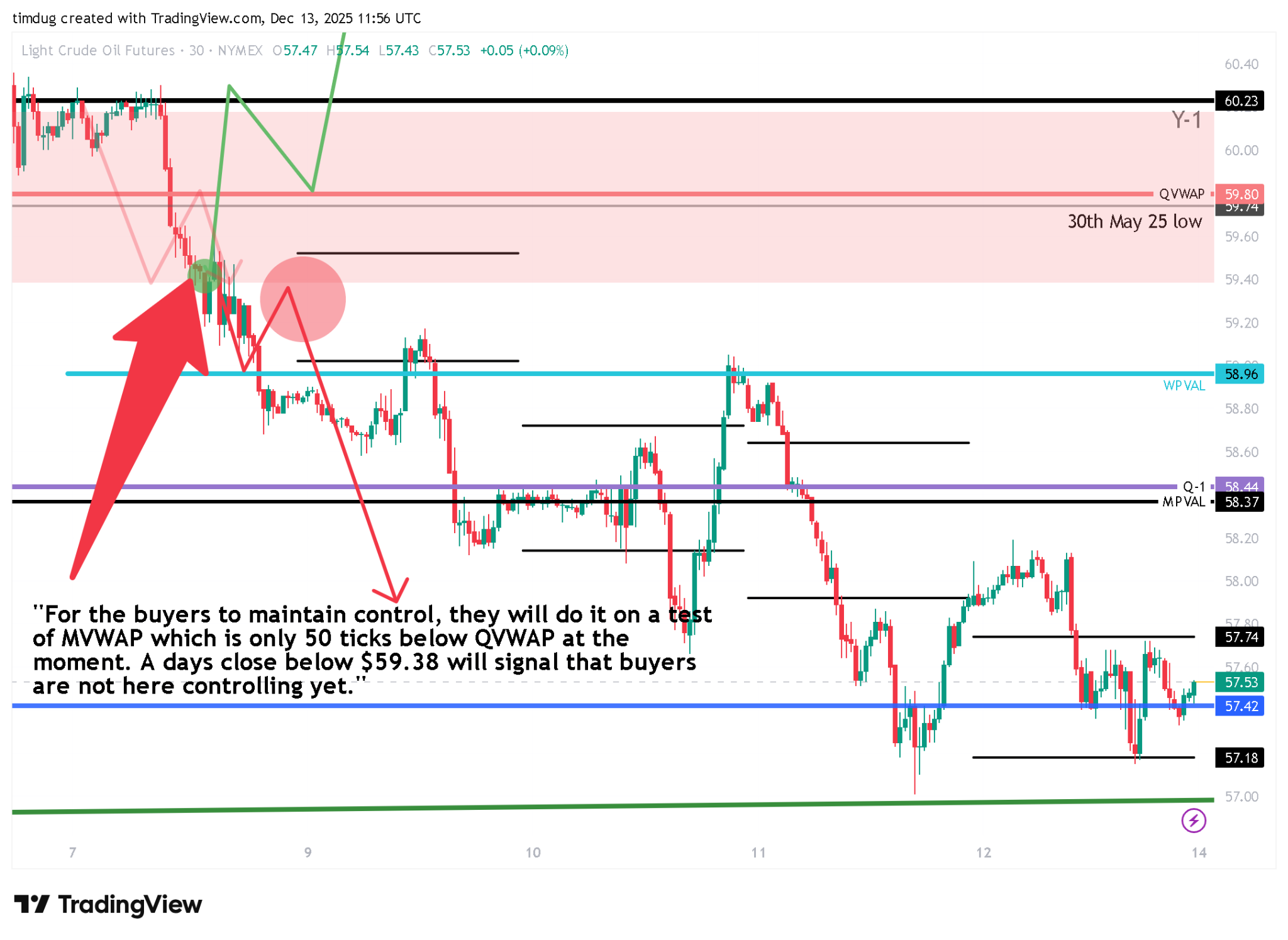
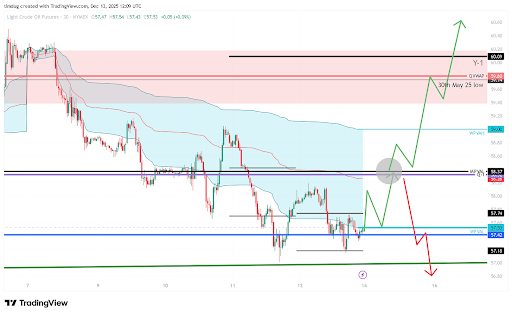
The market was beautiful in one sense last week in that it got the main business done on Monday and Friday. You can clearly see from the image at the top of this report that the signal to exit shorts from the prior week was not there. This allowed us to stay short through to the MPVAL $58.37 and beyond to $57.42. This trend area is where the mega turns of this year have been occurring; see daily bar chart below.
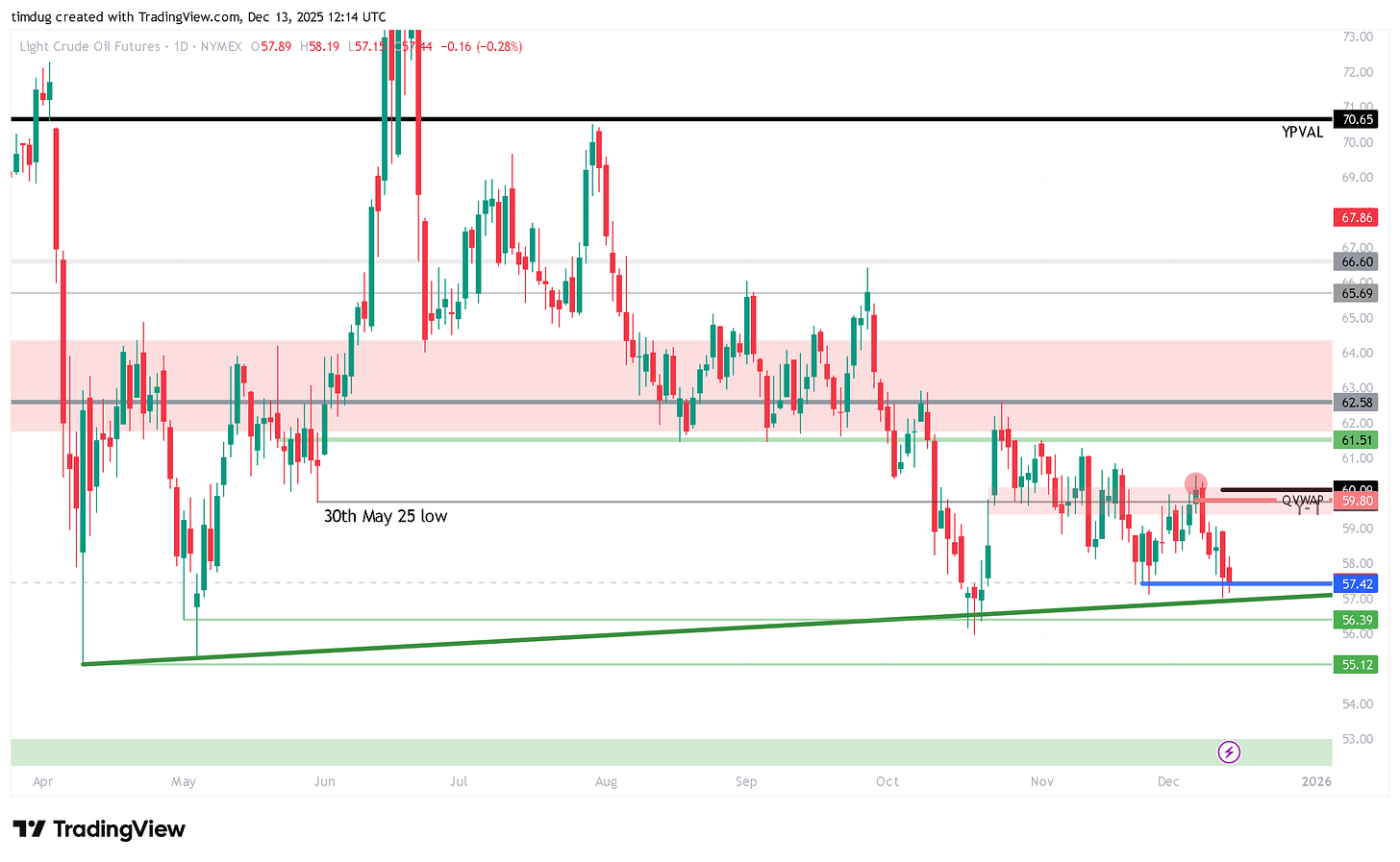
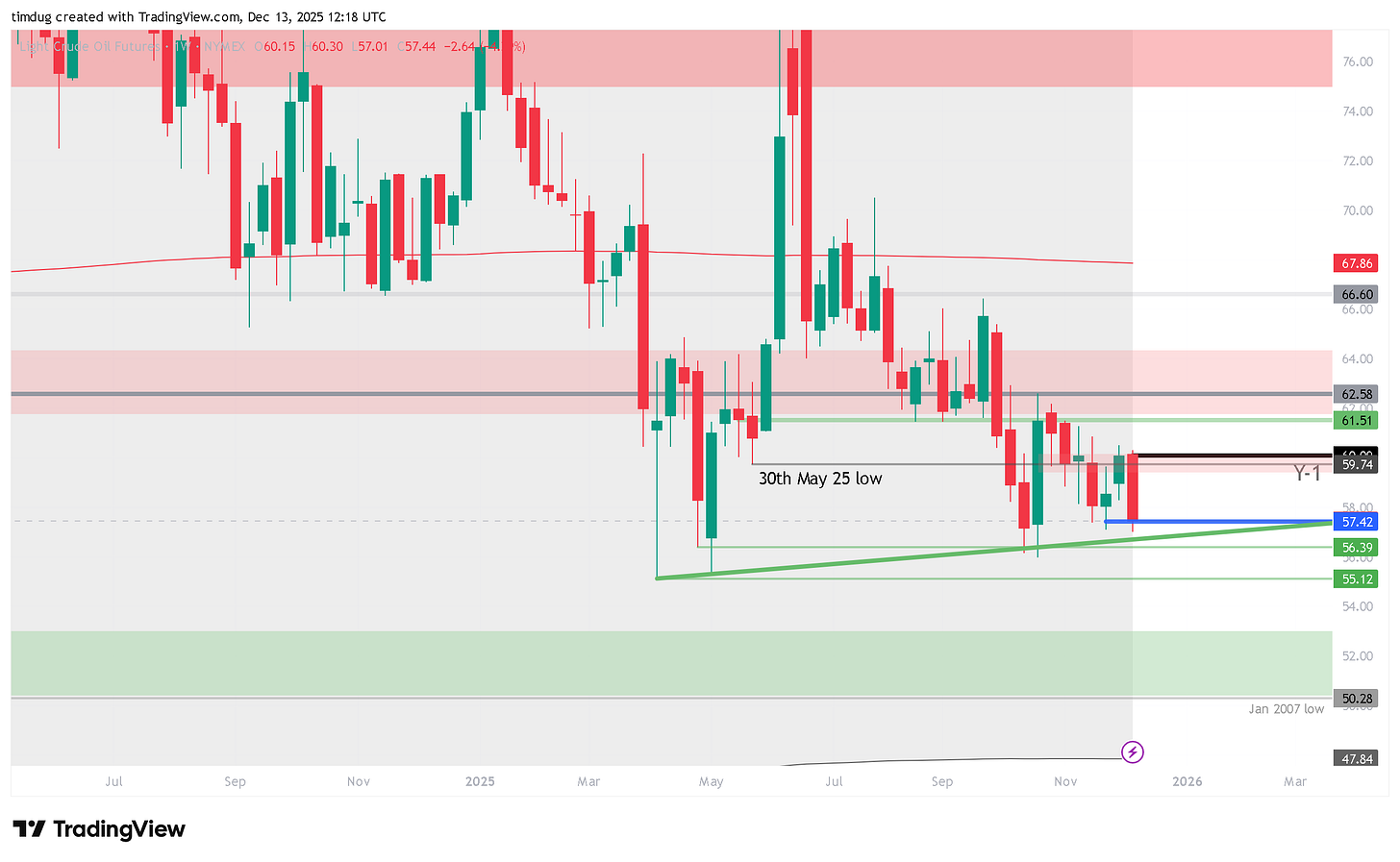
I would like to long this market, however the weight of disinterest in this market to go bid is as strong as I have seen it since COVID 2020 Feb, March, April. From a seasonality point of view, buyers should be stepping in here. I’m not impressed with the current level of buying I’ve seen, but it is there. Having up to date C.O.T would be valuable here- but not available till Jan 23rd.
So to keep it simple, I think we need a new tier 1 macro catalyst at the start of the week to drive us immediately higher- rip town level stuff. The pain trade this week is going to be the long. If we look at the forward curve, it will tell you to stay short- see below.
A Look at the Curve
For a larger swing trade point of view, the current oil curve is so setup that the market simply wants to sell the front of the curve to May 2026 and buy everything after that. Meaning Jan through May 26 contracts will depreciate and June 26 forward go bid.
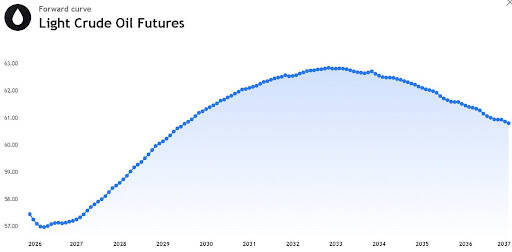
From a pure play trade perspective, I’m trading the V26/J27 spread on the long side and the H/U spread. The V/J spread offers up the longest duration trade. You can stay in this trade until Sept 2026. Long through to April, Short April through September.
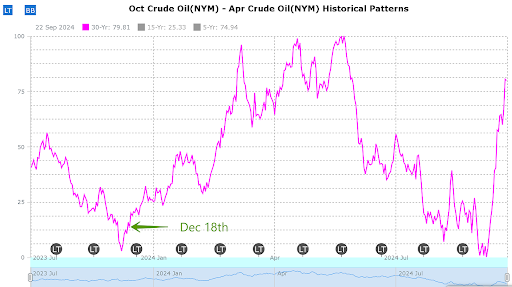
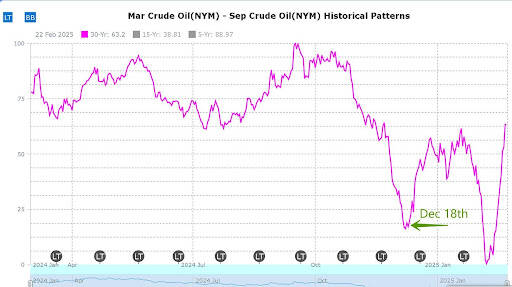
If you are interested in learning about spread trading, get in touch. I think it’s going to be an interesting week in the macro ahoy! Spark points are there- Venezuela? Russia rhetoric against the peace deal? NATO Posturing and talk? Aggressive landings of the glut into onshore storage?
Above all of this is price. Price is truth. Enjoy.