


Copper (XCU), uranium and lithium markets face important support tests after recent declines. The risk of supply in Chile and strong US factory orders may support a recovery in the copper market. Moreover, better electric vehicle sales support lithium demand, but the mining shares still face selling pressure. Uranium also needs stronger investor buying to support a recovery. Higher fuel costs could add to the pressure on copper and lithium producers. In my view, these markets need to defend key support while demand improves. This article presents the key market drivers and technical levels that could shape the next move in copper, uranium and lithium.
Copper, Uranium and Lithium Fundamentals: Supply Risks and Uneven Demand
Chile Supply Risks and US Factory Orders
Copper faces the fresh risk of supply in Chile. Codelco stopped work in the crushing and material handling area of the Radomiro Tomic mine on October 1 after fatal accident.
A longer shutdown could slow ore processing and reduce the supply of copper. This may support prices. Codelco has not said how much production has been affected. But the market impact will depend on how long the shutdown lasts.
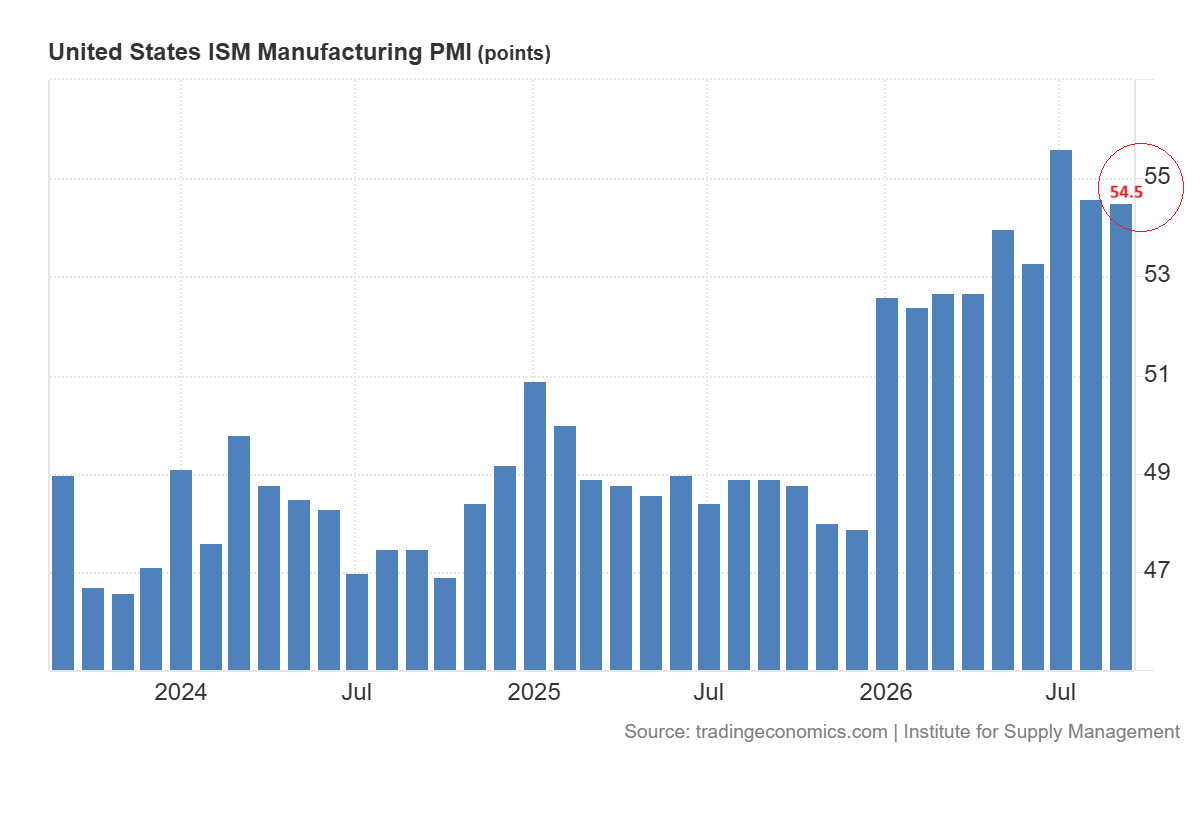
The fresh US manufacturing data also supports the demand for copper. The ISM manufacturing PMI reached 54.5 in September while new orders increased to 55.3 from 53.7 in August. The copper faces a short supply for the third consecutive month. The strong orders suggest continued demand for electrical equipment and machinery.
Investors are still cautious about putting money into Sprott’s uranium fund. In my view, a return to premium would improve conditions for new fund buying while stronger utility contracting would provide a more direct demand signal.
Copper Price Forecast
Every new Copper analysis as it publishes, today's technical signal and key levels, live price — on one page.
See all Copper forecastsLithium Demand: Stronger EV Sales Offer Support
Lithium received a strong demand signal from the latest sales data on electric vehicles. BYD reported a 17% increase in September sales from a year earlier to 463,561 vehicles. The overseas shipments of passenger vehicles and pickups increased 153.9%.
These gains support the outlook for battery demand outside China. But the domestic demand remained weak. The stronger sales in vehicles could help absorb the lithium supply.
China has paused fuel exports for October, except to Hong Kong and Macau. That could mean higher diesel bills for copper and lithium miners. They may have to pay more to run equipment and move materials.
The high costs may discourage production at less profitable operations and offer some support in prices. But they also increase costs for manufacturers that consume metals. The market will therefore weigh possible supply constraints against the pressure on industrial demand.
Copper Price Forecast: $6.50 Support Faces a Test
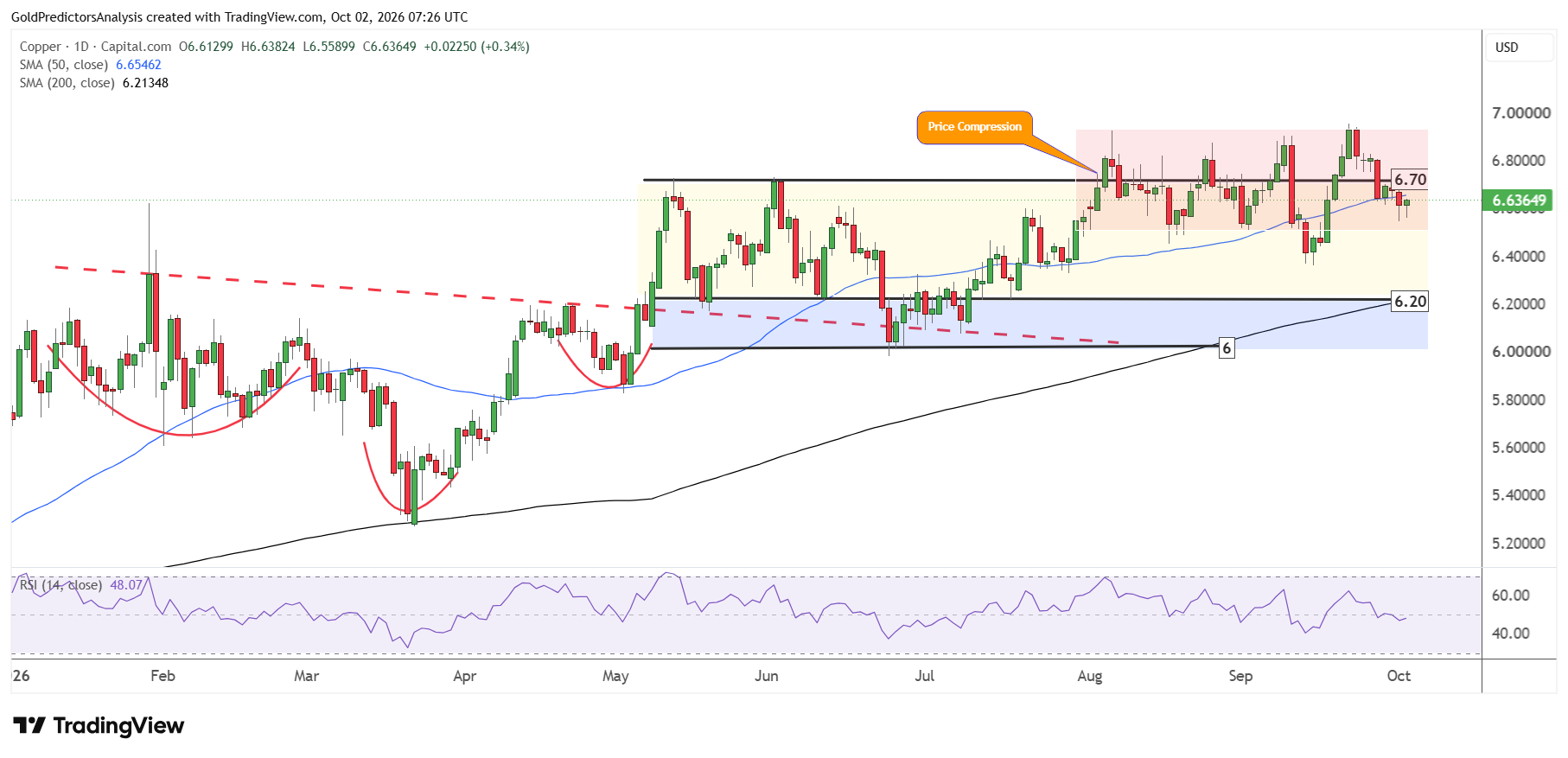
Copper prices dropped after marking a high at $6.95 on 22nd September. The price dropped below the 50-day SMA toward the $6.50 support. This support is defined by the rising trend line that stretches from the March 2026 lows.
A recovery above $6.70 will likely offer another rally towards the $6.95 to $7 area. However, a break below $6.50 will open the way for further drop towards the $6.20 support.
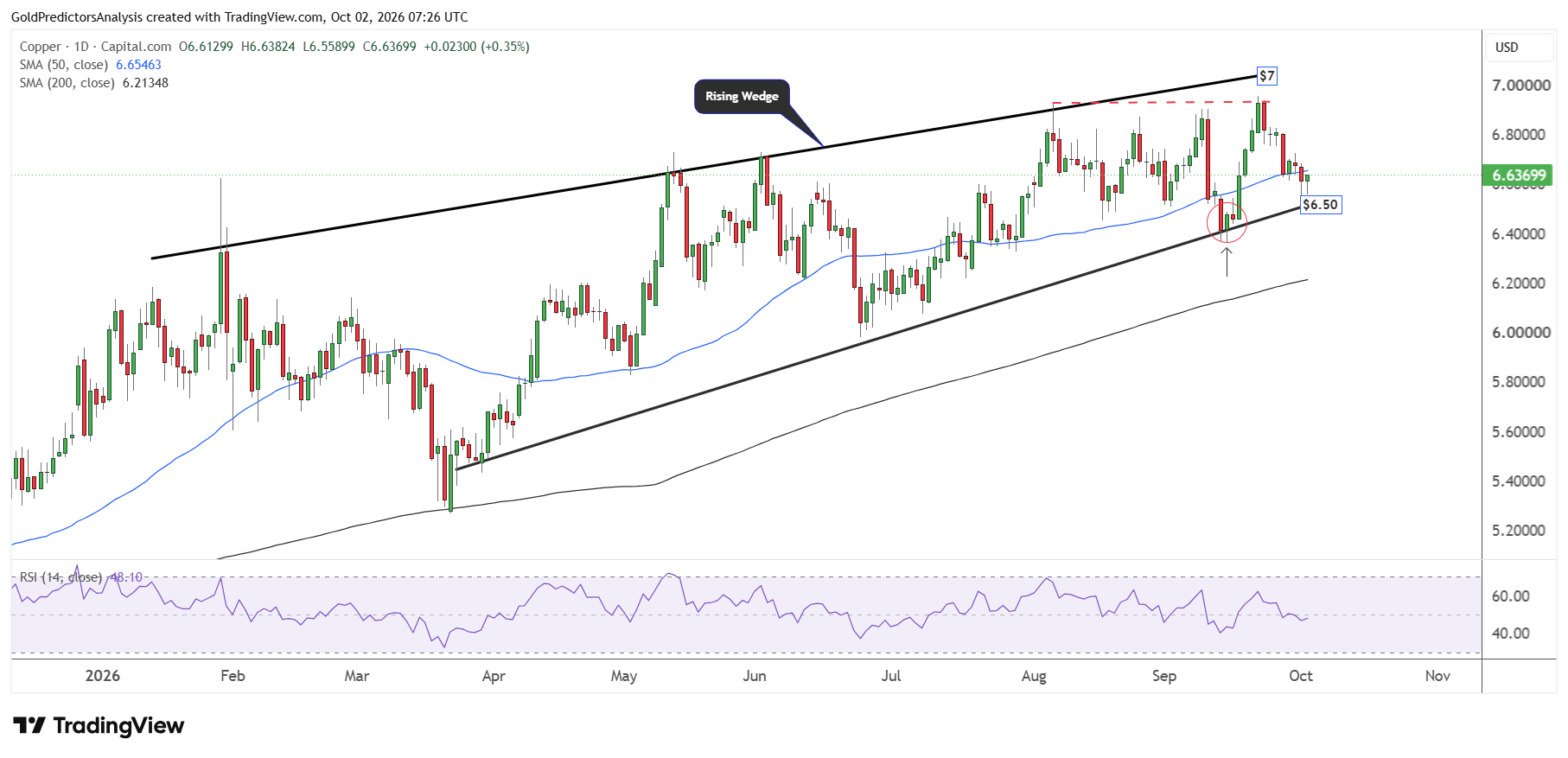
The RSI has broken below the midline, which suggests negative price action in the short term. However, the $6.20 support is defined by the 200-day SMA. A break below the $6 to $6.20 area will likely open the way for a strong drop towards the $5 support.
Overall, the price structure for copper still remains bullish, as prices have been compressing between $6.50 and $6.90. A break of these levels will likely define the next move.
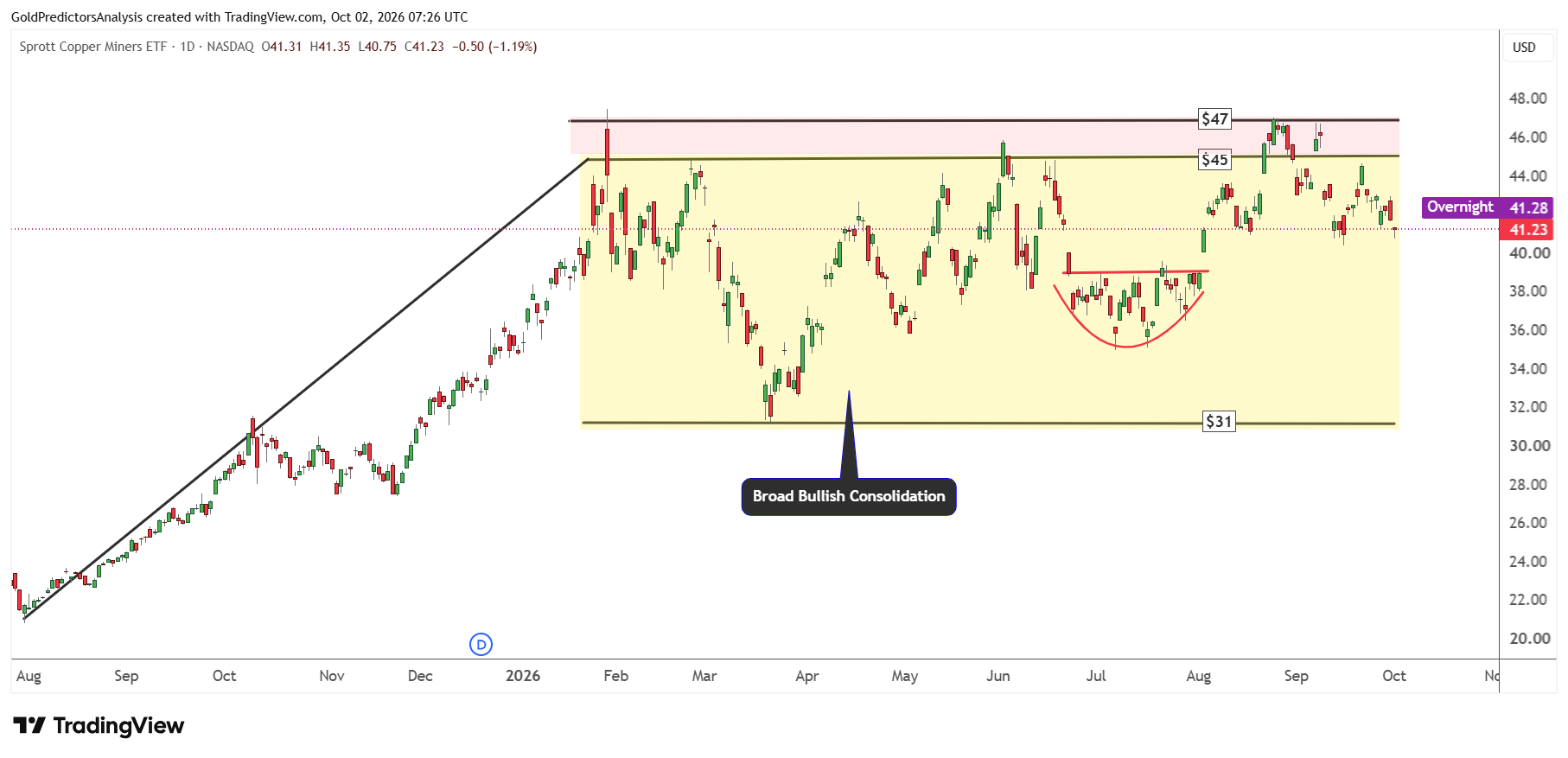
Despite the strong consolidation in copper prices, the Sprott Copper Miners ETF shows negative price action in the short term after rejecting the $47 resistance area in September 2026. However, the ETF price has remained in consolidation between $31 and $45 over the past few months. A break of these levels is required to move the ETF price in the next direction.
The immediate support in the Sprott Copper Miners ETF is $39. A break below $39 will likely open the way for further drop towards the $35 area. A break below $35 will push the price towards the $31 support.
Uranium ETF Forecast: Weakness Persists Near Key Support
Uranium Funds: Triangle and Trend Line Support in Focus
The uranium market also remained weak in September 2026 and approached a strong support area. The chart below shows that the Global X Uranium ETF has reached strong support near $38.38.
A break below $38 will likely push the ETF price towards the $33 area. Meanwhile, the price is trading within a triangle pattern. A break above $52 is required to push the ETF price higher towards the $60 region.
The Sprott Uranium Miners ETF is also trading within a triangle formation after marking a high in January 2026. The price is now approaching the lower support band of the triangle near $47. A recovery above $56 will likely offer a strong rally towards the $75 resistance. However, a break below $46 will likely offer further downside towards the $35 support.
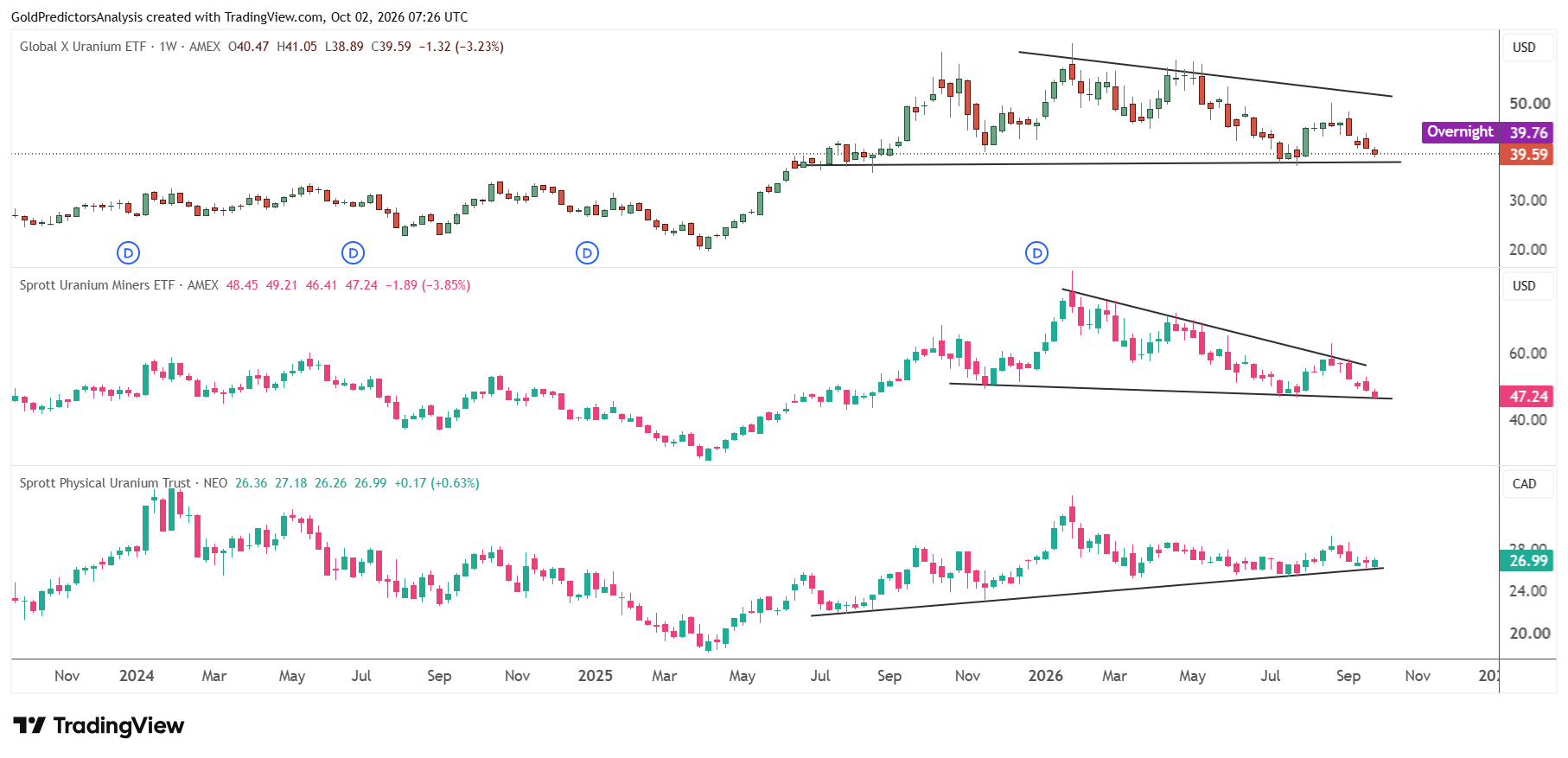
The Sprott Physical Uranium Trust is also trading around the support of the rising trend line that stretches from the July 2025 lows. A recovery above $29 will offer another rally towards the $33 area. On the other hand, a break below $25.40 will likely push the trust’s price further down towards the $20 support.
Uranium Equity Basket: September Losses Put $4,200 in Focus
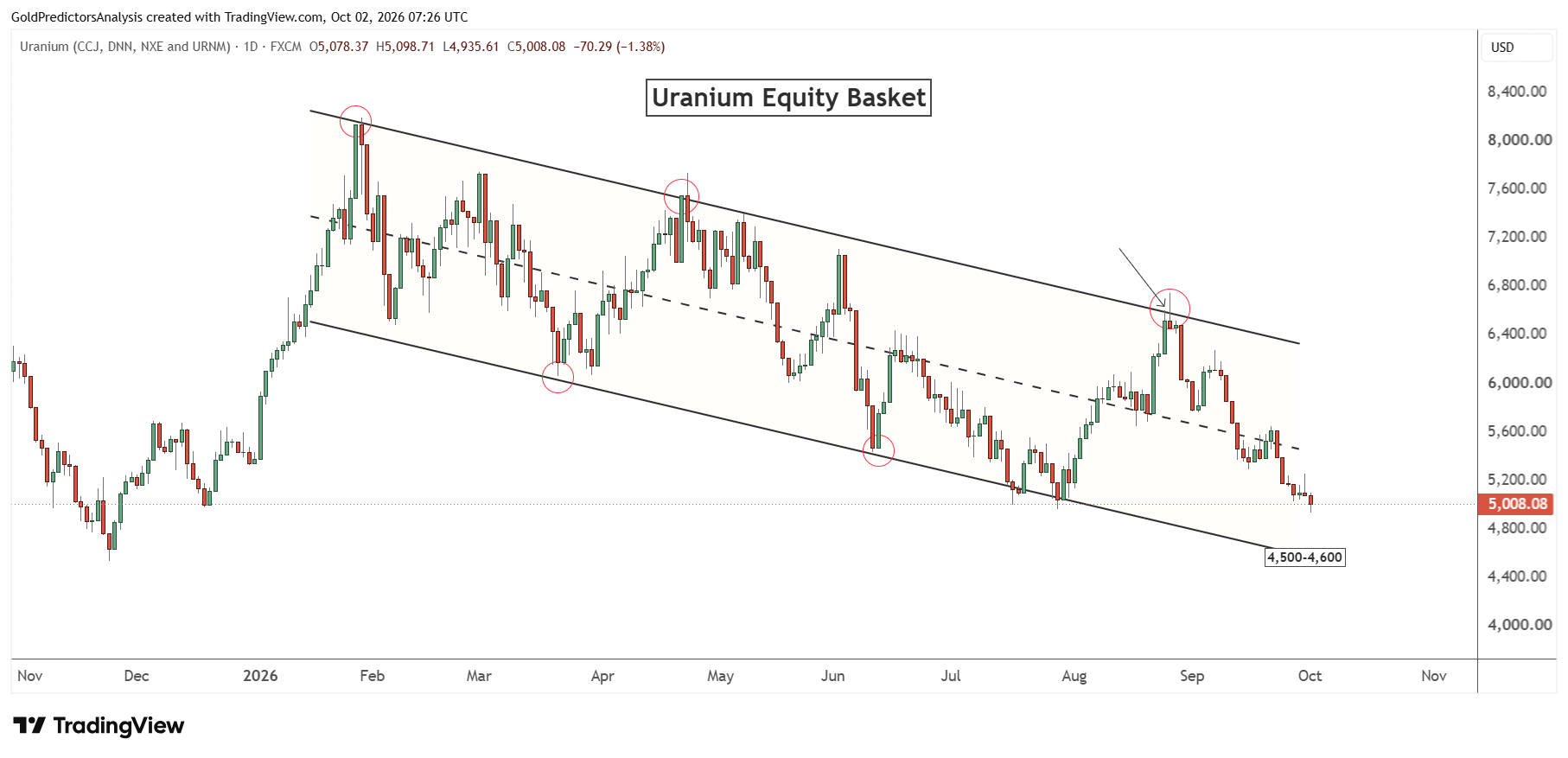
The weakness in the uranium market is also observed in the uranium equity basket, as seen in the chart below. The rejection at the resistance of the descending channel pattern has produced bearish pressure towards the strong support area between $4,500 and $4,600.
As long as the $4,500 support holds, the possibility of another rally towards $6,200 is high. A break above $6,300 will open the way for further rallies towards the $7,000 level.
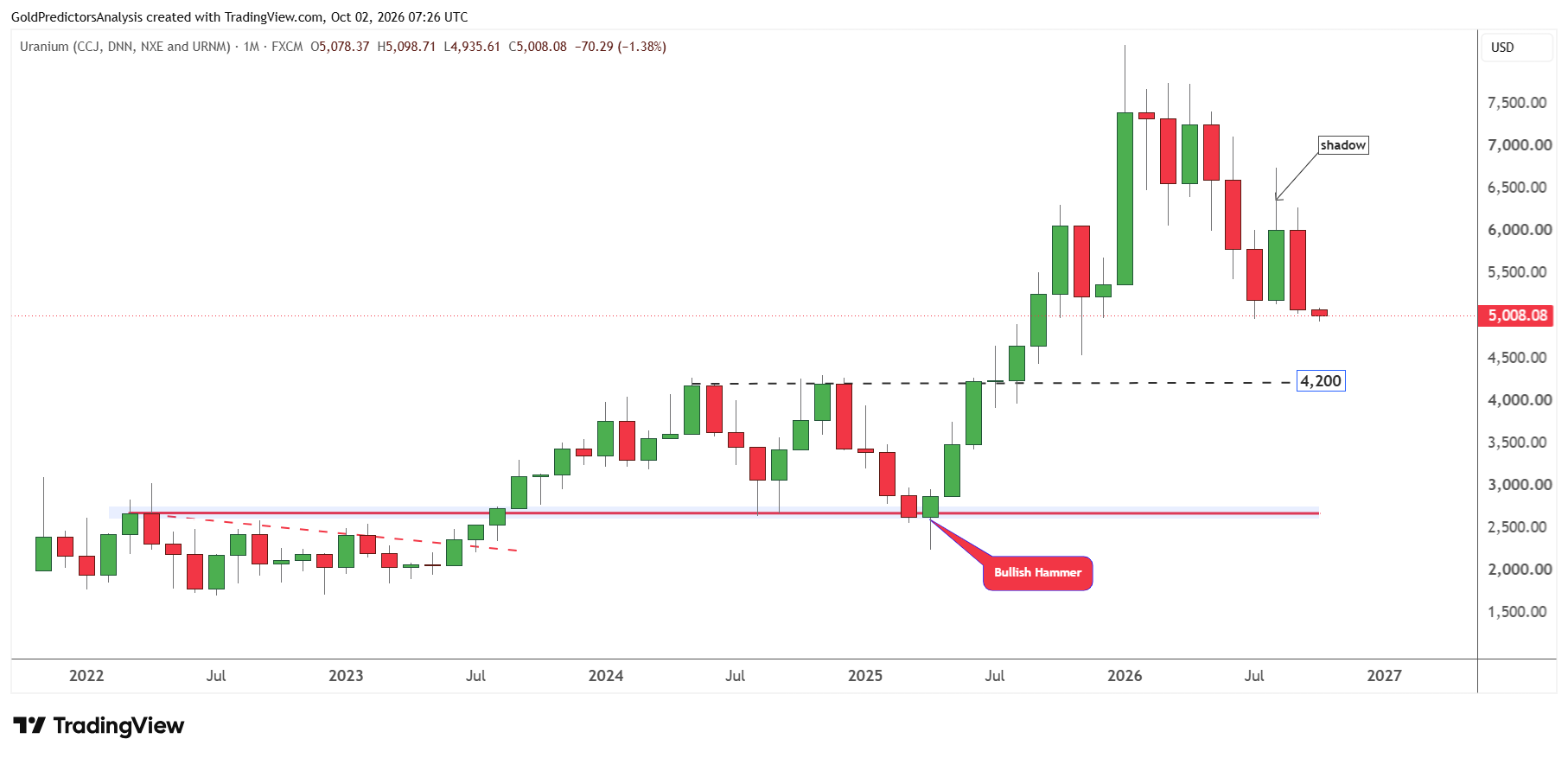
The bearish pressure in the uranium equity basket is also observed on the monthly chart below, which shows a 15.56% loss in September and suggests another drop in October towards the $4,200 level. However, as long as the $4,200 level holds, the possibility of another rally higher towards $7,000 remains in the long term.
Lithium ETF Forecast: Selling Pressure Threatens Key Support
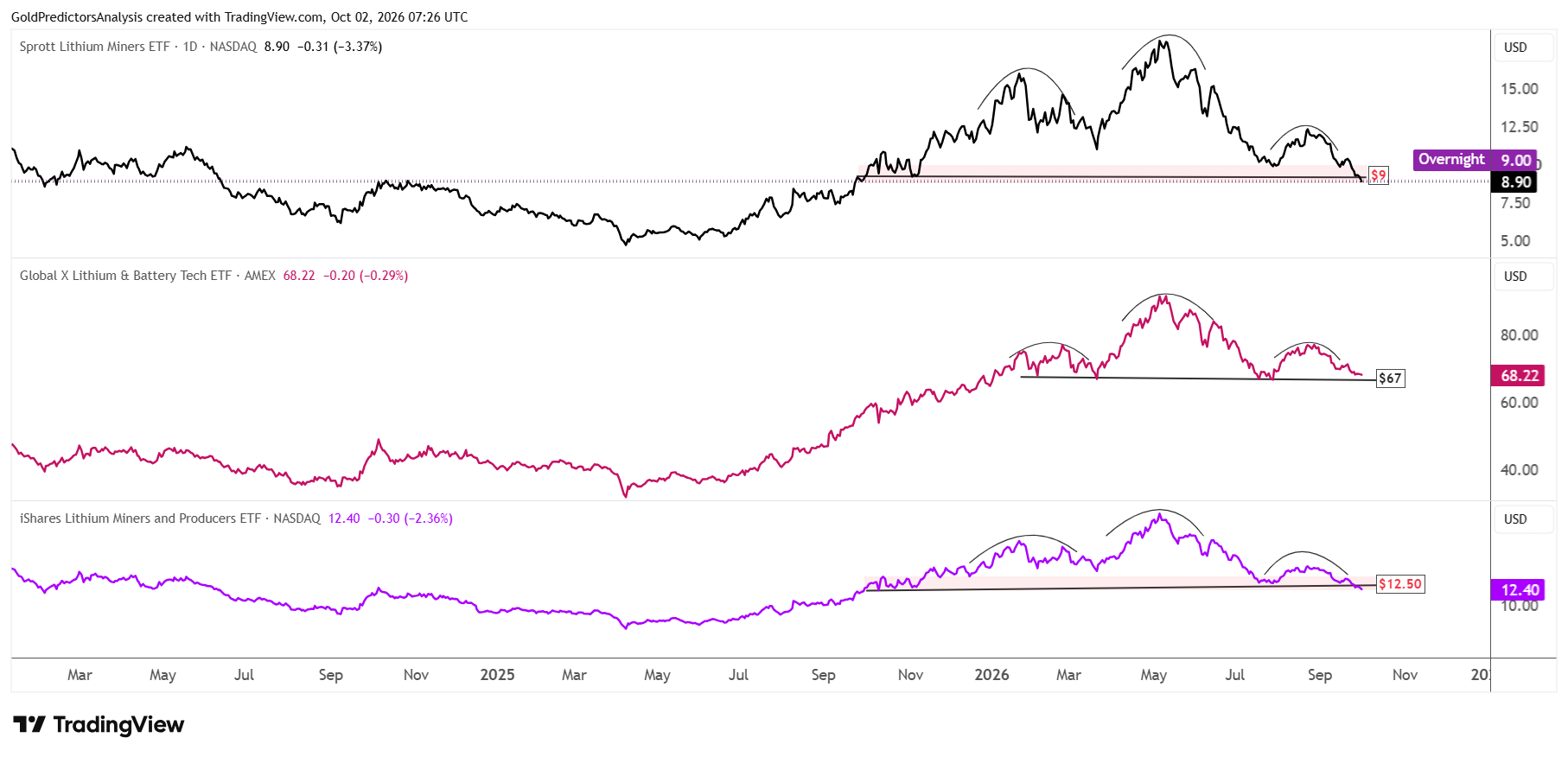
The lithium market also remains under bearish pressure. The chart below shows that the Sprott Lithium Miners ETF is attempting to break the support of $9. This is a strong support area in the long term. This breakdown will likely open the way for a strong drop towards the $6 to $7 area.
Meanwhile, the Global X Lithium and Battery Tech ETF is also approaching the key support at $67. A break below this support will likely push the price towards the $55 support.
On the other hand, the iShares Lithium Miners and Producers ETF is attempting to break the $12.50 level. This will likely push the price further down towards the $9 support.
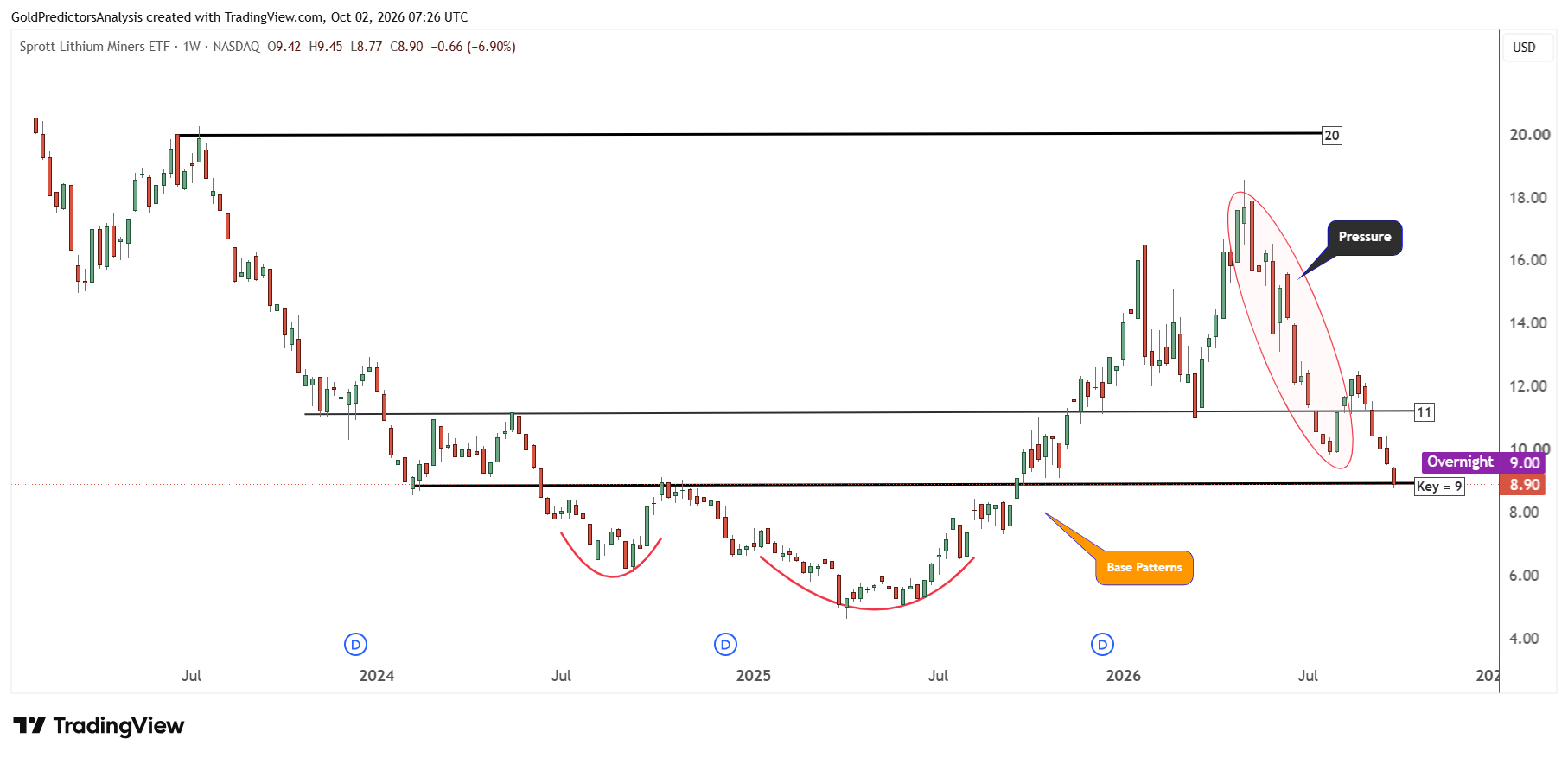
The strong bearish pressure in the lithium market is observed using the Sprott Lithium Miners ETF, which has been continuously dropping after marking a high at $12.49 in the last week of August.
The continuous weekly decline suggests extreme bearish pressure in the lithium market. A break below $9 will likely offer a strong drop towards $7.50 as the immediate target.
Key Levels to Watch for Copper, Uranium and Lithium
Copper may receive some support from the risk of supply in Chile and strong US factory orders. But the consolidation in a tight range between $6.50 and $6.90 suggest uncertainty in the short term. A break above $6.70 could bring the $6.95 to $7 area back into view. But a break below $6.50 would instead put the $6.20 support at risk. The impact of the Chilean shutdown will depend on how long it lasts and how much production it affects.
Uranium and lithium funds also face important support tests. The strong investor buying and new fuel contracts could support a recovery in uranium. Moreover, the better electric vehicle sales support lithium demand, but the mining shares still face selling pressure. In my view, these markets need to stay above key support while demand improves. A break below the key support would increase the risk of further decline in copper, uranium and lithium markets.