


Ore mined at Mexico’s Juanicipio averaged 330 grams of silver per tonne last quarter, down from 426 a year earlier, and poorer rock helps keep silver supply slow to grow, which supports the long-term case for silver.
Juanicipio is not the only one. At several named mines, each tonne of rock now yields less silver than it did a year ago. The companies are still meeting their production forecasts, with some help from newer mines such as Endeavour’s Terronera. That is a positive for silver over the next year, because miners are having to work harder just to meet their own forecasts. One test is still open. Mining costs for the quarter arrive with company results over the next week, and steady costs alongside steady output would count against the case for silver.
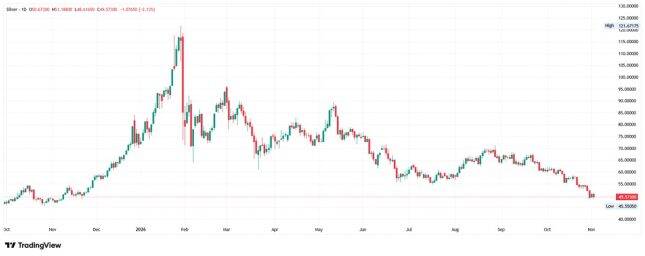
Silver is back above $50. USAGOLD’s report this morning put silver at $50.32 an ounce, after a dip to $48.62 earlier in the session. Gold was at $3,962.72, which puts the gold-silver ratio at 78.75. That ratio is the number of ounces of silver one ounce of gold buys. Prices have been weighed down by the chance of another Fed rate rise in December. At Golden Meadow®, I follow what the mines report as closely as the price, because supply changes far more slowly than interest-rate expectations.
Why Poorer Ore Matters to Silver
Miners call the amount of silver in each tonne of rock the grade. When the grade falls, a mine has to dig and process more rock to produce the same silver. That costs more, and it makes it harder for supply to rise when the price does. In Silver Rising, I treat falling grades as part of the long-term case for silver.
This newsletter has carried one test for the miners since August. If silver miners meet their production forecasts at flat or falling costs for two quarters in a row, that counts against the case. It would show supply answering the price without strain.
What the Third-Quarter Reports Show
Fresnillo describes itself as the world’s largest primary silver producer. It mined 10.1% less silver than a year earlier, according to its third-quarter production report. The company’s reported fall was larger, at 11.6%. That figure includes the end of a streaming contract, a deal that gave Fresnillo a share of the silver from another company’s mine. That silver was not Fresnillo’s own output, so I use the mined figure.
The main cause, the company said, was lower ore grades. At Juanicipio, which Fresnillo operates, the silver in each tonne fell by more than a fifth. At Saucito, the company said its updated geological models confirmed narrower veins. Not every mine moved the same way. The grade at the Fresnillo mine itself rose.
Silver Price Forecast
Every new Silver analysis as it publishes, today's technical signal and key levels, live price — on one page.
See all Silver forecastsOther producers also reported lower output or lower recovery. Silvercorp’s Ying district in China produced 41% less silver during work on its safety systems. Its GC mine is now expected to stay shut until around November 2027. Avino recovered less of the silver in its ore than a year earlier. Recovery is the share of the silver that a processing plant manages to extract.
One new mine helped. Endeavour’s Terronera mine in Mexico raised its grade and extracted 91.1% of the silver in its ore in September. Overall, the companies reporting are roughly meeting their forecasts. The table sets out each reading.
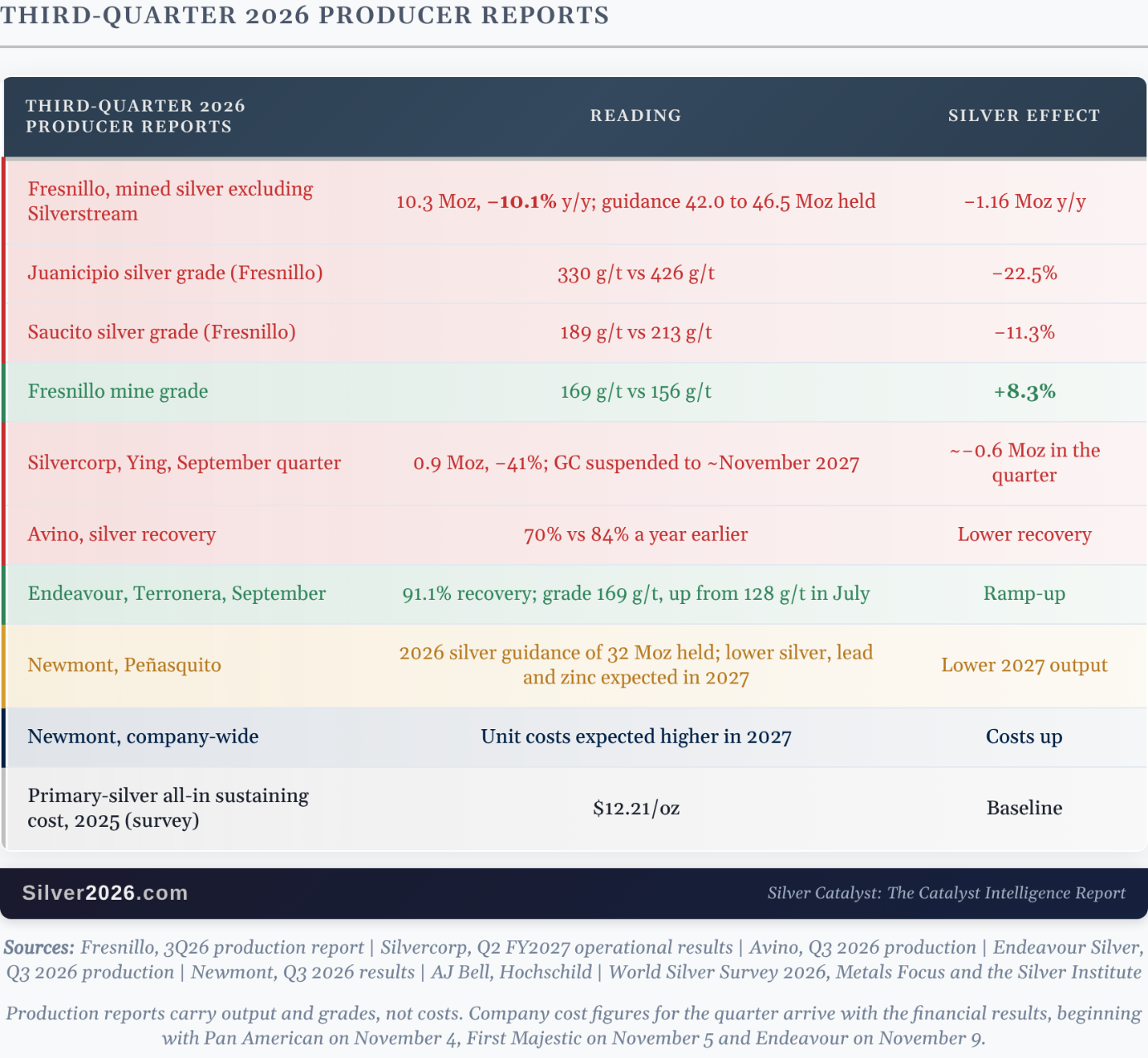
Production reports carry output and grades, not costs. Company cost figures for the quarter arrive with the financial results, beginning with Pan American on November 4, First Majestic on November 5 and Endeavour on November 9.
The Cost Test Arrives This Week
Production reports do not include costs, so the second half of the test cannot be graded yet. The one cost signal so far points toward rising costs. Newmont put the indirect effect of oil on its costs at about $50 million for each $10 a barrel, on top of the direct effect. It also expects its costs per unit of metal to rise in 2027.
On average, primary silver mines, where silver is the main product, still earn wide margins. Metals Focus and the Silver Institute put their 2025 all-in sustaining cost at $12.21 an ounce, and say margins widened. That is the full cost of keeping a mine running, after subtracting the revenue from other metals it sells. An average does not show that every mine is profitable, particularly mines that depend on other metals. Still, no mine was reported closing because of costs during the period.
The counterweight sits in the test itself. Meeting forecasts is half of what it describes. If the results show steady costs as well, the test will have been met for a quarter, and that would count against the case.
What This Means to Silver Investors
The third-quarter reports point to strain at several mines. Grades are falling at named operations, and where output is holding up, newer mines such as Terronera are part of the reason. New mines take years to find, permit and build, so that kind of support does not arrive quickly when prices rise. Over the next year, that is good for silver.
These are company reports, not a count of world supply, so on their own they do not change the overall numbers. Metals Focus and the Silver Institute still forecast a shortfall of 46.3 million ounces for 2026, which would be the sixth in a row. Their interim review, expected in mid-November, will show whether that figure changes.
The grade story also moves on a different clock from the price. This year, a more dangerous world has not helped silver. When conflicts have pushed oil higher, markets have expected more inflation and more Fed rate rises, and silver has fallen. When fear has spilled into stock markets, investors have sold silver to cover losses while gold held up better. Those pressures have pulled silver down over the past few weeks, while grades at named mines have fallen. They act on the price, not on how much silver the mines can produce. You can follow how silver has traded in 2026 alongside the longer-term case as the cost figures arrive.
How silver miners are coping with poorer ore is one dimension of the 100-catalyst framework I analyze in Silver Rising, alongside the four other Deep Dives in this issue of the Silver Catalyst newsletter. If you’ve at least considered investing in silver, I strongly encourage you to sign up, because it takes just $1 to get both. Get full Silver Catalyst Newsletter and Silver Rising book for $1 today.
Thank you.
The Silver Engineer