Silver (XAG) surged in 2025 after breaking decisively above long-term resistance at $50, marking a clear shift in market behaviour. In my view, this move reflects a structural change rather than a speculative spike. It is driven by tightening physical supply, accelerating industrial demand, and a renewed global liquidity cycle. This article examines the macroeconomic forces, technical structure, and intermarket signals that will shape silver’s next significant move into 2026.
Macro Forces Align to Reshape Silver’s Supply‑Demand Balance
China’s Silver Exodus and the Deepening Global Supply Crunch
The supply side continues to deteriorate, and China is at the centre of this shift. Silver inventories in Shanghai Futures Exchange warehouses have plunged to 715 tonnes. This is the lowest level since July 2016. That marks an 86% collapse from the 2020 pandemic peak.
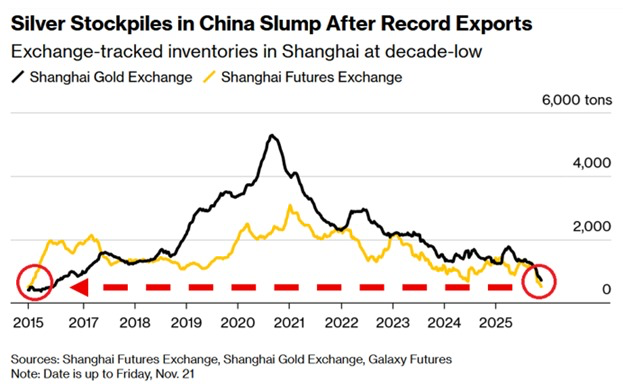
On the other hand, gold stockpiles tell a similar story, having fallen 83% from their 2021 highs to 519 tonnes, the lowest level since December 2015. These record lows are the result of massive exports to London. Severe shortages have triggered a transcontinental squeeze, pushing precious metal prices materially higher.
In October alone, China exported a record 660 tonnes of gold, which is the largest single-month outflow in history. These movements reveal a growing global scramble for physical delivery amid tightening supplies.
However, silver mine production remains flat despite elevated prices. As a result, most new projects are likely to face delays and will not come online before 2027. Moreover, the recycling volumes also remain underwhelming, partly due to inefficiencies in recovering silver from high-tech scrap. This physical tightness is no longer a temporary shock. Therefore, any surge in demand has the potential to trigger extreme spot price volatility and real-world delivery squeezes.
Silver Price Forecast
Every new Silver analysis as it publishes, today's technical signal and key levels, live price — on one page.
See all Silver forecastsSoaring Solar and Tech Demand Reshape Silver’s Future
The demand for solar energy is expected to remain dominant in the coming years. Silver is essential for photovoltaic cells, with each panel requiring approximately 10–20 grams.
Global solar capacity already exceeds 1,500 GW and continues to grow at a double-digit pace. As a result, silver consumption will surpass 200 million ounces annually by the end of 2026. The chart below illustrates that solar PV demand is expected to grow exponentially in the coming years. This rapid growth will further increase pressure on the silver supply.
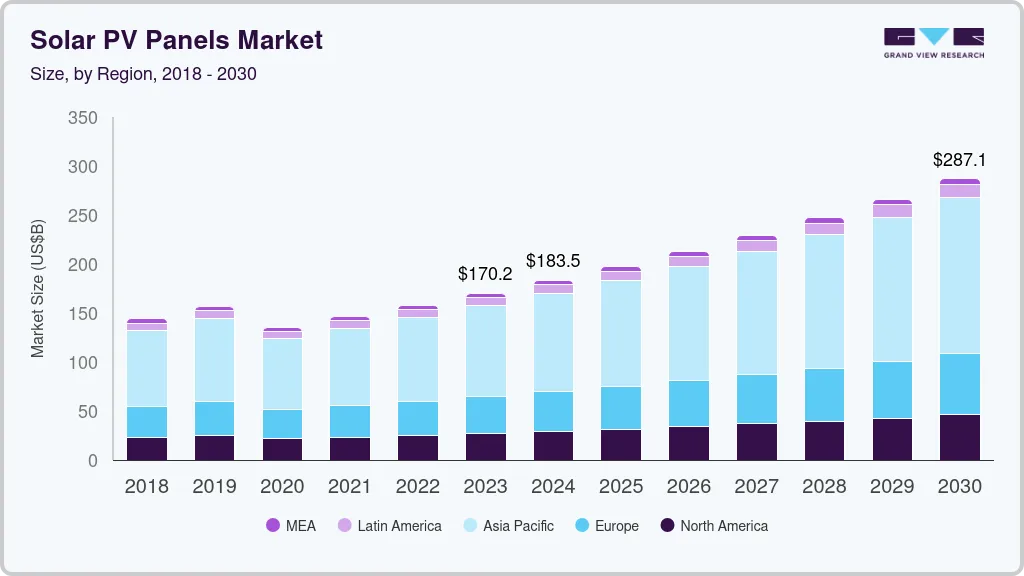
Moreover, electric vehicles, AI data centres, 5G infrastructure, and high‑performance electronics all rely on silver’s unmatched electrical conductivity. Unlike other metals, silver’s properties are tricky to substitute. Attempts to replace silver with copper or aluminium have consistently resulted in performance losses. Therefore, this demand remains both sticky and largely price‑insensitive.
On the other hand, silver is also gaining attention in the medical technology field. Its antimicrobial properties are now a standard feature in post-pandemic healthcare systems. From semiconductors to energy storage, silver has become a critical material, not a luxury.
Stealth QE and Liquidity Shifts Drive Silver’s Monetary Revival
The Federal Reserve initiated Reserve Management Purchases (RMPs) on December 12, 2025. This followed an announcement on December 10, signalling its intent to rebuild bank reserves. Initially, the program launched with purchases of $40 billion per month in short-term Treasury bills. This was significantly higher than the Fed’s projected long-term “neutral” pace of $20 billion to $25 billion per month.
While Fed Chair Jerome Powell maintains these are purely “technical” operations to manage liquidity and not a shift in monetary policy, market scepticism remains. In fact, many analysts have interpreted the program as a form of “stealth QE.” This is because it effectively expands the central bank’s balance sheet.
These policies weaken the U.S. dollar and push the US dollar index below the 99 level. In this environment, silver becomes increasingly attractive as a store of value. The RMP program, combined with tightening physical supply and surging industrial demand, amplifies the case for higher silver prices in 2026.
Silver Breakout Confirms Long-Term Bull Cycle
Cup-and-Handle Pattern Unlocks Decades of Price Compression
The long-term outlook for spot silver shows a strong breakout in 2025. The chart below illustrates that the $50 level has acted as a significant resistance since 1980, with silver trading below this zone for over four decades. Attempts to break above $50 in 2011 were unsuccessful, resulting in a prolonged period of consolidation below this level.
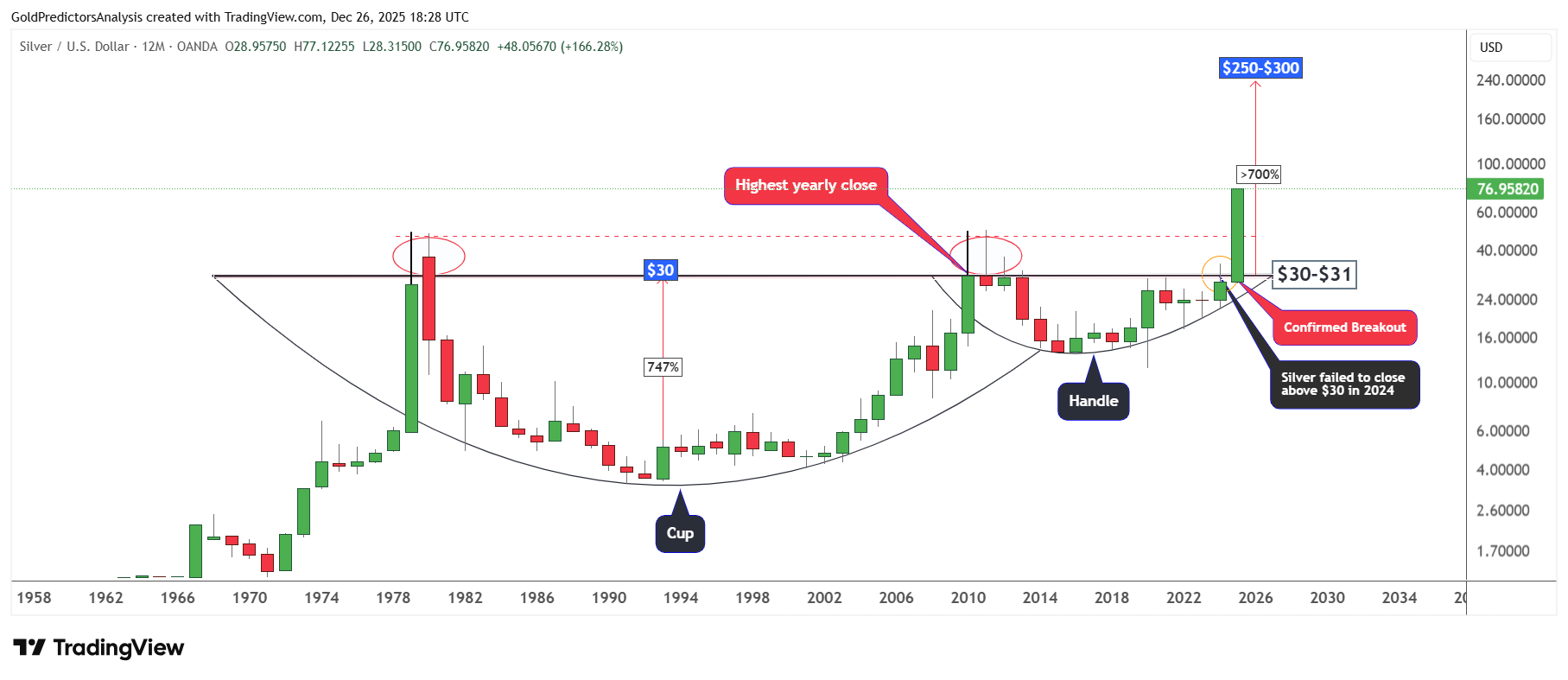
This multi-decade consolidation formed a classic cup-and-handle pattern, which silver broke out of in 2025. Moreover, the $31 level has also served as a pivotal barrier, with no yearly closes above it in the past 40 years. Historically, every break above $31 has been followed by a spike and a sharp drop. However, recent sustained bullish momentum above $30 suggests a potential shift in market dynamics in 2025.
The breakout from the cup-and-handle pattern in 2025 is projected to yield a gain of over 700%, similar to the 747% rally from the 1993 low to the $31 peak. If this move is measured from the $30 breakout level, it points to a potential target between $250 and $300. However, the first major hurdle is the psychological $100 level, which could be tested in 2026. Overall, silver prices are likely to gain further traction in the year ahead.
The cup-and-handle pattern reflects prolonged price compression, with consolidation below the $50 level acting as a pressure-building phase within the cup. The breakout in 2025 resembles an explosive release of that built-up momentum. The chart below highlights the silver boiling action within the cup before the explosion.
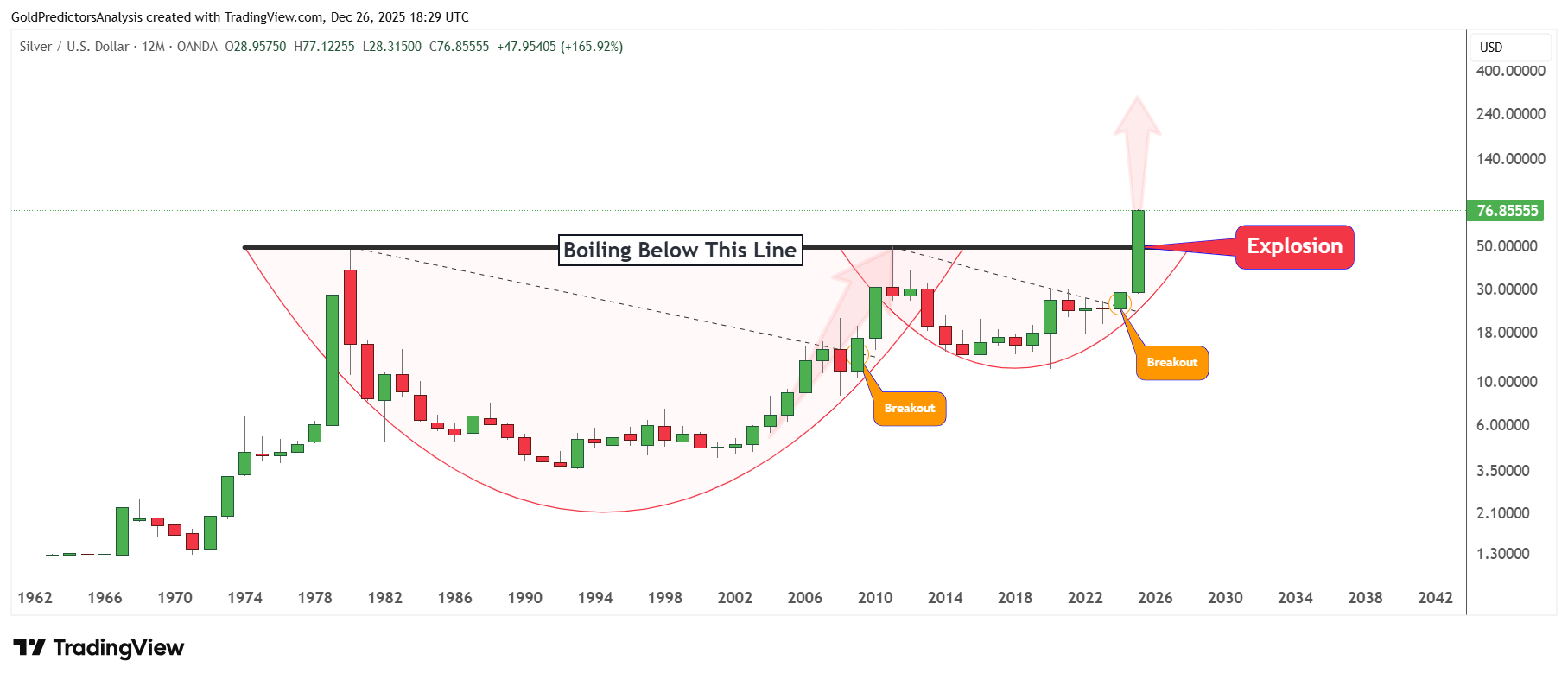
This breakout signals a major shift in silver’s price behaviour and suggests a new phase of sustained upside. The structure implies that silver is likely to gain traction relative to gold (XAU) over the coming months and years as the bullish trend unfolds.
Silver $50 Breakout Offers Fresh Accumulation Zone
To better understand recent developments in the silver market, the quarterly chart below shows that the highest quarterly close was recorded at $37.65. Notably, Q3 2025 marked this historic level.
Based on this breakout, the price will likely produce the highest yearly close in silver’s history in 2025. The chart below highlights that silver closed Q3 2025 at $46.64, right at the edge of the blue zone. This signals a breakout beyond the key level, setting the stage for a potential surge in early 2026.
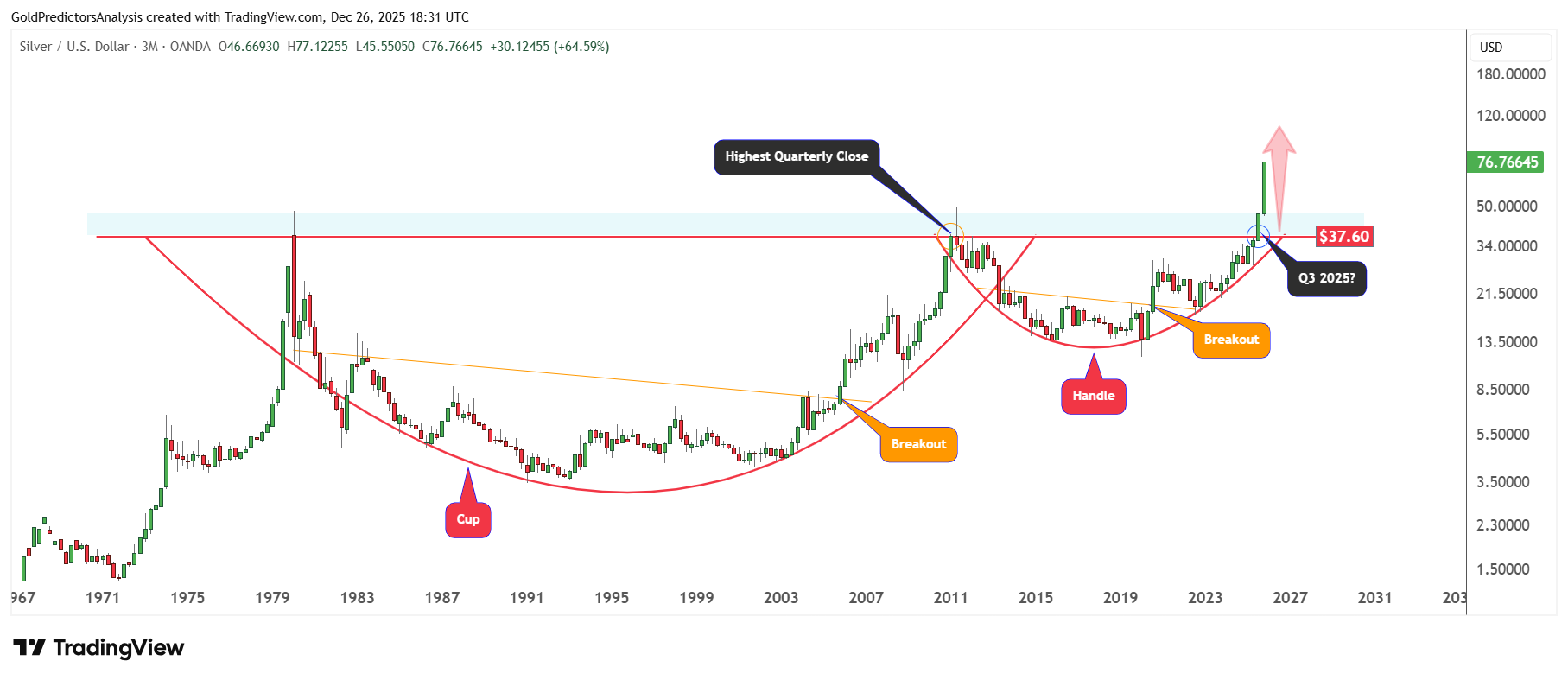
If any retracement occurs toward the $30–$50 range, it would likely present a long-term buying opportunity for investors. This region is considered a key accumulation zone, supported by decades of resistance and recent bullish momentum. Long-term investors may view pullbacks into this range as a chance to position for further upside.
Intermarket Ratios Point to Silver Leadership in Next Bull Phase
Gold‑to‑Silver Ratio Breakdown Signals Silver Catch‑Up Rally
The gold-to-silver ratio remains one of the most important indicators for understanding pivotal turning points in the gold and silver markets. The chart below shows that when the ratio peaks, silver prices tend to bottom while gold continues to rally. These peaks were observed in June 2003, October 2008, March 2020, and April 2025. These peaks resulted in a bottom in silver and a rally in gold.
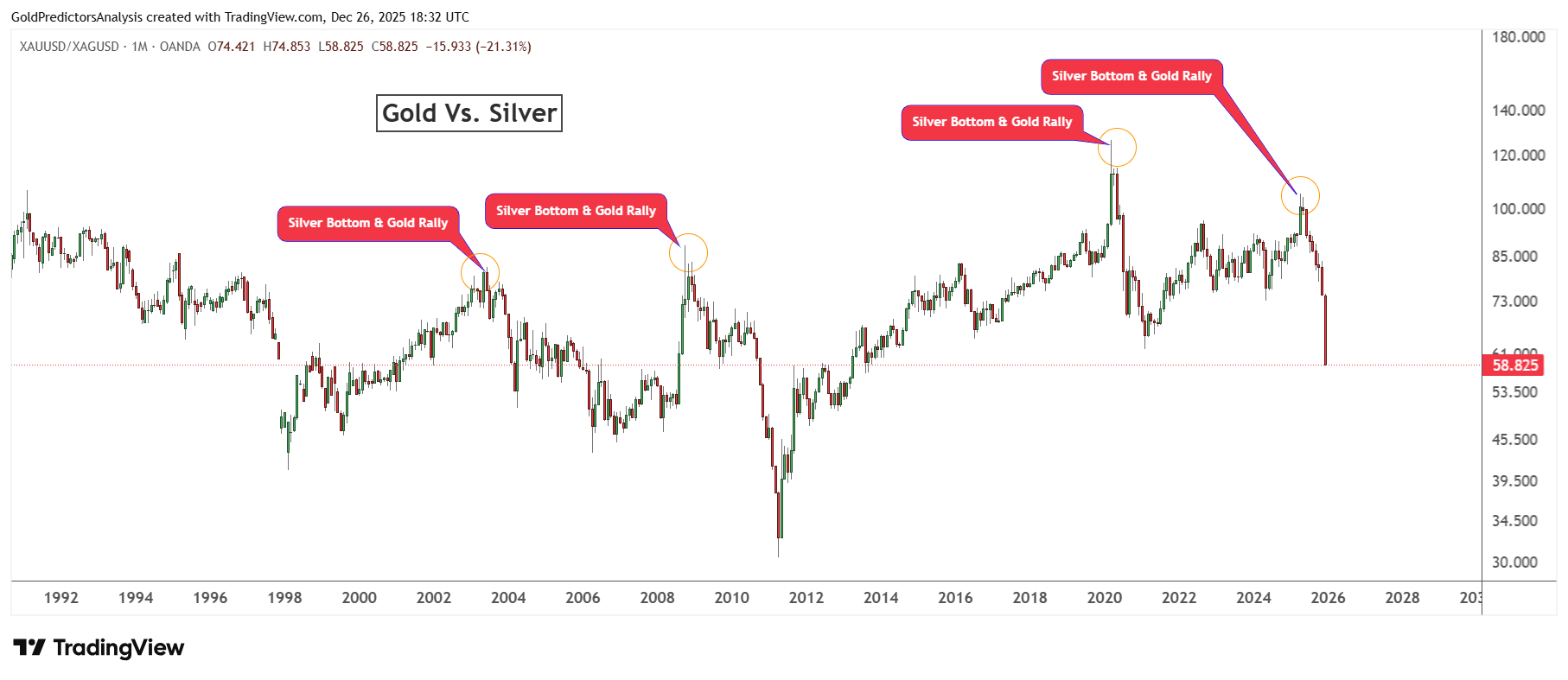
This pattern suggests that a falling gold-to-silver ratio signals bullish momentum in both gold and silver. Historically, silver tends to lead gold during these phases after major ratio peaks. Therefore, the recent drop in the ratio indicates that silver is likely to outperform gold in the months and years ahead.
From a technical perspective, the gold-to-silver ratio has also broken below its long-term ascending channel pattern. The ratio also broke the long-term support at the 64 level, indicating further decline to the 34 level. As the ratio trends lower, silver is likely to continue rising and outperform gold.
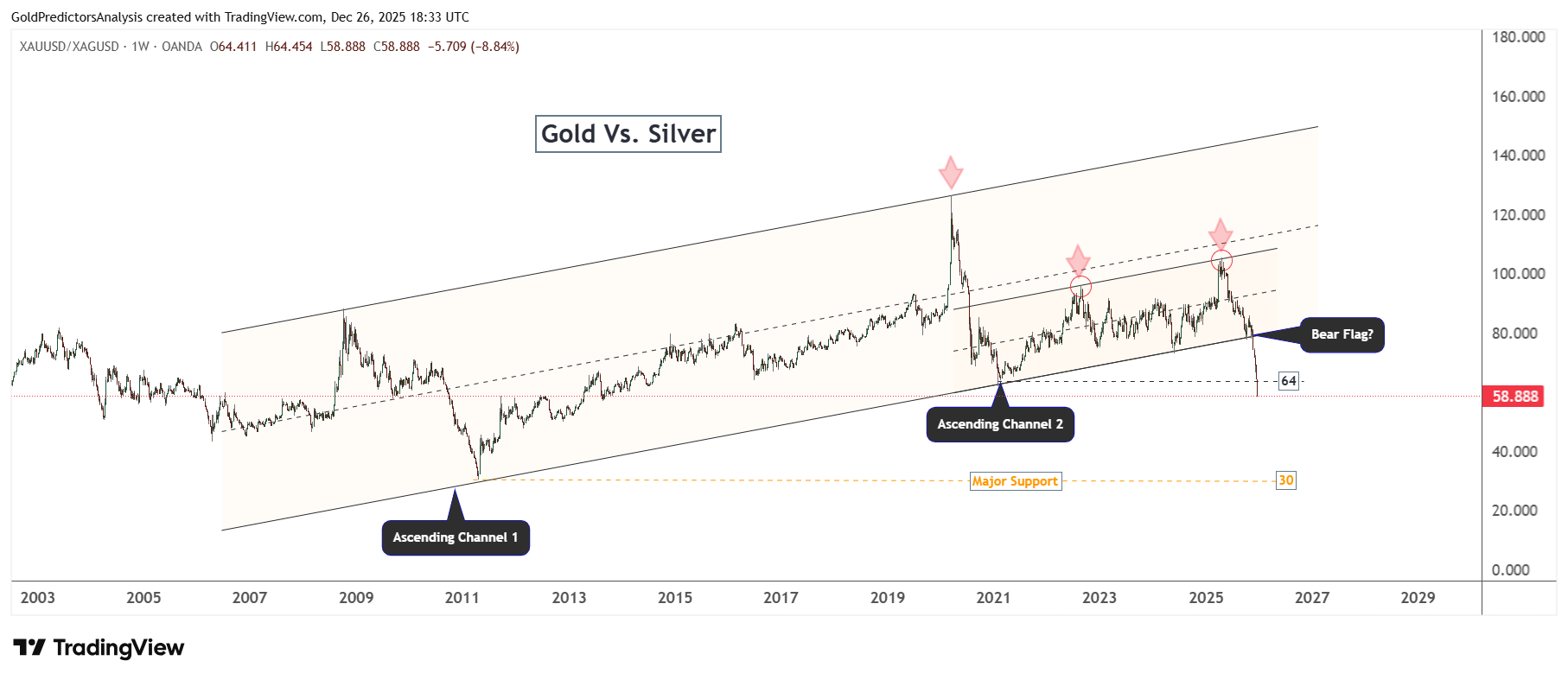
This bearish continuation and breakdown in the ratio indicate ongoing bullish momentum in both metals. The weakening ratio suggests that silver will likely outperform gold in the near to medium term.
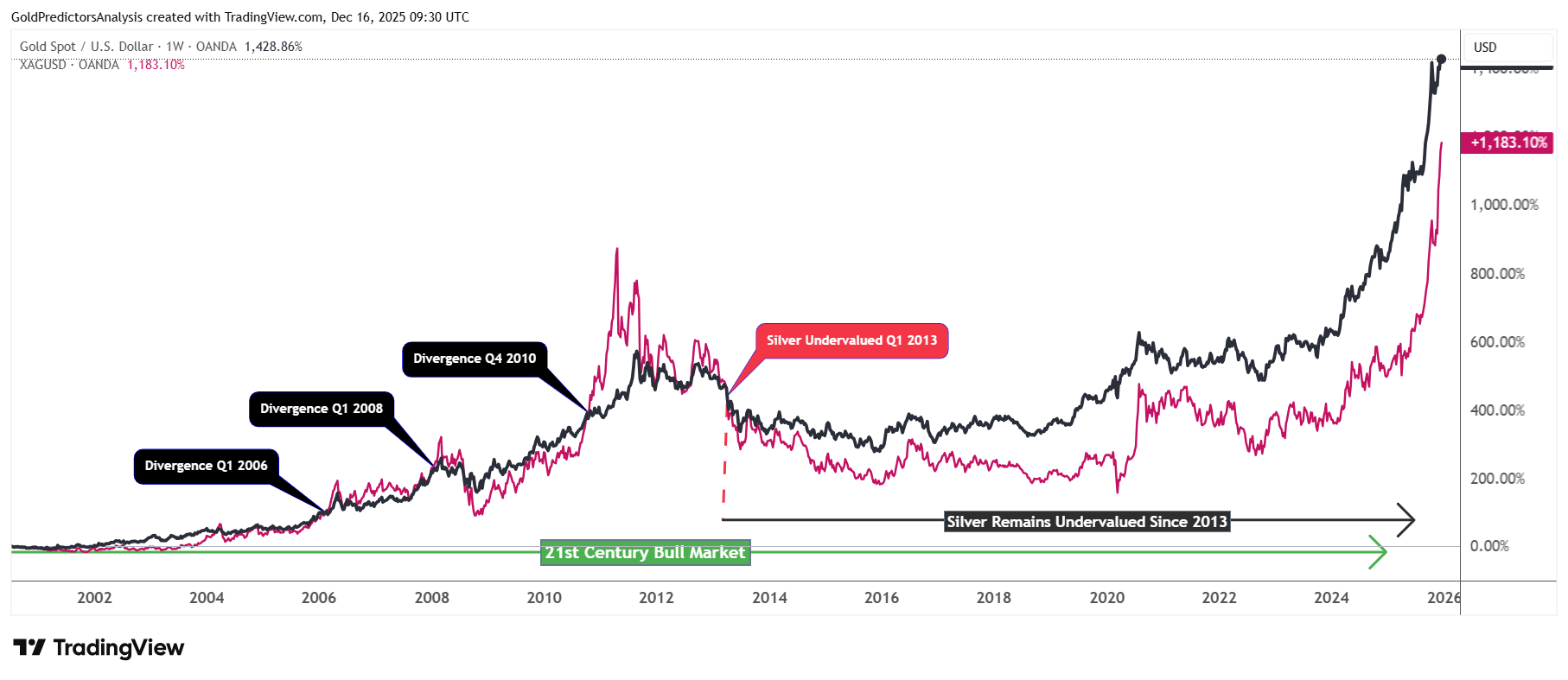
The chart below confirms the strong correlation between gold and silver prices in the 21st century. Silver began to catch up with gold’s rally in 2025 but remains undervalued relative to gold. Historically, silver accelerates sharply when the gold‑to‑silver ratio continues to decline. This dynamic is likely to persist in 2026, suggesting that silver could move faster than gold as it catches up with the momentum established during gold’s 2024–2025 rally.
Silver‑to‑Gold Ratio Confirms Early‑Stage Outperformance
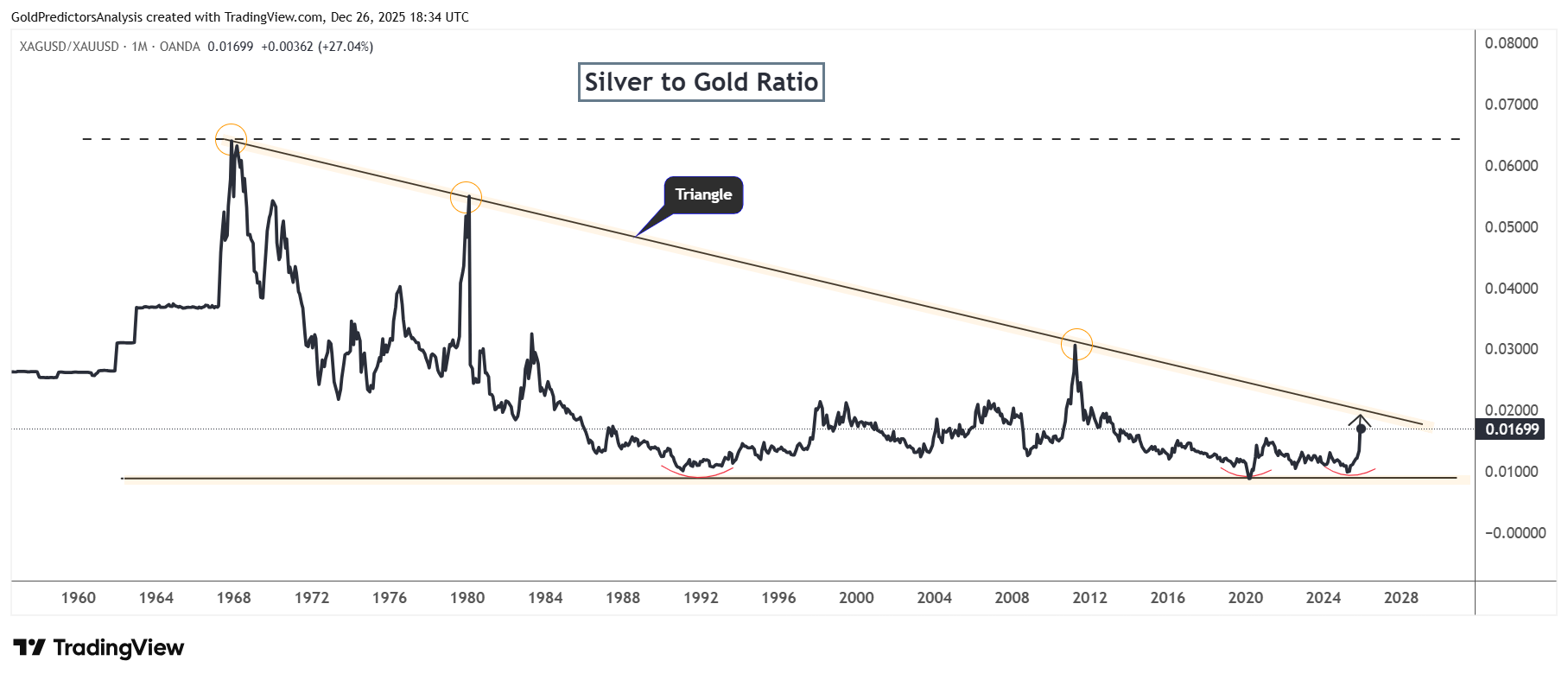
Despite the significant breakdown in the gold-to-silver ratio, the silver-to-gold ratio is showing signs of recovery from its low point. This ratio is now moving toward the key resistance at 0.02. There is still room for the ratio to rise further, suggesting that the silver market is likely to continue moving higher over the next few months.
Bottom Line
Silver enters 2026 with powerful momentum after breaking above the long-term resistance of $50 in 2025. This breakout confirms a structural shift supported by tightening physical supply, sustained industrial demand, and a dovish global liquidity environment. From solar to semiconductors, silver’s utility across high-growth sectors reinforces its new role as a critical industrial metal and a store of value.
As long as prices remain above the $30–$50 accumulation zone, the broader bullish thesis remains intact. The breakdown in the gold-to-silver ratio supports this bullish outlook. Additionally, quarterly closes support the view that silver is entering a leadership phase within the metals complex. A decisive drop below $30 would challenge the bullish view. However, the setup favours continued upside in 2026, targeting $100. A break above $100 will open the door towards $250-$300.