
The US dollar has recovered so far this month in most of its pairs from significant lows around the end of January after a positive NFP and a slightly larger decline than expected due to inflation. This article summarises recent news and data affecting the dollar, then looks briefly at the charts of XAUUSD and EURUSD ahead of GDP data on Friday, 20 February.
The probability of two cuts from the Federal Reserve (‘the Fed’) in the rest of the year has remained high recently and not changed significantly since December 2025. According to CME FedWatch, there’s around a 60% probability of the next cut in June and 75% by July. The decline in the rate of inflation in January seems to support loosening policy:
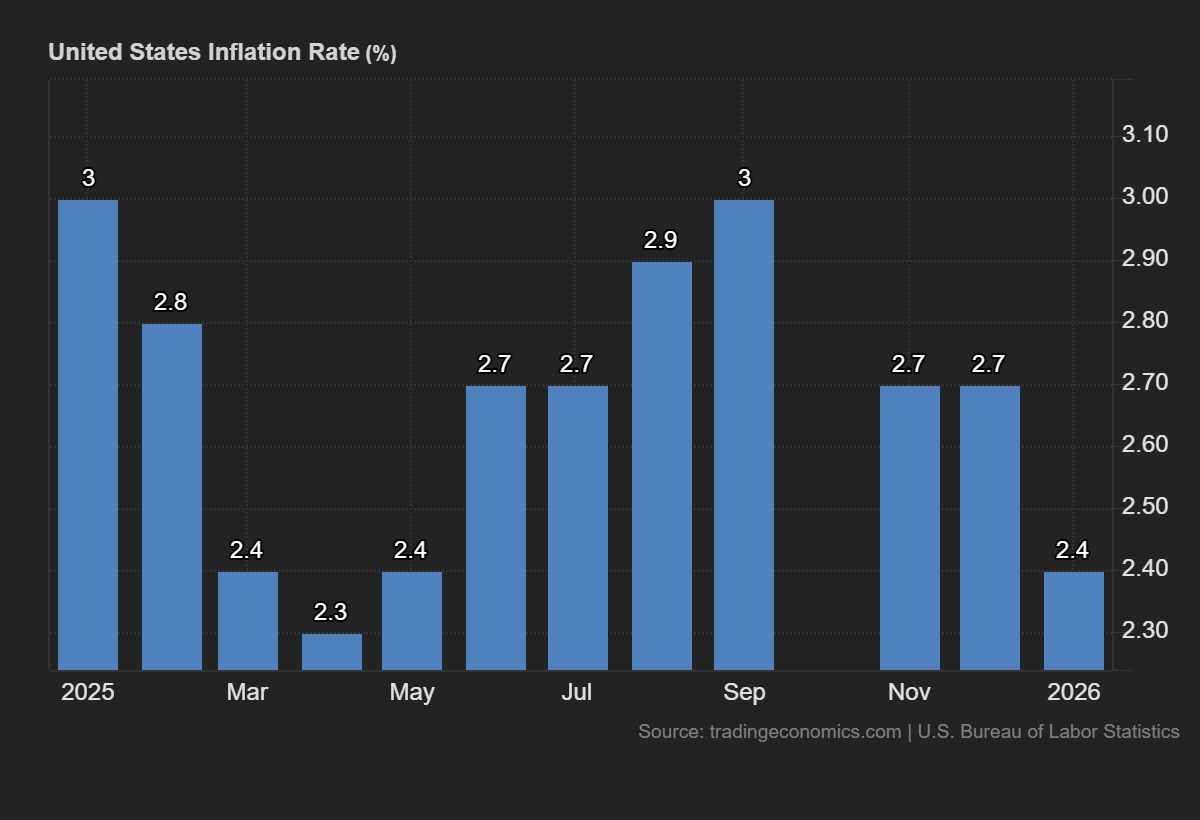
For much of last year, inflation was fairly sticky around 2.7-3%, significantly above the usual target of 2%, but January’s annual headline inflation at 2.4% was slightly lower than the consensus of 2.5%. The monthly headline figure was also slightly lower than expected, while the core numbers were in line with the consensus. One lower release doesn’t necessarily indicate a downtrend by inflation, but based on recent job data it certainly seems possible that this could be the start of one:
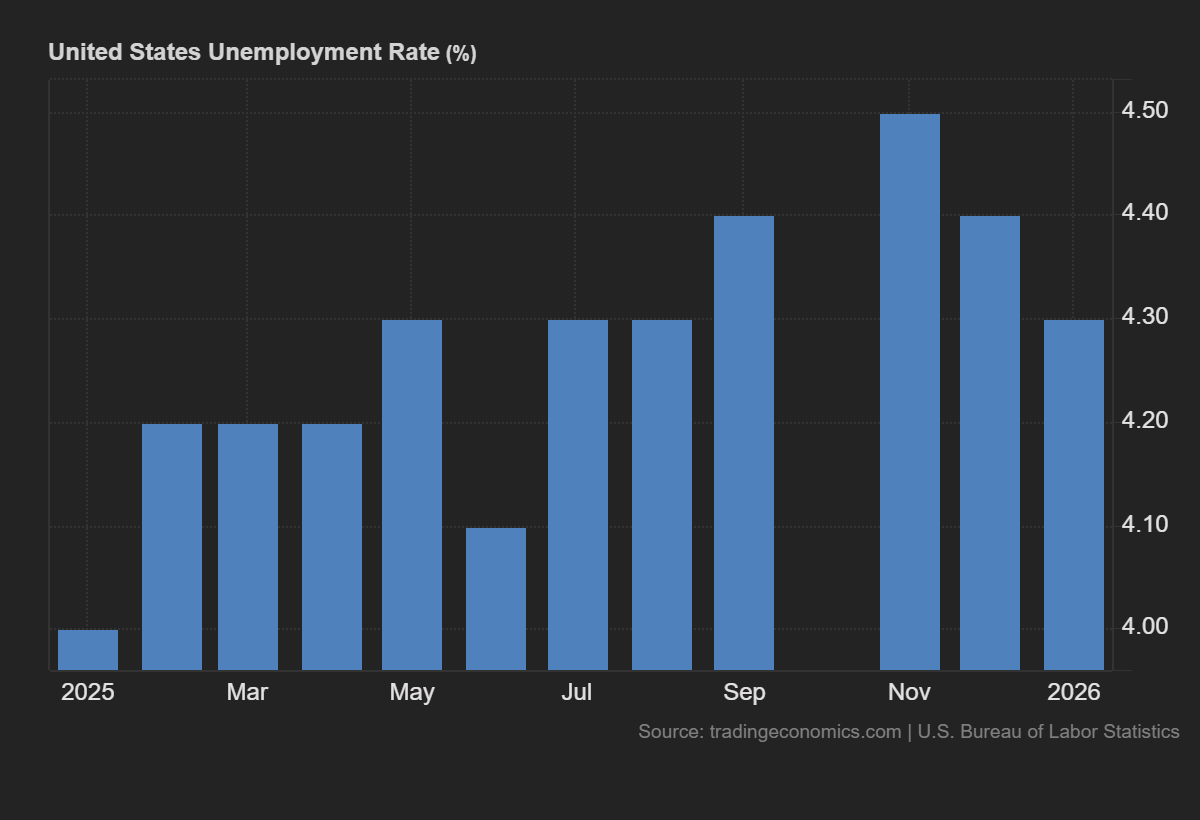
Although unemployment unexpectedly declined slightly last month to 4.3% and the total nonfarm for January was also much better than the consensus, overall, there’s clear evidence that the job market in the USA is significantly weaker now than around the end of 2024. January’s 130,000 payrolls were by far the highest since December 2024, and the average in 2025 was less than 100,000 monthly; some months were negative, particularly October 2025 at negative 140,000, the worst since December 2020.
Preliminary GDP for the last quarter in the USA is due at 13.30 GMT on Friday, 20 February, with expectations between 3% and 3.5%. The third quarter saw extremely strong growth relative to the circumstances at 4.4%, revised up from the initial estimate. It’d be very unlikely to see another release as strong as that, but traders will probably remain focused on imports and exports plus consumer spending in the upcoming numbers, with the job component possibly taking a backseat unless it’s particularly surprising.

Gold’s Consolidation Around $5,000 Continues
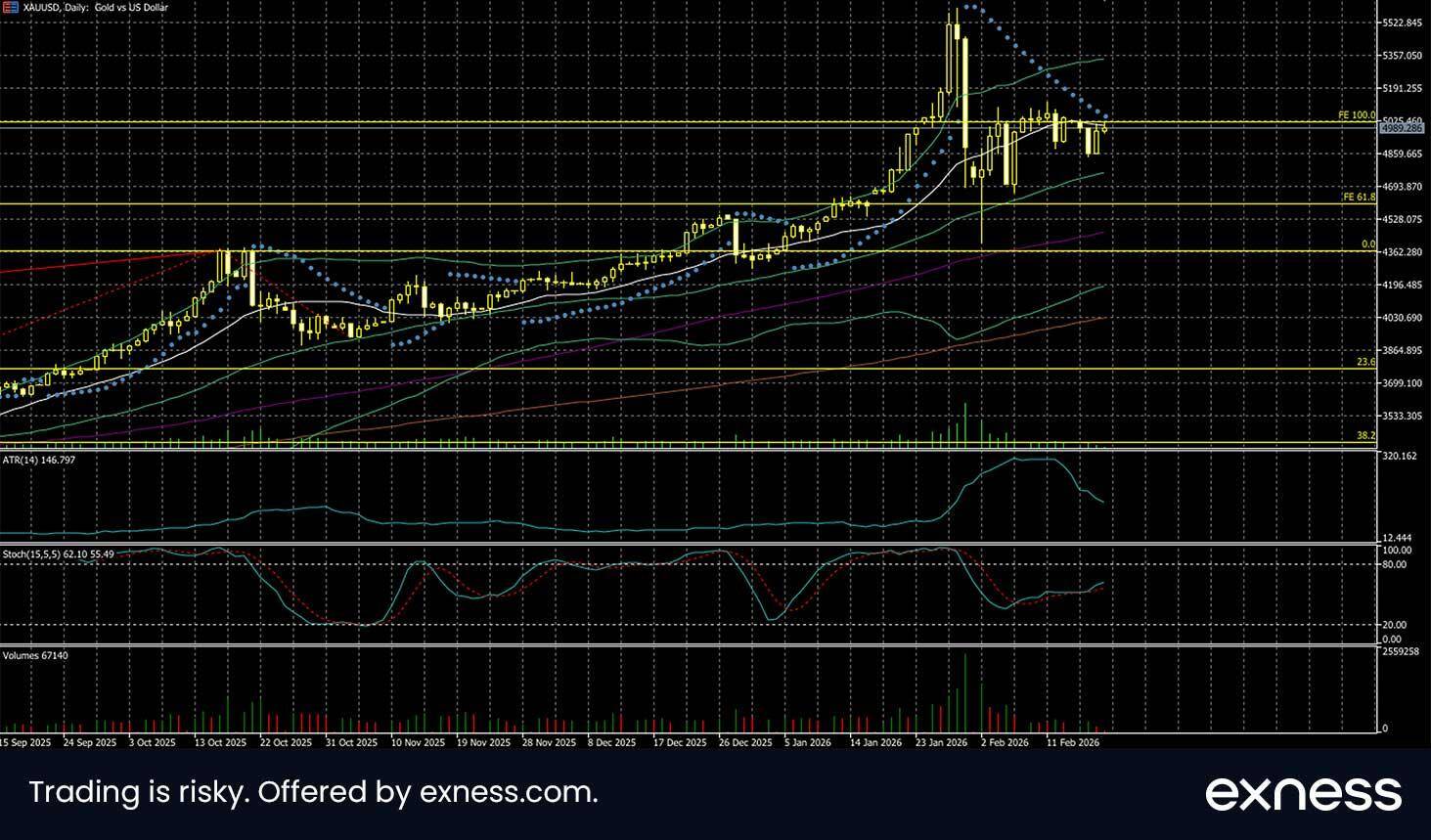
Gold has been seasonally less active recently due to the holiday in the USA and the Lunar New Year, while retaining much of January’s gains. The latest minutes from the Fed suggested some division in the FOMC on how to proceed this year, with some members even favouring tighter policy, although traders for now are discounting that possibility. Geopolitics hasn’t been a significant factor for gold recently, but major news from American-Iranian negotiations might affect demand; there is some analysis of the American military buildup in the Gulf.
A shakedown of volatility in the aftermath of late January’s dramatic movement is a normal situation technically, so a clear direction might not return until ATR declines to around $100 or below. That would also make finding stops for longer term trades a lot easier. Overall, since there’s no evidence that the uptrend is over, one might reasonably expect it to continue sooner or later. A medium-term resistance might be the upper Band around $5,330, but there would need to be clear momentum and volume for a move above $5,000-$5,100 first.
The value area between the 50 SMA from Bands and the 100 SMA is very wide and includes the 61.8% weekly Fibonacci extension; this is a (large) possible zone of support. The 100% Fibo extension might remain the primary technical reference unless 20 February’s American GDP is particularly surprising.
EUR/USD Price Forecast
Every new EUR/USD analysis as it publishes, today's technical signal and key levels, live price — on one page.
See all EUR/USD forecastsEuro-dollar Moves Down Ahead of US GDP
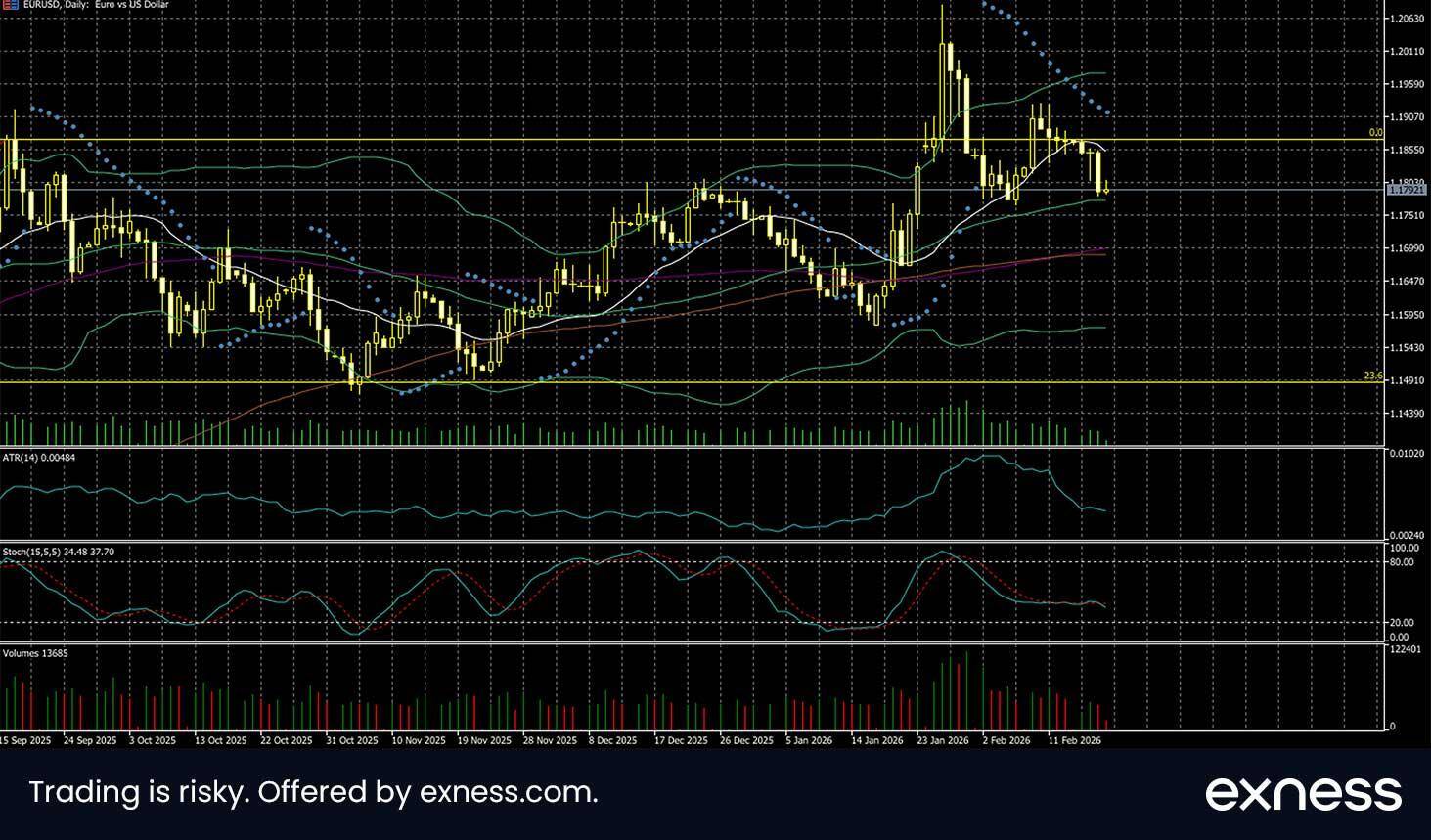
Forex markets reacted to the unexpectedly hawkish overall tone of the Fed’s latest minutes by lowering slightly expectations for two cuts in 2026. Meanwhile, inflation in the eurozone seems to be stable on target, so any changes to the ECB’s rates are unlikely for now.
$1.18 is a possible technical reference as the area of December 2025’s highs, the source of a bounce earlier this month, and with the 50 SMA from Bands nearby. If the price breaks below there, it might be able to push as far as the 100 and 200 SMAs around $1.17.
$1.20 remains an obvious long-term resistance as a round number and the area from which the price declined sharply late last month. With no clear signals now from the stochastic or volume, the upcoming American GDP might produce more losses or a bounce, depending on how positive the numbers are and traders’ sentiment.
This article was submitted by Michael Stark, an analyst at Exness.
For the latest analysis, ideas for trading and more, follow Michael on X: @MStarkExness.
The opinions in this article are personal to the writer; they do not represent those of Exness. This is not a recommendation to trade.