


The Trump trade war has come into focus again after Washington signaled renewed round of tariff pressure for South Korean goods. The move jolted markets and cast new doubt about stability of global trade at a time when supply chains and investment flows remain tenuous.
Tariff Hike Reopens Trade Tensions Between Washington and Seoul
President Trump announced to introduce higher tariffs on imports from South Korea. This announcement caught officials in Seoul by surprise and was meant to send a clear message that trade pressure is still one of the key tools in U.S. policy. According to the news, Trump blames South Korea’s legislature for not passing a deal agreed in principle last year. In response, he said that the tariffs would be revised on autos, lumber, pharmaceuticals and other goods from 15% to 25%.
This decision is crucial for South Korea because the country is not just a trading partner but also a key pillar of security in region. This announcement increases market uncertainty, which indicates that the value of economic leverage is still at the forefront of Trump’s foreign policy strategy.
Delayed Ratification Triggers Renewed U.S. Pressure
Trump and South Korean President Lee Jae Myung agreed to a broad outline last year. South Korea would put $350 billion into U.S. economy. In return, Washington would lower tariffs to Korean exports. However, the deal got stalled at the legislative level in Seoul.
From Trump’s point of view, delays are non-compliance. His reaction was typical of many people in same situation.
Markets React as Currency and Equity Volatility Picks Up
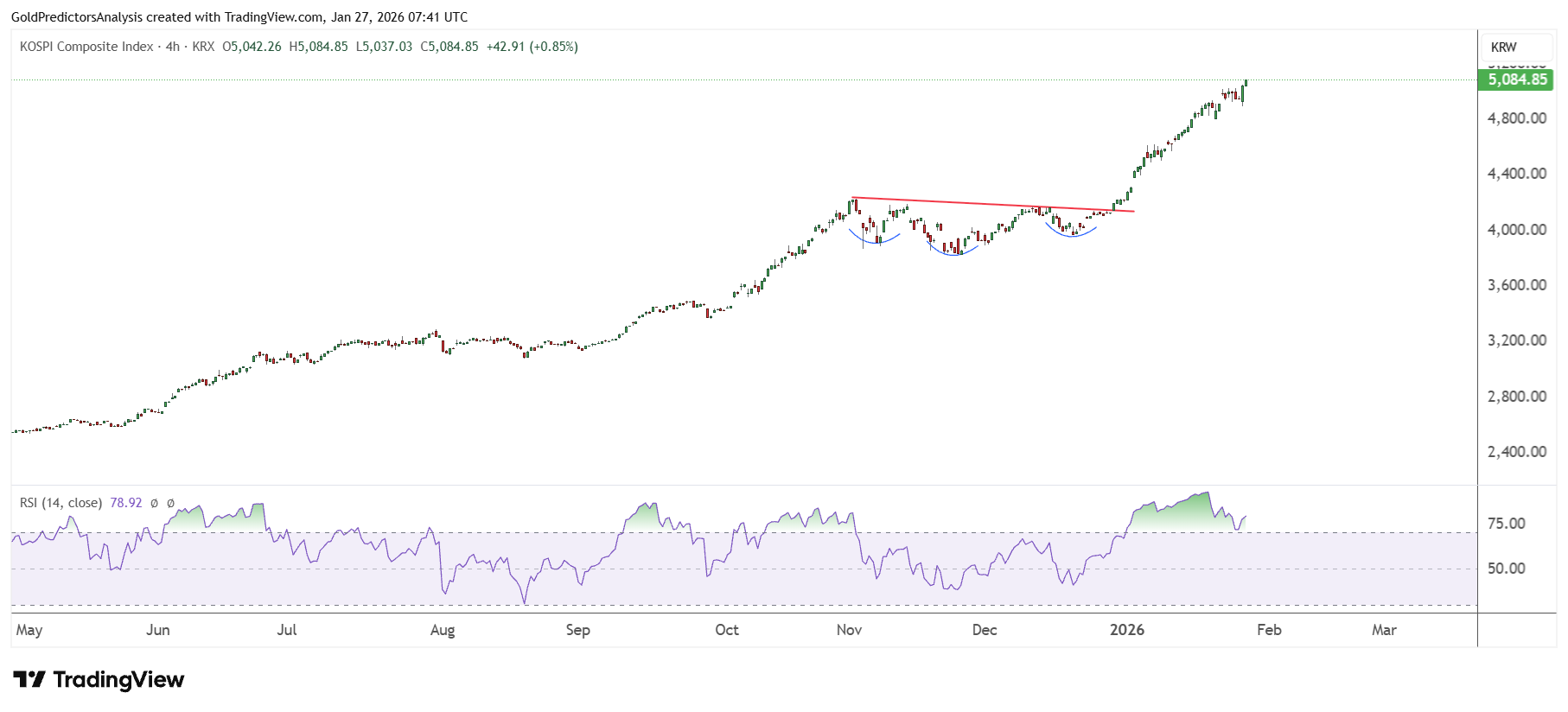
South Korean markets acted fast as the index of KOSPI dropped dramatically initially before reversing higher. On the other hand, the won devalued against the US dollar. The chart below shows that the USDKRW is still trading below the key level of 1,480. A break above this level will indicate a bullish bias.
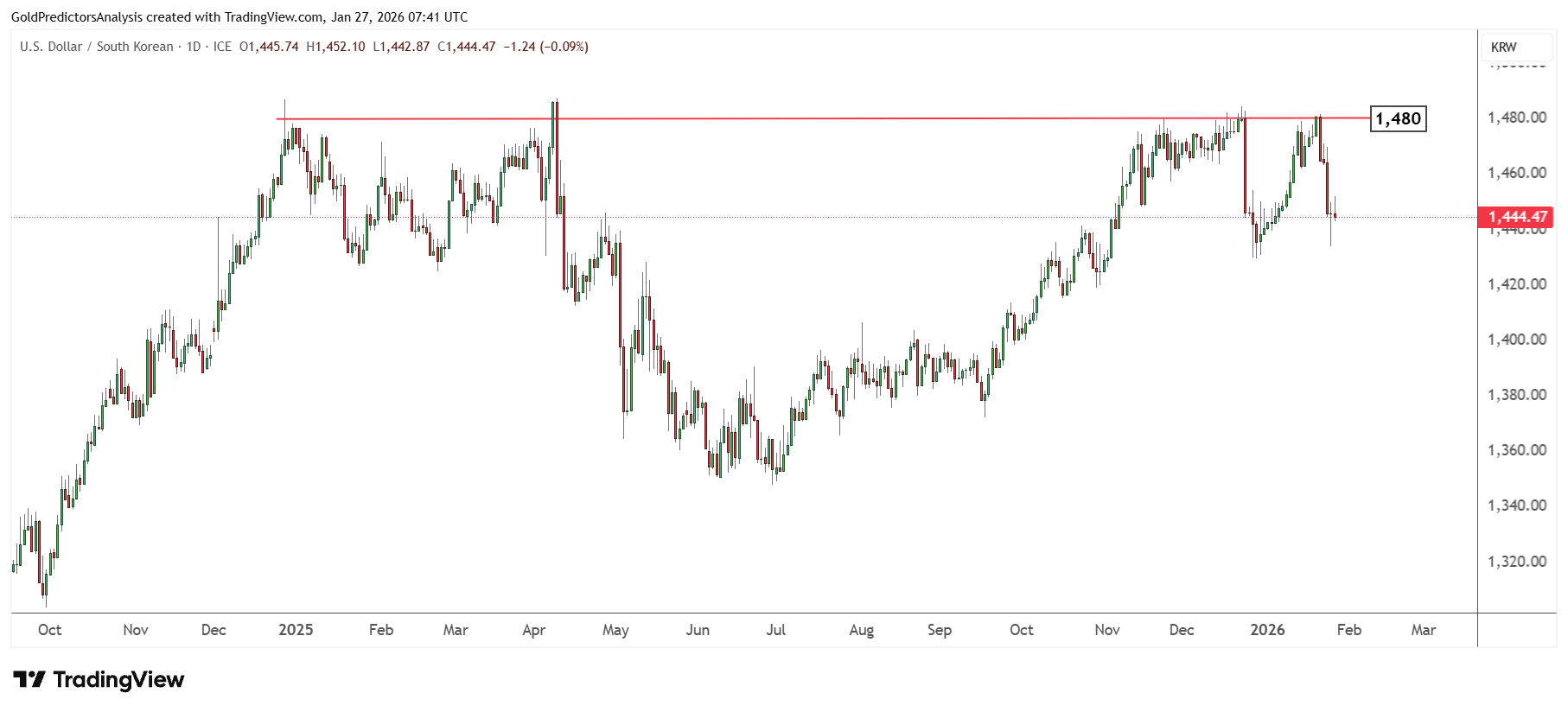
Investors are still of the mindset that the talks might be ongoing, and the tariffs may be used as leverage and not be an outcome.
However, this news carries high level of uncertainty. Autos account for about 25% of South Korea’s exports to U.S. Any sustained increase in tariffs would impact margins and competitiveness. Shares of Hyundai and Kia crashed before they recovered some of their losses. The rebound in the auto market after the crash was the cause for hope. However, it did not eliminate the underlying market risk.
Automakers and Exporters Face Rising Cost Pressure
The increment in tariffs would put South Korean automakers on defensive. They may be required to absorb higher costs or raise prices in US market. Either choice has a negative impact on profits or on demand. General Motors is also indirectly at risk because they make large quantities of vehicles in South Korea to export to U.S.
Beyond companies, the broader economy is feeling the pressure. U.S.-bound exports from South Korea already dropped last year, even as total exports reached record high. Moreover, autos saw double digit drop. The increase in tariffs may further strain the system and continue this pattern, which may slow down the momentum of growth.
Negotiations Resume as Trade Uncertainty Persists
South Korea will send its senior officials to Washington to restart the talks. Parliament is soon to embark on a new session too and this could lead to accelerated approach to bringing them into effect. If progress is made, the threat of tariffs can be decreased. If not, the Trump trade war may widen again.
For the time being, business and investors are cautious. The situation shows that the risk of trade has not vanished. And once again, tariffs are at the top of the world’s economic uncertainty.