The Trump-era trade war continues to reshape U.S. policy, legal frameworks, and economic strategy. As tariff-related programs evolve, the spotlight now shifts to the Supreme Court, which will decide whether these tariffs were lawfully enacted. Businesses have already responded by filing refund claims, while policymakers debate how to repurpose tariff revenues.
Supreme Court Showdown and Tariff Refund Risks
The Trump-era trade tariffs are entering a critical legal review. National Economic Council Director Kevin Hassett stated that the administration expects the U.S. Supreme Court to issue a favorable decision regarding the tariffs’ legality. However, if the court rules against the tariffs, a significant portion could be invalidated. This outcome may require the government to issue refunds totaling up to $100 billion.
This outcome would create massive administrative challenges. Costco (COST) and other major importers have already filed refund claims, anticipating a favorable verdict. Hassett warned that processing such a large volume of claims would strain government systems and finances.
In response to growing public attention, Trump has floated the idea of issuing $2,000 rebate checks funded by tariff revenue. Hassett now believes the checks are financially feasible. Trump is expected to bring the proposal to Congress in early 2026.
Moreover, Trump announced a “warrior dividend” of $1,776 for each of the 1.5 million active U.S. service members. He said the military bonus honors America’s founding and is backed by an unexpected surplus from tariffs. However, he did not provide a funding plan for the program.
Trump has proposed at least nine ways to spend tariff proceeds, including financing Republican tax cuts. However, with recent tariff rollbacks on key imports like coffee and oranges, monthly tariff revenues are now falling. They declined from $31.35 billion in October to $30.76 billion last month. This marks the first revenue decline since the trade war began, raising concerns about the sustainability of these funding promises.
S&P 500 Price Forecast
Every new S&P 500 analysis as it publishes, today's technical signal and key levels, live price — on one page.
See all S&P 500 forecastsEconomic Warning Signs Mount Despite Stock Market Strength
While Trump softens his trade stance with China by approving Nvidia’s sale of H200 chips and reporting positive feedback from Xi Jinping, domestic economic indicators are flashing red. These developments highlight growing economic stress at home despite easing trade tensions.
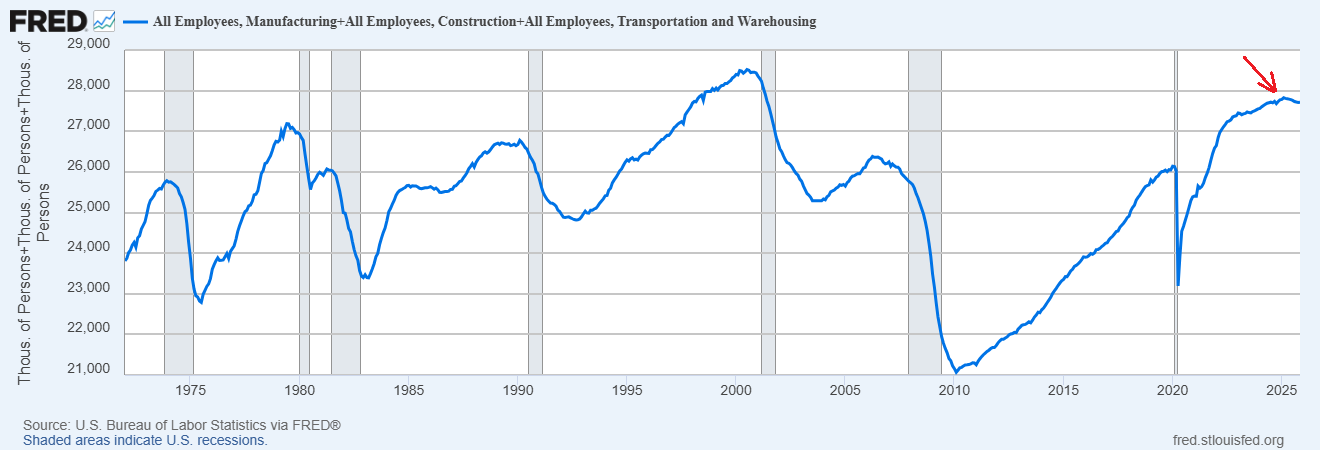
Moreover, the cyclical employment is weakening. The chart below shows that the jobs in manufacturing, construction, transportation, and warehousing have dropped by 111,000 since February. These sectors account for less than 20% of the total workforce but usually lead to job losses in a downturn. A drop of 300,000 would trigger an official recession warning.
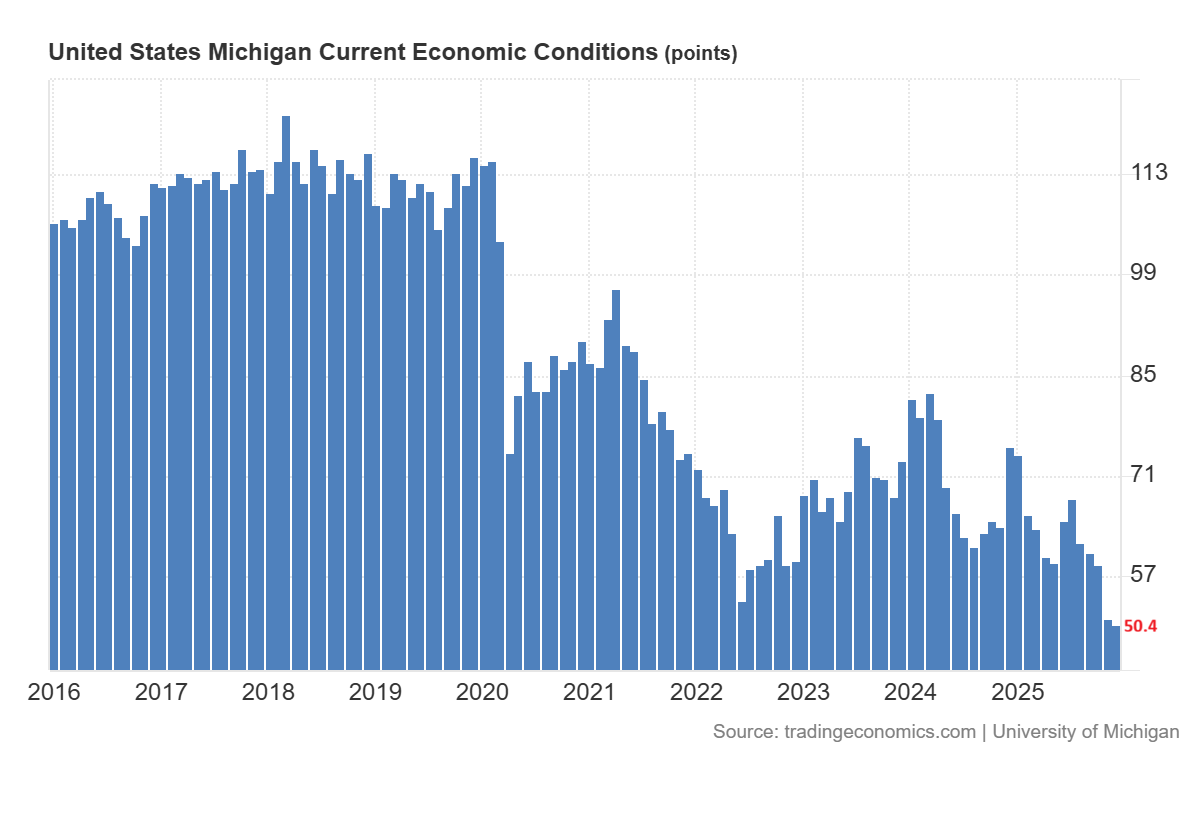
On the other hand, consumer sentiment has also collapsed. Meanwhile, the University of Michigan’s index for current economic conditions just recorded its lowest level since the survey began in 1960. Americans are increasingly concerned about inflation, job security, and overall economic direction.
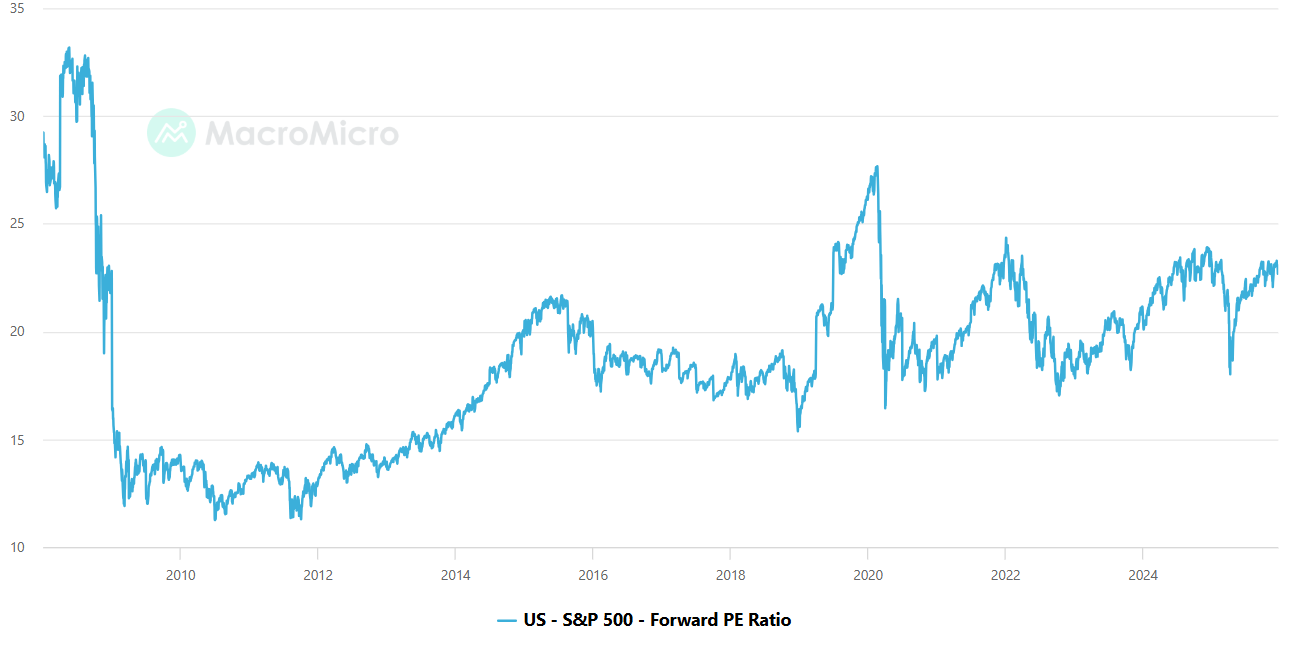
Despite these red flags, the stock market remains buoyant. The S&P 500’s forward price-to-earnings (PE) ratio is at 23.06, which is well above the 50-year average of 16.3 and nearing the dot-com bubble peak. This disconnect between weak fundamentals and strong equity valuations raises questions about whether markets are accurately pricing in risk.
As the Trump administration navigates legal, fiscal, and diplomatic challenges, the broader economy faces mounting pressure. Whether the Supreme Court upholds the tariffs or not, the ripple effects of the trade war are now firmly embedded in the economic and political landscape.
Bottom Line
The Trump trade war has triggered lasting effects across the economy. Legal challenges, falling tariff revenues, and uncertain funding plans add pressure to an already fragile outlook. Economic indicators show signs of weakness, while the stock market remains disconnected from fundamentals. As the Supreme Court decision nears, businesses, consumers, and policymakers must prepare for the financial and administrative consequences that could follow.