
Market Overview
Despite previously released mixed US economic data, the broad-based US dollar extended its two-day winning streak, remaining well bid around 98.90 and hitting an intraday high of 99.00. Its strength was linked to cautious market sentiment ahead of the US Nonfarm Payrolls (NFP) report, which will bring fresh clues about labor market conditions and the Fed’s future policy. NFP is forecast to show job gains of 60,000, down from 64,000 in November.

US Dollar Strengthens Amid Mixed Labor Data and Fed Rate Pause Expectations
On the data front, the previously released US labor reports show a mixed picture. Initial Jobless Claims rose slightly to 208,000 last week, lower than expected but higher than the week before. Meanwhile, the number of people receiving unemployment benefits increased to 1.914 million, showing a slow rise.
Moreover, the ADP report showed that private payrolls added 41,000 jobs in December, a small gain but below expectations. Job openings also fell in November to 7.146 million, signaling fewer opportunities than in October.
On the policy side, US Treasury Secretary Scott Bessent said the Federal Reserve should cut rates, calling lower rates “the only ingredient missing” for stronger growth. However, the market still expects the Fed to leave rates unchanged at its January meeting, with futures showing an 86% chance of no change.
Despite slightly higher jobless claims, the US dollar is rising as the Fed is expected to keep rates steady, supporting the currency amid a gradually cooling labor market.
GBP/USD Price Forecast
Every new GBP/USD analysis as it publishes, today's technical signal and key levels, live price — on one page.
See all GBP/USD forecastsUS Dollar Index (DXY) – Technical Analysis
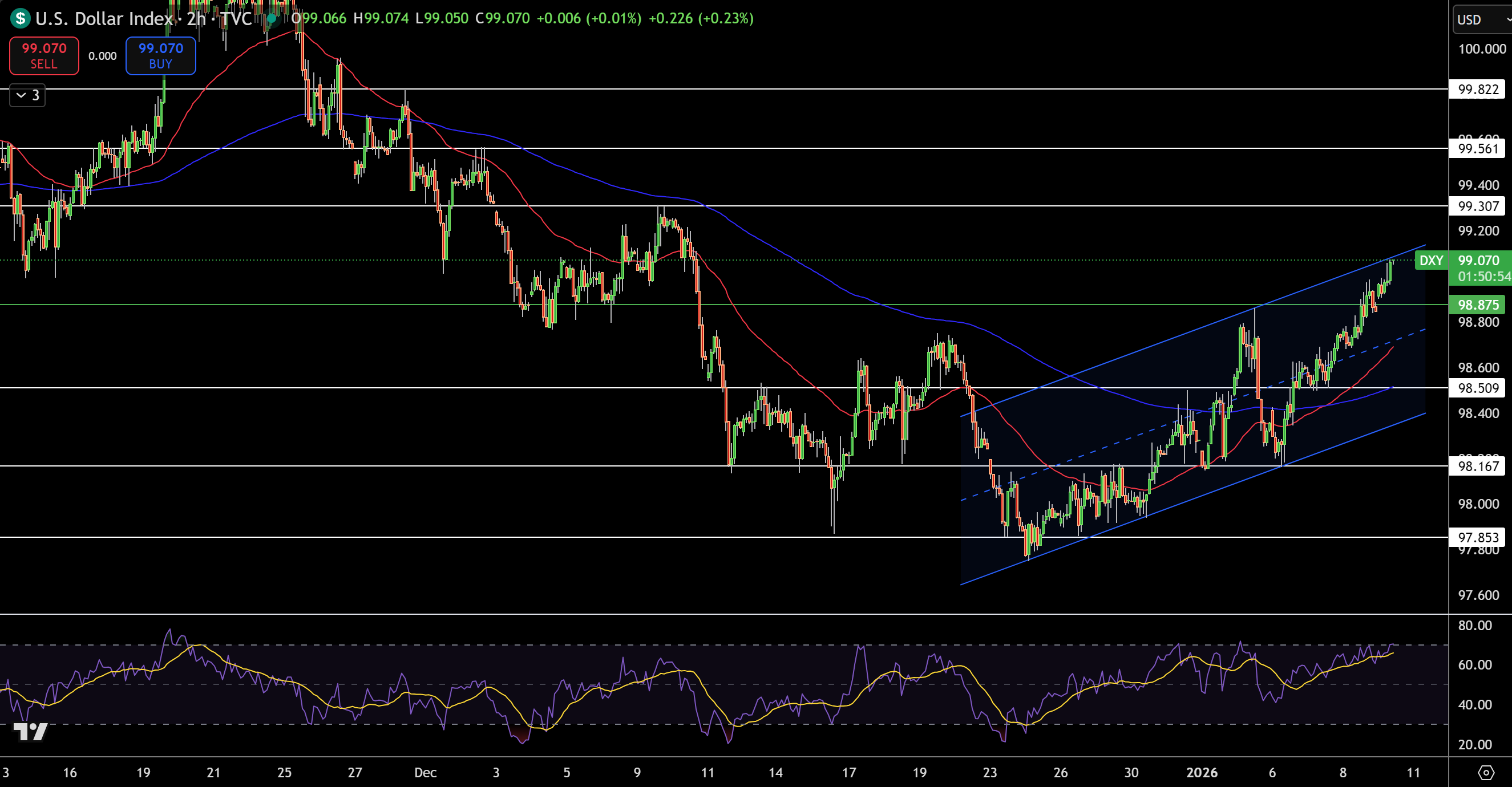
The US Dollar Index is trading near $99.07, extending its recovery within a rising channel that has guided price since late December. Recent candlesticks show steady higher lows, suggesting buyers remain in control rather than chasing momentum. Price is holding above the short-term moving averages, while the 200-period MA near $98.50 continues to act as a medium-term pivot.
The upward-sloping trendline reinforces the bullish structure, with former resistance around $98.85 now acting as support. RSI is hovering in the mid-to-high 60s, signaling strength without extreme conditions. As long as the channel holds, the dollar bias stays constructive, with upside pressure gradually building.
GBP/USD Technical Analysis
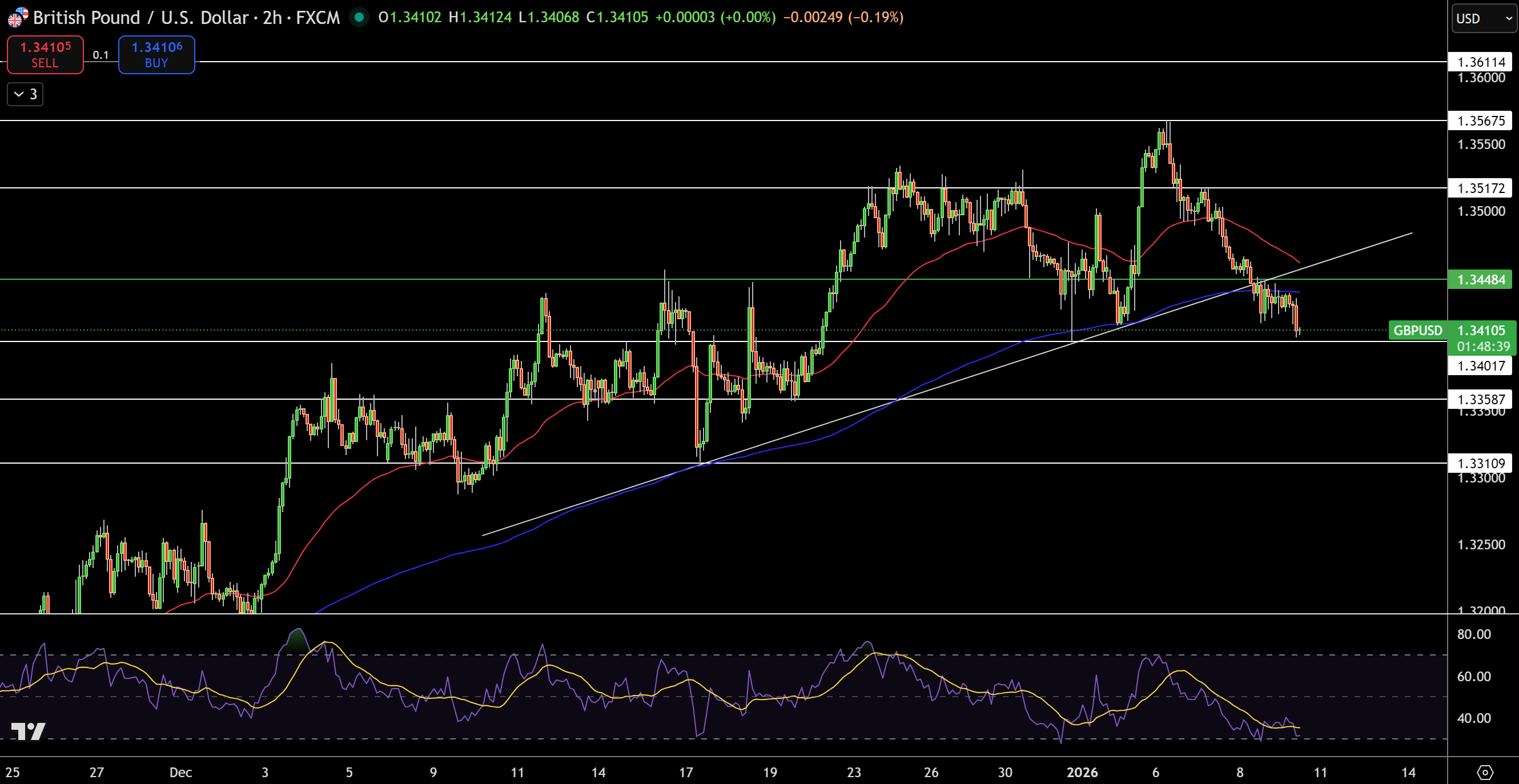
GBP/USD is trading near 1.3410, extending its pullback after failing to sustain momentum above the 1.3550–1.3570 resistance area. The pair has slipped below the short-term moving average and is now leaning on a rising trendline that has guided price action since early December.
The 200-period MA near 1.3440 is being tested, making this zone technically important for short-term direction. Candles show smaller bodies and limited follow-through, suggesting selling pressure is steady but not aggressive. RSI sits just above 40, reflecting fading bullish momentum rather than outright weakness.
A clean break below trend support would expose 1.3350, while holding it keeps the broader structure corrective.
EUR/USD Technical Forecast
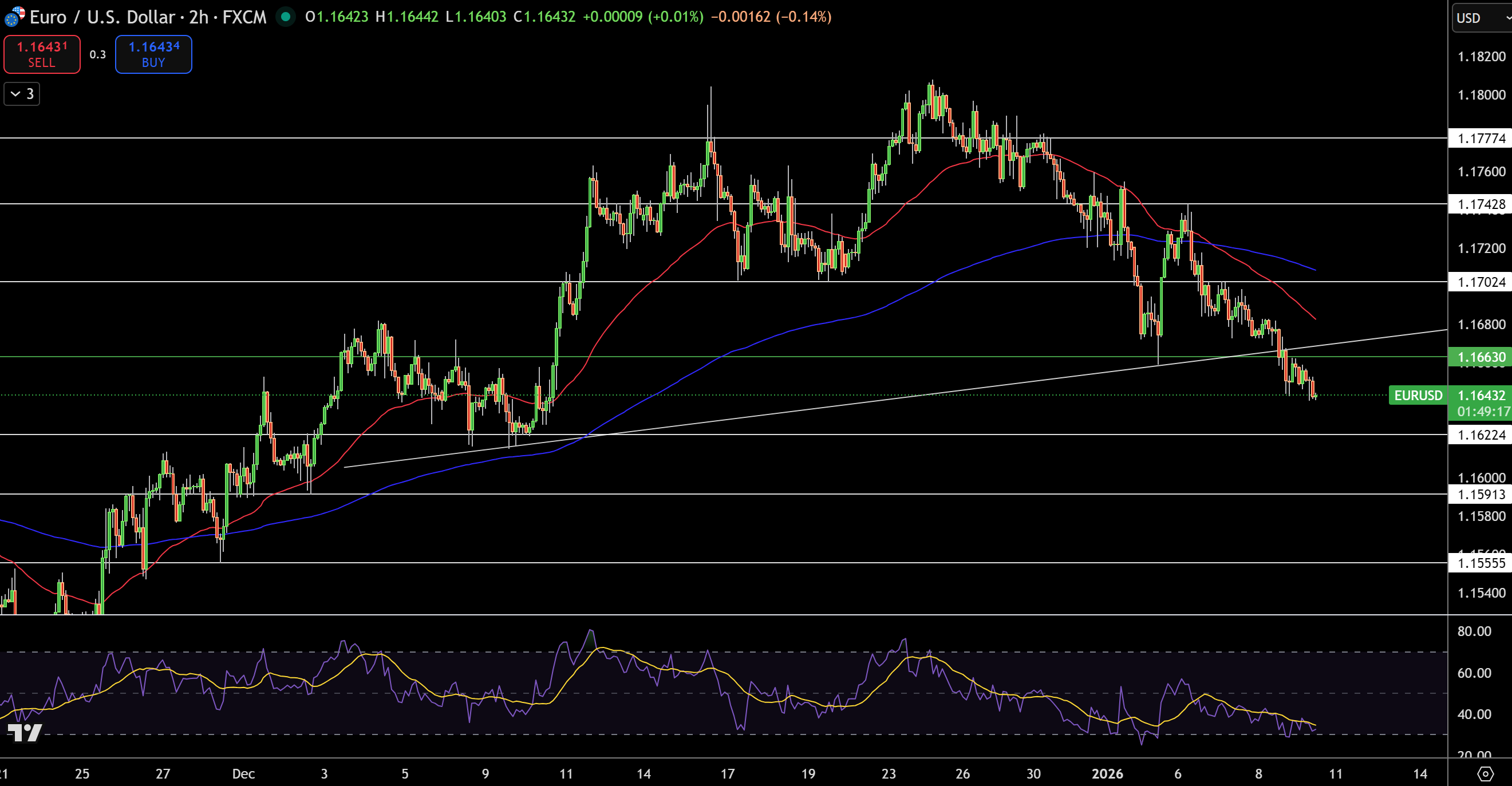
EUR/USD is trading near $1.1643, extending its pullback after failing to hold above the $1.1770–$1.1800 resistance zone. Price has slipped below the short-term moving average and is now pressing toward a rising trendline that has supported the pair since late November.
The 200-period MA near $1.1700 has flipped into resistance, reinforcing the softer tone. Recent candles show shallow bodies with lower wicks, suggesting selling pressure is controlled rather than impulsive. RSI is hovering near 40, pointing to weak momentum without clear oversold signals.
As long as trendline support near $1.1630–$1.1600 holds, the broader structure remains corrective rather than bearish.