


Zcash (ZEC) is recovering from its brutal June selloff, putting BitMEX co-founder Arthur Hayes’ earlier $1,000 price target back in focus, even though Hayes himself exited the token after the crash.
Zcash Recovers From June’s 50% Crash
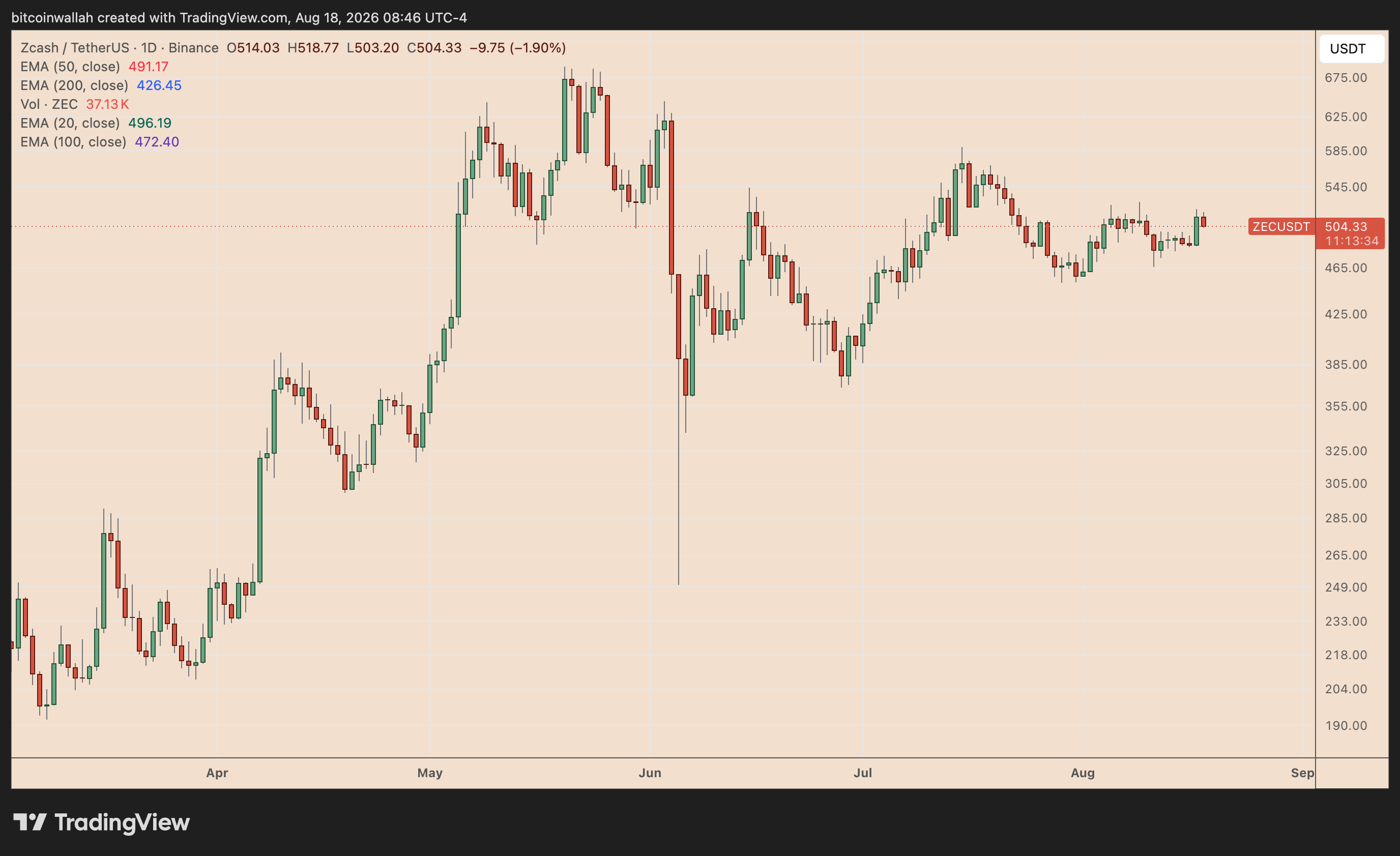
As of Aug. 18, ZEC was trading near $511, up about 5% on the day and holding above its major moving averages. Buyers have repeatedly defended the $490–$500 area since late July.
The ZEC/USD pair plunged more than 50% on June 5, falling from around $630 to near $310 after developers disclosed a critical vulnerability in Zcash’s Orchard shielded pool. It briefly traded as low as $250 during the panic before partially recovering from the decline.
The flaw could theoretically have allowed an attacker to create an unlimited amount of counterfeit ZEC inside the Orchard pool without detection, according to Shielded Labs.
An emergency fix was deployed on June 1, with the coordinated remediation completed by June 2. That helped ZEC recover sharply, with its prices now up by over 100% from the June nadir.
Hayes followed on June 5 by announcing that he had sold his entire ZEC position. He acknowledged that improper minting was probably unlikely, but argued that the inability to prove it had never happened undermined the privacy thesis behind his investment.
The Zcash market has absorbed much of the panic surrounding the Orchard disclosure and Arthur Hayes’ ZEC dump.
ZEC Technicals Exhibit Strong Upside Potential
Zcash’s weekly chart is also showing a strong bullish structure.
ZEC appears to be forming a cup-and-handle pattern, a classic bullish continuation setup that often precedes a fresh breakout. That is applicable if the early June downside wick, triggered by the Orchard vulnerability scare, is treated as an outlier,
The rounded “cup” developed after ZEC’s sharp recovery from its 2024–2025 lows, while the recent sideways-to-slightly-lower consolidation resembles the “handle.”
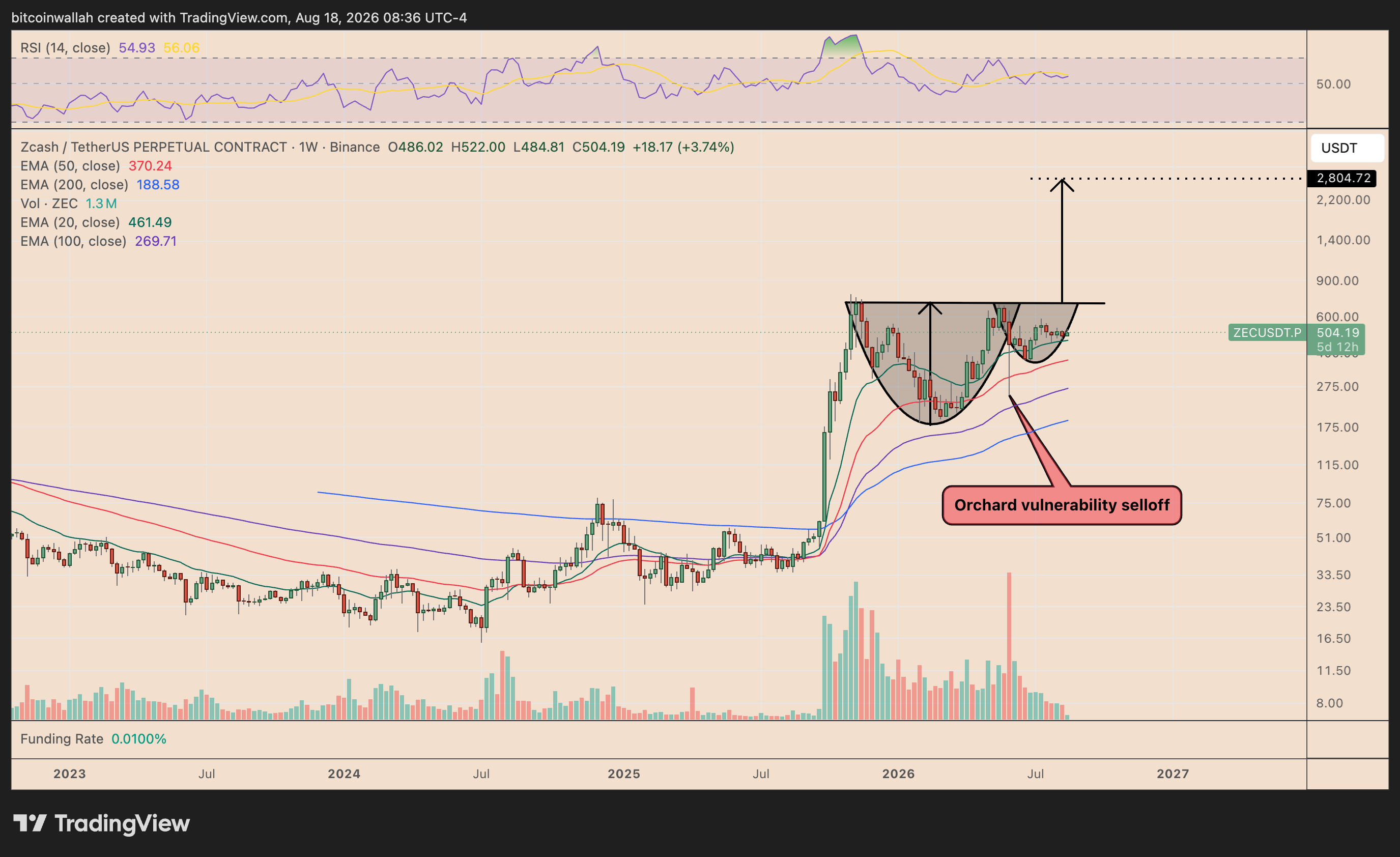
ZEC is now trading just below the pattern’s neckline resistance in the $750–$775 area. A decisive breakout above that range would confirm the setup and could put $1,000 back on the table as a near-term upside target, potentially by the end of 2026.
In traditional technical analysis, the breakout target is calculated by adding the cup’s depth to the neckline level. That projection points to a move well above $2,000 in 2027 if bullish momentum continues.
In other words, ZEC’s price action suggests that June’s crash may have been a temporary disruption rather than a trend-ending event.
What Could Change This Bullish Zcash Outlook?
Zcash’s biggest risk currently comes from the macro backdrop.
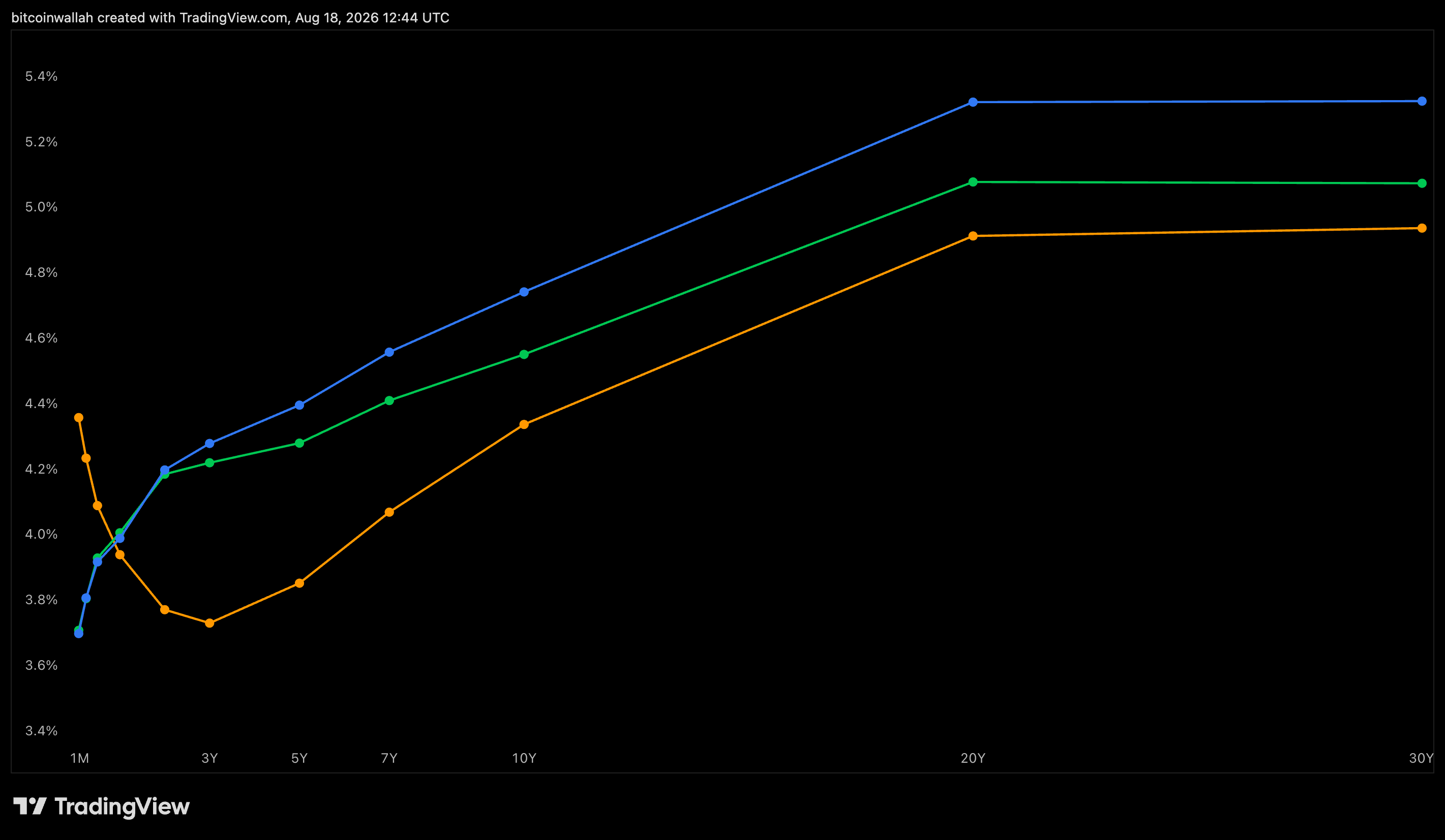
US Treasury yields remain elevated, with the 30-year yield above 5.3% and the 10-year near 4.7% on Aug. 18. Higher bond yields typically reduce demand for speculative assets such as cryptocurrencies.
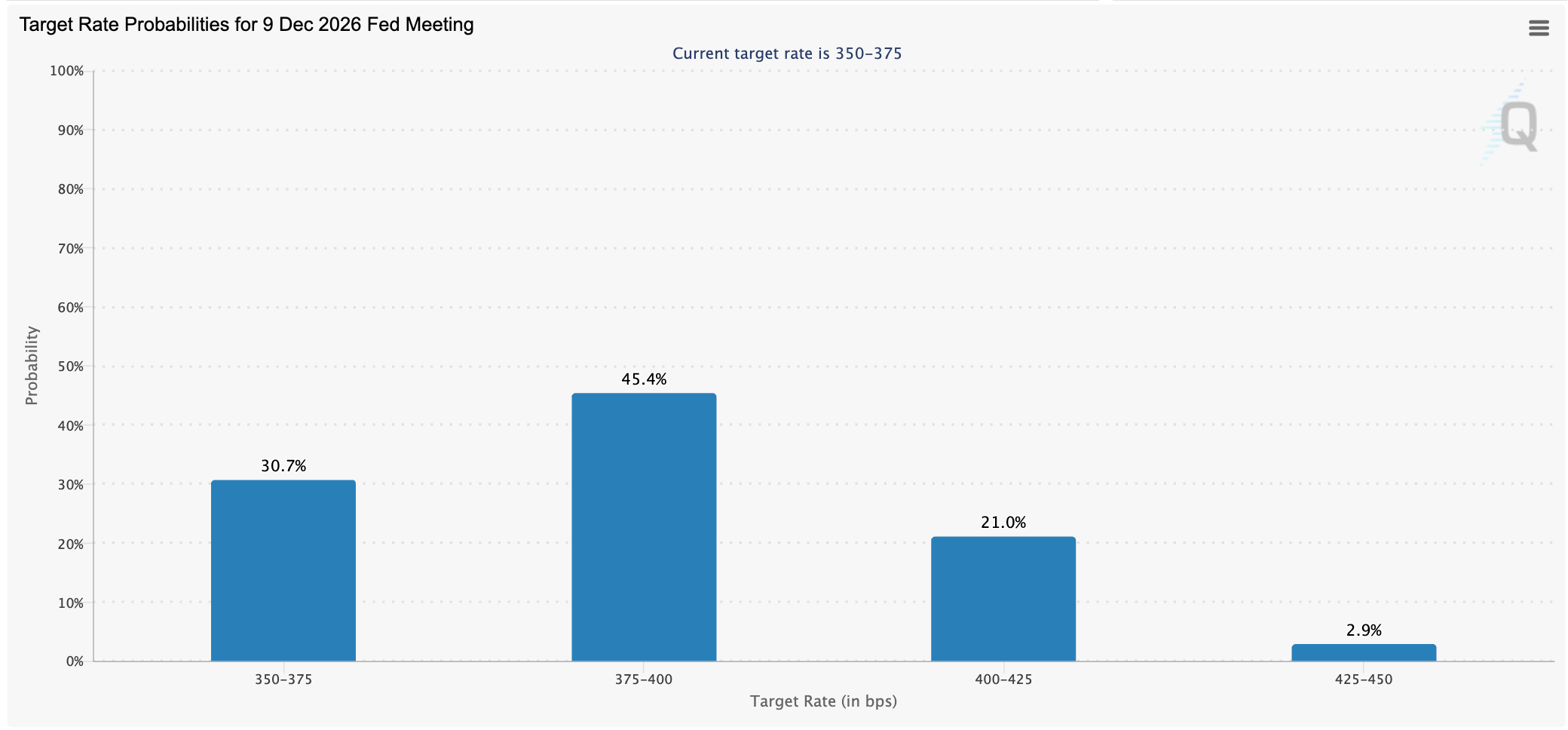
Inflation risks also remain elevated, with Brent crude above $90 and July US CPI at 3.4% year-over-year. Meanwhile, markets still see a 45.4% chance of another Fed rate hike in December.
Japan adds another liquidity risk. Japanese 10-year yields have climbed toward 3%, while markets are increasingly pricing another Bank of Japan rate hike in September
A further rise in global yields or renewed Fed/BOJ tightening expectations could weaken ZEC’s breakout setup.