



Following Wednesday’s FOMC projections and FED Chair Powell press conference, the focus returned to the Eurozone.
4th quarter wage growth and January trade data for the Eurozone were in focus.
Wage Growth
In the 4th quarter, wages grew by 3.5%, following 2.2% growth in the 3rd quarter.
January Trade
Trade data was of greater influence early in the European session, however.
In January, the trade surplus narrowed from €29.2bn to €6.3bn.
According to Eurostat,
Compared with January 2020:
- Exports of goods to the rest of the world fell by 11.4%, year-on-year, to €163.1bn.
- Imports of goods from the rest of the world fell by 14.1% to €156.8bn.
- Inter-euro area trade fell by 3.9% to €159.7bn in January 2021.
Compared with January – December 2019:
- Euro area exports of goods to the rest of the world fell by 9.2% in January to December 2020 to €2,131.4bn.
- Imports fell by 10.8% to €1,897.1bn over the same time period.
- As a result, the euro area recorded a surplus of €234.3bn, compared with €221.0bn in January to December 2019.
Market Impact
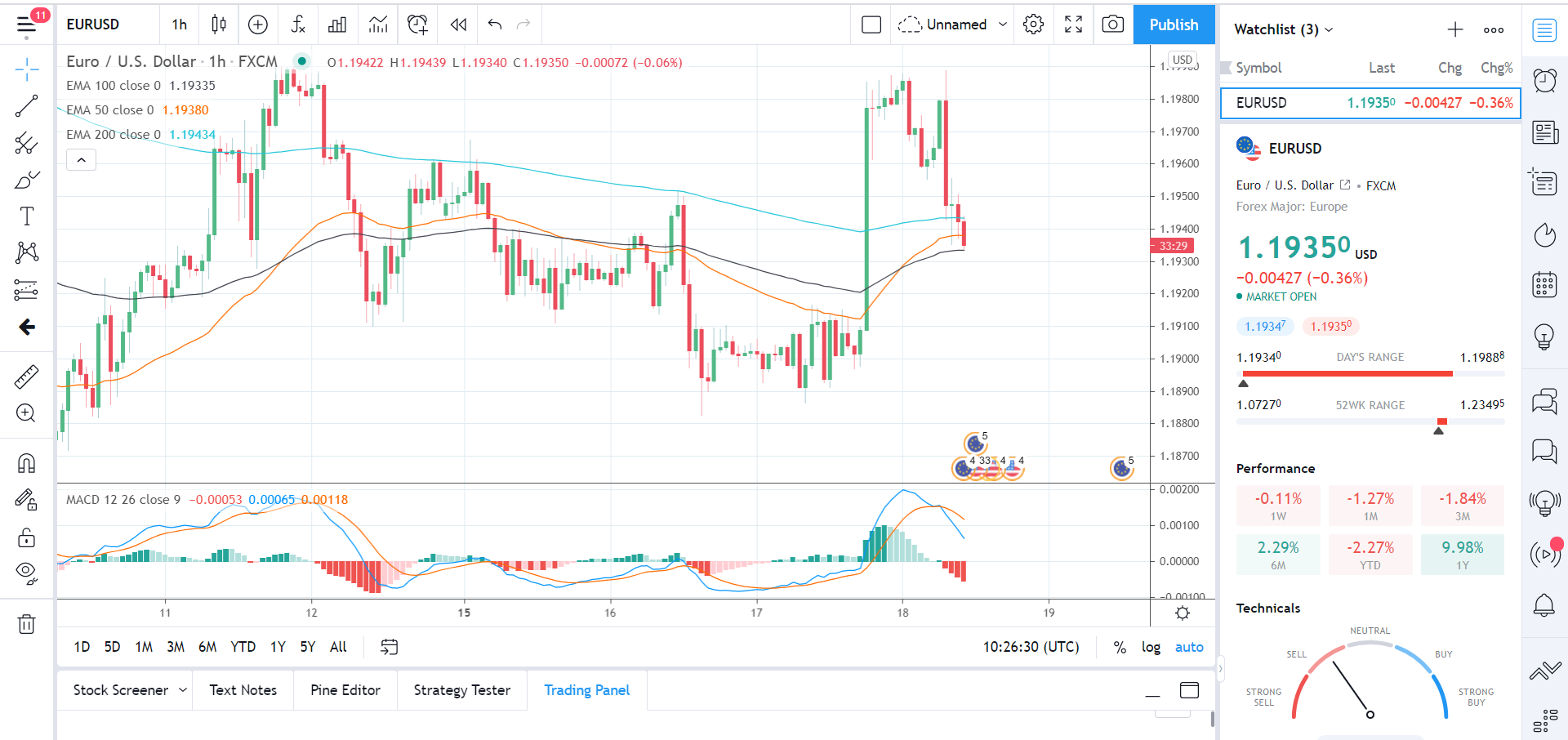
Ahead of today’s stats, the EUR struck a current day high $1.19888 before hitting reverse.
In response to the trade and wage growth figures, the EUR rose from $1.19422 to a post-stat high $1.19439 before falling to a post-stat low and a current day low $1.19340.
At the time of writing, the EUR was down by 0.36% to $1.19350.
Next Up
U.S weekly jobless claims and Philly FED Manufacturing PMI numbers.
On the monetary policy front, ECB President Lagarde is also on the docket on the hour.