

LINK Technical Analysis: Triangle Setup Favors 90% Rebound
Chainlink will likely finish 2025 coiled within a long-term compression structure, with the price consolidating near a rising trendline that has repeatedly acted as support over the past two years.
On the weekly chart, LINK is defending the $12-14 zone while volatility tightens between an ascending support line and a descending cycle-top resistance, a setup that often precedes directional expansion.
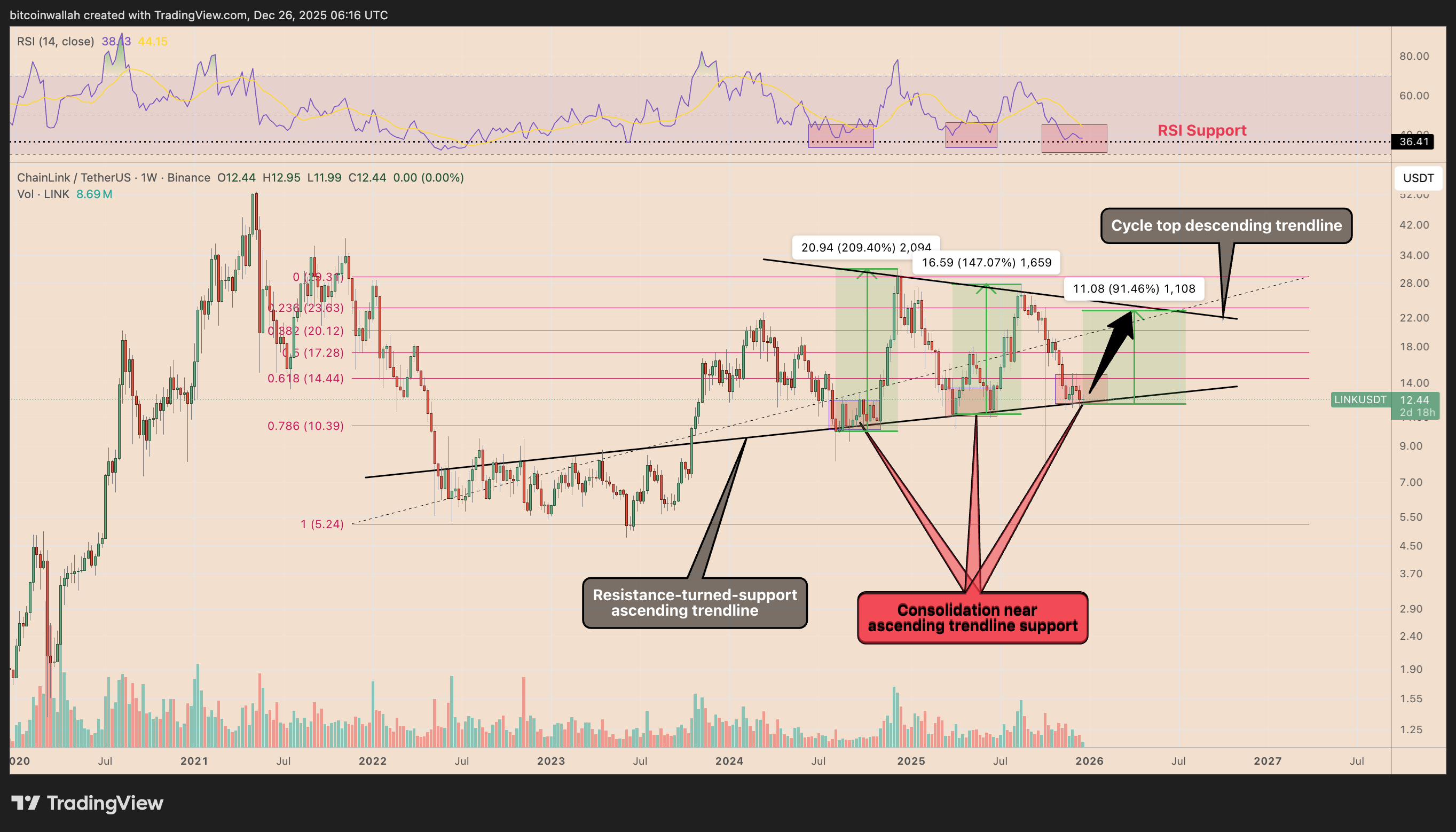
Weekly relative strength index (RSI) is hovering near long-standing support around the mid-30s, a level that has historically aligned with trendline bounces since mid-2024.
As long as LINK holds above its rising base, the risk-reward favors upside continuation. A successful rebound places the $23-24 region firmly in focus, up 90% from the current price levels.
That zone marks both a key Fibonacci resistance and the upper boundary of the broader triangle, making it the primary upside target to watch in early 2026.
Chainlink’s MVRV Z-Score Signals Undervaluation Risk-Reward Shift
On-chain data adds a supportive layer to Chainlink’s technical setup.
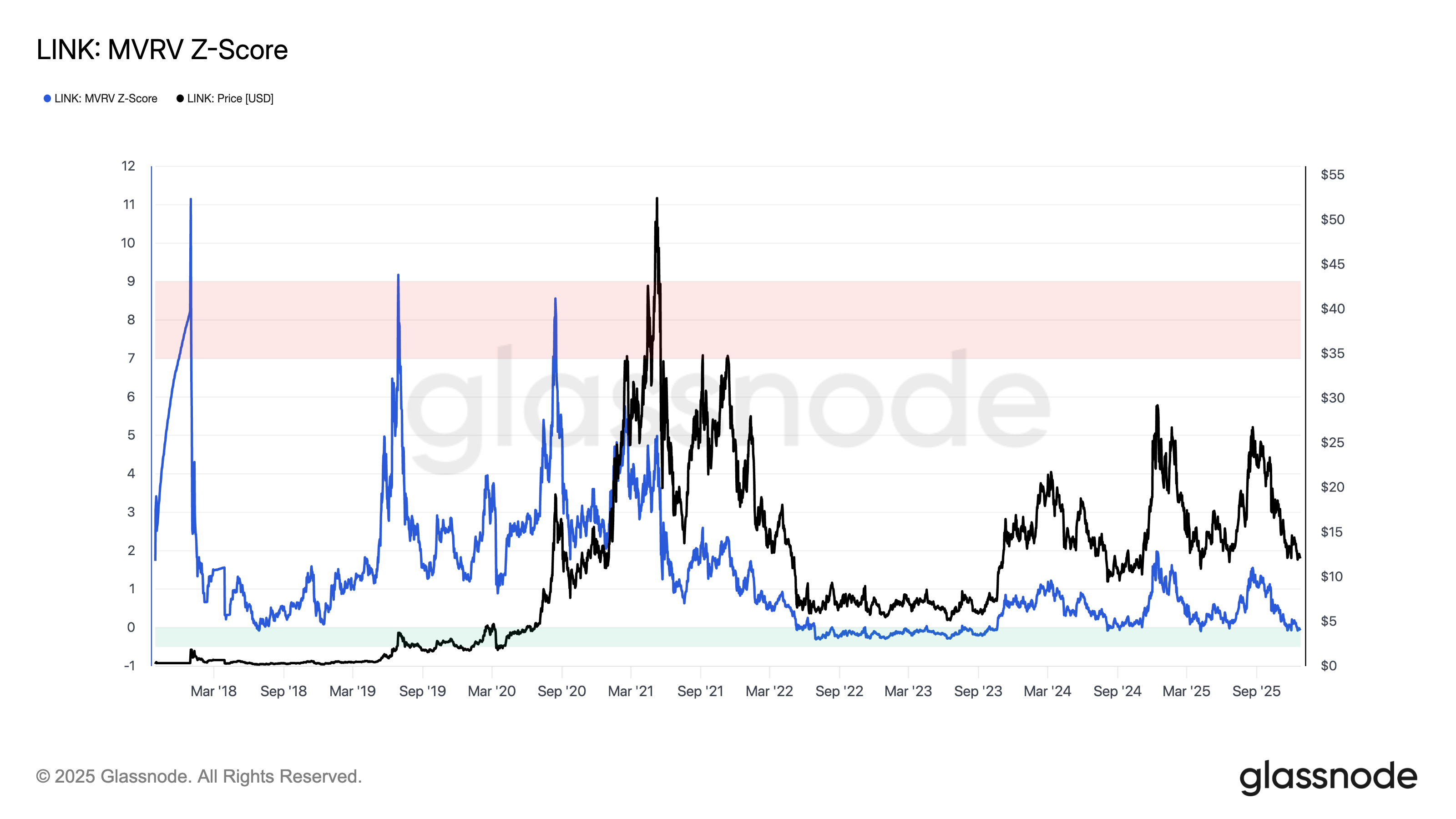
When the Z-Score trends deeply negative, it has often coincided with long-term accumulation phases rather than sustained downside.
The indicator does not time exact bottoms, but its current position suggests selling pressure may be increasingly exhausted, reinforcing the case for a stabilization phase and a potential recovery toward the $23-24 resistance zone.
LTC Technical Analysis: Channel Support Keeps $170–$180 in Play
Litecoin will likely close 2025 testing the lower boundary of its long-term ascending channel, a level that has consistently acted as an accumulation zone since the 2022 bear-market low.
Price is consolidating around the $75–$80 area, where rising channel support meets prior demand, suggesting downside pressure may be fading rather than accelerating.
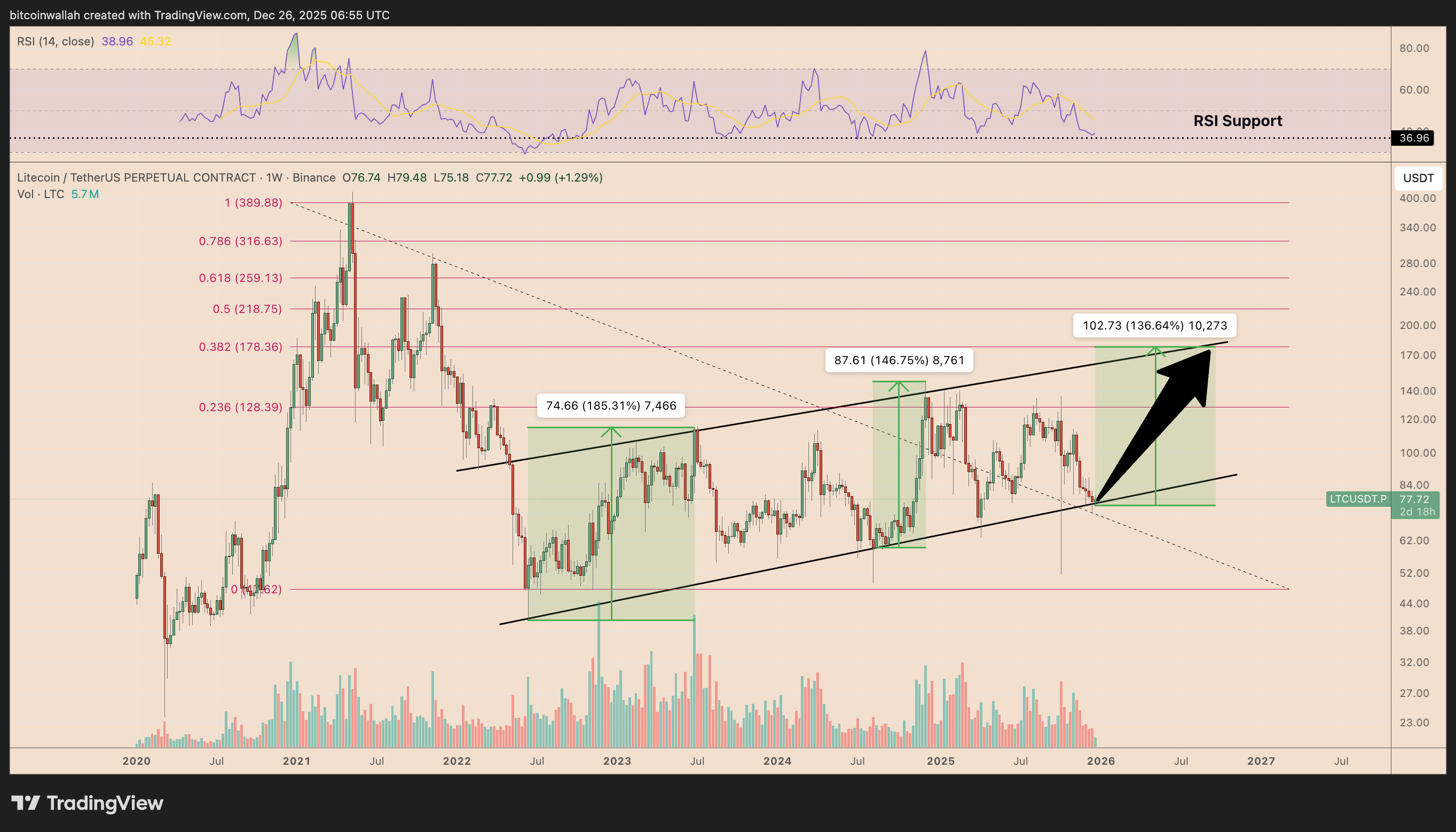
Momentum indicators support this view. Weekly RSI is hovering near the mid-30s, a region that has historically functioned as RSI support during corrective phases, often preceding relief rallies rather than breakdowns.
From a structural perspective, LTC remains in a broader uptrend as long as it holds above channel support.
A successful bounce would likely trigger a mean-reversion move toward the upper boundary of the channel, which aligns closely with the 0.382 Fibonacci retracement near $170–$180.
That zone has capped several recovery attempts in recent years, making it the primary upside level to watch if buyers regain control heading into early 2026.
Litecoin’s On-Chain Metric Projects $80-100 in Q1 2026
Litecoin’s Pi Cycle Top indicator adds weight to the rebound thesis.
Historically, LTC has tended to gravitate back toward its 111-day simple moving average after extended periods of underperformance below it, often producing sharp relief rallies rather than slow grind-ups.
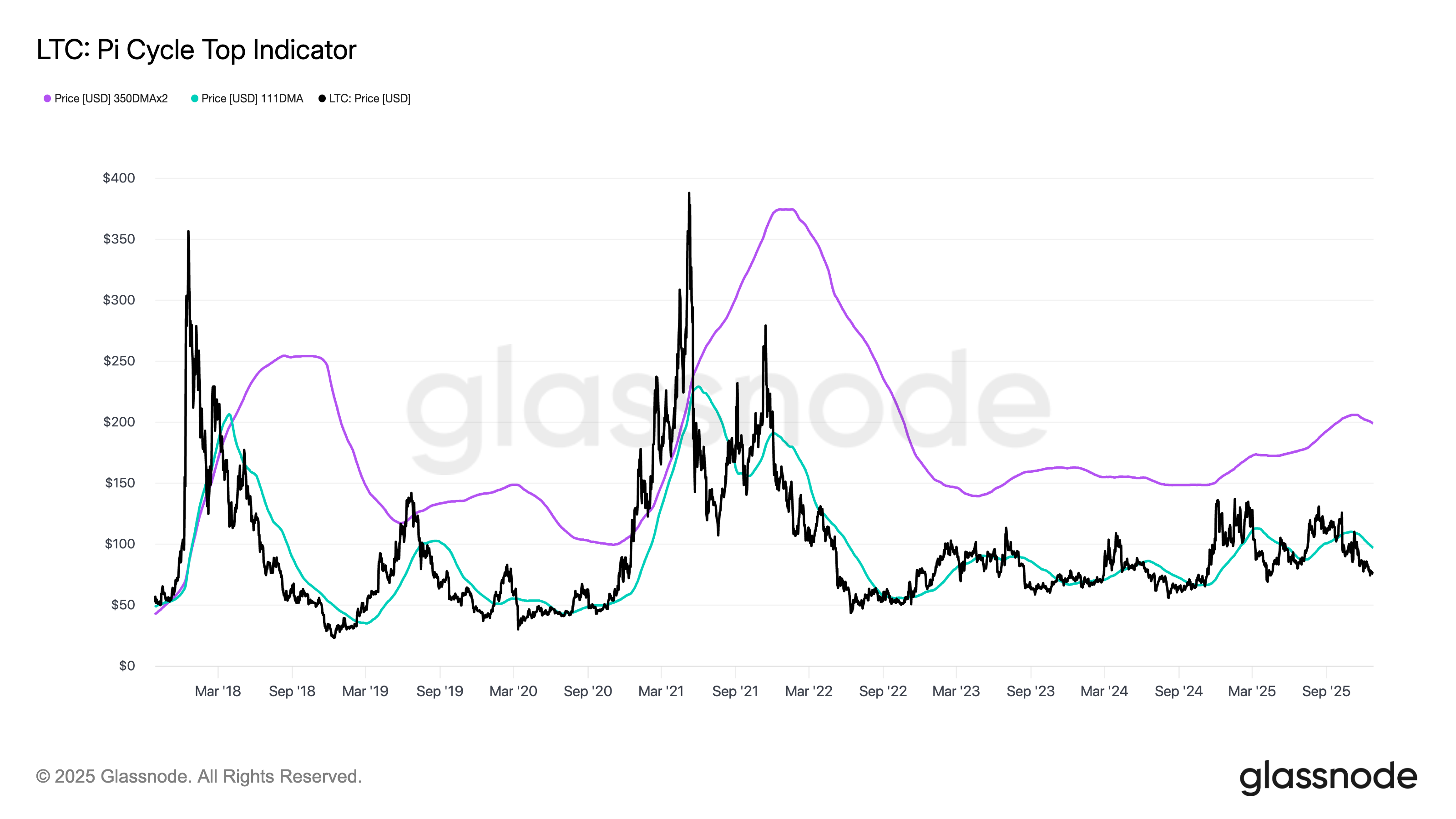
At present, price is trading well beneath the 111D SMA near $98–$100, creating a clear mean-reversion gap. In prior cycles, similar deviations preceded swift upside moves as momentum normalized and sidelined buyers stepped back in.
ZEC Technical Analysis: Ascending Triangle Signals $700 Price in Q1 2026
Zcash is consolidating inside a textbook ascending triangle following its explosive Q4 rally, suggesting the market is digesting gains rather than rolling over.
Price continues to post higher lows, supported by rising short- and medium-term EMAs, while horizontal resistance near the $470–$480 zone caps the structure. This pattern typically reflects sustained demand absorbing supply at a fixed level.
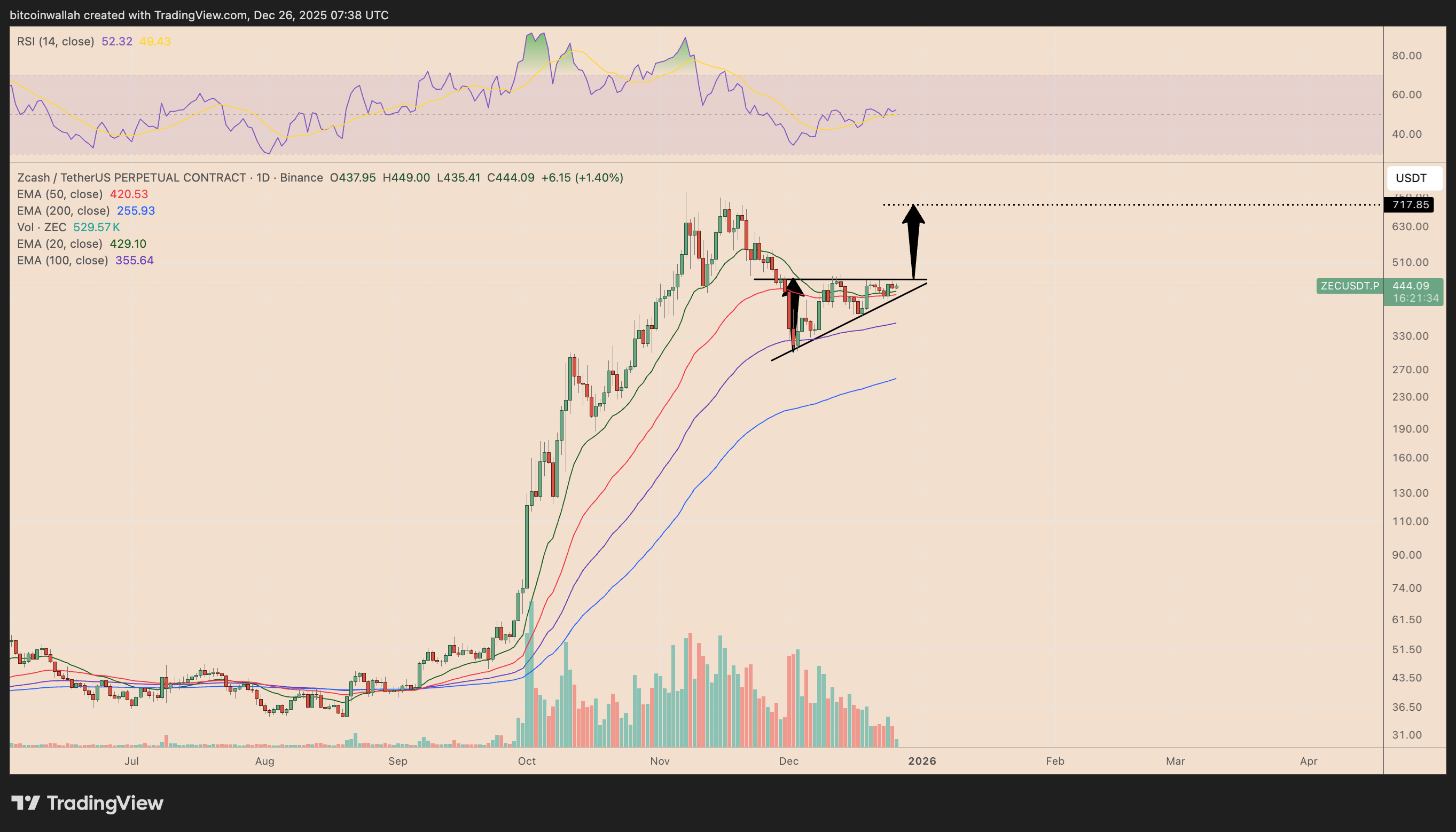
Daily RSI is holding above the midline, signalling bullish control despite recent consolidation.
If ZEC confirms a breakout above triangle resistance, the setup opens the door for a continuation move toward the $700–$720 region in Q1 2026, aligned with the prior measured move projection.