
US Services PMI and labor market data sink bets on a March Fed rate cut, sending Bitcoin (BTC) to $90,000.
US economic indicators signaled a pickup in economic momentum at the end of 2025, with services sector activity accelerating. The US jobs report highlighted a tighter labor market and rising wages, weighing on hopes for lower borrowing costs.
Stronger-than-expected US economic data and fading bets on a March Fed rate cut weighed on demand for BTC-spot ETFs, adding to the bearish sentiment. Despite this week’s pullback, the medium-term outlook remains bullish.
Below, I consider the key drivers behind recent price trends, the short-term outlook, the medium-term trajectory, and the key technical levels traders should watch.

US Jobs Report and Consumer Sentiment Signal Robust Economy
US economic indicators weighed on demand for BTC. Unemployment fell from 4.5% in November to 4.4% in December, while average hourly earnings rose 3.8% year-on-year in December (November: 3.6%).
Typically, tighter labor market conditions and higher wages fuel consumer spending and demand-driven inflation, cooling Fed rate cut bets.
The Michigan Consumer Sentiment Index increased from 52.9 in December to 54.0 in January, adding to the positive sentiment toward the US economy. An upswing in sentiment signaled a pickup in private consumption, which accounts for around 60% of the US GDP.
BTC climbed to a January 9 high of $92,011 before dropping back to $90,000 on sentiment toward the Fed rate path. According to the CME FedWatch Tool, the chances of a March cut fell from 51.1% on January 2 to 28.7% on January 9.
This week, service sector PMI data also weighed on hopes for a Fed rate cut. The all-important ISM Services PMI increased from 52.6 in November to 54.4 in December. Accounting for around 80% of the US GDP, the pickup in sector activity challenged calls from the US administration to cut interest rates.
Nevertheless, expectations of an incoming Fed Chair, supporting a lower interest rate environment, support a bullish short- to medium-term price outlook.
Bitcoin Price Forecast
Every new Bitcoin analysis as it publishes, today's technical signal and key levels, live price — on one page.
See all Bitcoin forecastsUS BTC-Spot ETFs Extend Outflow Streak
Fading bets on a March Fed rate cut weighed on demand for US BTC-spot ETFs, contributing to BTC’s pullback to $90,000. According to Farside Investors, BTC-spot ETF issuers saw net outflows of $680.9 million in the reporting week ending January 9, reversing $459 million in net inflows the previous week.
Key flow trends for the week included:
- Fidelity Wise Origin Bitcoin Fund (FBTC) reported net outflows of $481.2 million.
- Grayscale Bitcoin Trust (GBTC) saw net outflows of $171.8 million.
- In total, six ETF issuers reported weekly net outflows.
- Meanwhile, iShares Bitcoin Trust (IBIT) had net inflows of $25.9 million.
- Five of the 11 ETF issuers reported weekly inflows.
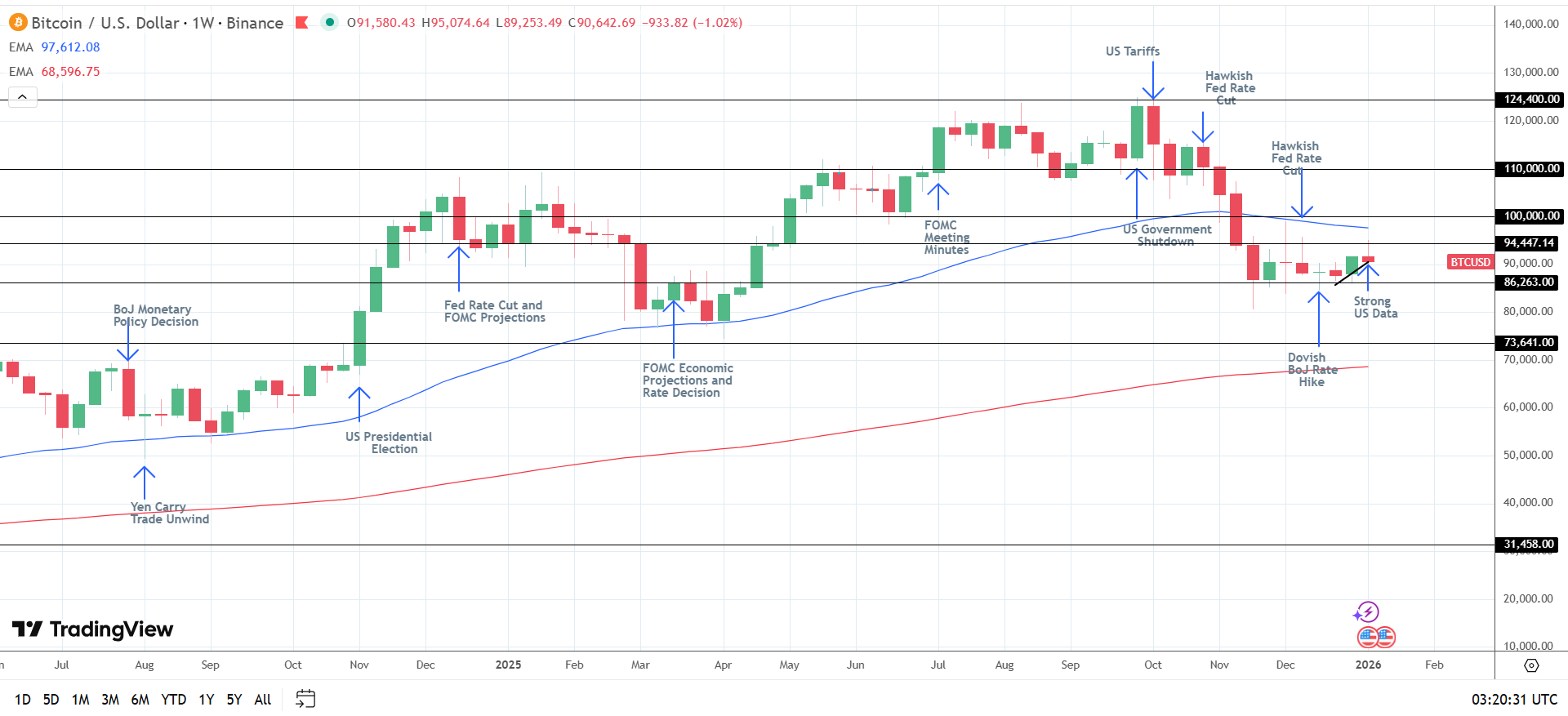
US BTC-spot ETF flows remain key for the supply-demand balance. Weekly outflows left BTC down 1.02% for the current week despite striking a five-week high of $95,075 on Monday, January 5.
Crucially, extended outflows in the week ahead would derail the cautiously bullish short-term and bullish medium-term outlook.
Bitcoin Fear & Greed Index Signals Sentiment Pickup
While this week’s US BTC-spot ETF market outflows contributed to the bearish sentiment, several price catalysts support a cautiously bullish short-term and a bullish medium-term outlook. Morgan Stanley’s S-1 filing for a BTC-spot ETF suggests a strong institutional demand backdrop.
The Morgan Stanley move followed the Market Structure Bill’s progress toward the January markups, another crucial development. The MSCI’s decision to retain digital asset treasury companies (DATs) was another positive development.
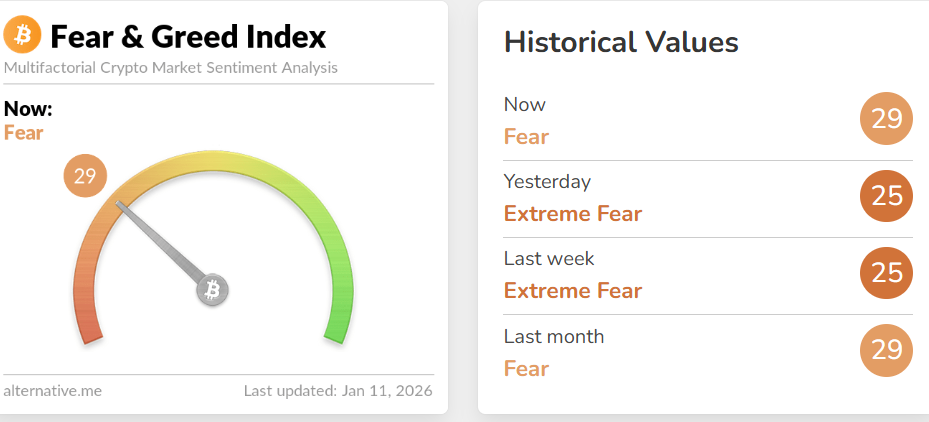
The Bitcoin Fear & Greed Index increased from 25 on January 10 to 29 on January 11, exiting the Extreme Fear zone. The upswing into the Fear zone suggests improving sentiment, affirming the bullish outlook.
Downside Risks: US Data, Central Banks, Regulatory Developments, and ETF Flows
While fundamentals support a constructive bias, downside risks remain, including:
- The BoJ announces a high neutral interest rate (1.5%-2%), indicating multiple rate hikes and increased risks of a yen carry trade unwind.
- US economic data and the Fed signal a more hawkish rate path.
- BTC-spot ETFs face extended outflows.
These scenarios would likely send BTC toward the November 21 low of $80,523, exposing the April low of $74,394.
In summary, the short-term outlook remains cautiously bullish as fundamentals outweigh the technicals. The medium- to longer-term outlook is constructive.
Technical Analysis
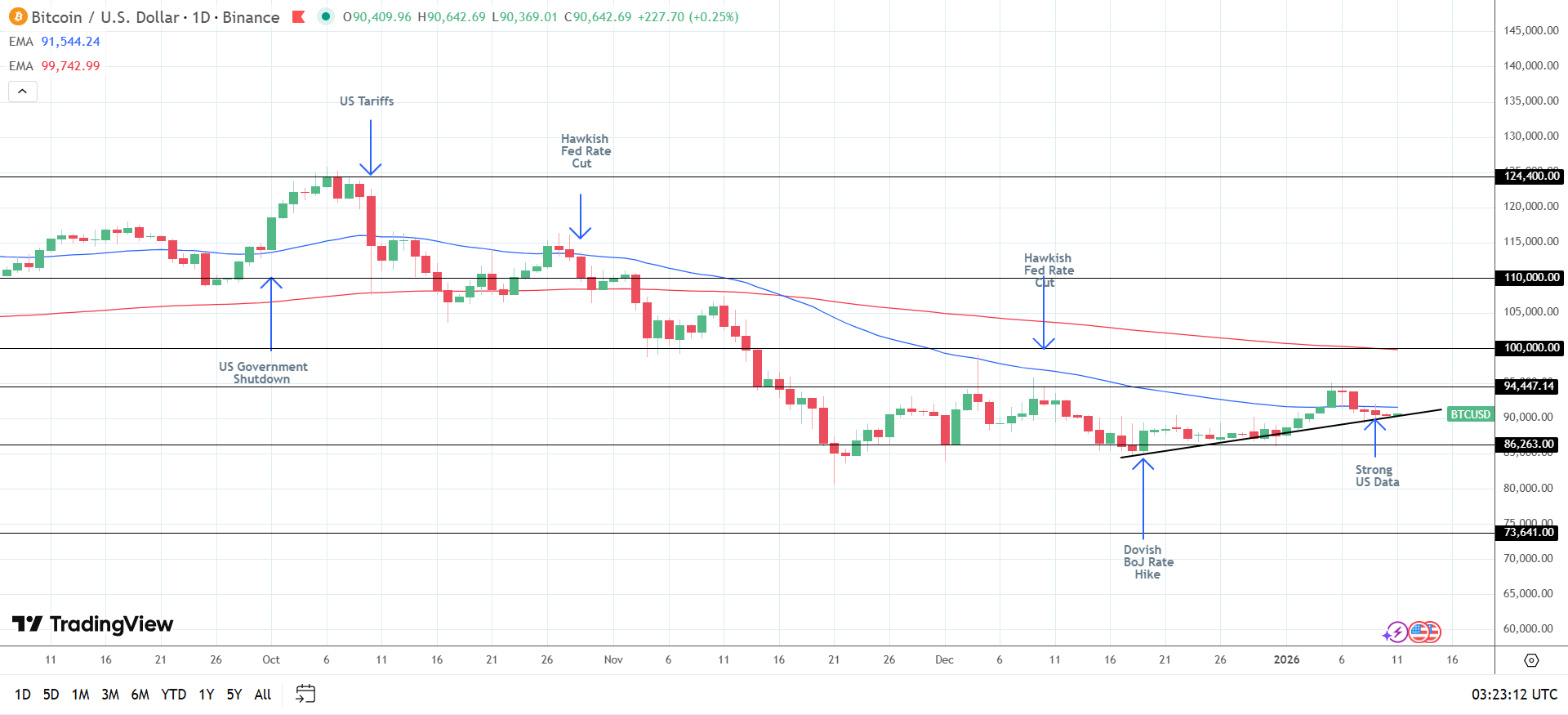
The weekly reversal left BTC below its 50-day and 200-day Exponential Moving Averages (EMAs), indicating a bearish bias. However, fundamentals are diverging from the technical indicators, signaling a rebound.
A break above the 50-day EMA would bring the $94,447 resistance level into play. Importantly, a sustained move above the 50-day EMA would indicate a near-term bullish trend reversal, paving the way toward the $100,000 psychological resistance level and the 200-day EMA. A break above the EMAs would reinforce the bullish short- to medium-term price outlook.
Bearish Structure Validation: What Happens if BTC Holds $90,000?
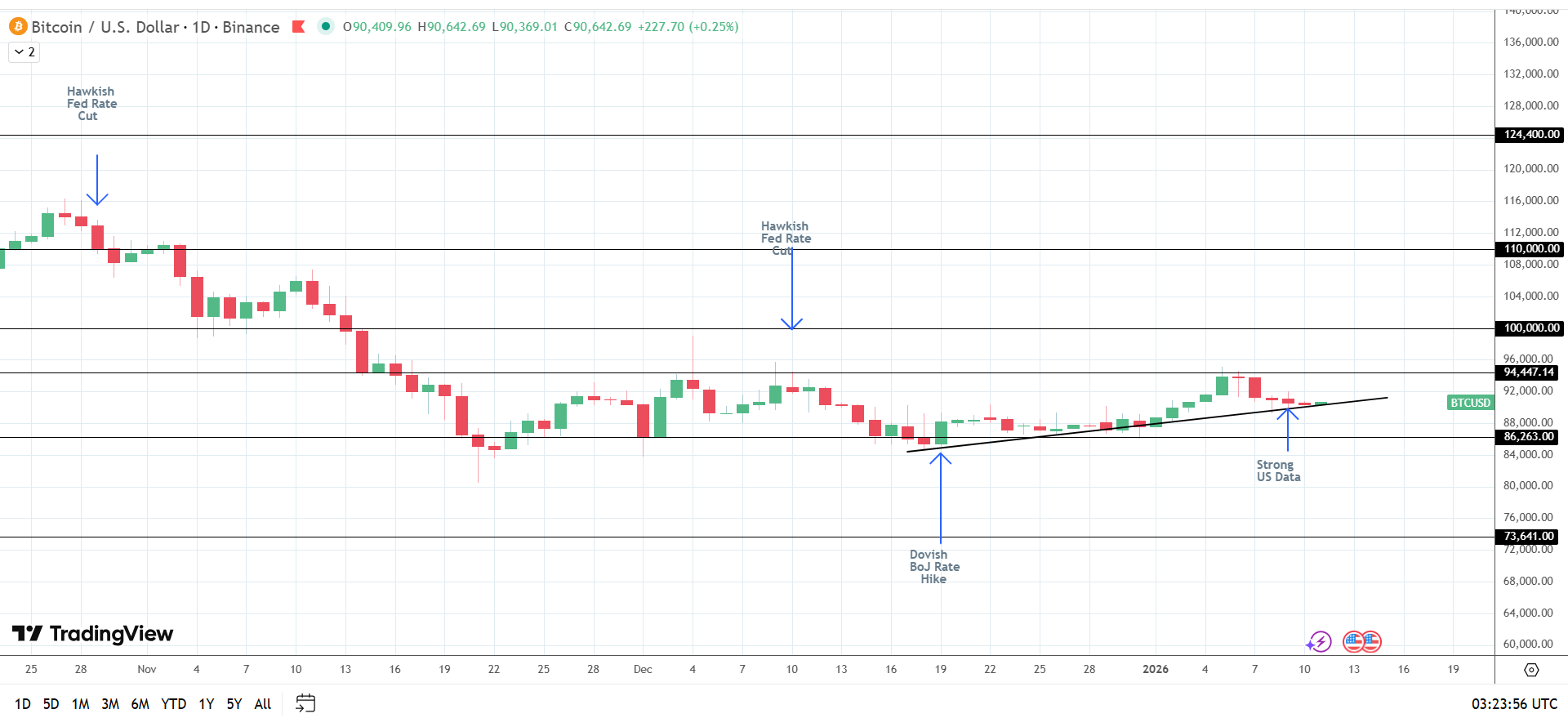
Avoiding a sustained fall below the $90,000 level and the trendline would support a move to $95,000. A breakout above $95,000 would validate the bullish structure, reinforcing the bullish short-term (1-4 weeks) target of $100,000 and the medium-term (4-8 weeks) target of $115,000.
However, a drop below $90,000 would expose the November low of $80,523 and invalidate the bullish structure.
Track BTC market trends with our real-time data and insights here.
Outlook: $90,000 Support Key to Bullish Outlook
US economic data, the Fed, the BoJ, and demand for US BTC-spot ETFs will influence demand for BTC.
The US CPI Report (January 13) will be the key event of the coming week. Softer US inflation and dovish Fed chatter would likely lift sentiment.
Considering the current market dynamics, the outlook remains constructive, with a 6-12 month price target of $150,000. The US Senate’s passing the Market Structure Bill would add to the bullish outlook.
Stay informed on BTC trends by monitoring macroeconomic developments, ETF flows, and technical indicators here.