
Bitcoin (BTC) investors are selling at a loss again for the first time since October 2023, according to CryptoQuant data.

69,000 BTC Sold Underwater Since December
Since December, holders have realized about 69,000 BTC in losses, worth roughly $6.1 billion at current prices. It reflects that a meaningful number of investors have been selling underwater positions instead of selling into strength.
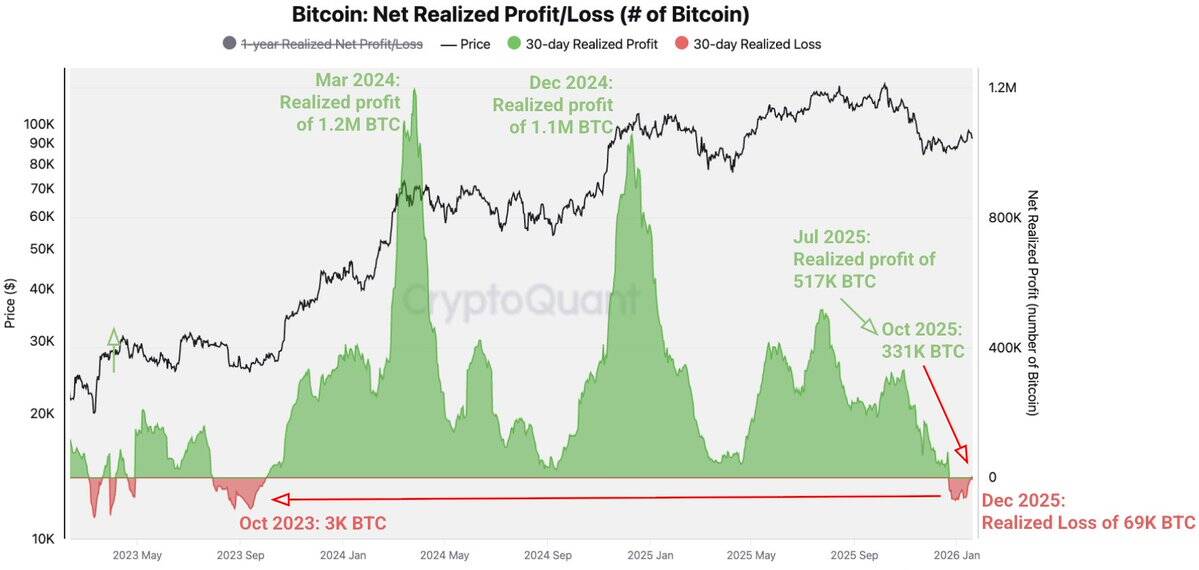
Unlike profit-taking, which often happens during rallies and can be absorbed, loss-realization suggets that traders are giving up on a position while anticipating further losses.
It can increase pressure during pullbacks because the selling is not coming from confident traders trimming gains, but from investors trying to limit their losses overall.
Profit-taking Faded for Months Before Losses Returned
CryptoQuant’s data further suggests this wasn’t a sudden switch.
Bitcoin Price Forecast
Every new Bitcoin analysis as it publishes, today's technical signal and key levels, live price — on one page.
See all Bitcoin forecasts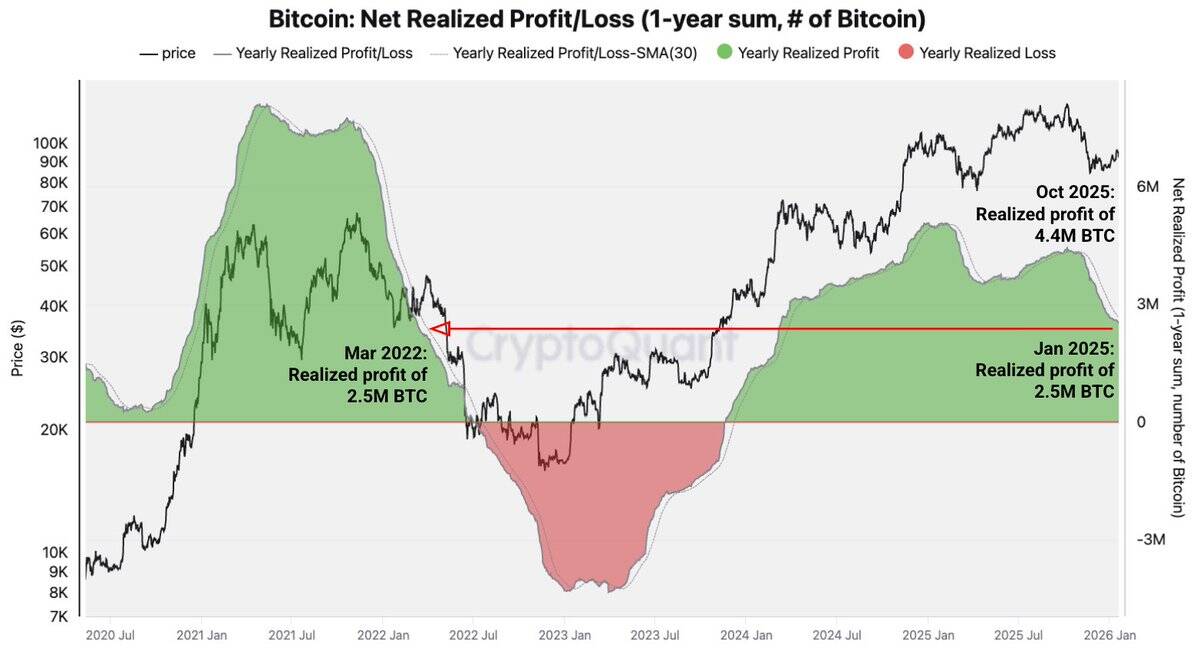
In the prior cycle, realized profits peaked in January 2021, then weakened through 2021. After that, realized losses started to show up as the market moved into the 2022 bear phase.
This does not prove Bitcoin is entering another 2022-style crash. But it does show a familiar pattern: first, fewer people are able or willing to take profits; later, more people are forced to sell at a loss.
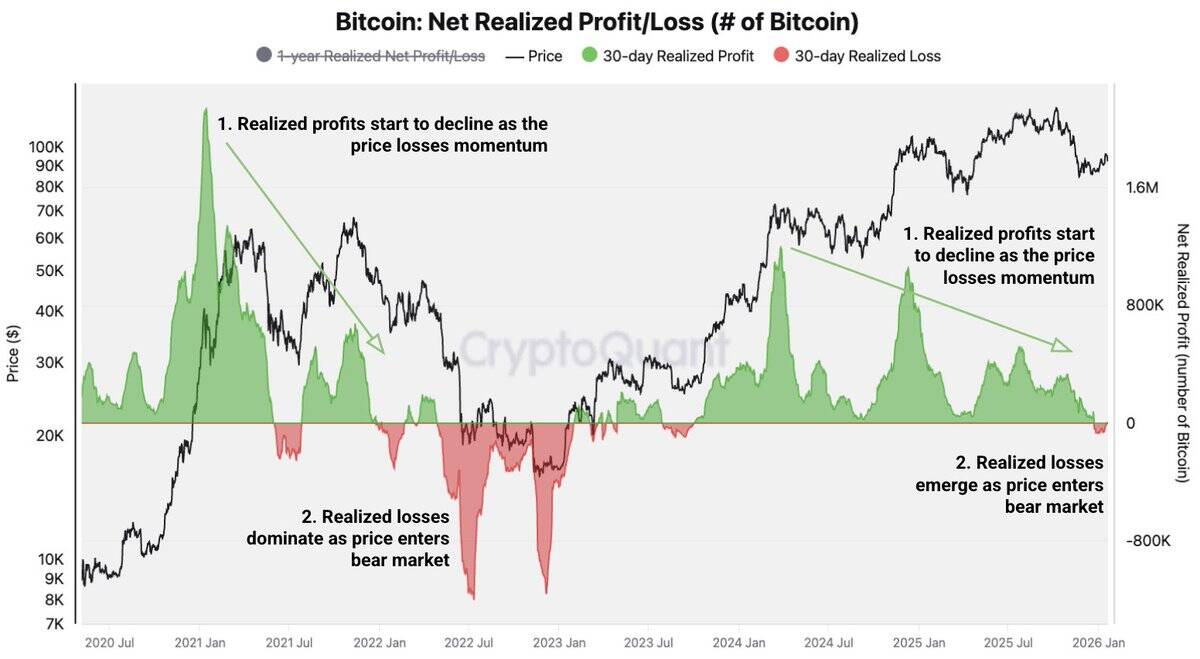
When fewer investors are sitting on big gains, the market can become more fragile. Small drops can feel bigger because more holders are closer to break-even, or already below it.
Analyst AlejandroBTC also highlighted how Bitcoin has been repeatedly failing to reclaim prior support, turning it into overhead supply.
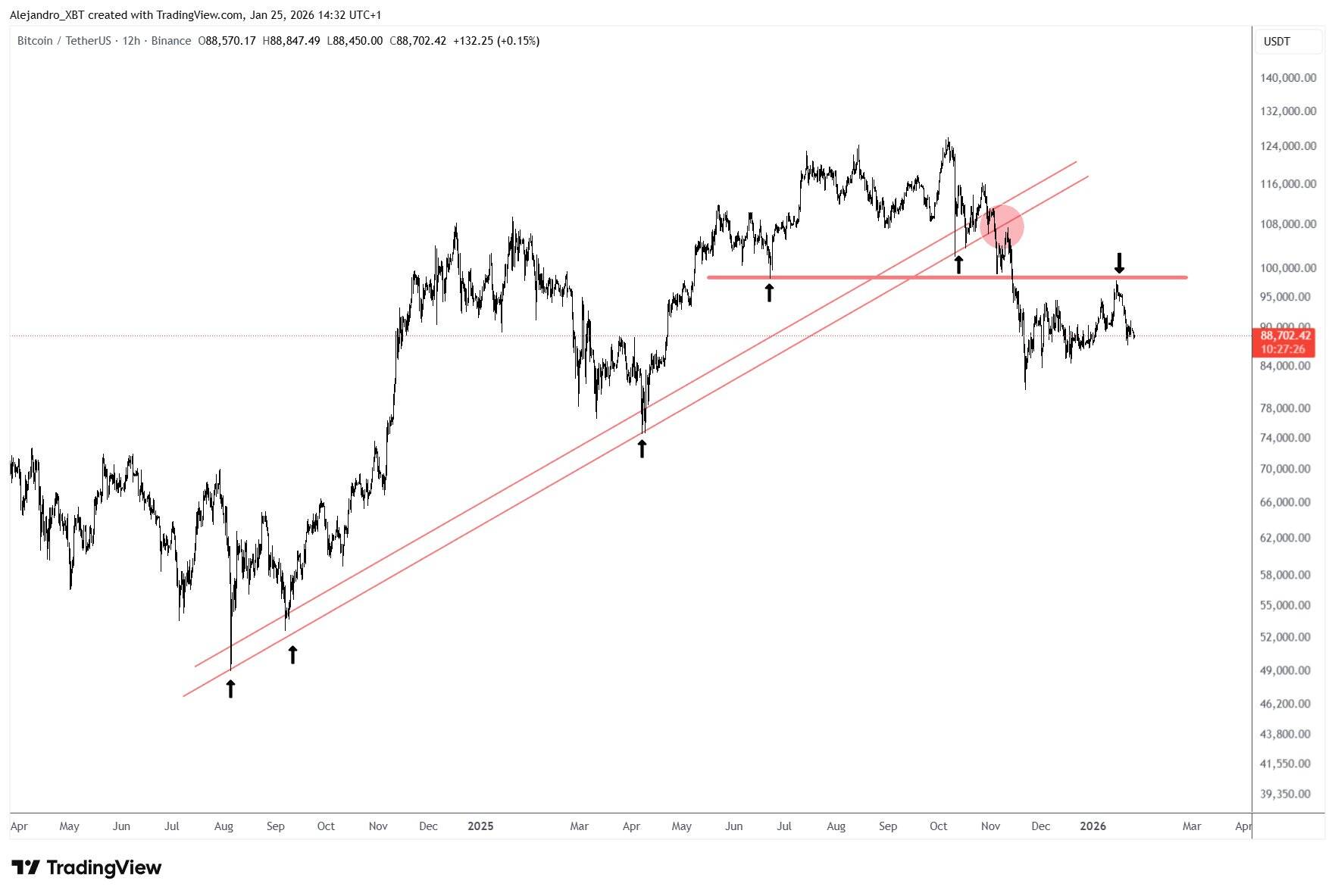
Each bounce is being sold sooner, which is typical when big holders use rallies to exit. Unless BTC breaks back above $100,000 and holds it, the path of least resistance remains down, with deeper support levels likely next.