Bitcoin (BTC) has gone down by 19% in the past 30 days as market sentiment has soured due to a deterioration in the macroeconomic backdrop.
The end of the war with Iran did not provide the sentiment boost we initially expected, and the latest rally succumbed after Kevin Warsh gave his first speech as Chairman of the Federal Reserve.
The market’s focus right now seems to be on interest rates, as inflation in the United States is running hotter.
The new head of the Fed highlighted that inflation is a “choice”, and market participants interpreted that as a hawkish comment that points to a potential rate increase of as much as 50 basis points this year.
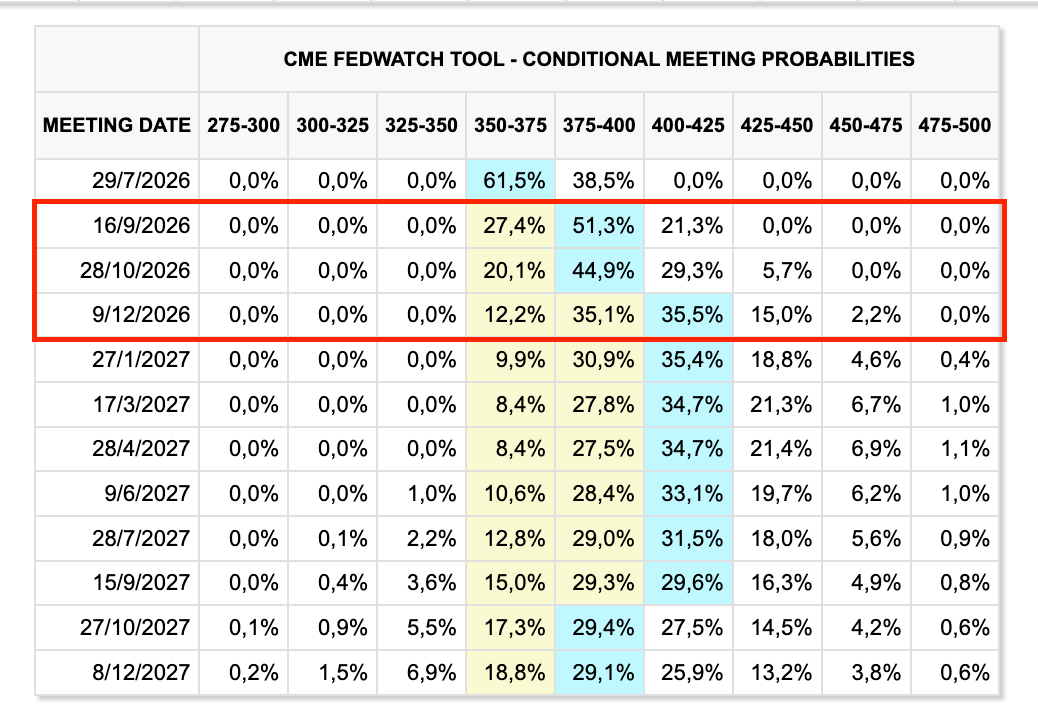
This changed the narrative entirely compared to earlier this year, as investors expected 2026 to bring forth one or two rate cuts.
As a result, what seemed like a strong bounce off Bitcoin’s $60,000 support has been a mere technical bounce, increasing the odds of a retest soon.

Whales Are Not Yet Selling Despite Bitcoin’s Stalled Rally
Market sentiment remains heavily depressed according to the Fear and Greed Index. This sentiment gauge sits at 19, indicating that investors are in “Extreme Fear” mode.
That said, deep-pocketed players are not yet dumping the top crypto. On-chain data from Santiment shows that BTC whale holdings experienced zero changes this month, but there was a big transfer between groups.
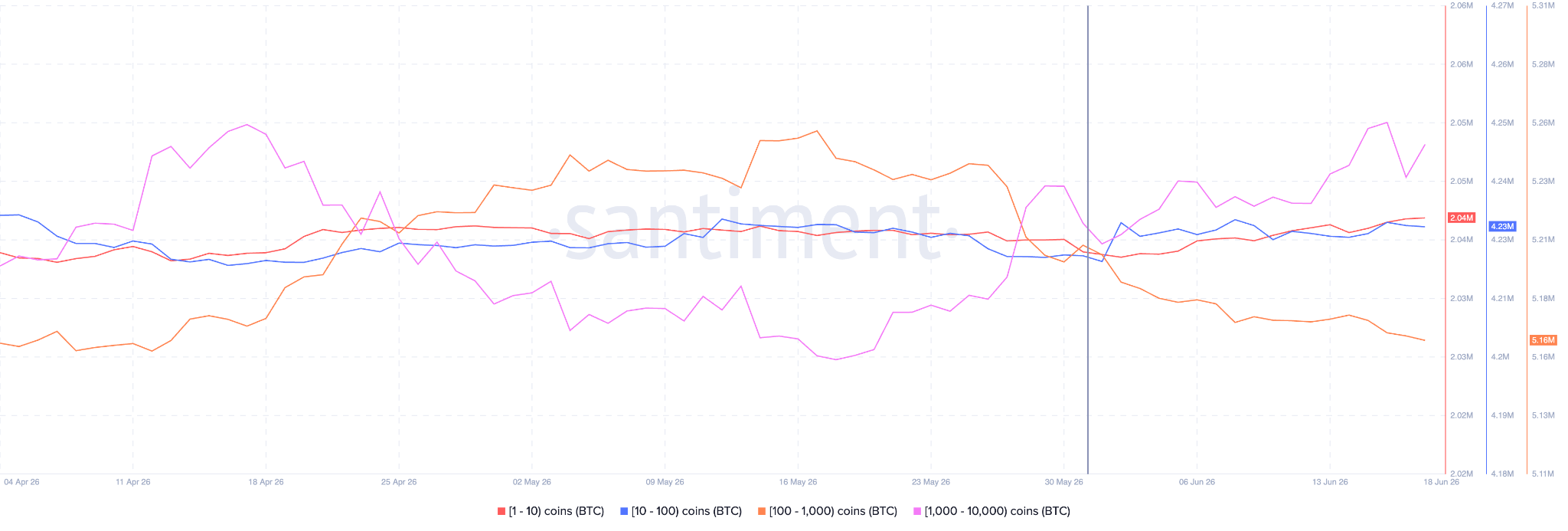
Addresses holding between 100 and 1,000 tokens sold 40,000 BTC while bigger addresses owning between 1,000 and 10,000 BTC bought 30,000 tokens. Meanwhile, wallets owning between 10 and 100 BTC bought 10,000 tokens.
The fact that whales are not in distribution mode confirms that these influential market participants have not yet made their minds about the impact of this recent deterioration in the macroeconomic landscape.
Bitcoin Price Forecast
Every new Bitcoin analysis as it publishes, today's technical signal and key levels, live price — on one page.
See all Bitcoin forecastsBTC Needs to Stay Above $60K to Keep Rallying, or It Risks a 17% Drop
Moving to the daily chart, our bearish trend line breakout fully yielded its expected outcome, which was a retest of the $60,000 support.
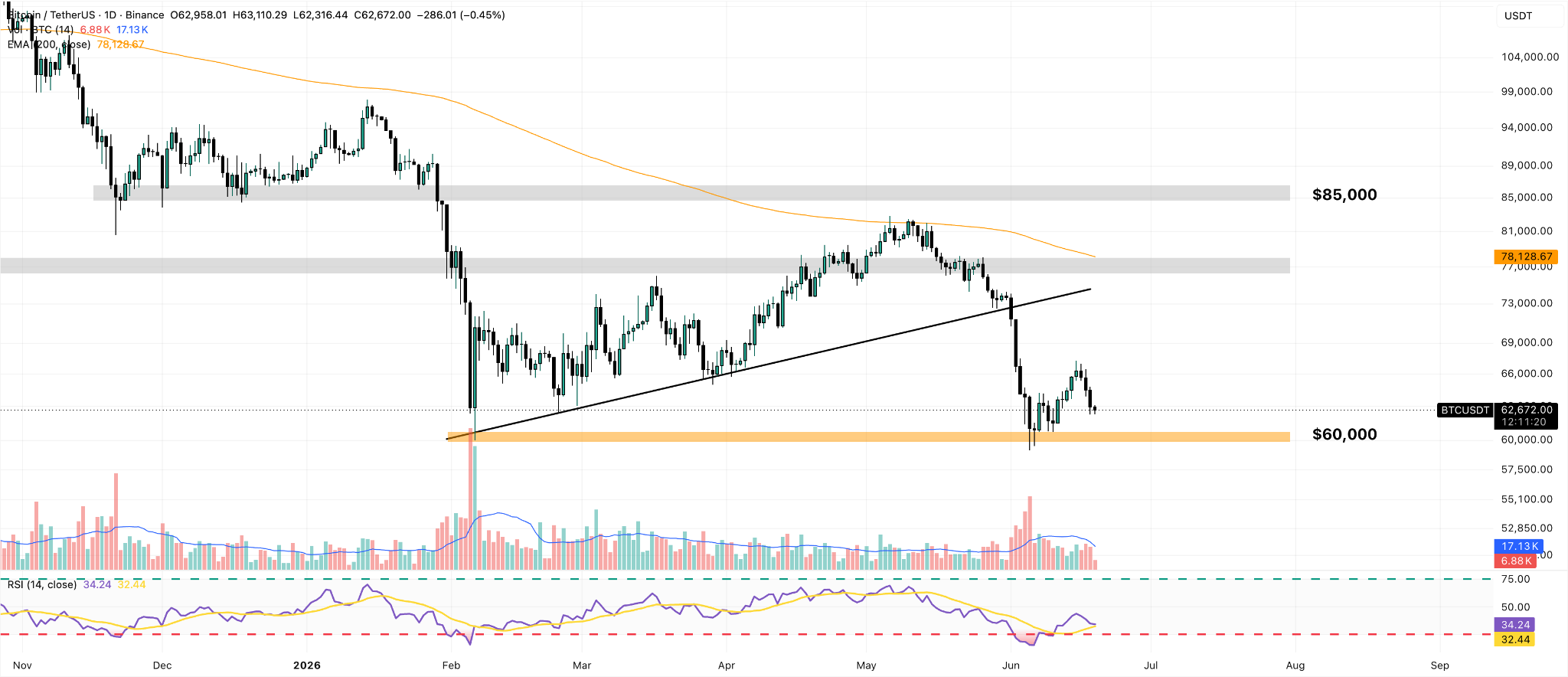
However, based on our weekly buy signal for BTC, a retest of this level was expected. In fact, the price could break below this mark, and this signal would still be in play.
However, the macroeconomic backdrop resembles the early (not the latest) stages of the 2022 bear market.
This weekly signal flashed after the Relative Strength Index (RSI) dropped to 30. In the past three instances, buying at these levels has yielded positive results for investors. However, in one out of three occasions, the price broke below its previous cycle low.
We see high odds of a bearish breakout below $60,000 right now, which could result in a drop to $50K in the near term.
However, if that support level holds, we could soon retest the 200-day exponential moving average (EMA), and that would reinforce the idea that this weekly buy signal will play out as expected over the next 6 to 12 months.