Dow Tumbles as UnitedHealth Plummets
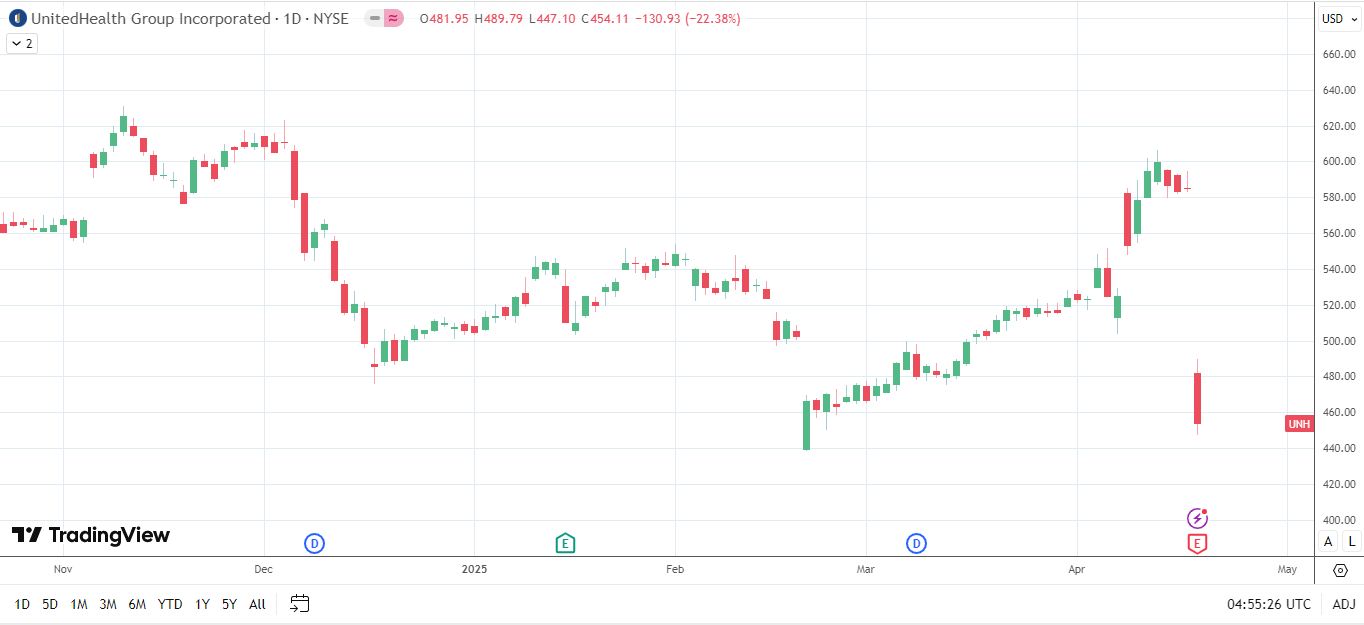
The Dow plunged 1.33% on Thursday, April 17, dragged down by a 22.38% slump in UnitedHealth (UNH), as markets weighed Trump’s tariff rhetoric and renewed trade tensions with China. Tariffs pose a significant threat to the US economy, potentially pressuring consumption while driving prices higher. Rising prices could delay Fed rate cuts, impacting risk assets.
US equity markets delivered mixed results, with the S&P 500 gaining 0.13%, while the Nasdaq Composite Index fell 0.13%.
Optimism over a potential US-Japan trade deal lifted risk sentiment after Trump declared ‘Big Progress’ in trade talks. He also expressed expectations of reaching a trade deal with China, signaling a more conciliatory tone toward the world’s second-largest economy. Still, ahead of the long weekend, investors remained cautious.
US economic indicators failed to move the dial despite labor market data suggesting economic resilience. Initial jobless claims fell from 224k (week ending April 5) to 215k (week ending April 12). A stable labor market may support consumer sentiment and spending, which contributes over 60% to US GDP.
Mainland Equity Markets Lose Ground on Tariff Uncertainty
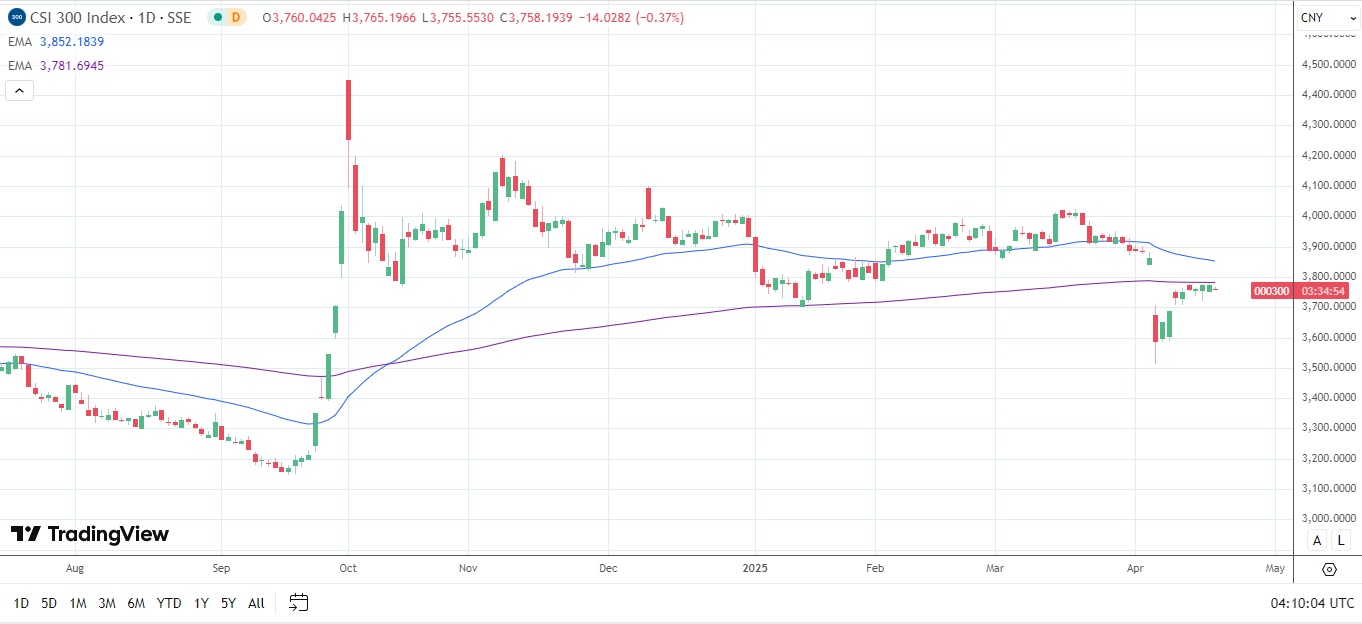
In Asia, Mainland China’s equity markets declined in the morning session on Friday, April 18, as investors fretted over the escalation in the US-China trade war. The CSI 300 and the Shanghai Composite Index dropped 0.37% and 0.39%, respectively. Hong Kong markets remained closed for Good Friday.
Hopes of fresh policy measures to bolster China’s economy continued to cushion the downside for Mainland-listed stocks. On April 17, CN Wire Reported:
“China’s PM Li Qiang chairs state council study session: CCTV: to enhance expectation management in economy. We need to roll out policy measures at critical time windows. Act early and quickly. We should have the courage to break conventions when necessary. Deliver policies precisely, enhance communications with markets.”
While President Trump raised hopes of dialogue with China, Beijing sent a firmer message. Bloomberg TV Asia Pacific Chief Markets Editor David Ingles shared an excerpt from China’s Ministry of Finance, stating:
“China’s MOFA says will fight to the end if interests harmed.”
Nikkei Price Forecast
Every new Nikkei analysis as it publishes, today's technical signal and key levels, live price — on one page.
See all Nikkei forecastsNikkei 225 Advances on US-Japan Trade Deal Hopes
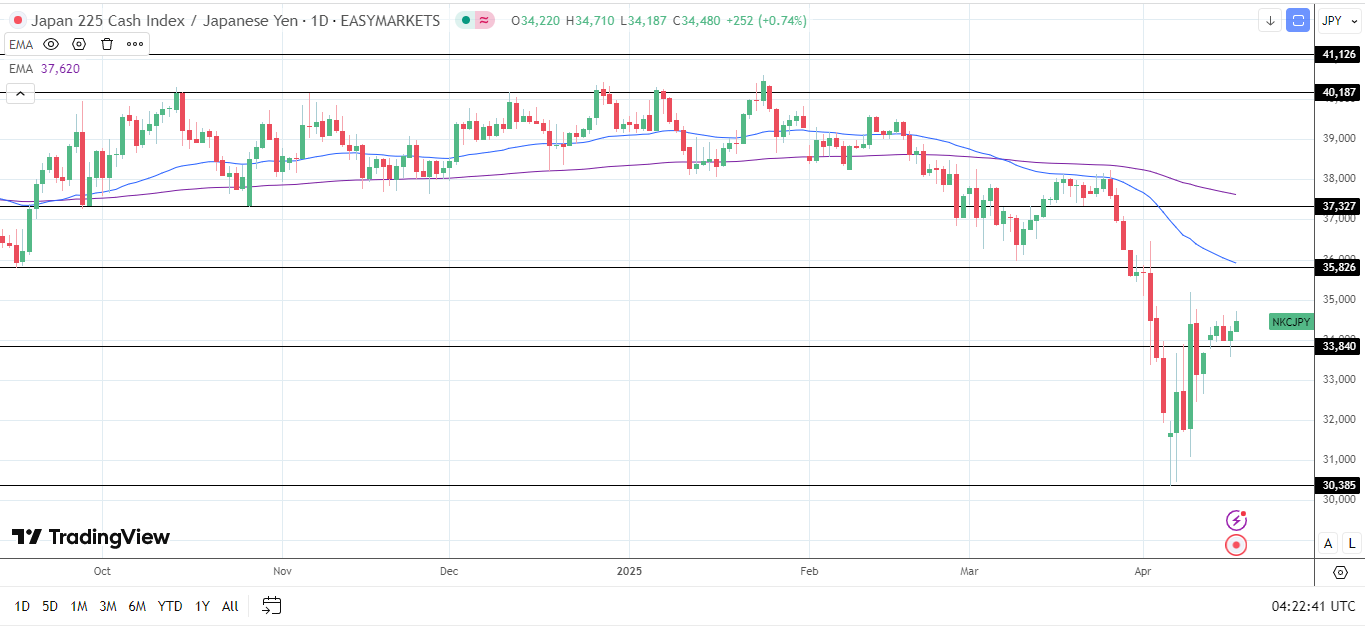
The Nikkei 225 gained 0.71% on Friday morning, buoyed by hopes of a US-Japan trade deal and expectations of a cautious Bank of Japan. The BoJ could delay raising interest rates if tariffs impact Japan’s economy, easing demand for the Japanese Yen. On Friday, the USD/JPY pair held onto overnight gains, bolstering Japanese firms’ export competitiveness and corporate earnings.
Nissan Motor Corp. (7201) gained 1.39%, while Sony Corp. (6758) rose 0.52% on trade-deal hopes.
Outlook: Tariffs and BoJ Caution
Trade-related developments will continue to influence near-term sentiment. Investors should consider:
- US-China trade-related news: An escalation in the trade war could weigh on risk sentiment, while trade talks could boost demand for Mainland-listed stocks
- Meaningful stimulus measures from Beijing, targeting domestic consumption, may cushion the downside risks.
- Central bank insights into the effect of trade policies on the US and Asian economies and central bank rate trajectories could dictate market sentiment.
On Friday, BoJ Governor Kazuo Ueda reportedly reaffirmed the Bank would continue raising interest rates if inflation progressed toward the 2% target. However, he acknowledged the need to monitor the economic fallout from US tariffs, potentially delaying rate hikes.
In this environment, investors should consider strategies to navigate trade-related volatility. For guidance on resilient asset classes, consult our latest market insights.