


A Consistent Fractal: ZEC Pumps After BTC Tops, Then Drops 80–92%
ZEC’s weekly chart highlights the bearish fractal across three major cycles.
For instance, Bitcoin reached its peak in December 2017. ZEC continued rising for several weeks, adding ~70% after BTC reversed. Once the market turned risk-off, ZEC fell 91.5% from peak to trough.
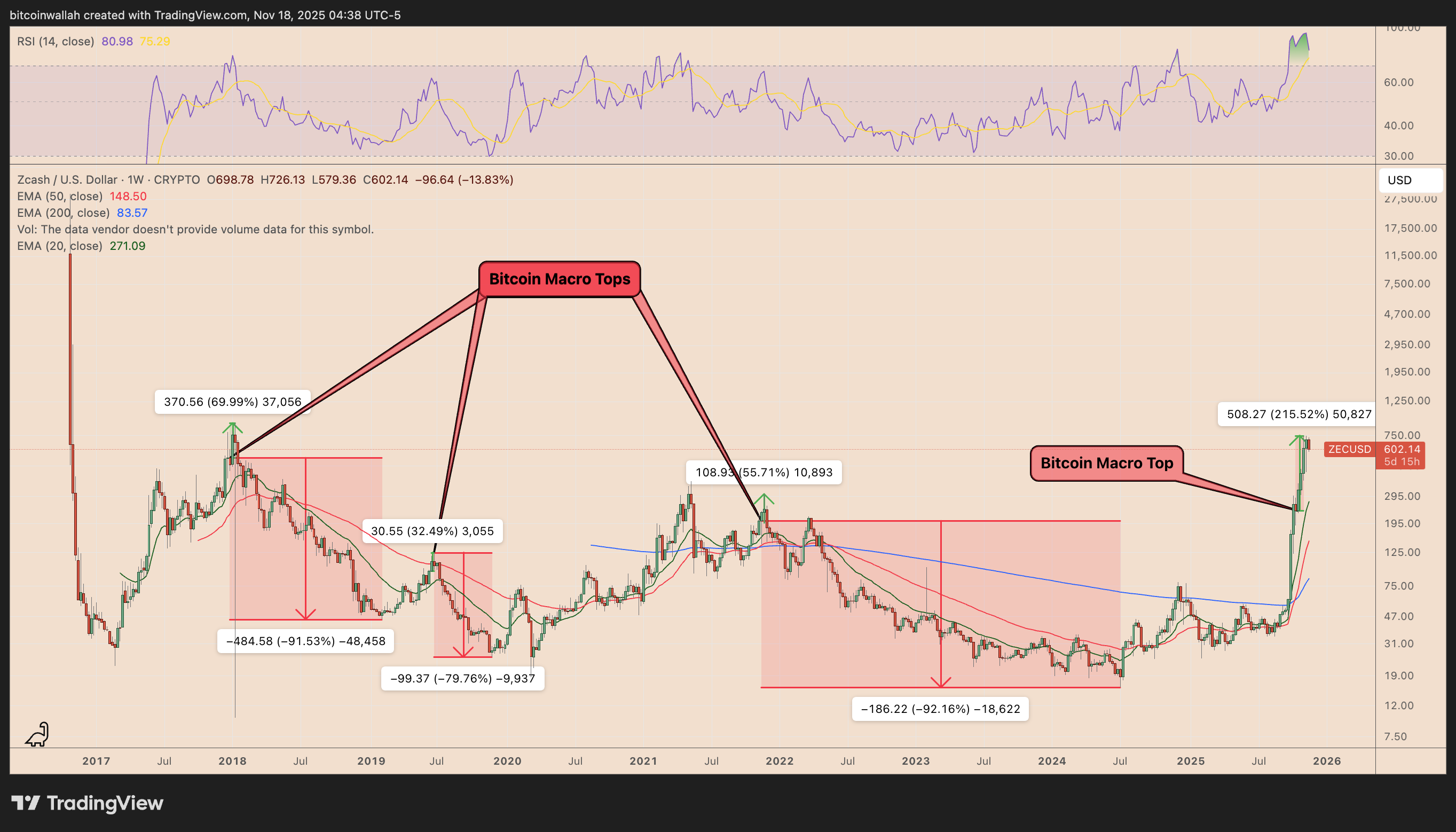
Similarly, Bitcoin reached its peak in April 2021. ZEC lagged the move, rallying ~55% afterward. The follow-through was short-lived: ZEC dropped ~92%, returning to multi-year lows.
As of November 2025, Bitcoin exhibited signs of a macro top. ZEC responded with its strongest lagging rally on record, a ~215% gain after BTC’s peak at around $126,230.
This mirrors the same late-cycle extension seen in previous tops, where capital rotates briefly into high-beta altcoins before liquidity thins.
Zcash has consistently acted as a high-beta follower of Bitcoin.
Liquidity peaks late in cycles often push volatile altcoins higher despite weakness in BTC. However, once market momentum fades, these assets typically unwind more quickly due to thinner order books and limited new inflows.
This indicates why ZEC’s tops come after Bitcoin’s, but its lows fall far deeper.
ZEC’s Rising Wedge Signals Breakdown Risks
Zcash is now trading inside a classic rising wedge pattern on the daily chart, a structure that typically appears near the end of strong uptrends and often precedes sharp corrective moves.
The wedge is tightening below the $630–$650 region, where ZEC has repeatedly rejected new highs despite aggressive intraday spikes.
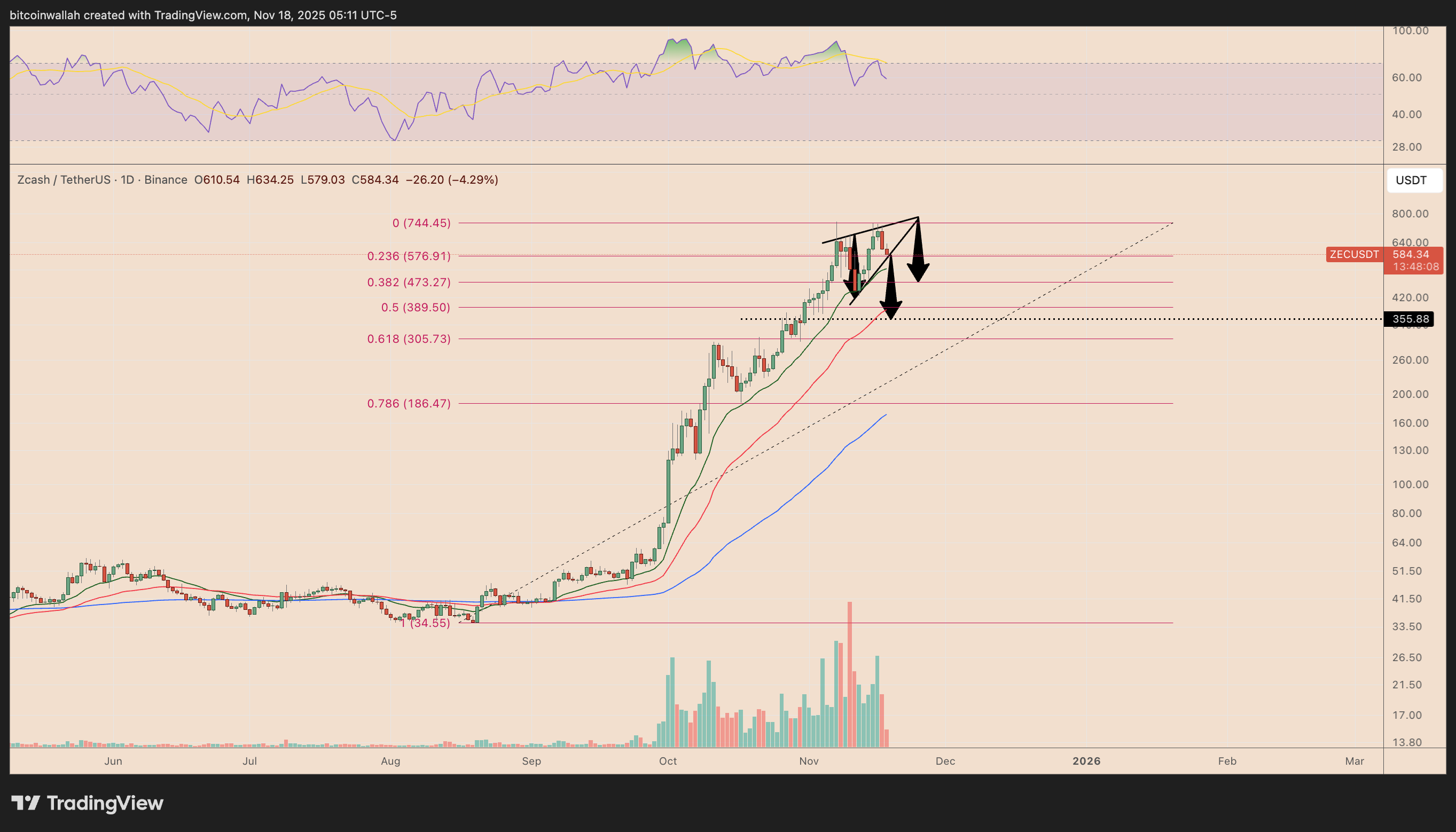
The pattern reflects weakening bullish momentum: higher highs are still forming, but at a slower rate, while sellers are stepping in more quickly with each attempt.
A decisive breakdown below the wedge’s lower trendline would validate the bearish setup, exposing ZEC to a retest of the 0.236 Fib level near $577, followed by a deeper move toward the 0.382 Fib at $473, a key confluence zone that also aligns with prior demand.