


WTI Crude Oil
West Texas Intermediate faces an interesting issue after Friday’s inventory report. It really isn’t just a question of global supply increasing or demand weakening. Instead, traders need to consider whether American crude can compete in international markets at current price differentials.
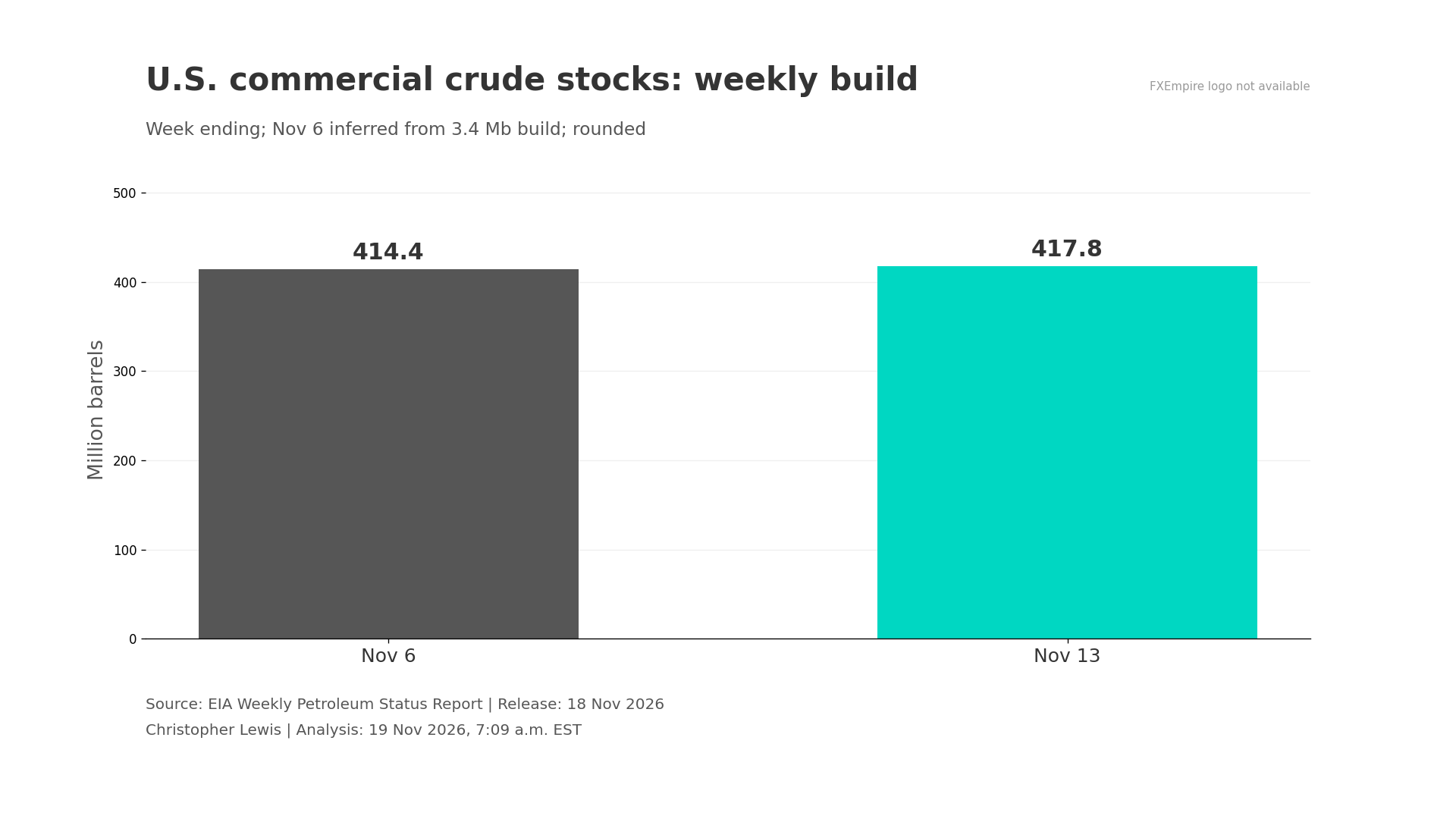
The Energy Information Administration reported on November 18 that commercial crude inventories increased by 3.4 million barrels to 417.8 million barrels during the week ending November 13. Reuters reported that analysts had expected an increase of just 58,000 barrels. This difference does make quite a bit of difference, in so much as we need to process what this could mean going forward.
Global Supply and Its Part
The market was already concerned about global supply, but a substantially larger American inventory build adds another problem for WTI. The international pricing relationship helps explain why WTI has been particularly vulnerable. When American crude is sufficiently inexpensive compared with Brent, exporters can profitably ship barrels to overseas customers. Freight charges, crude quality, and other costs can determine these transactions and whether or not they make commercial sense for the end user.
However, Reuters cited Sparta Commodities analyst Jun Goh on November 18 as saying that WTI export arbitrage to Asia and northwestern Europe had effectively closed. In practical terms, American oil wasn’t inexpensive enough relative to international alternatives to justify the shipping cost. This can leave additional crude in the domestic market for Americans.
A widening Brent-WTI differential may eventually correct the problem by making exports more competitive. But meanwhile, domestic petroleum product inventories have also increased. Distillate stocks rose 1.6 million barrels to 104.9 million barrels. Gasoline inventories increased 5.2 million barrels to 215.9 million barrels.
This combination should be paid attention to because a crude inventory build accompanied by rising product inventories can suggest that petroleum supply is temporarily exceeding demand across several parts of the refining system. Nevertheless, weekly inventories can fluctuate quite wildly, and the next report will be especially important in determining whether this represents some type of deterioration that’s going to have any legs to it.
Brent Oil Price Forecast
Every new Brent Oil analysis as it publishes, today's technical signal and key levels, live price — on one page.
See all Brent Oil forecastsCan U.S. Oil Compete With Overseas Pricing?
The most useful development to monitor is whether cheaper WTI brings attractive additional overseas demand. Until there’s evidence of improving exports or stronger refinery consumption, the domestic supply picture remains a bit of a concern.
Technical Analysis
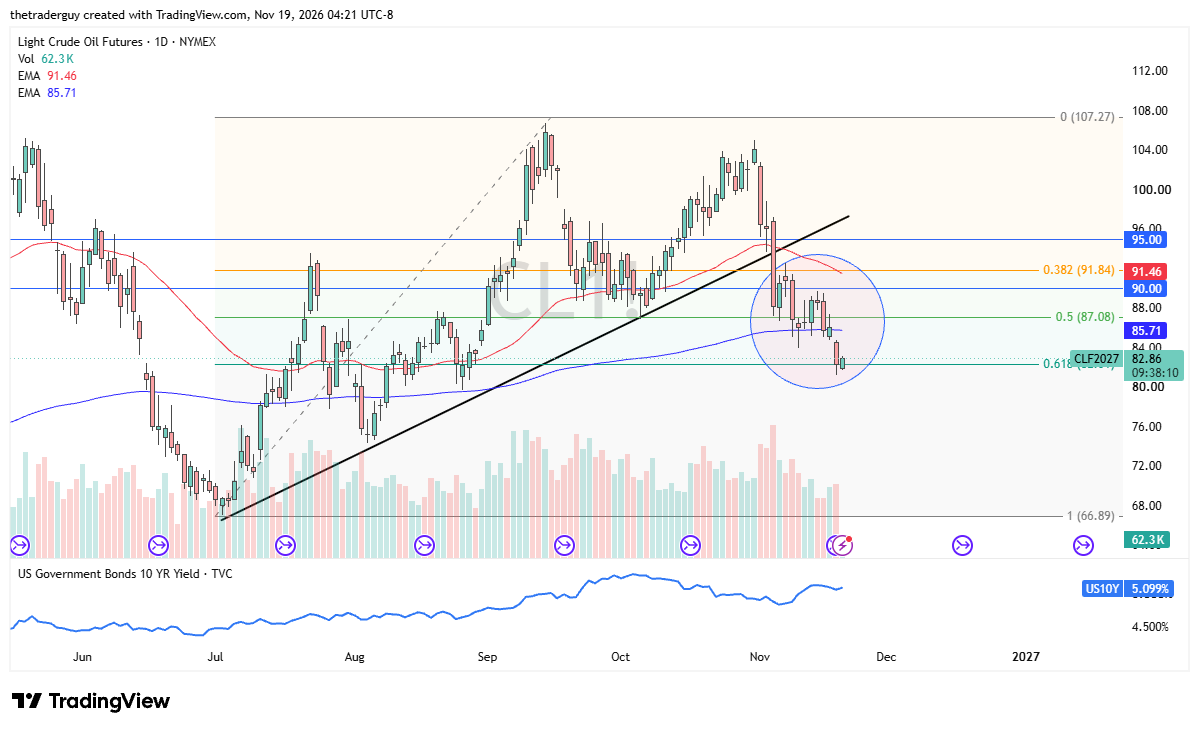
That being said, when we kicked off the trading session here on Thursday, we have seen a little bit of a bounce, but from a pretty deep pullback. I still believe that eventually this is a buy-the-dip market, but we’ve yet to see that setup play out. The $80 level below should be thought of as a potential support level, with the 200-day EMA above offering resistance.
Brent Crude Oil
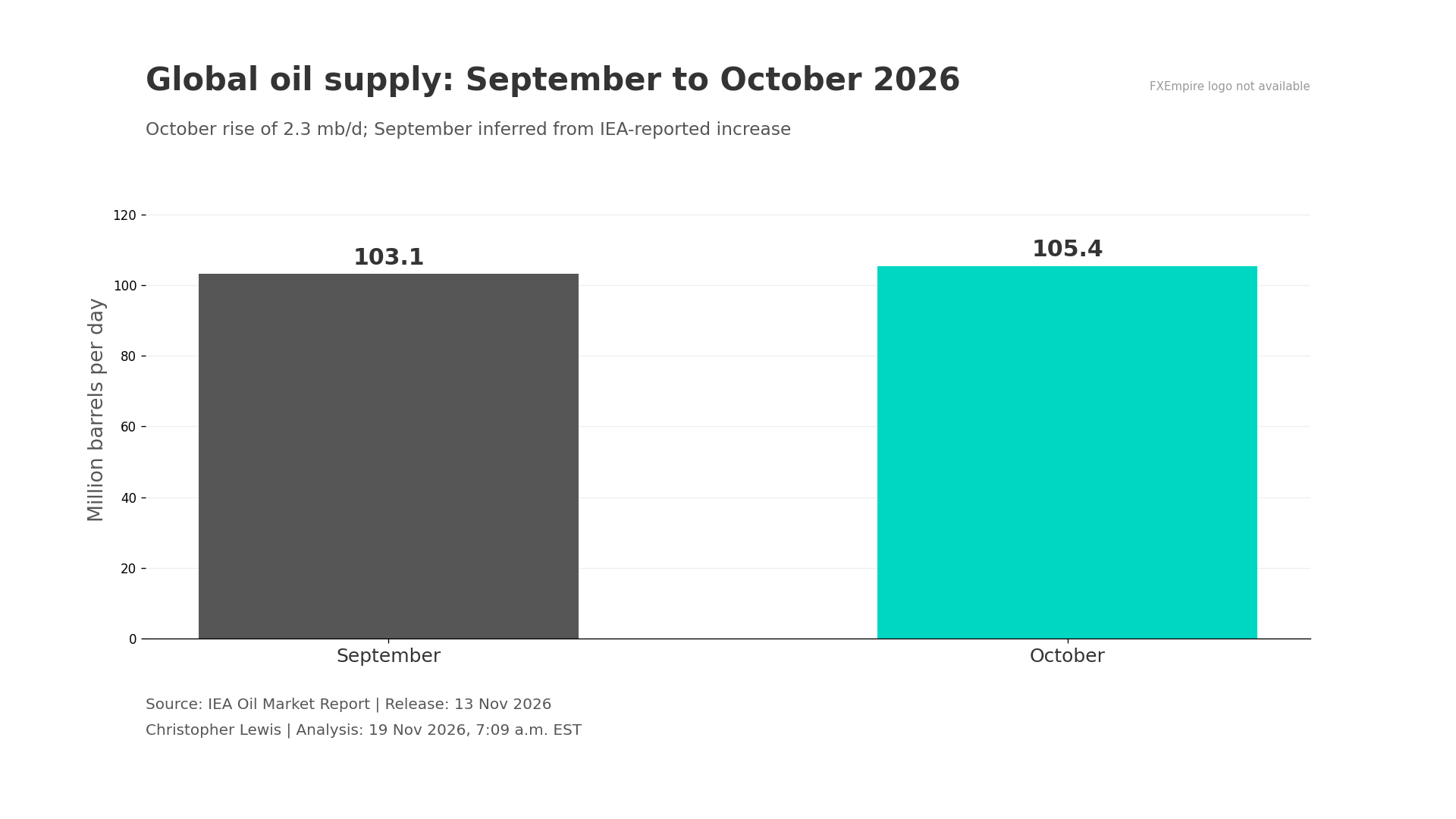
The International Energy Agency’s November 13 oil market report estimated global oil supply increased by 2.3 million barrels per day in October, reaching 105.4 million barrels per day. This suggests greater availability of crude oil internationally.
However, the comparison of global inventories introduces a significant complication. The IEA estimated that global inventories increased by 52 million barrels during October, yet oil stored and transported on water increased by 86 million barrels. At the same time, onshore inventories continued declining and reached their lowest level since at least 2016 in the agency series.
Is Oil Really Available?
This distinction matters because the location of crude can be just as important as whether or not it’s actually available. Asian refineries cannot immediately process oil that remains aboard a tanker elsewhere. The cargo must arrive at the location at an acceptable cost and within the required delivery schedule. Shipping disruptions can therefore maintain pressure on delivered crude prices even when global production is increasing.
The IEA also reported that record freight costs weakened Asian refinery margins during the month of October. This creates a more complicated situation than simply suggesting that the additional global production should lower Brent prices. There’s more oil available, but transportation costs and disruptions continue to interfere with the movement of some of those barrels.
Shipping Still Facing Attacks
Reuters’ November 18 reporting also documented attacks involving commercial shipping in the Middle East, reinforcing the importance of transportation security. However, disruption shouldn’t automatically be treated as permanent production losses. Traders need evidence that cargo deliveries have actually been delayed, diverted, or prevented from reaching customers.
Looking further ahead, the IEA forecasts global oil demand averaging 102.3 million barrels per day this year, followed by a recovery of 2 million barrels per day next year.
Charts Are Somewhat Neutral
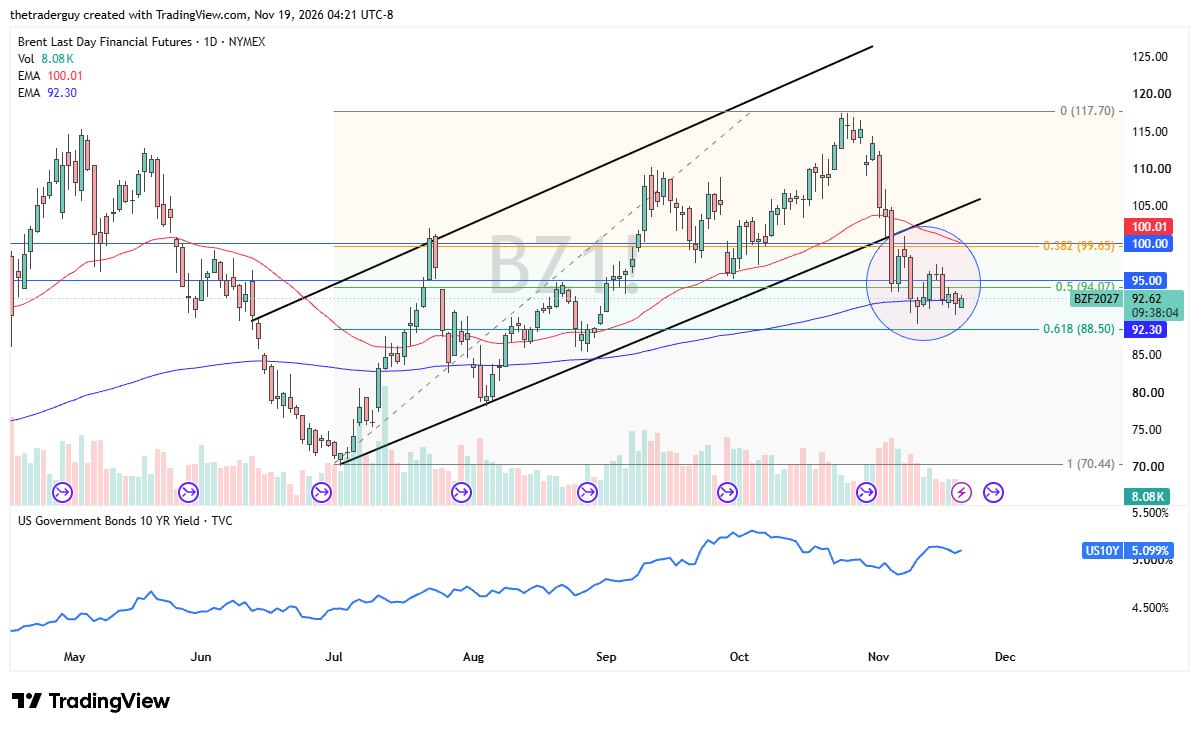
Looking at the charts, the technical analysis for Brent is a bit more neutral than WTI, as it’s hanging around the 200-day EMA. With that being the case, I am still somewhat ambivalent about this market, but it does seem like we are near support, so a short-term bounce could be in the works.
If you’d like to know more about how to trade crude oil, please visit our educational area.