


WTI Crude Oil
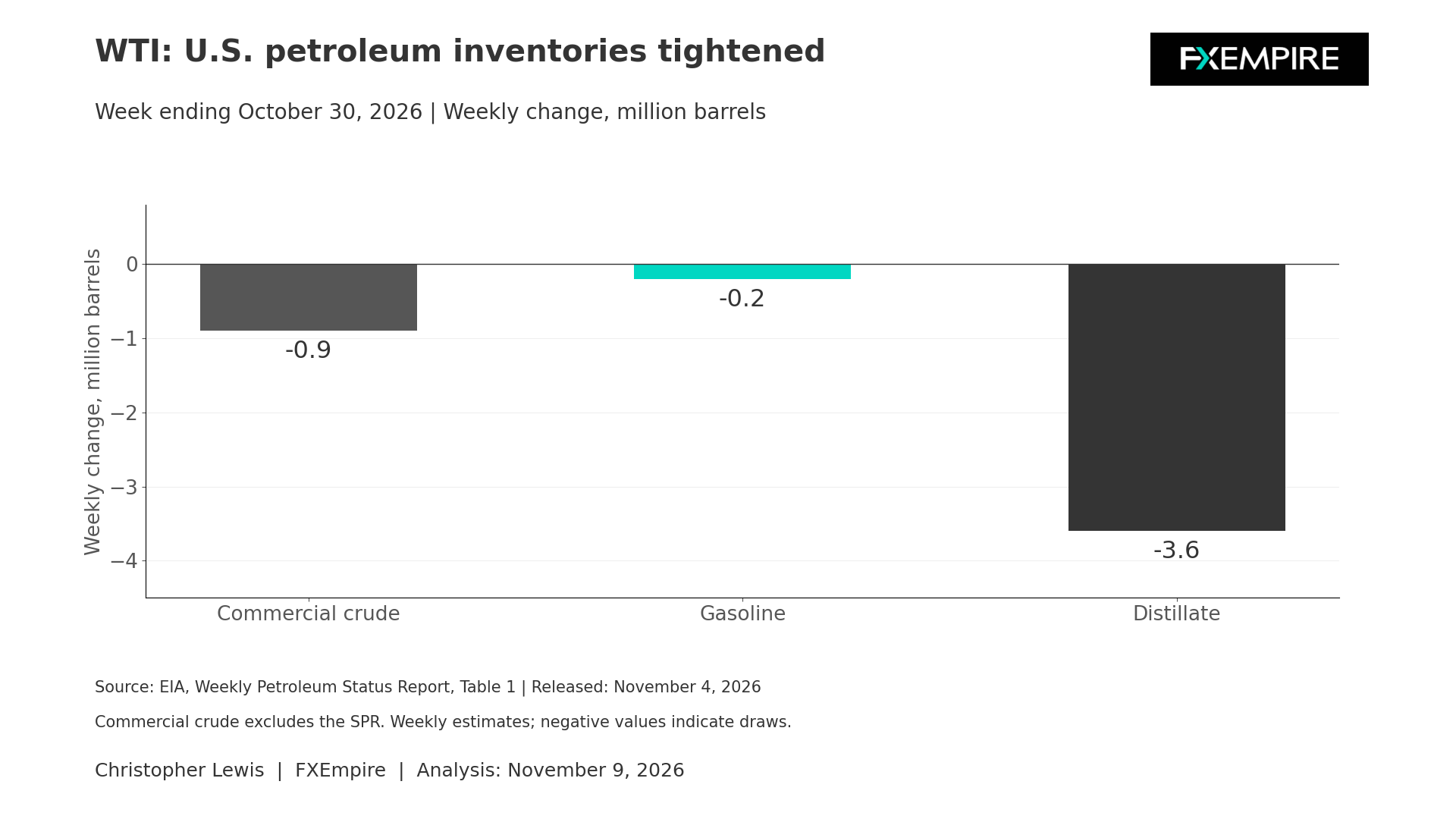
WTI crude oil begins the week with tighter U.S. petroleum balances, although the latest official figures are estimates for the week ending October 30, rather than real-time measurements. The EIA’s November 4 report showed commercial crude stocks at 409.8 million barrels, down 900,000 barrels during the week. The Strategic Petroleum Reserve also declined by 400,000 barrels to a reading of 282.2 million.
Those draws are supportive overall, but the more consequential development is in refinery output. Refined products offer a bit of a mixed picture when analyzing the petroleum situation in America. Gasoline inventories slipped 200,000 barrels to 209 million, while distillate stocks fell 3.6 million to 99.3 million. Distillate inventories were 11% below their level last year.
Flow Data Somewhat Mixed
The flow data present a more complicated picture. Domestic crude production was estimated at 14.003 million barrels per day, up 11,000 barrels per day from the previous week. Refinery crude inputs increased by 199,000 barrels per day to 16.725 million, helping explain why crude stocks have fallen despite high production.
Crude exports dropped by 1.179 million barrels per day to 3.675 million, while imports were broadly unchanged at 6.375 million. A decline in exports ordinarily reduces the call on domestic barrels, so the simultaneous inventory drop points to refinery demand as the stronger offset.
Products Supplied Rising
Petroleum products supplied rose to 21.962 million barrels per day, and the four-week average was 4% above the comparable number last year. Gasoline supplied increased to 8.808 million barrels per day, while distillate supply reached 4.439 million. These are EIA measures and are useful demand proxies rather than a direct retail consumption reading.
Nevertheless, the low distillate stock level gives the U.S. market less room to absorb a cold-weather demand increase or an unexpected refinery outage. The next WTI catalyst is delayed by Veterans Day. The EIA’s report covering the week ending November 6 is scheduled for Thursday, November 12, at noon Eastern Standard Time.
Brent Oil Price Forecast
Every new Brent Oil analysis as it publishes, today's technical signal and key levels, live price — on one page.
See all Brent Oil forecastsTechnical Outlook

The technical analysis for WTI crude oil does look a little bit soft, but it is probably worth mentioning that the 200-day EMA sits just below and has shown itself to be supportive so far. Currently, it looks as if the market is simply bouncing around the $90 level. As a result, this looks like a very neutral market.
Brent Crude Oil
Brent‘s fundamental situation remains centered on the ability for international supply to find routes and the uneven recovery in Middle Eastern exports.
The International Energy Agency’s October Oil Market Report estimated that Gulf crude oil exports surged by 4.4 million barrels per day in September to 13.9 million, more than 75% of the pre-war level. Total flows through the Strait of Hormuz rose to just under 11 million barrels per day, while bypass exports climbed to 5.6 million. These figures describe a substantial crude recovery, but they measure September conditions, so they are dated.
Recovery in Refined Products Still an Issue
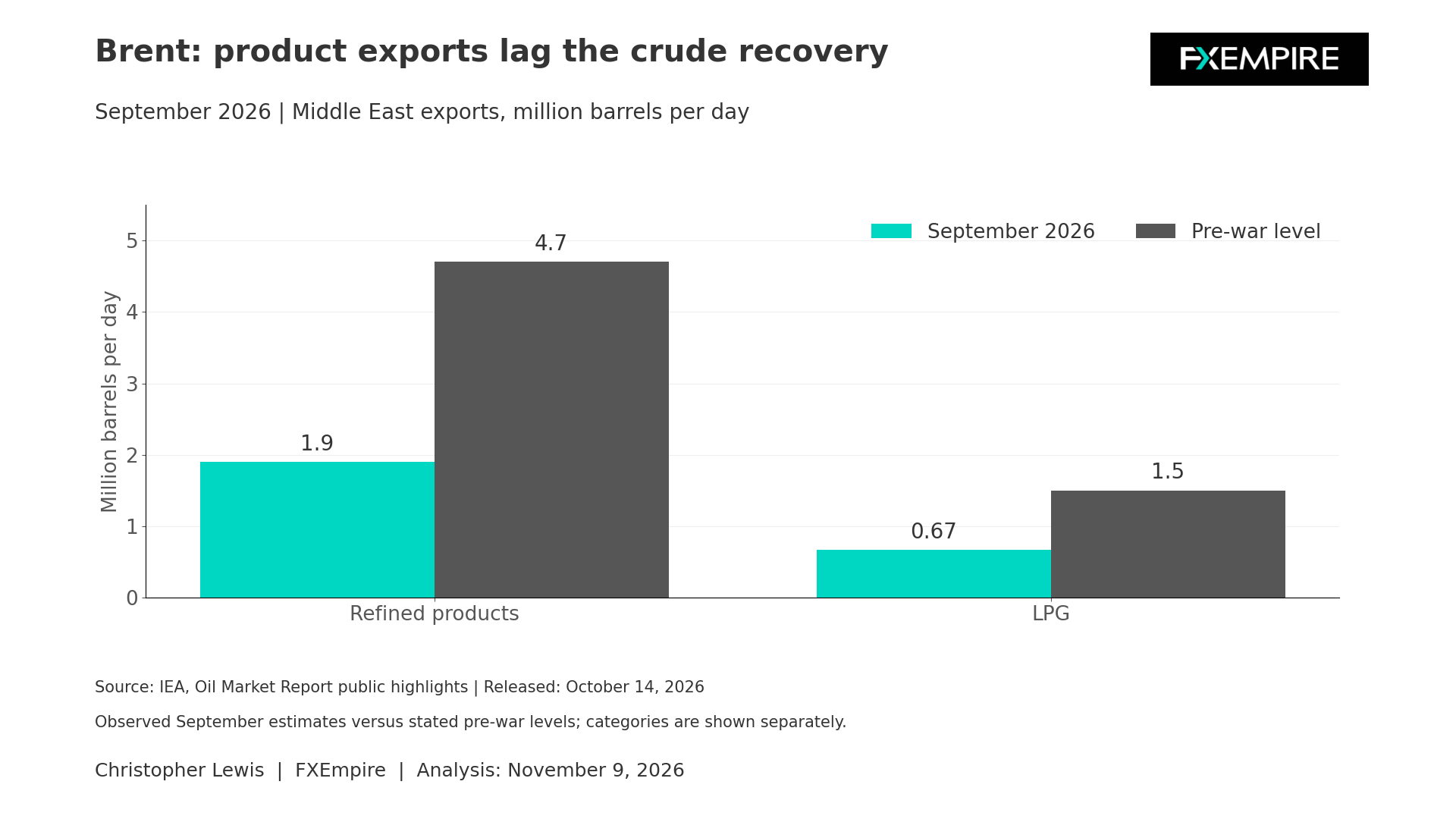
The recovery in refined products was much weaker. The IEA estimated Middle Eastern refined-products exports at 1.9 million barrels per day in September, compared with 4.7 million pre-war. LPG shipments reached 670,000 barrels per day versus 1.5 million previously. This matters for Brent because more crude can be available while diesel and other finished products remain scarce. Restricted product availability can keep refinery margins, freight costs, and delivered fuel prices elevated, even if crude oil flows start to improve.
The IEA estimated global observed oil stocks fell by 10 million barrels in September. A 103 million-barrel increase in oil on water was more than offset by a 113 million-barrel decline in onshore inventories. The agency forecast global demand to decline by 2.5 million barrels per day year over year in the fourth quarter and by 2.6 million on average during 2026 to 102.4 million barrels per day. These are projections based on the IEA’s October information.
OPEC and Output
OPEC said on November 1 that seven participating countries would maintain their September required production levels for December. This is a policy requirement rather than proof that barrels themselves have been delivered. The next formal OPEC+ meeting is scheduled for November 29.
Brent Technical Analysis
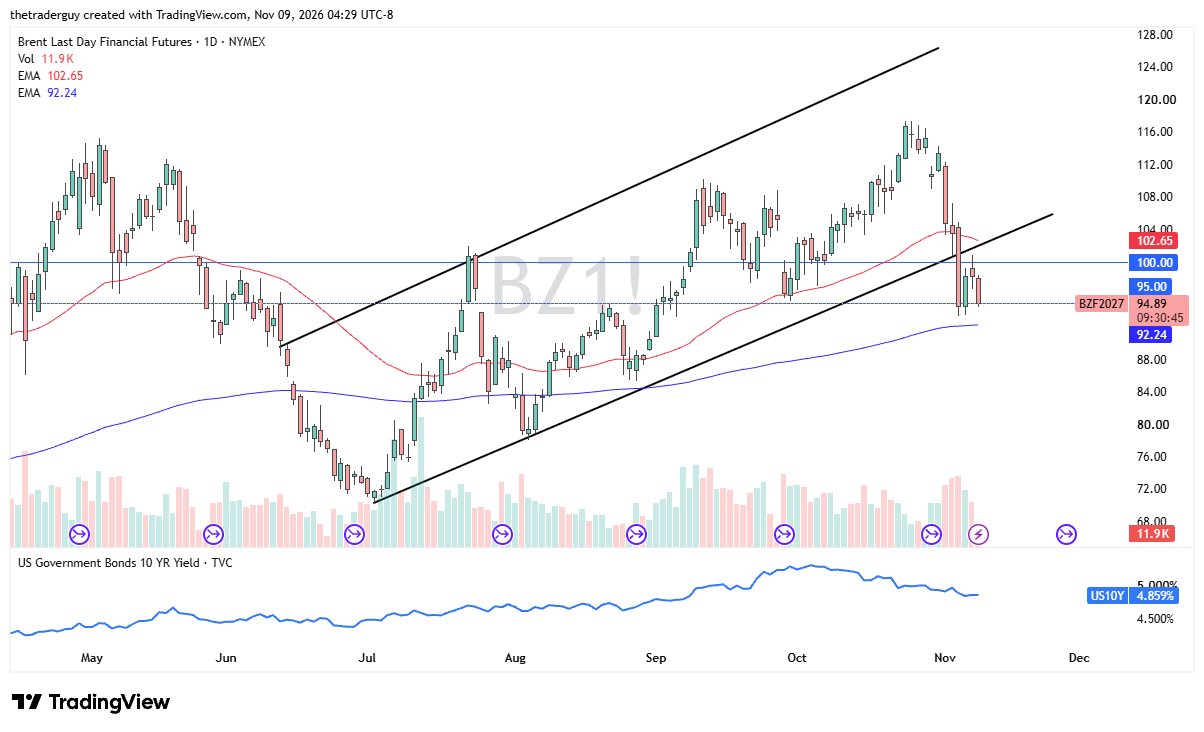
Brent looks very much like WTI from a technical analysis standpoint, as it is drifting lower and hanging around the $95 level. It is worth noting that the 200-day EMA sits just below and, so far, has offered support. The question now will be whether the recovery in supply continues or if we see hostilities flare up again in the Middle East. Ultimately, Brent looks fairly neutral at the moment as well.